
A rock bolt environmental product declaration reports life-cycle environmental information for a defined product scope under stated rules. A buyer comparing two offers can misread different units or system boundaries as a product advantage. Build a review sheet before comparing results. Identify the actual bolt assembly and request its applicable declaration rather than assuming coverage from a product category.
1. What should an EPD establish for your purchase?

A rock bolt environmental product declaration should establish whose product is covered, what unit is declared, and which life-cycle stages are reported. It supplies environmental information within stated boundaries. It does not automatically establish suitability for your support design.
Define the document’s purchasing role
Write the requirement precisely. Decide whether procurement needs an applicable EPD, comparable environmental data, or a specific project submission. Those deliverables require different reviews. Ask your sustainability reviewer to define the accepted program and document requirements without assuming another project’s rules apply here.
- Identify the project requirement and its source document.
- Name the person responsible for environmental-data review.
- Keep mechanical acceptance in a separate technical evidence process.
EPD requirement register
Use bolt-family descriptions for initial identification only. Request declaration coverage for the offered configuration before scoring environmental data.
| Procurement question | Record required | Review owner |
|---|---|---|
| Is an EPD requested? | Project specification reference | Procurement lead |
| Is this product covered? | Declared product scope | Sustainability reviewer |
| Is hardware suitable? | Separate technical evidence | Project engineer |
Key takeaway: define how an EPD will be used. A document request needs a review rule before bids arrive.
2. How do you confirm product coverage?
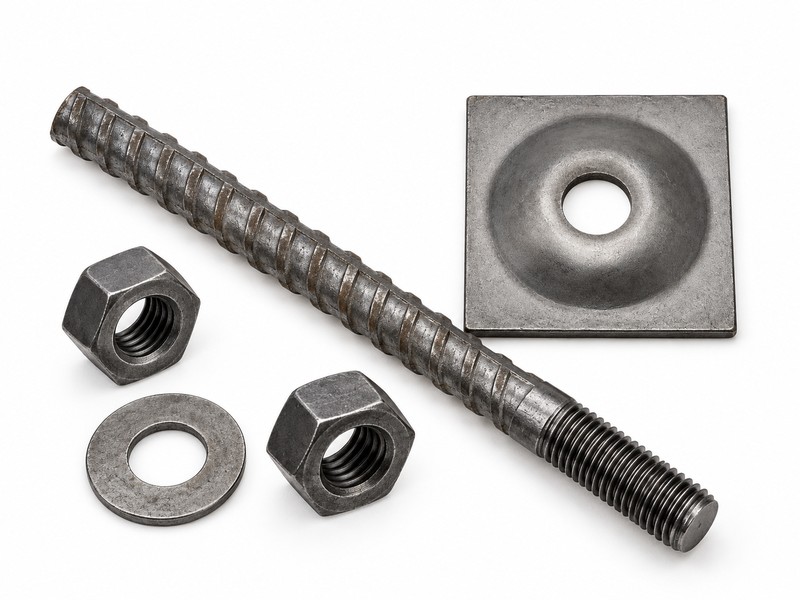
Confirm coverage by matching the offered product, manufacturer, production scope, and included components with the declaration. Similar product names provide incomplete evidence. A declaration for one producer cannot establish another factory’s environmental performance.
Read the covered-product description
Match the actual bill of materials. Determine whether coverage concerns a bar, a named kit, or a wider product group. Check whether nuts, plates, couplers, coatings, or packaging appear within that scope. Where a declaration covers an average or representative group, ask how the offered variant relates to it.
- Compare offered item descriptions with declaration coverage.
- Record covered plants or stated geographic representation.
- Identify separately purchased components that may fall outside scope.
Coverage comparison
Review bearing plates as distinct line items where needed. Ask the declaration owner to clarify ambiguous component coverage in writing.
| Scope field | Match required | Gap to record |
|---|---|---|
| Product identity | Offered variant or covered group | Unlisted configuration |
| Manufacturer scope | Named producer and stated coverage | Different factory assumed covered |
| Components | Included assembly elements | Missing accessory impacts |
Key takeaway: preserve coverage evidence with each offer. A family resemblance cannot substitute for a documented product match.
3. Why do declared units change comparisons?

Declared units change comparisons because environmental results refer to a stated quantity of product. A result per mass cannot be compared directly with a result per bolt or kit. Converting units requires traceable quantities and an appropriate comparison basis.
A declaration per unit mass and an order per assembled bolt use different denominators. Converting between them requires the mass of the covered product configuration. It still does not establish equal support function between alternative designs.
Establish one comparison basis
Keep quantity separate from performance. A mass-based declaration may describe production impacts without establishing how many bolts a design needs. A lighter item also may provide a different technical function. Have engineers establish technical equivalence before anyone uses material quantity to rank environmental outcomes.
- Record declared unit exactly as presented.
- Verify the mass or component quantity behind any conversion.
- Preserve calculations and avoid unsupported functional equivalence.
Unit-review record
For a self-drilling assembly, account for the actual included components. A bar-only mass may not represent the purchased kit.
| Declared basis | Conversion evidence | Remaining question |
|---|---|---|
| Mass of product | Verified purchased mass | Same product coverage? |
| Individual item | Identified size and configuration | Same technical function? |
| Defined kit | Component schedule | Same included elements? |
Key takeaway: normalize units transparently. Keep engineering equivalence separate from arithmetic conversion within the review sheet.
4. Which life-cycle modules should you compare?

Compare corresponding life-cycle modules under compatible rules and clearly recorded boundaries. A result covering production alone describes a different scope from a result including transport or end-of-life scenarios. Module labels should remain visible beside every extracted figure.
A1–A3 commonly identifies the product stage in construction-product declarations. Transport to site can appear separately under A4, while installation can appear under A5. Check the document itself before combining these stages, and retain its stated treatment of later modules.
Copy boundaries before copying results
Read the module table. Construction-product declarations can report production, transport, installation, use, and end-of-life information in separate modules. Read each declaration’s explanation of included and unreported stages. A blank or unreported module should remain visibly unreported rather than becoming a numerical zero.
- Record included modules and their stated scope.
- Preserve declared exclusions and unreported stages.
- Keep any beyond-system-boundary information separately identified.
Boundary comparison
Include accessory packaging only where your declared scope supports it. Ask the reviewer to approve which module comparisons are meaningful.
| Review field | Record | Comparison concern |
|---|---|---|
| Included stages | Module schedule | Different lifecycle scope |
| Unreported stages | Stated status | Missing mistaken for zero |
| Beyond-boundary information | Separate declared treatment | Unsupported offsetting |
Key takeaway: align boundaries before comparing values. Reject a combined total that hides incompatible module coverage.
5. How do scenarios affect a US delivery comparison?
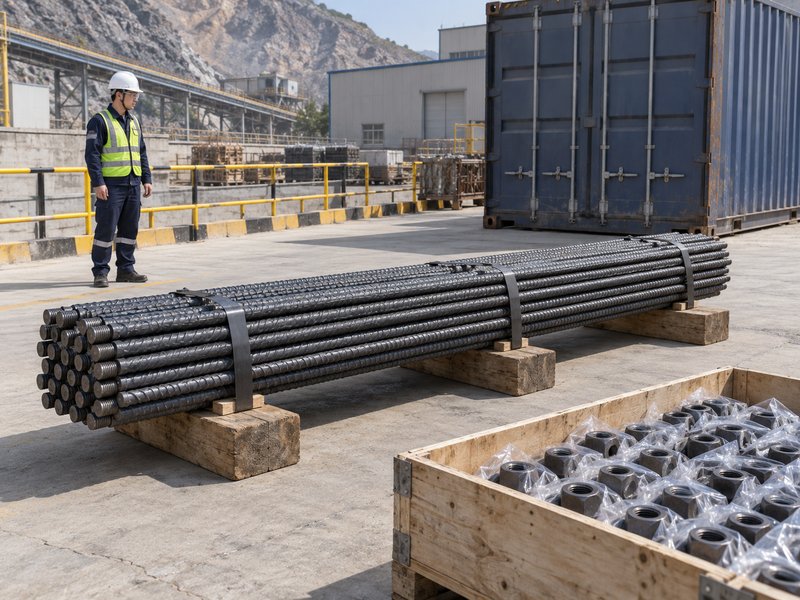
Scenarios affect a US delivery comparison when declared transport, installation, or end-of-life assumptions differ from your project. Those assumptions may describe a reference case rather than your actual supply route. Record differences before applying results to an offer.
Separate declared and project assumptions
Map the proposed route. Ask which origin, transport modes, distances, and packaging assumptions belong to the declaration. Then document your proposed delivery arrangement separately. Where project-specific calculations are requested, have a qualified reviewer choose compatible data and explain the method. Do not improvise carbon factors from unrelated declarations.
- Preserve declared scenario text with extracted results.
- Record project location and delivery assumptions.
- Identify calculations requiring additional verified data.
Scenario-fit review
Your tunnel project context informs destination needs, while shipment records establish an actual route. Keep both within the bid review file.
| Scenario | Declared information | Project check |
|---|---|---|
| Transport | Route assumptions | Matches proposed delivery? |
| Installation | Included activities | Fits purchased scope? |
| End of life | Stated recovery or disposal | Applicable to project assumptions? |
Key takeaway: label scenario differences. A published declaration does not automatically describe your shipment or mine’s eventual decommissioning.
6. What do PCR and verification details contribute?

Product category rules define methodological requirements for developing declarations, while verification information documents the stated review process. Record both before comparing EPDs. Shared terminology alone does not establish full comparability between programs or versions.
Record the methodological basis
Keep the rule version visible. Program-operator guidance explains that product category rules support consistent assessments within a product category. The same operator also cautions that declarations from different programs may remain imperfectly comparable. Ask a qualified reviewer to assess methodological alignment rather than assuming matching logos settle it.
- Record program operator and declaration identifier.
- Preserve PCR title, version, and referenced methodology.
- Identify verifier information and the stated verification basis.
Methodology review
A friction bolt offer needs coverage and method review for that product. Data for a different reinforcement system should remain separately identified.
| Method field | Record required | Reviewer question |
|---|---|---|
| PCR | Title and version | Compatible calculation basis? |
| Program | Operator and rules | Comparable declaration requirements? |
| Verification | Stated verifier and process | Applicable document identified? |
Key takeaway: compare methods alongside results. Refer unresolved methodological differences to a sustainability specialist before ranking offers.
7. How should validity and updates be checked?

Check declaration identity, publication or revision information, validity, and available registry status when reviewing an offer. A saved PDF can become outdated. Record the date and source of your check rather than describing a declaration as permanently current.
Follow the official record
Verify the document you received. Match its identifier and owner with the program operator’s record where available. Ask about revisions when a supplier sends another version. Keep the reviewed file within your procurement record so later teams know which document supported the decision.
- Record the review date and registry location.
- Compare PDF identity with the offered product coverage.
- Ask how future product or declaration changes will be notified.
Document-control record
Keep technical test documents in their own evidence category. Environmental document validity does not establish mechanical test applicability.
| Control field | Evidence | Procurement use |
|---|---|---|
| Identifier | PDF and registry match | Correct declaration |
| Revision | Reviewed file version | Reproducible decision |
| Validity status | Dated official record | Time-specific review |
Key takeaway: record when validity was checked. Retain the exact declaration version used to evaluate an offer.
8. Can an EPD prove a product is environmentally superior?
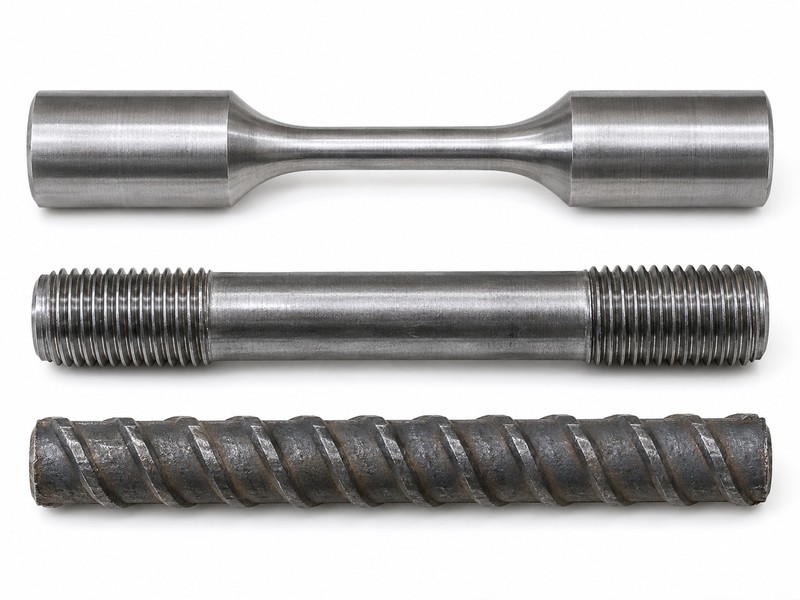
An EPD alone does not prove environmental superiority over another product. Comparison requires compatible scope, methodology, units, assumptions, and relevant technical function. Environmental data also cover more than a single selected indicator.
Mass normalization can help arithmetic comparison while hiding differences in assembly scope. A bar-only declaration excludes information that an accessory-inclusive kit declaration may contain. Resolve that boundary before treating equal mass units as equal procurement coverage.
Require a documented comparison basis
Compare the same question. Decide which indicators your project requires and why those indicators support its purchasing decision. Preserve other relevant reported information rather than presenting one favorable value as a complete environmental verdict. Ask the reviewer to record unresolved data differences and any limits on comparative statements.
- Confirm technical function before comparing quantities.
- Review matching indicators and calculation methods.
- Keep qualification notes beside any bid score.
Comparison readiness
Use a readiness decision before a ranking decision. If evidence remains incompatible, report the gap and request clarification from bidders.
| Comparison condition | Required evidence | If unresolved |
|---|---|---|
| Product function | Engineering review | Avoid equivalence claim |
| Environmental method | Compatible declared basis | Qualify comparison |
| Data scope | Matching units and stages | Request additional evidence |
Key takeaway: approve comparison assumptions before scoring. A lower isolated number can answer a different question from your procurement requirement.
9. What should you do when a supplier lacks an EPD?

Record that an applicable EPD has not been provided, then follow your project’s documented purchasing requirement. Do not fill the gap using another producer’s declaration. Whether an offer remains eligible depends on the actual contract or project criteria.
Describe the gap without inventing a claim
Keep unavailable data unavailable. Ask whether a relevant declaration exists, is planned, or cannot be supplied. Other documents may provide useful information, but their purpose and verification status differ. Describe each item accurately rather than relabeling a material certificate or generic sustainability statement as an EPD.
- Request a clear statement of available product-specific evidence.
- Record the project’s treatment of missing declarations.
- Assign a reviewer for alternative data if the specification allows it.
Evidence-gap record
Avoid promising that any unspecified factory already has verified environmental data. Evaluate supplied documents against the requirement in your tender.
| Supplier response | Record | Buyer action |
|---|---|---|
| Applicable EPD supplied | Identity and coverage | Complete EPD review |
| Different document supplied | Actual document type | Check accepted alternatives |
| No applicable declaration | Explicit evidence gap | Follow project criteria |
Key takeaway: disclose missing evidence plainly. Never transfer another producer’s declared footprint into your purchase record.
10. What should your environmental-data RFQ include?
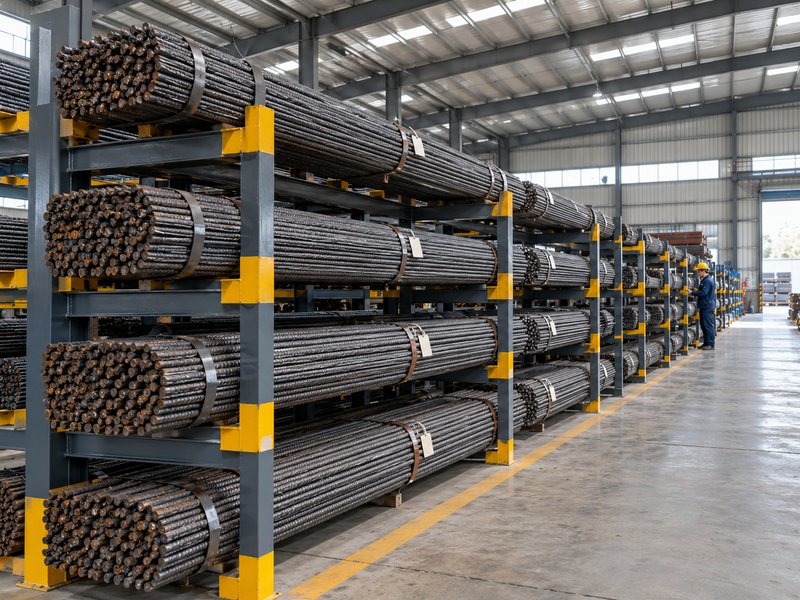
Your RFQ should identify offered hardware, required environmental documents, comparison rules, and review responsibilities. A rock bolt environmental product declaration becomes useful when buyers can connect it with a specific offer and a defined decision. Keep environmental and engineering acceptance requirements separately explicit.
Send the review sheet with the enquiry
Make evidence requests answerable. Ask bidders to identify coverage, declared units, included modules, PCR basis, verification, and validity. State whether project-specific scenario information is needed. US buyers should use their actual project criteria; European declaration terminology alone does not establish a US legal requirement.
- Request the complete declaration and official registry reference where available.
- Require explanations for coverage or scenario differences.
- Ask bidders to identify unavailable information without substituting unrelated data.
Request facts before promises
| Closure check | Action to retain |
|---|---|
| 1 | Request the complete declaration and official registry reference where available. |
| 2 | Require explanations for coverage or scenario differences. |
| 3 | Ask bidders to identify unavailable information without substituting unrelated data. |
For hardware identification, contact us with your component schedule and environmental submission requirements. Ask for available product-specific evidence and review it before making any carbon, certification, or EPD claim about the offered supply.
Q1: Can I use another manufacturer’s EPD for my order? No. Its declared scope does not establish your supplier’s environmental performance unless that supply is explicitly covered.
Q2: How do I know if accessories are included? Read the product scope and component description. Ask the declaration owner to clarify missing or ambiguous items.
Q3: What’s the best unit for comparing offers? Use a justified common basis. Declared quantities and technical function both require review before comparison.
Q4: Does an EPD establish US regulatory compliance? No general conclusion follows. Check the actual project and applicable requirements separately with qualified reviewers.
Q5: Should I treat an unreported module as zero? No. Preserve its stated reporting status and ask whether additional evidence is needed for your comparison.