What Are Prestressed Anchor Cables & Prestressed Steel Strands?
Prestressed steel strand is the core load-bearing material in prestressing technology, while prestressed anchor cable is an engineering reinforcement system that applies steel strand to rock, soil, concrete, and structural support projects. Together, they form a complete technical chain from high-strength material to active reinforcement application.
Prestressed Steel Strand
High-strength stranded steel wire used as the main tensile material in prestressed concrete, bridge structures, anchor cables, and geotechnical reinforcement projects.
Prestressed Anchor Cable
A reinforcement system made from steel strand, anchorage components, grouting body, free section, bonded section, and external anchor head.
From Material to Engineering Support
Steel strand provides tensile capacity, while the anchor cable system transfers prestress into rock, soil, or concrete structures for active reinforcement.
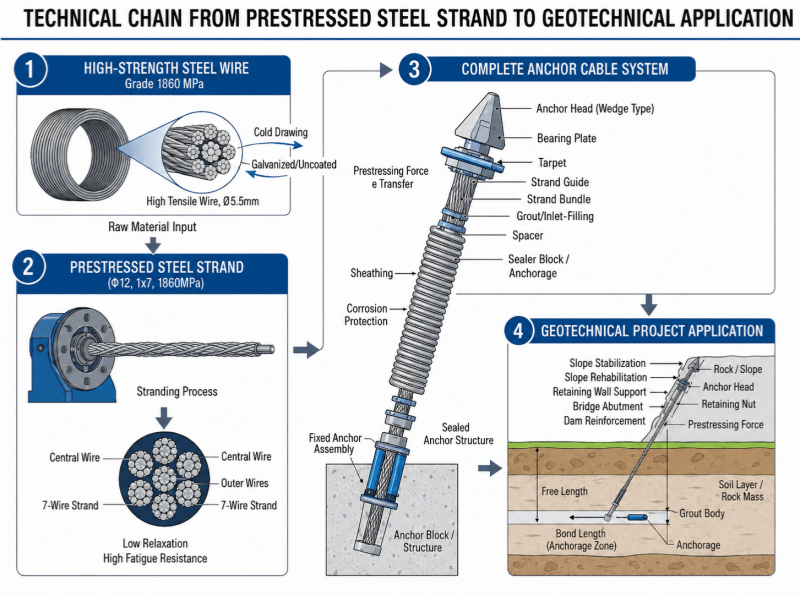
Technical chain from high-strength material to active reinforcement application
In simple terms, prestressed steel strand is the material foundation, and prestressed anchor cable is the engineering support system built around that material.
Low Tensile Capacity, Ground Instability & Long-Term Support Risk
Prestressed anchor cables and prestressed steel strands are widely used to solve engineering problems related to tensile weakness, unstable ground conditions, structural deformation, and long-term support safety. They help transfer prestress into concrete, rock, and soil systems for stronger and more reliable reinforcement.
Low Tensile Capacity in Concrete Structures
Concrete performs well in compression, but its tensile capacity is limited. Prestressed steel strand helps improve structural performance by introducing controlled tensile resistance.
Poor Ground Stability
Rock and soil masses may crack, loosen, or lose stability under load, excavation, or water influence, requiring active reinforcement support.
Slope Instability Risk
Natural and engineered slopes may suffer sliding, collapse, or progressive deformation without reliable anchoring and reinforcement.
Deep Foundation Pit Deformation
Excavation of deep foundation pits may cause wall movement, soil displacement, and surrounding structure risk if support force is insufficient.
Tunnel Surrounding Rock Reinforcement
Tunnel excavation often disturbs surrounding rock, making reinforcement necessary to improve stability and reduce deformation risk.
Long-Term Load-Bearing & Safety Risk
Without durable and stable prestressed reinforcement, engineering structures may face long-term load loss, deformation accumulation, and safety risk.
Why These Problems Need Prestressed Reinforcement
These are the practical engineering reasons why prestressed steel strands and prestressed anchor cable systems are widely used in bridges, slopes, deep foundation pits, tunnels, mining, and water conservancy projects.
How Prestressed Anchor Cables Provide Active Reinforcement
Prestressed anchor cables are installed into stable rock or soil layers and tensioned at the external anchor head. After locking, the prestress is transferred through the free section and bonded anchorage section, applying active compressive force to unstable ground or structures to control deformation and improve stability.
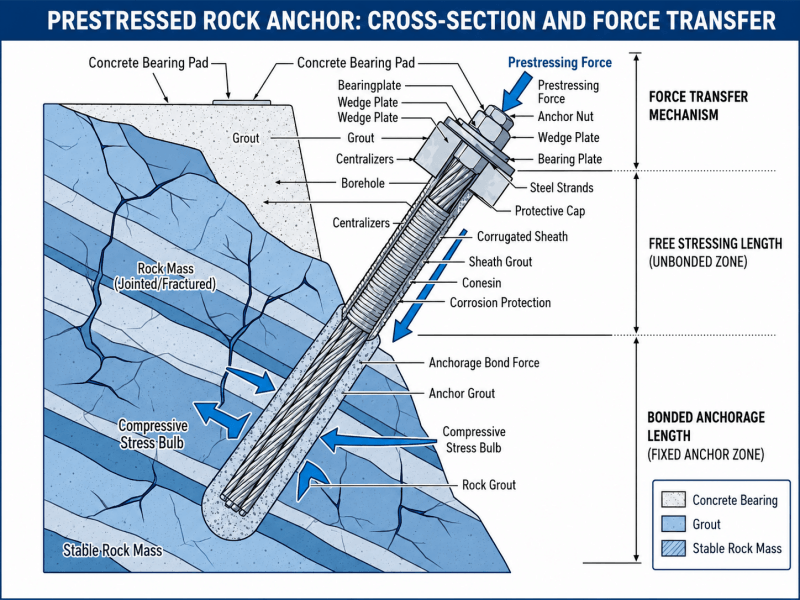
Bonded Anchorage in Stable Ground
The bonded anchorage section is fixed in stable rock or soil through grouting, providing the foundation for load transfer.
Prestress Transfer Through Free Section
The free section allows the steel strand to elongate during tensioning and transfer prestress to the anchorage section.
Tensioning & Locking at Anchor Head
The external anchor head locks the tensioned steel strand and transfers prestress into the supported structure.
Active Compressive Reinforcement
After locking, the anchor cable applies active compressive force to unstable ground, helping control deformation.
Request a detailed technical consultation for your project.
Prestressed Anchor Cable & Steel Strand Solutions
We provide a complete product range from prestressed steel strands to customized prestressed anchor cable systems for bridges, slopes, deep foundation pits, tunnels, water conservancy, and mining reinforcement projects.
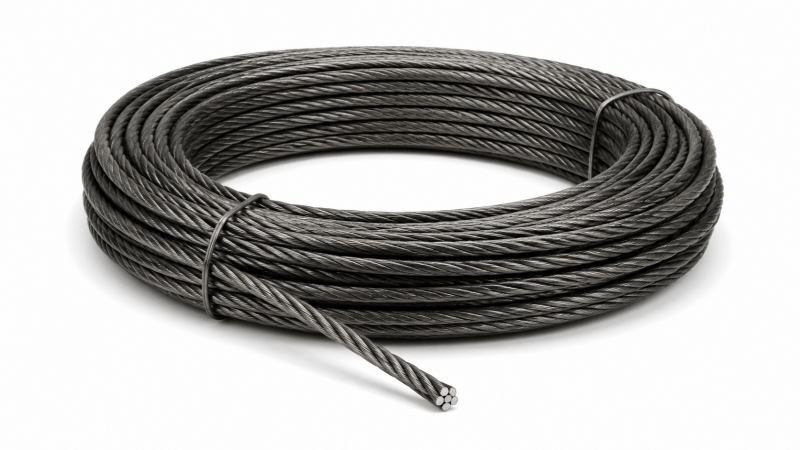
1×7 Standard Prestressed Steel Strand
A widely used standard prestressed steel strand for prestressed concrete, anchor cable manufacturing, bridge structures, and general reinforcement projects.
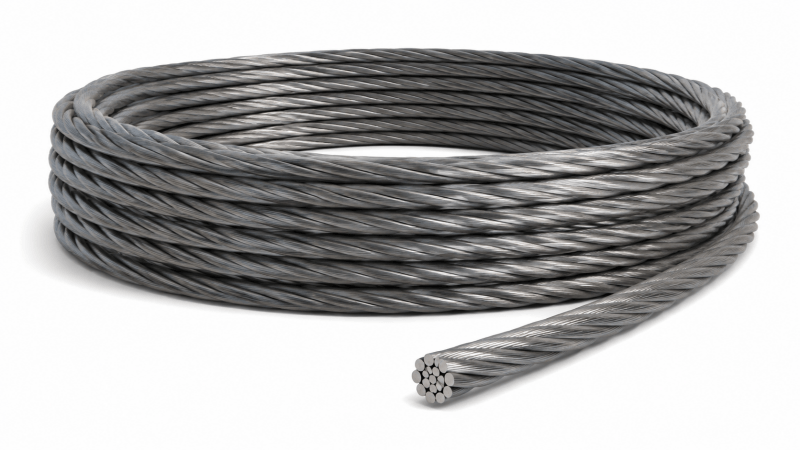
1×19 High-Capacity Prestressed Steel Strand
A high-capacity multi-wire strand solution with stronger load-bearing capability for demanding reinforcement and structural prestressing applications.
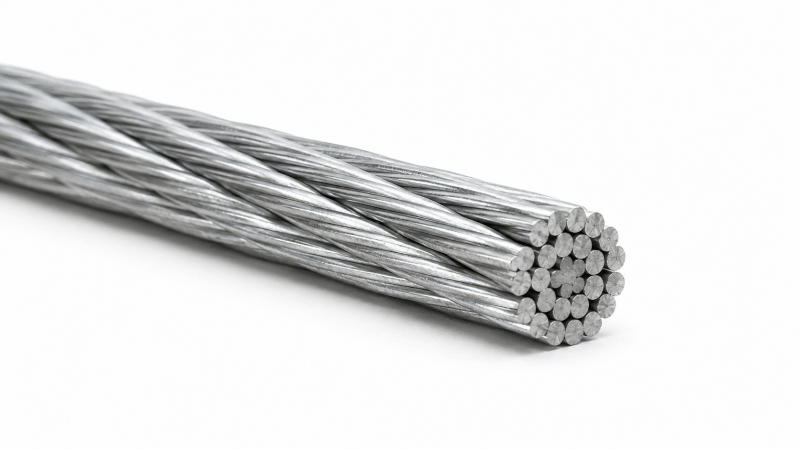
Galvanized Prestressed Steel Strand
Designed for corrosion-resistant reinforcement applications where humid, exposed, or long-term outdoor service conditions are involved.
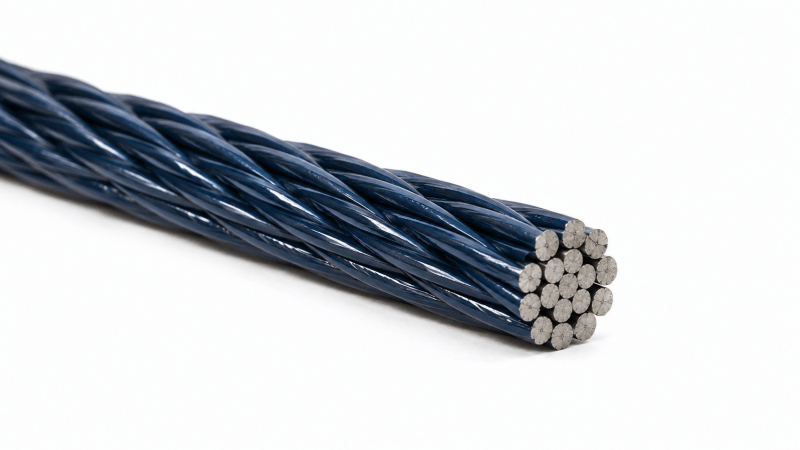
Epoxy Coated Prestressed Steel Strand
A protective prestressed strand option with improved corrosion resistance for harsh engineering environments and long-term durability requirements.
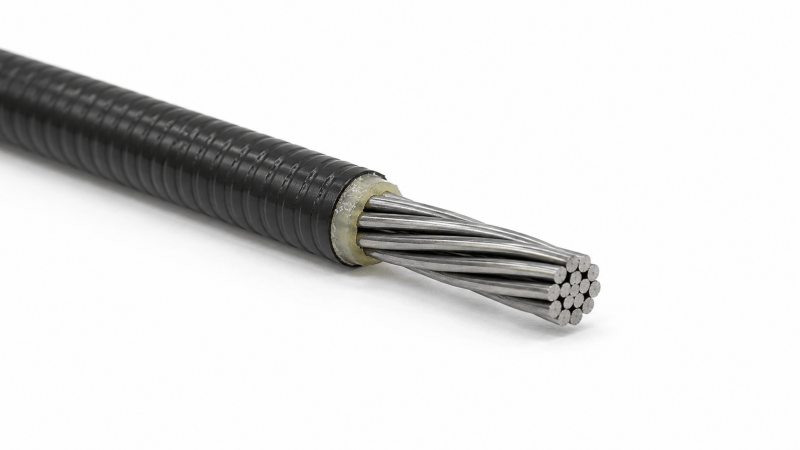
Unbonded Prestressed Steel Strand
A prestressing solution with protective sheathing and grease layer, suitable for applications requiring lower friction and easier force transfer.
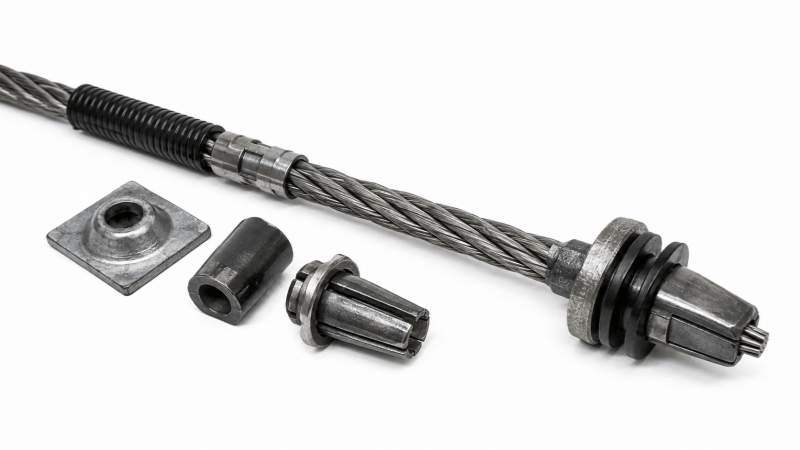
Custom Prestressed Anchor Cable System
A project-based anchor cable system customized with steel strand, anchorage components, and corrosion protection for specific project designs.
Need help choosing the right solution? Send us your application type, required strength grade, or project drawings. Our team can help recommend the right steel strand or anchor cable system.
Prestressed Steel Strand Classification
Prestressed steel strands can be selected by strand structure and surface treatment. Different structures affect load capacity and flexibility, while different surface treatments help meet corrosion resistance and long-term durability requirements.
By Structure Type
1×7 Standard Prestressed Steel Strand
Made with 6 outer wires around 1 center wire. A widely used standard structure with balanced strength and cost performance.
Bridge / Building / Anchor Cable1×19 High-Capacity Prestressed Steel Strand
Made with 18 outer wires around 1 center wire. Designed for higher load-bearing capacity and special structural applications.
Heavy Load / Long Span / Special Structure1×3 Small-Diameter Prestressed Steel Strand
Made with 2 outer wires around 1 center wire. Suitable for smaller components or applications requiring compact strand size.
Small Component / Pipe Reinforcement / PrecastBy Surface Treatment
Plain Prestressed Steel Strand
Standard uncoated strand for dry, low-corrosion, and cost-sensitive conventional engineering environments.
Standard Use / Low CorrosionGalvanized Prestressed Steel Strand
Hot-dip galvanized surface treatment provides basic anti-rust protection for humid or mildly corrosive environments.
Humid Environment / Anti-RustEpoxy Coated Prestressed Steel Strand
Epoxy coating provides higher corrosion resistance for marine, chemical, or harsh long-term service environments.
High Corrosion / Long-Term DurabilityUnbonded Prestressed Steel Strand
Coated with anti-corrosion grease and protected by PE sheathing, suitable for applications requiring no bonding.
Unbonded / PE Sheathed / Re-TensioningFor general prestressed concrete and anchor cable applications, 1×7 steel strand is commonly selected. For higher load projects, 1×19 can be considered. For corrosive environments, galvanized, epoxy coated, or unbonded steel strands should be selected according to service conditions and durability requirements.
Prestressed Anchor Cable Classification
Prestressed anchor cables can be classified by load transfer mechanism and service life. Different anchor systems are designed to match different ground conditions, support goals, and engineering needs.
Tension-Type Anchor Cable
The most commonly used anchor cable type. The bonded section mainly works in tension and is suitable for conventional slope support.
Compression-Type Anchor Cable
Transfers tensile force into compressive force through a bearing body, providing better pull-out resistance in weak ground.
Dispersed Anchor Cable
Anchors steel strands at different positions along the anchorage section to reduce stress concentration and improve distribution.
Recoverable Anchor Cable
Designed for temporary support projects. The steel strand can be recovered after use, helping reduce material waste.
Service Life Classification
Temporary Anchor Cable
Used for short-term support projects, usually within 2 years, such as temporary deep foundation pit support and excavation reinforcement.
Permanent Anchor Cable
Used for long-term reinforcement projects over 2 years, such as slope stabilization, dam reinforcement, and tunnel support.
How to Choose the Right Anchor Cable System?
Core Technical Parameters of Prestressed Steel Strand
Prestressed steel strand specifications should be selected according to required load capacity, structural design, and project application. Key parameters include nominal diameter, strand structure, and strength grade.
| Nominal Diameter | Structure Type | Nominal Area | Strength Grade | Min. Breaking Load | Elastic Modulus | Typical Application |
|---|---|---|---|---|---|---|
| 9.53 mm | 1×7 | 54.8 mm² | 1860 MPa | 99.3 kN | 195±10 GPa | Small precast components |
| 12.70 mm | 1×7 | 98.7 mm² | 1860 MPa | 183.6 kN | 195±10 GPa | Building slabs, small beams |
| 15.20 mm | 1×7 | 139.0 mm² | 1860 MPa | 260.0 kN | 195±10 GPa | Bridges, slope anchor cables |
| 15.20 mm | 1×7 | 139.0 mm² | 1960 MPa | 274.0 kN | 195±10 GPa | Heavy-load slopes, large water projects |
| 17.80 mm | 1×7 | 191.0 mm² | 1860 MPa | 355.3 kN | 195±10 GPa | High-capacity cables, wind power foundations |
Nominal Diameter
Selected according to component size, anchor cable load, and structural reinforcement requirements.
Strength Grade
1860 MPa and 1960 MPa are commonly used strength grades for high-strength applications.
Min. Breaking Load
Reflects the ultimate load-bearing capacity of the steel strand before failure.
Elastic Modulus
Affects elongation calculation, tensioning control, and prestress transfer accuracy.
How to Read These Parameters for Project Selection?
Standard Construction Process for Prestressed Anchor Cable
A reliable system requires controlled installation procedures. From site preparation to final sealing, proper construction ensures anchorage reliability and long-term reinforcement performance.
Site Prep
Clean surface, level site, and prepare stable platform.
Drilling
Borehole drilling according to design position and depth.
Fabrication
Assemble strands, spacers, and protective sheathing.
Installation
Carefully insert the anchor cable into the borehole.
Grouting
Inject cement grout to bond strand with rock or soil.
Tensioning
Apply designed prestress and lock anchor head.
Sealing
Final concrete sealing for long-term protection.
Key Construction Control Points
Borehole Accuracy: Precise position, depth, and inclination match project design.
Grouting Density: Quality directly affects bonded anchorage strength.
Tensioning Control: Calibrated equipment and staged checks ensure design force.
Need Installation or Technical Support for Your Project?
Quality Control & Acceptance Standards
Prestressed anchor cable performance depends on both product quality and construction quality. Key acceptance items include borehole accuracy, steel strand mechanical properties, and long-term prestress loss monitoring.
| Inspection Item | Acceptance Standard | Testing Method | Why It Matters |
|---|---|---|---|
| Hole Position Deviation | ≤50 mm | Total station measurement | Ensures anchor cable position matches design. |
| Inclination Deviation | ≤1.0° | Inclinometer measurement | Controls force alignment and direction. |
| Steel Strand Properties | GB/T 5224 requirements | Sampling inspection | Confirms material load-bearing reliability. |
| Grouting Body Strength | ≥30 MPa | Test block testing | Ensures bonded anchorage strength. |
| Pull-Out Test | 1.5x Design Load | On-site test | Verifies actual anchorage capacity. |
| Locking Shrinkage | ≤1 mm | Displacement check | Checks stability after tensioning. |
| Prestress Loss | ≤5% (24h) | Monitoring device | Confirms long-term support reliability. |
Borehole Accuracy Control
Hole position, depth, and inclination affect anchor installation, grouting quality, and load transfer direction.
Steel Strand Batch Inspection
Mechanical properties such as tensile strength and elongation should be checked before every use.
Grouting Strength Verification
Grouting body strength directly affects bonded anchorage capacity and overall structural stability.
Quality Control Support for Project Orders
Where Prestressed Anchor Cables & Steel Strands Are Used
Our solutions are widely used in structural prestressing, geotechnical anchorage, and large-scale infrastructure reinforcement across diverse engineering sectors.
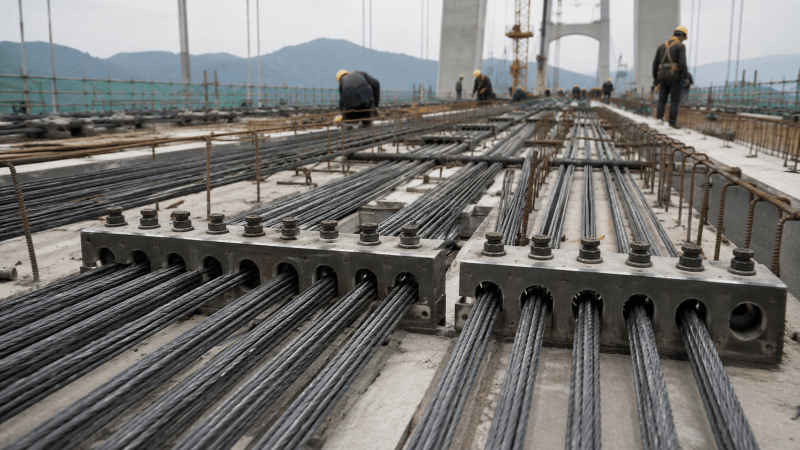
Bridge Engineering
Used in box girders, T-beams, and long-span bridge components.
High-strength tensile material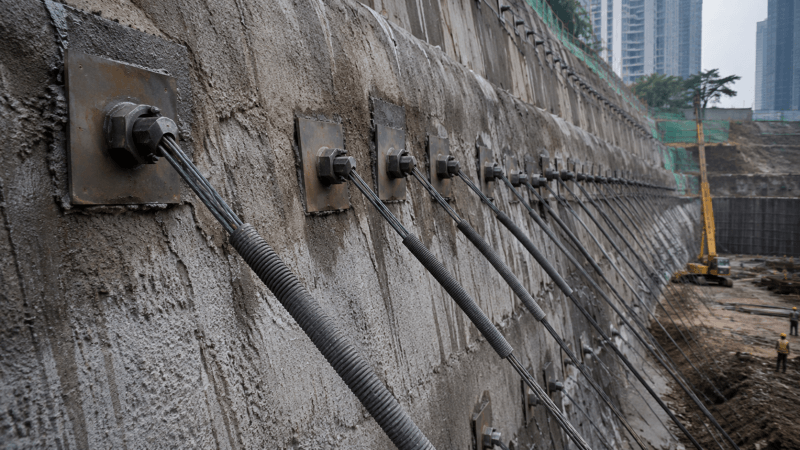
Geotechnical Anchorage
Applied for slope support, foundation pit anchorage, and rock-soil reinforcement.
Active rock and soil stability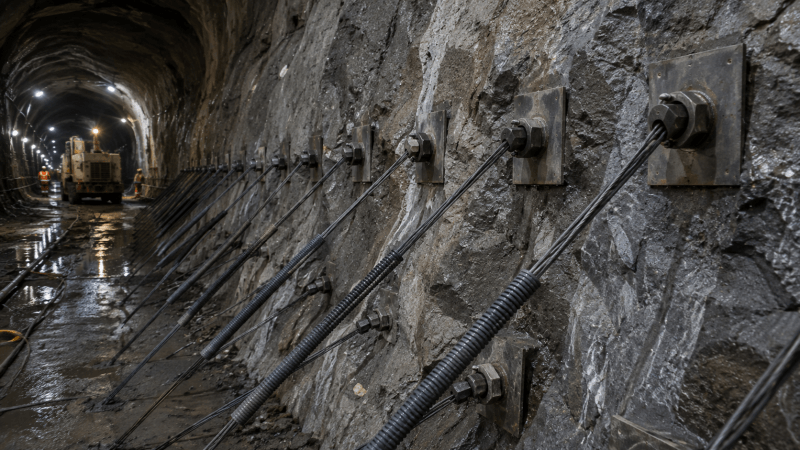
Mining & Infrastructure
Used in roadway reinforcement, dam projects, and high-load nuclear power structures.
High-load special reinforcement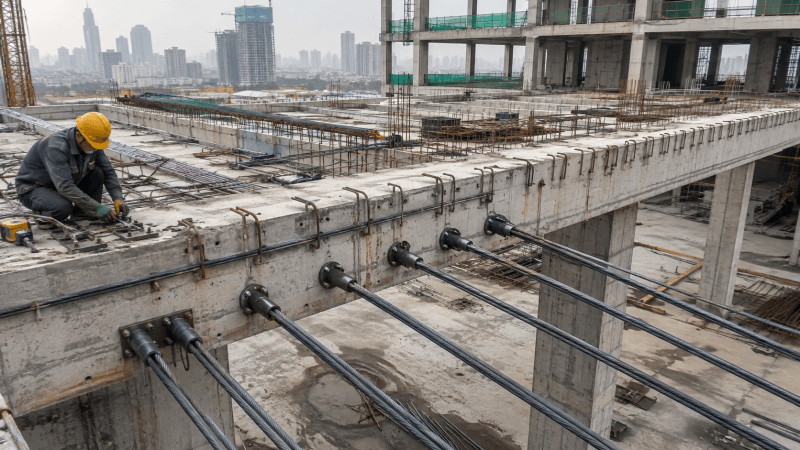
Building Engineering
Used in large-span factory beams, high-rise slabs, and prestressed concrete structures.
Structural span & load performance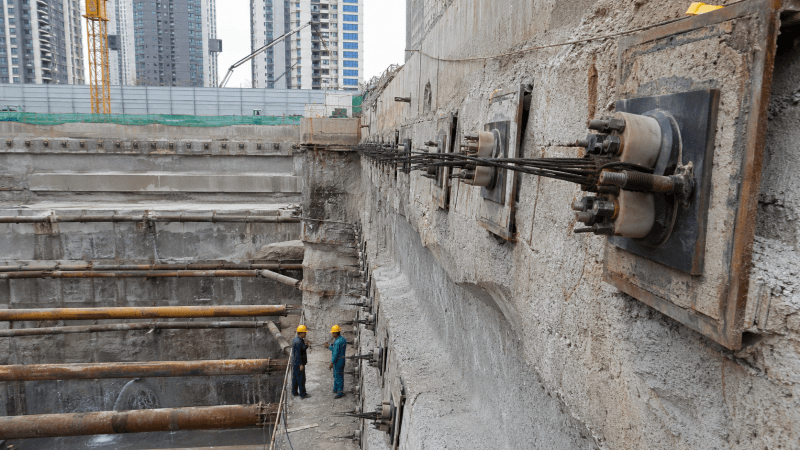
Deep Foundation Pit Support
Controls retaining wall movement and soil deformation in urban deep excavations.
Reliable anchorage support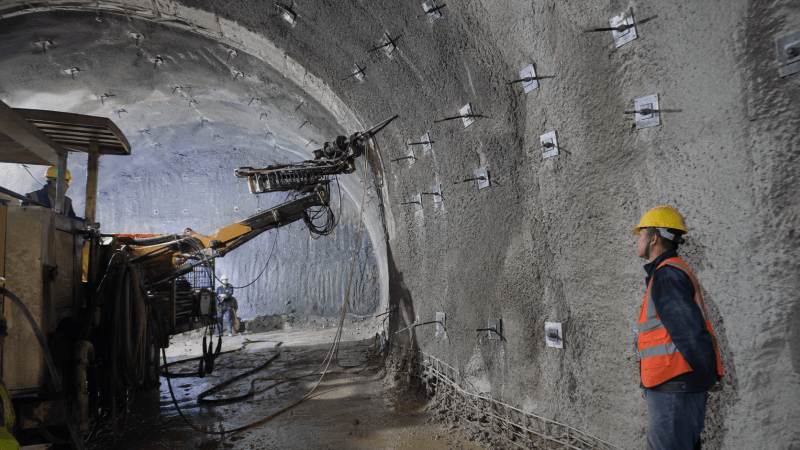
Tunnel & Underground Support
Improves surrounding rock stability and controls deformation after excavation.
Active underground reinforcementDifferent Projects Require Different Prestressed Solutions
Standards & Compliance Support
Prestressed steel strands and anchor cable systems are used in safety-critical projects. Selection, testing, and construction follow rigorous material and industry-specific standards.
Steel Strand Material Standards
Prestressing Steel Strand for Concrete
Covers material requirements, mechanical properties, and quality control inspection.
Large-Diameter High-Strength Strand
Specialized requirements for high-capacity, low-relaxation prestressed strand applications.
Geotechnical & Slope Engineering
Code for Building Slope Engineering
Technical specifications for slope stabilization and building support reinforcement.
Rock and Soil Anchorage Support
Comprehensive code for rock-soil anchoring and shotcrete-supported projects.
Need Technical Documents for Your Project?
Anti-Corrosion, Smart Monitoring & Green Construction
For demanding geotechnical projects, we provide advanced upgrades including corrosion protection, smart monitoring systems, and project-based customization.
Advanced Anti-Corrosion
Options include galvanized strand, epoxy coating, and PE/PVC sheathing for harsh environments.
High-Strength Selection
Higher grades and larger-diameter strands for heavy-load slopes and wind power foundations.
Smart Anchor Monitoring
Integrated sensing technology to track anchor force and long-term support condition.
Project-Based Custom Manufacturing
Custom Specifications
Diameter, strength grade, and surface treatment matched to project needs.
System Matching
Anchor head components, free section, and guide caps matched to design.
Corrosion Design
Full encapsulated systems selected according to service environment.
Project Documents
Technical parameters, batch info, and inspection communication support.
Need a Customized Prestressed Solution for Your Project?
Get Custom Prestressed Anchor Cable & Steel Strand Solutions from China Factory
Send us your project requirements, steel strand specification, or technical drawings. We help recommend suitable prestressed solutions for your engineering project.
-
Factory-Direct Supply
Stable manufacturing support for strands, components, and reinforcement solutions.
-
Custom Specification
Diameter, strength grade, anchorage length, and corrosion protection customization.
-
Engineering Selection
Professional matching of system structures based on your specific project conditions.
-
Quality Control
Full support for batch inspection, test reports, and compliance documentation.
Request Direct Factory Quotation
Connect directly with our engineering team to get custom-designed solutions that minimize downtime and cut procurement costs.