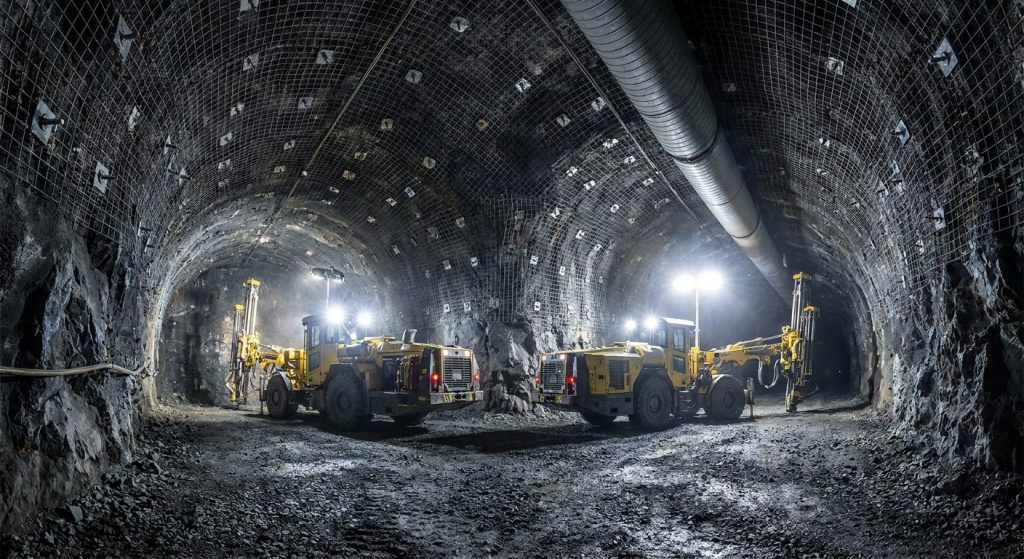
A tunnel rock bolt is a high-tensile steel reinforcing rod specifically designed to stabilize underground excavations by anchoring fractured or weak rock strata back into a competent rock mass. In modern tunneling and underground mining, ground instability and structural failures represent major geotechnical hazards that threaten both worker safety and project timelines. Relying solely on passive concrete linings or waiting for geological settling to occur can lead to catastrophic cave-ins, expensive equipment damage, and massive project delays. By installing active and passive anchoring systems at the active face, engineering teams can create a unified, self-supporting rock arch that ensures a safe working environment and highly predictable excavation cycles.
Why is rock bolting essential in modern tunneling?
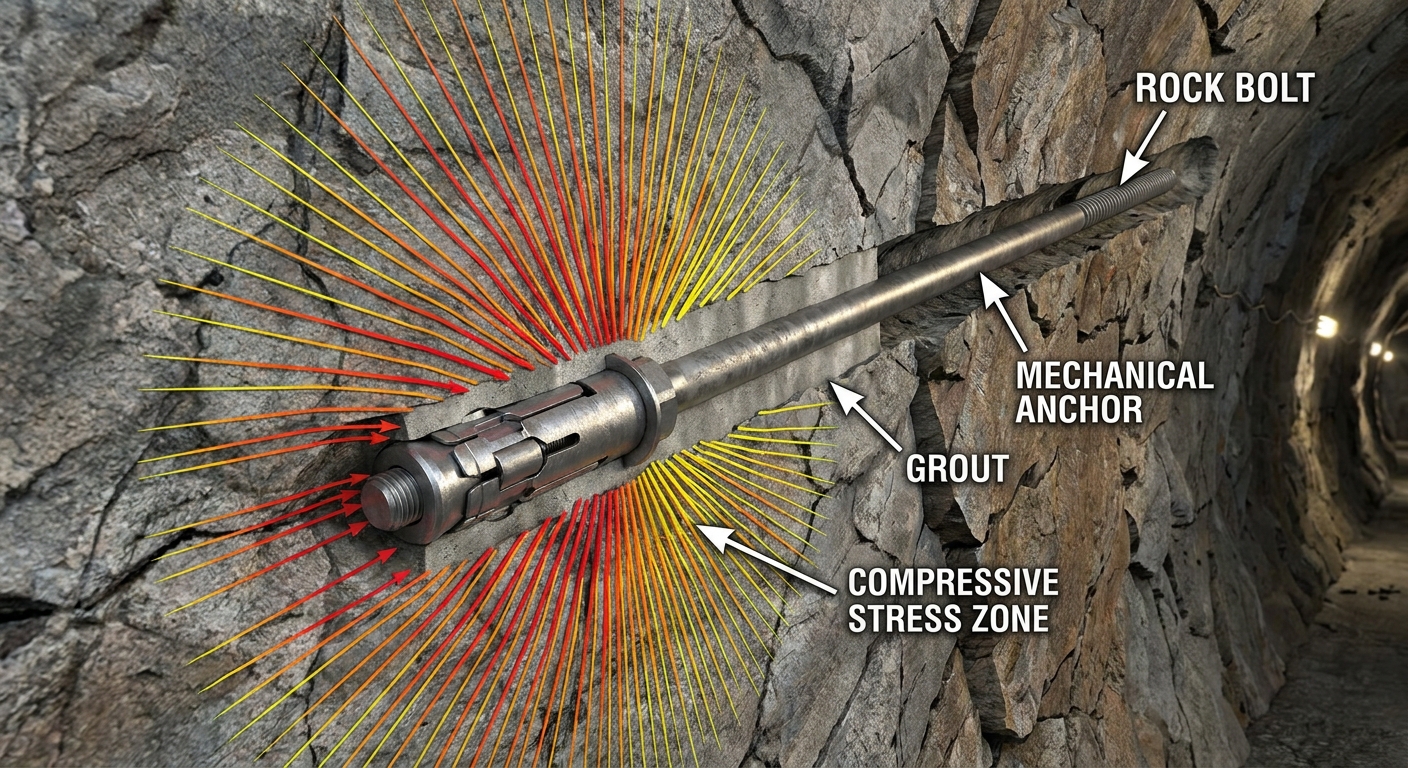
Rock bolting is essential because it actively stabilizes fractured rock masses by transferring structural loads from the unstable tunnel face deep into the competent rock mass. Utilizing a high-capacity tunnel rock bolt ensures immediate safety during excavation, prevents hazardous roof falls, and minimizes the need for heavy, expensive passive steel ribs. This active reinforcement allows modern engineering projects to progress safely and efficiently through diverse geological formations.
How do these bolts actually reinforce tunnel roofs?
Here is the thing: when you install these structural elements, you are not just hanging dead weight; you are actively binding loose rock blocks together to create a rigid, self-supporting beam. This system prevents localized block fallout and manages the overall ground deformation behavior.
- Suspension Effect: Binds thin, weak immediate roof layers to stable, deep rock strata.
- Friction Effect: Generates clamping force across joints to prevent relative sliding between rock blocks.
- Arching Effect: Creates a continuous compressive zone within the rock mass using multiple closely-spaced bolts.
Key Takeaway: The primary engineering value of the rock bolt is its ability to transform unstable, jointed ground into its own load-bearing support structure.
| Reinforcement Mechanism | Primary Function | Ideal Geological Condition | |
|---|---|---|---|
| Suspension | Transfers load to deep stable rock | Laminated rock with solid upper strata | |
| Friction / Clamping | Prevents joint slippage and movement | Highly jointed, blocky rock formations | |
| Arching / Beam Building | Creates a monolithic compression zone | Weak, thin-bedded strata |
The data above highlights how distinct stress zones are engineered to sustain heavy ground loads. See MSHA guidance.
What is a mechanical expansion shell bolt?
A mechanical expansion shell bolt is an active support system that secures itself immediately using a metallic wedge sleeve that expands against the borehole wall. As a primary type of tunnel rock bolt, this assembly provides immediate point-anchorage tension, making it ideal for hard rock formations where instant stability is required before grouting. The mechanical wedging action ensures the bolt holds high loads immediately upon installation.
Why choose mechanical bolts over other options?
Think about it: when you are dealing with rapid excavation cycles in hard rock, you cannot afford to wait hours for resin or cement grout to fully cure. You need immediate structural response to proceed with drilling and blasting.
- Immediate Tensioning: Achieves high design loads immediately after mechanical expansion.
- Point Anchorage: Provides localized heavy clamping forces at the deep end of the borehole.
- Industrial Synergy: Integrates seamlessly with continuous mucking setups including robust conveyor return rollers for debris handling.
Key Takeaway: Mechanical expansion bolts offer unmatched speed for temporary and active immediate support, though they require stable rock to grip effectively.
| Mechanical Feature | Specification | Engineering Benefit | |
|---|---|---|---|
| Anchorage Type | Point-anchored wedge sleeve | Instant load bearing | |
| Installation Time | < 3 minutes per bolt | High excavation advance rate | |
| Grouting Requirement | Optional (for permanent corrosion resistance) | Highly adaptable to wet conditions |
These specifications demonstrate the high immediate load capacity that mechanical bolts achieve in solid strata.
How do friction stabilizers support tunnels?
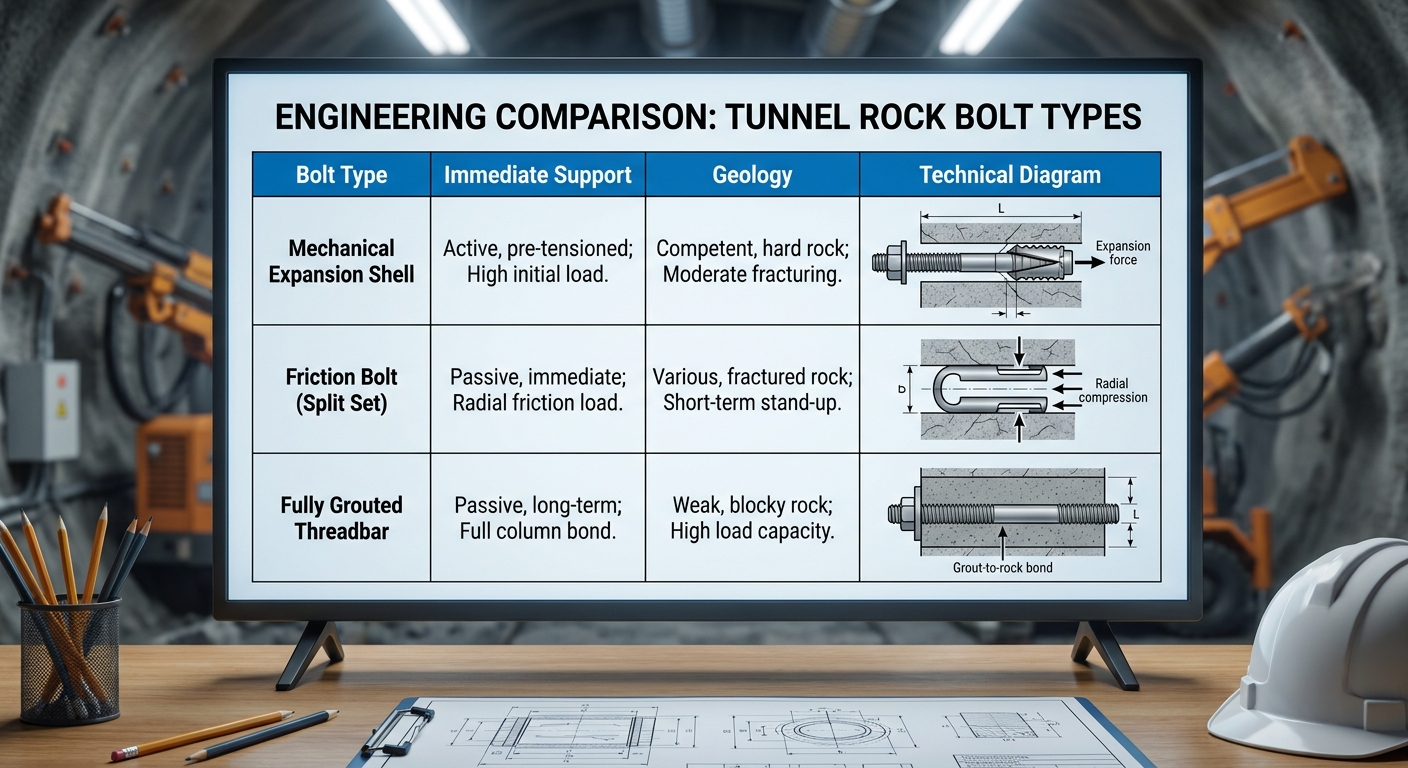
Friction stabilizers support tunnels by exerting continuous radial pressure against the borehole wall through an oversized steel tube forced into a smaller hole. This highly flexible tunnel rock bolt type, commonly known as a Split Set or Swellex, adapts perfectly to ground convergence and geological shifts, absorbing significant rock deformations without failing. The friction created along the entire length of the tube provides immediate dynamic support.
Which geological conditions suit friction bolts?
Let me explain: when you are tunneling through highly fractured, squeezing ground, you need a dynamic support system that yields with ground movements rather than snapping under sudden load spikes. Friction bolts provide that continuous yielding capability.
- Full-Length Friction: Secures the rock mass along the entire drilled length of the steel tube.
- Dynamic Yielding: Allows slight slipping under heavy loads, redistributing stresses safely without bolt failure.
- Fast Installation: Simple percussion hammer driving or hydraulic expansion makes installation incredibly fast.
Key Takeaway: Friction stabilizers are the go-to solution for dynamic, squeezing, or seismically active environments where rock deformation is inevitable.
| Stabilizer Type | Operating Method | Yield Capacity | |
|---|---|---|---|
| Split Set (Friction) | Mechanical percussion into undersized hole | Moderate yielding capability | |
| Swellex (Hydraulic) | High-pressure water expansion in borehole | High load capacity and yielding | |
| Self-Locking Bolt | Rotational mechanical locking | High immediate axial resistance |
The matrix indicates how radial expansion pressure directly correlates to overall holding capacity across variable rock qualities.
What are fully grouted threadbar rock bolts?
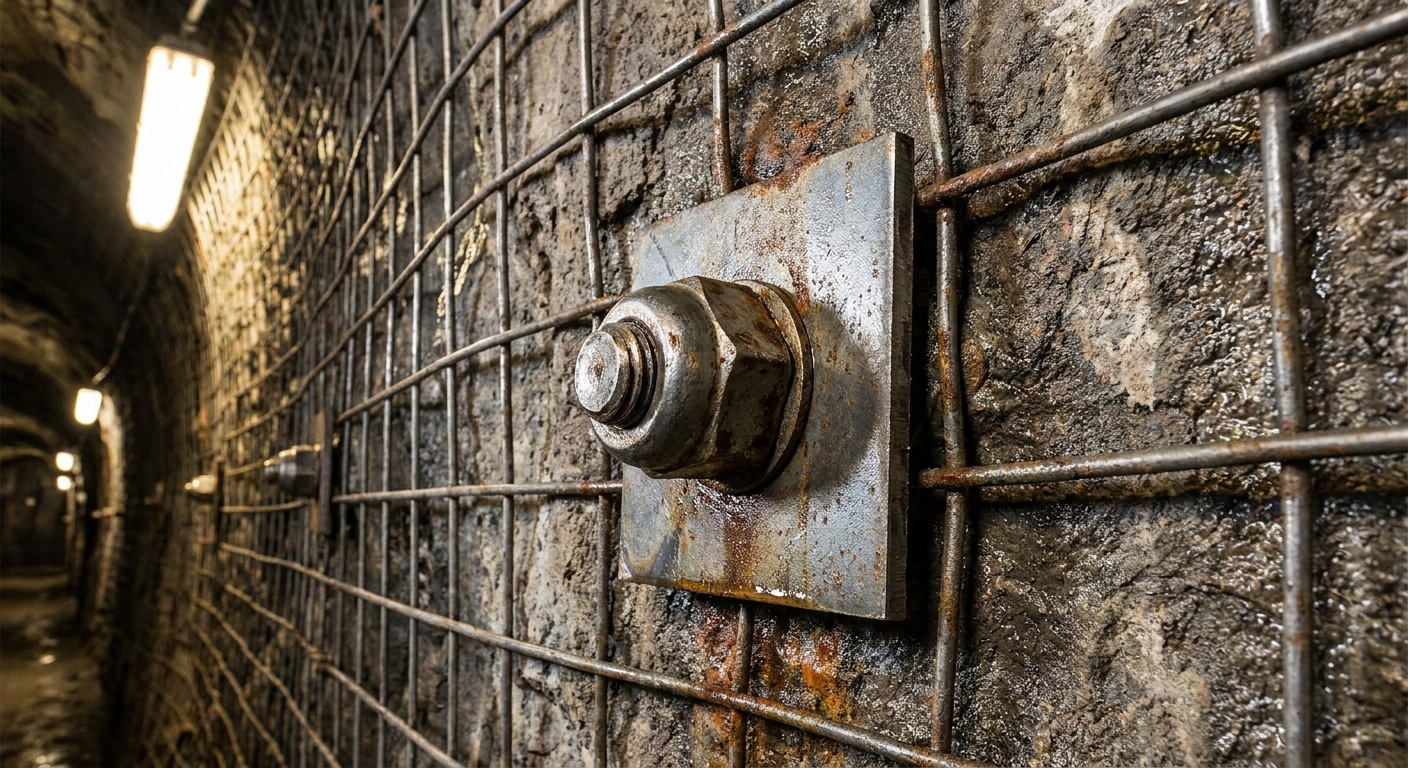
Fully grouted threadbar rock bolts are passive reinforcing steel elements completely encased in cementitious grout or fast-curing chemical resin. This robust tunnel rock bolt type forms a continuous bond with the surrounding rock mass, providing long-term structural stabilization and excellent load-transfer capabilities for high-stress underground applications. Unlike point-anchored systems, they reinforce the rock over the entire length of the bar once the grout has set.
How do cement and resin grouts compare here?
What does this mean for you? When you specify the grouting medium, you are directly trading off curing speed against long-term material cost and handling complexity.
- Resin Cartridges: Provide ultra-fast curing (under 60 seconds) for immediate load transfer and rapid face cycle times.
- Cement Grout: Offers highly economical, high-strength protection for deep permanent anchors with superior corrosion shielding.
- Conveyor Operations: Cured installations maintain safe, stable roof conditions above material haulage paths equipped with durable conveyor idlers .
Key Takeaway: Fully grouted threadbars provide exceptional permanent support, with resin suited for rapid development and cement for long-life infrastructure.
| Grouting Medium | Curing Speed | Cost Profile | Durability / Lifespan | |
|---|---|---|---|---|
| Polyester Resin | Fast (1 – 5 mins) | Higher | Excellent in stable dry ground | |
| Portland Cement | Slow (12 – 24 hours) | Low | Superior long-term corrosion resistance | |
| Hybrid Resin | Medium (5 – 15 mins) | Premium | Excellent in fractured ground |
This analytical comparison assists project engineers in balancing cost-efficiency with operational installation speed.
How does self-drilling anchor technology work?
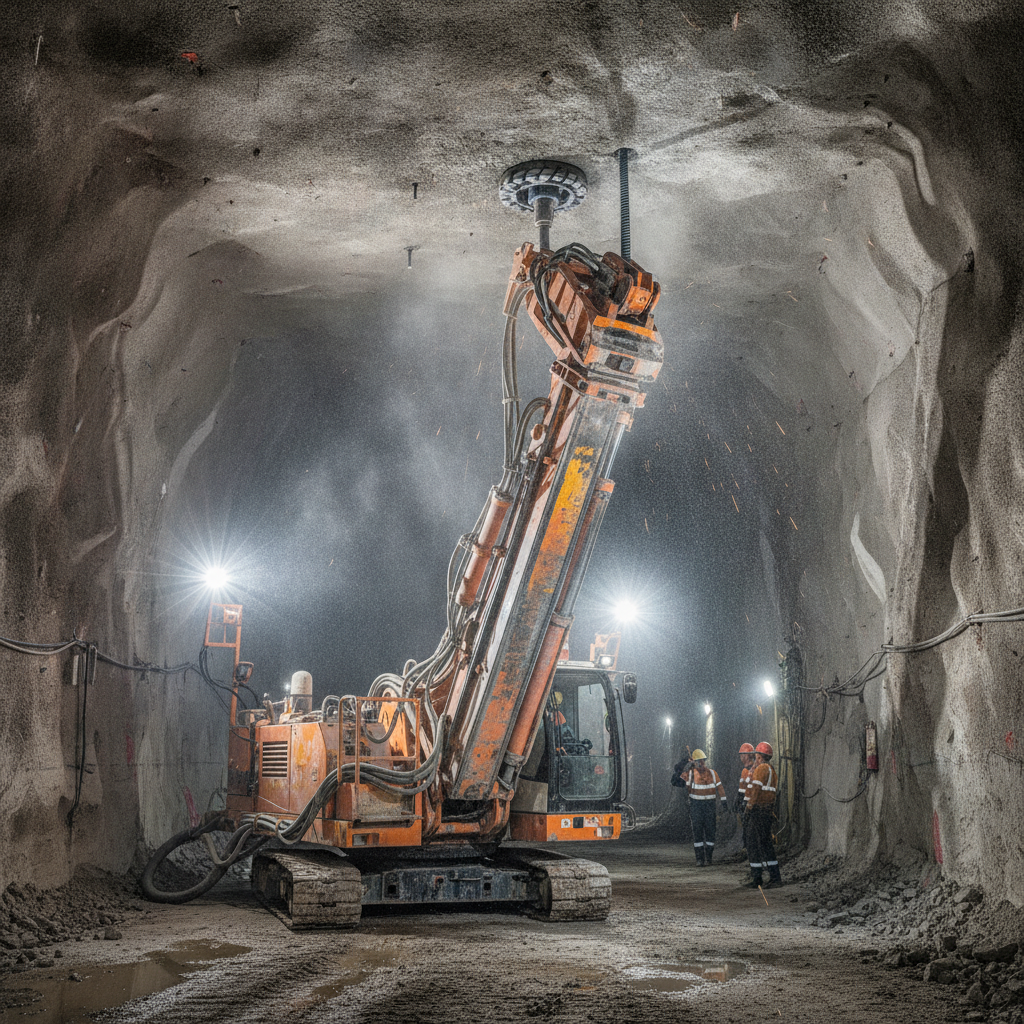
Self-drilling anchor technology works by utilizing a hollow, fully-threaded steel bar that performs the drilling, flushing, and grouting processes in a single continuous operation. This innovative tunnel rock bolt style eliminates the risk of borehole collapse in loose, loose-flowing, or highly unstable soils, allowing for rapid and safe installation without a separate casing. The hollow bore serves as both a flushing channel during drilling and a conduit for grout injection.
When should you deploy self-drilling bolts?
Look at the facts: when you work in highly weathered or water-bearing formations, traditional drilling leaves you with collapsed holes that make bolt insertion impossible. Self-drilling anchors solve this issue entirely.
- One-Step Operation: Combines drilling, placing, and grouting to maximize tunnel progress speeds.
- No Borehole Collapse: The drill rod remains in the hole as the structural bolt, ensuring zero lost holes.
- Sacrificial Bits: Utilizes specialized steel or tungsten carbide bits designed to cut through soil, sand, or hard rock.
Key Takeaway: Self-drilling anchors are the ultimate engineering solution for extremely poor, collapsible ground conditions where conventional rock bolting fails.
| Parameter | Standard Hollow Bar | High-Capacity Hollow Bar | |
|---|---|---|---|
| Outer Diameter | 32 mm to 51 mm | 76 mm to 135 mm | |
| Ultimate Load Capacity | 220 kN to 800 kN | 1200 kN to 3200 kN | |
| Thread Type | R-thread / T-thread | Specialized Trapezoidal rope thread |
Evaluating these parameters reveals the structural feasibility of hollow bars in challenging, non-cohesive soils.
What is the purpose of rock bolt pull testing?
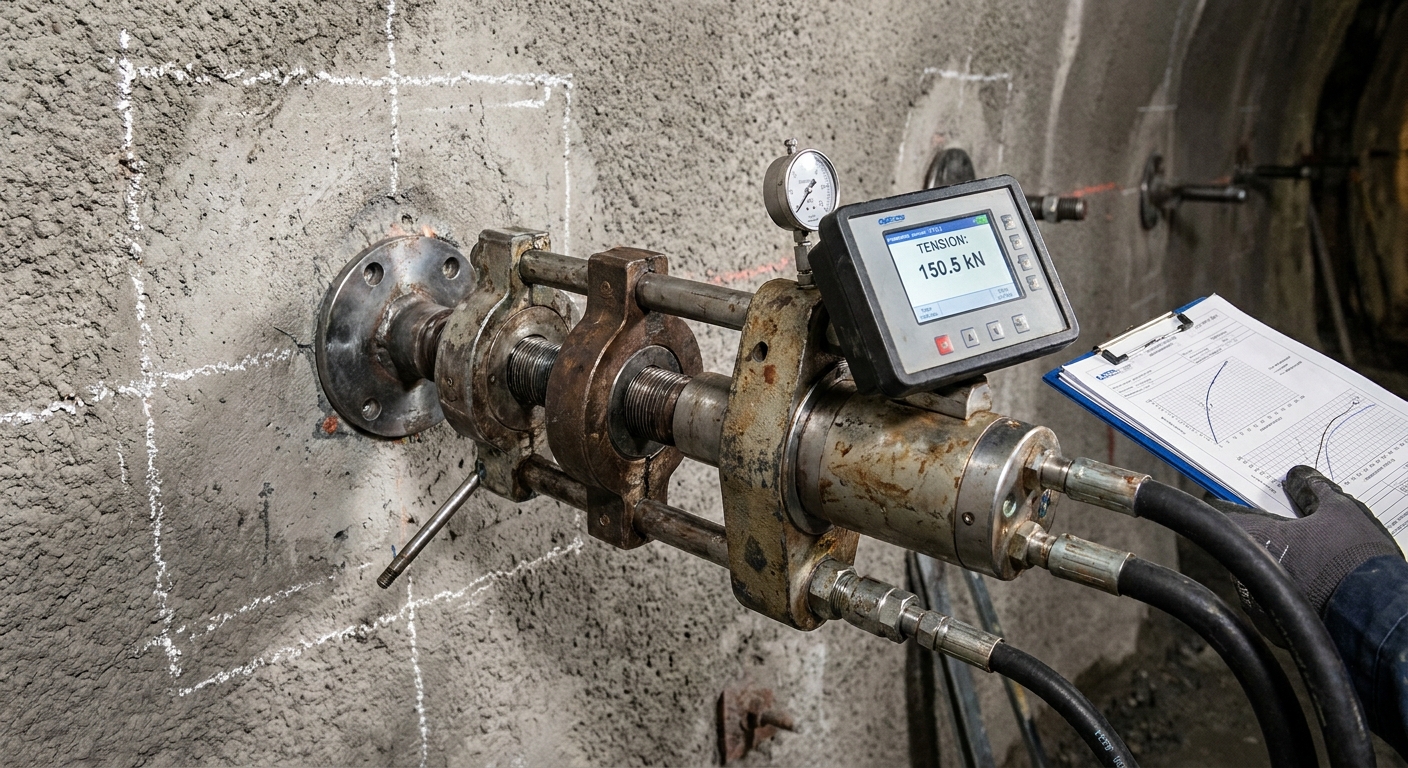
The purpose of rock bolt pull testing is to verify the ultimate tensile load-bearing capacity and anchorage quality of installed support elements under real field conditions. Conducting these non-destructive or destructive tests ensures each tunnel rock bolt complies with safety standards, validating that the grout-to-rock bond can withstand the design load limits. Regular pull testing is a cornerstone of quality control in tunneling infrastructure.
How do you perform a proper rock bolt pull test?
But that’s not all: when you conduct these quality assurance procedures, you must carefully monitor both the applied hydraulic pressure and the corresponding displacement. This data determines whether the anchorage has achieved the required geotechnical shear strength.
- Equipment Setup: Align a center-hole hydraulic jack over the exposed bolt thread and secure it to the bearing plate.
- Incremental Load Application: Pump hydraulic pressure in steps while reading the load cell or pressure gauge.
- Displacement Monitoring: Record structural elongation to identify premature slippage or grout failure before design load.
- Material Protection: Keep surrounding material handling systems, including those riding on heavy-duty troughing idlers , clear of the test area to prevent vibration interference.
Key Takeaway: Pull testing is the critical validation gate that confirms the mechanical integrity and installation quality of your tunnel support system.
| Test Parameter | Target Value | Pass/Fail Criteria | |
|---|---|---|---|
| Proof Load | 1.2x to 1.5x of design load | Bolt must hold without slipping | |
| Displacement Limit | < 5 mm at design load | Exceeding suggests poor grout bonding | |
| Test Frequency | 1% to 3% of total installed bolts | Mandatory compliance standard |
These safety criteria establish the baseline for confirming the structural performance of anchors under extreme geological loads.
How do rock bolts integrate with steel arches?
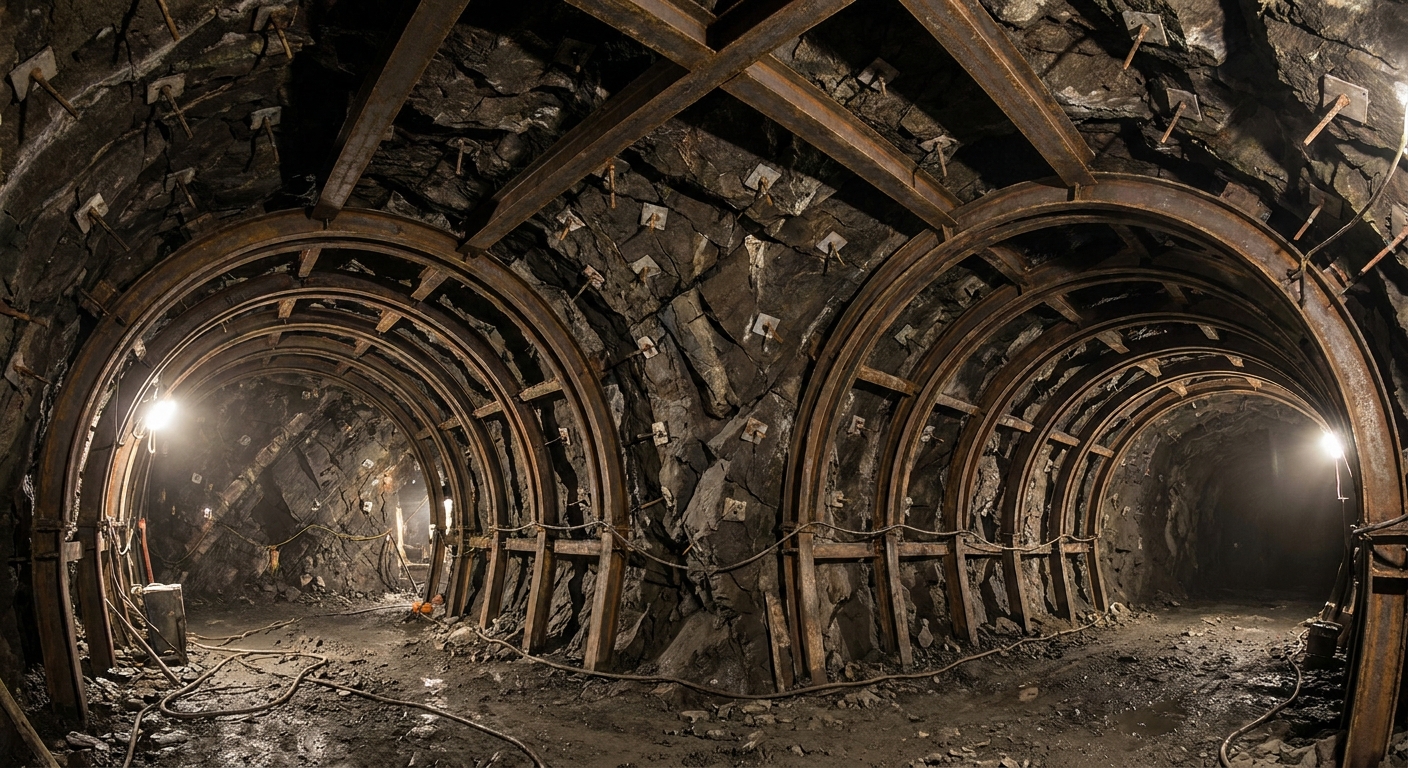
Rock bolts integrate with steel arches by securing the heavy structural steel frames directly to the excavated rock face, creating a combined active-passive reinforcement system. This integration allows the tunnel rock bolt array to pin the lining system, preventing the arches from shifting or buckling under localized geological stresses or sudden blasting vibrations. The unified system is highly effective in dealing with heavy, non-homogeneous rock loads.
When is a combined support system required?
You see: when you encounter highly fault-damaged zones or massive portal areas, a single support type simply cannot withstand the multi-axial tectonic forces. A combined system bridges the gap between active surface control and deep anchoring.
- Load Redistribution: Steel arches handle immediate peripheral bending stresses while bolts transfer radial loads deep into the rock.
- Pre-Tensioned Unity: Bolting through connection plates on steel ribs mechanically clamps the steel frame to the tunnel profile.
- Deformation Control: Dramatically reduces structural convergence in high-stress squeezing ground.
Key Takeaway: Combining steel arches with rock bolts provides a highly redundant, heavy-duty support system necessary for fault zones and portals.
| Support Component | Active vs. Passive | Structural Strength Contribution | |
|---|---|---|---|
| Rock Bolt | Active (deep anchor) | High radial tensile strength | |
| Steel Arch | Passive (surface rib) | Superior resistance to bending and buckling | |
| Shotcrete Layer | Passive (conforming skin) | Excellent shear capacity over joint boundaries |
The data below underscores how combining active and passive technologies maximizes safety factor margins in highly unstable rock.
Why is corrosion protection vital for rock bolts?
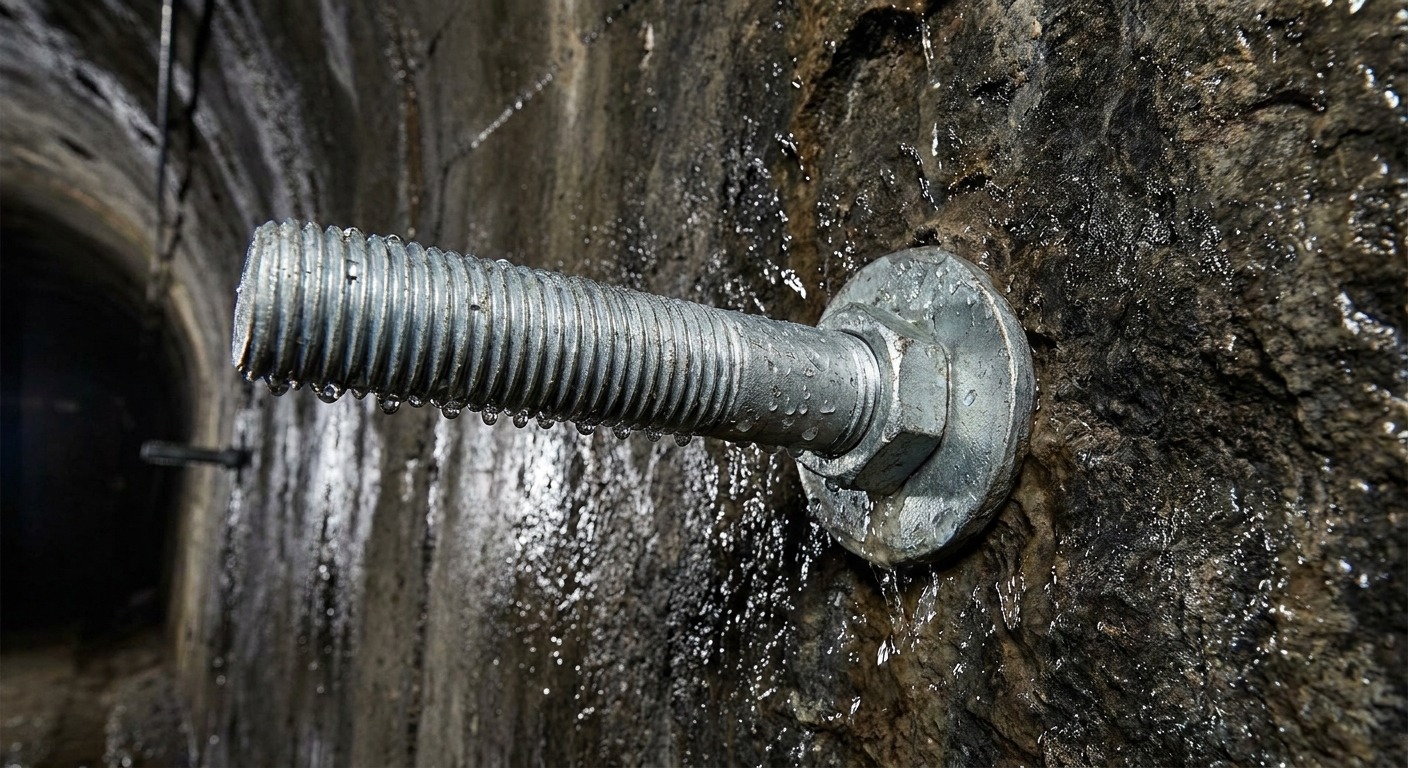
Corrosion protection is vital for rock bolts because acidic groundwater, warm temperatures, and humid underground air quickly degrade raw steel, compromising the structural safety of the tunnel. Selecting a pre-protected tunnel rock bolt ensures that the reinforcement system retains its full engineering capacity over the designated life span of the civil infrastructure. Unprotected steel can suffer from localized pitting or hydrogen embrittlement, leading to sudden, unannounced failures.
What are the best corrosion protection coatings?
Let’s look closer: when you are designing a permanent subsea or transit tunnel with a 100-year life expectancy, you must deploy multiple barriers against moisture. Choosing the right coating determines the structural survival of the tunnel lining.
- Hot-Dip Galvanizing: Provides excellent sacrificial zinc protection that survives mechanical scrapes during handling and installation.
- Epoxy Coating: Creates a highly durable, chemically inert barrier against aggressive chloride-rich groundwater.
- Double Corrosion Protection (DCP): Combines a corrugated plastic sheath with internal grout encapsulation for maximum security.
Key Takeaway: Selecting the right corrosion barrier is critical to preventing catastrophic, invisible failures of rock reinforcement over long project lifespans.
| Protection System | Cost Factor | Service Life | Ideal Environment | |
|---|---|---|---|---|
| Bare Steel | Low | < 2 years | Temporary development tunnels | |
| Hot-Dip Galvanized | Moderate | 20 – 50 years | Moderate humidity, low acidity | |
| Double Corrosion (DCP) | High | 100+ years | Highly aggressive subsea / permanent civil tunnels |
This analysis helps engineering specifiers select optimal surface coatings based on environmental corrosivity classes.
How does rock bolting influence tunnel design?
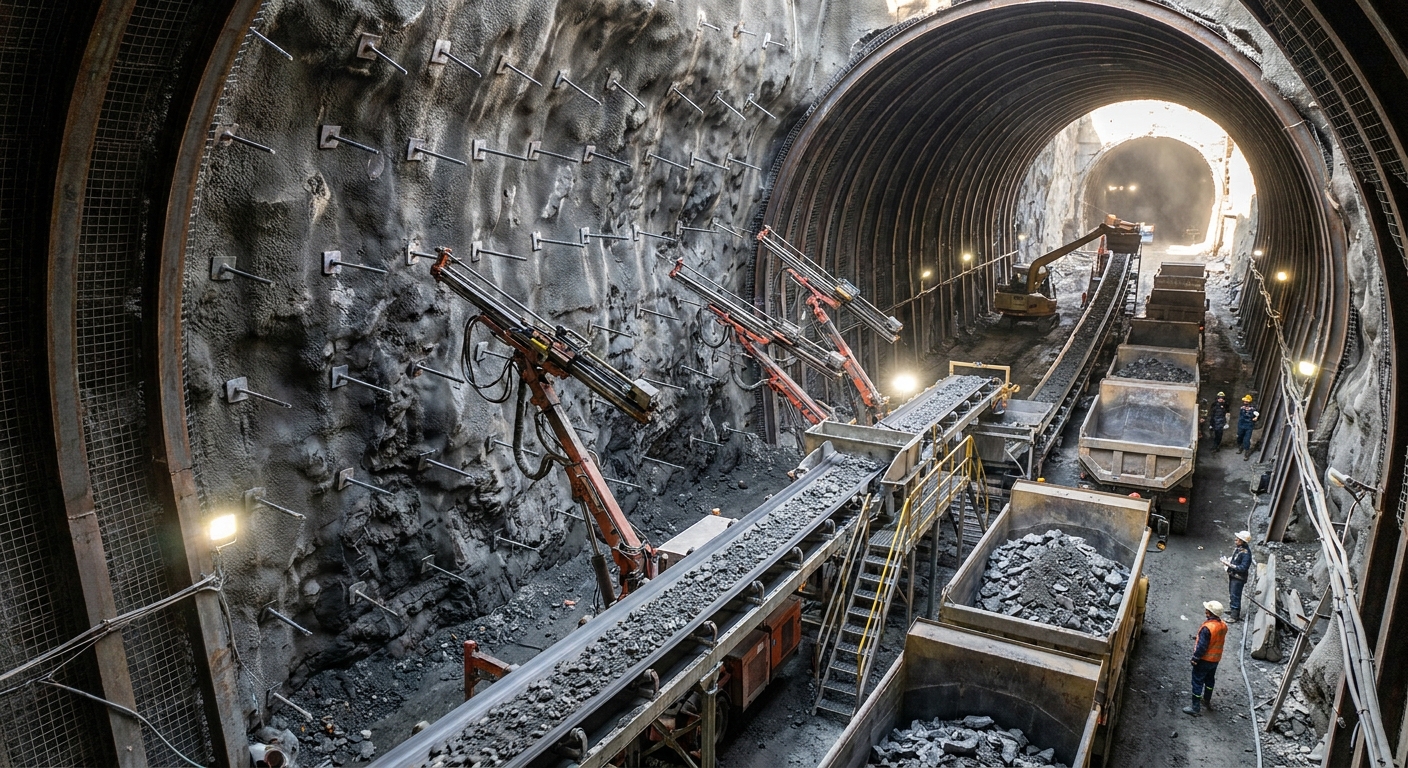
Rock bolting influences tunnel design by allowing modern engineers to reduce the required thickness of permanent concrete linings through the optimization of the rock’s natural load-bearing capacity. Integrating a targeted tunnel rock bolt pattern into the initial structural model allows for lighter, safer, and much more cost-effective excavation designs, aligning perfectly with New Austrian Tunneling Method (NATM) principles.
How do you calculate optimal rock bolt spacing?
Guess what? When you calculate spacing patterns using RMR (Rock Mass Rating) or Q-system indices, even a tiny deviation in spacing can significantly impact overall safety. Proper calculation balances safety factors with installation cost.
- Joint Density Analysis: Dictates whether a systematic grid or highly localized spot-bolting is needed.
- Bolt Length Selection: Typically calculated as 2 to 3 times the thickness of unstable jointed blocks, or 0.3 times the tunnel span.
- Finite Element Analysis (FEA): Simulates rock mass relaxation and models rock bolt load-bearing capacities under stress.
Key Takeaway: Optimizing rock bolt spacing patterns balances maximum safety with substantial savings in material and labor costs.
| Geotechnical Class (RMR) | Recommended Spacing | Recommended Bolt Length | |
|---|---|---|---|
| Class II (Good Rock) | Spot bolting / > 2.5 m grid | 2.0 m to 3.0 m | |
| Class III (Fair Rock) | 1.5 m to 2.0 m grid | 3.0 m to 4.0 m | |
| Class IV (Poor Rock) | 1.0 m to 1.5 m grid | 4.0 m to 6.0 m |
The spacing guidelines shown highlight how geotechnical rock quality directly dictates the density of the bolting grid.
What are the latest trends in rock bolt tech?
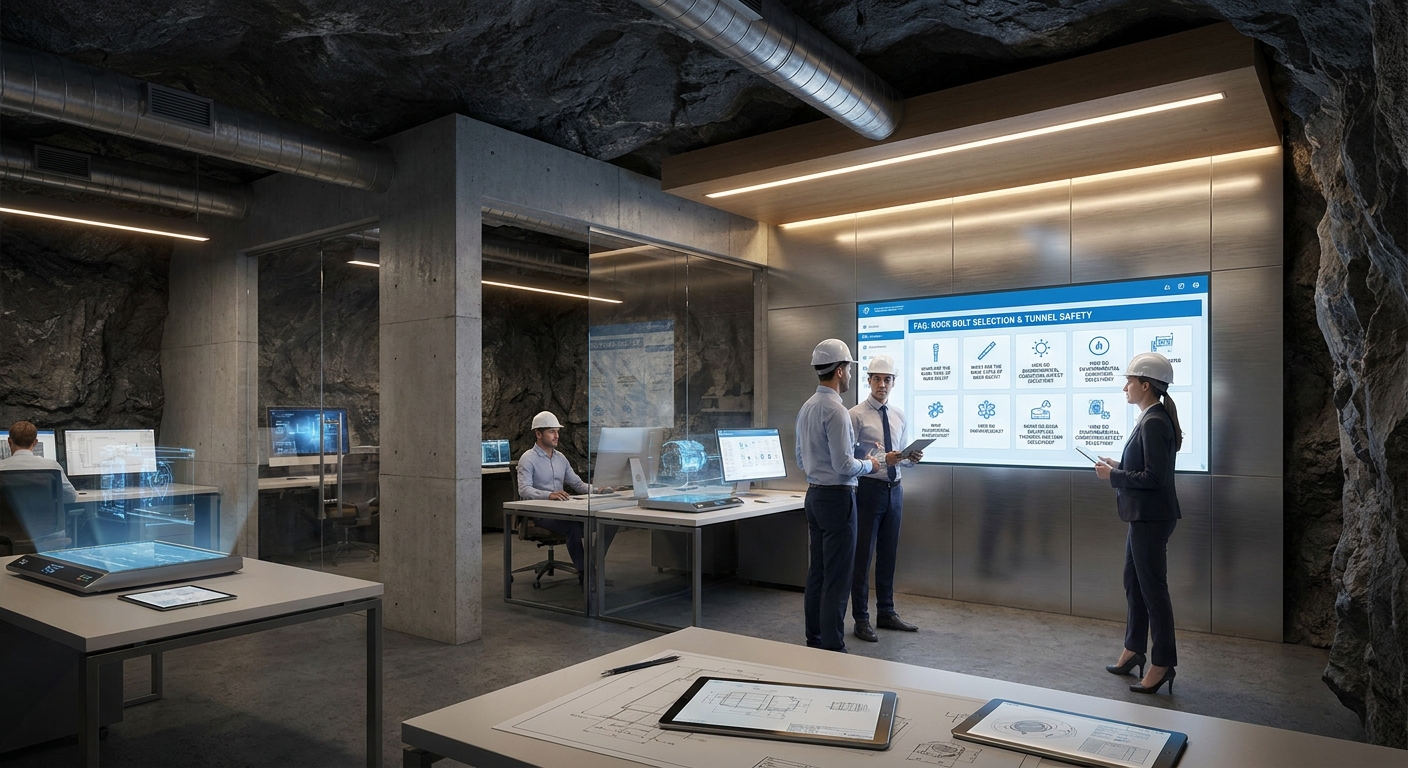
The latest trends in rock bolt technology focus on the integration of smart fiber-optic sensors for real-time stress monitoring and the development of automated, mechanized installation systems. This modern evolution of the tunnel rock bolt enhances worker safety by removing personnel from the active excavation face while providing digital, continuous structural health data over the life of the tunnel.
Why is smart rock bolting the future of mining?
It gets better: when you implement smart bolting systems, you gain the ability to predict and prevent roof collapse events days before they occur. The data acts as an early-warning geological system.
- Fiber-Optic Sensing: Embedded FBG (Fiber Bragg Grating) sensors measure micron-scale deformations along the bolt.
- Wireless Data Transmission: Sends continuous rock stress telemetry directly to control rooms above ground.
- Robotic Bolting Jumbos: Automated drilling systems drill, insert, and grout bolts without any human exposure under unsupported roofs.
Key Takeaway: Smart rock bolting shifts tunnel maintenance from reactive repair to predictive prevention, dramatically reducing operational risk.
| Smart Technology | Primary Benefit | Implementation Cost | |
|---|---|---|---|
| Embedded Strain Gauges | Real-time structural health monitoring | Premium | |
| Self-Grouting Hollow Bars | Eliminates secondary grouting steps | Moderate | |
| Fiber-Optic Telemetry | High-density data along the entire shaft | Premium |
These technological innovations showcase the future of highly digitalized, low-risk underground operations.
Tunnel Rock Bolt Technical Summary and Best Practices
Developing safe, productive underground infrastructure requires selecting high-quality rock stabilization components that match your geological conditions. Whether implementing mechanical, friction, or grouted systems, verifying anchor performance under real-world loads is non-negotiable for site safety. Secure your project’s underground operations and ensure maximum compliance by partnering with experienced geotechnical suppliers; contact us today to receive tailored engineering consultations, product specifications, and competitive quotes for all your heavy-duty construction and mining equipment needs.
Frequently Asked Questions
Can I install friction bolts in highly acidic groundwater?
You should avoid using unprotected black steel friction bolts in acidic environments as the thin steel walls can degrade rapidly; instead, select hot-dip galvanized or specialized stainless steel friction stabilizers to ensure long-term structural integrity.
What’s the best rock bolt for extremely soft, squeezing ground?
The best choice is a dynamic friction stabilizer or a yieldable fully-grouted threadbar, as these systems allow controlled rock mass deformation and continuous resistance without experiencing sudden tensile failures.
How do I know if my rock bolts require secondary grouting?
You will need secondary grouting if you are using mechanical expansion bolts or hollow bars for permanent support, as the grout is required to seal the borehole, protect the steel core from corrosion, and provide a secondary long-term load transfer mechanism.
Can I use polyester resin cartridges in highly wet boreholes?
No, polyester resins are highly sensitive to water presence which can wash out uncurated material and disrupt the chemical polymerization process; in high water-inflow conditions, you should use water-insensitive polyurethane resins or traditional cementitious grouting.