
A self drilling anchor coupler tensile test measures axial behavior of a defined bar-and-coupler specimen under a documented loading procedure. It helps buyers review connection evidence that a bare-bar certificate cannot supply. A supplier may offer strong bar data while leaving its connection untested. Request assembly-specific evidence for your self-drilling anchor components before accepting a connection claim. Keep laboratory assembly testing separate from field anchorage pull-out testing.
1. What is a self drilling anchor coupler tensile test?
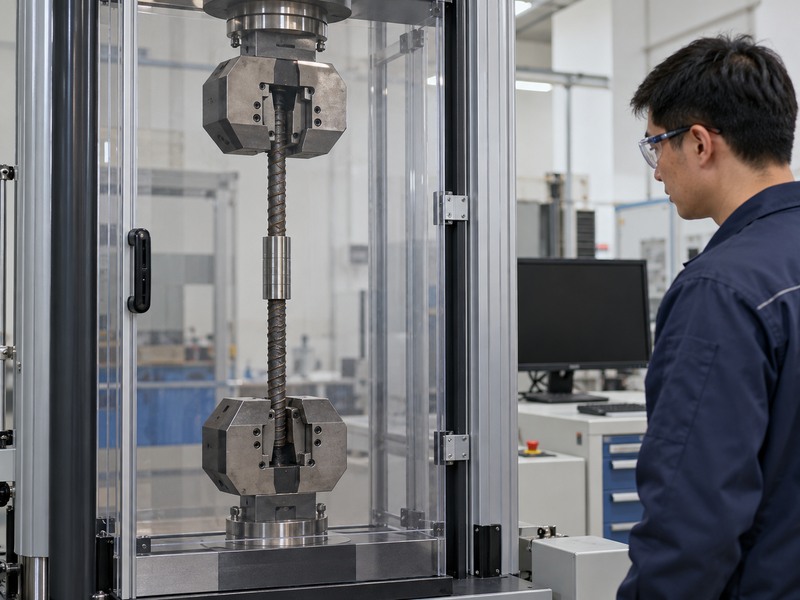
It is an axial laboratory test of a specified connection between identified hollow-bar sections. The specimen includes components whose interaction needs evaluation. Its result describes that assembly under recorded conditions. It cannot automatically establish capacities for other connectors, bar families or installation arrangements.
What should the test identify?
Begin with the assembled specimen rather than a catalog number. A report should connect each tested component with a controlled designation or drawing. Include assembly details that affect how load reaches the connection. Unclear specimen identification makes later comparisons uncertain.
- Identify both bar sections and the coupler.
- Record drawing references and relevant conditions.
- Identify the test arrangement and report scope.
What belongs in a purchase review?
Request a specimen schedule covering your matched anchor accessories. Compare that schedule with the proposed order. Ask for clarification when a report describes a family without identifying which assembly underwent testing.
| Evidence field | What it establishes | Unresolved without it |
|---|---|---|
| Bar identity | Tested member | Product applicability |
| Coupler identity | Tested connection | Connection equivalence |
| Assembly details | Specimen configuration | Reproducibility |
A useful report begins with a traceable specimen description.
2. Why is a bare-bar tensile certificate insufficient?
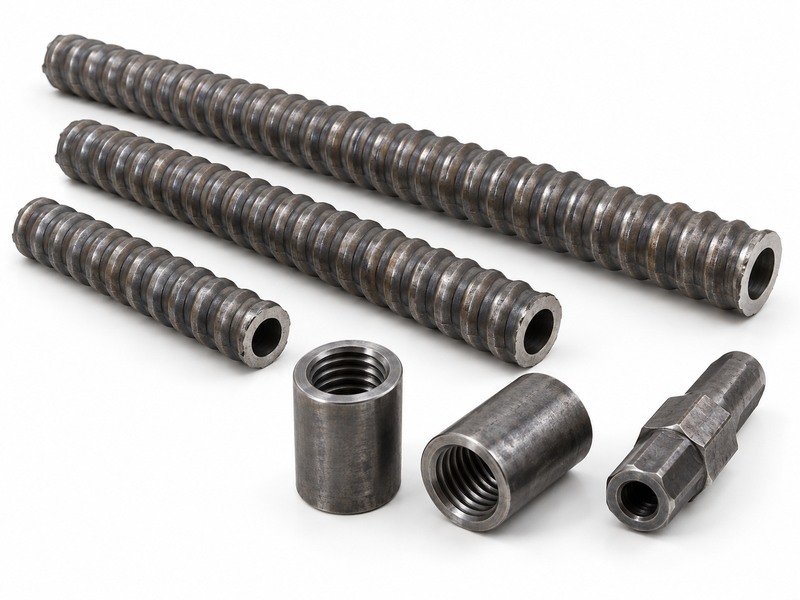
A bare-bar tensile certificate leaves connection behavior outside its specimen scope. A coupler introduces interfaces that need their own evidence. Matching a nominal bar rating does not prove how an assembled connection responds. Procurement should distinguish material properties, bar performance and assembly performance.
Which documents serve different purposes?
Keep material evidence and connection evidence in separate fields. A steel certificate may support material identification. A bar test may characterize a bar specimen. An assembly test examines a different unit of analysis and needs its own documented basis.
- Link material records with supplied components.
- Check whether a coupler appeared in testing.
- Avoid transferring a bar rating without evidence.
How should suppliers support assembly claims?
Ask for reports identifying your hollow-bar connection arrangement. Require a written explanation when proposed capacity relies on combined documents. Your reviewer should see which claims were tested and which remain engineering interpretations.
| Document | Possible support | Remaining question |
|---|---|---|
| Material certificate | Identified steel properties | Connection response |
| Bar tensile report | Bar specimen behavior | Coupled assembly behavior |
| Assembly tensile report | Defined connection response | Other configurations |
Read a claim against the specimen that produced its evidence.
3. What does the assessment method contribute?
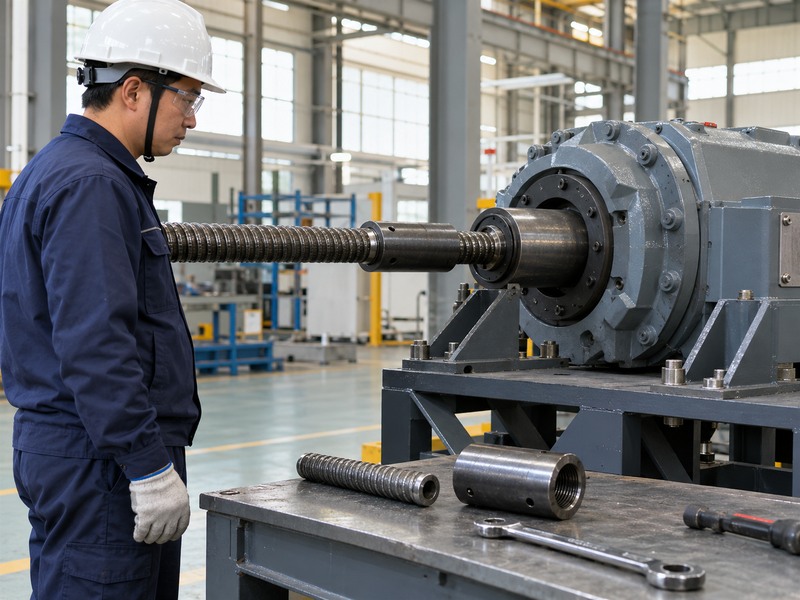
The European hollow-bar connection test protocol provides a structured approach for assessing defined connection specimens. Its connection annex addresses specimen arrangement, staged axial loading, holding, failure loading and relative displacement measurements. Those subjects help buyers request complete records. The method does not prove any supplier’s product passed testing.
How should a US buyer use this reference?
Ask which procedure generated the submitted results. A report should name its method and identify deviations. Your engineer must judge that procedure against project requirements. European assessment methodology should not be presented as a US legal requirement or automatic project approval.
- Identify method title, edition and relevant annex.
- Request the laboratory’s complete report reference.
- Record deviations and limits of applicability.
What should your review avoid assuming?
Avoid assuming that a method citation represents completed testing. Use our self-drilling system background for adjacent product navigation. Actual acceptance needs specimen-specific records and an authorized project decision.
| Submission | What you know | What to request |
|---|---|---|
| Method citation | Proposed procedure | Actual test report |
| Partial result sheet | Selected outcomes | Complete supporting record |
| Full report | Reviewable evidence | Applicability decision |
A named method helps frame review without replacing it.
4. Which specimen details affect applicability?
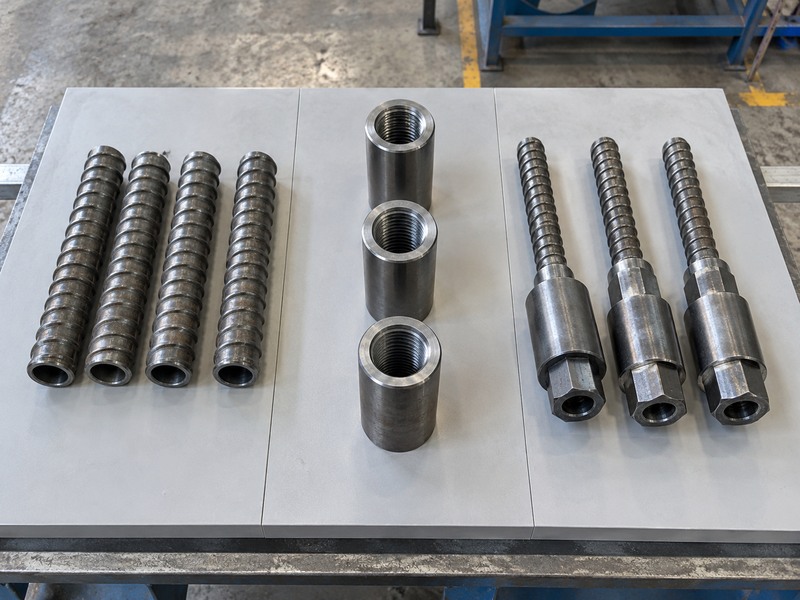
Component geometry, identity and documented assembly conditions affect whether test evidence applies to your purchase. A similar external appearance cannot establish an equivalent specimen. Coating condition or a changed component drawing may also require review. Ask which variations the evidence expressly covers.
What should a specimen record preserve?
Trace every tested part back to a controlled reference. Request photographs where useful alongside drawings and component identifiers. Photographs can show arrangement but may omit details needed for comparison. Use controlled technical records as the basis for an applicability decision.
- Bar and coupler designations or drawings.
- Assembly preparation and engagement information.
- Supplied finish and relevant production references.
How should you handle a different component revision?
Compare your proposed anchor assembly with the tested revision. Request written review for deviations. An engineer or responsible qualification authority should determine whether further evidence is needed before accepting a changed configuration.
| Specimen field | Review purpose | Change response |
|---|---|---|
| Drawing revision | Defines tested geometry | Check revised applicability |
| Assembly record | Defines connection condition | Review different preparation |
| Component finish | Describes supplied state | Evaluate relevant differences |
Preserve enough detail for another reviewer to reconstruct applicability.
5. How should loading stages be reported?
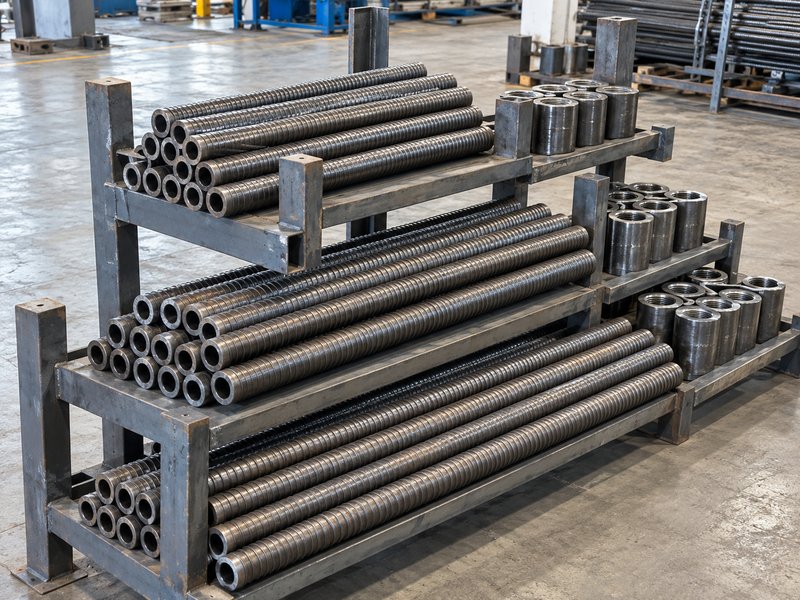
Loading stages should be reported with their sequence, control basis and recorded observations. A single peak-load value omits behavior during earlier loading and holding stages. Buyers need enough information to understand the submitted procedure. Do not invent universal stage values from an unrelated report.
What questions should you ask the laboratory?
Read loading history alongside the reported outcome. Ask how each stage was applied and which measurements accompanied it. Request records of departures from the stated procedure. Your engineer can then judge whether those departures affect project acceptance.
- Identify loading sequence and hold stages.
- Record measurement timing and control method.
- Identify interruptions, deviations or unusual observations.
What should remain linked with the result?
Keep procedure information and component accessory identification with the same report package. A detached results table can lose its specimen context. Reject comparisons that combine peak values from tests with incompatible loading histories.
| Report item | Why buyers need it | Missing-record risk |
|---|---|---|
| Loading sequence | Establishes procedure | Incomparable tests |
| Hold records | Shows observed response | Hidden intermediate behavior |
| Deviations | Defines departures | Unclear validity |
A result becomes interpretable when its loading history remains visible.
6. Why measure relative movement at the connection?
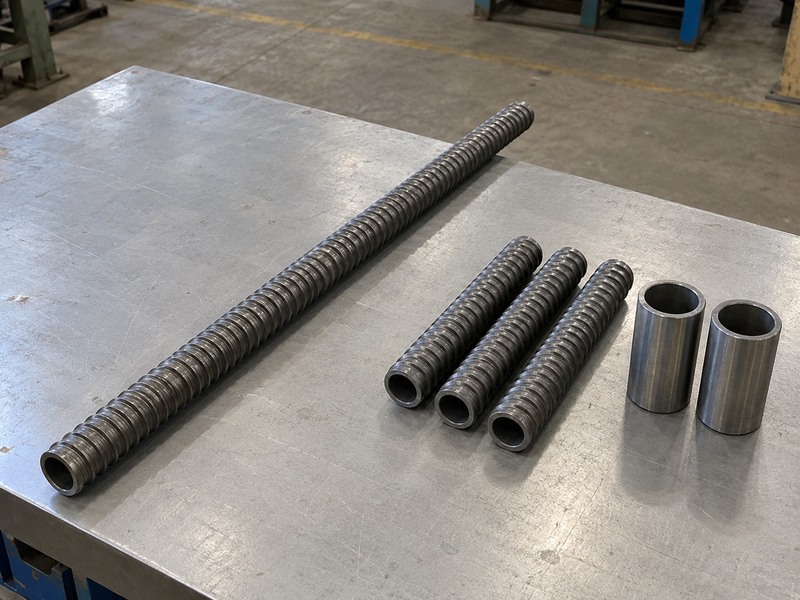
Relative movement measurements help distinguish connection response from whole-specimen or machine displacement. A machine crosshead record can include effects beyond the coupler region. The supplied test method addresses relative displacements within its defined arrangement. Review where instruments were placed before interpreting their readings.
Which measurement definitions need clarification?
Locate each measurement before reading its curve. Ask what distance or movement a reported channel represents. Confirm instrument locations and reference points within the specimen drawing. Avoid treating every displacement trace as direct connection slip.
- Identify gauge locations and reference points.
- Distinguish local from whole-specimen measurements.
- Request channel definitions alongside recorded curves.
How should you compare measurement records?
Compare like measurement definitions across reports. Our hollow-bar background page provides adjacent reading rather than laboratory acceptance values. Submit unclear measurement arrangements for technical review before drawing performance conclusions.
| Recorded movement | Possible scope | Clarification needed |
|---|---|---|
| Crosshead travel | Machine and specimen effects | Measurement definition |
| Local relative movement | Defined connection region | Gauge positions |
| Whole-specimen movement | Broader specimen response | Reference length |
A movement value needs its measurement geometry beside it.
7. What should failure observations tell a buyer?
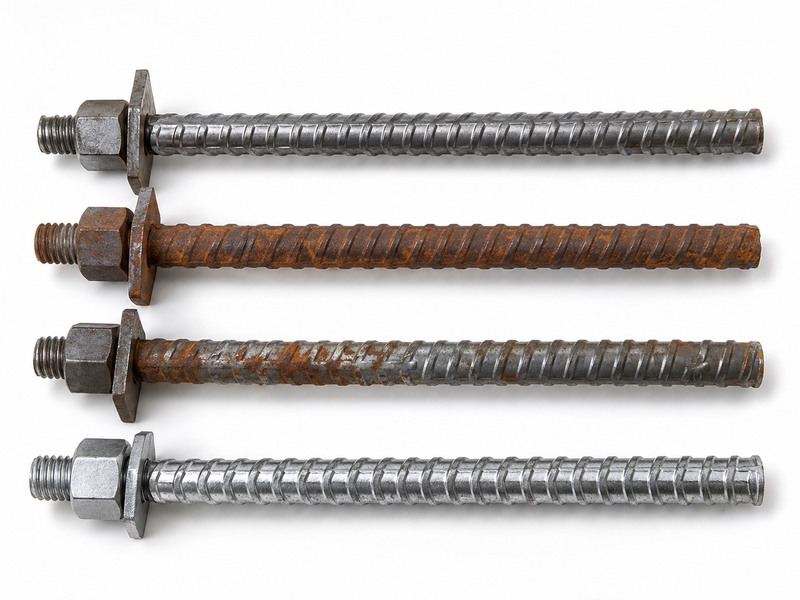
Failure observations should identify where and how the tested assembly stopped carrying load under its procedure. A peak value alone cannot show that location. Photographs and written observations can support interpretation without replacing numerical records. Avoid translating one specimen’s failure into a universal product rule.
What should a complete observation record include?
Read failure location with the specimen description. Ask whether the report identifies affected components and observed damage. Keep terms aligned with actual evidence rather than guessing a mechanism from a photograph. Further examination may be needed when a mechanism remains uncertain.
- Recorded location of failure or termination.
- Photographs linked with specimen identifiers.
- Description of observed connection or bar behavior.
How should procurement use that information?
Compare observations with the declared acceptance criteria and project requirements. Ask your reviewer whether a failure mode affects the proposed use. Keep any proposed component change separate until its relevance receives documented review.
| Observation | Review value | Interpretation limit |
|---|---|---|
| Failure location | Identifies affected region | Does not establish cause alone |
| Photographic record | Supports visual review | Cannot replace measurements |
| Written mechanism | States laboratory interpretation | Needs supporting evidence |
Failure records should support an engineering decision rather than a brochure claim.
8. How does this differ from a field pull-out test?
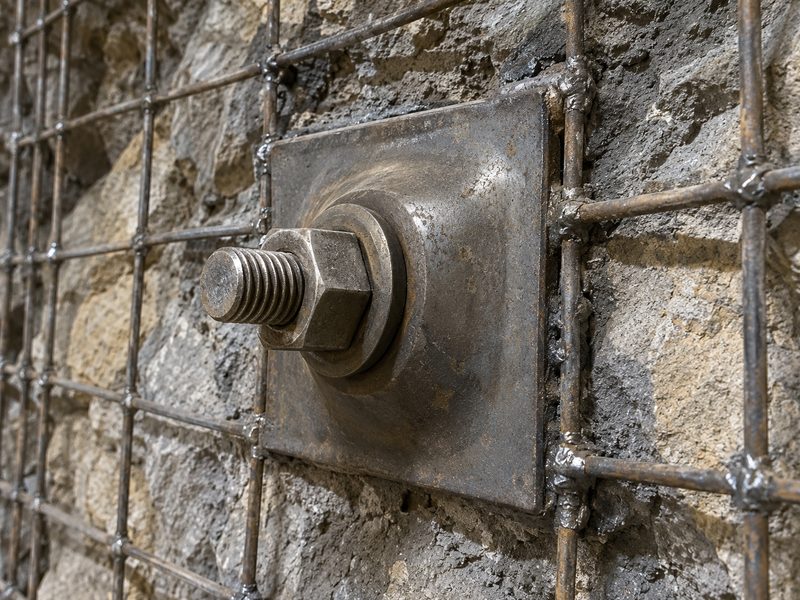
A laboratory coupler tensile test examines a defined assembly, while a field pull-out test examines an installed anchorage arrangement. Ground, bonding and field load paths create a different test context. One procedure cannot automatically substitute for the other. State your evidence question before requesting a test.
Which question does each test answer?
Choose evidence by the unit being evaluated. Ask whether you need connection behavior or installed anchorage performance. A test program may include both subjects for different purposes. Your engineer should define their respective acceptance roles.
- Laboratory assembly evidence concerns identified components.
- Field anchorage evidence concerns installed conditions.
- Project acceptance may require separate records.
How should your purchase documents separate them?
List component evidence separately from field verification requirements. Our field pull-out background provides adjacent navigation only. Keep current project procedures and authorized acceptance criteria as your controlling documents.
| Test context | Main unit of analysis | Buyer request |
|---|---|---|
| Coupler laboratory test | Bar-and-coupler specimen | Assembly report |
| Field pull-out test | Installed anchorage | Project field record |
| Material tensile test | Defined material specimen | Material evidence |
Naming the unit of analysis prevents an inappropriate test substitution.
9. What makes a supplier report reviewable?

A reviewable report connects specimen identity, procedure, measurements and conclusions within one traceable record. Selected screenshots or an unlabeled maximum value leave technical gaps. Procurement needs a consistent checklist before commercial comparison. It should reveal missing information without inventing acceptance limits.
Which omissions require a response?
Return incomplete evidence with specific missing fields. Ask for full records rather than a more confident summary. Separate report completeness from technical acceptance. A complete report can still describe an assembly unsuitable for your project.
- Missing specimen or component identification.
- Unstated procedure, loading stages or deviations.
- Undefined displacement channels or failure location.
Your responsible engineering reviewer should compare submitted evidence with project requirements. Record any limits and approved deviations in writing. Purchasing can then release the exact accepted configuration without implying broader interchangeability.
| Review step | Required output | Release consequence |
|---|---|---|
| Completeness check | Missing fields identified | Request supplement |
| Applicability review | Configuration matched | Resolve deviations |
| Acceptance decision | Written disposition | Release defined assembly |
Use a clear disposition instead of an unqualified “test approved” label.
10. What should your coupler test inquiry request?

Your inquiry should request specimen-specific axial evidence and identify the project decision it must support. Attach the proposed component schedule and available drawings. Ask suppliers to distinguish existing reports from testing still proposed. This prevents a future testing promise from appearing as completed qualification.
What should your request contain?
Ask for records that your reviewer can trace. Include the assembly designation and relevant acceptance specification. Request complete loading and measurement documentation where applicable. State that field pull-out evidence answers a separate question.
- Tested bar and coupler configuration.
- Procedure, report reference and laboratory identity.
- Loading history, movement definitions and observations.
- Documented applicability to proposed supplied components.
What should you submit next?
| Closure check | Action to retain |
|---|---|
| 1 | Tested bar and coupler configuration. |
| 2 | Procedure, report reference and laboratory identity. |
| 3 | Loading history, movement definitions and observations. |
| 4 | Documented applicability to proposed supplied components. |
Send your component drawings, evidence checklist and project requirements when you contact us. Request a clearly scoped technical response before accepting connection claims. Keep unresolved report fields open until your engineering reviewer issues a disposition.
Q1: Can I accept a coupler from its bar tensile rating?
No, a bar rating does not establish the behavior of an assembled connection without supporting evidence.
Q2: What’s the best document for reviewing a connection?
Request a complete assembly report identifying components, procedure, measurements and observations. Match its scope with your project requirements.
Q3: Can a field pull-out test replace this laboratory test?
Not automatically; installed anchorage and laboratory connection behavior involve different units of analysis and acceptance questions.
Q4: How do I know what a displacement curve represents?
Check instrument positions and channel definitions. Ask the laboratory when local movement and whole-specimen displacement are unclear.
Q5: Does citing an assessment method prove product approval?
No, a method citation identifies a procedure; product evidence and project acceptance require separate supporting records.