
Dome vs flat rock bolt plates should be compared through their approved seating arrangement, contact conditions and documented assembly performance. Shape alone cannot establish which plate carries more load. You may receive two plates with similar dimensions while their seating details differ. Compare your rock bolt plate options against a controlled support drawing before accepting substitutions. A clear component schedule prevents an attractive product photograph from becoming an unsupported engineering decision.
1. How do dome vs flat rock bolt plates differ?
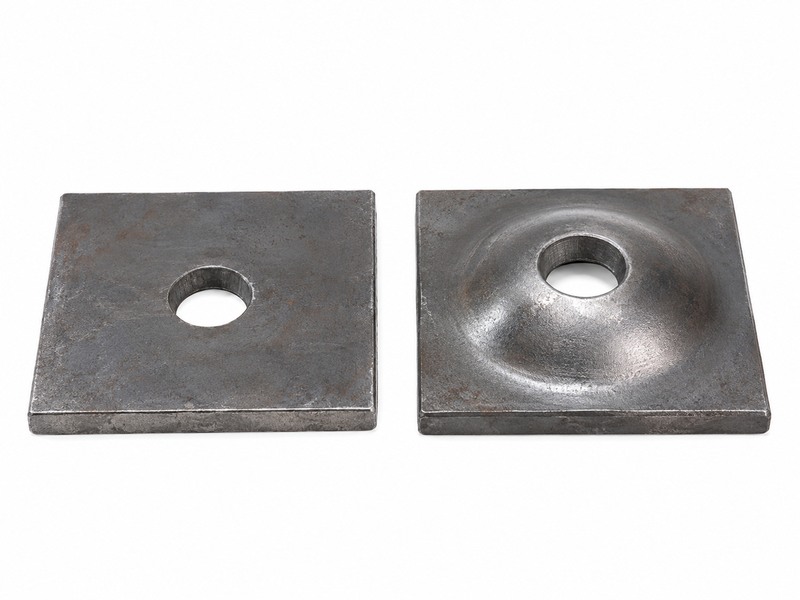
Domed and flat plates differ in formed geometry and their intended seating interfaces. Manufacturers distinguish several plate families, including domed and flat designs. Those categories help identify products but do not establish a universal strength ranking. Your comparison must include the complete assembly and its specified function.
Which geometric details deserve attention?
Read plate profile together with the assembly drawing. A product name can conceal differences in central opening, formed region and bearing surface. Obtain a section view when a photograph cannot show those details. Keep dimensions tied to a controlled product reference.
- Compare plate profile and central opening.
- Identify the intended nut or washer seat.
- Check the bearing face and contact arrangement.
What should a buyer record?
List each candidate within your accessory review using its exact designation. Mark unknown interfaces for clarification before price comparison. Treat shape as one selection field within a broader component decision.
| Comparison field | Domed candidate | Flat candidate |
|---|---|---|
| Profile | Verify formed geometry | Verify planar geometry |
| Central seating | Check matched interface | Check matched interface |
| Performance evidence | Request applicable records | Request applicable records |
A shape category identifies a family rather than a rating.
2. Does a domed shape automatically mean higher capacity?
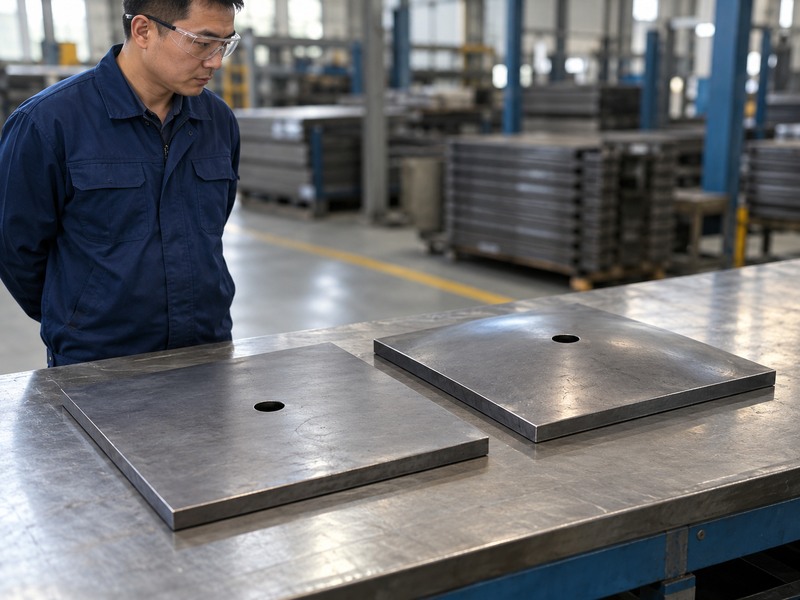
No, a domed shape does not automatically establish higher capacity than a flat plate. Plate behavior depends on details beyond its broad outline. Material, geometry, contact and loading arrangement belong within the evidence review. Avoid choosing a plate through appearance or a generalized strength claim.
What should replace a shape-based ranking?
Compare documented assemblies under relevant conditions. Ask which specimen and support arrangement produced a stated result. Check whether candidate reports use comparable conditions. A stronger-looking profile may still lack evidence for your specific application.
- Match the specimen to the offered plate.
- Compare test arrangements before comparing results.
- Ask which assembly restrictions accompany any rating.
How should purchasing handle a capacity claim?
Request supporting records for the proposed bearing plate product. Submit technical comparisons to your engineer. Keep commercial evaluations separate until performance claims have an accepted basis.
| Supplier claim | Missing context | Useful follow-up |
|---|---|---|
| “Domed means stronger” | Actual product evidence | Request applicable report |
| “Same dimensions” | Material and geometry | Obtain controlled drawings |
| “Same capacity” | Test comparability | Review loading arrangements |
A defensible selection follows evidence rather than a general shape preference.
3. How does the bearing surface affect selection?
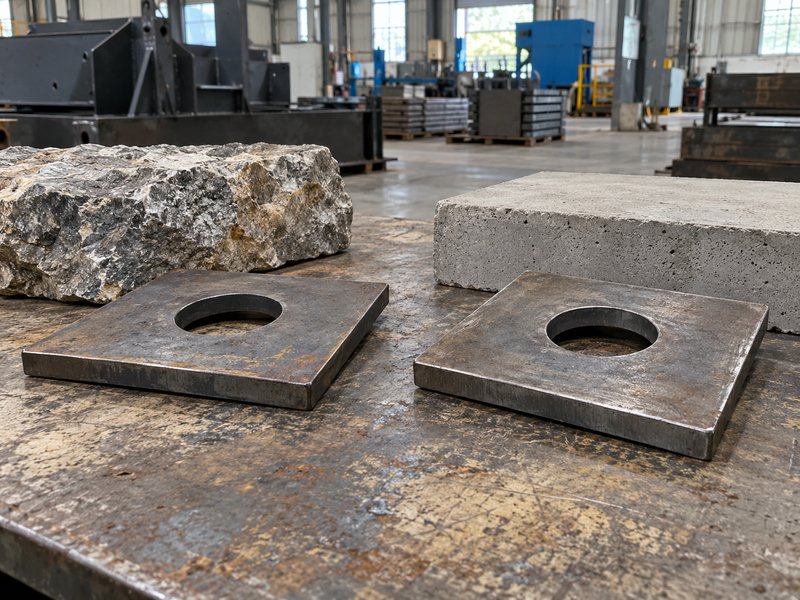
The bearing surface affects how a plate receives support and transfers load through its contact region. A plate resting on a test fixture may behave differently from an assembly against a project substrate. Uneven contact deserves review rather than an improvised plate choice. For US underground coal installations, review bearing-plate and washer requirements when documenting the intended seating interface.
Which contact questions should you ask?
Describe the surface supporting your plate. Identify whether the approved detail involves exposed rock, a specified facing or another support arrangement. Ask how the chosen assembly addresses its documented contact conditions. Do not infer acceptable gaps from a catalog photograph.
- Identify the intended bearing substrate.
- Record relevant surface and contact assumptions.
- Check approved detailing for the plate interface.
What should your drawing show?
Show the plate in context with its supporting surface and connected components. Our tunnel support background provides adjacent reading only. Use current project details for acceptance of contact conditions.
| Surface question | Required evidence | Selection consequence |
|---|---|---|
| What supports the plate? | Approved support detail | Defines contact basis |
| How is contact established? | Assembly instructions | Controls installation interface |
| Which test applies? | Relevant loading arrangement | Bounds comparison |
Contact assumptions should remain visible beside plate selection records.
4. Which nut and washer interfaces must match?
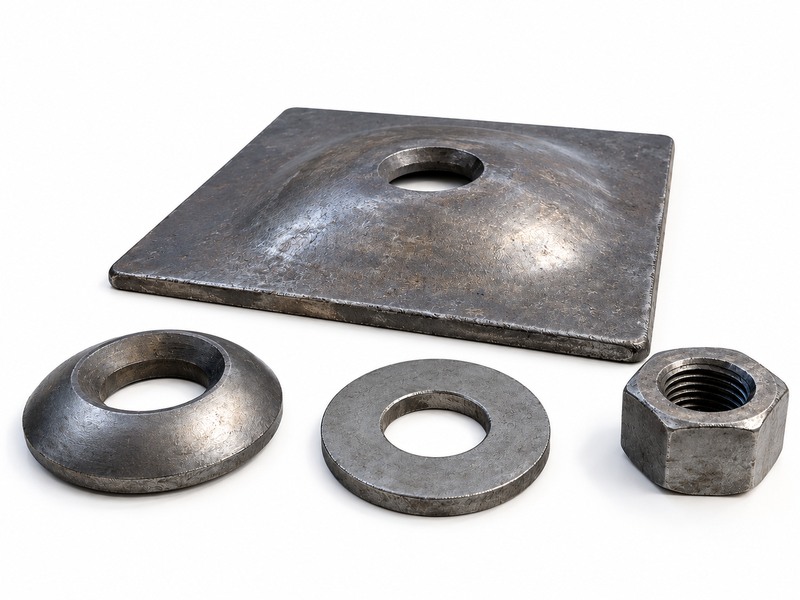
Nut and washer interfaces must match the plate’s approved seating geometry and assembly arrangement. A plate can belong to a different seating system despite a similar central hole. Spherical and hardened flat washers can also serve complementary roles. Avoid treating every washer shape as an interchangeable substitute.
What should a seating review identify?
Check mating surfaces as an assembled stack. Obtain a drawing showing component order and contact surfaces. Ask whether a washer belongs directly against a nut, a plate or another component. Follow the identified system rather than building a stack from similar-looking hardware.
- Identify nut bearing face and washer arrangement.
- Identify plate seating profile and opening.
- Confirm approved order and component references.
Where should the detailed review go?
Include seating questions within the matched accessory package. Keep detailed angular washer selection separate from this plate-profile comparison. Request written acceptance before changing a component within an approved stack.
| Interface | What to match | Substitution concern |
|---|---|---|
| Nut to washer | Intended bearing surfaces | Local contact mismatch |
| Washer to plate | Compatible seating geometry | Unapproved stack |
| Bar through opening | Documented clearance | Contact or fit conflict |
Review the assembled interfaces before accepting any individual plate.
5. How do you compare drawings from different suppliers?
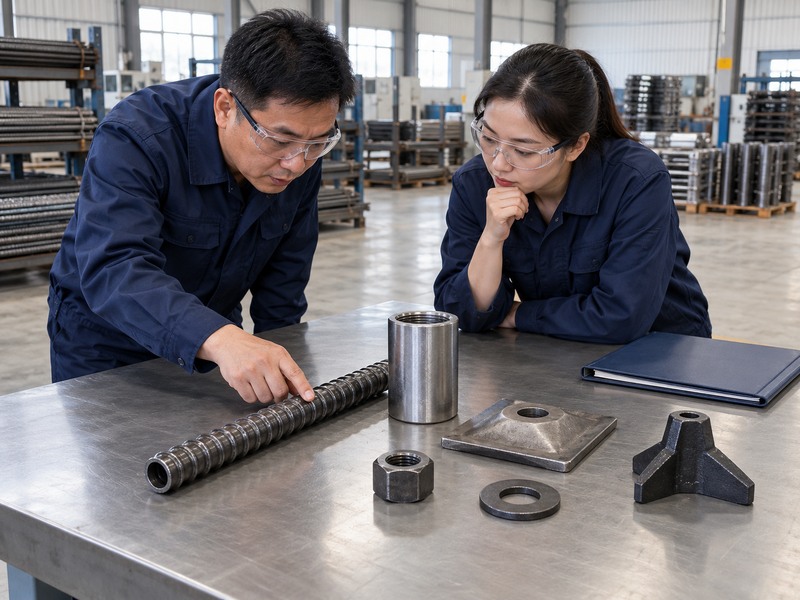
Compare supplier drawings using common component fields and the same intended assembly function. Matching outside dimensions cannot establish equivalent plate geometry. Ask for details that drawings omit before reaching a technical conclusion. Keep each candidate linked with its evidence rather than combining specifications across products.
Which drawing fields help avoid a false match?
Create a field-by-field comparison before discussing equivalence. Include the central opening and formed profile alongside outside dimensions. Add material and finish references where the project requires them. Leave unprovided information clearly unresolved.
- Controlled drawing number and revision.
- Geometry, opening and intended seating arrangement.
- Material, finish and applicable assembly references.
How should you document an alternative?
Compare an offered rock bolt plate directly with the approved drawing. Ask your engineer to identify accepted differences. A supplier’s equivalence statement should support that review rather than replace it.
| Drawing field | Why compare it? | Response if absent |
|---|---|---|
| Profile section | Defines formed geometry | Request section view |
| Seating detail | Defines mating interface | Request assembly drawing |
| Revision reference | Controls product identity | Clarify current design |
An alternative needs a documented technical disposition before release.
6. What can a physical shape comparison show?
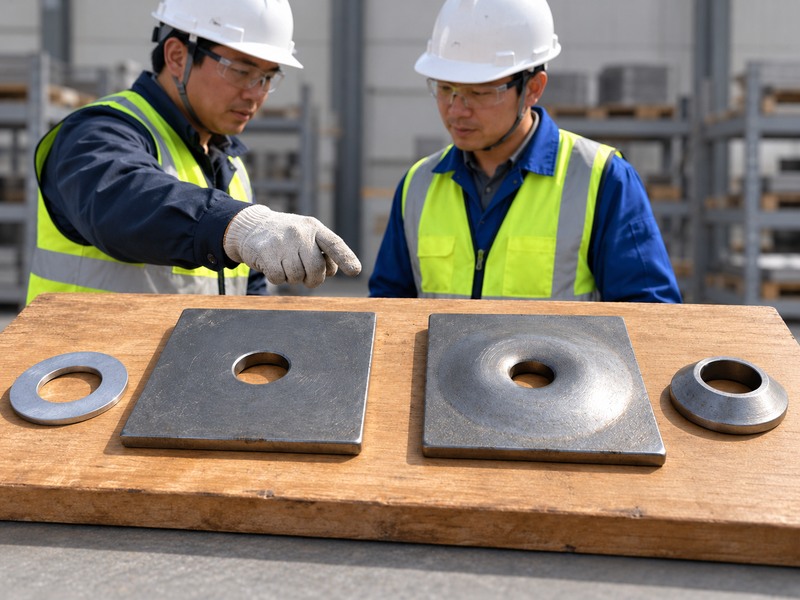
A physical comparison can show geometry, fit and component arrangement without proving a capacity ranking. Real samples help buyers see differences that catalog photographs hide. Their value increases when each sample matches a controlled drawing. Keep visual review separate from laboratory performance evidence.
Which sample checks are useful?
Use samples for identification and interface questions. Place a compatible nut-and-washer stack beside each plate. Check whether actual parts match the proposed arrangement. Avoid forcing mismatched parts together merely because their openings appear close.
- Compare visible profile against the drawing.
- Check the intended seating arrangement.
- Record unanswered questions for supplier review.
How should you retain that comparison?
Photograph complete samples with controlled references in your internal record. Our rock bolt sizing background provides adjacent navigation, not acceptance dimensions. Request technical evidence before attaching a performance conclusion to sample fit.
| Sample observation | What it supports | What remains separate |
|---|---|---|
| Visible profile | Product identification | Capacity evidence |
| Matched seating | Interface review | Approved loading behavior |
| Drawing agreement | Supplied configuration | Project acceptance |
Physical samples support a review when their limits remain explicit.
7. How should mesh or facing change the component review?
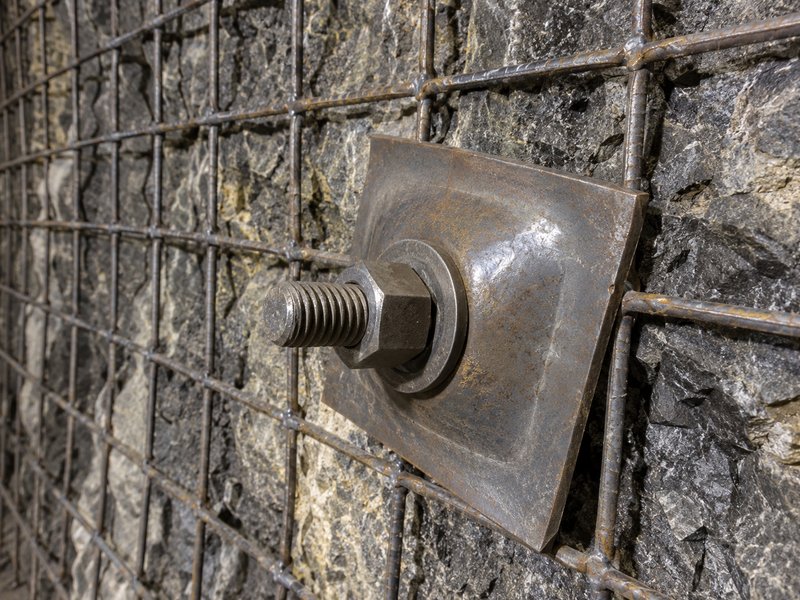
Mesh or facing changes which interfaces and component roles your review must include. A large-area surface-retention plate may complement a primary bearing plate. Its wider outline does not automatically establish the same structural function. Keep the approved assembly roles visible when comparing plate profiles.
Which roles should your drawing distinguish?
Name the bearing role separately from surface retention. Identify which part carries concentrated load through the nut-and-plate interface. Identify which part holds mesh or supports a larger surface area. Some approved arrangements use both components together.
- Mark the primary bearing component.
- Mark mesh or facing retention components.
- Show component order and contact interfaces.
How do you prevent an unintended replacement?
Require a drawing revision before replacing a bearing plate with another plate family. Ask whether a proposed component provides the same accepted function. Keep the decision focused on your assembly rather than interpreting marketing names as engineering equivalence.
| Component role | Main review question | Drawing requirement |
|---|---|---|
| Bearing interface | Which part receives nut load? | Defined assembly role |
| Mesh retention | Which part secures surface control? | Mesh contact detail |
| Combined arrangement | Are both parts required? | Approved stack order |
A broader footprint can complement another plate without replacing it.
8. What should incoming inspection check?
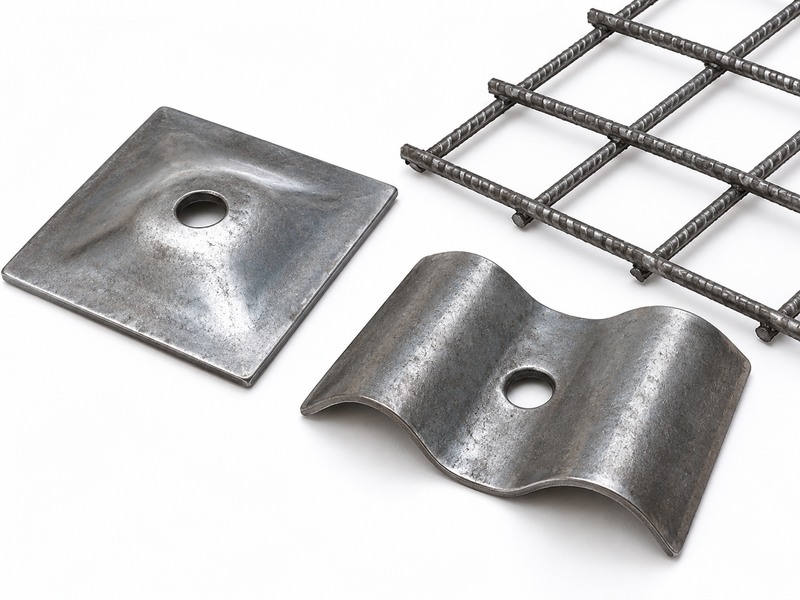
Incoming inspection should verify plate identity, condition and agreement with the accepted assembly schedule. A shipment of flat and domed plates can become mixed if identification disappears. Receiving checks should detect that problem before field issue. Visual inspection cannot establish an undocumented load rating.
Which checks should receiving staff perform?
Compare delivered parts with the accepted reference sample. Use controlled drawings and supplied identification where available. Check for obvious damage or component discrepancies. Route doubtful material through the project’s technical disposition process.
- Confirm plate family and component designation.
- Check opening and profile against documentation.
- Preserve lot references and supplied records.
What should remain with the shipment?
Keep the relevant plate order details with approved drawings and seating components. Segregate unmatched parts for technical disposition. Purchasing should resolve discrepancies before warehouse teams substitute a familiar plate from another stock location.
| Receiving item | Review basis | Escalation trigger |
|---|---|---|
| Plate identity | Approved schedule | Mixed or unclear stock |
| Physical condition | Inspection procedure | Visible damage |
| Seating components | Matched assembly list | Missing or alternate parts |
Receiving protects the approved arrangement through material handling.
9. When does a plate substitution need engineering review?
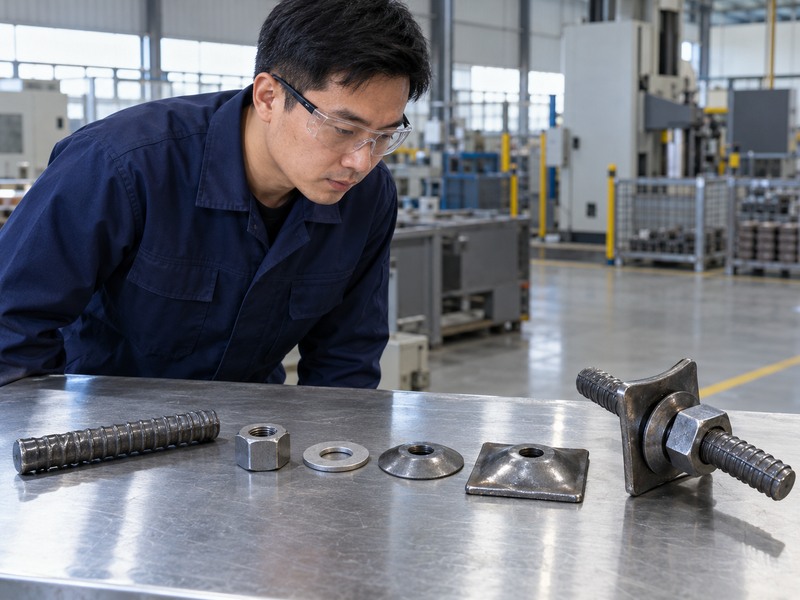
A substitution needs engineering review when it changes geometry, contact, component interfaces or the accepted evidence basis. A similar outline does not remove that need. Procurement should identify differences before proposing an alternative. Your reviewer can then decide which supporting documents are necessary.
Which changes should you flag?
Describe changed interfaces instead of saying “equivalent.” Identify the original and proposed part references. Explain differences in the full stack and intended surface contact. Avoid approving an alternative through price or availability alone.
- Changed plate profile or central opening.
- Different nut or washer seating arrangement.
- Different support contact or mesh interaction.
What should a written disposition contain?
Record accepted component identities, applicable drawings and limits of approval. Include required installation-document revisions with that disposition. Tell purchasing exactly which parts may be released so a narrow acceptance cannot become an unrestricted substitution policy.
| Proposed change | Required question | Decision record |
|---|---|---|
| Flat to domed | Same accepted function? | Engineering disposition |
| Different washer seat | Compatible full stack? | Assembly approval |
| Different footprint | Suitable contact arrangement? | Revised support detail |
Approve a specific alternative within a defined assembly.
10. How should you request the right plate comparison?
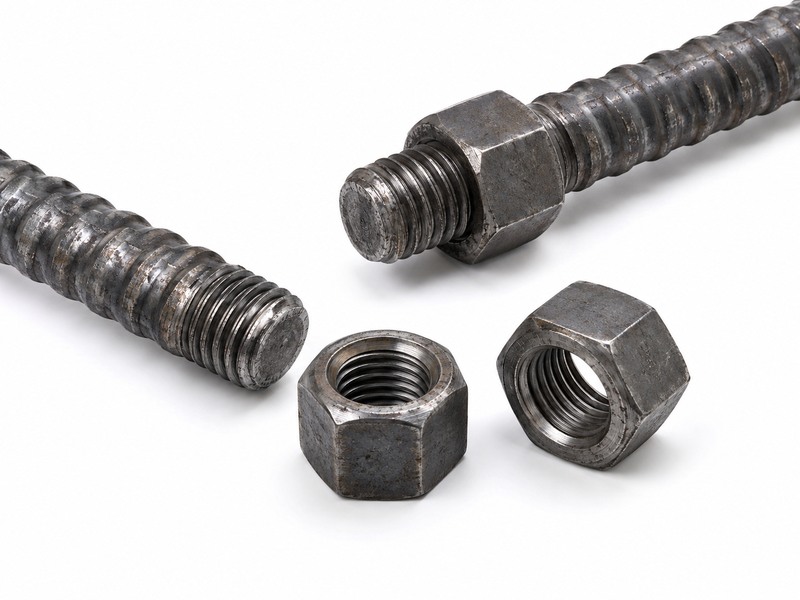
Request a comparison using your support drawing, intended contact conditions and matched component schedule. Ask suppliers to identify which plate families they can document for that arrangement. Keep a separate list of unresolved interface or evidence questions. That gives your engineer a concrete basis for review.
What should the inquiry include?
Send the complete seating stack with your plate request. Include component references and available loading requirements from approved documents. Ask for controlled drawings and applicable performance evidence. Keep numerical acceptance criteria within your project specification.
- Approved support and seating arrangement.
- Required plate, nut and washer references.
- Intended substrate and surface-control components.
- Documentation needed for alternative review.
What should you send before purchase release?
| Closure check | Action to retain |
|---|---|
| 1 | Approved support and seating arrangement. |
| 2 | Required plate, nut and washer references. |
| 3 | Intended substrate and surface-control components. |
| 4 | Documentation needed for alternative review. |
Send your assembly drawing and candidate plate references when you contact us. Request a documented response covering geometry and matching components. Release an order after your reviewer accepts the exact arrangement and its evidence.
Q1: Can I choose a domed plate because it looks stronger?
No, shape alone does not establish capacity; compare applicable assembly evidence and approved project requirements.
Q2: Can I replace a flat plate with a domed plate?
Only after technical review accepts the changed geometry, seating interfaces and contact conditions for your assembly.
Q3: Are spherical and flat washers competing choices?
Not always; some matched assemblies use both for different functions, so follow the documented component stack.
Q4: How do I know if a mesh plate replaces a bearing plate?
Read the approved assembly detail. A surface-retention component may require a separate primary bearing plate.
Q5: What’s the best document to start a plate inquiry?
Send the complete support drawing with nut, washer and contact details. A photograph alone leaves interface questions open.