
Spherical washers for rock bolts help a matched nut-and-plate assembly accommodate a specified angular seating condition. They require compatible mating geometry and documented limits. A washer cannot correct every misaligned hole or unsuitable bearing surface. If a bolt emerges obliquely, compare your rock bolt seating accessories with the approved assembly detail before adding hardware. Some systems also require a hardened flat washer, so treat the complete stack as your selection unit.
1. What do spherical washers for rock bolts do?
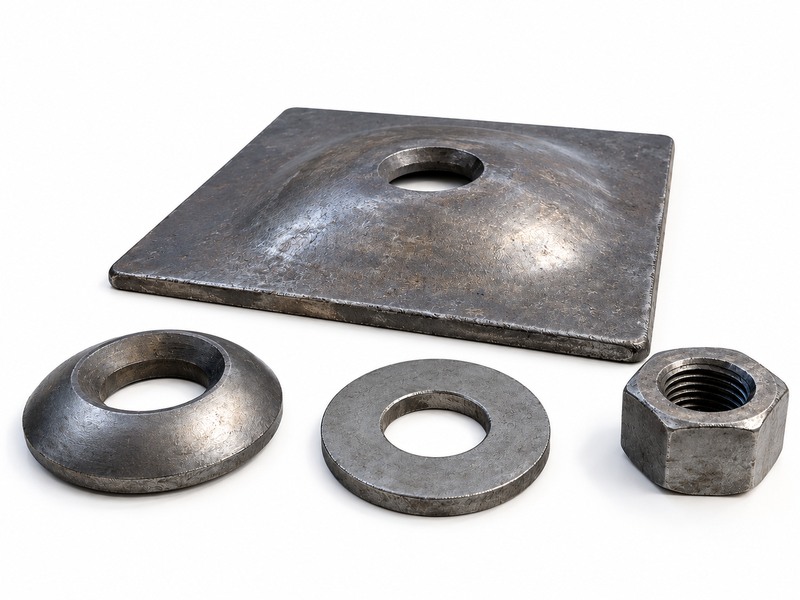
They provide a curved seating interface within a matched rock bolt end assembly. That interface can accommodate an angular condition allowed by the identified system. It does not create unlimited articulation. Product-specific geometry and restrictions determine which assembly a washer belongs within.
Where does angular seating occur?
Examine how your bolt axis meets the plate seat. A bolt can emerge at an angle relative to the local bearing surface. The nut still needs an appropriate contact arrangement. A matched curved interface addresses that seating question within its documented scope.
- Record bolt direction at the collar.
- Check plate seating orientation and geometry.
- Locate the specified curved mating surfaces.
What should a buyer select?
Select a complete arrangement with matching plate components rather than an isolated washer shape. Ask which exact plate and nut references belong with it. Keep permitted angular conditions tied to that assembly.
| Component | Seating question | Selection basis |
|---|---|---|
| Spherical washer | Which curved surface mates? | Matched geometry |
| Plate seat | Which washer fits its profile? | Assembly drawing |
| Nut interface | Which bearing arrangement applies? | System documentation |
A curved shape becomes useful through a defined mating interface.
2. Why does a non-square collar deserve review?
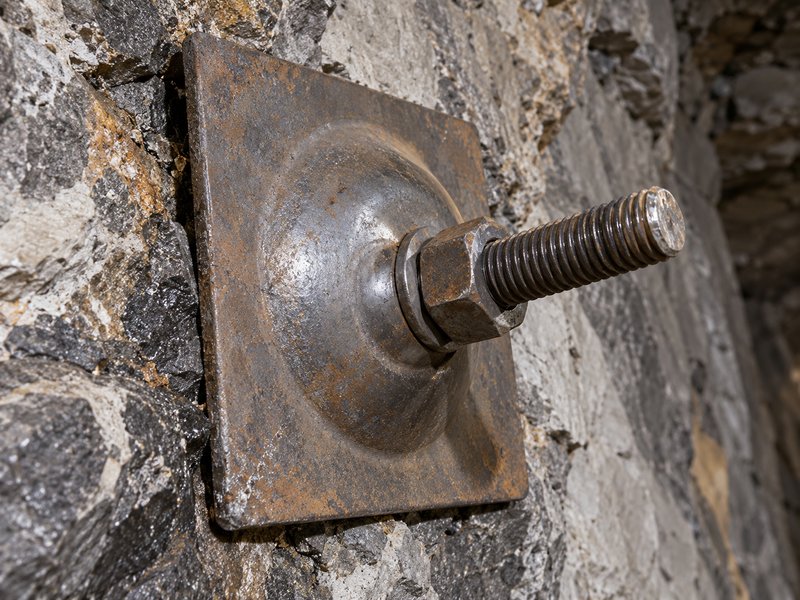
A non-square collar deserves review because bolt direction and local plate orientation can create an angular seating condition. A flat surface placed against an oblique component may not reproduce the intended contact. The approved end arrangement should address that geometry. Do not judge it through visible nut position alone.
Which directions should your detail show?
Draw your bolt axis through the complete stack. Show how the washer and plate contact around that axis. Include the actual supporting surface rather than a simplified horizontal line. This helps your reviewer distinguish angular seating from another contact problem.
- Bolt axis and local plate orientation.
- Washer mating surface and nut bearing face.
- Supporting rock or specified facing interface.
How should a site observation be used?
Compare observed collar geometry with the accepted detail. Our tunnel support background provides adjacent reading only. Your engineer should decide whether a changed seating arrangement requires corrective action or further review.
| Observed geometry | Question raised | Review focus |
|---|---|---|
| Oblique bolt axis | Approved angular condition? | Matched seat limits |
| Uneven plate support | Separate contact problem? | Supporting substrate |
| Unclear washer contact | Correct stack arrangement? | Component order |
Describe the geometry before deciding which component should change.
3. Why must the spherical surfaces match?
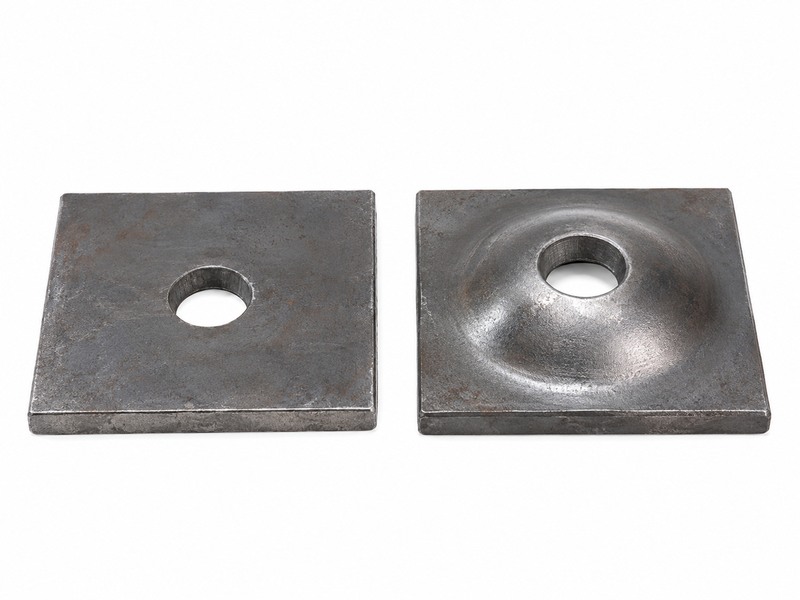
Spherical surfaces must match because their intended contact depends on compatible curvature and seating geometry. Two rounded parts can appear compatible without belonging to the same assembly. Hole size alone cannot establish a correct seat. Check the mating profile and component references together.
What does a matched-seat review examine?
Follow actual curved contact rather than the outline. Identify which washer surface bears on which plate surface. Ask whether a proposed replacement changes that relationship. A supplier should identify accepted combinations rather than describe all domed hardware as interchangeable.
- Curved surface and corresponding plate seat.
- Central opening and bar passage arrangement.
- Nut contact and specified component sequence.
What should remain controlled during ordering?
Order the exact washer and accessory combination shown in accepted documents. Separate alternatives within the material schedule. A similar sample should prompt a geometry comparison rather than immediate acceptance.
| Matching feature | Why check it? | Inadequate shortcut |
|---|---|---|
| Curved profile | Defines intended contact | “Both are rounded” |
| Central arrangement | Defines component fit | Hole size alone |
| Assembly sequence | Defines load path | Familiar stock order |
Match the contact geometry before interpreting an angular allowance.
4. Can a flat washer belong in the same assembly?
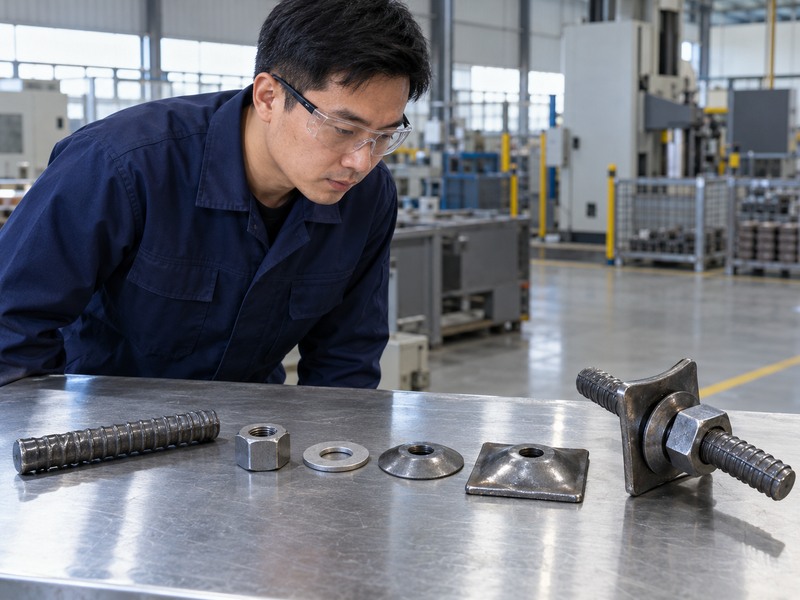
Yes, a hardened flat washer can belong in the same documented assembly as a spherical washer. Manufacturer examples assign roles within specific nut-and-plate arrangements. The parts can complement each other instead of acting as universal alternatives. Follow the identified stack rather than choosing only one by shape.
How can their roles differ?
Name each contact interface before removing a washer. One component may provide the curved seating interface. Another may provide the specified flat bearing interface under a nut. Its required material or hardness remains system-specific and cannot be guessed from appearance.
- Identify the curved mating interface.
- Identify the specified flat bearing interface.
- Preserve each required component and its position.
What should a proposed simplification require?
Ask your reviewer whether removing a washer changes the accepted plate-and-hardware assembly. Obtain a specific disposition before purchase or field substitution. A shorter stack does not automatically perform the same functions.
| Component role | Interface served | Removal question |
|---|---|---|
| Curved washer | Matched angular seat | Angular function retained? |
| Specified flat washer | Defined flat bearing contact | Required interface retained? |
| Nut | Applies load through stack | Intended bearing arrangement? |
Preserve required interfaces rather than reducing the assembly by appearance.
5. How should angular allowances be interpreted?
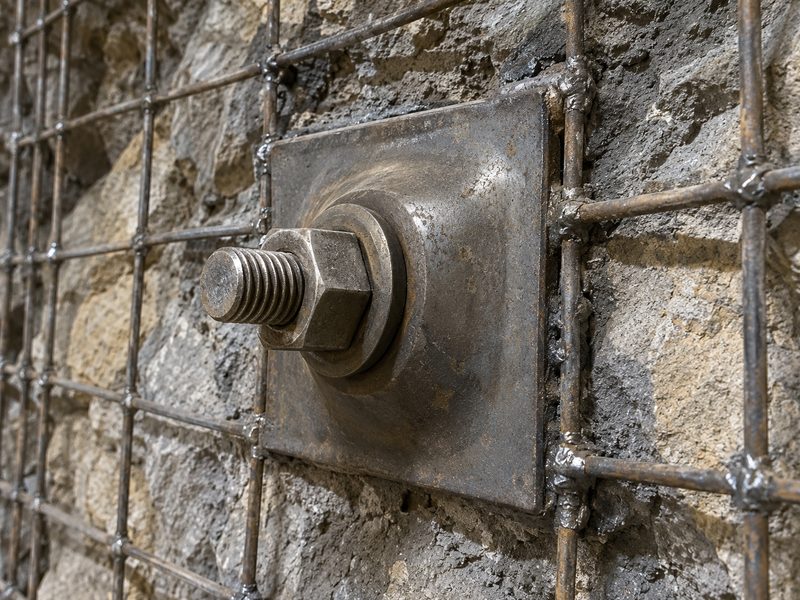
Angular allowances should be interpreted as product-specific conditions for the stated compatible assembly. A value from another washer family cannot establish your component’s limit. Your detail must also identify what angle is being measured. Avoid a generic allowance for every spherical washer.
Which angle definition matters?
Ask which two directions define the stated angle. A reported allowance needs reference surfaces or axes. The supporting geometry and included components should remain clear. Your engineer can then compare that definition with the proposed collar condition.
- Define angle reference axes or surfaces.
- List all components covered by the allowance.
- Record restrictions accompanying the published condition.
What if the assembly has no documented allowance?
Treat the angular suitability as unresolved rather than borrowing another system’s value. Our rock bolt sizing background provides adjacent navigation only. Request applicable technical review for the proposed geometry.
| Angle information | What it needs | Buyer response |
|---|---|---|
| Published allowance | Component and reference definition | Check applicability |
| Different assembly | Separate supporting evidence | Request review |
| No stated allowance | Suitability unresolved | Avoid assumed value |
A number needs a matching assembly and a defined geometric reference.
6. What should a seating comparison demonstrate?
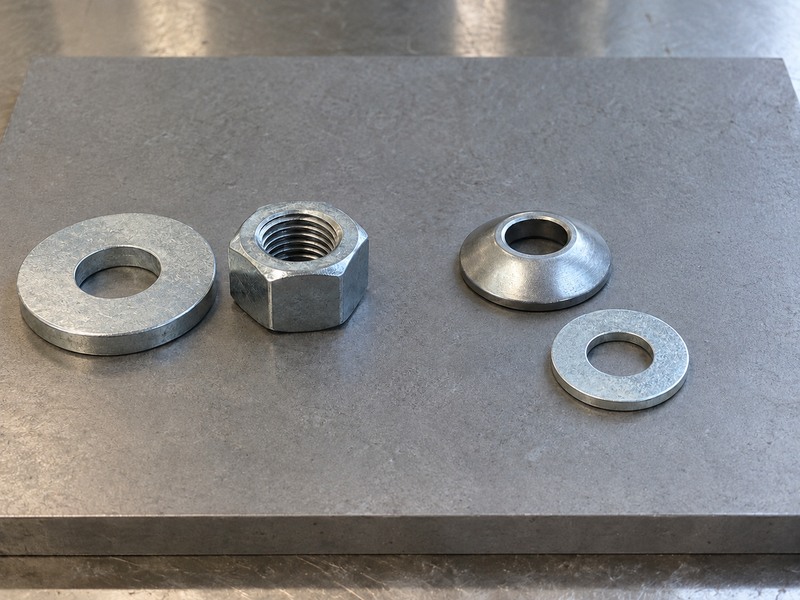
A seating comparison should demonstrate intended component order and visible contact geometry through identified samples. It can explain why curved and flat interfaces serve different roles. It cannot prove capacity or quantify angular capability without suitable evidence. Keep sample review focused on geometry and identification.
Which sample views help an engineer?
Show the complete stack from more than one direction. A side view reveals relationships hidden in a top view. Include separated components where their mating surfaces need inspection. Avoid forcing an incorrect stack together for a convenient photograph.
- Complete stack showing bolt direction.
- Separated curved and flat contact surfaces.
- Compatible plate and nut identities.
How should you preserve the comparison?
Keep photographs with controlled component references. Link your matched accessory order to that accepted arrangement. Record performance questions separately so a visual fit review cannot become an unsupported approval.
| Sample view | What it explains | Limit |
|---|---|---|
| Side assembly | Component order and axis | No capacity proof |
| Separated surfaces | Mating geometry | No universal interchangeability |
| Plate context | Intended seating arrangement | Applies to identified parts |
A clear physical comparison helps locate the unresolved interface.
7. What can a spherical washer not correct?
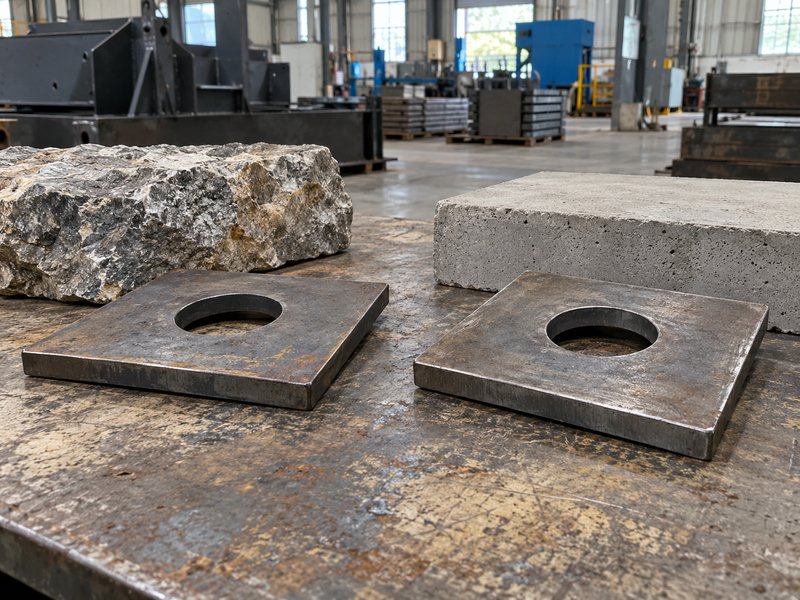
A spherical washer cannot automatically correct unsuitable plate support, an incorrect thread pair or an unapproved collar arrangement. Those problems involve different interfaces. A curved washer addresses only its documented seating function. Diagnose the actual geometry before selecting a remedy.
Which problems should remain separate?
Distinguish angular seating from supporting-surface contact. A washer can sit within its intended seat while the plate lacks acceptable support behind it. A compatible curved surface also says nothing about nut thread identity. Each interface needs its own accepted basis.
- Nut and bar thread compatibility.
- Washer and plate seating compatibility.
- Plate contact with the supporting substrate.
How should unexpected conditions be handled?
Follow project procedures when observed contact differs from the approved detail. For US underground coal roof bolts, review washer-conformity requirements before accepting a changed seating arrangement. Avoid stacking extra washers or bending components through an improvised response.
| Problem observed | Interface involved | Review direction |
|---|---|---|
| Nut does not fit | Thread pair | Component compatibility |
| Curved surfaces mismatch | Washer and plate | Matched-seat review |
| Plate lacks intended contact | Plate and substrate | Support-detail review |
Choose a response for the affected interface rather than every visible symptom.
8. Which incoming checks protect a matched stack?
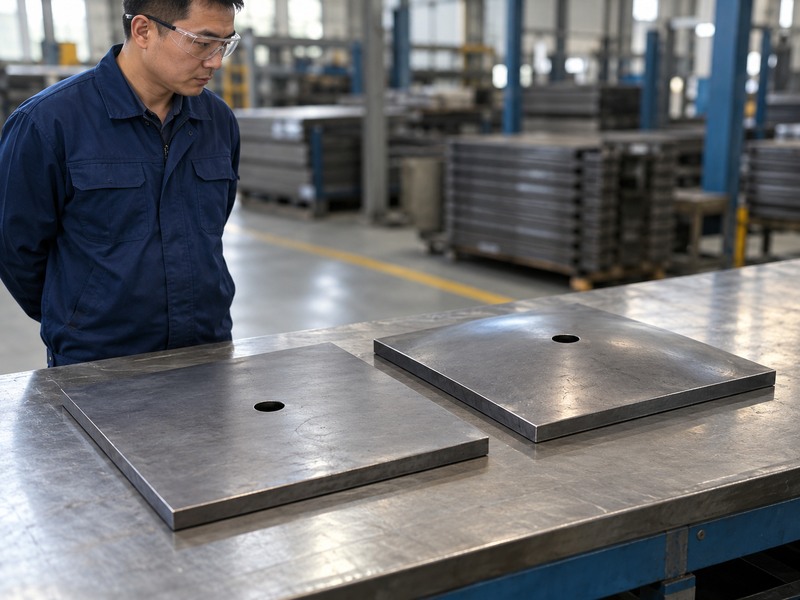
Incoming checks protect a matched stack by preserving component identity, condition and required quantities. Similar curved washers can become mixed when supplied loose. A receiving team needs an accepted component schedule rather than an assumed universal washer category. Keep different systems separated through material handling.
What should receiving compare?
Check each piece against its assigned mating part. Compare the washer with controlled drawings and an accepted reference where available. Verify associated flat washers when the assembly requires them. Segregate damaged, unidentified or substituted components for review.
- Exact washer, nut and plate references.
- Required quantities within each complete stack.
- Condition of intended contact surfaces.
Which purchasing detail supports that inspection?
Use a complete plate and washer schedule with accepted alternatives identified separately. Retain available traceability information with your order. Receiving should confirm an approved arrangement rather than determine angular suitability for an unfamiliar component.
| Receiving check | Purpose | Hold condition |
|---|---|---|
| Component identity | Preserve matched geometry | Unknown washer family |
| Complete quantities | Preserve required interfaces | Missing flat or curved part |
| Contact-surface condition | Protect intended seating | Damage or discrepancy |
Good identification prevents an approved stack from becoming mixed hardware.
9. What should a substitution review examine?
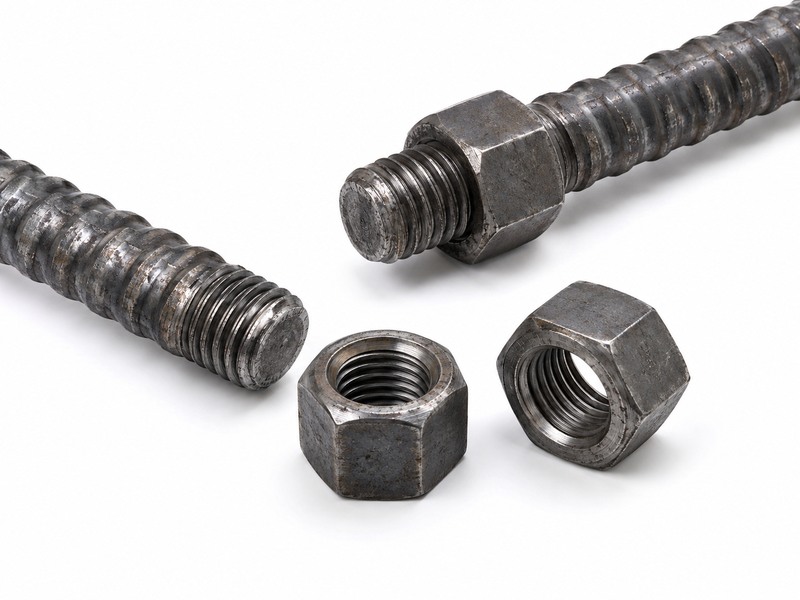
A substitution review should examine mating geometry, component functions and evidence for the proposed angular condition. A different washer can change more than its outside dimensions. Review the complete nut-and-plate arrangement with it. Limit any acceptance to the identified alternative and its stated conditions.
Which changes deserve explicit questions?
Describe changed contact surfaces in the proposal. Show the original and proposed components beside their mating parts. Identify differences in the stack and available evidence. Keep an unresolved field visible instead of filling it with a different manufacturer’s value.
- Changed curved profile or central arrangement.
- Alternate flat washer or nut interface.
- Revised stated angular applicability or restrictions.
What should the accepted revision contain?
Record exact component references and a revised assembly detail. Include applicable restrictions and any changed instructions. Issue that revision before material teams exchange components between approved sets.
| Proposed difference | Review question | Acceptance output |
|---|---|---|
| New curved washer | Compatible seat? | Matched component reference |
| Changed stack | Required interfaces retained? | Revised assembly detail |
| Different angle claim | Applicable evidence? | Defined restriction |
Approve an identified seating arrangement rather than a washer shape.
10. How do you prepare a spherical-washer inquiry?
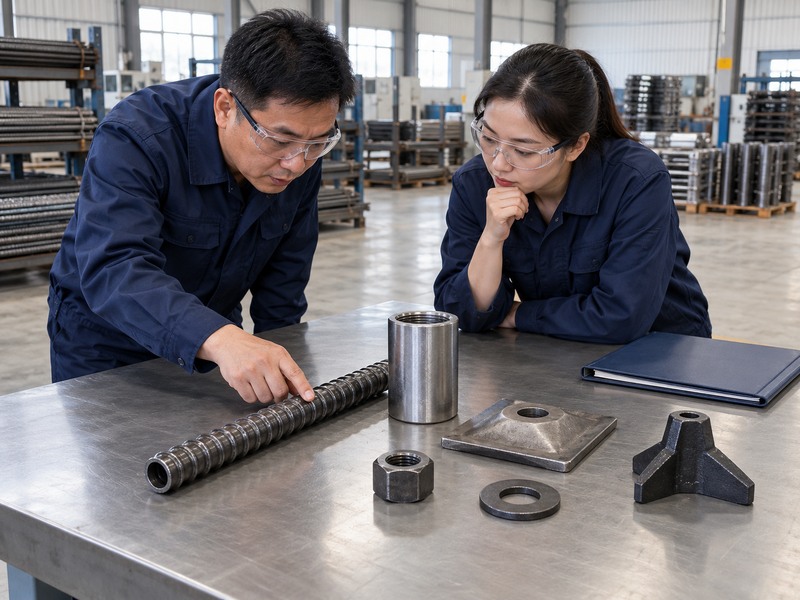
Prepare the inquiry with bolt direction, plate seating geometry and all required stack components. Include the approved support detail and any observed discrepancy. Ask suppliers to identify a documented compatible arrangement. Keep final suitability with your project’s authorized engineering review.
What should your request show?
Show mating surfaces alongside the seating question. A close-up of one washer may hide the actual interface problem. Include installation context and controlled component references. State whether you need original supply, replacement review or clarification of an installed condition.
- Nut, washer and plate component references.
- Bolt axis and local supporting-surface context.
- Required angular condition and its definition.
- Applicable evidence and acceptance requirements.
What should happen before ordering?
| Closure check | Action to retain |
|---|---|
| 1 | Nut, washer and plate component references. |
| 2 | Bolt axis and local supporting-surface context. |
| 3 | Required angular condition and its definition. |
| 4 | Applicable evidence and acceptance requirements. |
Send your seating detail and component information when you contact us. Request an assembly-specific response covering matching parts and documented restrictions. Release the accepted stack after your reviewer resolves each contact interface.
Q1: Can I use any rounded washer with a domed plate?
No, curved parts require compatible mating geometry and a documented assembly arrangement.
Q2: Can a spherical washer replace every flat washer?
No, some systems require both because their interfaces and functions differ within the matched stack.
Q3: What’s the best angular allowance to use?
Use the allowance documented for your exact assembly and reference definition. No universal value applies here.
Q4: How do I know whether the problem is behind the plate?
Compare actual substrate contact with the approved support detail. Angular washer seating and plate support need separate checks.
Q5: Can I add extra washers to improve contact?
Only through an accepted revised detail. Extra hardware can change the intended stack and load path.