Rock bolts are long, high-strength reinforcing steel rods designed to stabilize underground excavations by transferring tension from unstable outer strata to deeper, consolidated rock masses. When working in underground mining or tunneling, loose, shifting geological formations pose a constant threat of sudden collapse, risking both lives and equipment. Overlooking the optimization of your ground support systems can lead to devastating structural failures and project shutdowns. That is why choosing the exact rock bolt sizes and anchoring mechanisms is the ultimate defense against shifting strata. This guide explores the mechanical principles, material compositions, and installation techniques necessary to ensure complete structural safety.
What Is a Rock Bolt and How Does It Support Rock?
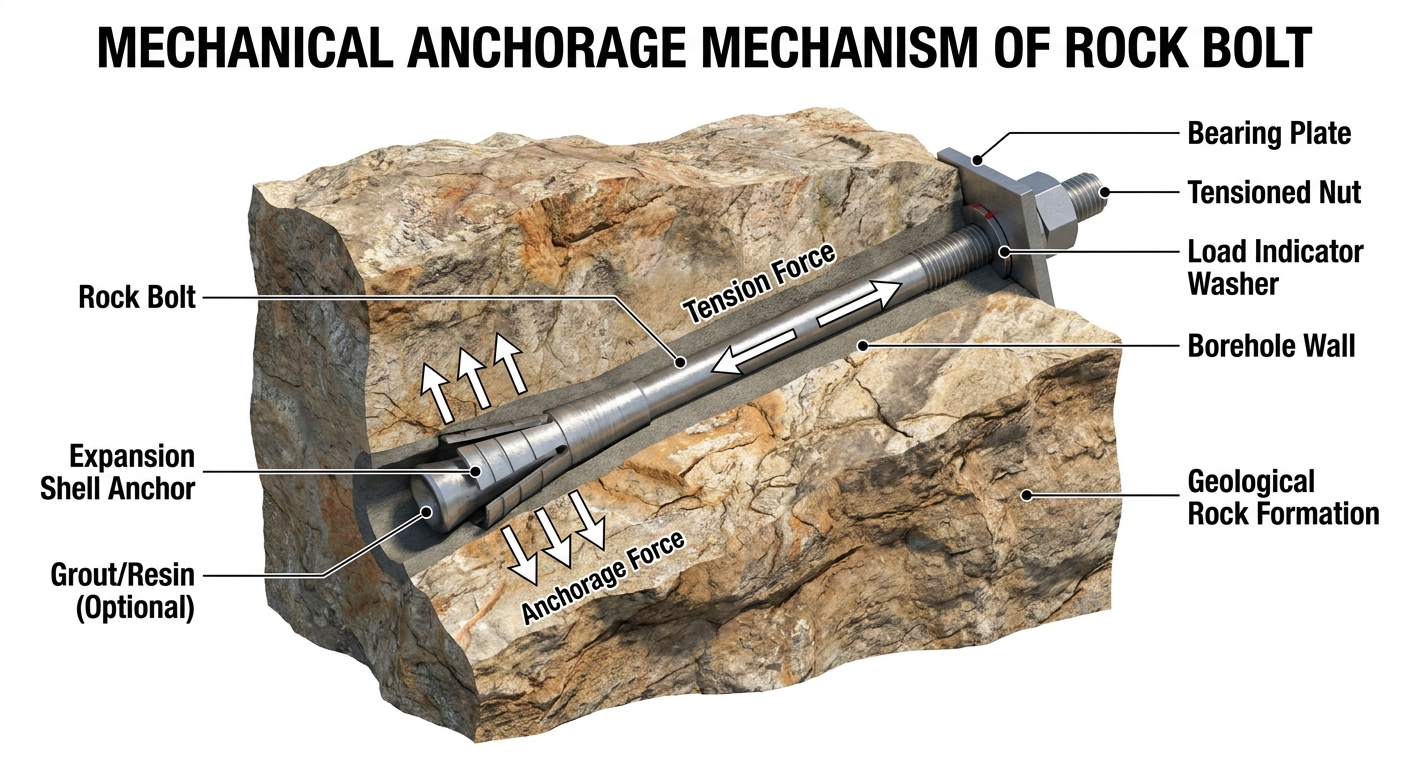
A rock bolt stabilizes rock masses by mechanically anchoring loose outer layers to a competent, deeper zone of solid strata. By binding these geologic layers together, the bolt increases the frictional resistance along joints and prevents progressive failure. Selecting the right rock bolt sizes is essential for optimizing this load-bearing system under extreme subterranean pressures. This active reinforcement allows tunnels and mines to maintain structural integrity.
The reinforcement utilizes either a suspension mechanism or a beam-building process to stabilize the ground. These mechanical methods prevent gravitational falls and lateral shifting of individual stone blocks. Through these engineering actions, rock bolts transform loose rock into a unified, self-supporting arch.
Understanding the Mechanics of the Suspension System
The suspension system acts like an anchor, hanging a loose, weak layer of rock from a self-supporting overhead stratum. This mechanism is critical when dealing with laminated or bedded rock formations where the outer skin is prone to peeling. Think about it. Without this tensile connection, gravity would slowly pull down the loose slabs, causing a sudden roof failure.
The bolt transfers the weight of the unstable lower blocks directly into the competent ground above. This structural transfer stabilizes the roof without requiring heavy external arches.
- Tension Transfer: Redirects the weight of loose rock layers deeper into the ground.
- Bedding Stability: Restricts bed separation and minor rock movements.
- Face Protection: Prevents minor rock blocks from falling on active crews.
Exploring the Beam Building Mechanism in Jointed Rock
Installing several bolts across jointed strata clamps the layers together, increases friction, and resists bending. This process creates a unified, stiff beam from fractured stone plates that can support its own weight. Let’s dive in. This active clamping force prevents the rock layers from sliding past each other along geological joint planes.
Key Takeaway: Applying tensioned rock bolts turns fractured, weak rock formations into a cohesive, self-supporting structural beam, ensuring worker safety.
| Support Mechanism | Primary Action | Ideal Rock Condition | Active or Passive | |
|---|---|---|---|---|
| Suspension | Hangs loose rock from stable strata | Thin bedded layers over solid rock | Passive or Active | |
| Beam Building | Clamps layered strata together | Heavily stratified/fractured zones | Active (Pre-tensioned) |
Geomechanical analysis shows that choosing the right support mechanism prevents progressive shear failures before they compromise the excavation boundary.
Why Do Different Rock Bolt Sizes Matter for Safety?
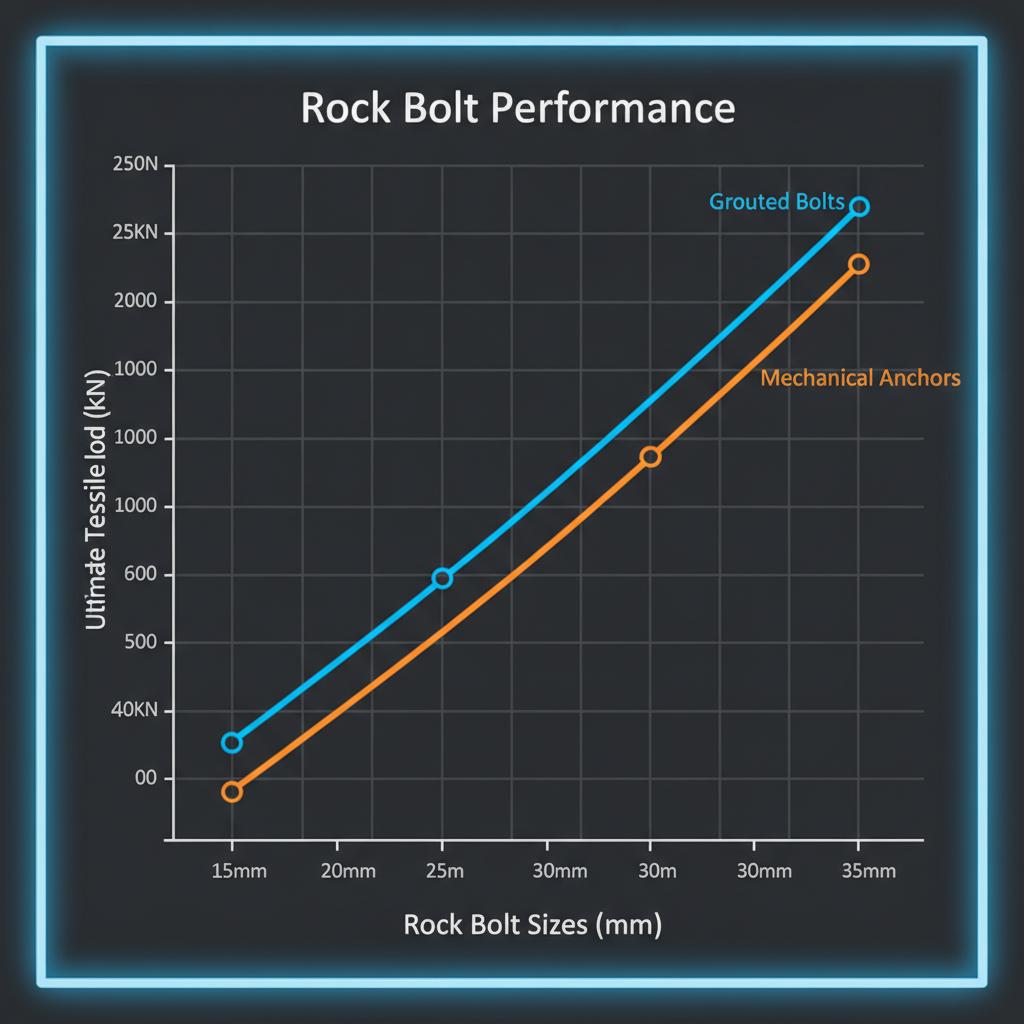
Different rock bolt sizes matter for safety because they directly dictate the system’s ultimate tensile load-bearing capacity and its ability to withstand extreme geological shear forces. If you install undersized anchors in a high-stress zone, you risk sudden mechanical failure, rockbursts, and severe tunnel collapses. Therefore, calculating the correct rock bolt sizes is the first line of defense for keeping underground crews safe. Each geological environment demands tailored dimensions to prevent fatal structural yielding.
Additionally, matching the physical bolt diameter with the drilled borehole diameter is critical for anchoring agents. When these dimensions do not align, adhesive resins cannot mix correctly, leading to anchor slippage. Let us explore how these sizing decisions prevent progressive geomechanical failures.
Sizing Diameters to Match Load Requirements
Standard rock bolt diameters range from 20mm to over 36mm, with each step up dramatically increasing tensile capacity. Choosing the correct diameter is essential to prevent structural shear failure. Here is why: a bolt with insufficient cross-sectional area will yield rapidly when the rock mass begins to squeeze.
Engineers rely on these standard diameters to design support patterns that can handle the predicted ground pressure. Selecting the appropriate size guarantees that your tunnel roof remains rigid.
- 20mm to 22mm Bolts: Ideal for standard utility lines and low-stress coal mines.
- 25mm to 28mm Bolts: Standard for highway spans and high-speed rail tunnels.
- 32mm to 36mm Bolts: Engineered for deep excavations facing high rockburst risks.
Engineering Precise Tolerances for Installation
To install these heavy bolts, your drilling rigs must maintain strict manufacturing tolerances. Using high-performance components, such as a custom conveyor roller shaft , ensures that the boring machinery operates smoothly without causing drill drift. Let’s look closer. A clean, straight borehole is crucial for achieving high-strength point anchors.
Key Takeaway: Matching the exact cross-sectional area of your bolt to the expected geological loads prevents premature steel yielding and guarantees system longevity.
| Bolt Diameter (mm) | Yield Strength (kN) | Tensile Strength (kN) | Borehole Size Range (mm) | |
|---|---|---|---|---|
| 20 | 150 – 190 | 220 – 260 | 28 – 32 | |
| 25 | 240 – 290 | 340 – 390 | 33 – 37 | |
| 32 | 400 – 460 | 560 – 620 | 41 – 45 |
Maintaining a tight 4mm to 6mm anchoring annulus is essential for maximizing shear transfer between the rock face and the steel core.
How Do Mechanical Rock Bolts Secure Loose Strata?
Mechanical rock bolts secure loose strata by deploying an expandable steel shell at the deep end of a borehole to wedge itself firmly against the surrounding rock. Tightening the bolt pulls a tapered plug through the shell, forcing the metal leaves outward to grip the rock face. Correctly matching standard rock bolt sizes with your drilling equipment ensures that the expansion shell achieves maximum grip. This physical wedge action provides immediate ground support right after installation.
Localized expansion makes these bolts point-anchored support systems. They work especially well in hard, stable rock formations that need immediate tension. Let’s look closer at their typical field applications.
The Mechanics of Wedge Seating and Torque
Applying torque to the mechanical bolt drives the tapered plug outward and expands the serrated shells into the surrounding borehole. This mechanical interlock holds the bearing plate tightly against the excavation face. Think about it. This physical wedge action provides immediate holding capacity without requiring adhesive curing time.
This immediate structural response makes mechanical anchors highly valuable for rapid mining cycles. However, because they only grip at a single point, they depend heavily on hard rock quality.
- Point Anchorage: Focuses compressive forces deep within the stable rock mass.
- Immediate Tensioning: Allows crews to secure the faceplate right after insertion.
- Torque Control: Requires calibrated wrench tools to verify target pre-loads.
Operational Limits of Point Anchored Bolts
Because these bolts are not bonded along their entire length, they can be vulnerable to blast vibrations. If the rock around the expanded wedge zone crushes, the tension is lost completely. Here is the bottom line: mechanical anchors should only be used in competent, medium-to-hard rock formations.
Key Takeaway: Mechanical anchors offer fast, immediate holding capacity in stable rock, making them ideal for high-speed geological operations.
| Bolt Variant | Anchor Type | Tension State | Primary Vulnerability | |
|---|---|---|---|---|
| Mechanical Shell | Localized point wedge | Active (Pre-tensioned) | Blast vibrations, rock crushing | |
| Fully Encapsulated | Full-length bond | Passive or Active | Slow grout/resin curing |
Point-anchored bolts demand high-quality rock strata at the wedge zone to prevent premature anchor slip under load.
What Role Do Grout-Bonded Rock Bolts Play in Tunnels?
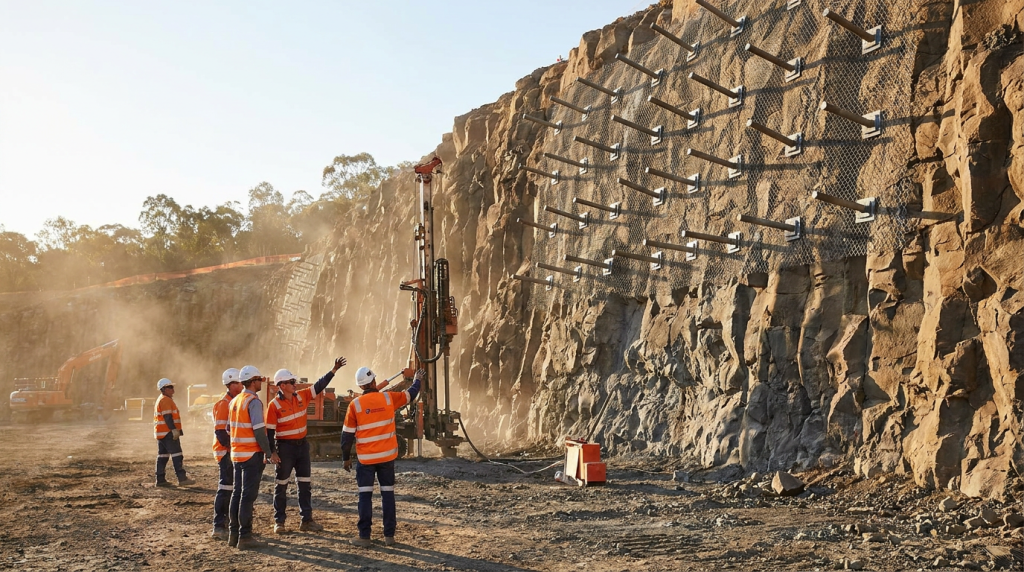
Grout-bonded rock bolts play a critical role in tunnels by creating a continuous, full-length shear bond that distributes geological stresses evenly and shields the steel rod from water damage. By packing the borehole with high-strength cement grout or rapid-curing chemical resins, you create a permanent barrier against ground movement. Specifying the correct rock bolt sizes is vital to ensure an optimal chemical annulus exists around the metal shaft. Once cured, this adhesive bond prevents localized geological shifts from breaking the steel support.
This full-length anchoring mechanism makes grouted rebar the standard for permanent civil engineering tunnels. Even under heavy water inflow, the protective grout prevents corrosion from weakening the steel. Let’s examine how different grouting materials perform under stress.
Chemical Resins vs Cement Grouting Materials
Chemical resin cartridges cure within minutes to provide fast, high-strength support, whereas cement-based grouts are slower but highly cost-effective for large holes. The choice between these materials dictates your project’s cycle times and budget. Let’s dive in. Polyester resin is standard for rapid development, while cement slurry is preferred for long-term civil works.
Both systems work by bonding the entire length of the steel bar to the rock mass. This full-length bond prevents any single block from sliding along joint planes.
- Resin Cartridges: Rapid curing times ranging from 30 seconds to 15 minutes.
- Portland Cement: Extremely cost-effective for deep, high-volume anchoring patterns.
- Corrosion Protection: Both materials act as a seal against acidic groundwater.
Shear Resistance of Fully Encapsulated Rebar
Once the grout cures, the bolt provides passive resistance against any ground shifting. This full-length connection transfers joint shear stresses evenly along the steel shaft, preventing local failure. Here is why: a fully bonded bolt prevents minor block slippage before it can trigger a wider collapse.
Key Takeaway: Specifying fully encapsulated grout-bonded bolts provides high shear resistance and long-term corrosion protection in wet civil tunnels.
| Grout Medium | Typical Cure Time | Relative Cost | Primary Support Mode | |
|---|---|---|---|---|
| Polyester Resin | 30 seconds – 15 minutes | Higher | Active or Passive | |
| Portland Cement | 12 – 24 hours | Lower | Passive (Post-grout) |
Fully grouted systems maximize shear resistance across joint planes, ensuring long-term underground civil structures remain secure.
Why Choose Friction Rock Bolts for Temporary Support?
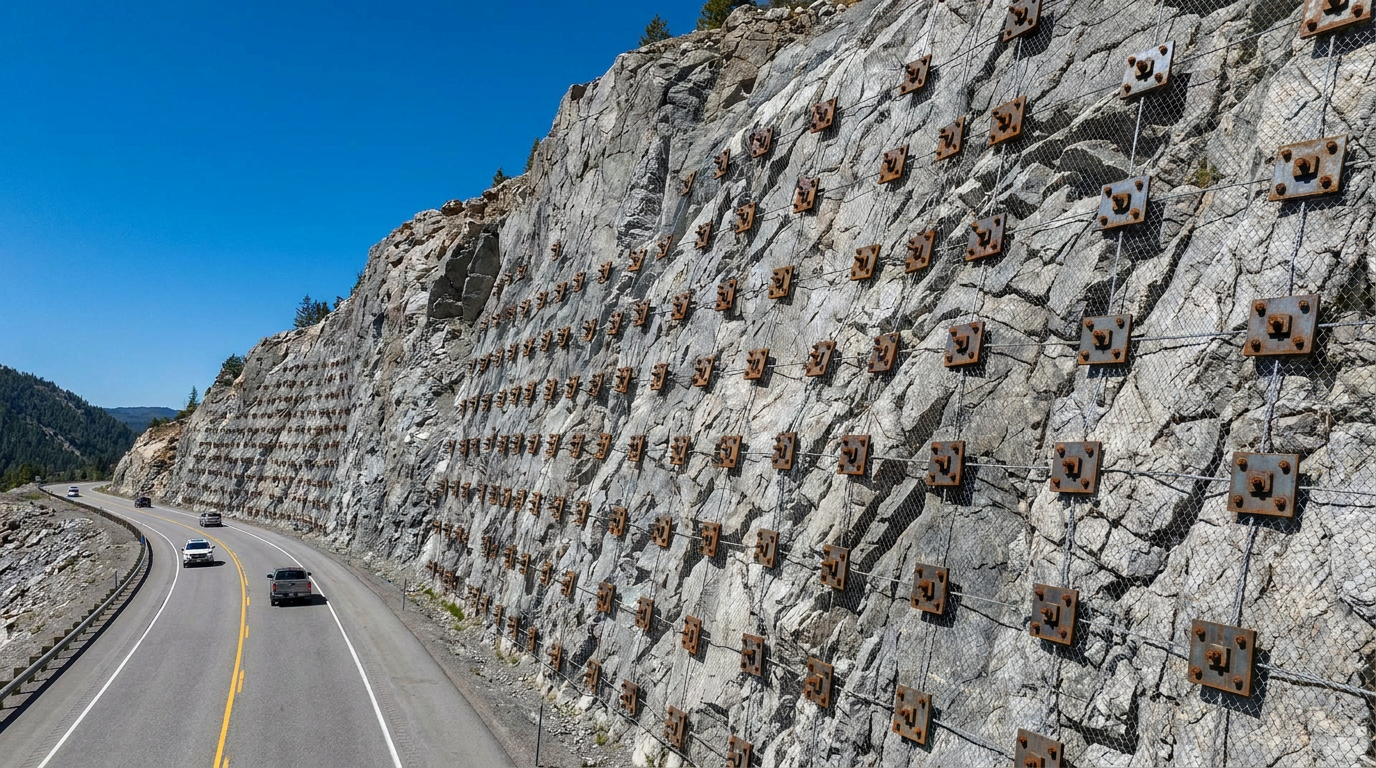
You should choose friction rock bolts for temporary support because they can be installed within seconds and provide immediate radial clamping force along the entire borehole length. These bolts, including split-set stabilizers and expandable Swellex systems, work by pressing outward against the rock without needing any chemical grout or cement. Sizing the borehole precisely to match standard rock bolt sizes is essential for establishing the tight interference fit required for friction support. This immediate structural grip allows mine and tunnel faces to advance without delay.
Friction bolts are also highly yieldable, meaning they can slip slightly under dynamic loads rather than snapping. This elasticity is highly beneficial in active mine faces undergoing blasting vibrations. Let’s check how these friction-based systems operate.
Radial Force Mechanics of Split-Set Stabilizers
Split-sets are steel tubes with a continuous slot along their length, driven into a borehole slightly smaller than the tube. This creates a radial spring force that exerts constant friction along the hole. Think about it. There is no waiting for grout to dry, making installation incredibly rapid.
The tube conforms perfectly to any natural wall irregularities. This interference fit provides robust, instant ground support.
- Radial Spring Pressure: Exerts continuous outward force along the entire borehole wall.
- Percussion Drive: Installed quickly using standard pneumatic or hydraulic rock drills.
- Yield Capability: Slides slightly to absorb ground deformation without snapping.
Swellex Inflatable Bolts and Hydraulic Grip
Swellex bolts consist of a folded steel tube expanded inside the borehole using high-pressure water pumps. This expansion creates an extreme friction and mechanical interlock with the rock face. Here is the bottom line: Swellex anchors provide uniform, reliable load capacity even in highly fractured ground.
Key Takeaway: Friction rock bolts offer rapid installation and instant holding power, making them the ultimate choice for active, temporary mining zones.
| Friction Type | Activation Method | Radial Force Level | Installation Effort | |
|---|---|---|---|---|
| Split-Set | Mechanical percussion drive | Moderate | Extremely Low | |
| Swellex | High-pressure hydraulic inflation | High | Low (Requires water pump) |
Friction-stabilized bolts provide highly adaptable, dynamic support by yielding slightly under extreme seismic loads rather than snapping.
How Do Self-Drilling Rock Bolts Simplify Drilling?
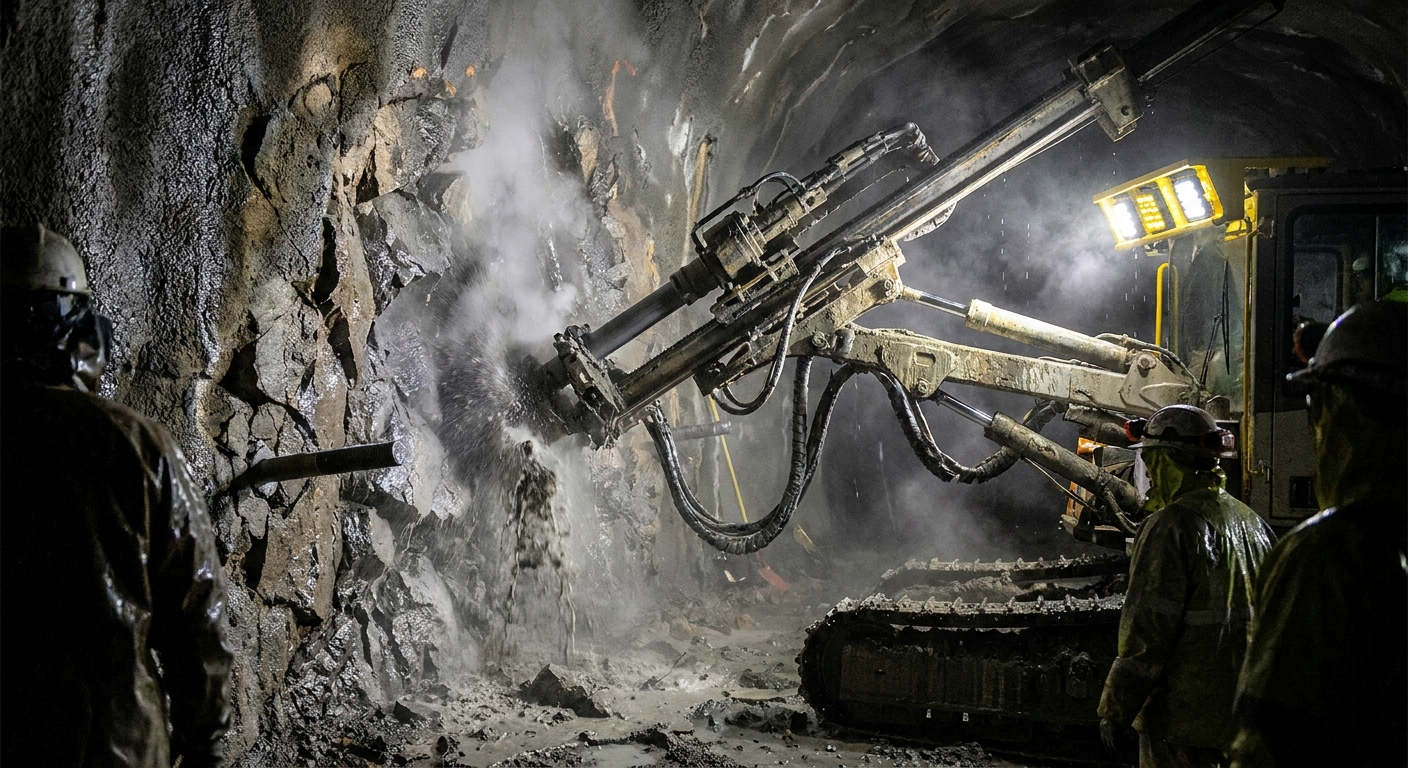
Self-drilling rock bolts simplify drilling by acting as the drill string, anchor bar, and grouting tube at the same time, so crews can secure collapsing ground in one continuous step. A sacrificial drill bit at the lead tip lets these hollow rods cut through unstable sand, soil, and fractured rock without temporary casing pipes. Choosing the correct rock bolt sizes lets crews reach the target depth and prepare the anchor in one pass. Immediately after drilling, crews pump grout through the hollow core to encapsulate the anchor.
This innovative approach completely eliminates the risk of losing a borehole to collapsing walls. It provides a reliable geotechnical solution where traditional pre-drilling methods fail. Let’s examine the design advantages of this system.
The Hollow Core Design as a Multifunctional Conduit
The hollow center of the bar acts as a drill rod to flush out debris, and later as a high-flow grout tube. This ensures that the borehole is filled completely from the bottom up. Let’s look closer. It eliminates the traditional drilling bottlenecks in loose, sandy formations.
Because the anchor bar is never extracted, the hole cannot collapse before grouting. This makes it highly efficient in sandy soils.
- Flushing Conduit: Uses water or air to remove drilling debris while cutting.
- Hollow Steel Bar: Combines high-tensile drill rod and anchor into one.
- Sacrificial Bit: Carves through variable rock and soil types without wearing out.
High-Performance Machinery Requirements
Operating these advanced systems demands robust drilling machinery that can handle continuous high-torque operations. Equipping your drilling rigs with heavy-duty conveyor rollers ensures that material handling and rig movement remain highly reliable on site. Think about it. Maintaining your heavy machinery prevents expensive downtime during critical excavation cycles.
Key Takeaway: Choosing self-drilling rock bolts removes the risk of borehole collapse, speeding up projects in difficult, watery soils.
| Ground Condition | Drilling Challenge | Standard Bolt Solution | Self-Drilling Advantage | |
|---|---|---|---|---|
| Loose Gravel/Sand | Continuous hole collapse | Casing pipes required | Single-pass drilling and grouting | |
| Highly Fractured Rock | Blocked boreholes | Redrilling frequent | Direct insertion, zero collapse |
Self-drilling hollow bars eliminate the need for temporary casing, delivering rapid support in the poorest geological conditions.
What Key Accessories Ensure Rock Bolt Performance?
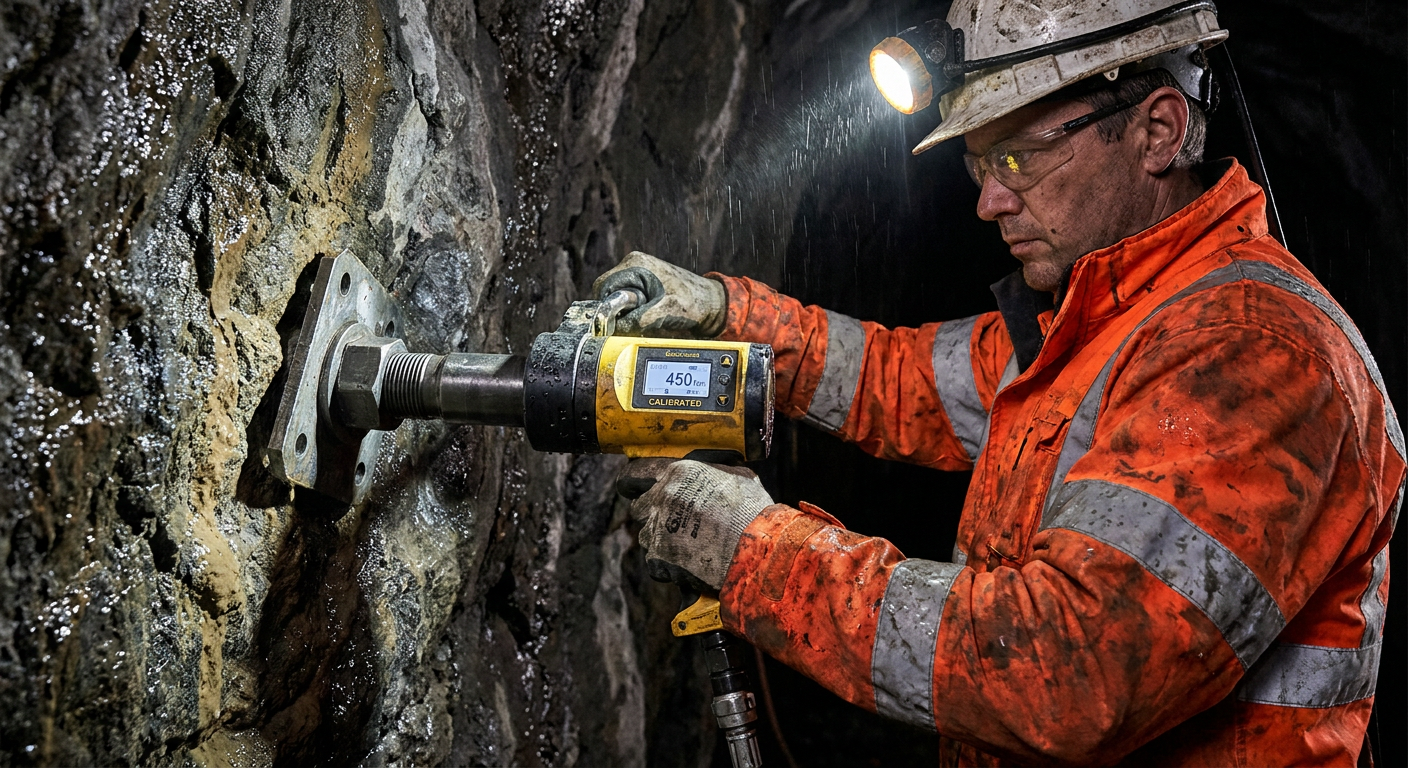
Key accessories ensure rock bolt performance by distributing high tension loads across the rock surface and maintaining the alignment of the bolt under uneven rock face conditions. Essential components like heavy-duty steel dome plates, spherical washers, and high-strength nuts prevent the bolt head from punching through soft outer stone layers. Choosing these accessories to match your specific rock bolt sizes is vital for maintaining systemic load integrity. Without these interfaces, even the strongest anchor would fail as the surface rock crumbles away.
These plates and washers allow the bolt to be tensioned evenly, even if the borehole was drilled at an angle. Let us examine how each structural accessory contributes to overall safety.
The Structural Duty of Bearing Plates
Bearing plates act as the primary interface, distributing high tension forces from the bolt head onto the rock face. They prevent the steel bolt from punching through soft rock and soil layers. Here is the bottom line: without a proper faceplate, the bolt’s tensile force cannot stabilize the surface skin.
These plates are typically curved or domed to increase their structural stiffness. They compress the outer rock layers to create a stable geomechanical arch.
- Load Distribution: Spreads localized tensile forces across a wider rock surface.
- Skin Control: Holds wire mesh and local rock fragments securely in place.
- Dome Geometry: Increases structural resistance against bending under load.
Utilizing Spherical Washers for Angle Alignment
Spherical washers allow the faceplate to remain perpendicular to the bolt even if the hole was drilled at an angle. This ensures that tension forces are applied axially, preventing harmful bending stresses in the steel. Let’s dive in. Maintaining axial alignment is critical for preventing premature thread failure.
Key Takeaway: Equipping your installations with matched dome plates and spherical washers guarantees that tensile loads remain centered and stable.
| Accessory Component | Primary Purpose | Material Class | Critical Inspection Parameter | |
|---|---|---|---|---|
| Dome Bearing Plate | Load distribution | Structural Steel | Plate deformation/cracking | |
| Spherical Washer | Angle alignment | High-strength Alloy | Angular contact alignment | |
| Load Indicator | Tension verification | Carbon Spring Steel | Visual tab flattening |
High-quality accessory pairings prevent surface rock spalling and ensure the rock bolt’s tensile load is transferred safely to the rock mass.
How Are Rock Bolts Installed in Underground Mines?
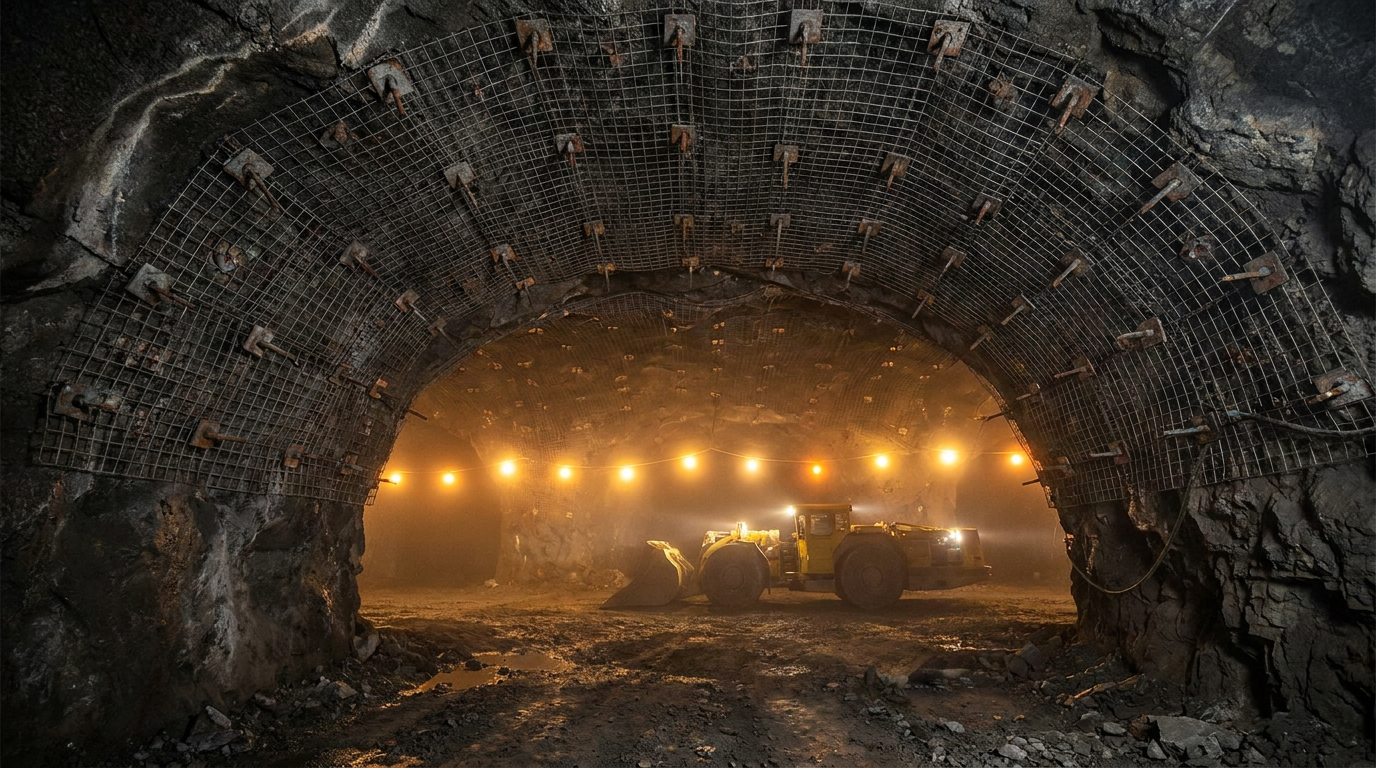
Automated roof-bolting rigs install rock bolts in underground mines by drilling boreholes, inserting resin capsules, and driving steel bolts to secure the roof in a fast, mechanized cycle. This computerized sequence minimizes human exposure to unsupported rock and keeps miners safe during rapid production. Matching the drilling equipment to specific rock bolt sizes helps the system mix resin correctly and achieve maximum holding capacity. This speed supports the rapid pace of modern mining cycles.
The bolting process is typically completed in groups or patterns to build a continuous geomechanical arch overhead. Let us review the precise step-by-step methods used by mine support crews.
Mechanized Roof Bolter Cycle Sequences
Modern underground mines utilize massive, computerized roof bolters to drill and install anchors rapidly. The rig drills the borehole, inserts fast-acting resin cartridges, and pushes the bolt upward. Think about it. Mechanizing this cycle keeps your crew away from unsupported, hazardous excavation faces.
The automated machinery ensures consistent spin and hold times for the chemical adhesive. This consistency is vital for maintaining high quality across hundreds of bolts.
- Automated Drilling: Drills highly uniform boreholes at precise angles.
- Resin Insertion: Automatically loads fast-acting chemical adhesive capsules.
- Spin and Hold: Mixes the chemical components and holds the bolt during curing.
Integrating Welded Wire Mesh for Skin Support
Support crews install heavy-duty steel mesh along with the faceplates to catch small, loose rocks between the bolt pattern. This combined approach provides complete surface protection across the roof and walls of the mine. Here is why: even a small rock block falling from the roof can cause severe injury.
Key Takeaway: Mechanizing your roof-bolting operations ensures maximum installation speed while protecting your workforce from rockfalls.
| Installation Step | Critical Control Point | Safety Target | Common Hazard | |
|---|---|---|---|---|
| Hole Boring | Depth and straightness | Clean borehole | Driller dust inhalation | |
| Resin Spin | Rotational speed/time | Uniform chemical mixing | Under-mixed soft resin | |
| Pre-Tensioning | Torque wrench calibration | Target pre-load reached | Nut stripping/thread damage |
Mechanized installation sequences minimize human exposure to unsupported roofs, significantly reducing workplace accidents in mining.
How Is Rock Bolt Load Capacity Tested on Site?
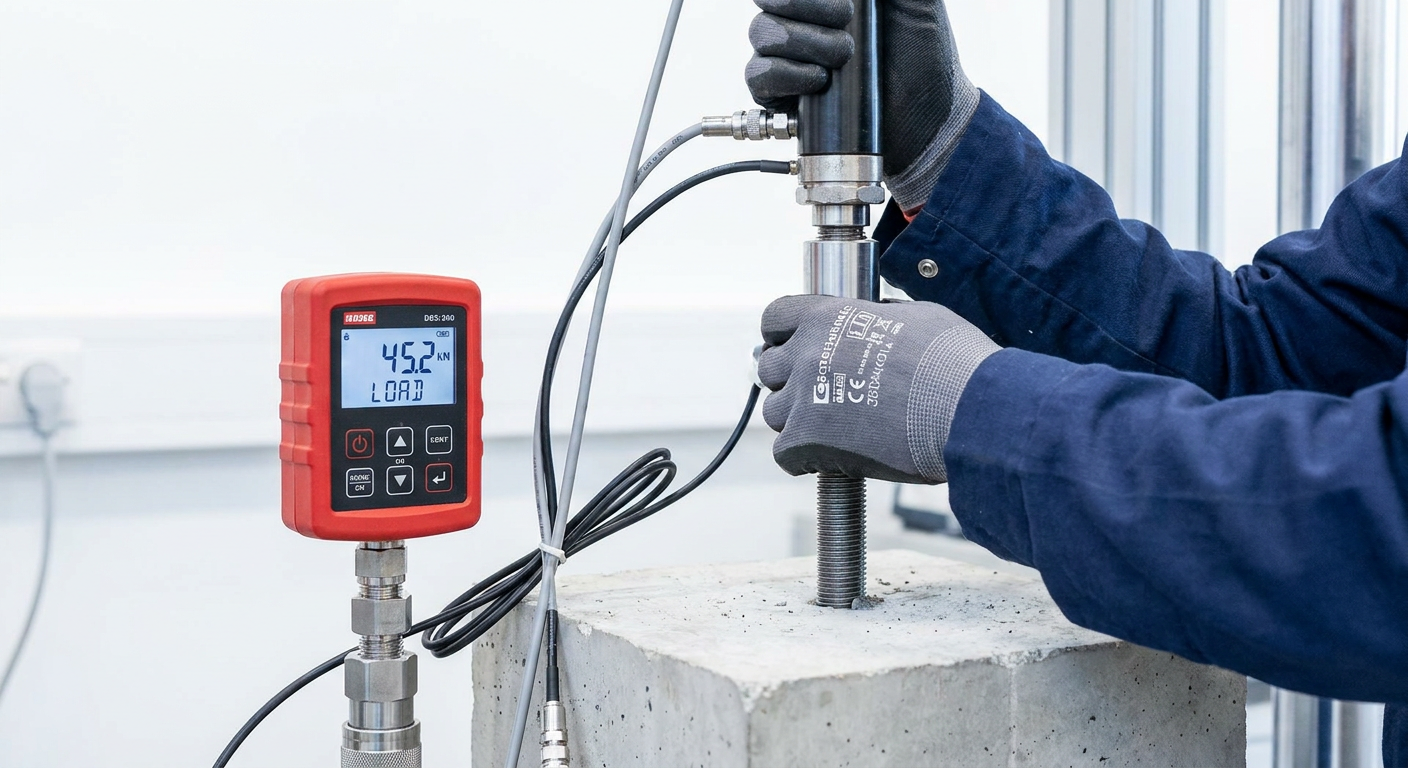
Rock bolt load capacity is tested on site using specialized hydraulic center-hole jacks that apply an incremental, measured pull-out force directly to the end of the installed anchor. This physical test verifies that the bond between the grout, steel, and rock mass can safely withstand your structural design loads. Verifying on-site performance across varying rock bolt sizes is the only way to prove your safety factors are met before tunneling advances. If the bolt slips or yields prematurely, engineers must modify the spacing or grout formula.
These tests provide hard geomechanical data to satisfy strict safety regulations and contract specifications. Let’s look closer at how pull-out tests are executed and interpreted.
Executing Hydraulic Pull-Out Tests on Site
To perform a pull-out test, a hydraulic center-hole jack is secured over the protruding threaded tip of the installed bolt. The pump applies a measured tensile force while a dial gauge records the outward displacement. Here is the bottom line: this physical test proves whether the anchor’s bond strength meets your project design specs.
If the bolt holds the target test load without slipping, the installation is verified. Testing is standard for meeting international safety regulations.
- Measured Tension: Applies precise, incremented hydraulic forces to the steel bar.
- Displacement Tracking: Monitors if the anchor is pulling loose from the rock.
- Bond Verification: Proves the quality of the resin or mechanical expansion.
Analyzing Load-Displacement Curves for Safety
A steep, linear load-displacement curve indicates a rigid, high-performance bond, whereas a flat curve warns of anchor slippage. This geomechanical data allows engineers to adjust grout mix designs or decrease spacing. Let’s look closer. Accurate curves prevent the catastrophic deployment of weak, slipping anchors.
Key Takeaway: Conducting regular site pull-out tests provides direct, empirical confirmation that your support system can handle actual rock loads.
| Test Parameter | Primary Equipment | Success Metric | Corrective Action for Failure | |
|---|---|---|---|---|
| Pull-Out Load | Hydraulic center-hole jack | Zero slippage at design load | Adjust grout/resin mix ratios | |
| Displacement | Dial indicator/sensor | Under 5mm of total movement | Decrease spacing between bolts |
Rigorous field pull-out testing is the ultimate quality check to verify that actual ground support capacity matches your engineering designs.
How Do Rock Bolts Compare with Cable Anchor Systems?
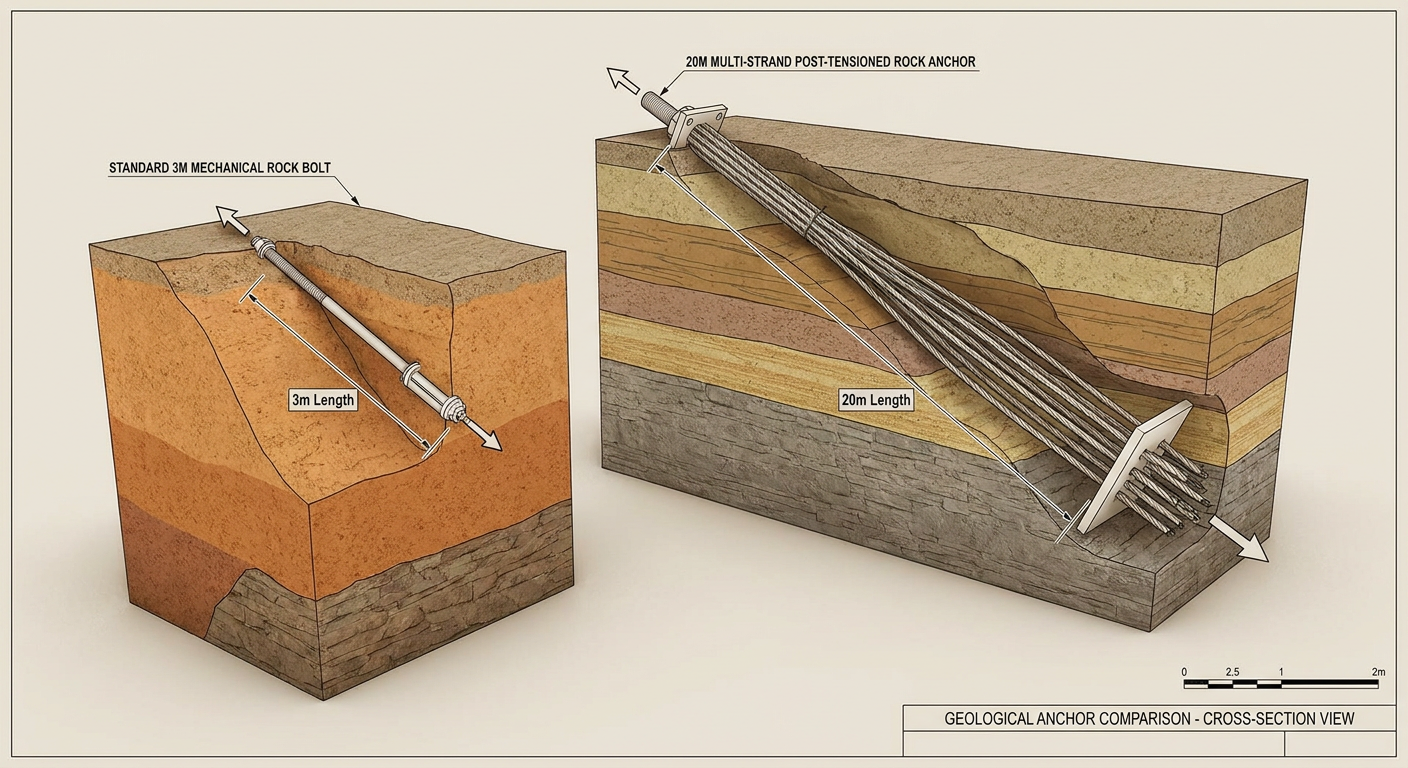
Rock bolts are shorter, rigid support rods designed to stabilize the immediate rock face, whereas cable anchor systems utilize long, flexible multi-strand steel wires to secure large structural loads deep into solid bedrock. Rock bolts are typically installed in lengths under 6 meters for localized skin and beam-building support. Selecting the appropriate rock bolt sizes allows you to manage localized excavation pressures efficiently and economically. In contrast, cable anchors are tensioned up to 30 meters deep to stabilize massive bridge abutments, dam walls, and deep excavations.
Because cable anchors are flexible, they can handle immense dynamic loads and are easier to transport into tight underground spaces. Let’s compare their physical properties and mechanical capabilities.
Mechanical Distinctions and Tensile Capacities
Standard rock bolts handle loads up to 300 kN, while multi-strand cable anchors can easily exceed 1,000 kN of tensile capacity. This fundamental difference dictates how you approach stabilizing tunnel roofs versus high highway slopes. Think about it. Rigid bars cannot easily match the 1,000+ kN capacity of multi-strand cables.
However, rock bolts are far cheaper and faster to install for immediate rock skin control. This makes them the primary choice for rapid underground development.
- Rock Bolts: Best for immediate rock skin control and shallow geomechanical arches.
- Cable Anchors: Ideal for deep geological failure planes and heavy foundations.
- Material Flexibility: Cable strands can be coiled, making them easier to handle in tight tunnels.
Designing a Unified Geomechanical Support Pattern
Many heavy civil engineering excavations combine both systems to build a robust, multi-tiered reinforcement grid. You use high-density rock bolts for immediate face stability and deep cable anchors for long-term safety. Here is why: this layered approach manages both shallow rockfalls and deep-seated slope failures.
Key Takeaway: Combining short-range rigid rock bolts with deep-reaching cable anchors provides the ultimate multi-tiered protection for high-stress projects.
| Performance Parameter | Rock Bolt Systems | Cable Anchor Systems | |
|---|---|---|---|
| Typical Length | 1.5 to 6.0 meters | 10 to 40+ meters | |
| Tensile Capacity | 100 to 350 kN | 1,000 to 10,000+ kN | |
| Rigidity | High (Rigid Steel Bar) | Low (Flexible Steel Cables) | |
| Installation Speed | Fast | Slower (Requires deep drilling/tensioning) |
Balancing the short-range rigidity of rock bolts with the deep-reaching capacity of cable anchors is key to managing complex geological conditions.
Conclusion
Choosing the correct rock bolt specifications and maintaining precise manufacturing standards is vital for keeping underground civil and mining operations safe and stable. Utilizing high-quality, perfectly matched components prevents unexpected structural failures, helps control construction costs, and protects underground crews. When handling large-scale civil support projects, using high-precision manufacturing equipment is key to keeping operations running smoothly.
Ready to optimize your equipment? contact us today to secure premium, heavy-duty industrial rollers, custom-formed machine components, and precision shafts designed for your toughest projects.
FAQ
Can I use the same rock bolt sizes for all soil and clay types?
No. Soft clays and loose soils lack the compressive strength needed for standard mechanical or friction rock bolts to grip properly. In these unstable formations, you must use self-drilling hollow-core anchors with full cement grouting to establish a reliable, high-capacity bond.
What’s the best way to determine anchor hole spacing?
Geotechnical engineers determine anchor hole spacing using rock mass classification systems and 3D stress modeling. Typical spacing grids range from 1.0 to 2.5 meters, depending on rock quality. Common methods include Rock Mass Rating and the Q system.
How do I know if my chosen rock bolt is safe?
Absolutely. You must perform on-site hydraulic pull-out testing on a representative sample of installed bolts to physically verify their holding capacity. If the test load exceeds your calculated design safety limits without bolt slip or yielding, the installation is considered safe.
Can I install rock bolts without using grout or resin?
Yes. Friction-stabilized bolts (such as Split-Sets and Swellex systems) and mechanical expansion shell bolts do not require any grouting agent to function. They rely purely on radial friction or mechanical wedging against the borehole walls, making them excellent for immediate, temporary support.
How do I know if a tunnel roof requires additional cable anchors?
It depends. If the potential geological failure zone extends deeper than the reach of standard rock bolts (typically deeper than 6 meters), or if the tunnel span is extremely wide, you must install deep-reaching cable anchors to tie the excavation safely into deep, stable bedrock.