
Self drilling anchor drilling torque limits depend on a qualified hollow-bar assembly and its documented rotary-percussive drilling conditions. A rig can advance a hole while overstressing an unsuitable bar connection. You need evidence covering torque, impact and assembly configuration before approving a drilling setup. Start with a clearly identified self-drilling anchor system and request its applicable operating envelope. A tensile rating alone cannot answer this drilling question.
1. What do self drilling anchor drilling torque limits cover?
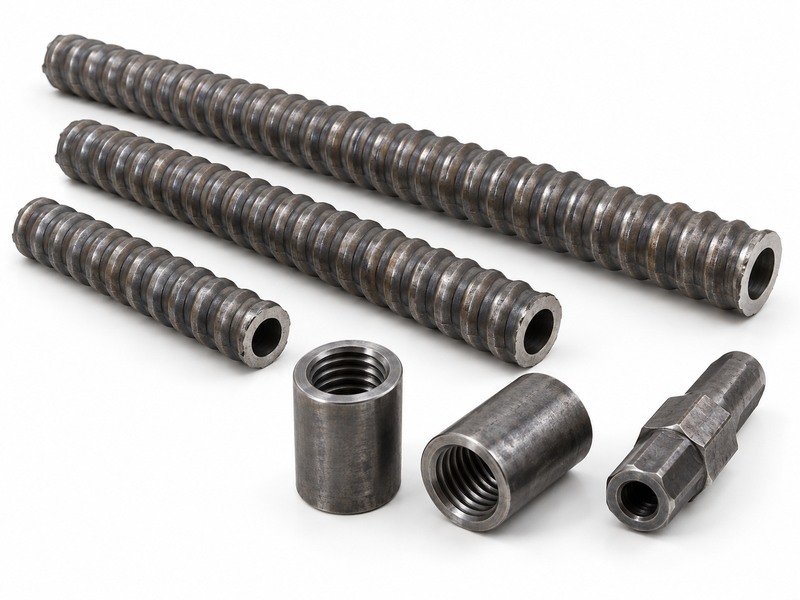
They cover rotational loading during hole advancement, together with relevant impact loading and component configuration. The hollow bar transmits drilling actions through its steel section and connections. Those temporary construction demands differ from later installed axial loading. A drilling review must follow the bar and its interfaces before considering installed reinforcement duties.
Which actions need separate records?
Separate drilling actions before comparing ratings. Rotation introduces twisting action along the bar. Percussion adds repeated axial impacts through the same drilling assembly. Machine output and component qualification must describe compatible actions rather than unrelated headline values.
- Identify rotary output at the driving interface.
- Identify percussion settings and operating mode.
- Record bar and connection product identities.
What belongs in your comparison sheet?
Request separate evidence fields rather than one unlabeled torque number. Include matching anchor accessories within that review because connections form part of a drilling assembly. Mark unresolved fields before purchase release.
| Record | Buyer question | Decision use |
|---|---|---|
| Rotary action | Which interface was evaluated? | Match rig output |
| Impact action | Which conditions accompanied rotation? | Bound operating mode |
| Assembly identity | Which components were used? | Preserve applicability |
A complete comparison identifies both action and specimen.
2. Why can tensile strength leave a drilling evidence gap?
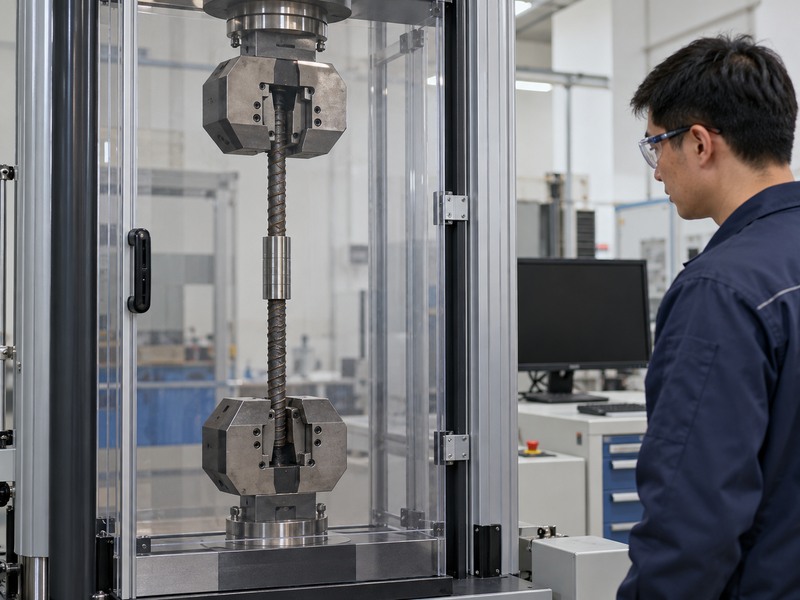
Tensile strength describes axial behavior and does not establish a safe rotary-percussive drilling envelope. Axial tension, torsion and repeated impacts impose different demands on steel and connections. A bar may have documented tensile properties without documented combined drilling performance. Procurement should ask which evidence covers each duty.
How should you read a tensile certificate?
Keep each certificate attached to its loading direction. Axial loading pulls along the bar axis. Torsion twists its steel section while percussion adds repeated impacts during drilling. A larger axial rating cannot establish how that combination affects the identified assembly.
- Check whether a bare bar or connection was tested.
- Keep units and loading directions explicit.
- Separate raw results from declared operating limits.
Which evidence closes this gap?
Hollow-bar wall geometry matters because its steel section carries twisting action. Nominal outside diameter alone cannot describe that section. Request drilling evidence covering your selected hollow-bar product family rather than transferring an axial rating.
| Document | What it may support | What remains open |
|---|---|---|
| Material certificate | Identified steel properties | Assembly drilling behavior |
| Axial test | Specimen tensile response | Combined drilling actions |
| Drilling assessment | Stated drilling conditions | Untested configurations |
Use each document only within its stated scope.
3. What can a European assessment method tell US buyers?

A European assessment method can explain an evidence approach without becoming a US project requirement. The European hollow-bar assessment method addresses combined impact energy and torque capacity. Its method provides a useful framework for questions about drilling damage. It does not establish that any offered product passed an assessment.
How should you use that framework?
Turn a method reference into a document request. Ask whether proposed evidence follows a named method or another accepted qualification procedure. Request the applicable document edition and complete report. Your engineer must decide whether that evidence suits project requirements.
- Name the method, edition and relevant section.
- Confirm the laboratory and report reference.
- List deviations or untested operating conditions.
What should procurement avoid claiming?
Keep European methodology separate from US contractual acceptance. Our self-drilling system background provides adjacent navigation; project submittals still require current supporting records. Do not place an approval mark against an assembly merely because its brochure mentions a method.
| Statement | Appropriate interpretation | Required follow-up |
|---|---|---|
| Method cited | Assessment basis identified | Obtain actual evidence |
| Report provided | Results may be reviewable | Check applicability |
| Project accepted | Authorized decision recorded | Retain approval scope |
A method citation starts review rather than ending it.
4. Which components must match the drilling evidence?

All load-carrying components represented in qualification must match the supplied assembly or have documented acceptance for a change. Bar identity alone leaves connection and driving-interface questions unanswered. Thread appearance also cannot prove that different parts share a qualified drilling envelope. Review a bill of materials against actual evidence.
Where can substitutions hide?
Follow the drilling load path through every connection. The driving adaptor introduces drilling actions at a bar end. Bar sections and connections transmit those actions along the assembly. A changed connection or engagement condition can change an interface represented in qualification.
- Verify bar designation and production identification.
- Check connection and engagement requirements.
- Match driving equipment interface and adaptors.
How do you control substitutions?
Specify an assembly schedule alongside your anchor bolt inquiry. Require written review before accepting alternatives. Include photographs only as supporting identification; controlled drawings and report references should govern technical equivalence.
| Component change | Evidence question | Purchasing response |
|---|---|---|
| Different bar | Same assessed configuration? | Request applicability review |
| Different connection | Same drilling behavior? | Require supporting evidence |
| Different adaptor | Same interface conditions? | Obtain documented acceptance |
Treat undocumented substitutions as an unresolved technical item.
5. How should rig output be compared with assembly limits?
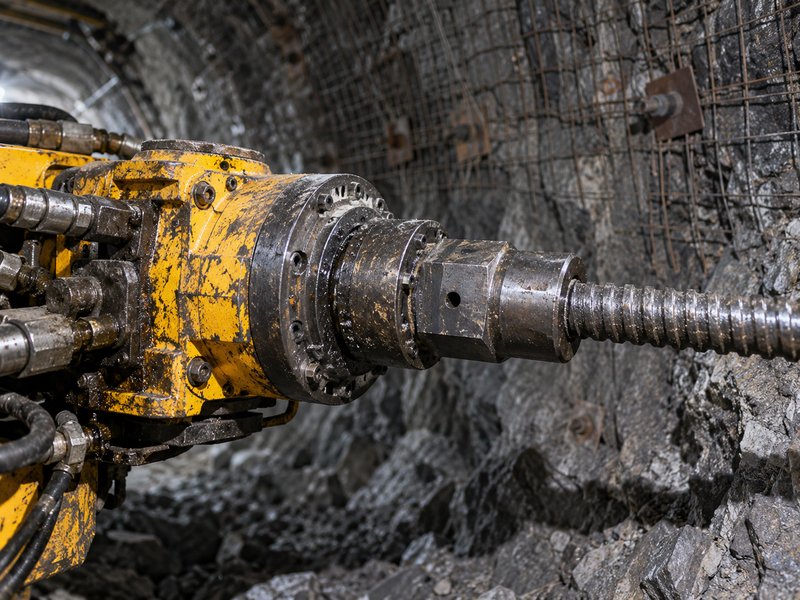
Rig output should be compared using compatible definitions, operating modes and measurement locations. A machine specification may describe a capability rather than actual loading throughout drilling. Your review must connect equipment settings with an accepted assembly envelope. Values without a shared basis cannot support that comparison.
Which equipment information helps?
Ask how a machine setting becomes an assembly load. A rig setting and an actual interface load describe different things. Equipment documentation should explain how the selected operating mode controls output. Adaptor geometry and measurement location also belong within the comparison between machine data and component evidence.
- Identify selected rig and drilling attachment.
- Record available output-control documentation.
- Note where torque information originates.
Who should reconcile different definitions?
Have equipment and component suppliers resolve interface questions before field release. Include driving and connection accessories in that exchange. Ask your responsible engineer to accept the resulting comparison rather than relying on a salesperson’s undocumented equivalence.
| Comparison field | Required alignment | Hold point |
|---|---|---|
| Torque basis | Same defined interface | Unclear measurement location |
| Operating mode | Matching percussion conditions | Different drilling mode |
| Output control | Documented equipment behavior | Unverified setting conversion |
Resolve mismatched definitions before choosing operating settings.
6. Why must impact and rotation be reviewed together?
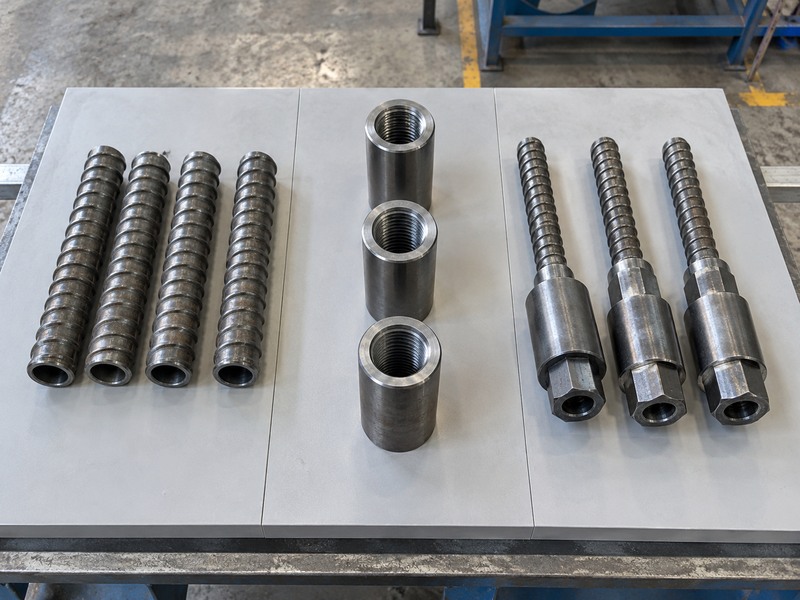
Impact and rotation should be reviewed together when qualification concerns rotary-percussive drilling. A torque statement without accompanying impact conditions leaves combined loading unresolved. Changing percussion while holding a nominal torque setting can move operation beyond documented conditions. Buyers should request the complete envelope rather than isolated maxima.
How do incomplete tables mislead buyers?
Keep paired conditions together during technical review. Rotation drives the cutting action while percussion adds repeated axial impacts. The same bar and connections carry those actions during rotary-percussive drilling. Separate maximum values cannot establish that their combination was evaluated together.
- Preserve paired operating conditions from reports.
- Ask about combined-loading applicability.
- Record restrictions on simultaneous settings.
What should an operating envelope show?
Request enough detail for your engineer to identify permitted conditions and unresolved cases. Use hollow-bar background information for adjacent terminology only. Specific operating decisions require approved component and equipment documents.
| Evidence format | Interpretation risk | Better record |
|---|---|---|
| Torque alone | Impact condition missing | Paired loading conditions |
| Separate maxima | Unsupported combination | Defined operating envelope |
| Equipment brochure | Component suitability assumed | Assembly-specific evidence |
A paired condition describes a more specific case than two separate maxima.
7. What drilling changes require another review?
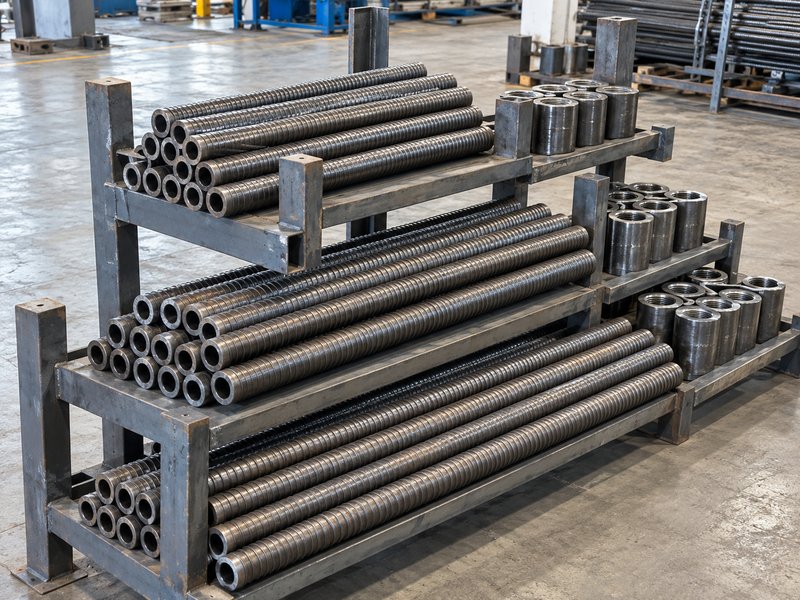
Changes require review whenever they alter conditions covered by accepted evidence. Ground response, equipment changes and component substitutions can prompt a review without establishing a new universal limit. Crews need a defined escalation route when actual operation departs from approved conditions. Procurement can help by retaining those conditions within the supply package.
What can trigger an escalation?
Write change triggers before drilling starts. An alternate adaptor changes an input interface even when the bar remains unchanged. A changed percussion mode alters another part of combined loading. Ask your equipment specialist and engineer whether existing evidence covers that revised case.
- Changed rig, attachment or driving adaptor.
- Changed bar or connection configuration.
- Operating conditions outside accepted documentation.
What should a change record contain?
Record original conditions, proposed changes, evidence reviewed and approving authority. Include equipment identifiers so later reviewers can reconstruct the decision. Preserve superseded settings as controlled history rather than leaving competing instructions at a work area.
| Change record | Why retain it? | Responsible review |
|---|---|---|
| Original envelope | Establishes accepted baseline | Project engineer |
| Proposed departure | Identifies technical gap | Equipment/component specialists |
| Written disposition | Controls field release | Authorized project team |
A recorded decision prevents informal settings from becoming assumed limits.
8. What should incoming inspection verify?

Incoming inspection should verify that delivered parts match the assembly approved for drilling. It cannot establish a missing torque envelope through visual examination. Receiving checks instead protect product identity, condition and traceability. A correct document package loses value when mixed stock reaches a drilling crew.
How do you protect product identity?
Check the delivered assembly against approved records. Compare packing information, supplier identifiers and controlled drawings. Segregate unidentified connectors or damaged parts for review. Avoid accepting similar appearance as proof that components belong to the same qualified configuration.
- Reconcile quantities and component identities.
- Preserve lot information where supplied.
- Record damage or undocumented substitutions.
Which records belong with a shipment?
Link your self-drilling anchor components with approved report references and assembly schedules. Request clarification for discrepancies before field issue. Keep technical acceptance separate from a warehouse count so both responsibilities remain clear.
| Receiving check | Evidence retained | Disposition if unclear |
|---|---|---|
| Product identity | Packing and drawing match | Segregate pending review |
| Physical condition | Inspection record | Request technical decision |
| Report linkage | Approved component schedule | Hold affected components |
Receiving controls preserve an already established qualification basis.
9. Which supplier answers should stop purchase release?
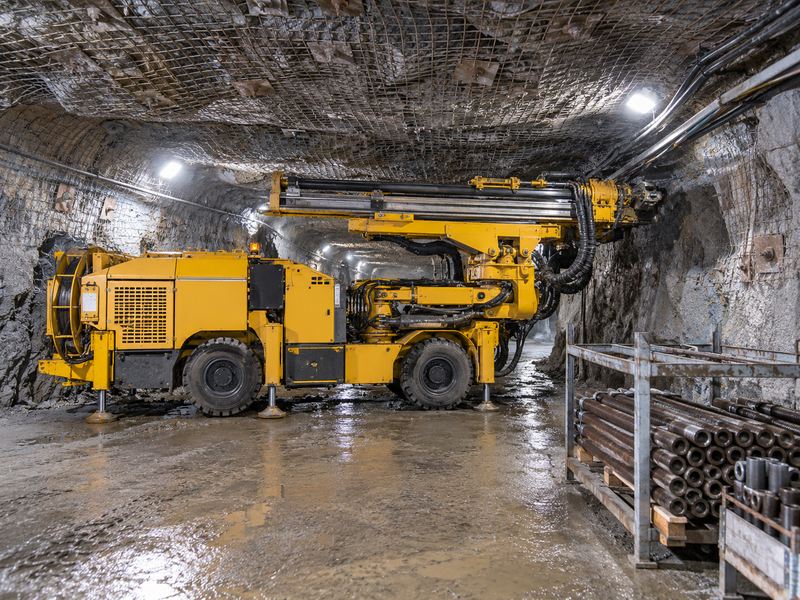
Unresolved assembly identity, missing combined-loading evidence or incompatible equipment definitions should stop technical release until reviewed. A confident verbal assurance cannot fill those gaps. You need a written basis that a responsible reviewer can evaluate. Separate commercial progress from acceptance of drilling conditions.
Which answers need clarification?
Return unsupported equivalence claims with a precise question. Ask what evidence connects an offered component with the proposed drilling setup. Request a report reference rather than a repeated marketing description. Keep unanswered items visible in your procurement tracker.
- “Same diameter” without assembly identification.
- “High tensile strength” without drilling evidence.
- “Works with every rig” without defined conditions.
What makes a response reviewable?
A useful response names components, documents applicable conditions and identifies remaining limits. It also distinguishes assessed results from supplier recommendations. Issue a written technical disposition after engineering review so purchasing knows which questions remain open.
| Supplier response | Missing information | Buyer action |
|---|---|---|
| Generic capacity claim | Loading basis | Request specific evidence |
| Method name only | Actual report | Obtain report reference |
| Unrestricted compatibility | Defined configuration | Require applicability review |
Release material against a documented configuration and accepted evidence.
10. How do you issue a useful drilling torque inquiry?
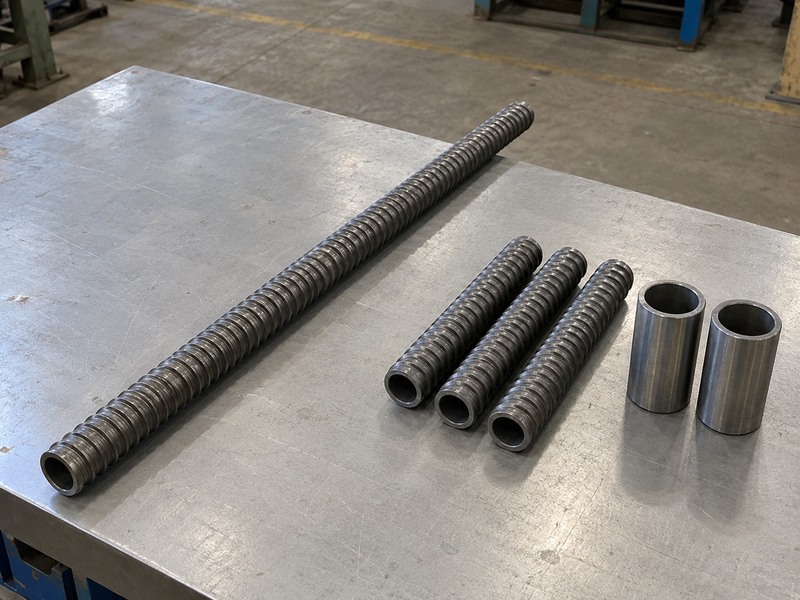
Issue an inquiry that identifies components, equipment and evidence needed for your project review. Attach the proposed drilling configuration and ask suppliers to state applicability limits. Keep installed nut torque outside this inquiry because it concerns a different stage and load relationship. A narrowly framed request produces a clearer technical response.
What should your inquiry request?
Give suppliers a configuration they can evaluate. Include available rig documentation and the approved component schedule. Ask for missing information as a separate list rather than accepting silent assumptions. Your engineer can then review each gap before any field setting receives approval.
- Proposed bar, connection and driving interface.
- Intended rotary-percussive equipment configuration.
- Applicable qualification reports and stated restrictions.
- Written review of deviations or substitutions.
What should you send next?
| Closure check | Action to retain |
|---|---|
| 1 | Proposed bar, connection and driving interface. |
| 2 | Intended rotary-percussive equipment configuration. |
| 3 | Applicable qualification reports and stated restrictions. |
| 4 | Written review of deviations or substitutions. |
Send your equipment details, component drawings and project evidence requirements when you contact us. Request a documented component response before ordering against assumed drilling limits. Retain your engineer’s accepted configuration with procurement and field records.
Q1: Can I calculate drilling torque limits from tensile strength?
No, axial tensile evidence does not establish combined torsional and impact behavior for a drilling assembly.
Q2: Can I use installed nut torque as a drilling setting?
No, nut tightening and rotary-percussive drilling concern different actions, interfaces and acceptance documents.
Q3: How do I know if a report covers my connectors?
Check specimen identities and controlled component references. Request written applicability review when those references differ from your order.
Q4: Does a European assessment method establish US compliance?
No, project acceptance requires review against applicable US requirements and your approved engineering specification.
Q5: What’s the best response to an undocumented rig change?
Request technical review before accepting revised settings. Record the configuration, evidence and authorized disposition.