
GFRP rock bolt shear strength requires evidence from a defined loading arrangement and specimen. A tensile value cannot establish a universal shear rating. When procurement receives a strength table, identify which test produced each number. Published combined-loading research demonstrates why loading direction deserves separate treatment. A gfrp rock bolt shear strength review should connect reported behavior with the actual product and intended support duty.
1. What does GFRP rock bolt shear strength describe?
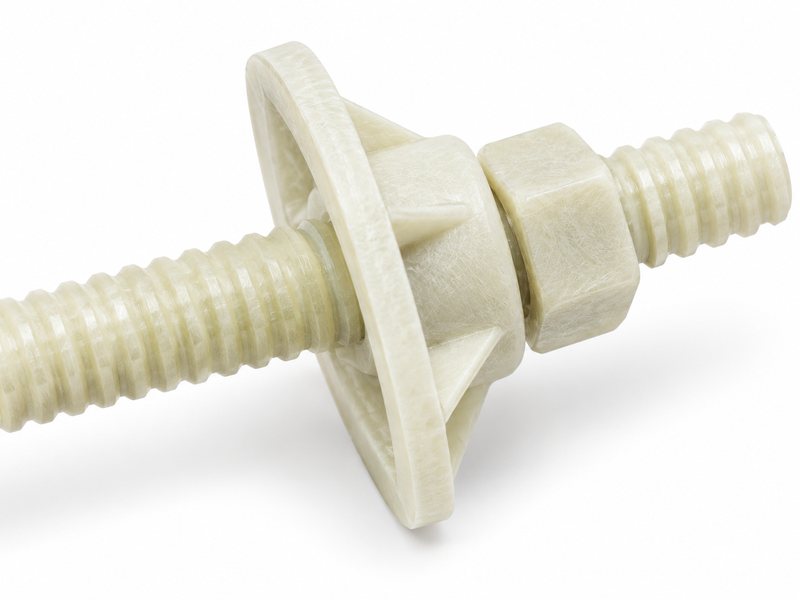
GFRP rock bolt shear strength describes resistance within a specified shear-testing configuration. It may concern a bar specimen or an anchored assembly. Those boundaries affect interpretation. A report should identify measured force, any calculated stress, and the assumed failure area separately.
Which quantity appears in the headline?
Distinguish test load from stress derived through geometry assumptions. Identify whether the load includes one or several interacting resistance mechanisms. A product label alone cannot explain that distinction. Keep original units and calculation definitions beside any converted value.
- Identify measured and calculated quantities.
- State specimen and assembly boundaries.
- Record the report's loading-mode definition.
Read the quantity before the value. Ask engineering what a reported shear figure actually represents.
Which label needs clarification?
| Reported label | Question to resolve |
|---|---|
| Shear load | Which specimen and test arrangement? |
| Shear stress | Which assumed area and calculation? |
| Assembly capacity | Which included components and loading modes? |
A precise label prevents a laboratory result from being silently converted into a broader support-system rating. A translated summary should retain the original property definition so purchasing language does not broaden the evidence unintentionally.
2. Why does tensile strength need separate evidence?
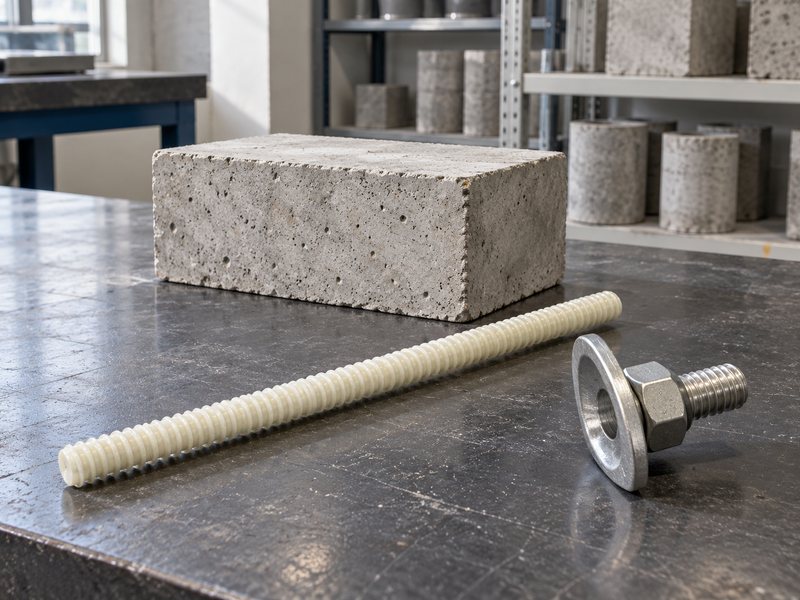
Tensile strength needs separate evidence because axial loading and transverse interaction impose different demands. A favorable tensile result cannot define shear response by a universal ratio. Read the actual test description. Composite construction and loading arrangement belong within the applicability assessment.
How should procurement organize the evidence?
Keep tensile, shear, and connection reports in separate fields. Include associated support components when reviewing a complete assembly. Identify where one submitted report leaves another loading mode unanswered. Avoid allowing a blank shear field to inherit a tensile value automatically.
- Separate evidence by loading mode.
- Match each result with its specimen.
- Identify missing application-relevant properties.
Keep tensile and shear results distinct. Ask your engineer which evidence is needed for the expected ground-movement mechanism.
Which result answers which question?
| Evidence | Relevant scope |
|---|---|
| Axial tensile result | Tested response along the bar |
| Shear result | Tested transverse interaction |
| Combined-loading result | Tested interaction under its defined direction |
A complete submission may need several evidence types because one loading mode cannot establish every other response. If a required loading mode remains untested, identify that gap explicitly rather than infer it from a stronger evidence category.
3. What does combined pull and shear research add?
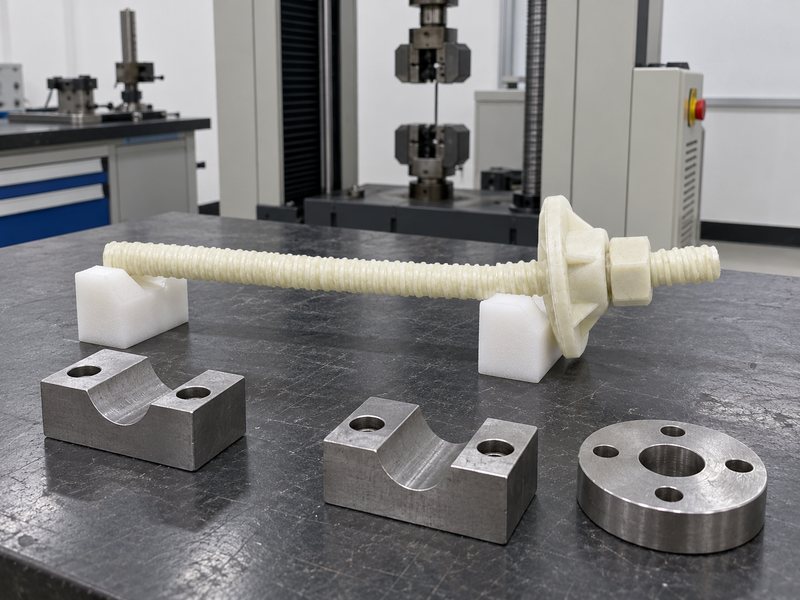
Combined pull and shear research adds evidence about interaction between loading components. A GFRP assembly review should distinguish those tests from pure axial and transverse arrangements. Published laboratory work found response changes across tested displacement directions. Its specimen-specific results cannot establish universal transition angles for other products.
Which direction does a report describe?
Check whether angle refers to displacement, applied force, specimen orientation, or another defined reference. These descriptions should not be treated as synonyms. Request a setup drawing where wording remains unclear. Keep the original angle definition within any comparison table.
- Identify the reference used for direction.
- Separate imposed motion from measured force.
- Preserve specimen and confinement details.
Ask which angle was controlled. Have engineering interpret combined-loading evidence before transferring it into an application decision.
Which direction label needs definition?
| Direction label | Clarification required |
|---|---|
| Displacement angle | Reference and imposed movement path |
| Load angle | Reference and force components |
| Bar inclination | Relationship with fixture and discontinuity |
A familiar angle value remains ambiguous until the report identifies what moved, what was measured, and the reference direction. Preserve that reference definition when communicating results between engineering and purchasing so a shortened description does not change its meaning.
4. How do fixtures and confinement change interpretation?
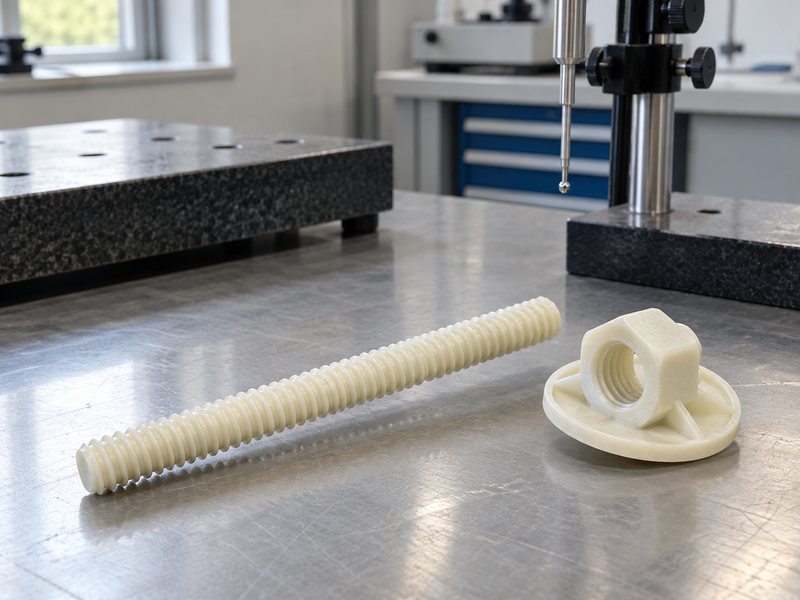
Fixtures and confinement change interpretation by defining contact, bending space, and load transfer around a specimen. A double-shear FRP bar method addresses a different specimen scope from a fully grouted assembly. Document the actual arrangement. Do not assume similar maximum loads imply equivalent behavior.
Which external components should be included?
Identify blocks, grout, interfaces, free lengths, and end restraints. A bearing plate belongs in the report only when it forms part of the tested arrangement. Keep laboratory boundaries separate from field discontinuity geometry. Ask which differences could affect applicability.
- Record confinement material and dimensions.
- Identify gaps and contact surfaces.
- Describe end restraint and included components.
Treat the fixture as part of the evidence. Request enough setup detail for an independent engineering review.
Which setup feature answers which question?
| Setup feature | Interpretation purpose |
|---|---|
| Confinement | Defines surrounding restraint |
| Gap or interface | Defines local interaction region |
| End restraint | Defines permitted movement and load transfer |
A report should identify its boundary conditions rather than leave reviewers to reconstruct them from an isolated specimen photograph. Where a report omits critical setup information, request clarification before treating similar specimen dimensions as evidence of comparable conditions.
5. Why do displacement and damage sequence matter?
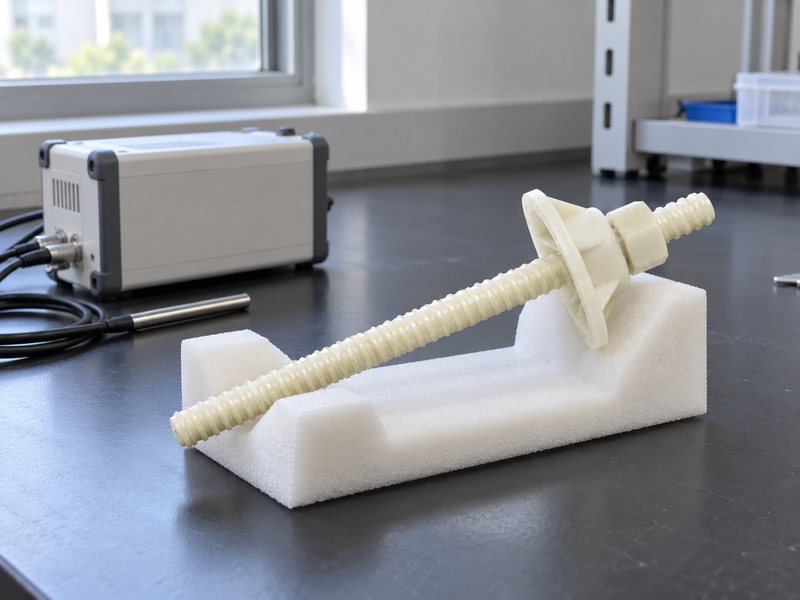
Displacement and damage sequence matter because a maximum force alone cannot describe response before and after that point. A GFRP mechanical evidence package should include available response records and observed failure descriptions. Avoid assigning an unobserved damage mechanism from a curve alone. Distinguish direct observation from interpretation.
Which observations help explain the record?
Ask where movement was measured and which components contributed. Record visible events with their timing where available. Identify whether loading stopped because of specimen behavior or equipment limits. Preserve interrupted tests rather than excluding them without explanation.
- Review movement references and response records.
- Connect observed events with recorded timing.
- Identify test termination and failure location.
Read the response around the peak. Have engineering identify which behavior matters for the intended support duty.
Which detail prevents an overclaim?
| Detail | Interpretation benefit |
|---|---|
| Movement reference | Defines what displacement includes |
| Observed damage sequence | Supports mechanism interpretation |
| Termination reason | Distinguishes specimen and equipment limits |
A result described as maximum recorded load should retain that wording when an actual specimen limit was not established. Keep observed damage descriptions separate from proposed mechanisms so later reviewers can evaluate the interpretation against preserved facts.
6. Can one composite construction represent every GFRP bolt?
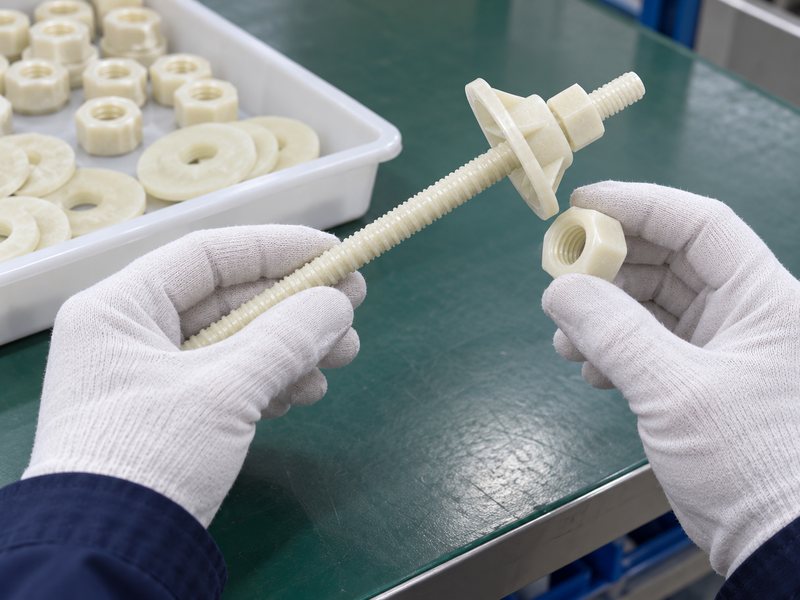
One composite construction cannot automatically represent every GFRP bolt. Fiber arrangement, matrix, geometry, and surface form require product-specific identification. Research involving a novel construction should remain attached to that construction. A shared material abbreviation does not establish equivalent shear behavior.
What should a product identity review include?
Request controlled descriptions and drawings for tested and supplied products. Ask whether a study concerns a prototype or a production configuration. Keep unsupported equivalence claims out of procurement records. A supplier should explain any material or geometry difference affecting report relevance.
- Identify composite construction without guessing composition.
- Match tested and supplied drawing revisions.
- Separate research prototypes from quoted goods.
Keep the tested construction visible. Require evidence for the proposed product rather than accepting a general GFRP research headline.
Which identity difference needs review?
| Difference | Applicability question |
|---|---|
| Fiber architecture | Is the same construction represented? |
| Matrix or geometry | Does the report cover the proposed product? |
| Surface or end form | Are relevant contact conditions comparable? |
An engineering review should state where product differences prevent direct use of another specimen's reported result. A report describing a novel construction should identify the same configuration throughout its drawings, specimen records, and conclusions.
7. How should shear reports be compared fairly?
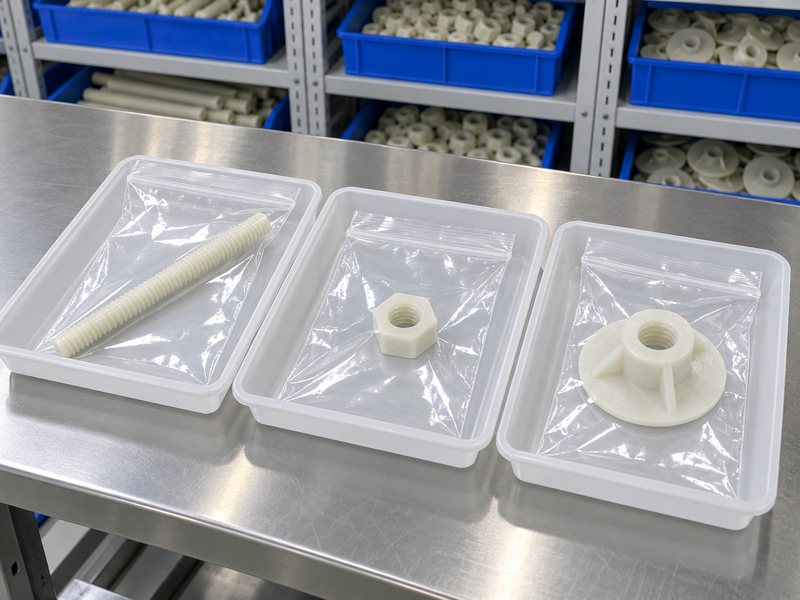
Shear reports should be compared through property definition, specimen, setup, and failure mode before numerical ranking. A GFRP bolt comparison may contain results from incompatible arrangements. Preserve those differences visibly. An engineer should justify any comparison that crosses test methods or configurations.
Which fields belong beside each result?
Record bar identity, geometry, confinement, load direction, and measurement references. Include the calculation basis where stress is reported. Identify sample scope and variability. A single favorable specimen should not represent an entire product population without justification.
- Reconcile units and property definitions.
- Compare setup and specimen identities.
- Retain result population and exclusions.
Normalize the definitions before the values. Leave incomparable evidence unresolved instead of forcing it into a purchasing ranking.
Which comparison field prevents confusion?
| Field | Question answered |
|---|---|
| Property definition | Are like quantities being compared? |
| Setup and specimen | Are represented conditions compatible? |
| Population and failure mode | What scope supports the reported result? |
A side-by-side table can reveal an evidence gap even when it cannot support a defensible ranking of strength values. Where sample populations differ, document that difference before comparing a selected maximum with a broader set of reported results.
8. What can a numerical model establish?
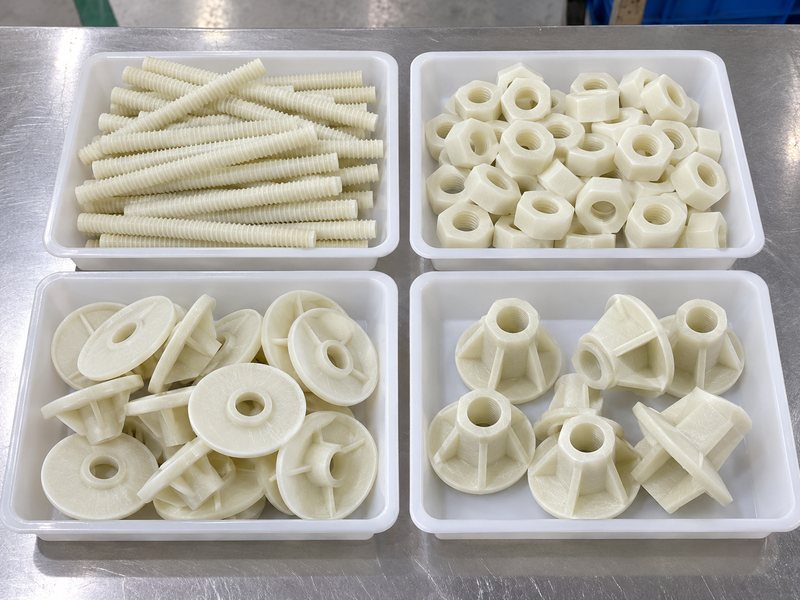
A numerical model can establish predictions only within its formulation and validation scope. Published combined-loading work reported limits in reproducing shear behavior despite better axial agreement. That finding concerns its particular model and specimens. It illustrates why validation must match the response being claimed.
Which model evidence should reviewers request?
Ask which experimental results were used for fitting and which tested prediction independently. Identify whether validation covers axial, shear, or combined loading. Keep input assumptions traceable. A plausible-looking simulation image cannot establish a product-specific capacity.
- Identify modeled quantity and assumptions.
- Separate fitting evidence from validation.
- Match validation mode with the proposed claim.
Validate the claimed loading mode. Ask engineering whether model evidence adds a justified prediction or only a visual explanation.
Which modeling statement needs which support?
| Modeling statement | Evidence required |
|---|---|
| Matches an axial test | Relevant axial comparison |
| Predicts shear response | Relevant shear validation |
| Supports application design | Justified transfer and uncertainty review |
Success in one loading mode should not silently become a claim of validated prediction across every mechanical response. An application decision should retain unresolved model limitations instead of presenting a successful simulation image as complete validation.
9. What should a shear-strength inquiry require?
A shear-strength inquiry should require product-specific evidence relevant to expected loading and confinement. A GFRP technical inquiry should identify which reported quantities your engineer needs. Avoid asking for a universal shear-to-tensile ratio. Specify the evidence question instead of supplying an unsupported conversion rule.
Which information helps suppliers respond?
Provide intended support duty, relevant movement description, and available design context. Request tested product identity, setup details, response records, and limitations. Ask whether proposed goods differ from reported specimens. Keep technical qualification separate from a commercial quotation.
- Define the relevant mechanical question.
- Request complete report references.
- Identify missing conditions requiring review.
Ask for applicability, not a headline. Have engineering assess report relevance before procurement uses a value in bid evaluation.
Which requested item supports review?
| Requested item | Review purpose |
|---|---|
| Product identity | Connects evidence with quoted goods |
| Setup and response | Defines tested behavior |
| Applicability statement | Identifies represented and missing conditions |
A supplier response should explain why its evidence answers the inquiry rather than rely on a strength value without context. Conditional technical acceptance should identify the missing evidence clearly enough for both supplier and procurement staff to track its resolution.
10. How should engineers make the final evidence decision?
Engineers should accept evidence within a defined application boundary and document remaining uncertainty. A report can support a limited decision without establishing universal GFRP shear strength. Record any configuration changes requiring renewed review. Keep unsupported ratios and transferred research capacities out of the purchasing specification.
What should your acceptance record contain?
Identify the accepted product, relevant reports, loading modes, and conditions. State which evidence gaps remain and who must resolve them. Preserve the reason for any conditional approval. A later substitution should retain technical review responsibility rather than becoming a warehouse convenience.
- State accepted scope and evidence limits.
- Record unresolved mechanical questions.
- Maintain product and configuration control.
| Closure check | Action to retain |
|---|---|
| 1 | State accepted scope and evidence limits. |
| 2 | Record unresolved mechanical questions. |
| 3 | Maintain product and configuration control. |
Approve the evidence within its scope. Share your GFRP product requirements and loading questions when you contact us. Request documents your engineer can assess before treating a tensile figure as a shear rating.
Q1: Can I calculate shear strength from tensile strength alone?
Do not assume a universal conversion. Relevant product-specific testing and engineering interpretation are required.
Q2: Does a combined-loading angle mean the same thing in every report?
No. Check whether it describes force, displacement, or specimen orientation and identify the reference direction.
Q3: Can braided-bolt research qualify a different GFRP construction?
Not automatically. Product construction, geometry, and conditions require an explicit applicability review.
Q4: Does a model matching tensile behavior prove shear predictions?
No. Validation should address the loading mode and response being claimed.
Q5: What is the best evidence package for procurement?
Request identified specimens, complete methods, response and failure records, sample scope, and a clear applicability statement.