
The rock bolt vs rock anchor decision starts with the load path. A rock bolt reinforces the rock mass around an excavation, while a prestressed rock anchor transfers a structural tensile load through a free length to a bonded zone in competent ground. The terms sometimes overlap in specifications, so the name alone is not enough. Engineers must check the tendon type, bonded length, free length, design load, corrosion protection, test method, and intended service life.
For example, the wrong choice in tunnel, mine, slope, retaining-wall, dam, or foundation work can increase drilling cost or leave a failure surface unsupported. The guide compares eight practical differences and shows what to confirm before procurement. Therefore, final selection must follow the project geotechnical design, applicable code, and the engineer of record.
Rock bolt vs rock anchor: quick comparison
The table below is a screening tool, not a design specification. In practice, actual lengths, capacities, and spacing depend on geology, groundwater, excavation geometry, construction sequence, and the required factor of safety.
| Decision factor | Rock bolt | Rock anchor |
|---|---|---|
| Primary purpose | Reinforces and confines a fractured rock mass near an excavation | Transfers structural tension to a bonded zone beyond the critical surface |
| Common work | Mine roofs, tunnel crowns and ribs, chambers, local face or slope reinforcement | Retaining walls, deep cuts, slope stabilization, dams, foundations, and uplift restraint |
| Typical configuration | Fully bonded bar, mechanically anchored bolt, friction bolt, or self-drilling bolt | Bar or strand tendon with anchorage, free length, and bond length |
| Installation pattern | Usually a closer systematic grid | Usually wider, design-led locations |
| Tensioning | Passive, torqued, or pre-tensioned response, depending on the system | Crew stresses and locks off the tendon with hydraulic equipment |
| Verification | Project-specified torque checks, pull tests, proof tests, or monitoring | Project-specified performance, proof, creep, lift-off, or acceptance tests |
| Service life | Temporary or permanent, depending on design and protection | Temporary or permanent, with protection matched to service life |
| Cost driver | High unit count and installation cycle time | Deeper drilling, larger tendons, grouting, stressing, testing, and protection |
Rock bolt vs rock anchor difference 1: purpose and load transfer
The clearest difference between rock bolt and rock anchor systems is the intended job of the tendon. For example, rock bolts bind discontinuous rock through friction, suspension, mechanical anchorage, or grout bond. In fact, the archived NIOSH roof and rock bolting reference describes bolts as a way to bind a discontinuous rock mass and covers systematic patterns, installation, and testing.
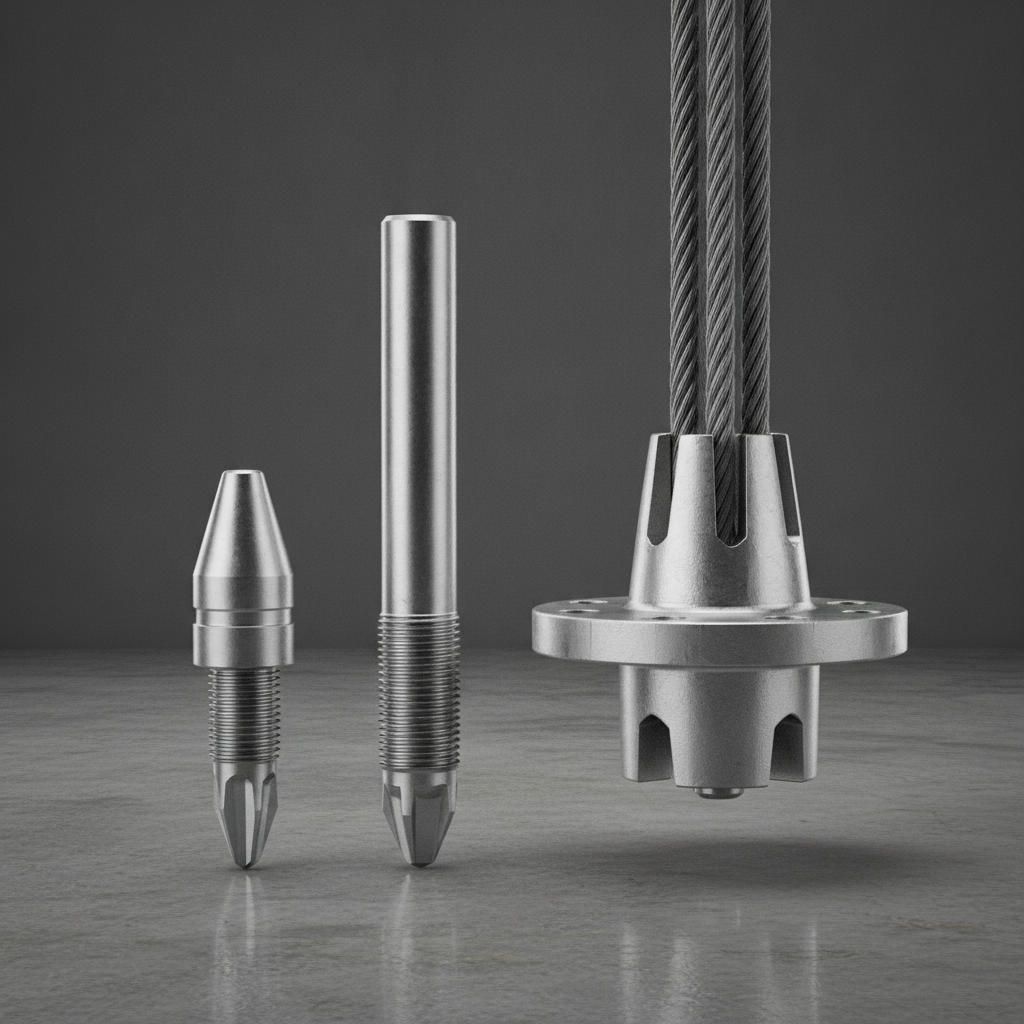
How a rock bolt works
Installers place a rock bolt across joints, bedding, or fractured zones so the surrounding rock behaves as a more coherent mass. For example, depending on the system, resistance comes from an expansion shell, friction along the borehole, resin or cement grout, or a combination of bond and plate restraint.
- Mechanical bolts develop anchorage at the far end and can provide early support after installation.
- Friction bolts develop contact along the borehole and are common where rapid installation matters.
- Resin- or cement-grouted bolts transfer load through a bonded length and can improve shear resistance across joints.
- Self-drilling bolts combine drilling, reinforcement, and grouting where collapsing holes make conventional installation difficult. See the self-drilling rock bolt installation guide.
How a rock anchor works
A prestressed ground anchor is a structural element that carries tensile load into soil or rock. Specifically, the FHWA Ground Anchors and Anchored Systems manual identifies three basic parts: the anchorage, the free stressing length, and the bond length. During stressing, the free length elongates while grout in the bond length carries the load into competent ground.
- At the head, the anchorage transfers tendon force to a plate, wale, wall, footing, or other supported structure.
- Along the tendon, the free length allows controlled tendon elongation during stressing.
- At depth, the bond length transfers the applied tensile load into the surrounding ground through grout bond.
| Mechanism | Rock bolt | Rock anchor |
|---|---|---|
| Rock interaction | Stitches, confines, or suspends blocks within the reinforced zone | Transfers force from a structure or unstable mass to a deeper bonded zone |
| Typical bond arrangement | Often fully bonded or frictionally engaged | Defined free length plus bonded anchor length |
| Response | May be passive or actively tensioned | Usually stressed to a specified lock-off load |
Before buying: ask whether the drawing requires a fully bonded reinforcing element or a tendon with a free length and bonded root. That detail is more useful than the product label.
Rock bolt vs rock anchor difference 2: applications
Ground support must match the expected failure mode. For reference, the NIOSH Mining and Ground Falls guidance notes that geology, horizontal stress, changing roof conditions, and support choice influence roof design. Therefore, teams should map joints, classify the rock mass, measure groundwater, and locate the critical surface before choosing hardware.
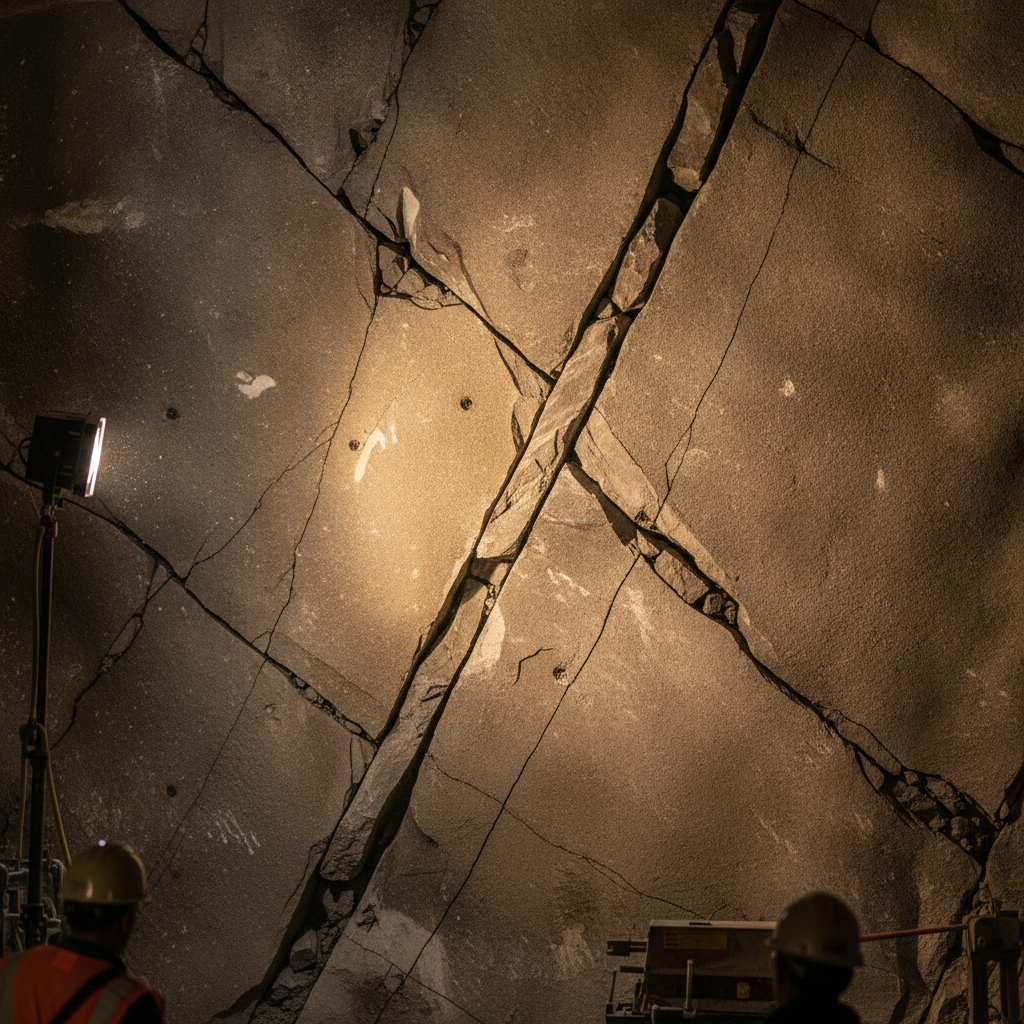
Where rock bolts are commonly used
Rock bolts are well suited to localized reinforcement around mine drifts, tunnel crowns, ribs, and underground chambers. As a result, a systematic grid can create a reinforced arch and limit the release of small wedges. In addition, crews may add mesh or shotcrete where surface retention is also required.
- Tunnel and mine roof support near the excavation boundary
- Local wedge control across mapped joints
- Temporary support during excavation advance
- Permanent tunnel support when the design, grout, steel, and corrosion protection are specified for that duty
Where rock anchors are commonly used
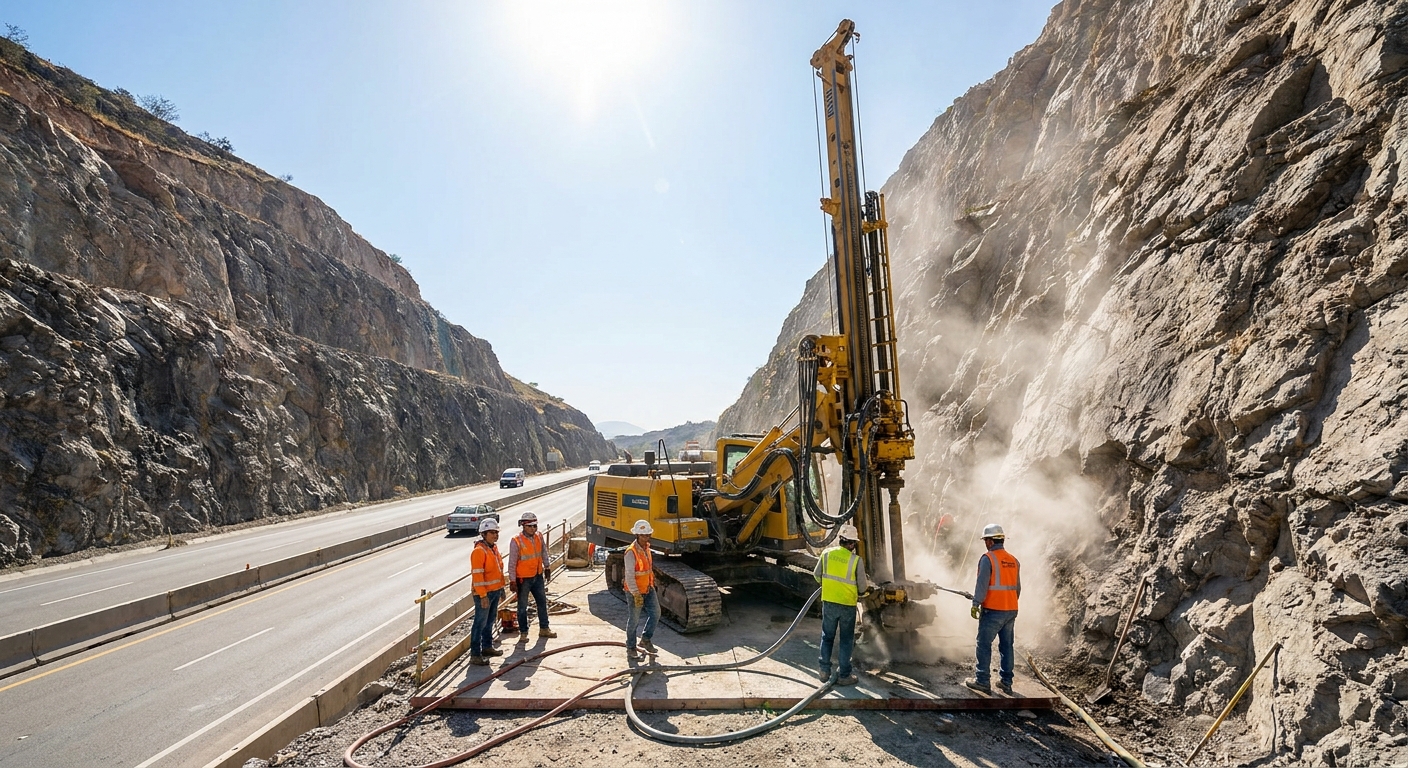
Projects use rock anchors when the load must cross a deep failure surface or tie a structure into competent ground. For example, common applications include anchored retaining walls, highway cut slopes, landslide stabilization, dam and foundation tie-downs, and uplift resistance.
| Site condition | Typical starting point | Reason |
|---|---|---|
| Shallow fractured zone around a tunnel | Systematic rock bolts, often with mesh or shotcrete | Reinforces the near-surface rock mass |
| Deep-seated slope movement | Prestressed rock anchors | Bonded zone can be placed beyond the critical surface |
| Retaining wall or excavation support | Ground anchors or tiebacks | Transfers wall load into stable ground |
| Mixed shallow and deep instability | Combined bolt, anchor, mesh, and facing system | Addresses more than one failure mechanism |
In some projects, a combined system works best. For example, anchors may stabilize the overall slope while bolts and mesh control smaller blocks at the face.
Rock bolt vs rock anchor difference 3: tensile capacity
Capacity is an important rock bolt vs rock anchor difference, but it is not a universal dividing line. However, large bolts and small anchors can overlap. Therefore, designers select the tendon from calculated demand, bond capacity, steel capacity, displacement limits, test requirements, and site conditions.
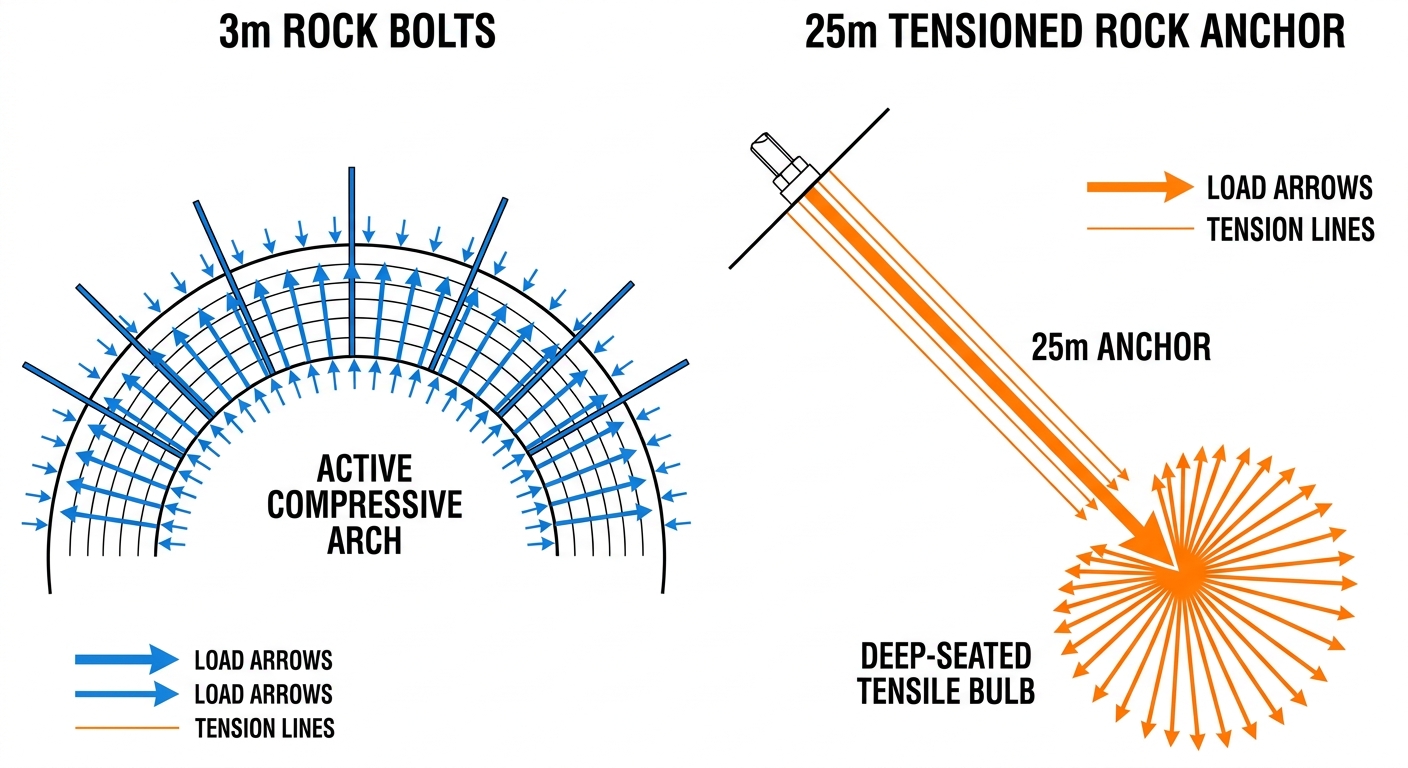
Active and passive response
An active system applies load during installation. A tensioned bolt or anchor clamps joints or supports a structure before significant movement occurs. By contrast, a passive dowel or fully bonded untensioned bolt develops resistance as the rock deforms. Therefore, designers should state the required response instead of asking installers to infer it from diameter or product name.
Indicative load ranges
The original project draft used the ranges below as a planning comparison. However, treat them as illustrative only. Therefore, manufacturer data, bond testing, geotechnical calculations, and the engineer’s acceptance criteria govern the final selection.
| System | Illustrative working range from the project draft | Typical response |
|---|---|---|
| Standard rock bolt | 100 to 300 kN | Localized tension and shear resistance |
| Prestressed multi-strand anchor | 1,000 to 5,000+ kN | High-capacity tensile load transfer |
Do not compare quoted tendon strength alone. Also, the steel, anchorage, grout-to-tendon bond, grout-to-ground bond, rock cone or pullout behavior, bearing plate, or supported structure can limit system capacity.
Rock bolt vs rock anchor difference 4: length and depth
The second major difference between rock bolt and rock anchor design is the point where the system transfers load. For example, a bolt commonly stays within the reinforced zone around an excavation. By contrast, an anchor must place its bond length beyond the critical failure surface and inside material that can sustain the design load.
Why anchor length is usually greater
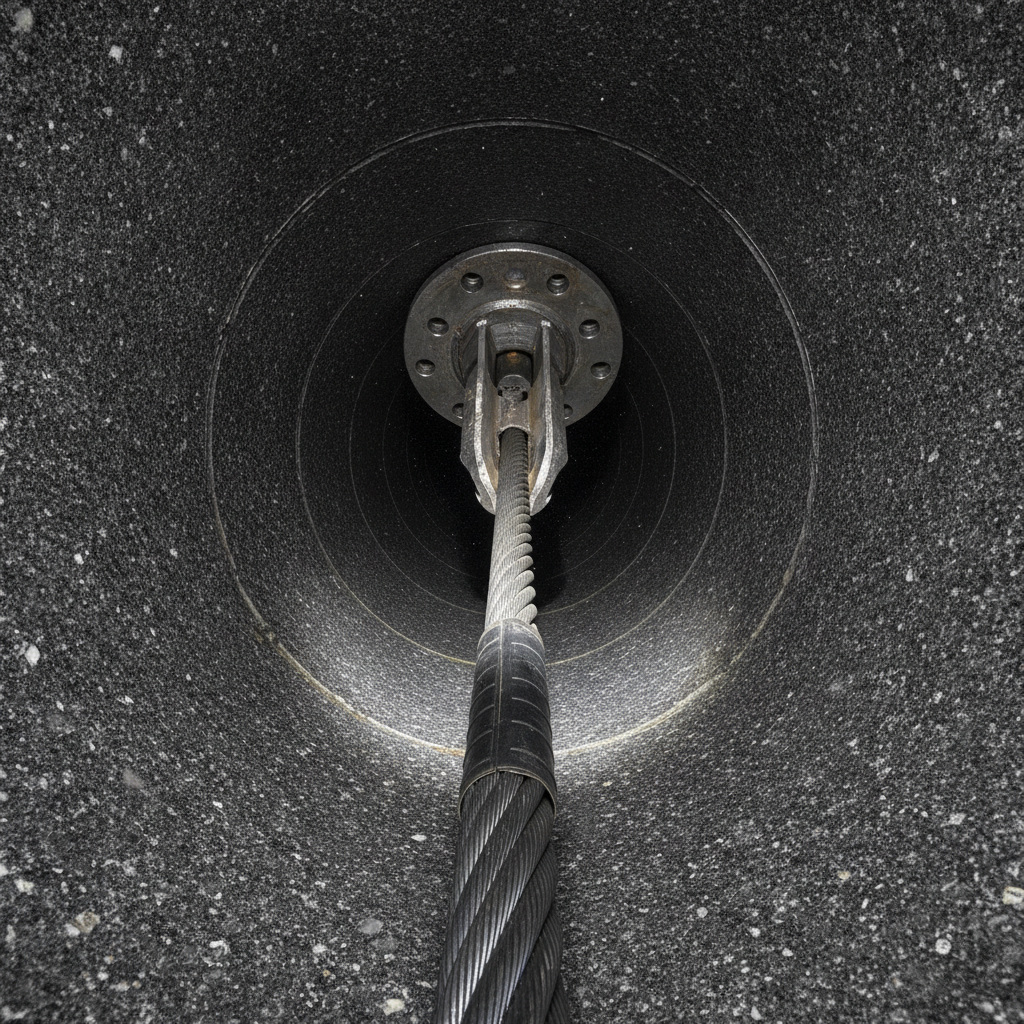
If the bonded zone ends inside a moving block or slide mass, the anchor cannot provide the intended restraint. For example, designers use borehole logs, discontinuity surveys, laboratory data, groundwater observations, and stability analysis to locate the bond zone. Also, drilling tolerances and deviation matter because a long hole can miss the intended competent layer.
Planning ranges and equipment
| Parameter | Rock bolt planning profile | Rock anchor planning profile |
|---|---|---|
| Length used in the original draft | About 1.5 to 6 m | About 6 to 40+ m |
| Borehole diameter used in the original draft | About 32 to 51 mm | About 100 to 250+ mm |
| Typical drilling plant | Handheld drill, bolter, or jumbo | Rotary or rotary-percussive rig sized for depth and diameter |
| Grout placement | Cartridge resin or cement grout, depending on system | Controlled cement grouting, often with records of volume and pressure |
Do not copy these overlapping ranges into a purchase order without the project specification. Therefore, for bolt diameter and length decisions, review the rock bolt size selection guide alongside the geotechnical drawings.
Rock bolt vs rock anchor difference 5: tensioning and testing
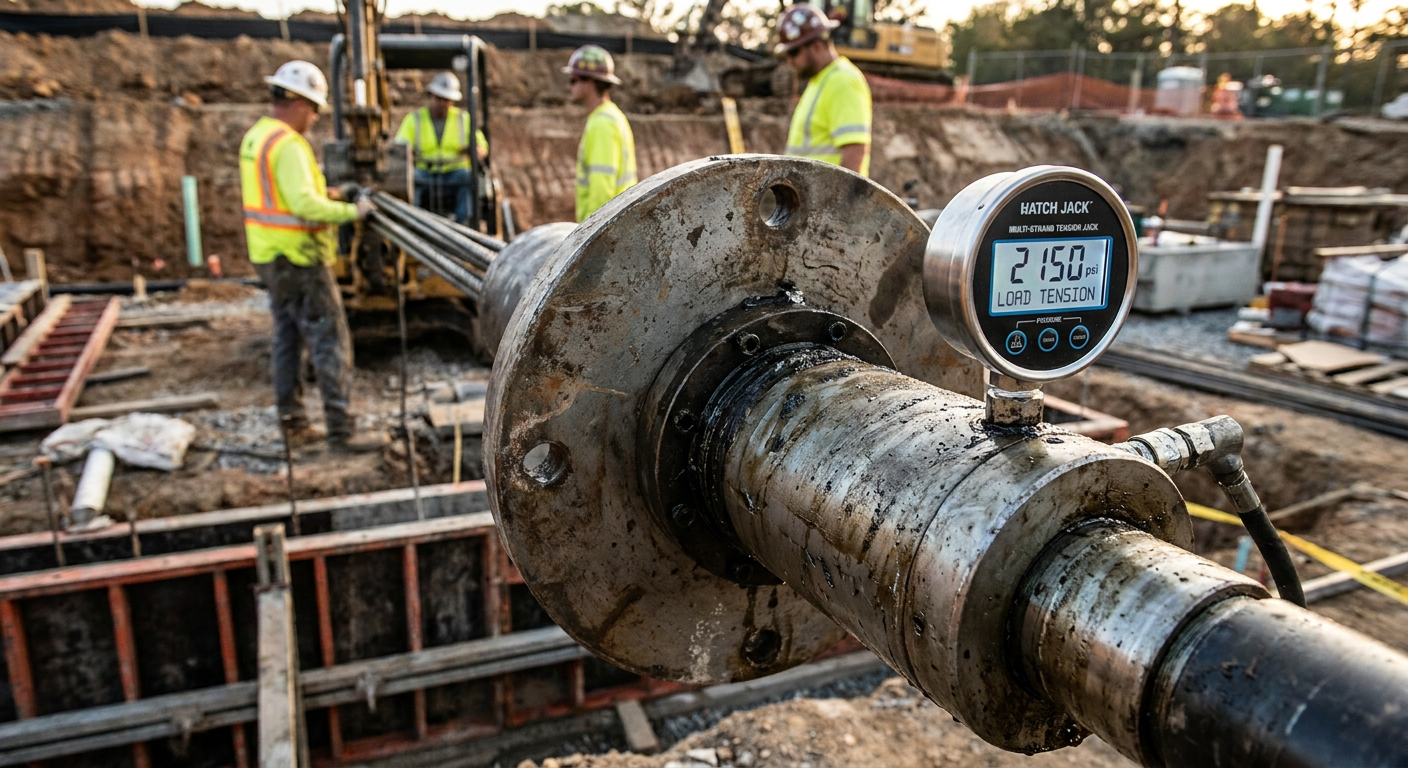
Installation control separates many bolt systems from prestressed anchors. For example, crews may torque, drive, grout, or tension rock bolts. By contrast, crews commonly stress anchors in stages, record movement, and lock them off at a specified load. Therefore, the project team should agree on the test procedure before drilling begins.
Rock bolt installation checks
For example, checks may include hole diameter and depth, resin spin and hold time, grout return, plate seating, installation torque, pull testing, and visual inspection. For U.S. underground construction, OSHA 29 CFR 1926.800 requires torque wrenches where ground-support bolts depend on torsionally applied force, and it assigns torque and test-frequency decisions to a competent person based on the bolt system and ground conditions.
Rock anchor stressing checks
Anchor acceptance can include proof, performance, creep, or lift-off testing, depending on the specification. During each test, the crew records jack calibration, gauge readings, tendon movement, hold periods, apparent free length, lock-off load, and any seating losses. In addition, FHWA’s manual provides detailed design, corrosion protection, testing, inspection, and construction guidance for grouted ground anchors.
| Control point | Rock bolt | Rock anchor |
|---|---|---|
| Installation force | Torque, drive force, or specified pre-tension where applicable | Hydraulic stressing to a specified sequence and lock-off load |
| Common field checks | Hole depth, consumables, torque, grout, plate seating, pull tests | Jack calibration, load and movement readings, hold periods, lock-off, grout records |
| Acceptance basis | Project support plan and test frequency | Project-specific proof, performance, creep, or acceptance criteria |
Never substitute torque for tendon force without a verified relationship for the installed system. For example, friction, thread condition, lubrication, plate seating, and equipment calibration can change the result.
Rock bolt vs rock anchor difference 6: service life
A rock bolt can be temporary or permanent, and the same is true of a rock anchor. Instead, service life is a design requirement, not a product name. Therefore, the relevant rock bolt vs rock anchor comparison is the protection system, inspectability, consequence of failure, and exposure to groundwater, chlorides, acidic drainage, or stray current.
Temporary support
Temporary mine or excavation support may use bare steel, resin, cement grout, or a single protection layer when the defined service period and environment allow it. However, project documents must state the intended temporary period and conditions. Also, a future lining does not make an element temporary.
Permanent support
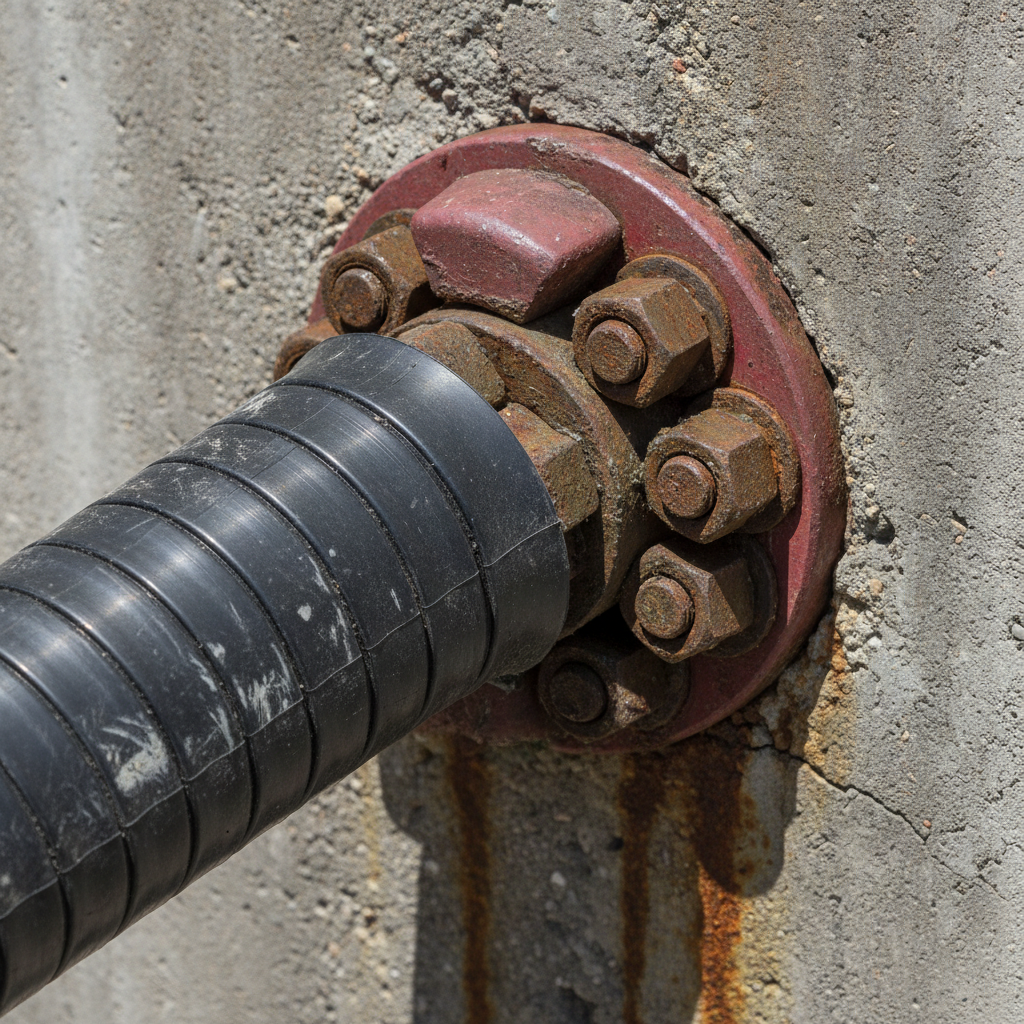
Permanent anchors often require multiple barriers around critical steel components, sealed anchor heads, protected transitions, and controlled grout coverage. For reference, the official U.S. Army Corps of Engineers Rock Reinforcement manual is a useful technical reference for rock bolts, anchors, grouting, design, installation, and testing. Project specifications and current local standards still control.
| Design aspect | Temporary support example | Permanent support example |
|---|---|---|
| Design life category used in the original draft | Under 2 years | 50 to 100+ years |
| Protection approach | None or one grout/protective layer where permitted | Project-specified multi-barrier or double-corrosion protection |
| Materials | Bare steel, coated steel, fiberglass, resin, or cement grout as designed | Protected bar or strand, grout, sheath, sealed head, and compatible accessories |
| Monitoring | Inspection and scheduled tests | Inspection, records, and monitoring where the consequence of failure warrants it |
Fiberglass bolts can solve corrosion, cuttability, or electromagnetic constraints in some projects. However, engineers must check creep, fire performance, connection details, and approval requirements before permanent use.
Rock bolt vs rock anchor difference 7: spacing
Rock bolts are often installed in a dense pattern because they reinforce a distributed zone around an opening. By contrast, engineers usually place rock anchors at wider, structurally selected points because each anchor engages a larger mass or supported element. Even so, spacing comes from analysis, not a default grid.
What controls bolt spacing
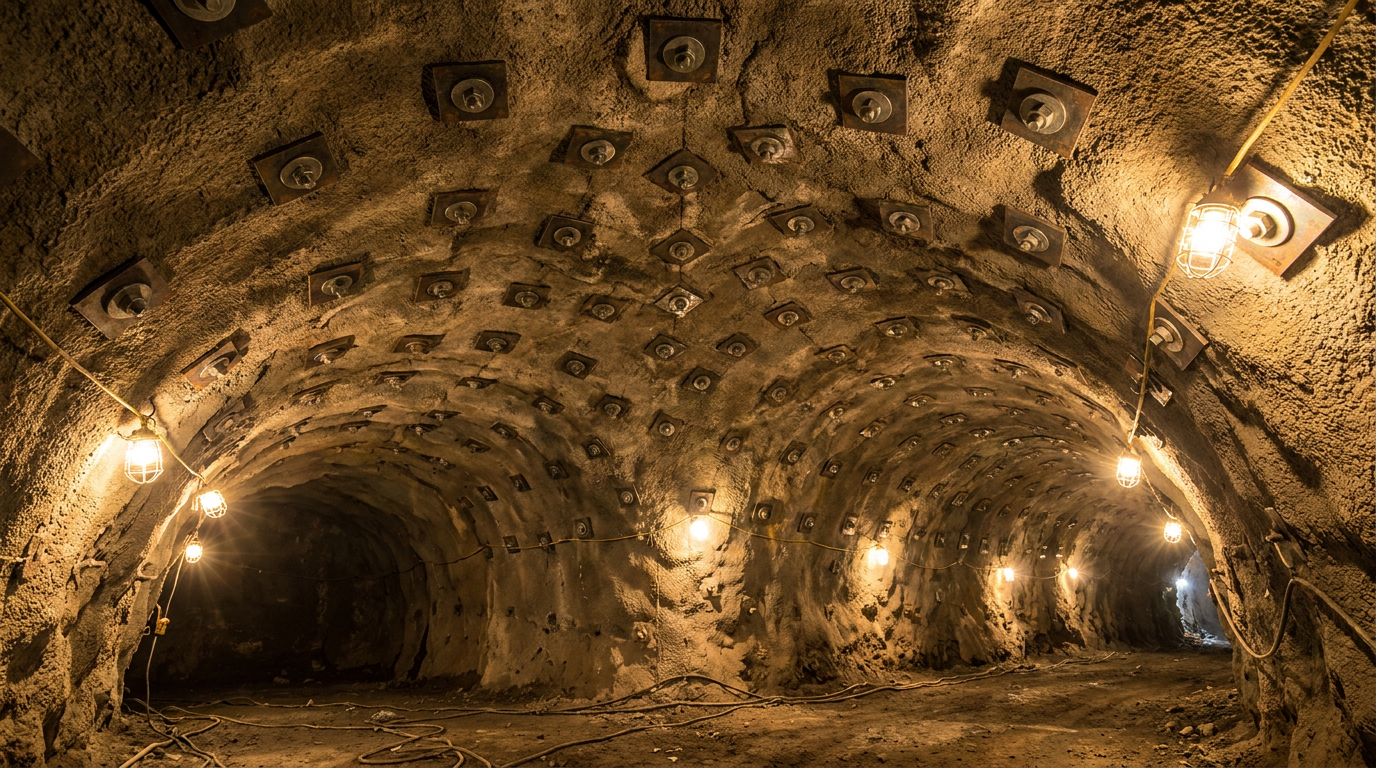
Bolt spacing depends on block size, joint orientation, excavation span, rock mass quality, stress, bolt capacity, plate and mesh behavior, and the construction sequence. However, tightening the grid without addressing loose surface material can still leave rock-fall exposure between bolts.
What controls anchor spacing
Anchor spacing depends on wall or slope demand, tendon capacity, bond-zone geometry, structural wales or panels, group effects, access, and drilling tolerance. Also, designers should arrange anchors so the test and stressing equipment can operate safely.
| Layout | Illustrative spacing from the original draft | Design intent |
|---|---|---|
| Systematic rock bolt pattern | About 1.0 to 1.5 m | Create a reinforced zone and control local blocks |
| Rock anchor layout | About 3.0 to 6.0 m | Transfer concentrated structural loads beyond a critical surface |
Use those figures only for early equipment and quantity planning. The approved support drawing must govern installation.
Rock bolt vs rock anchor difference 8: installed cost
Unit price does not show total installed cost. However, rock bolts are usually cheaper per tendon, and a project may require hundreds or thousands of closely spaced units. Meanwhile, anchors cost more per location because they can require deeper drilling, larger equipment, tendon assembly, staged grouting, stressing, testing, and corrosion protection.
Material cost drivers
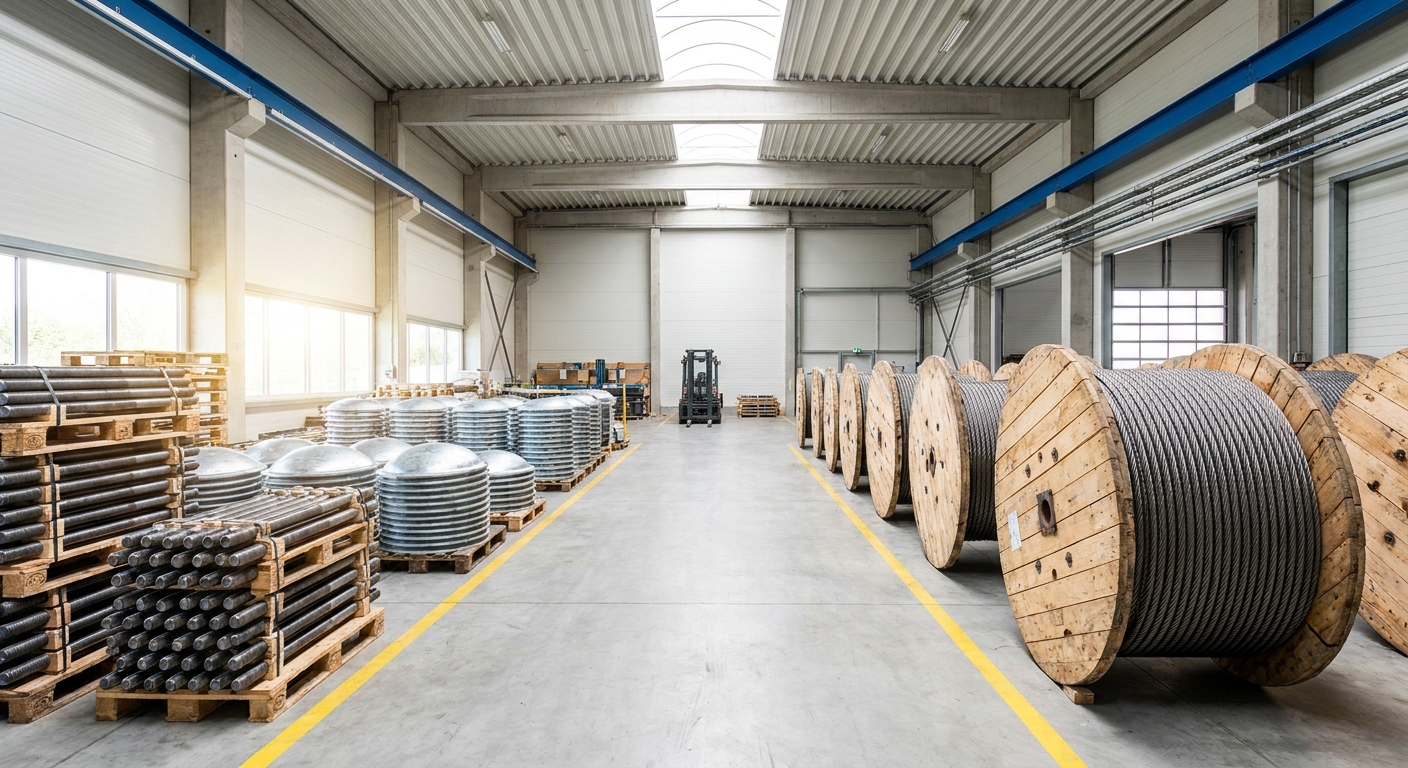
- Steel grade, bar or strand area, thread and coupling design
- Resin, cement grout, centralizers, spacers, sheathing, and corrosion barriers
- Bearing plates, nuts, anchor heads, trumpets, wedges, and caps
- Packaging, traceability, certificates, testing, and transport length
Labor and plant cost drivers
- Hole diameter, depth, inclination, and drilling rate
- Rig access, setup space, working height, and spoil handling
- Grout mixing, pumping, return monitoring, and cleaning
- Stressing-jack capacity, calibration, test duration, and reporting
| Cost element | Rock bolting project | Rock anchoring project |
|---|---|---|
| Material per location | Usually low to moderate | Usually high |
| Equipment footprint | Handheld drills, jumbos, or standard bolters | Larger drilling rigs, grout plant, and tensioning jacks |
| Installation cycle | Shorter and repeated across a dense pattern | Longer, with staged drilling, grouting, curing, stressing, and testing |
| Main commercial risk | Quantity, cycle time, consumables, and access | Ground variability, drilling depth, grout take, test failure, and rework |
Request a system quotation, not a bar-only quotation. A complete rock bolt accessories schedule should match the thread form, plate geometry, nut, coupler, grout or resin, drilling method, and traceability requirements.
How to choose the correct system
For a practical rock bolt vs rock anchor selection, start with the failure mechanism and load path. Then confirm that the proposed tendon reaches competent ground, that the installation method suits the borehole, and that the crew can test the completed system.
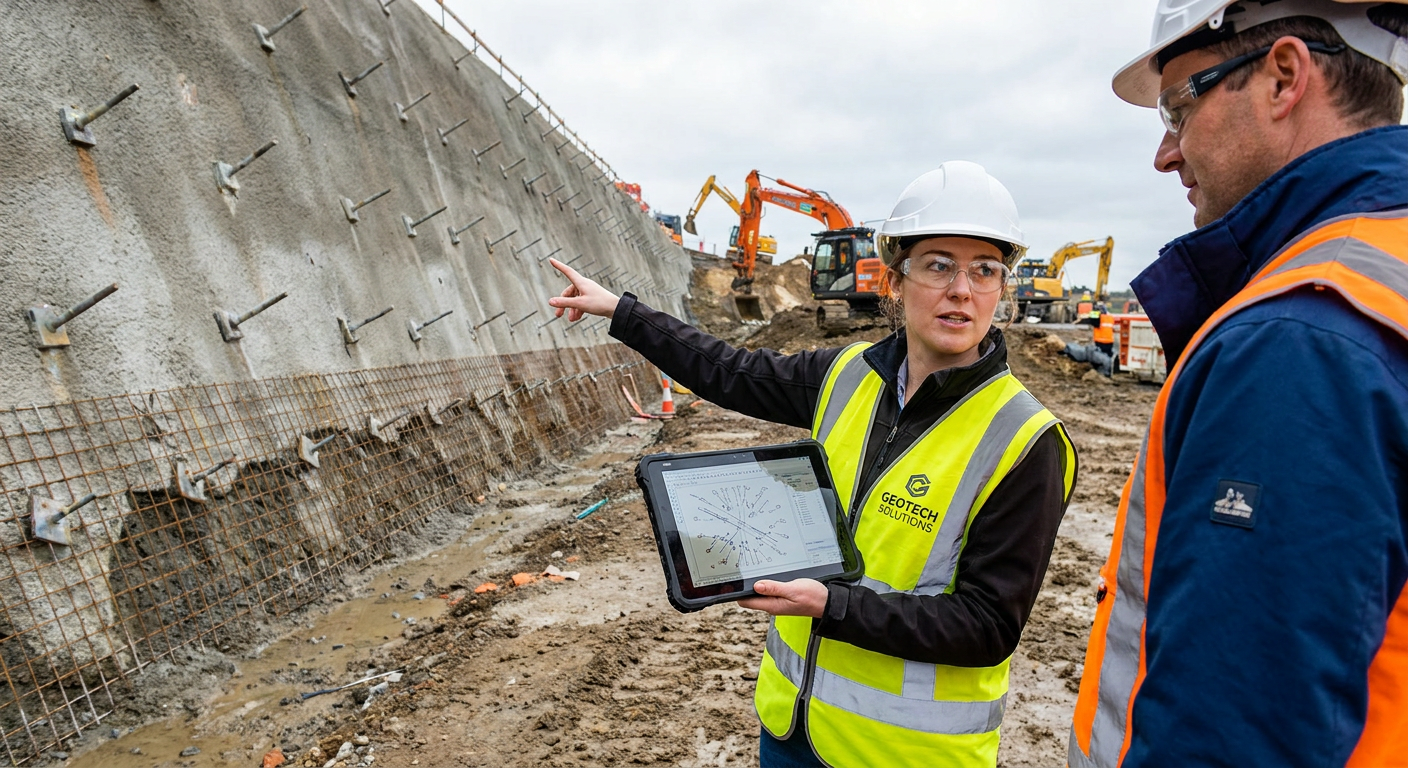
- Define the failure surface. Map joints, bedding, faults, weak layers, weathering, and groundwater.
- Set the structural duty. Decide whether the system reinforces rock near an excavation or transfers a structural load across a deeper surface.
- Confirm the load case. State design load, test load, displacement limit, dynamic demand, and factor of safety.
- Specify the tendon. Give material, diameter, length, bond length, free length, couplers, plates, heads, and coatings.
- Match the drilling and grout method. Account for collapsing holes, water, flushing, deviation, grout pressure, and curing time.
- Set acceptance criteria. Define inspection hold points, calibration, test frequency, records, and action after a failed test.
- Check service life. Match corrosion protection and monitoring to exposure and consequence of failure.
- Price the installed system. Include access, plant, consumables, testing, delays, and rework.
| Project role | Question to answer | Required output |
|---|---|---|
| Geotechnical engineer | What can move, and where is competent ground? | Ground model, failure surface, bond zone, and support demand |
| Structural engineer | Where does the tendon load enter the structure? | Anchorage, plate, wale, facing, or foundation details |
| Site superintendent | Can the crew build the specified hole, grout, and test sequence safely? | Method statement, plant plan, and inspection points |
| Procurement team | Do all components form one compatible system? | Approved submittal, certificates, lead time, and complete bill of materials |
Cable bolts occupy part of the space between short rigid bolts and large civil ground anchors. If the project uses long flexible tendons in underground mining, compare the design with the cage cable bolt system and the engineer’s ground-control plan.
Rock bolt vs rock anchor specification mistakes
- Choosing by product name without defining the required load path
- Ending the bonded zone inside the expected moving mass
- Copying a standard length or spacing from another site
- Treating torque as a direct load measurement without calibration
- Ignoring water, hole collapse, grout loss, or drilling deviation
- Specifying permanent service without a complete corrosion-protection detail
- Buying bar, nut, plate, coupler, grout, and drill tooling as unrelated items
- Leaving proof testing, acceptance limits, and failed-test procedures undefined
These mistakes are avoidable when the drawing, material schedule, method statement, and inspection plan describe the same system.
Rock bolt vs rock anchor FAQs
Can a rock bolt replace a rock anchor for deep slope stabilization?
Usually not when the design depends on a bonded zone beyond a deep slide surface and a controlled prestress. A short bolt that ends inside the moving mass cannot provide that load path. However, bolts may still control smaller face blocks as part of a combined slope-support system.
How do I decide what a tunnel needs?
Start with the likely failure mechanism, joint orientation, excavation span, stress, groundwater, and support timing. Shallow wedges and a reinforced arch often point to systematic bolting. A deep structural load or failure surface may require anchors. The rock bolt installation guide explains the drilling, anchoring, grouting, and verification steps for common bolt systems.
How can I tell whether a rock bolt has failed?
Warning signs include plate deformation, nut movement, broken mesh, cracking or loss of grout, increasing convergence, fresh rock movement between support points, or pull-test behavior outside the acceptance criteria. Stop work and follow the project ground-control procedure when support performance is uncertain.
Can engineers use fiberglass rock bolts for permanent civil work?
Engineers can specify them in suitable permanent applications, especially where corrosion resistance or cuttability matters. Approval should account for long-term strength, creep, fire exposure, connection details, installation damage, and the governing code.
Which grout works for deep rock anchors?
Cementitious grout is common for bonded ground anchors, but the mix, water-cement ratio, admixtures, bleed, strength, pumping method, pressure, and verification must follow the design. The best grout is the one qualified for the tendon, ground, water conditions, and construction method.
Rock bolt vs rock anchor final procurement checklist
The difference between rock bolt and rock anchor systems comes down to one question: is the tendon reinforcing the rock mass around an excavation, or transferring a defined structural load to a deeper bonded zone? Confirm that answer before comparing steel grades or unit prices.
- Approved drawings and geotechnical report
- Tendon type, grade, diameter, length, and thread
- Free length and bond length where applicable
- Plate, nut, coupler, head, wedge, trumpet, cap, and centralizer details
- Grout or resin specification and installation method
- Corrosion-protection class and service life
- Design, lock-off, proof, and acceptance loads
- Inspection, testing, traceability, and failed-test procedure
Send Yongduo Roller your drawings, ground conditions, target load, service life, and test requirements for a component and tooling review before ordering.