
A self-drilling rock anchor is an advanced geotechnical stabilization system that consolidates drilling, grouting, and anchoring into a single operational step to secure unstable formations. Imagine executing a deep underground excavation or slope stabilization project on a site with highly fractured rock, loose sand, or crumbling soil. Traditional anchoring systems require you to drill a hole, extract the drill casing, insert the tendon, and pump grout. In collapsing geologies, the borehole caves in immediately upon withdrawing the drill string, stalling your project, risking crew safety, and inflating labor overhead. The modern B2B remedy to this engineering bottleneck is the high-efficiency self drilling rock bolt system, which acts as its own drill rod to prevent borehole collapse and establish instantaneous geological reinforcement.
What is a self drilling rock bolt system?
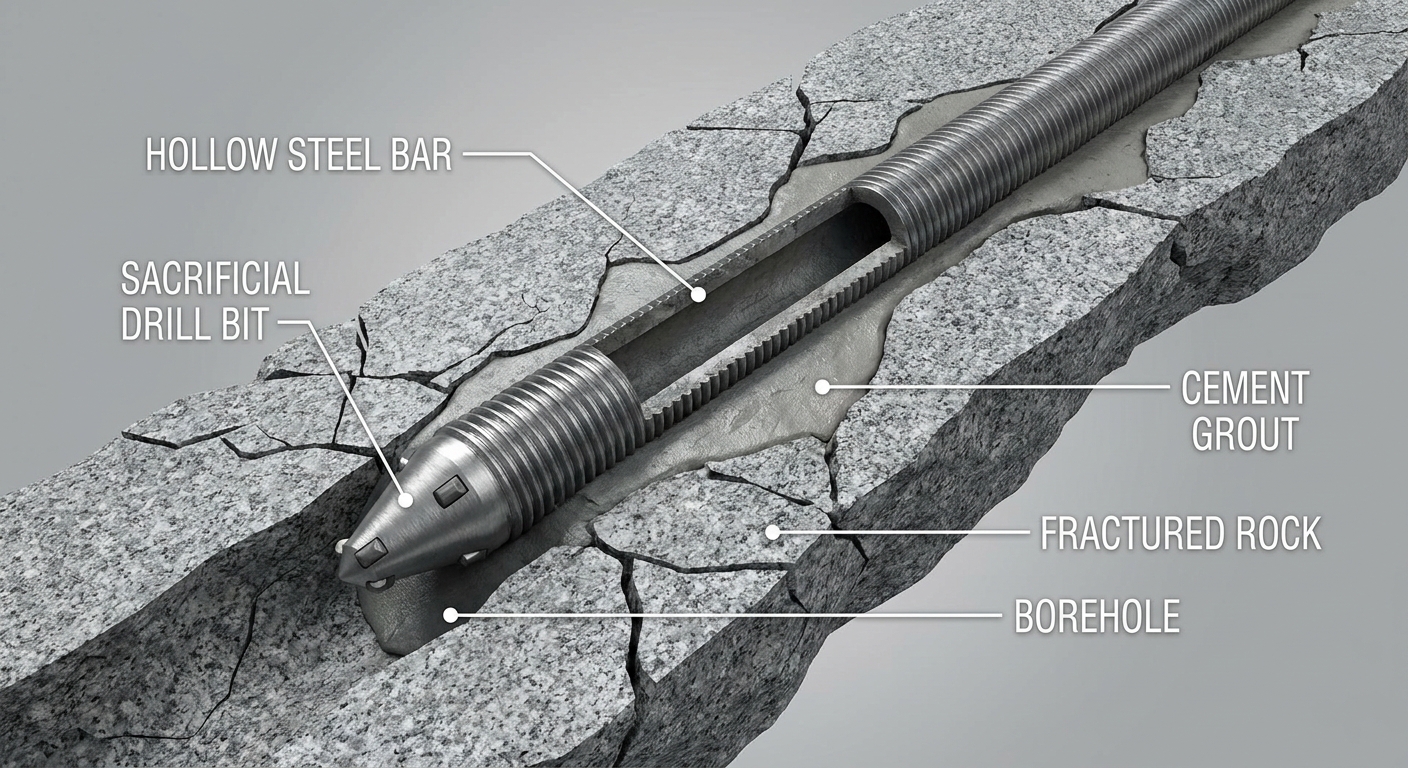
A self drilling rock bolt system is an integrated structural reinforcement assembly engineered to secure highly compromised or loose geological strata by serving as the drill string, the grouting tube, and the permanent tension tendon simultaneously. By removing the need for pre-drilled holes, this specialized setup allows you to stabilize ground formations in a single, fluid pass.
This system is highly regarded in heavy-duty geotechnical operations where safety and processing efficiency are paramount. B2B operators choose this option to guarantee maximum uptime on active tunneling and excavation sites. For roof-bolting operator precautions, see MSHA guidance.
What are the core components of the system?
The physical assembly of this system comprises robust, heavy-duty mechanical elements designed for extreme soil interaction and high torque. You will find that these parts function as a single unit to handle extreme rotational stresses.
High-strength hollow steel bars act as the central tension tendon, providing a dynamic flow path for high-pressure grout. This hollow core serves as the conduit for flushing medium during drilling and cementitious grout during the anchoring phase.
- Disposable sacrificial drill bit: Carves the initial borehole and remains embedded in the ground.
- Hollow steel bar: Acts as both the structural tendon and the drilling conduit.
- Threaded coupler: Joins multiple bar segments to reach targeted geological depths.
- Centralizer: Keeps the bar aligned in the borehole for uniform grout distribution.
- Bearing plate and dome nut: Clamps the structural face and transfers structural tension.
How does the system bypass pre-drilling?
Think about it: traditional pre-drilling demands a separate casing step that eats up valuable crew hours. The self-drilling anchor bypasses this completely by drilling and grouting in parallel, using the hollow bar itself as the non-retrievable drill rod.
Because the bar is never withdrawn, you do not have to worry about loose gravel or water-bearing sand caving in. This direct-drive process keeps your site moving forward safely without requiring specialized casing equipment.
| Component | Material Specification | Engineering Function | |
|---|---|---|---|
| Sacrificial Bit | Hardened Tungsten Carbide / Steel Alloy | Penetrates soil and rock; remains embedded in the ground. | |
| Hollow Bar | High-Tensile Structural Steel | Transmits torque during drilling; serves as a grouting conduit and structural tendon. | |
| Centralizer | Polyethylene or Pressed Steel | Positions the hollow bar in the exact center of the borehole for uniform grout cover. |
This structural breakdown illustrates how each element acts in unison to secure compromised geologic profiles.
Key Takeaway: By utilizing the anchor itself as the drilling rod, the single-pass system completely eliminates the threat of borehole collapses during tendon installation, keeping your projects on schedule and on budget.
Why choose a self drilling rock bolt?
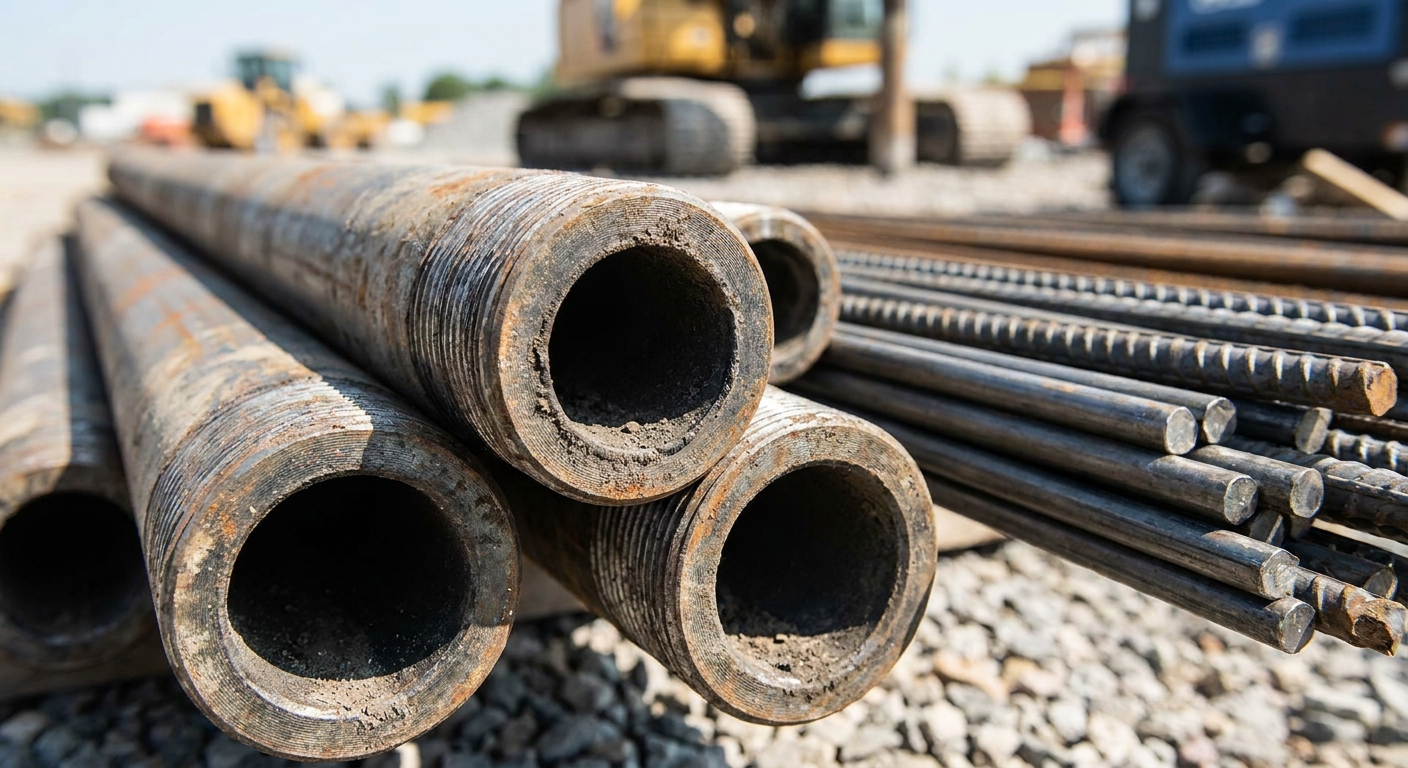
Choosing a self drilling rock bolt over traditional solid-core rock bolts or hollow grouted anchors provides immediate stability advantages when working in challenging geological environments. Its single-pass construction method completely bypasses the labor-intensive casing requirements of traditional setups.
You can significantly scale down on-site machinery and logistics with this design. Eliminating temporary casing translates to a smaller physical footprint on your busy B2B job sites.
Why do traditional anchor methods fail in weak ground?
Let’s face it: withdrawing a traditional casing in highly fractured geologies almost always triggers an immediate borehole wall collapse. When the soil caves in, you are forced to re-drill, wasting expensive materials and critical hours.
The physical disruption of inserting a separate tendon also weakens the surrounding soil structure further. This unstable environment puts your underground operators and machinery at severe risk.
- Collapsing borehole walls in high-groundwater zones.
- Jamming of solid anchor rods during insertion into unlined holes.
- Incomplete grout coverage due to localized soil cave-ins.
- High labor overhead from repetitive drilling attempts.
What is the speed advantage of single-step installation?
By consolidating drilling, grouting, and anchoring into a continuous operation, you can increase installation speeds by up to 200%. This massive leap in efficiency helps you hit aggressive construction milestones without adding labor.
Your drilling rig operates continuously without the downtime associated with inserting separate casings and tendons. This keeps your project progression smooth and predictable.
| Project Metric | Traditional Cased Anchoring | Self-Drilling SDA System | |
|---|---|---|---|
| Operational Steps | 3 distinct steps (Drill, Insert, Grout) | 1 continuous integrated step | |
| Casing Requirement | Mandatory in loose soils (costly) | Not required (anchor acts as casing) | |
| Labor Hours | High (frequent borehole clearing) | Low (continuous progression) | |
| Geological Risk | High borehole collapse vulnerability | Zero risk of post-drill collapse |
This performance comparison highlights the immense time and cost savings realized by switching to single-step SDA technology.
Key Takeaway: Integrating drilling and grouting solves the fundamental physics problem of borehole instability in crumbling formations, driving down project delays and improving site safety margins.
Where do you install a self drilling rock bolt?
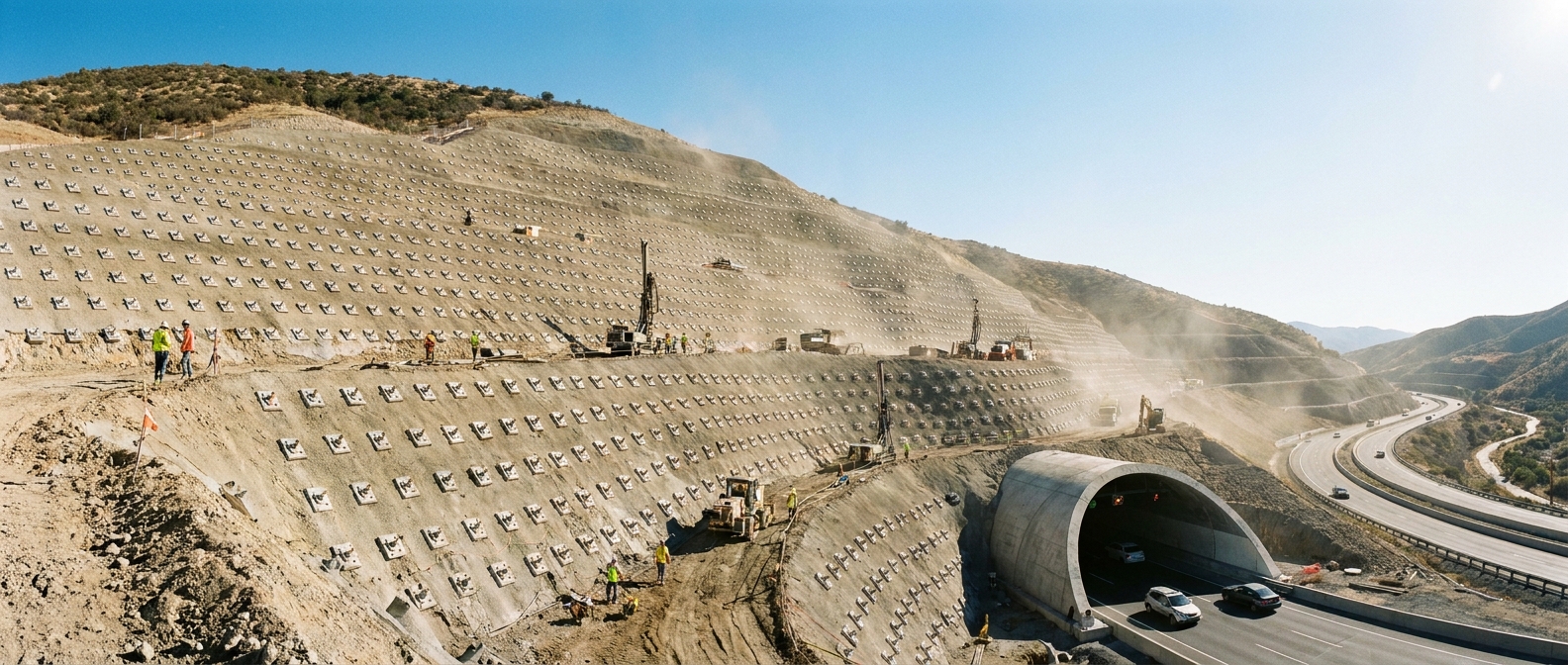
Geotechnical designers specify a self drilling rock bolt across highly diverse civil, mining, and tunneling landscapes where immediate stabilization is paramount. Its adaptability makes it the go-to solution for challenging, heterogeneous geologies.
Whether securing a steep mountain highway or reinforcing an underground vault, this versatile system fits seamlessly into your heavy-duty structural plans. It is particularly effective where traditional rotary drill setups struggle to maintain a clean hole.
How do SDA systems stabilize underground tunnels?
Here is the deal: when you are tunneling through squeezing rock or swelling clay, the active face can deform within minutes of excavation. Utilizing these anchors as radial support or forepoling umbrellas creates an immediate safety shield above your excavation crews.
This continuous structural reinforcement protects both your excavators and the downstream bulk handling networks. In fact, keeping the haulage portals secure ensures your impact roller and conveyor setups remain aligned and fully operational.
Can SDA systems prevent catastrophic landslides?
When used on steep highway or railway cuts, these systems function as high-tensile soil nails. They cross potential failure planes to tie unstable superficial soil blocks directly into deep, competent rock strata.
This anchoring method restricts lateral earth pressure, ensuring long-term slope stability. The high-shear resistance developed protects critical transport infrastructure from environmental threats.
- Highway and railway cut slope stabilization.
- Retaining wall tension anchor systems.
- Underground mine roof and rib support.
- Urban deep excavation foundation shoring.
| Sector | Primary Geotechnical Function | Common Geologic Condition | |
|---|---|---|---|
| Tunneling / Mining | Forepoling and radial vault support | Squeezing ground, heavily fractured rock | |
| Slope Engineering | High-tension | Weathered granite, loose colluvial soil | |
| Foundations | Compression and tension micropiles | Soft clay, water-bearing sand deposits |
This cross-industry application matrix showcases the extreme versatility of hollow bar anchoring systems in modern engineering.
Key Takeaway: From underground subway tunnels to towering mountain highways, SDA systems act as the invisible skeletal structure securing critical infrastructure and protecting your physical B2B assets.
How does a self drilling rock bolt hold soil?
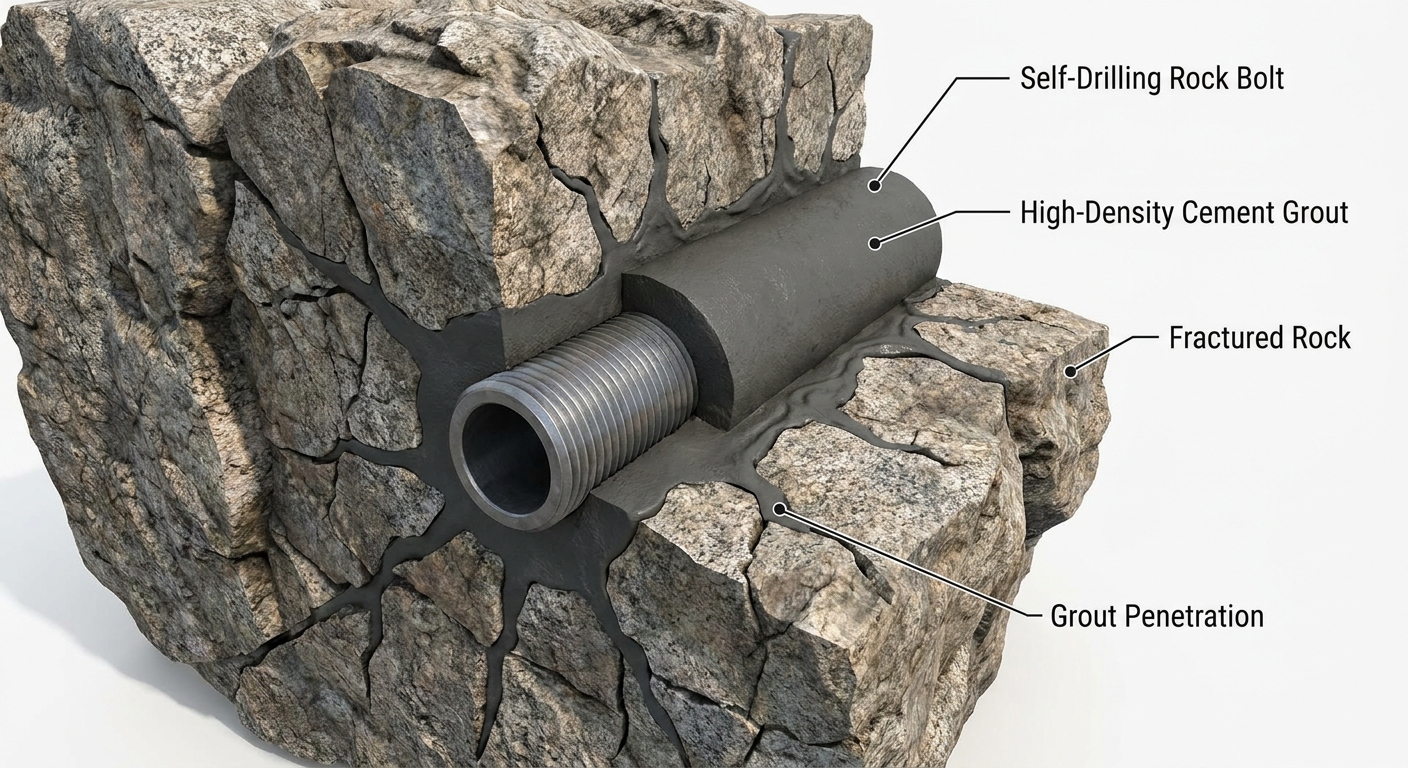
The mechanical integrity of how a self drilling rock bolt secures earth relies on a powerful dual mechanism of high-strength steel tension and comprehensive cement grout bonding with surrounding formations. By establishing high friction along the entire length of the borehole, the system resists heavy axial pulling forces.
This grout-to-ground bond distributes structural loads over a much wider area than mechanical expansion anchors. As a result, you get a highly resilient anchor that excels even in low-cohesion sands and gravels.
How does the grout-to-ground bond build strength?
Pressurized cement grout is pumped through the hollow steel bar’s center, escaping through the drill bit ports. It permeates the surrounding soil voids to form a rough, high-friction anchor body.
This expansive cement root mixes directly with loose particles, turning weak soil into a consolidated composite mass. As the cement slurry cures, it grips the rugged external thread of the hollow bar.
- Chemical adhesion between the cured grout and the steel bar’s threads.
- Mechanical interlocking of the rough grout body with soil pores.
- Active compressive stress field created by tensioning the hex nut.
- High resistance to pull-out forces under heavy seismic or static loads.
What is the mechanical role of the bearing plate?
But that is not all: once the grout cures, the bearing plate and heavy-duty hex nut are tightened against the outer rock face. This mechanical tensioning distributes the axial loads uniformly across the exterior structural surface.
The plate prevents surface flaking and spalling, ensuring the structural face does not degrade over time. It essentially clamps the outer layers to prevent localized structural shifts.
| Mechanism Stage | Main Component | Structural Role | |
|---|---|---|---|
| Phase I: Penetration & Permeation | Slurry Grout & Hardened Bit | Infiltrates rock joints, filling structural voids and fissures. | |
| Phase II: Shear Interlock | Threaded | Transfers tension forces from the rock mass to the cured grout cylinder. | |
| Phase III: Surface Distribution | Plate and Dome Nut Assembly | Clamps outer rock layers to prevent surface flaking and spalling. |
Understanding this dual-action load transfer mechanism is critical for calculating precise safety factors in geotechnical designs.
Key Takeaway: The combination of internal chemical bonding via grout and external mechanical anchoring via tension plates creates a highly resilient rock reinforcement system that guarantees structural safety.
Who manufactures a self drilling rock bolt bar?
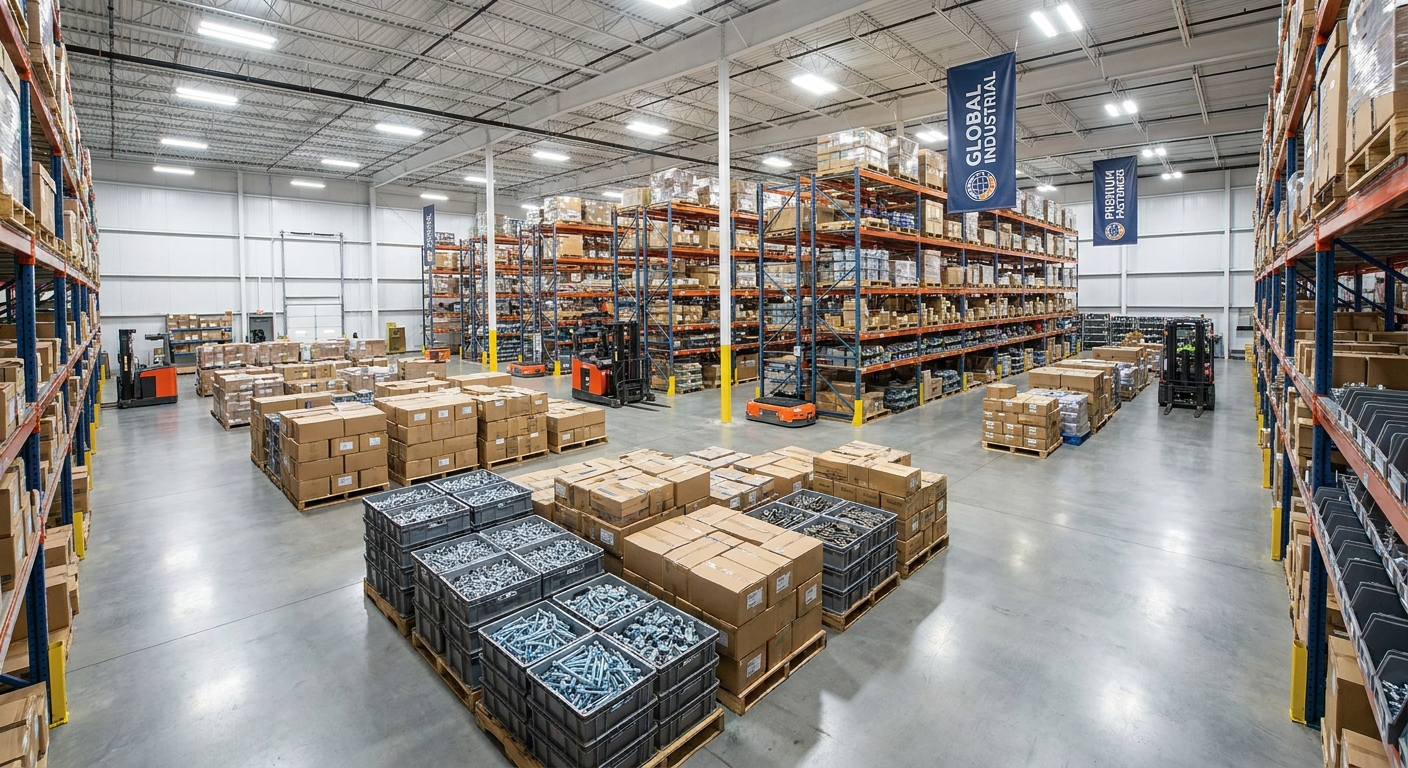
Finding a reputable manufacturer that produces a high-performance self drilling rock bolt requires auditing their raw material sourcing, steel metallurgy, and precision manufacturing tolerances. When you procure structural steel components, verifying traceability ensures that each batch meets safety standards.
Top B2B manufacturers utilize advanced metallurgical processes to construct hollow steel bars that handle extreme rotary torque. They also offer structural components like conveyor idler frame options for major mining and logistics clients globally.
Why does steel grade matter for SDA hollow bars?
Think about it: low-grade structural steel risks shearing off mid-hole when your drilling rig hits a hard granite pocket. Choosing a high-tensile alloy ensures that the bar can transmit the necessary rotational torque without failing.
Premium steel grades also provide excellent impact resistance during rotary-percussive drilling. This avoids costly delays associated with retrieving broken bar fragments.
What quality control standards must manufacturers meet?
To ensure compatibility on-site, hollow bar threads must align perfectly with international dimensional standards like ISO 10208. High-integrity manufacturers perform rigorous tensile, impact, and dimensional checks before shipping.
You should look for suppliers who provide verified material test certificates with every order. This level of quality assurance protects your firm from structural failures and installation jams.
- Ultrasonic non-destructive testing for micro-fissures in steel.
- Charpy V-notch impact tests for low-temperature toughness.
- Thread profile dimensional inspection using precision calipers.
- Tensile pull-out proof loading to verify ultimate yield capacity.
| Quality Metric | Required Industrial Standard | Engineering Purpose | |
|---|---|---|---|
| Dimensional Threading | ISO 10208 Compatibility | Guarantees seamless coupling with accessories on-site. | |
| Steel Grade Tensile Strength | Minimum 500 MPa to 1100 MPa | Prevents tensile rupture under maximum design loads. | |
| Corrosion Protection | ASTM A153 Hot-Dip Galvanizing | Prevents acidic groundwater from corroding the steel bar. |
Selecting the appropriate steel metallurgy ensures your structural anchors withstand both immediate drilling stresses and long-term load demands.
Key Takeaway: The integrity of a rock bolt is only as reliable as the quality control protocols maintained by its manufacturing facility, so always partner with certified suppliers to mitigate site risks.
When is a self drilling rock bolt necessary?
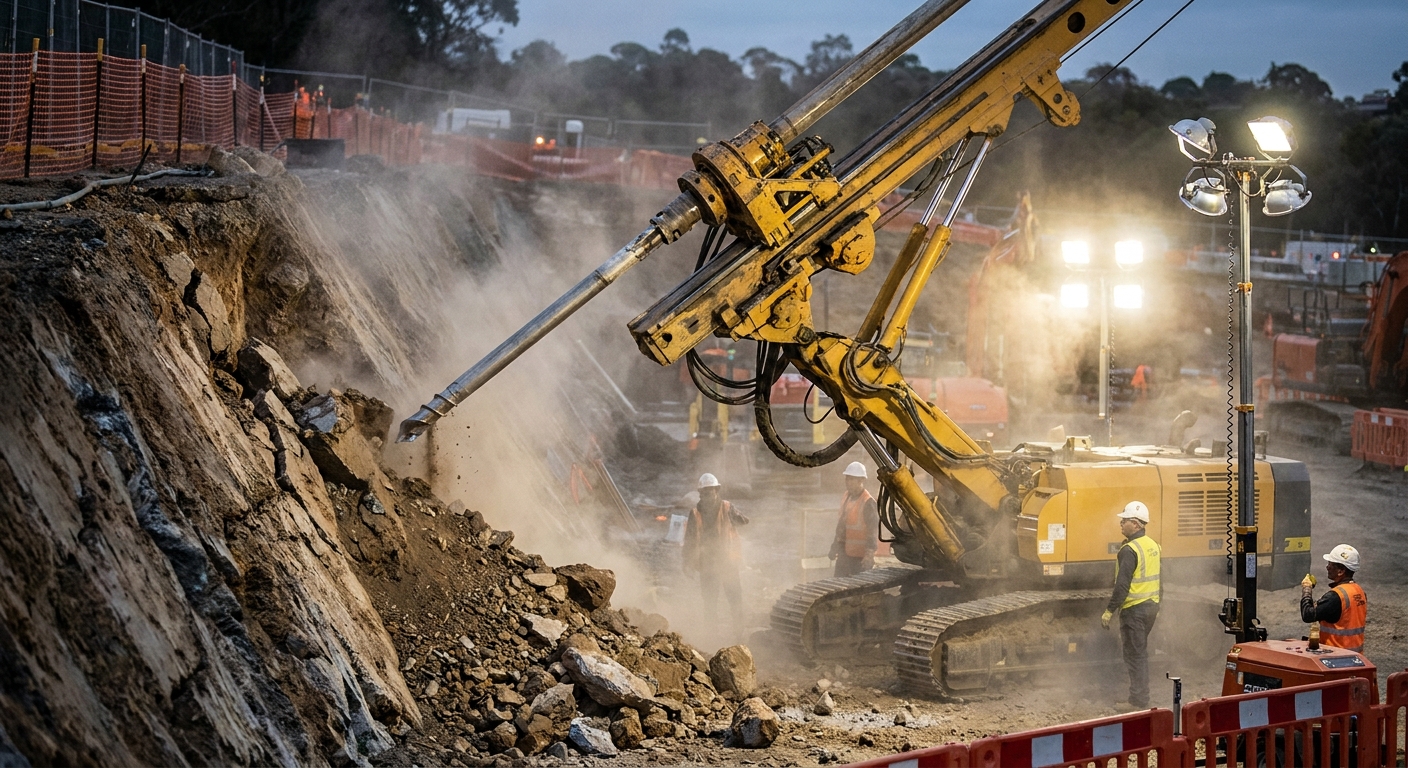
Deploying a self drilling rock bolt becomes absolutely critical when tackling complex geotechnical hazards where geological instability threatens human safety and structural assets. You cannot afford to use traditional pre-drilled anchors in running sands, collapsing gravels, or water-bearing geologies.
In these severe conditions, the borehole walls cave in the moment the drill bit is withdrawn. This makes the self-drilling mechanism the only viable way to place an anchor without risking crew injury or equipment loss.
When do unstable, squeezing ground conditions occur?
Squeezing ground phenomena typically happen in deep tunnels or highly weathered shales under heavy overburden stress. If you do not install rapid reinforcement, the excavated rock face will deform rapidly, threatening a catastrophic cave-in.
These dynamic stress zones require high-yield anchors that can adapt to changing ground pressures. Bypassing the casing phase allows you to establish support before deformation begins.
- Deep excavation in silty clays or loose fluvial sand.
- Underpinning settling foundations in historic city centers.
- Stabilizing railway embankments undergoing dynamic loading.
- High-pressure water inflow zones that wash out un-grouted holes.
Is SDA necessary for historical structure repair?
By the way: when consolidating historical brickwork or masonry foundations, traditional drilling methods create heavy vibrations that can crack the fragile structure. Self-drilling micropiles can be threaded through existing masonry with minimal disturbance.
This low-vibration technique secures the historic foundation while keeping the original architectural features completely intact. It offers a surgical approach to structural underpinning.
| Geotechnical Scenario | Traditional Anchor Feasibility | Self-Drilling SDA Suitability | |
|---|---|---|---|
| Solid Granite (Stable) | Highly Feasible (cost-effective) | Feasible but often overkill | |
| Water-Bearing Sand (Collapsing) | Extremely Low (casing jams) | Highly Recommended (casing-free) | |
| Squeezing Fault Zones | Low (boreholes deform rapidly) | Outstanding (immediate support) |
This geological risk assessment chart demonstrates how SDA systems mitigate disastrous foundation collapses before they start.
Key Takeaway: Standard drilling fails in collapsing soils; SDAs are the non-negotiable solution for preserving structural integrity in these high-risk zones, protecting your crew and machinery.
Which thread fits a self drilling rock bolt best?
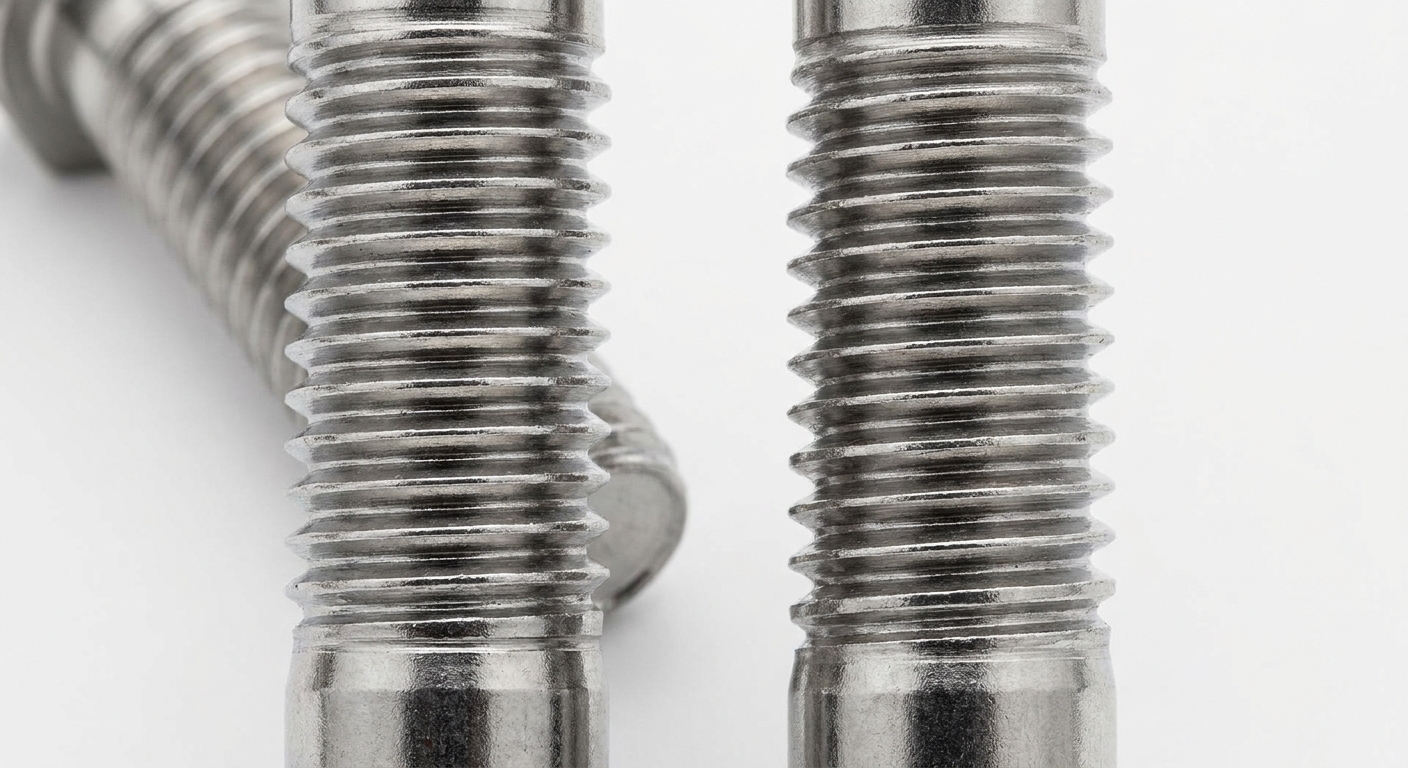
Selecting the optimal thread profile for a self drilling rock bolt depends strictly on whether your project requires standard micro-anchoring or high-adhesion micropiling. Your choice of thread style directly impacts how well the steel bar bonds with the concrete grout.
B2B buyers must analyze the expected load types to ensure maximum bond strength. In similar fashion, choosing the correct rubber disc return roller design is vital to prevent material build-up on heavy-duty industrial conveyor systems.
What are the mechanical features of R-type thread?
Here is the deal: the standard R-type thread features a continuous, rounded wave design that conforms to ISO 10208 standards. This rope thread profile is highly optimized for smaller-diameter bars used in radial rock bolting and light slope nailing.
It allows for fast, easy coupling of bar segments on-site. The rounded profile is also highly resistant to clogging from soil and rock dust during the drilling process.
Why does the T-type thread provide higher bonding?
The T-type thread is characterized by deep, flat trapezoidal ridges designed for heavy-duty micropiling. These broad ridges provide a significantly larger mechanical surface area, yielding a concrete-bonding friction capacity that is often twice that of standard rounded R-threads.
This robust geometry also prevents thread damage during high-torque drilling in harsh geologies. It is the preferred choice for heavy-load structures that require reliable long-term support.
- Deeper thread depth for increased concrete shear resistance.
- Enhanced torque transfer during drilling in hard rocky strata.
- Broad, flat pitch that is highly resistant to field thread damage.
- Ideal geometric profile for heavy-duty micropiling and foundations.
| Thread Type | Pitch Profile | Standard Compliance | Primary Application Area | |
|---|---|---|---|---|
| R-Type Thread | Rounded Wave (rope thread) | ISO 10208 Standard | Small-diameter slope nailing & light tunneling | |
| T-Type Thread | Flat Trapezoidal Ridge | Full-Thread Bar Spec | Heavy-duty micropiling & high-tension foundation anchors |
Selecting the appropriate thread style is a foundational design choice that influences both load transfer capabilities and installation ease.
Key Takeaway: Use R-threads for rapid, small-diameter slope nailing, but specify T-threads when maximum concrete-to-steel bond strength is required for high-load foundation support.
What accessories complete a self drilling rock bolt?
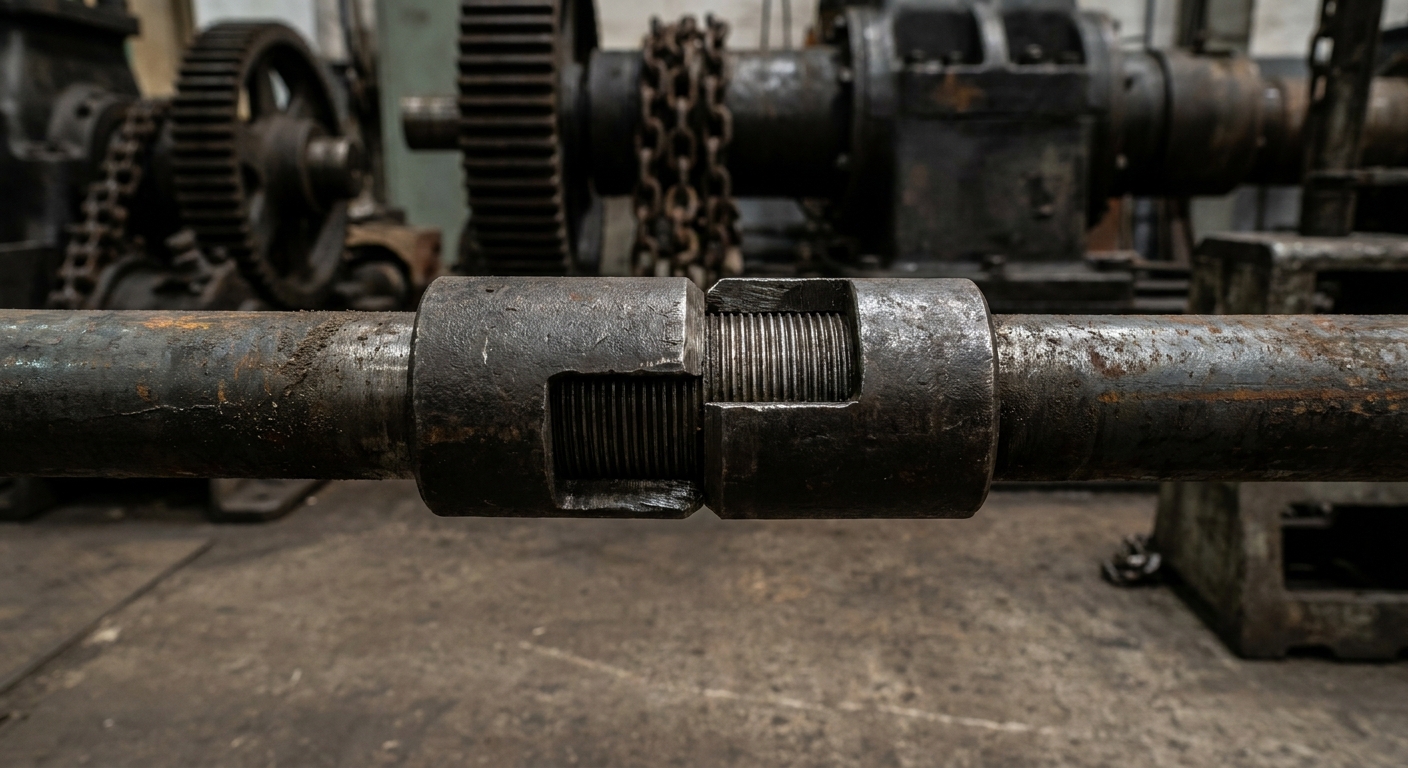
A robust self drilling rock bolt system relies on a suite of carefully engineered accessories that transfer, distribute, and secure mechanical forces safely into the geology. If you use low-quality accessories, you risk compromising the structural integrity of the entire anchor assembly.
Each accessory must match the steel grade and thread type of the hollow bar to ensure uniform load transfer. Standardizing your components avoids premature shear failures under maximum tension.
What is the structural role of anchor couplers?
High-strength threaded couplers are vital components that join multiple hollow bars together, allowing you to reach stable rock strata deep below the surface. This modular extension capability is key for deep micropiling projects.
The coupler contains internal thread stops that prevent the bars from over-threading during high-torque drilling. This design keeps the joint secure under extreme vibration and pulling forces.
- Hardened steel couplers with integrated internal thread stops.
- Flat or domed steel plates to sit flush against irregular rock faces.
- High-stress spherical hex nuts that compensate for angular drill alignments.
- Spring steel or plastic centralizers fitted along the bar length.
How do centralizers align the hollow bar?
Keep in mind: if the anchor bar lies off-center in the borehole, the grout cover will be uneven, exposing the steel to rapid groundwater corrosion. Centralizers keep the hollow bar positioned precisely in the center of the hole.
This guarantees a uniform, continuous ring of protective grout around the entire length of the steel tendon. It is a simple step that heavily extends the lifespan of the system.
| Accessory Component | Primary Manufacturing Material | Critical Structural Function | |
|---|---|---|---|
| Coupler | Carbon or Alloy Structural Steel | Extends overall anchor depth without losing mechanical tension capacity. | |
| Centralizer | Durable Polyethylene / Spring Steel | Guarantees complete annular spacing for perfect grout coverage. | |
| bearing plate and hex nut | High-Strength Structural Steel Plate | Clamps the external structure and transfers interior tension forces. |
This accessory breakdown underlines how each small component plays a critical role in preventing catastrophic anchor failure.
Key Takeaway: Geotechnical anchors fail if the grout cover is uneven; centralizers and high-quality accessories are inexpensive yet critical components that prevent off-center alignment and ensure structural safety.
How do you grout a self drilling rock bolt safely?
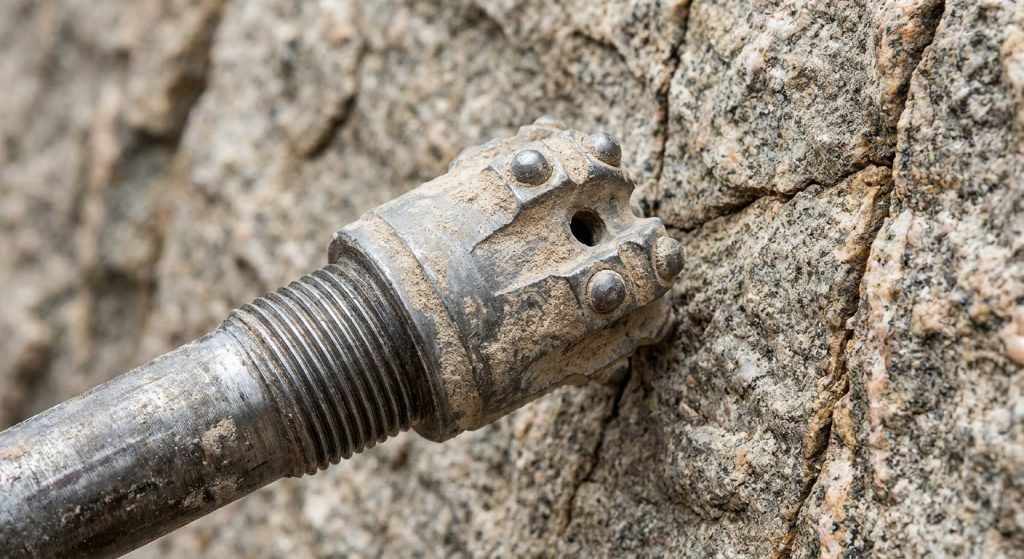
Executing a flawless grouting process with a self drilling rock bolt requires rigorous monitoring of slurry densities, injection pressures, and exit flow indicators. You must ensure that the grout is fully consolidated to establish a high-strength bond with the geology.
For optimal results, you should use reliable cement grout mixes paired with precision injection pumps. Just as high-quality steel conveyor roller components prevent material spillage in bulk handling, proper pressure grouting prevents water ingress in deep excavations.
What is the ideal water-to-cement ratio?
Think about it: a mix that is too watery will cure into a weak, porous cement structure that lacks tensile and compressive strength. The ideal water-to-cement ratio for pressure grouting is between 0.40 and 0.50.
This specific ratio provides excellent pumpability while ensuring high density and maximum corrosion protection once cured. It creates a robust protective barrier around the hollow bar.
How does simultaneous grouting block water?
When you perform pressure grouting, the cement slurry is forced into the surrounding rock fissures and joint planes. This high-pressure injection seals off groundwater channels, preventing water from washing out your borehole.
This is especially beneficial in water-bearing sands and fractured rocks where traditional dry drilling would fail. The cured grout root consolidates the weak soil into a stable composite block.
- Using high-shear colloidal grout mixers for homogeneous slurry preparation.
- Employing continuous pressure-gauge monitoring during grout injection.
- Drilling under grout flush to immediately line the borehole wall.
- Terminating grouting only when pure, thick slurry exits the drill hole collar.
| Grouting Phase | Target Pressure Range | Slurry Consistency | Engineering Objectives | |
|---|---|---|---|---|
| Drilling Flush | 0.5 to 1.5 MPa | Thin (water-rich) | Flushes drill cuttings and cools the sacrificial drill bit. | |
| Primary Injection | 1.5 to 3.0 MPa | Dense (0.45 W/C ratio) | Displaces water, fills the borehole, and coats the steel bar. | |
| Final Consolidation | Over 3.0 MPa | Thick paste | Forces grout into rock cracks, creating an interlocking anchor bulb. |
A strict adherence to these precise grouting protocols is the ultimate defense against anchor slipping under high tensile loads.
Key Takeaway: Proper pressure-grouting turns surrounding weak rock formations into a unified, high-strength composite mass, ensuring that your structural foundations remain permanently secure.
Why is a self drilling rock bolt cost-effective?
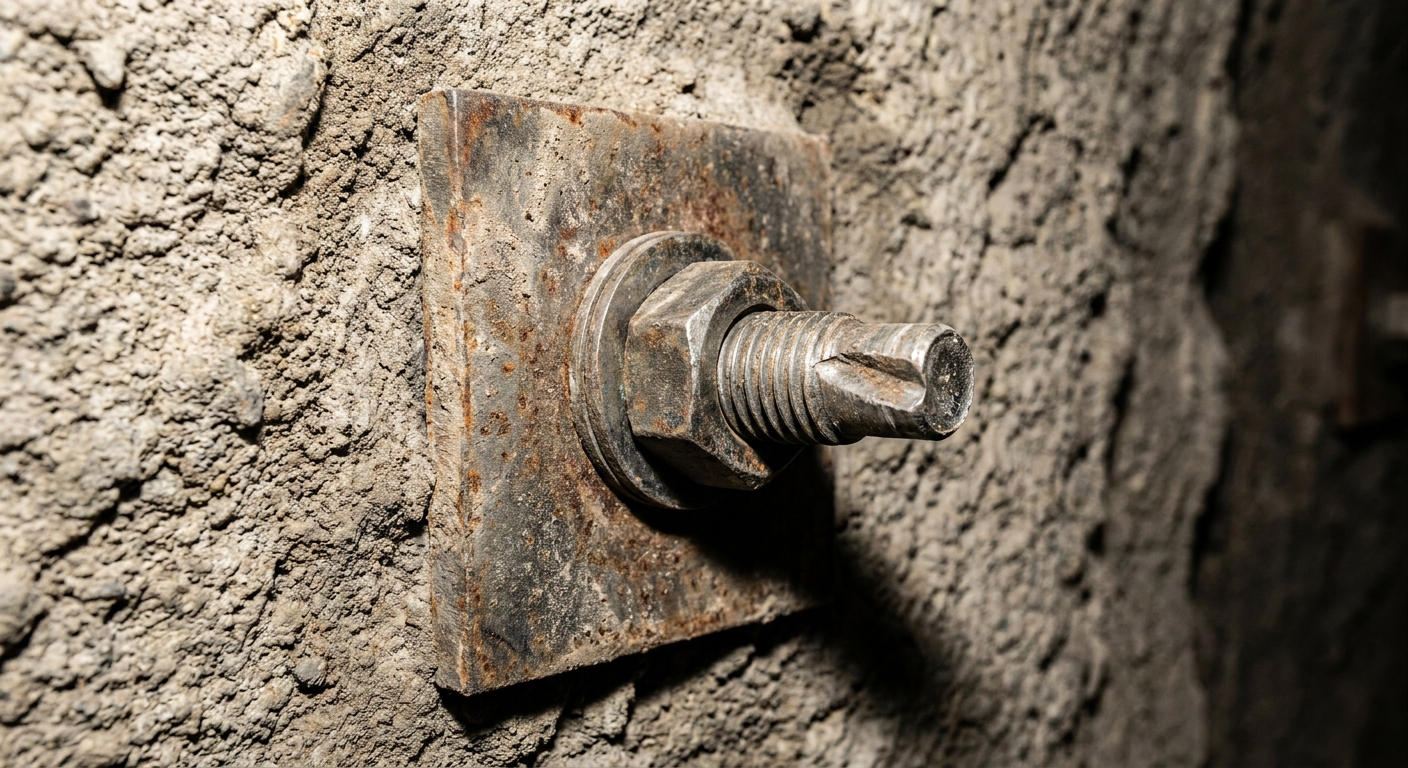
While the initial material cost of a self drilling rock bolt may exceed that of standard solid rebar, the overall lifecycle savings across labor, equipment, and schedule compression make it the most economical choice. You must look beyond upfront material costs to calculate true operational savings.
Consolidating multiple tasks into a single-step process minimizes the need for specialized crew training. This lets you optimize your B2B project budget and allocate resources to other critical areas of your construction site.
How do SDAs reduce site labor and machine overhead?
Because you do not need to install and pull temporary casing, you can operate with smaller, more versatile drilling rigs. This smaller physical footprint means you spend less on heavy equipment rentals and fuel consumption.
Your smaller, highly focused drill crew can achieve up to double the daily installation footage compared to traditional casing methods. This fast-tracks your project timeline and lowers overall overhead.
Why do SDAs lower long-term risk and liability?
Here is the bottom line: structural failures due to collapsed boreholes or poorly grouted tendons can cost millions in repairs and legal fees. The full encapsulation of the hollow steel bar inside a high-pressure grout body guarantees robust corrosion resistance.
This drastically lowers your long-term maintenance costs and provides peace of mind for the entire lifecycle of the infrastructure. It is a proactive investment in structural safety.
- No expensive drill casing rentals or casing extraction wear-and-tear.
- Fewer specialized drilling rigs needed on-site, cutting down mobilization costs.
- Significantly reduced crew sizes and lower daily labor expenses.
- Faster project sign-off, which translates to reduced financing costs.
| Cost Factor | Solid Rebar + Temporary Casing | Self-Drilling Hollow Bar (SDA) | |
|---|---|---|---|
| Upfront Material Cost | Moderate | Higher | |
| Casing Equipment Costs | High (rental and repair of casings) | Zero (casing-free installation) | |
| Daily Labor Requirements | Large multi-step crew | Compact single-step crew | |
| Risk of Schedule Overruns | High (risk of caved boreholes) | Extremely Low |
This financial breakdown demonstrates how investing in high-quality hollow bar systems protects overall project profitability.
Key Takeaway: The higher upfront material cost of SDA hollow bars is rapidly offset by dramatic savings in heavy equipment rental and labor hours, protecting your bottom line.
Conclusion
By eliminating borehole collapses, casing extraction delays, and high machinery overhead, this single-pass engineering method resolves the industry’s most frustrating excavation challenges. At Yongduoroller, we specialize in delivering high-precision steel components engineered to withstand extreme structural loads. Whether you require durable threaded hollow bars, robust accessories, or certified high-performance components, our manufacturing expertise ensures that your physical assets remain secure and your B2B supply lines stay uninterrupted. We look forward to powering the future of heavy industry, mining, and civil infrastructure through robust engineering and certified material quality. Ready to safeguard your next deep excavation or tunnel project? To discuss custom specifications, request load-test certificates, or get a comprehensive quote for your B2B supply, please contact us today .
FAQ
Can I reuse the drill bit of a self-drilling anchor bolt?
No, the sacrificial drill bit is specifically designed for single-use. Once it drills down to the target depth, it remains permanently embedded at the bottom of the borehole to secure the anchor base, allowing grout to flow freely through its flushing ports.
What’s the best thread type for high-load micropiling applications?
The T-type thread is the best choice for high-load micropiling. Its deep, flat trapezoidal profile provides a significantly larger surface area, yielding a concrete-bonding friction capacity that is often twice that of standard rounded R-threads.
How do I know if my soil conditions require a self-drilling rock anchor?
You should specify self-drilling anchors if you encounter loose sand, gravel, weathered soil, or water-bearing rock where open boreholes cave in immediately after withdrawing a drill bit.
Can I extend the length of a hollow anchor bar indefinitely?
Yes, but with strict engineering limitations. While high-strength threaded couplers allow you to extend hollow bars to reach deep stable strata, you must consult a structural engineer to ensure that the rotational torque limits of the drilling rig and the bar’s tensile capacity are not exceeded.
What’s the best water-to-cement ratio for SDA grouting?
The ideal water-to-cement ratio ranges between 0.40 and 0.50. This creates a dense, low-shrinkage slurry that is fluid enough to pump through the hollow steel bar while curing into high-strength cement that provides excellent load transfer and corrosion protection.