
A rock bolt bearing plate vs mesh plate comparison should start with load-bearing and surface-retention roles within your approved support assembly. A bearing plate receives concentrated loading through the bolt-end arrangement. A mesh plate may spread contact over mesh or retain a wider surface area. Some approved designs use both components. Compare your rock bolt plate components as an assembled system before replacing one with another. More visible coverage does not automatically establish an equivalent bearing function.
1. What separates bearing and mesh-retention roles?
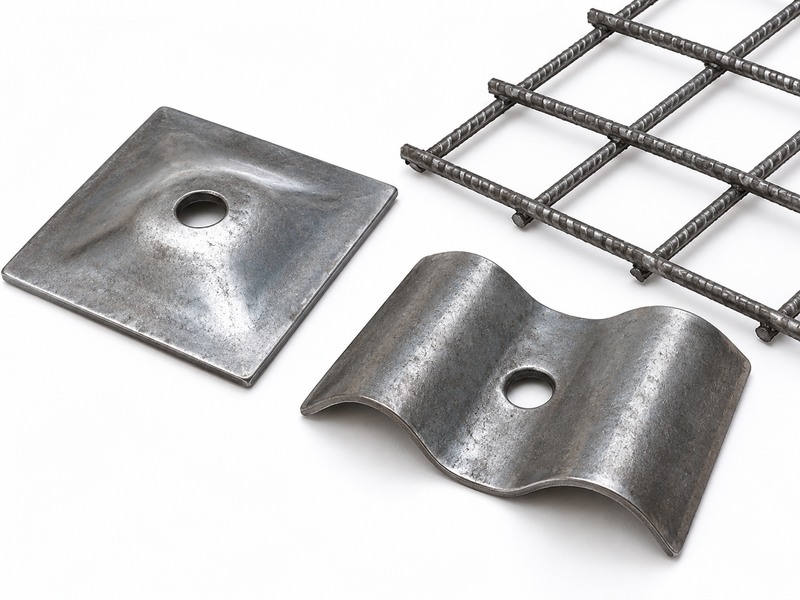
Their roles differ in how they receive concentrated bolt-end loading and support surrounding surface-control materials. A primary bearing plate belongs within a defined nut, washer and support load path. A mesh-retention component may extend contact beyond that concentrated region. Product names alone cannot establish which functions a particular part provides.
How should you follow the load path?
Trace force from each nut into the supporting assembly. Identify which plate receives that contact directly or through a matched washer. Then identify which component engages mesh farther from the bolt axis. One arrangement can contain both roles without making its components interchangeable.
- Locate the concentrated bolt-end seating region.
- Locate mesh or facing contact beyond that region.
- Identify each component within the approved stack.
Which comparison is useful for buying?
Compare function before comparing outline. Include matching bolt accessories where they determine seating. A wider component needs its own role identified rather than an assumed bearing-plate rating.
| Functional question | Bearing role | Surface-retention role |
|---|---|---|
| Where does load enter? | Defined bolt-end seat | Mesh or facing contact |
| What must match? | Nut/washer/support arrangement | Surface-control detail |
| Can another part replace it? | Requires accepted equivalence | Requires accepted equivalence |
A component’s assigned function governs a meaningful comparison.
2. Why can a mesh plate need a separate bearing plate?
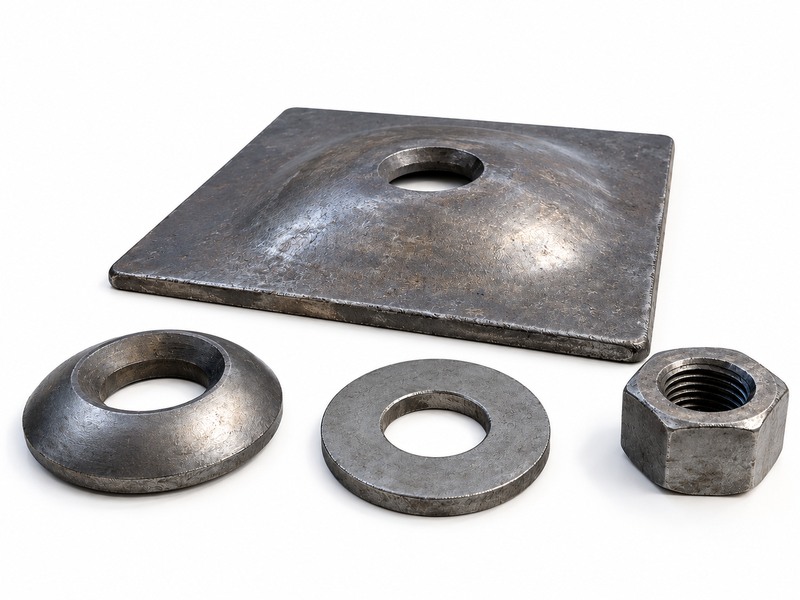
A mesh plate can need a separate bearing plate when the approved arrangement divides surface retention from primary bolt-end bearing. Manufacturer examples include larger-area components used with another roof or bearing plate. Those combinations show complementary functions. They do not create a universal rule for every plate family.
What does each part contribute?
Read the combination as two interacting components. One part may provide a specified seat around the bolt axis. Another may reach across a larger mesh area. Removing either part changes your documented assembly even when the remaining component still covers its hole.
- Confirm which part receives the seating stack.
- Confirm which part retains the wider surface.
- Preserve specified order and orientation.
What should you avoid during substitution?
Avoid treating an enlarged footprint as permission to remove a required bearing plate. For US underground coal roof bolts, check bearing-plate installation requirements before considering removal of a required primary plate. An alternate arrangement needs acceptance as a complete assembly rather than a one-for-one visual swap.
| Proposed action | Functional risk | Better decision basis |
|---|---|---|
| Remove primary plate | Changed bolt-end bearing | Approved assembly detail |
| Remove retention plate | Changed mesh contact | Surface-control requirement |
| Replace both together | Entire load path changes | Complete alternative review |
A complementary part should remain until its role receives another accepted solution.
3. How does contact footprint affect mesh support?
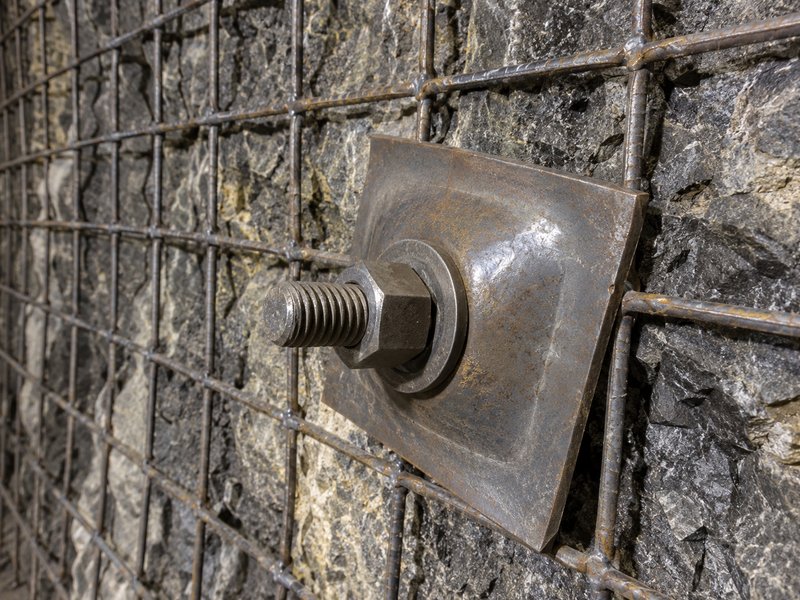
Contact footprint determines where a component touches mesh and the supporting surface around a bolt location. A larger outline may contact more mesh, yet actual contact depends on profile and placement. Areas spanning gaps do not automatically provide the same support as bearing contact. Review the installed detail rather than outside dimensions alone.
Which contact points should you inspect?
Look at contact patches instead of the silhouette. A plate edge may touch a wire while another region stands clear. A raised profile can also change which surfaces meet. Your drawing should show intended mesh position and the supporting substrate.
- Identify wires or straps under contact regions.
- Identify unsupported gaps within the assembly.
- Check orientation relative to mesh geometry.
How can a simple layout help?
Lay representative components against the specified mesh in a controlled review. Our tunnel support background provides adjacent navigation only. Use the approved surface-control detail for actual acceptance of coverage and contact.
| Visible feature | What it tells you | What remains open |
|---|---|---|
| Large outline | Potential coverage | Actual contact patches |
| Raised profile | Different geometry | Intended seating condition |
| Wire contact | Local interaction | Accepted assembly behavior |
Judge coverage through actual component placement and contact.
4. Why should mesh damage enter the selection discussion?
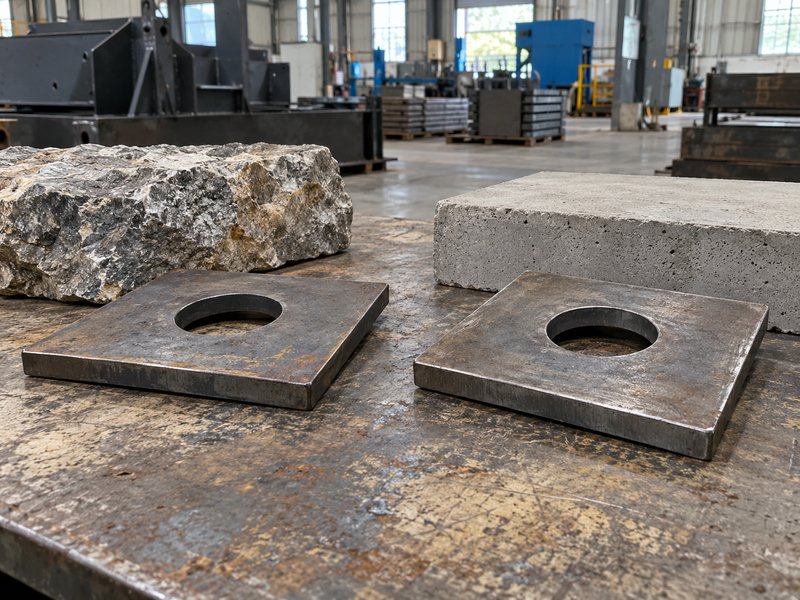
Mesh damage belongs in selection because contact geometry determines how a plate or strap interacts with wire. Ground-support research discusses matching plate performance while avoiding damage to mesh and straps. That concern directs attention toward interfaces rather than plate size alone. It does not provide a universal edge shape or acceptance threshold.
What should an interface review examine?
Inspect the places where steel meets wire. Look for concentrated contacts and unexpected interference within the proposed assembly. Compare the arrangement with its approved detail. Refer questionable contact to your engineer rather than modifying plate edges on site.
- Contact between plate edges and mesh wires.
- Interference with welded intersections or straps.
- Distortion or damage introduced during handling.
What should suppliers clarify?
Ask how proposed surface-control components fit the specified mesh arrangement. Provide representative mesh information rather than a generic request for a larger plate. A correct match depends on both sides of the interface.
| Interface concern | Review question | Practical action |
|---|---|---|
| Edge against wire | Intended contact? | Compare assembly detail |
| Welded intersection | Creates interference? | Review actual placement |
| Handling damage | Changes intended contact? | Segregate affected material |
A mesh-compatible arrangement needs more than adequate outside dimensions.
5. How do butterfly plates fit this comparison?
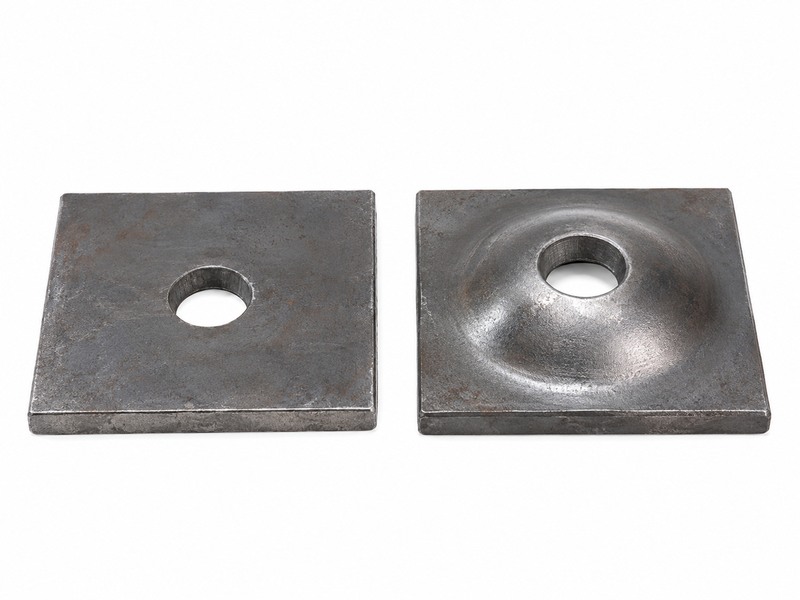
Butterfly plates fit this comparison as a specific surface-contact geometry whose role depends on its documented assembly. Manufacturer information describes direct-to-rock or welded-mesh use and combinations with flat or domed bearing plates. Those examples support checking combined arrangements. They do not make butterfly plates universal substitutes for every bearing plate.
Which features require a matched detail?
Identify what the profile contacts in your application. A formed surface plate may engage rock or mesh differently depending on placement. Its orientation and central arrangement belong within the support detail. Keep those conditions linked with the exact component designation.
- Intended direct-to-rock or mesh interface.
- Required primary bearing component, if specified.
- Central opening and compatible seating arrangement.
How should you compare available options?
Ask for the documented function of each candidate rather than ranking shapes. Include seating accessories when they form part of the combination. Request review whenever a proposed alternative changes contact or component order.
| Arrangement question | Why it matters | Accepted basis |
|---|---|---|
| Direct rock contact? | Defines supporting interface | Product/project detail |
| Welded mesh contact? | Defines surface interaction | Matched mesh arrangement |
| Separate bearing plate? | Defines bolt-end load path | Approved component stack |
A familiar trade name still needs a complete assembly description.
6. What should a bearing-vs-mesh comparison board show?
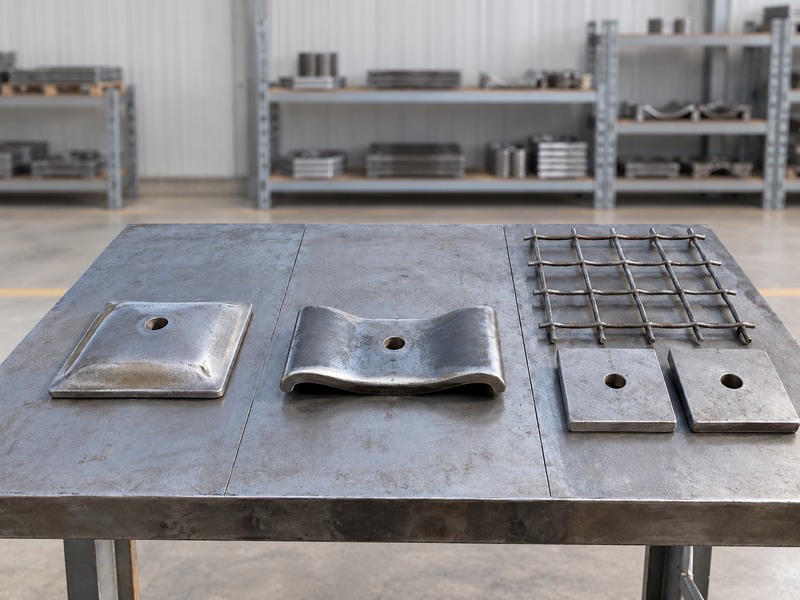
A comparison board should show component roles, contact and assembly order through real samples. It can help a buyer distinguish a primary seat from wider mesh retention. It cannot establish product capacity or a universal replacement rule. Keep that boundary clear during sample reviews.
Which samples make the distinction visible?
Place a complete combination beside individual parts. Show representative mesh under the retention component. Include the specified bearing plate and matched seating hardware in their intended order. A complete physical example reveals interfaces that isolated catalog images conceal.
- Individual bearing and retention components.
- Representative mesh or strap sample.
- One documented complete assembly arrangement.
How should the sample review be retained?
Keep sample references with photographs and the accepted detail. Our rock bolt sizing background provides related navigation rather than acceptance geometry. Route performance questions to applicable technical evidence.
| Sample view | Useful observation | Interpretation limit |
|---|---|---|
| Individual parts | Shape and identification | No capacity proof |
| Mesh interface | Intended contact placement | No field equivalence |
| Full combination | Component order | Applies to shown arrangement |
A physical comparison explains roles when its scope stays explicit.
7. How do substrate and orientation affect the assembly?
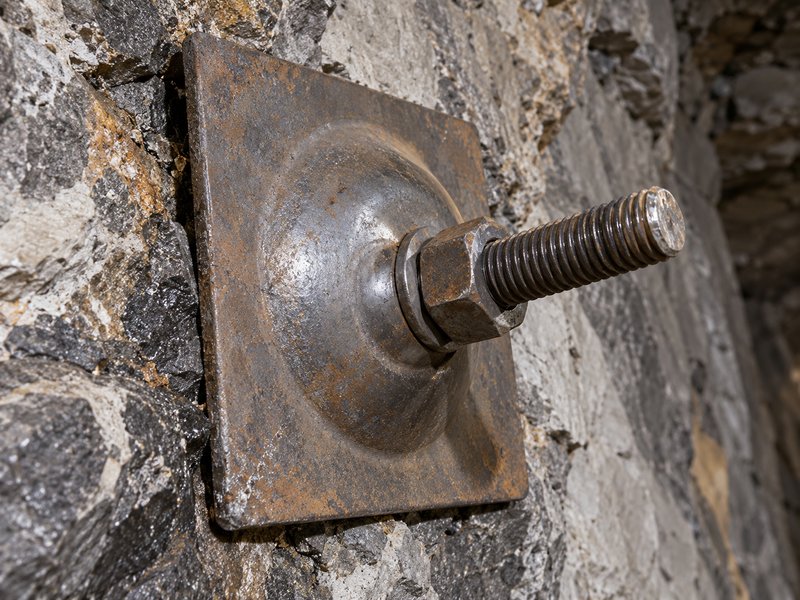
Substrate and orientation affect which component surfaces receive contact and how your assembly fits around the bolt location. Rough rock, a specified facing and different mesh placement create different interfaces. A component can appear correctly sized while sitting differently from its intended arrangement. Use an installed section detail for review.
What belongs in that section detail?
Show the supporting surface behind your mesh. Identify the supporting material and relative positions of each plate. Include bolt direction where it affects seating. Your engineer should define acceptable contact conditions without relying on a stock product photograph.
- Substrate and facing arrangement, if present.
- Mesh position relative to each plate.
- Bolt-end stack and intended bearing surfaces.
What should field observations trigger?
Unexpected gaps, interference or reversed components should prompt review under project procedures. Avoid solving an interface problem through an unapproved extra washer or plate. Record observed geometry and obtain a disposition for the affected location.
| Observation | Possible question | Review response |
|---|---|---|
| Plate stands clear | Intended contact missing? | Check support detail |
| Mesh interferes with seat | Stack arranged correctly? | Review component order |
| Different substrate | Evidence still relevant? | Engineering assessment |
Contact differences deserve a defined response before components are improvised.
8. How should an order separate the two plate roles?
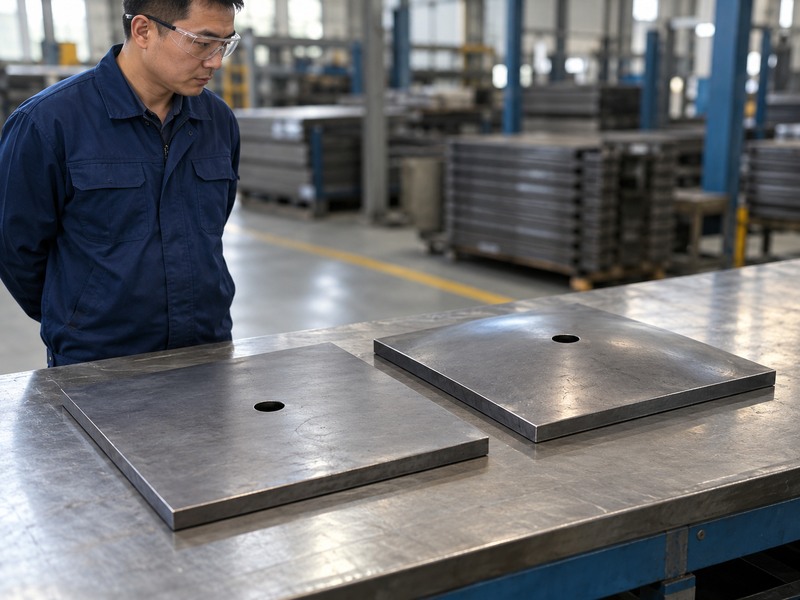
An order should identify primary bearing and surface-retention components separately when both appear in the approved assembly. One generic line for “plates” can hide a missing role. Component references and quantities should follow the accepted detail. This also helps receiving prevent unintended stock substitutions.
What should the bill of materials include?
Give every required component its own identity. List the mesh interface and hardware arrangement through drawing references. Separate supplied combinations from individual replacement parts. Keep spare quantities distinguishable from the installed assembly requirement.
- Bearing plate designation and matched hardware.
- Retention plate designation and intended mesh.
- Required combination, order and quantities.
How should receiving check deliveries?
Compare delivered plate components with the accepted material list. Segregate unidentified or damaged stock. A similar-looking plate from another bin should not become a substitute without technical review.
| Order line | Purpose | Receiving check |
|---|---|---|
| Primary bearing plate | Defines concentrated seat | Match designation |
| Retention component | Defines surface contact | Match geometry and role |
| Seating hardware | Completes accepted stack | Check matched set |
Clear order lines keep a two-role assembly intact through delivery.
9. Which substitution questions should an engineer resolve?
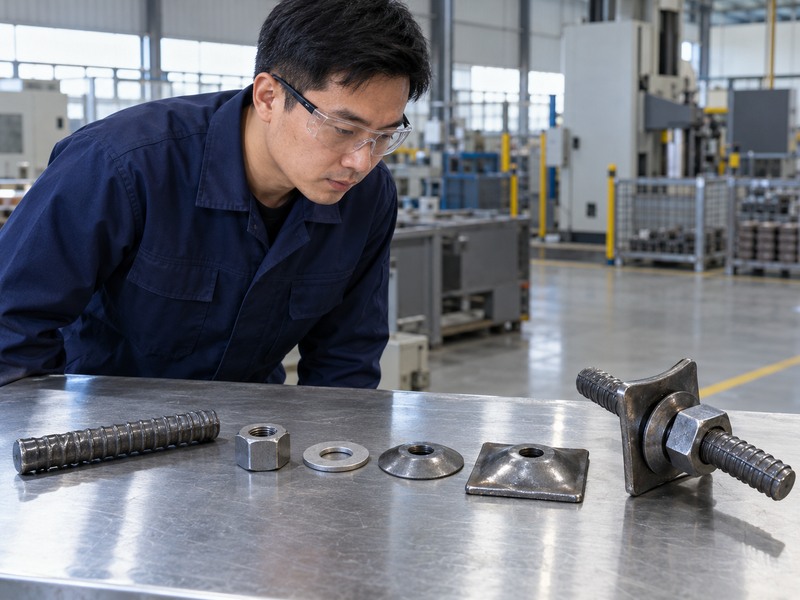
An engineer should resolve changes to bearing function, mesh contact and evidence applicability before accepting a substitution. A larger alternative can still change a seating interface. A smaller alternative can remove required surface coverage. Compare the complete arrangements rather than individual shapes.
What should an alternative proposal explain?
State which original function each new part supplies. Show the original and proposed assembly side by side. Identify changed interfaces and supporting evidence. Avoid an equivalence claim based only on diameter, outline or availability.
- Where does bolt-end loading enter?
- How is mesh or facing retained?
- Which approved contacts or quantities change?
What should an accepted change specify?
Record exact component references and revised assembly details. Include approval limits and affected project locations where relevant. Issue the accepted revision through document control before warehouse or field teams exchange parts.
| Changed feature | Engineering question | Release requirement |
|---|---|---|
| Primary seat | Equivalent accepted function? | Defined component approval |
| Mesh footprint | Suitable retention contact? | Revised surface detail |
| Assembly order | Correct full load path? | Controlled stack drawing |
Accept a defined combination rather than a broad replacement claim.
10. How should you prepare a plate-role inquiry?
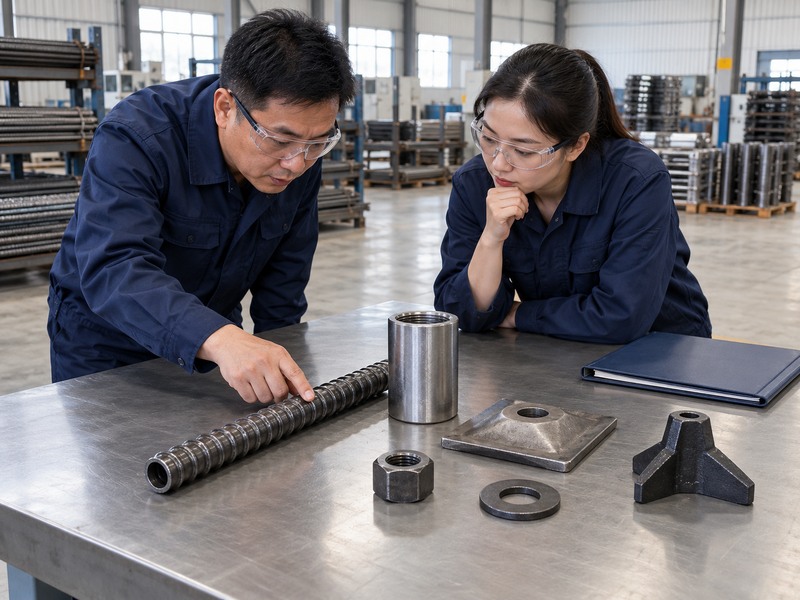
Prepare the inquiry around your support detail, mesh arrangement and required component roles. Include photographs of representative interfaces when drawings need context. Ask suppliers which exact components they can identify for review. Keep capacity acceptance within project engineering documents.
What should your request include?
Send the combination that must work together. Include the bolt-end hardware and surface-control materials. Ask whether a proposed larger-area component requires a separate bearing plate. A direct question helps prevent incomplete quotations.
- Approved bearing and surface-retention arrangement.
- Mesh or strap information and intended contact.
- Nut, washer and plate component references.
- Required drawings and applicability evidence.
What should you send next?
| Closure check | Action to retain |
|---|---|
| 1 | Approved bearing and surface-retention arrangement. |
| 2 | Mesh or strap information and intended contact. |
| 3 | Nut, washer and plate component references. |
| 4 | Required drawings and applicability evidence. |
Send your assembly detail, mesh information and component list when you contact us. Request a response separating each plate’s role and supplied quantity. Release your order after a reviewer accepts the complete combination.
Q1: Can I replace a bearing plate with a larger mesh plate?
Only after engineering review accepts the complete alternative. Wider coverage does not automatically establish an equivalent bearing function.
Q2: Can one assembly need both plate types?
Yes, some documented arrangements combine a primary bearing plate with a larger surface-retention component.
Q3: How do I know what a butterfly plate does?
Read its exact product and assembly detail. The trade name alone cannot establish its required bearing or retention role.
Q4: What’s the best way to compare mesh contact?
Review a section detail with representative components. Compare actual contact regions and mesh placement rather than outside dimensions alone.
Q5: Can receiving substitute a familiar plate from stock?
Only within an accepted alternative. Component identity and assigned function must match the approved arrangement.