
Rock bolt bearing plate testing should show how an identified plate or matched assembly behaves under a documented laboratory loading arrangement. A peak-load number without fixture details can mislead a purchase decision. You need specimen identity, support geometry and deformation records before comparing results. Connect your proposed bearing plate order with the complete test report. Keep plate laboratory evidence separate from whole-bolt field pull-out records and project-specific acceptance criteria.
1. What does rock bolt bearing plate testing evaluate?
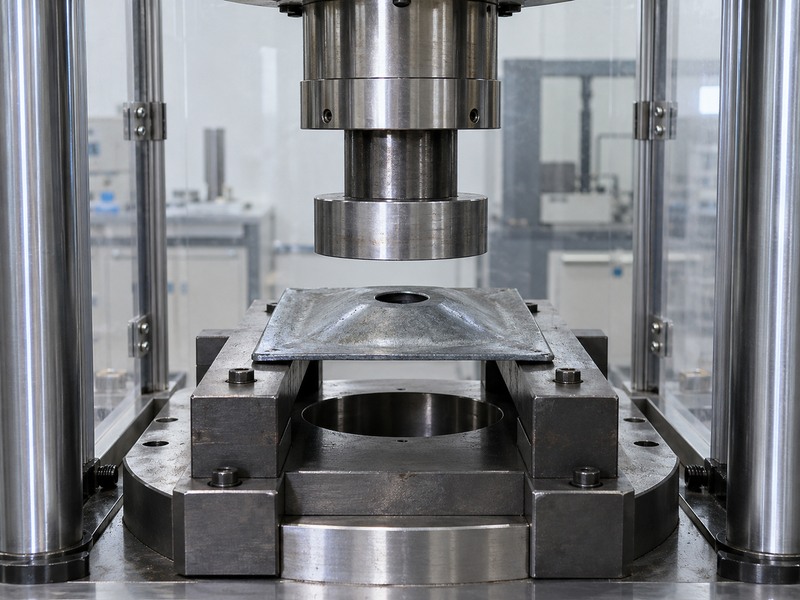
It evaluates a defined plate or plate assembly within a stated laboratory arrangement. The specimen and its supporting fixture establish what a result can describe. A report may address plate deformation or assembly response under compression. Read its stated purpose before treating any result as an installed support rating.
Which unit of analysis should be named?
Identify whether the specimen contains a plate or a stack. A bare plate test differs from a test involving washers, a nut or a facing material. Those components can change the load path. Procurement should request an unambiguous specimen description.
- Identify the tested plate and drawing revision.
- List included nut and washer components.
- Identify supporting substrate or laboratory fixture.
What belongs in your evidence schedule?
List test records against the proposed accessory assembly. Separate component-only evidence from assembly evidence. Ask your engineer which record addresses the project decision before comparing commercial offers.
| Specimen type | What its report may address | Review boundary |
|---|---|---|
| Isolated plate | Defined plate response | Fixture-specific conditions |
| Matched hardware stack | Matched stack behavior | Included components |
| Facing interface | Defined interface behavior | Tested substrate arrangement |
A clear specimen description sets the report’s technical boundary.
2. Why does the support opening matter?
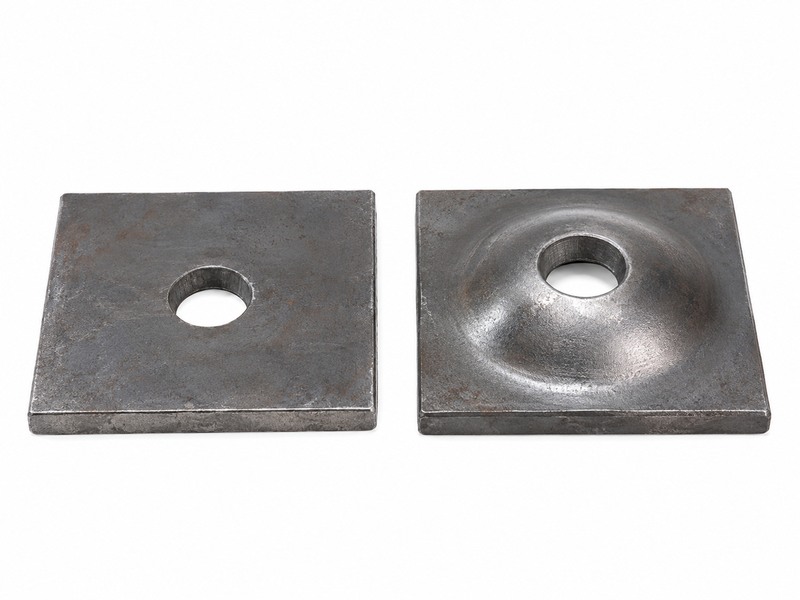
The support opening matters because it helps define how a plate spans and receives support during testing. A result belongs to the stated fixture geometry. Different support arrangements can prevent a direct comparison between reports. Ask for drawings rather than assuming every laboratory uses the same setup.
What should a fixture drawing show?
Inspect support contact before reading the maximum load. Identify the support surface and opening geometry. Ask where your plate bears against the fixture. Dimensions and contact descriptions should be available within controlled laboratory records.
- Support opening and surrounding bearing surface.
- Plate orientation within the fixture.
- Central loading contact and alignment arrangement.
How should purchasing compare two results?
Compare fixture descriptions for each proposed rock bolt plate. Ask your reviewer whether differences allow a meaningful comparison. Keep unmatched results separate instead of ranking products through isolated peak values.
| Fixture detail | Interpretation question | Buyer response |
|---|---|---|
| Support opening | Same spanning condition? | Compare drawings |
| Contact area | Same support region? | Review applicability |
| Loading contact | Same load introduction? | Check assembled setup |
Comparable numbers require an adequately comparable test arrangement.
3. What should loading and deformation records include?
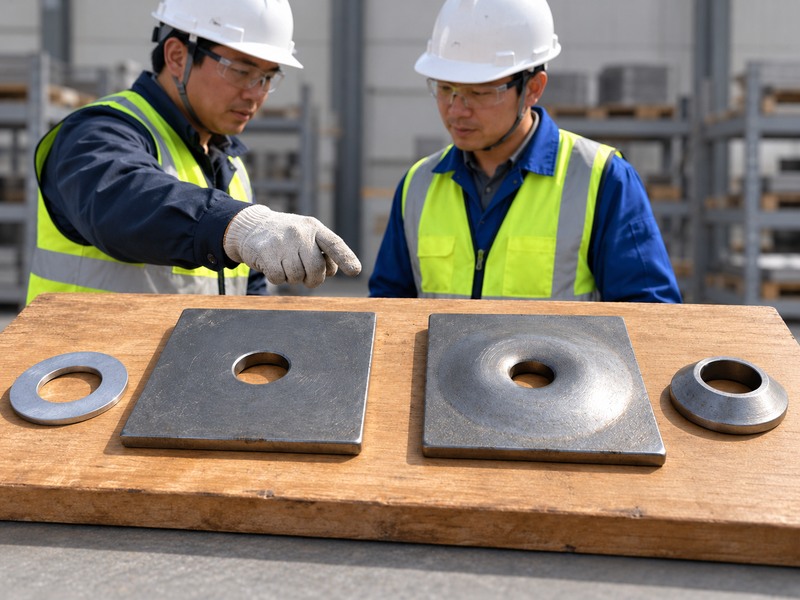
Loading and deformation records should define applied load, measured movement and the procedure connecting them. A deformation value needs a stated measurement location. A curve without that definition can hide differences between plate movement and fixture response. Use bearing-plate specification scope to identify relevant evidence, then request the applicable laboratory procedure.
Which measurement questions should you ask?
Locate each measured movement within the setup. Ask whether a channel describes plate displacement, machine movement or another response. Confirm instrument references and loading direction. Keep procedure deviations attached to the same test record.
- Identify measured quantity and reference points.
- Identify loading sequence and control basis.
- Record termination conditions and deviations.
What should remain beside a curve?
Keep specimen drawings, fixture descriptions and channel definitions with each curve. Our rock bolt sizing background provides adjacent terminology only. Laboratory records must supply the actual basis for interpretation.
| Record | What it explains | Missing-context risk |
|---|---|---|
| Load history | How loading progressed | Unclear procedure |
| Movement definition | What displacement represents | Incorrect comparison |
| Setup drawing | Where forces and supports act | Uncertain load path |
A useful curve remains connected with its measurement definitions.
4. How do washers and nuts change report scope?
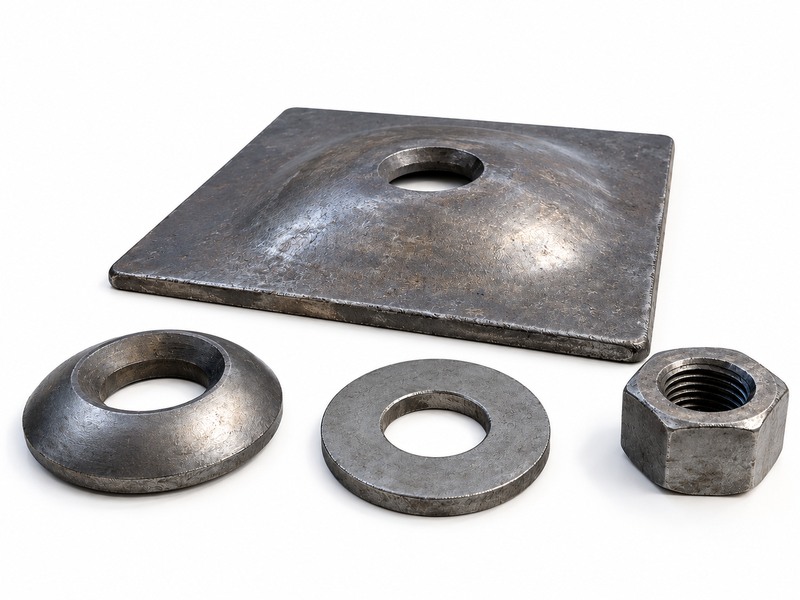
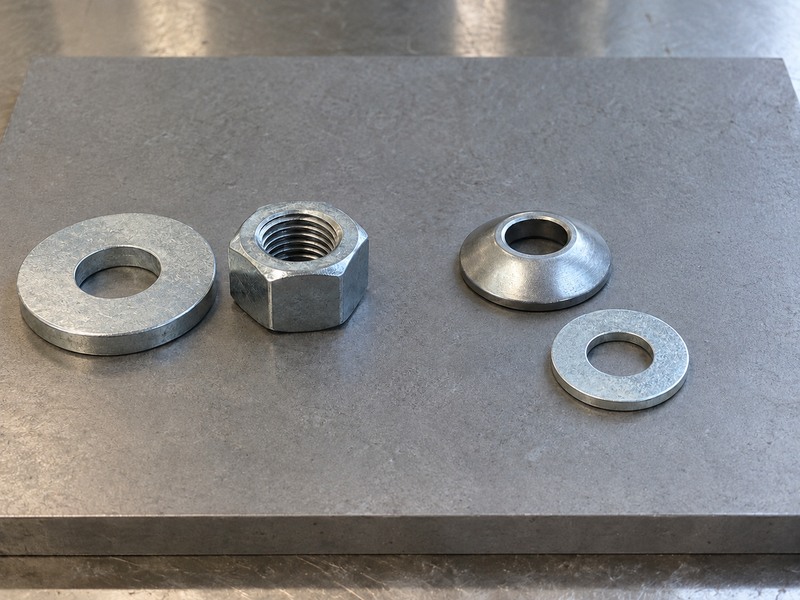
Washers and nuts change report scope when they form part of the tested loading interface. Their geometry can affect how load reaches a plate. Evidence for one stack should not be assumed to cover another. Match actual components before using an assembly result in procurement.
Which interfaces require identification?
Follow load through the full seating stack. Identify each contact surface from nut through washer to plate. Spherical and hardened flat washers may have complementary functions within a documented system. Do not reduce that arrangement to a generic washer preference.
- Nut bearing face and component identity.
- Washer type, order and mating surfaces.
- Plate seating geometry and central opening.
How should a component change be reviewed?
Submit changes within your matched accessory schedule for technical review. Ask whether existing evidence covers the revised stack. A report for an old washer arrangement needs a documented applicability decision before reuse.
| Stack change | Evidence question | Required disposition |
|---|---|---|
| Different nut | Same load introduction? | Applicability review |
| Different washer | Same seating condition? | Assembly review |
| Different plate seat | Same contact geometry? | Revised evidence assessment |
Assembly evidence follows the components and interfaces actually tested.
5. Why does substrate context affect interpretation?
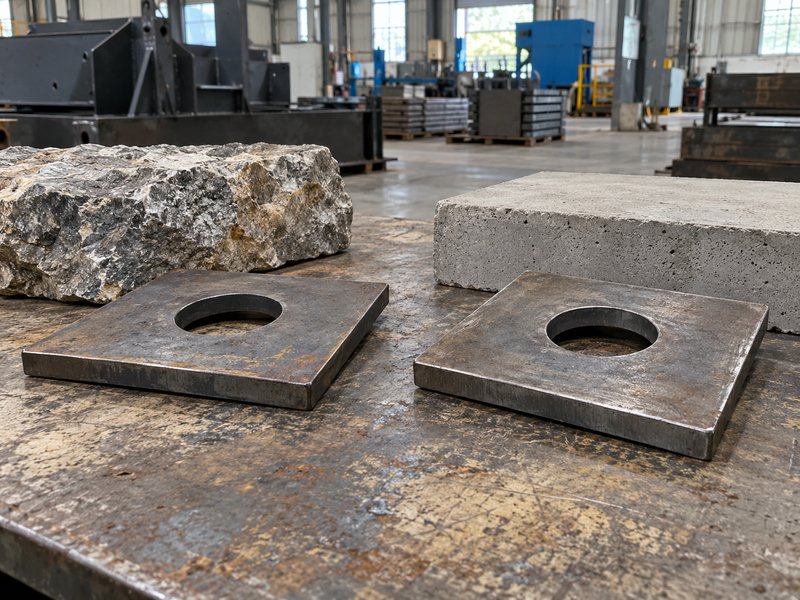
Substrate context affects interpretation because supporting material forms part of a plate assembly’s contact and load-transfer arrangement. Research on domed plates discusses laboratory compression and assembly behavior in specific tunnel contexts. Those observations should not become universal acceptance values. Check whether the report addresses conditions relevant to your project.
What should a substrate record describe?
Include supporting material within the specimen definition. Ask which substrate or facing was included and how it was supported. Request the applicable preparation and condition records. Avoid assuming that a steel fixture represents every rock or facing interface.
- Substrate identity and relevant preparation details.
- Contact arrangement between plate and substrate.
- Scope of the laboratory’s reported conclusions.
What should your engineer decide?
Ask your reviewer whether the submitted plate assembly evidence addresses project conditions. Record any remaining evidence gap explicitly. Further evaluation may be needed without implying that the existing laboratory report lacks value within its own scope.
| Supporting arrangement | What to inspect | Applicability question |
|---|---|---|
| Steel fixture | Defined contact geometry | Matches requested plate test? |
| Facing specimen | Material and support | Relevant assembly context? |
| Project substrate | Approved design assumptions | Further evidence required? |
Test relevance depends on the question your project needs answered.
6. How should you read a peak-load claim?
Read a peak-load claim alongside deformation, specimen details and the test’s termination conditions. A maximum value captures only part of an observed response. It cannot describe every service condition or permitted movement. Your project specification should define which performance measures matter for acceptance.
Which records prevent a one-number comparison?
Read the response record before ranking candidates. Ask what happened before the reported peak and why testing ended. Determine whether deformation or assembly observations affect the intended decision. Keep acceptance criteria separate from a supplier’s selected headline value.
- Review load and movement records together.
- Identify termination or failure observations.
- Compare results against project-defined criteria.
What should your comparison table preserve?
Preserve procedure and specimen differences instead of hiding them within a capacity column. Our field-test background provides adjacent navigation only. A plate compression result requires its own laboratory interpretation.
| Headline item | Context needed | Decision limit |
|---|---|---|
| Maximum load | Procedure and specimen | Does not define every criterion |
| Deformation value | Measurement definition | Not universal acceptability |
| Failure observation | Location and setup | Not a generic mechanism |
A complete comparison retains the response and its conditions.
7. How does laboratory plate testing differ from field testing?

Laboratory plate testing examines a controlled specimen arrangement, while field testing examines an installed system within its site conditions. Field anchorage, bonding and ground response create a different context. A field pull-out record cannot automatically replace a plate laboratory report. State the intended evidence question before requesting testing.
Which evidence questions belong separately?
Separate component behavior from installed system response. Ask whether procurement needs product evidence, assembly evidence or field acceptance records. Some projects require several evidence types. Your engineer should define how each contributes to the acceptance decision.
- Component report for an identified plate.
- Assembly report for included interfaces.
- Field record for an installed arrangement.
How should you organize the submittal?
Create separate evidence entries with explicit specimen or location references. Retain the project’s current testing procedures and criteria. Do not transfer a laboratory result directly into a field acceptance limit without an authorized engineering basis.
| Evidence context | Unit examined | Typical review question |
|---|---|---|
| Plate laboratory test | Controlled specimen | Documented plate response? |
| Assembly laboratory test | Matched interfaces | Relevant stack behavior? |
| Field verification | Installed system | Project acceptance met? |
Separate records prevent one test from answering an unrelated question.
8. What traceability should a test report provide?

A test report should link results with identifiable specimens, component records and the procedure actually used. Without that chain, buyers cannot confidently match a result with supplied material. A marketing sheet rarely carries all those details. Request complete evidence before treating a claim as reviewable.
Which identifiers should remain connected?
Trace each result back to the offered component. Compare specimen designations with the order drawing and relevant production records. Ask the supplier to explain any different references. Preserve laboratory report identification within your approved documentation package.
- Specimen and plate drawing identification.
- Included hardware and substrate references.
- Laboratory, report and procedure identification.
How should receiving use accepted evidence?
Link incoming plate components with the approved schedule. Receiving cannot repeat a laboratory qualification through visual inspection. Its role includes detecting mismatches, damage and undocumented substitutions before field issue.
| Traceability link | Review purpose | Gap response |
|---|---|---|
| Result to specimen | Identifies tested arrangement | Request report clarification |
| Specimen to drawing | Defines product applicability | Review differences |
| Drawing to delivery | Preserves accepted identity | Hold unmatched material |
Traceability carries technical acceptance from report review into delivery.
9. Which omissions should delay technical acceptance?

Missing specimen identity, fixture geometry or measurement definitions should delay acceptance until their significance receives review. A report can be genuine while remaining unsuitable for a particular decision. Procurement should distinguish completeness from applicability. Both need an explicit disposition before technical release.
What should your review checklist flag?
Return specific gaps rather than requesting a “better certificate.” Name the absent field and explain which comparison it prevents. Ask for supplementary records or an applicability statement. Your engineer can decide whether further evidence is necessary.
- Unidentified plate, washer or nut arrangement.
- Missing support opening or loading-contact details.
- Unexplained movement readings or acceptance basis.
What should the final disposition say?
Record accepted component references, evidence reviewed and approval limits. Identify remaining field verification separately. Purchasing needs a clear release instruction tied to a specific arrangement, not an unrestricted approval of a supplier’s plate range.
| Review outcome | Meaning | Purchasing action |
|---|---|---|
| Incomplete | Review fields missing | Request supplement |
| Inapplicable | Wrong specimen or conditions | Seek relevant evidence |
| Accepted with limits | Defined scope approved | Release within scope |
A precise disposition preserves your engineering decision’s stated scope.
10. How do you request a useful plate testing package?

Request a package that links your proposed plate assembly with complete laboratory records and project requirements. Include the support detail and any specified evaluation criteria. Ask suppliers to identify available evidence and remaining gaps. That creates a technical review path before commercial release.
What should the inquiry contain?
Describe your specimen and the decision you need supported. Include plate and hardware references alongside substrate assumptions. Request setup drawings and measurement definitions with test results. Leave project acceptance with the authorized reviewer.
- Proposed plate and complete seating stack.
- Relevant support or facing arrangement.
- Required procedure and acceptance specification.
- Report, fixture and traceability requirements.
What should you send next?
| Closure check | Action to retain |
|---|---|
| 1 | Proposed plate and complete seating stack. |
| 2 | Relevant support or facing arrangement. |
| 3 | Required procedure and acceptance specification. |
| 4 | Report, fixture and traceability requirements. |
Send your plate drawing, assembly detail and evidence checklist when you contact us. Request a documented response covering report scope and component identity. Resolve missing test context before approving an equivalent product claim.
Q1: Can I compare plates using maximum load alone?
No, support geometry, specimen identity, deformation records and procedure conditions must accompany that comparison.
Q2: Can a field pull-out report prove plate performance?
Not automatically; it examines an installed system and cannot replace a differently scoped laboratory plate assessment.
Q3: How do I know what a movement value means?
Check instrument references and measurement definitions. Ask for clarification when the report does not identify what moved.
Q4: Can I change a washer after assembly testing?
Only after applicability review accepts the changed interface. Existing evidence describes its recorded specimen arrangement.
Q5: What’s the best next request for an incomplete report?
Name the missing specimen, fixture or measurement field. A precise question gives your reviewer usable supplementary evidence.