
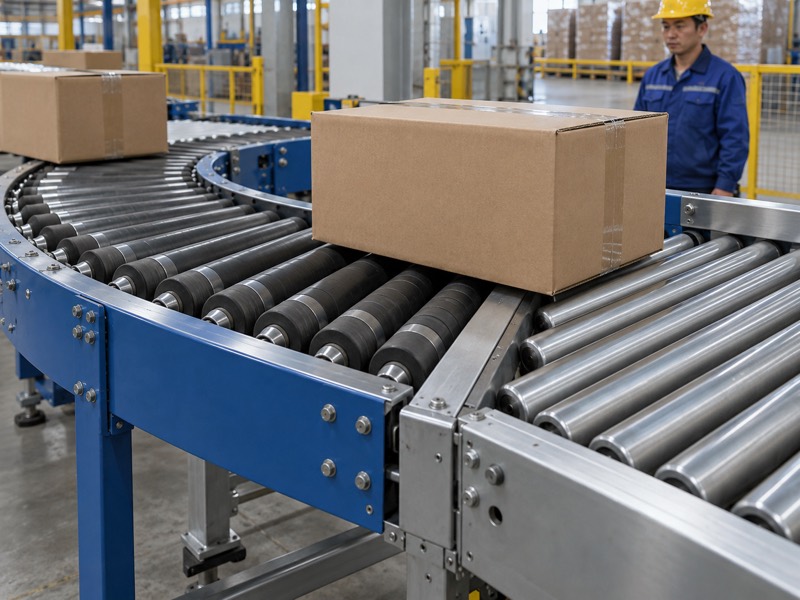
A taper roller conveyor moves loads around a curve using roller geometry that provides different surface speeds across the conveying width. Packages still need suitable support, contact and motion input. If cartons turn sideways or jam at an exit, review your complete layout before changing a roller.
1. How does a taper roller conveyor follow a curve?
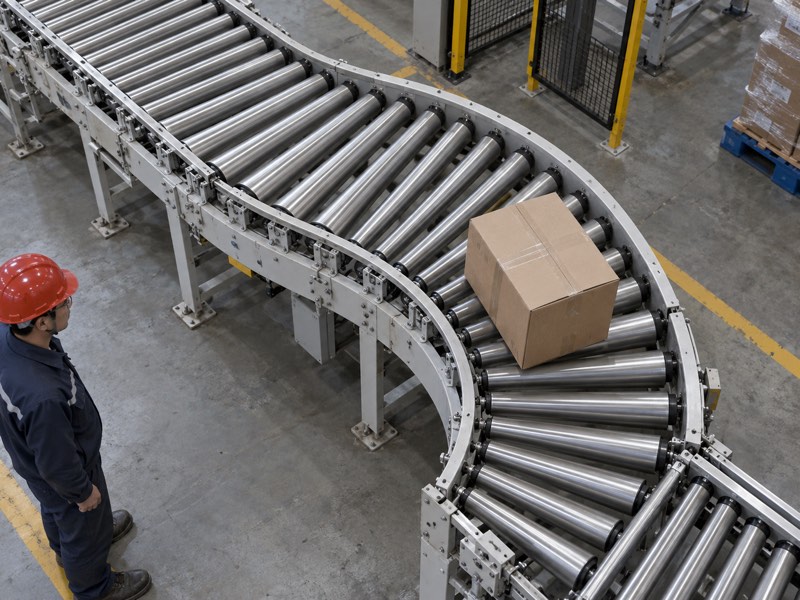
A conventional taper roller conveyor uses rollers arranged around a curve center with larger working diameters toward the outside arc. Outside contact travels farther during a turn. Diameter variation helps accommodate that travel while packages remain supported across their bottoms.
What controls the package path?
Start with the curve center and contact footprint. Roller axes, taper shape and product position work together. A package following an unintended position may contact a different portion of each roller. Side guidance and entry conditions also influence its route.
- Identify inside radius, conveying width and intended travel direction.
- Mark roller orientation on a controlled layout drawing.
- Describe actual product bottoms and expected positions.
A taper creates no universal automatic steering guarantee. Friction, package stiffness and drive conditions affect motion through every contact. Confirm your intended route through engineering review and representative trials.
Which layout feature has which role?
| Feature | Role in curved travel | Review question |
|---|---|---|
| Radial roller arrangement | Defines contact direction | Does layout share a center? |
| Varying working diameter | Changes local surface speed | Does profile suit radius? |
| Product positioning | Defines occupied contact zone | Where does each load travel? |
Key Takeaway: Approve a complete curve geometry. Roller orientation and package path belong on the same layout drawing.
2. Why must outside contact move faster?
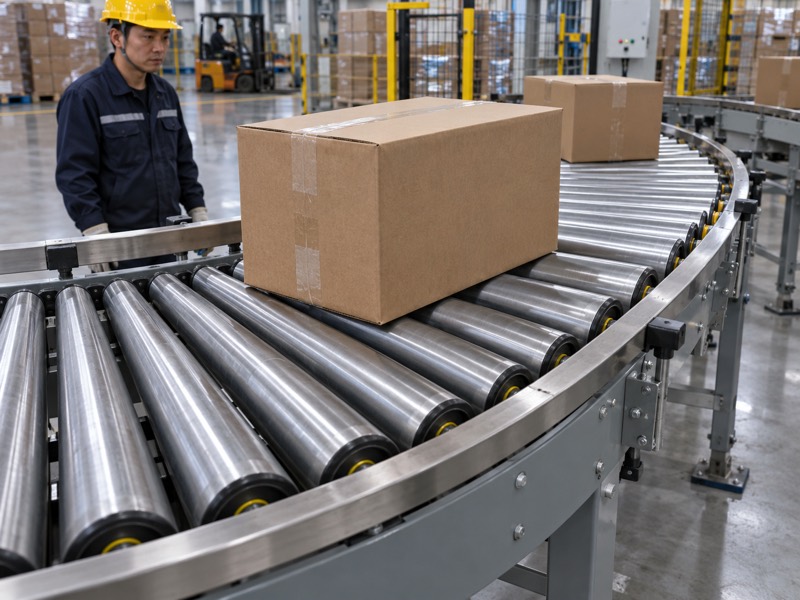
Outside contact follows a longer arc than inside contact during the same turn. A taper roller conveyor accommodates this difference through diameter variation along rotating rollers. At a given rotational speed, larger working radii provide higher local surface speed.
What happens when motion does not match geometry?
Watch package rotation during a controlled trial. Unequal or unsuitable motion can create slipping, scuffing or skew. A rigid package may contact several rollers at once, making their relative behavior relevant. Damaged or seized rollers can disturb an otherwise suitable layout.
- Observe orientation at entry, middle and exit.
- Identify slipping or sustained pressure against side guidance.
- Compare loaded behavior with roller rotation after isolation.
Keep explanations tied to contact rather than claims that a conical surface automatically pushes every load sideways. Your drive method and product bottom affect actual travel. Geometry supports a desired route only within suitable operating conditions.
Which observation helps diagnose motion?
| Observation | Potential relationship | Check |
|---|---|---|
| Package rotates unexpectedly | Contact motion differs across width | Taper and drive |
| Scuffing appears underneath | Sliding contact persists | Surface and rotation |
| Skew starts at one position | Local support or transmission issue | Affected roller area |
Key Takeaway: Judge surface-speed compatibility through package behavior. Document orientation changes rather than reporting only whether a carton reached the exit.
3. How should you define the product range?
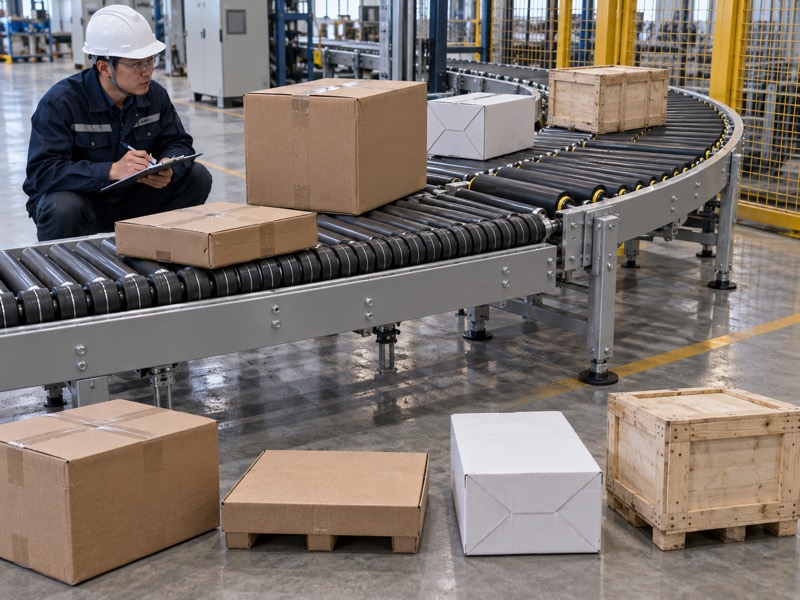
Define product dimensions, weight distribution, bottom geometry and allowable orientation before specifying a taper roller conveyor. Product size alone cannot describe stable support. Flexible packaging and cartons with irregular bases may contact rollers differently from rigid test boxes.
Which load details change design decisions?
Describe the underside that actually carries weight. A nominal carton length can exceed its flat contact footprint. Damaged bottoms, straps or projecting seams may change contact. Include normal product variation rather than designing around one ideal sample.
- Provide minimum and maximum contacting dimensions.
- Record weight distribution and any unstable center of gravity.
- Define permitted rotation, marking and damage during travel.
Review clearance around the largest load envelope through a turn. Projecting corners may reach farther than its straight-line width. Your system designer should confirm how product range affects radius, guides and transfer arrangements.
What should a load schedule contain?
| Load detail | Design consequence | Evidence |
|---|---|---|
| Contact footprint | Roller support requirement | Bottom dimensions |
| Uneven weight distribution | Local load concentration | Product description |
| Corner sweep | Curve clearance requirement | Layout envelope |
Key Takeaway: Supply a load schedule with representative samples. Include bottom condition and turning clearance rather than only package length and weight.
4. How do you check support through the outside arc?
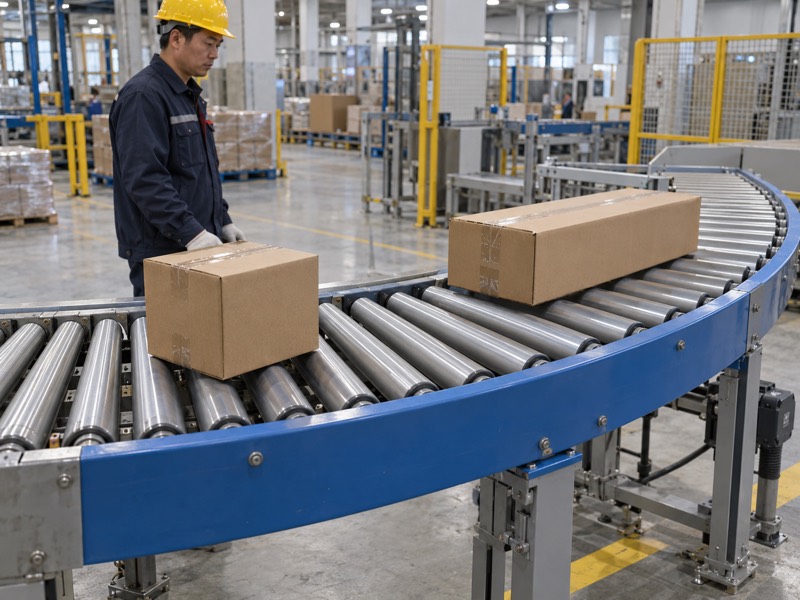
You check roller gaps against product contact footprints throughout the curve. Your taper roller conveyor spacing can create different gaps at inner and outer locations. A package adequately supported on a straight section may behave differently near a curve’s outside edge.
Where can support become inadequate?
Inspect entry, curve and exit as one support sequence. Gaps between adjacent rollers and adjoining sections affect how a load bridges contact. A flexible bottom can sag even when overall dimensions appear adequate. Review representative loads at their expected positions.
- Check the shortest contact footprint across each transfer.
- Include flexible, damaged or irregular bottoms within your accepted range.
- Verify load ratings through your system’s approved design.
Avoid inventing a universal minimum roller count for every application. Package construction and conveyor geometry determine requirements. Use engineering calculations and trials defined by your equipment designer.
Which support concern needs which check?
| Concern | Location | Review |
|---|---|---|
| Wider gaps at outside arc | Curve travel | Contact-footprint support |
| Unsupported transfer region | Entry or exit | Bridging and transfer design |
| Flexible product bottom | Any conveying span | Representative load trial |
Key Takeaway: Check the least-supported product position. Approve support across all transitions before releasing a curve into service.
5. When can gravity move loads through a curve?
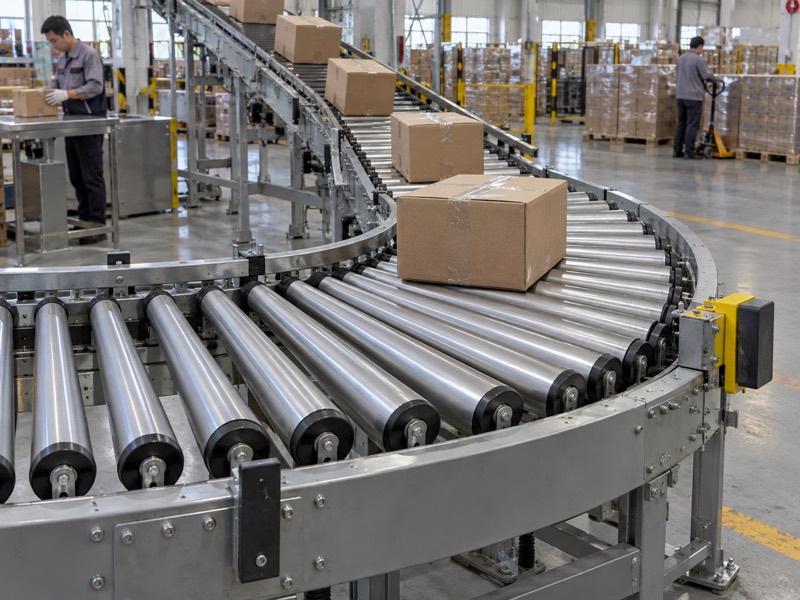
Gravity can move loads when approved conveyor slope provides enough driving force for their rolling resistance and contact conditions. A taper roller conveyor does not generate propulsion from taper alone. Level arrangements normally require another suitable motion source.
What must a gravity design control?
Evaluate movement and stopping together. Load weight, bearing resistance, slope and product surface affect behavior. Some products may hesitate while others accelerate. Your design needs a controlled destination and suitable restraint before trials begin.
- Define approved slope and expected product range.
- Include stopping, accumulation and operator interfaces.
- Check bearing resistance under intended loading.
Don’t change slope by improvised frame adjustment. Altered elevations affect transfers, guarding and load behavior. Review any change against a complete installation drawing and site procedures.
Which gravity condition needs verification?
| Condition | Potential behavior | Design review |
|---|---|---|
| Insufficient driving force | Product hesitates | Slope and resistance |
| Excessive acceleration | Impact at destination | Control and stop provision |
| Variable product range | Uneven movement | Representative load tests |
Key Takeaway: Specify gravity duty through approved slope and control requirements. Verify stopping behavior with the same attention given to movement.
6. What does powered operation add to your curve?
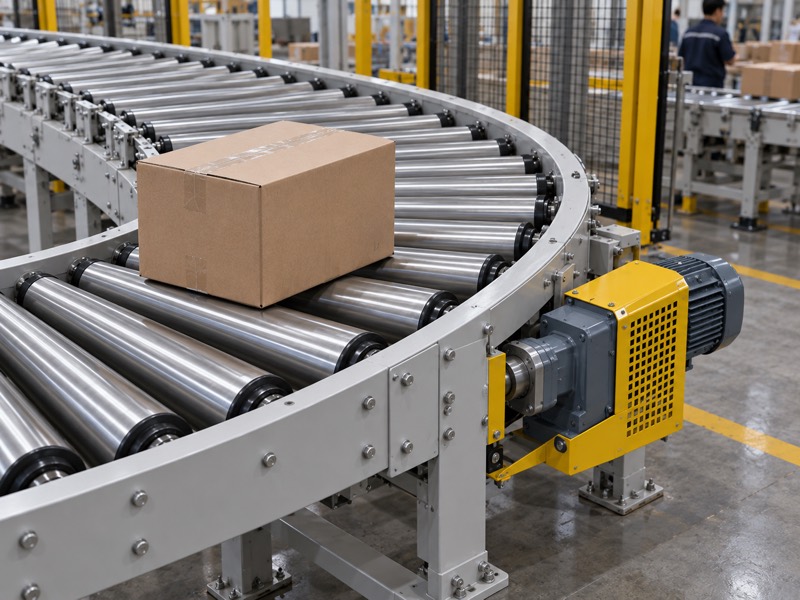
Powered operation provides a defined motion input through an approved transmission and control arrangement. Your taper roller conveyor still needs compatible drive interfaces and product contact. A motor alone cannot resolve poor support, unsuitable taper or an obstructed exit.
Which transmission details should you review?
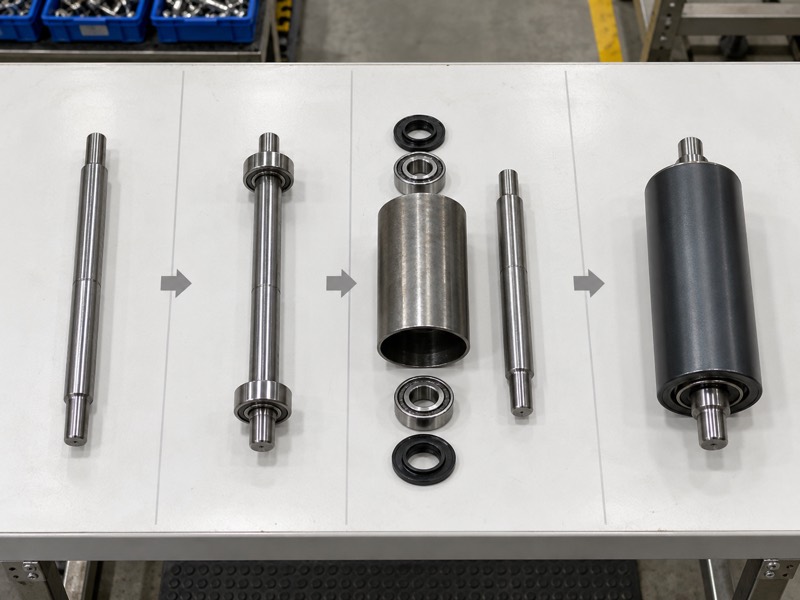
Trace how motion reaches each roller. Drive belts, grooves, chains or other arrangements require compatible geometry. Their locations affect mounting and guarding. Ask your system supplier to define applicable loads, controls and maintenance requirements.
- Identify drive method and roller interface dimensions.
- Confirm direction and any reversing duty.
- Specify control interfaces with neighboring conveyor sections.
Changes in transmission can affect slip and package movement. Replacement rollers should match approved drive geometry or have documented design approval. Review manufacturer information alongside actual application drawings when evaluating a supply proposal.
What should powered-duty approval cover?
| Requirement | Question | Approval evidence |
|---|---|---|
| Drive interface | Does transmission fit? | Component drawing |
| Operating duty | Can system handle intended loads? | Application review |
| Controls | How does neighboring equipment interact? | Control description |
Key Takeaway: Define powered duty as a system requirement. Approve transmission and control compatibility before installing replacement rollers.
7. How should cartons enter a curve?
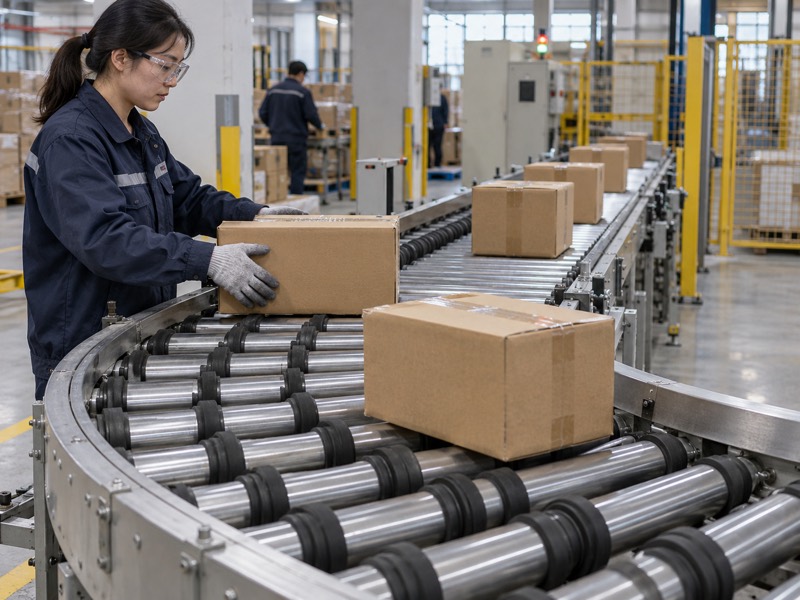
Cartons should enter with suitable orientation, spacing and support for the approved curve. A taper roller conveyor may receive poorly positioned loads from upstream equipment. Correct taper cannot guarantee orderly handling when entry conditions exceed its design.
Which upstream conditions create problems?
Check feeding before blaming the bend. Closely spaced cartons can interact during turning. A skewed carton may enter against side guidance and remain there. Changes in height or speed can disturb orientation before most of its bottom reaches curve rollers.
- Observe orientation at the last upstream support.
- Check spacing during representative production conditions.
- Inspect transfer height and unsupported gaps.
Accumulation requires specific system provisions. Do not assume a curve can safely hold touching loads because it transports separated cartons. Ask your designer how feeding control and backpressure should work with your actual products.
Which entry symptom points upstream?
| Symptom | Possible entry cause | Check |
|---|---|---|
| Immediate side-guide contact | Skewed incoming package | Upstream orientation |
| Packages collide in curve | Unsuitable spacing | Feed and accumulation control |
| Carton tips at entry | Transfer support issue | Height and gap |
Key Takeaway: Record entry conditions alongside curve behavior. Correct feeding or transfer faults before changing taper geometry.
8. How should side guides contact your products?
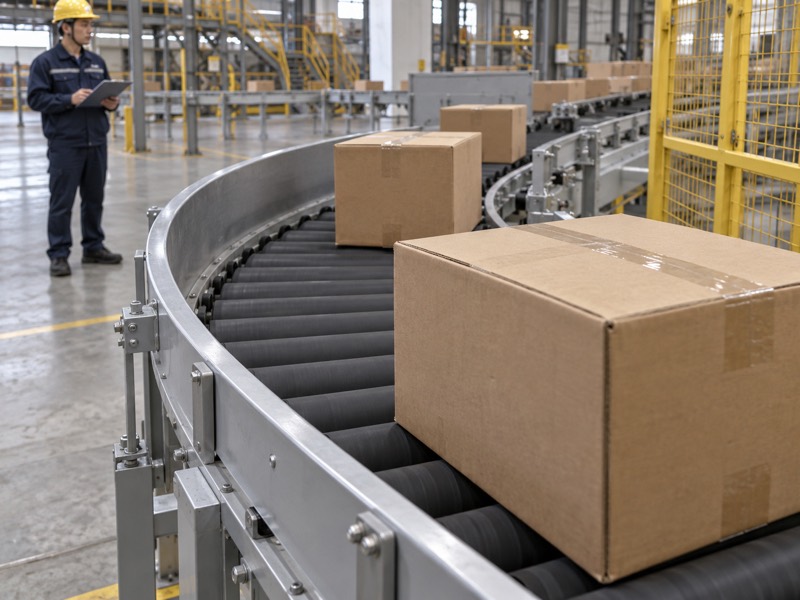
Side guides should suit the approved product path and allow acceptable contact without trapping or damaging loads. Your taper roller conveyor side guidance depends on package geometry and system design. Constant heavy rubbing may indicate skew, poor entry conditions or unsuitable clearance.
What should your clearance review include?
Check the complete turning envelope. Package corners sweep through changing positions during travel. Adjustable guides can become too tight after a product change. Include projecting packaging features and expected orientation variation in your review.
- Define guide positions for approved product configurations.
- Check contact height against package stability.
- Record scuffing, compression or repeated guide impact.
These guides contact conveyed products, which differs from belt-edge guidance. A belt guide roller should not be substituted without a designed application. Select product-guidance hardware through your system’s layout and load requirements.
How should guidance observations be interpreted?
| Observation | Possible issue | Review |
|---|---|---|
| Continuous scuffing | Sustained sideways pressure | Entry and path geometry |
| Corner catches guide | Turning envelope conflict | Clearance and guide continuity |
| Package tips under contact | Contact height or stability | Product-guidance arrangement |
Key Takeaway: Set guides from a product envelope and approved layout. Investigate heavy contact instead of narrowing clearance repeatedly.
9. What makes an exit transfer work reliably?
A reliable exit transfer maintains support, compatible elevations and suitable motion into the receiving section. Your taper roller conveyor needs an exit designed for actual product footprints. A turn can operate acceptably until an unsupported or obstructed handover causes trouble.
Which receiving conditions deserve inspection?
Watch the handover before altering curve settings. A stopped receiving conveyor may create unintended accumulation. A height step can catch a carton bottom. Different surface motion can also disturb product orientation as contact shifts between sections.
- Verify elevations and transfer gaps against drawings.
- Confirm receiving-equipment readiness and control signals.
- Observe product support while crossing between sections.
Review small products and irregular bottoms separately when required. They may need an approved transfer arrangement beyond ordinary roller spacing. Record trial evidence at handover rather than judging the entire route from a single camera angle.
What should an exit review cover?
| Exit condition | Potential consequence | Required check |
|---|---|---|
| Receiving section unavailable | Unplanned backpressure | Control coordination |
| Height mismatch | Package catches or tips | Installation elevations |
| Excessive unsupported gap | Product loses support | Transfer design |
Key Takeaway: Approve exit support and control coordination with your curve. Include receiving equipment in representative handling trials.
10. What should you test before accepting the system?
You should test your agreed product range under defined operating and transfer conditions. Your taper roller conveyor acceptance needs evidence of support, orientation, damage control and safe integration. Set criteria before commissioning so each observation can lead to a clear decision.
How do you make acceptance measurable?
Write down acceptable product behavior before running trials. Use representative loads and configuration records. Observe entry, curve travel and exit rather than only throughput. Follow site procedures for operation, hazardous-energy control and any approved adjustment.
- Record load identity, layout configuration and operating conditions.
- Inspect skew, scuffing, tipping and transfer hesitation.
- Verify guards and maintenance access against approved installation.
Preserve drawings and component records with trial results. They help maintenance order matching parts and identify later configuration changes. Any unresolved deviation should receive a defined corrective action before release.
Which evidence supports acceptance?
| Test area | Evidence | Decision reference |
|---|---|---|
| Product support | Representative load observations | Approved product range |
| Motion and transfers | Orientation and handover records | Agreed handling criteria |
| Installation | Drawing and guard checks | Approved system layout |
Key Takeaway: Accept a curve against your product range and operating conditions. Keep trial records linked with the final installed configuration.
FAQ
Q1: Can a tapered curve run without power? Yes, if an approved gravity design provides suitable movement and stopping control.
Q2: Will a curve keep every carton facing forward? Only within its design conditions. Entry orientation, support and contact affect actual behavior.
Q3: Can I accumulate packages through any curve? No. Accumulation requires suitable transmission, controls and load-handling provisions.
Q4: How do I know whether roller spacing works? Review actual bottom footprints and test representative loads through entry, curve and exit.
Q5: What’s the best information for a quotation? Provide curve layout, product schedule, motion source, transfers and acceptance requirements.
Send your curve layout and product schedule when you contact us about suitable roller geometry and supply requirements.