
A steel spiral return roller needs smooth helical surfaces, compatible belt contact and correctly fitted end assemblies. A worn roller may keep turning while burrs, deposits or loose mounting damage a belt. Inspect a steel spiral return roller as a complete support assembly. Record surface condition and replacement dimensions before deciding whether it can remain in service.
1. What should a steel spiral return roller support?
A steel spiral return roller should support a returning belt under its approved loading and contact conditions. Helical elements change working-surface geometry and deposit interaction. They do not make a return assembly suitable automatically for loaded carrying or impact positions.
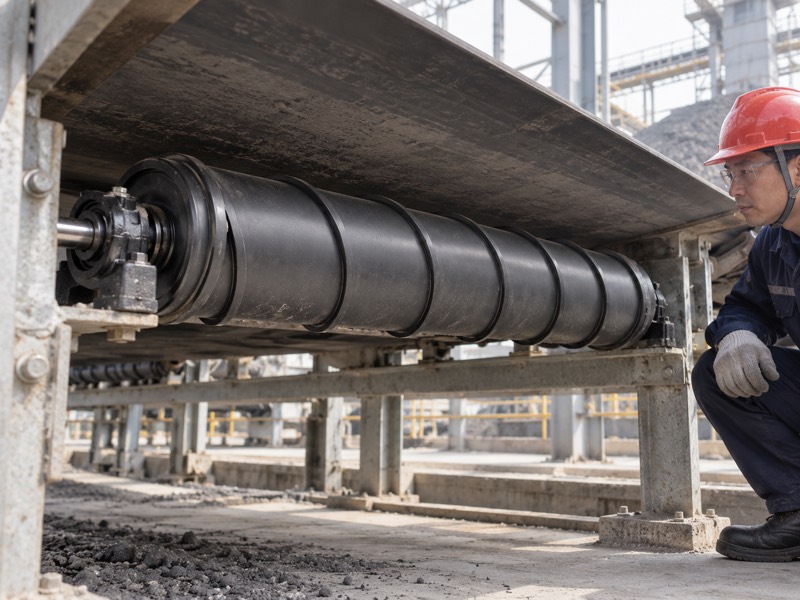
Confirm duty before inspecting wear
Identify the intended support position. A belt’s return run usually carries different loads from its carrying run, yet tension, belt mass and deposits still matter. Compare the installation with approved conveyor drawings. If duty changed after a plant modification, review suitability before treating wear as an isolated component problem.
- Record belt width, speed and return spacing.
- Identify belt face, travel direction and contact arrangement.
- Describe material buildup and wet-service exposure.
Use the existing arrangement as a baseline
For example, plain return rollers may remain appropriate where contact surfaces stay relatively clean. Spiral construction should address a defined condition rather than follow an automatic replacement rule. Confirm bearing and shaft duties alongside working geometry.
| Position | Required review | Avoid assuming |
|---|---|---|
| Return support | Belt and deposit load | Every roller fits |
| Carrying support | Loaded duty | Return rating transfers |
| Loading zone | Impact conditions | Steel means impact-rated |
Approve intended function before interpreting component performance. Key Takeaway: Keep spiral return assemblies within an explicitly approved conveyor duty.
2. Which surface defects require close attention?
Surface defects require close attention when they change contact or create sharp features on a steel spiral return roller. Burrs, damaged elements, rough corrosion and local wear can mark belt covers. Rotation alone cannot establish a safe working surface.
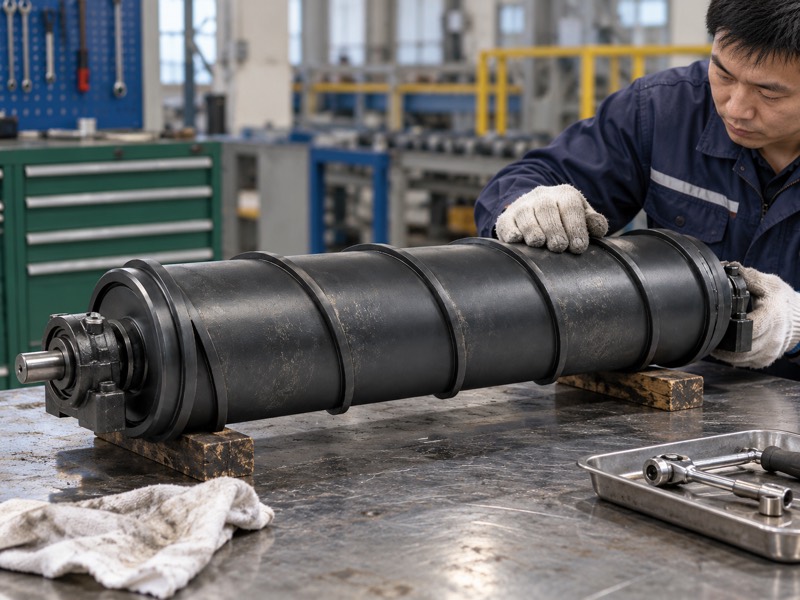
Inspect the full working face
Check every helical element. Deposits can hide wear and damage, so clean surfaces under an approved isolated procedure before assessment. Examine peaks, element connections and contact edges. A defect at one location may repeat its effect across a moving belt even when surrounding steel appears sound.
- Look for sharp edges, cracks and displaced elements.
- Photograph worn regions from consistent viewpoints.
- Record damage location relative to belt contact.
Link findings with operating symptoms
If new belt marks appear, inspect corresponding support positions and check alignment. Do not dismiss a localized defect because most of a roller looks serviceable. Use supplier or site withdrawal criteria and seek engineering review when acceptance limits remain unclear.
| Surface finding | Potential effect | Next step |
|---|---|---|
| Burr or sharp edge | Cover marking | Remove for review |
| Missing or displaced element | Uneven support | Inspect assembly |
| Rough corrosion | Abrasive contact | Evaluate surface suitability |
Document unacceptable findings before returning equipment to service. Key Takeaway: Inspect complete helical surfaces and apply defined withdrawal criteria for damaging defects.
3. How do deposits affect a steel spiral return roller?
Deposits affect a steel spiral return roller by changing effective contact geometry and exposing end assemblies to contamination. Sticky material may bridge helical spaces or form uneven ridges. Those conditions can persist despite a surface designed to disturb carryback.
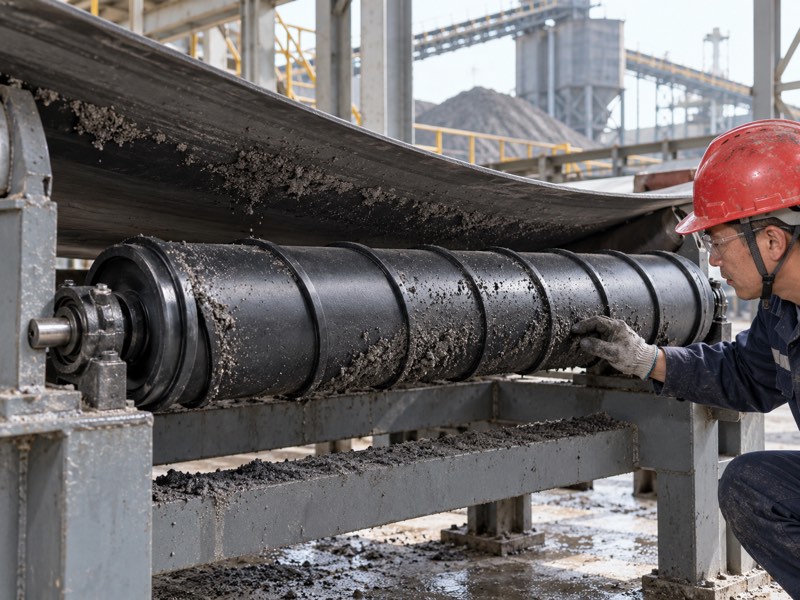
Separate deposit wear from metal damage
Clean before judging shape. Packed material may resemble worn or distorted working elements. Remove it with approved tools after isolation, then inspect underlying steel. Compare observations with earlier photographs so changes in material behavior do not become mistaken for construction defects.
- Record deposit shape and distribution across width.
- Note moisture, feed changes and cleaner condition.
- Inspect end housings for packed contamination.
Review carryback at its source
For heavy deposits, check upstream cleaners, belt-cover damage and material discharge. A comb return roller offers another contact geometry, but it also needs material-specific evaluation. Changing support without investigating excessive carryback can leave the maintenance problem unresolved.
| Deposit condition | Immediate check | Wider review |
|---|---|---|
| Bridged helical gaps | Clean and inspect | Material adhesion |
| Uneven ridges | Contact geometry | Upstream cleaning |
| Packed roller ends | Seal exposure | Discharge and access |
Compare cleaned geometry with observed operating deposits. Key Takeaway: Inspect underlying steel after safe cleaning and investigate why deposits keep returning.
4. What belt signs indicate unsuitable contact?
Belt signs indicate unsuitable contact when new marks, local abrasion or cover damage correspond with a steel spiral return roller position. Several causes can produce similar symptoms. Inspect surface condition, shaft seating, bearing rotation and frame alignment before assigning blame.
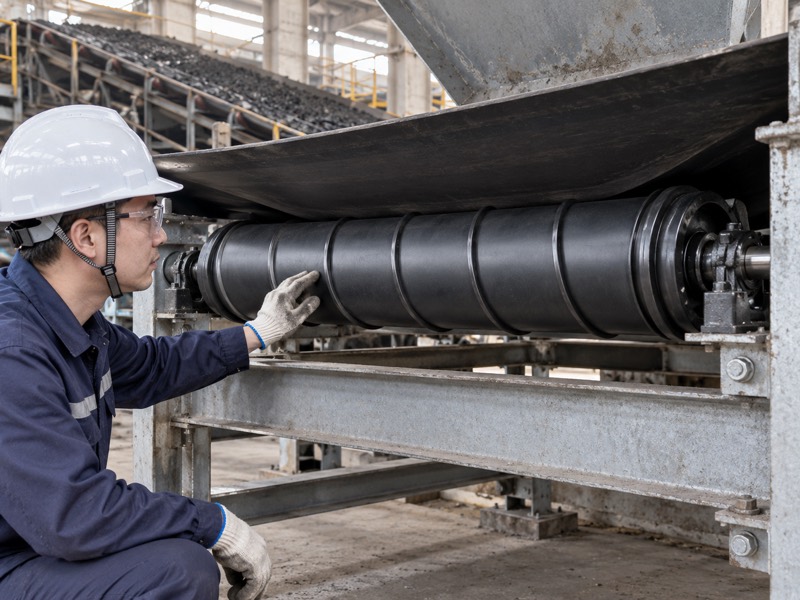
Compare initial and current cover condition
Use photographs from before installation. Existing repairs and grooves should be recorded before a trial because they can influence contact. Check mechanical splices and raised repairs for compatibility. When damage appears, follow approved stopping and inspection procedures instead of continuing until its cause becomes obvious.
- Record marks by belt position and contact face.
- Check whether a roller rotates freely after isolation.
- Inspect surfaces for sharp defects or embedded debris.
Investigate alignment and edge pressure
For example, skewed mounting can alter belt movement while buildup changes local support. Guide rollers need appropriate positioning but cannot replace a mechanical alignment review. Continuous heavy edge contact should prompt investigation rather than routine pressure increases.
| Belt symptom | Possible contributor | Inspection focus |
|---|---|---|
| New contact bands | Uneven support | Helical condition |
| Scratches | Sharp defect or debris | Surface inspection |
| Persistent edge contact | Alignment or loading | Conveyor geometry |
Review belt and roller findings together under recorded conditions. Key Takeaway: Treat new belt damage as a reason for prompt contact and alignment investigation.
5. How should a steel spiral return roller be cleaned safely?
A steel spiral return roller should be cleaned only under an approved method with verified isolation and safe access. Moving nip points create entanglement hazards. Follow site hazardous-energy control procedures, including stored-energy management, before contact work.
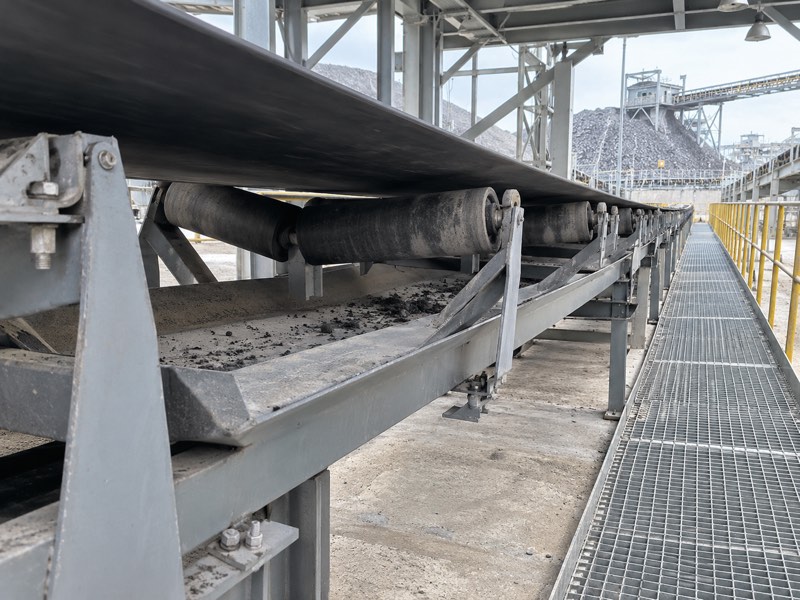
Prepare removal and cleaning work
Keep tools away from movement. Use approved observation positions while machinery operates, then isolate equipment for scraping, washing or removal. Support components where release changes load paths. Clear material from access routes and avoid cleaning methods that direct contamination into unprotected seals.
- Confirm isolation before removing guards.
- Use tools compatible with helical surfaces and belt materials.
- Control debris, washwater and slippery walking surfaces.
Restore a complete operating arrangement
After cleaning, inspect working surfaces and end assemblies before reinstalling guards. Account for tools and loose parts. Startup should follow site authorization, then guarded observation can check rotation and belt behavior without reaching toward moving equipment.
| Job stage | Required control | Verification |
|---|---|---|
| Before contact | Isolation and stored energy | Authorized check |
| During cleaning | Tools and component support | Safe working position |
| Before restart | Guards and area clearance | Site release procedure |
Plan access while equipment remains guarded so shutdown work can proceed efficiently. Key Takeaway: Never scrape or adjust helical surfaces while a belt or roller moves.
6. When should bearings or seals trigger replacement review?
Bearings or seals should trigger replacement review when a steel spiral return roller binds, rotates roughly or shows damaged end protection. These observations may indicate internal contamination or mechanical damage. Approved inspection criteria determine whether replacement or further examination is appropriate.
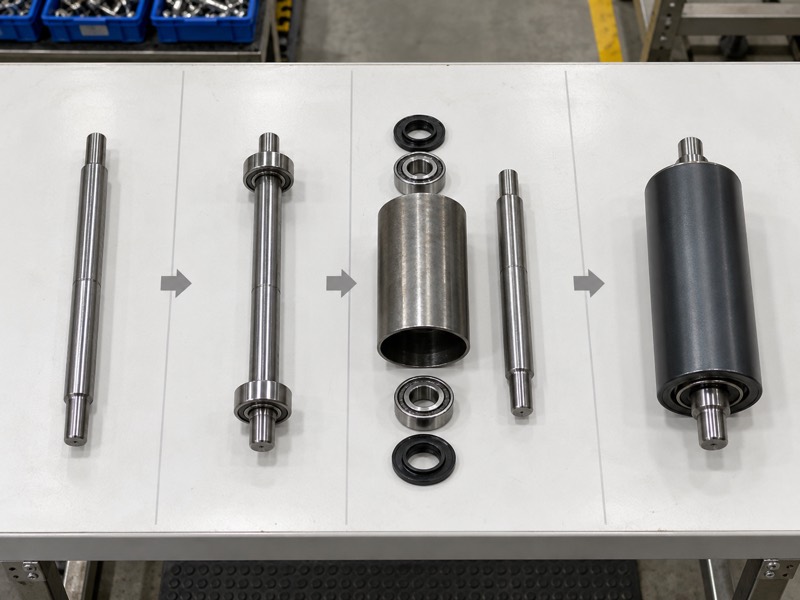
Inspect end assemblies after cleaning
Record more than noise. Noise during operation can have several sources, so combine guarded observations with isolated mechanical checks. Look for loose housings, damaged seals and unusual shaft movement. Compare condition with an approved sample where available.
- Note roughness or binding under an approved hand check.
- Inspect accumulated material around shaft interfaces.
- Record housing attachment and visible damage.
Avoid improvised internal repairs
Some constructions permit specified servicing, while others require assembly replacement. Ask for maintenance instructions before dismantling or relubricating an unfamiliar roller. Applying grease without an approved route can leave contamination or damage unresolved.
| End finding | Concern | Review action |
|---|---|---|
| Binding | Internal damage or fit | Isolate and inspect |
| Damaged seal | Contamination entry | Confirm repair scope |
| Loose housing | Support instability | Review attachment |
Use construction-specific instructions when deciding between servicing and replacement. Key Takeaway: Evaluate bearings, seals and housings as one end assembly before returning a roller to duty.
7. Which dimensions control replacement fit?
Replacement fit for a steel spiral return roller depends on working-face length, working outside diameter and shaft-end geometry. A worn part may no longer represent original dimensions. Confirm interfaces against an approved drawing and undamaged frame seats.
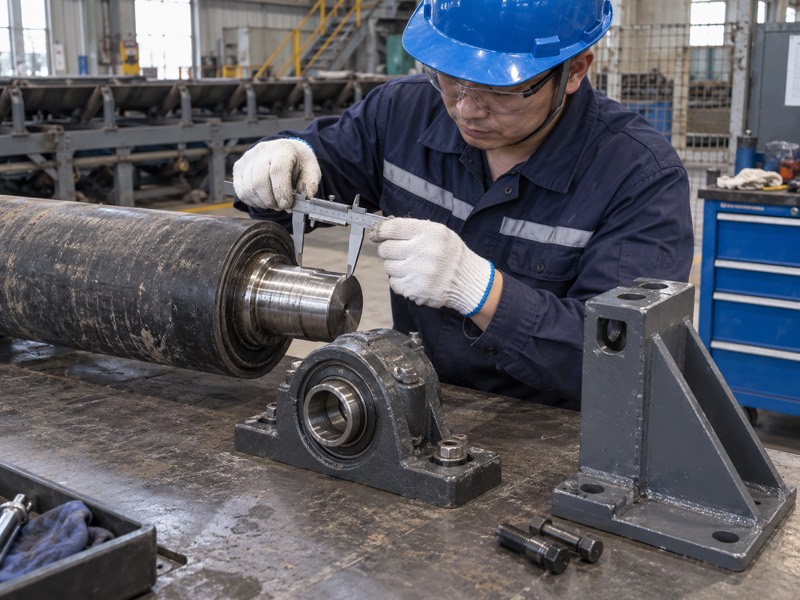
Define the working diameter clearly
Distinguish contact geometry from core size. Helical elements can create a working diameter different from an underlying body. Identify which dimension your drawing controls rather than reporting one ambiguous diameter. Record overall shaft length separately from useful belt-support length.
- State units and drawing revision.
- Detail flats, slots, grooves or retaining features.
- Check clearances around guards and adjacent structures.
Trial fit before accepting a batch
If a proposed assembly needs force for seating, stop and resolve dimensional differences. Check retention and free rotation under an approved inspection procedure. A change in working diameter may alter belt support height even when shaft ends fit existing brackets.
| Dimension | Controls | Inspection basis |
|---|---|---|
| Working diameter | Belt contact height | Approved drawing |
| Working-face length | Support coverage | Dimensional check |
| Shaft-end form | Bracket seating | Gauge or trial fit |
Approve complete contact and mounting geometry before production release. Key Takeaway: Specify working dimensions and shaft interfaces clearly rather than copying worn measurements blindly.
8. Can worn helical elements be repaired on site?
Worn helical elements on a steel spiral return roller should be repaired only through an approved engineering and manufacturer-supported procedure. Uncontrolled grinding or welding can alter geometry, strength and belt-contact finish. Replacement may be preferable when repair acceptance cannot be established.
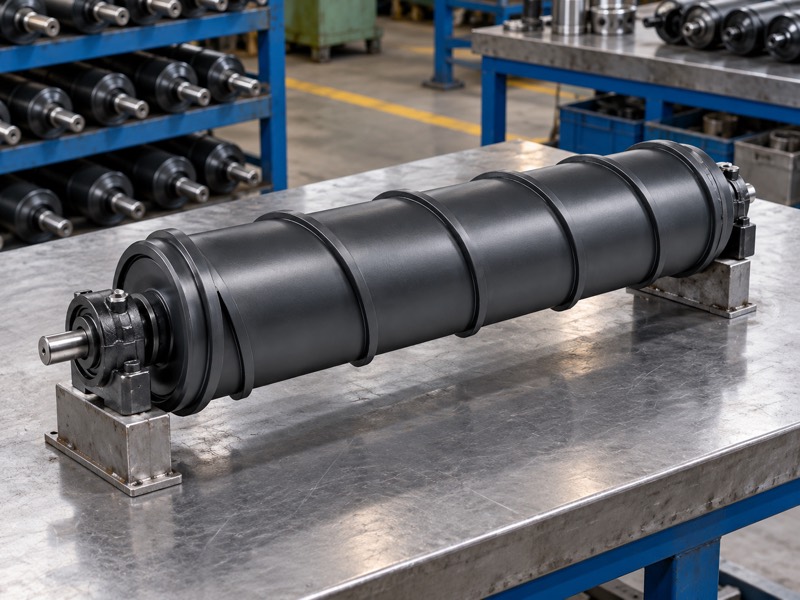
Confirm repair scope before work
Ask how repair will be accepted. A repaired element needs more than a visually tidy surface. Review permissible methods, dimensional checks and any required inspections. Heat or force applied near end assemblies may affect bearings, seals or attachment details.
- Identify component construction and damaged locations.
- Request written repair limits and inspection requirements.
- Determine who approves return to service.
Compare repair with replacement work
Include removal, preparation, inspection and reinstallation in a cost comparison. If repair introduces uncertain contact geometry or unsupported acceptance claims, it may prolong review without solving your reliability problem. Keep rejected components separate from available spares.
| Condition | Candidate decision | Required support |
|---|---|---|
| Minor approved service issue | Specified maintenance | Manufacturer instructions |
| Damaged helical element | Repair review | Approved method and checks |
| Unclear construction | Replacement review | Defined new assembly |
Release repaired equipment only after its documented acceptance process. Key Takeaway: Avoid improvised surface repairs that lack approved geometry and inspection criteria.
9. How do you evaluate a replacement steel spiral return roller?
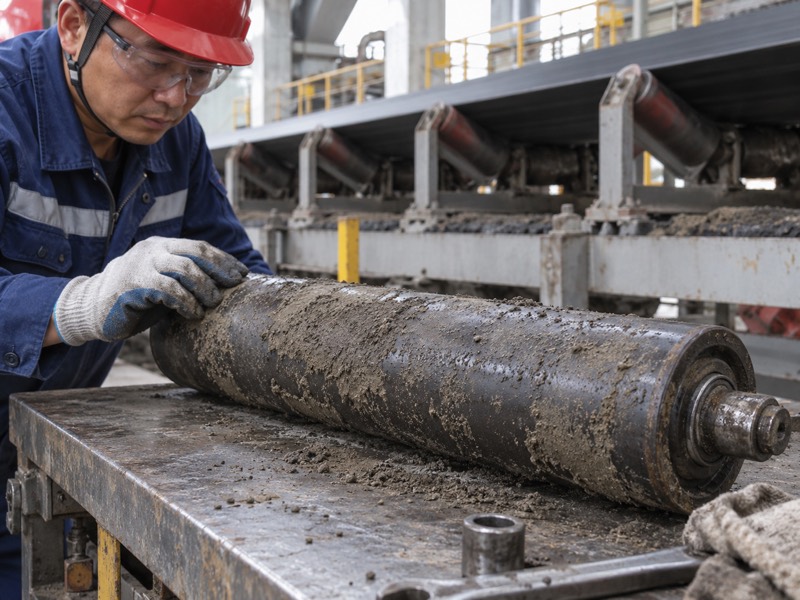
Evaluate a replacement steel spiral return roller through fit inspection and a recorded service trial. Track deposits, working-surface wear and belt condition. Comparison periods should include relevant loading, moisture and maintenance changes.
Record a replacement baseline
Describe why the old part was removed. A seized bearing suggests different priorities from rapid helical wear or severe carryback. Photograph removed components and record operating history where available. This gives a supplier useful evidence for reviewing proposed construction.
- Inspect sample dimensions and surface finish.
- Record installation position and approved orientation.
- Agree withdrawal criteria before startup.
Review results against the original problem
If deposits fall while belt marks increase, the replacement needs further review. Likewise, good initial rotation does not prove long-term contamination resistance. Discuss measured observations rather than assigning a service-life ratio from a short trial.
| Trial observation | Decision question | Supporting record |
|---|---|---|
| Deposit behavior | Did cleanup improve? | Comparable photographs |
| Belt contact | Any new damage? | Cover inspections |
| End condition | Stable rotation? | Maintenance log |
Approve wider purchasing only when relevant observations support it. Key Takeaway: Link every replacement trial with the failure mode that prompted your purchase.
10. What should a steel spiral roller replacement quote include?
A replacement quote should include dimensions, belt information, failure findings and approved acceptance requirements. A steel spiral return roller proposal can then address fit and operating duty explicitly. Ask for construction deviations before comparing commercial offers.
Send useful technical evidence
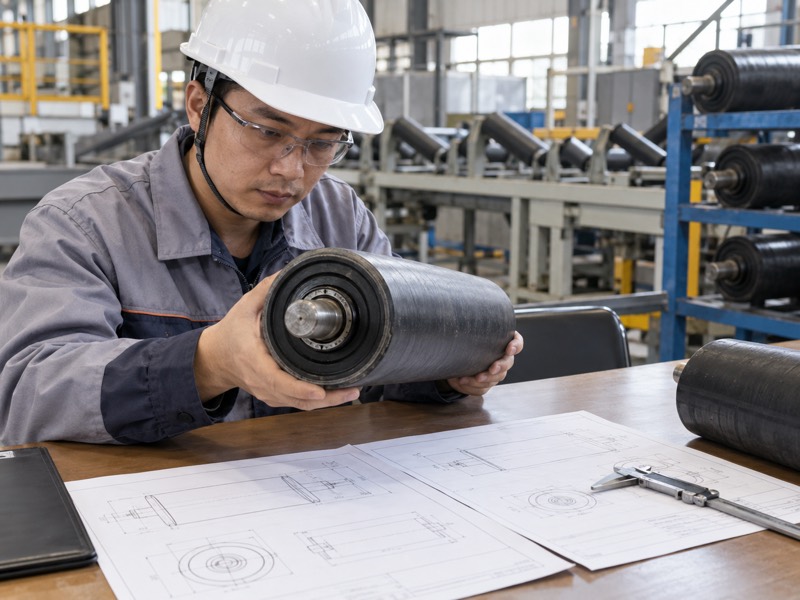
Combine the drawing with field findings. Include working diameter, face length, shaft ends and bracket details. Add speed, return spacing, material exposure and photographs of wear. State whether you require a sample, dimensional report or another agreed inspection record.
- Identify intended quantity and conveyor positions.
- Provide units, revision and required tolerances.
- Describe repair or replacement reasons without guessing causes.
Approve the proposed scope
| Quote input | Supplier response | Buyer review |
|---|---|---|
| Approved drawing | Proposed dimensions | Installation fit |
| Wear findings | Construction recommendation | Duty suitability |
| Inspection requirements | Agreed records | Acceptance process |
Key Takeaway: Request a replacement proposal tied to actual fit, wear and contamination conditions. Send XINYONGDUO your roller drawing, belt details and photographs of removed components. Contact us for a steel spiral roller quotation and confirmation of proposed assembly construction. Your maintenance team should be able to inspect replacement fit before installation.
FAQ
Q1: Can I keep a roller that turns but has sharp damage? Only if approved inspection criteria permit continued use. Sharp contact features can damage covers even when bearings rotate.
Q2: What’s the best way to measure a worn spiral roller? Use approved drawings and undamaged interfaces as references. Record working diameter separately from underlying body dimensions.
Q3: Can I weld replacement helical elements myself? Only through an approved repair procedure with defined inspections. Uncontrolled repair can change geometry and damage nearby components.
Q4: How do I know if a bearing needs replacement? Follow assembly-specific criteria and inspect roughness, binding, loose support or damaged seals after isolation.
Q5: Can I predict service life from a short trial? No. Record fit, wear and operating conditions, then continue evaluation until relevant failure behavior can be assessed.