A DIN spiral conveyor roller order needs an exact standard, edition, applicable scope and approved component drawing. A purchase request saying DIN roller leaves suppliers guessing about dimensions, tolerances and inspection evidence. Define a din spiral conveyor roller requirement through documents your engineering team can review. Standards references should identify specific obligations before anyone confirms conformity or releases production.
1. What does a din spiral conveyor roller request mean?
A din spiral conveyor roller request means a buyer expects some defined DIN-related requirement, but that phrase leaves its scope incomplete. It may concern dimensions, arrangement or another property. Ask which document and clauses apply to the actual return assembly.
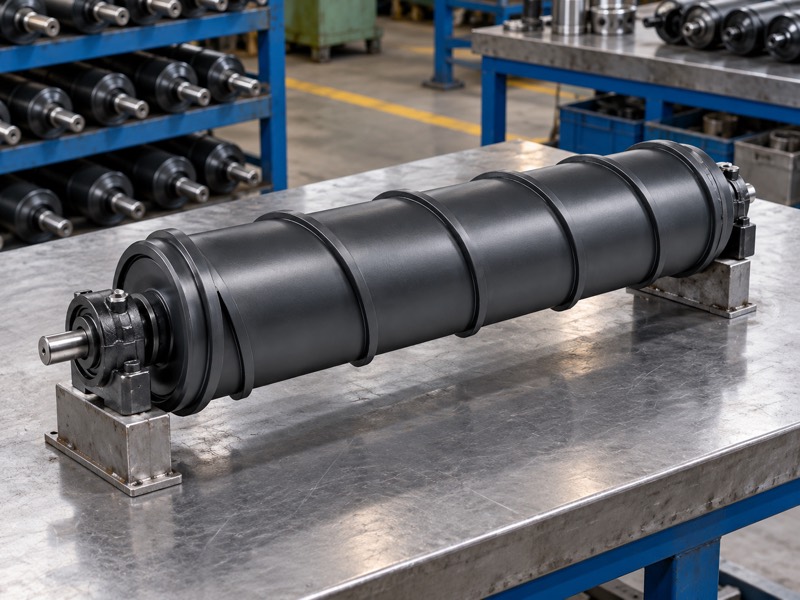
Translate a label into a specification
Request the full reference. A drawing note should identify a standard number and edition, then explain its relationship with component geometry. Determine whether your order concerns a bulk belt-conveyor return roller or another machine. Similar commercial names can conceal very different design duties.
- Record the complete standard designation and edition.
- Identify applicable clauses, dimensions or inspection requirements.
- Confirm component function and intended conveyor position.
Keep supplier statements specific
A conformity statement should describe exactly which requirement was reviewed and what evidence supports it. Broad DIN certification wording does not define product scope. Your purchasing team should request a documented response tied to approved drawings and agreed acceptance criteria.
| Order wording | Missing information | Required clarification |
|---|---|---|
| DIN roller | Standard and edition | Full designation |
| Standard dimensions | Applicable geometry | Drawing references |
| Conforming assembly | Evidence and scope | Written requirements |
Resolve incomplete terminology before asking for a firm technical offer. Key Takeaway: Convert a DIN label into identifiable requirements for one defined roller assembly.
2. Which DIN standard covers bulk belt-idler dimensions?
DIN 15207-1:2024-06 covers main dimensions of idlers for belt conveyors carrying bulk material. A din spiral conveyor roller inquiry should confirm whether that scope fits its intended duty. The standard reference alone does not define every aspect of a helical return assembly.
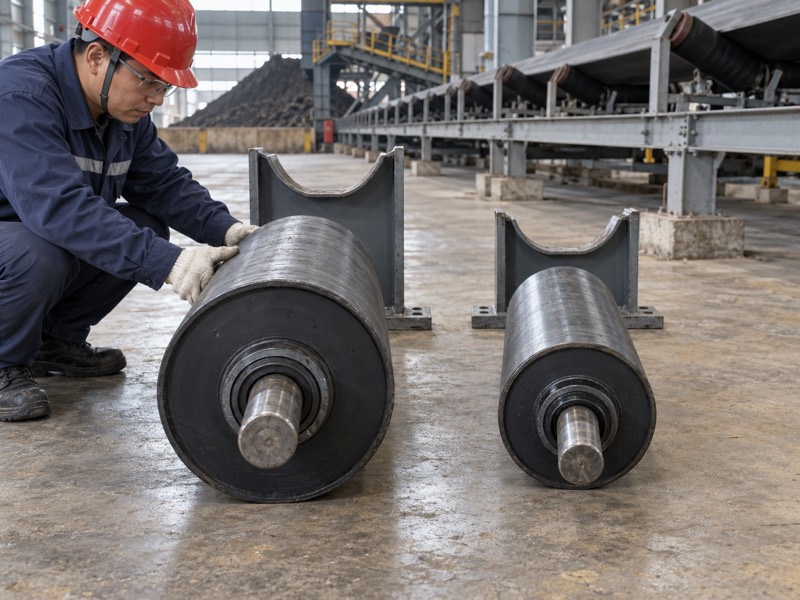
Verify the reference before applying it
Check the edition in your order. An official DIN 15207-1 listing identifies the 2024-06 edition and its bulk-material dimensional scope. Older drawings may cite earlier editions. Your engineer should resolve which edition governs the purchase before using any dimensional requirement.
- Compare drawing references with purchase-document references.
- Obtain authorized access to the applicable standard text.
- Identify which dimensions your assembly must satisfy.
Separate dimensions from other duties
Dimensional agreement does not establish acceptable bearing seals, belt contact, electrical behavior or service life. Those matters require their own specifications where relevant. A spiral working surface also needs an explicit drawing so standard dimensions do not become a substitute for missing geometry.
| Requirement area | Review basis | Additional information |
|---|---|---|
| Main idler dimensions | Named standard and edition | Applicable clauses |
| Spiral working surface | Approved component drawing | Geometry and finish |
| Operating suitability | Duty specification | Load and exposure |
Apply each document only within its identified scope. Key Takeaway: Use DIN 15207-1:2024-06 for its stated dimensional scope, with separate requirements for assembly duty.
3. What drawing controls a din spiral conveyor roller order?
An approved revision-controlled drawing should control a din spiral conveyor roller order alongside expressly incorporated standards. The drawing must identify working geometry, mounting interfaces and agreed tolerances. Photographs help explain construction but cannot replace those dimensions.
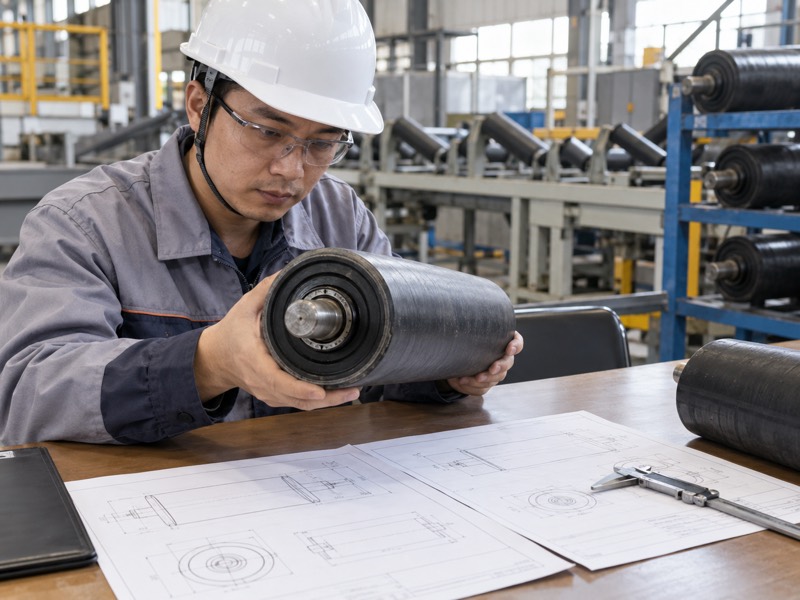
Establish document priority
Decide what governs a conflict. A supplier drawing, buyer drawing and purchase note may describe slightly different dimensions. Resolve such differences before production rather than assuming one document takes precedence. Record the approved revision and any accepted departures in your order package.
- Identify drawing number, revision and dimensional units.
- List incorporated standards with full edition references.
- Specify how proposed changes receive engineering approval.
Include installation interfaces
For example, return roller shaft ends must fit actual bracket seats even when nominal working dimensions follow a standard. Include mounting clearances and retention details. Your drawing should distinguish working-face length from overall shaft length.
| Document | Controls | Approval requirement |
|---|---|---|
| Buyer drawing | Required geometry | Named revision |
| Supplier drawing | Proposed construction | Buyer review |
| Deviation record | Accepted differences | Written approval |
Release production against one reconciled technical package. Key Takeaway: Agree drawing priority, revision and accepted deviations before confirming conformity.
4. Which spiral dimensions need explicit definition?
Spiral dimensions need explicit definition wherever a din spiral conveyor roller drawing could leave working contact or construction ambiguous. Include working diameter, element arrangement, useful face length and shaft geometry. A general standard note cannot fill every missing component detail.

Distinguish working and underlying geometry
Name the dimension being measured. A helical element may produce a working diameter different from an underlying body. Define element spacing, section and attachment according to approved design. Avoid inferring those features from another roller’s appearance or an unrelated dimensional table.
- Identify working diameter and useful contact length.
- Show helical arrangement and approved orientation requirements.
- Detail shaft ends and relevant end clearances.
Define contact condition as well as size
Surface defects can affect belt covers even when principal dimensions match a drawing. Agree workmanship expectations and inspection criteria for helical elements. Where precise acceptance limits remain unspecified, ask your technical reviewer to define them before the supplier evaluates samples.
| Geometry item | Why it matters | Drawing requirement |
|---|---|---|
| Working diameter | Support height | Explicit measurement reference |
| Helical elements | Belt contact | Arrangement and condition |
| Shaft ends | Installation | Dimensions and tolerances |
Make component-specific geometry inspectable rather than implied. Key Takeaway: Define spiral contact geometry directly and review its relationship with standard dimensions.
5. How should tolerances be agreed for a DIN roller?
Tolerances should be agreed by identifying applicable drawing requirements and standard clauses for a din spiral conveyor roller. Functional interfaces may need different controls from noncritical dimensions. Avoid adding numerical tolerances without a design or contractual basis.

Prioritize dimensions that affect fit
Link tolerance with function. Shaft-end seating, working diameter and useful support length influence different installation conditions. Ask your engineer which dimensions require individual tolerances. State any agreed general tolerance reference explicitly rather than assuming a supplier’s customary practice applies.
- Confirm measurement references and dimensional units.
- Identify critical mounting and contact dimensions.
- Agree inspection tools and reporting expectations.
Resolve conflicting requirements
If a drawing tolerance differs from an incorporated requirement, resolve that conflict in writing before manufacturing. A supplier should flag proposed departures during quotation. Sample inspection then checks approved requirements rather than becoming a negotiation over which document was intended.
| Tolerance question | Needed agreement | Inspection consequence |
|---|---|---|
| Critical interfaces | Individual limits | Defined acceptance |
| Other dimensions | General reference if used | Consistent checks |
| Document conflict | Written resolution | Unambiguous report |
Keep tolerance decisions visible in your approved technical package. Key Takeaway: Agree functional tolerances and document priority before accepting dimensional inspection results.
6. What operating information should accompany the standard?
Operating information should accompany a din spiral conveyor roller standard reference because dimensions alone cannot establish duty suitability. Include belt construction, load, speed and exposure. A supplier needs those details when proposing bearings, seals and working-surface construction.

Describe actual service conditions
State where the roller will work. Return support may encounter wet carryback, abrasive fines and deposits around end housings. Belt thickness, splice arrangement and damaged covers can influence contact compatibility. Describe those conditions using drawings and field photographs rather than broad heavy-duty labels.
- State belt width, speed and return spacing.
- Include temperatures and contamination exposure.
- Identify splices, repairs and relevant electrical requirements.
Review alternatives through the same process
For some carryback conditions, comb return support may deserve review alongside spiral construction. An alternative still needs its own geometry and acceptance requirements. A shared standard reference does not establish automatic interchangeability between different contact surfaces.
| Duty input | Supports review of | Required confirmation |
|---|---|---|
| Belt and spacing | Contact and load | Assembly suitability |
| Carryback conditions | Working-surface choice | Material-specific proposal |
| Dust and water | Bearing protection | End construction |
Include service conditions in the same package as dimensional documents. Key Takeaway: Specify operational duty separately from dimensional conformity.
7. What evidence should a din spiral conveyor roller provide?
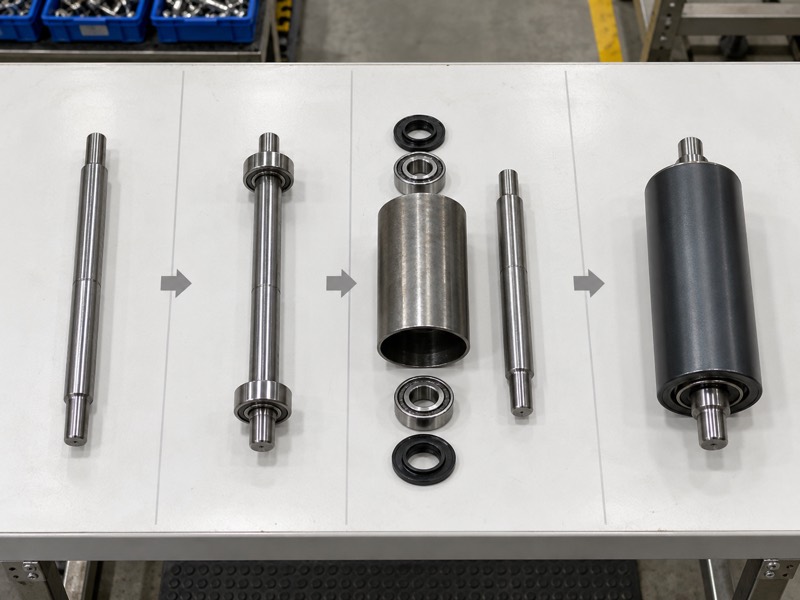
A din spiral conveyor roller should provide evidence agreed for its specific order requirements. This may include dimensional records, material identification and specified inspection results. Ask which requirement each record demonstrates before requesting a generic compliance certificate.
Define evidence during quotation
Match each document with an acceptance task. A dimensional report helps verify measured geometry, while material documents answer a different question. Tests should identify method, conditions and product scope. Certification language should be used only when an actual applicable certification requirement and evidence exist.
- List inspection records required for samples and production.
- Identify product or batch traceability expectations.
- State who reviews and approves each record.
Keep unsupported claims outside acceptance
A supplier statement about DIN conformity should reference specific requirements and the evidence supporting them. Broad approval wording cannot establish every operating property. If a requested record is unavailable, resolve that limitation before treating the order as technically accepted.
| Evidence | Can address | Needs explicit scope |
|---|---|---|
| Dimensional report | Drawing measurements | Selected dimensions |
| Material identification | Specified materials | Supplied components |
| Test record | Defined property | Method and conditions |
Review documents for relevance rather than volume. Key Takeaway: Request order-specific evidence and avoid blanket certification statements.
8. How do you handle older DIN references on drawings?
Handle older DIN references by asking your design owner which edition governs the din spiral conveyor roller purchase. A later edition does not automatically rewrite an existing contract. Resolve compatibility and document changes through an approved engineering review.
Identify the exact difference in documentation
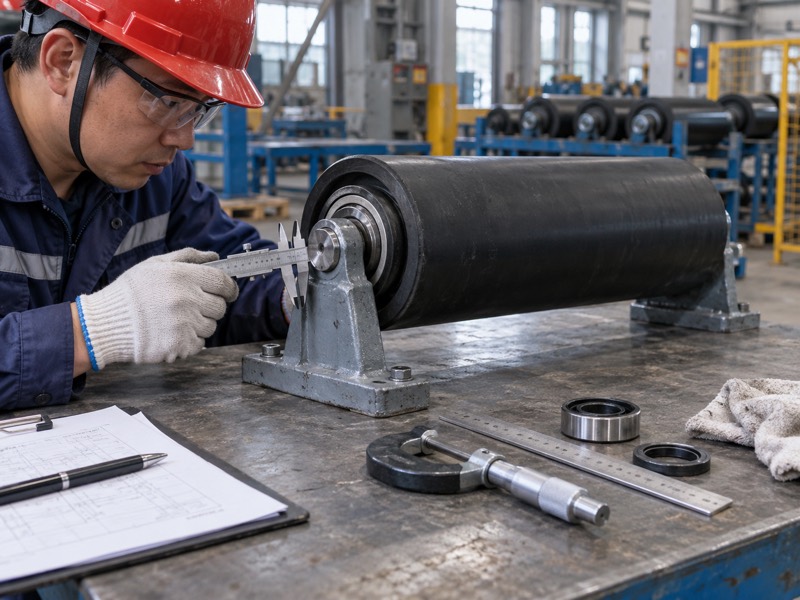
Keep revision history visible. Record the edition cited on your drawing and compare it with current source information. Obtain authorized standard text for any necessary review. Avoid assuming that an edition change means every roller dimension changed, because scope and actual provisions require examination.
- List drawing and purchase-order references together.
- Ask the design owner to resolve edition selection.
- Record approved updates or continued legacy requirements.
Prevent silent substitutions
If a supplier proposes another edition or construction, request a deviation statement before production. Review practical fit using drawings and samples where necessary. Keep accepted changes traceable so maintenance replacements follow the same approved arrangement.
| Situation | Required action | Decision owner |
|---|---|---|
| Older drawing reference | Confirm governing edition | Design owner |
| Conflicting order note | Reconcile documents | Buyer and engineer |
| Supplier substitution | Review written deviation | Technical approver |
Document the edition decision before approving production drawings. Key Takeaway: Resolve older references deliberately rather than changing contract requirements through assumption.
9. How should a DIN spiral roller sample be approved?
A sample din spiral conveyor roller should be approved against agreed drawings, evidence and practical mounting requirements. Dimensional checks and service suitability answer separate questions. Trial installation requires approved isolation and inspection procedures.
Check records before field installation
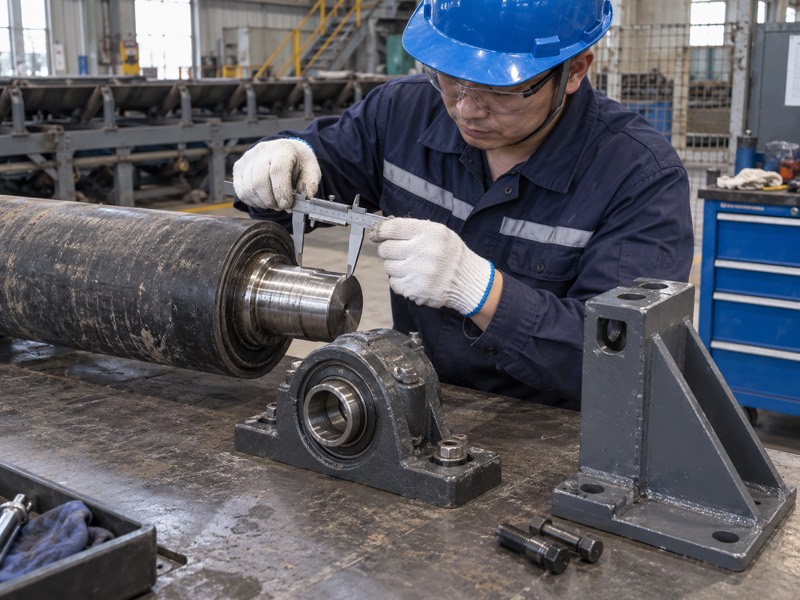
Use an agreed sequence. Review documentation and dimensions, then inspect workmanship and trial fit. Identify samples by drawing revision and construction. Before touching installed equipment, follow site-approved lockout/tagout procedures and control stored energy.
- Measure critical shaft and contact dimensions.
- Inspect helical surfaces for damaging defects.
- Confirm bracket seating, retention and clearance.
Review service behavior within a defined trial
For example, initial free rotation can confirm one condition while a field trial evaluates deposit and belt-contact behavior. Record loading, moisture and operating exposure. No short trial establishes universal service life or every conformity requirement.
| Approval stage | Checks | Release supported |
|---|---|---|
| Documentation | Requirements and records | Technical review |
| Sample inspection | Geometry and workmanship | Trial mounting |
| Field trial | Contact and deposits | Wider purchase review |
Approve each stage through the responsible reviewer. Key Takeaway: Separate dimensional acceptance, installation fit and observed service approval.
10. What should your DIN roller purchase request contain?
Your purchase request should contain a complete standard designation, governing drawing, service conditions and acceptance plan for a din spiral conveyor roller. A clear package lets suppliers confirm applicable requirements. Unresolved assumptions should appear as questions or deviations before order release.
Assemble one controlling package
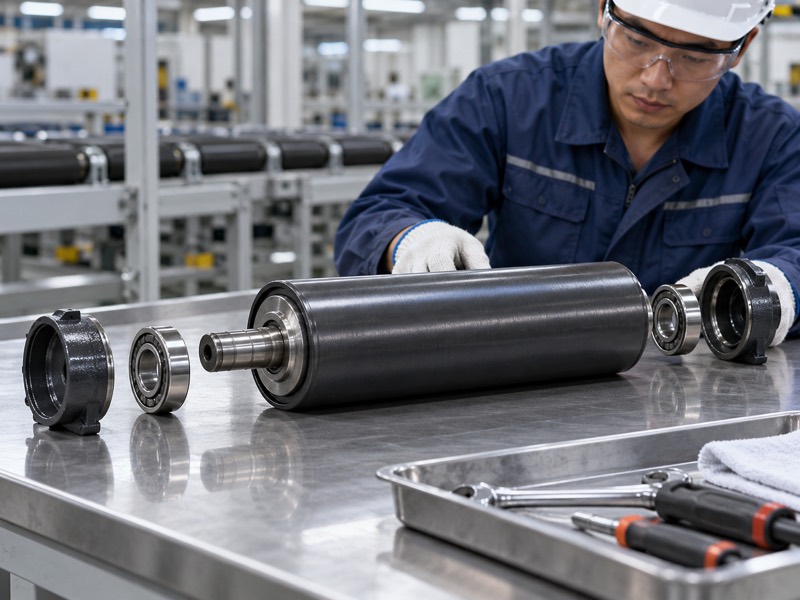
Give purchasing a clear release basis. Include exact standard editions, drawing revisions and approved changes. Add quantity, intended positions and required inspection documents. If your application compares other belt-support designs, identify each component separately rather than using one general roller specification.
- State standards only where their scope applies.
- Request a written supplier conformity and deviation response.
- Define sample approval before production release.
Confirm the final order requirements
| Order item | Required confirmation | Release condition |
|---|---|---|
| Standard and edition | Applicable requirements | Engineering agreement |
| Drawing and revisions | Complete geometry | Approved document |
| Evidence and sample | Inspection scope | Acceptance plan |
Key Takeaway: Release a drawing-based order with exact standards and evidence requirements. Send XINYONGDUO your roller drawing, full DIN references, belt duty and requested inspection records. Contact us for a spiral roller proposal with a confirmed construction and requirement scope. Technical approval should identify what will be measured and which documents govern the order.
FAQ
Q1: Can I order a roller by saying DIN certified? That wording is incomplete. Identify applicable standards, editions, requirements and any actual certification scheme before requesting evidence.
Q2: Which edition covers bulk belt-idler main dimensions? DIN 15207-1:2024-06 addresses that scope. Confirm its applicability and governing status for your drawing and purchase contract.
Q3: Can a dimensional standard approve belt-contact safety? Dimensional agreement alone cannot establish contact suitability. Review helical surface condition, belt construction and actual duty separately.
Q4: How do I handle an old standard on a drawing? Ask your design owner to confirm the governing edition. Record any approved update or continued legacy requirement before production.
Q5: What’s the best evidence for replacement fit? Use an approved dimensional drawing, relevant inspection records and a controlled trial fit in your actual mounting arrangement.