
A spiral return roller supports a belt on a helical surface that can disturb carryback deposits under suitable operating conditions. Sticky fines can change ordinary return-roller contact, leaving uneven buildup and repeated cleaning work. A spiral return roller offers a different support geometry, but belt compatibility and upstream cleaning still need review. Select it for a defined return position rather than a promised universal cleaning result.
1. What does a spiral return roller do?
A spiral return roller supports a returning belt while its helical surface changes contact with attached material. That geometry may help disturb or redirect deposits. It describes a belt-conveyor component, rather than a complete spiral conveyor that moves packages between levels.
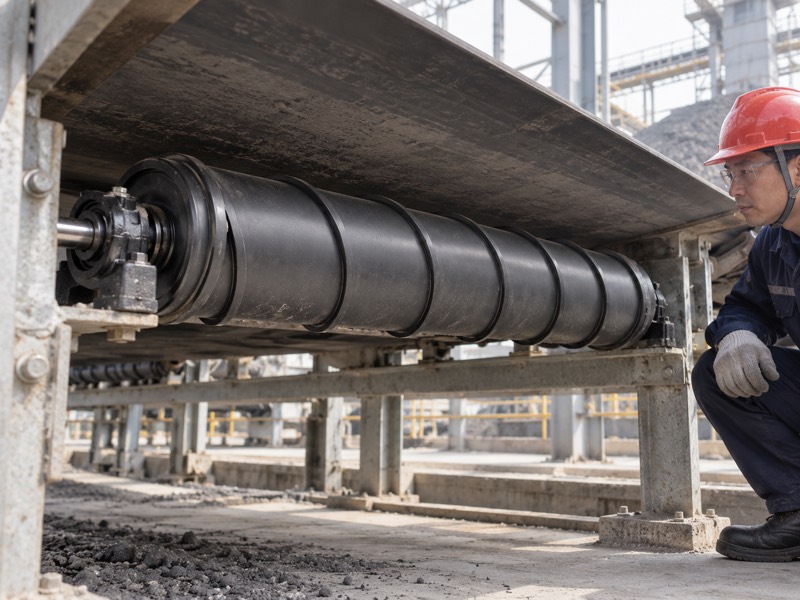
Identify the intended conveyor function
Confirm which machine you are specifying. Bulk belt conveyors carry material on a belt supported by idlers. A return roller supports an unloaded belt returning toward its tail. Package-handling spiral conveyors use a different transport arrangement, so their layout or drive details should not be transferred onto this component.
- Identify which belt face contacts each roller.
- Record return-run direction and mounting position.
- Describe whether deposits are dry, wet or adhesive.
Separate support from dedicated cleaning
A helical surface may alter deposit behavior, but it does not replace compatible cleaners at discharge. Review ordinary return support as a baseline when deciding whether special geometry is needed. Cleaner condition can change what reaches every downstream roller.
| Component | Main job | Selection basis |
|---|---|---|
| Spiral return roller | Return support with helical contact | Belt and carryback conditions |
| Plain return roller | Continuous return support | Clean contact conditions |
| Belt cleaner | Residue removal | Approved cleaning position |
Specify these functions separately in your equipment inquiry. Key Takeaway: Treat spiral geometry as a return-support option within a complete cleaning arrangement.
2. Which materials make spiral support worth reviewing?
Materials make spiral support worth reviewing when persistent adhesion changes return contact or creates difficult deposits. A spiral return roller may suit some wet fines and sticky bulk streams. Suitability depends on particle behavior, moisture and actual belt condition.
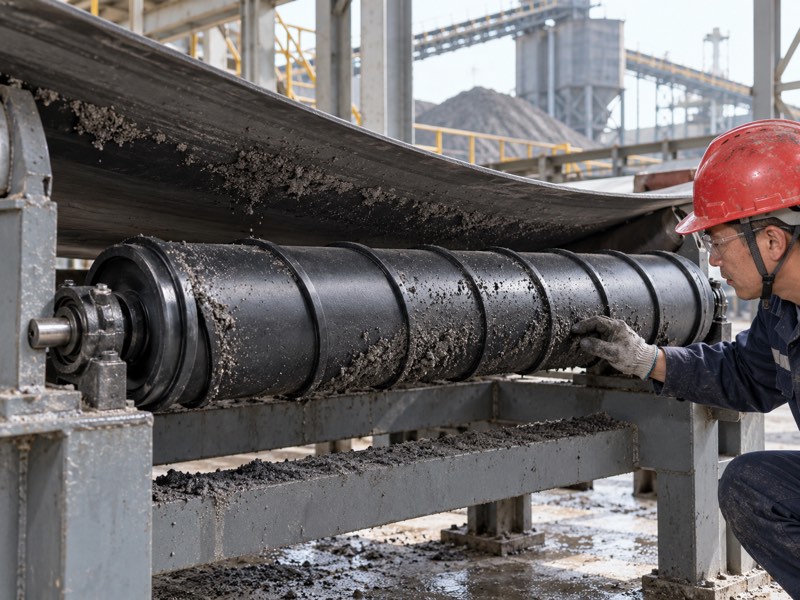
Describe what accumulates
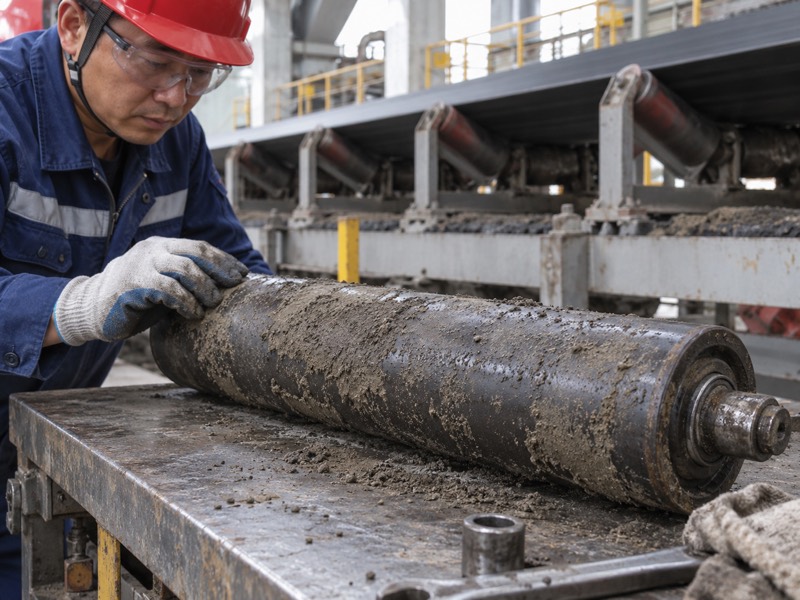
Show the deposit pattern. Photographs of material around existing rollers often provide more useful context than a general sticky-material label. Record whether deposits pack firmly, form ridges or fall away during operation. Material changes after rain or process-water adjustments may influence your selection.
- State material type and approximate particle characteristics.
- Identify wet-service periods and other exposure changes.
- Record existing cleaning methods and observed limitations.
Check whether the problem starts upstream
Poor cleaner contact, damaged covers and transfer leakage can increase contamination reaching return supports. Investigate those causes before changing rollers. A new contact geometry may help with residual deposits while leaving excessive carryback unresolved.
| Deposit behavior | Candidate review | Related investigation |
|---|---|---|
| Adhesive ridges | Helical contact | Upstream cleaner condition |
| Loose dry fines | Existing support and cleaning | Dust and discharge control |
| Coarse trapped debris | Clearance and belt protection | Contamination route |
Choose candidates based on observed behavior rather than material names alone. Key Takeaway: Document deposit shape and operating changes before requesting a spiral roller proposal.
3. How does a spiral return roller influence contact?
A spiral return roller contacts a belt along its helical working elements rather than one continuous cylindrical surface. This changes local support and deposit interaction. Element dimensions, spacing and surface condition determine whether that contact remains suitable.
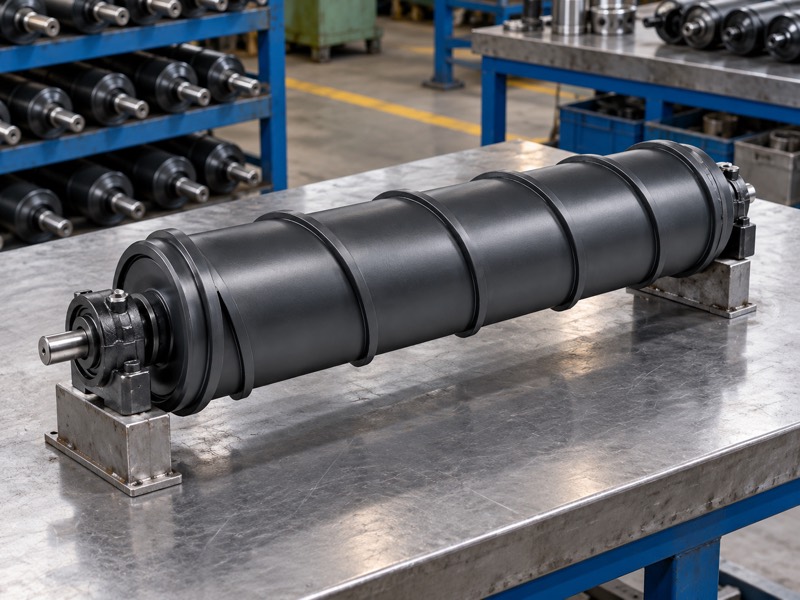
Review contact geometry with your belt
Check how support reaches the cover. A worn belt, soft cover or damaged repair may react differently from an undamaged belt. Helical elements must remain smooth and correctly aligned. Ask for working-surface construction details without assuming one pitch or element shape fits every conveyor.
- Confirm roller diameter and working-face coverage.
- Describe belt construction, thickness and cover condition.
- Identify splices or repairs crossing the contact surface.
Avoid unapproved directional assumptions
Helix arrangement can affect how deposits move across contact areas. Ask your supplier or conveyor designer to confirm orientation for intended travel direction. Do not infer a steering or cleaning effect solely from a photograph of the spiral shape.
| Geometry detail | Relevant concern | Approval request |
|---|---|---|
| Helical spacing | Support distribution | Belt compatibility |
| Element surface | Local wear or cutting | Smooth contact condition |
| Helix arrangement | Deposit interaction | Intended orientation |
Approve working geometry through a drawing and suitable sample inspection. Key Takeaway: Match helical contact with actual belt construction instead of assuming universal compatibility.
4. Where should spiral support be installed?
Spiral support should be installed at an approved return position with suitable load, clearance and material discharge. A spiral return roller needs space for deposits without exposing adjacent equipment to uncontrolled accumulation. Position should follow a conveyor layout review.
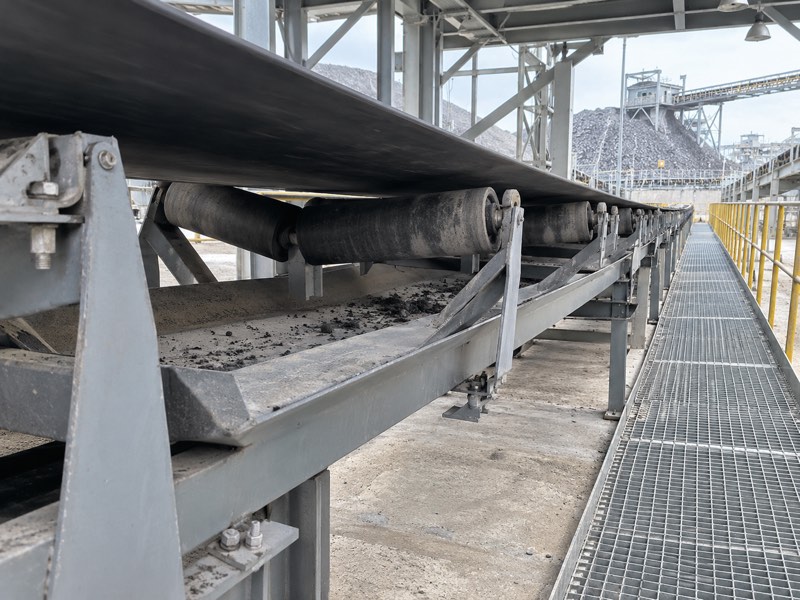
Inspect surrounding equipment
Review the space beneath support. Deposits that fall from a roller need a collection or cleanup arrangement. Guards, chutes and nearby bearings should not trap that material. Confirm safe access for isolated inspections and replacement before approving a position that looks suitable from above.
- Check belt sag and existing return spacing.
- Record clearances around guards and structural members.
- Identify nearby pulleys and contamination-sensitive components.
Preserve the designed support pattern
Replacing one roller type can change effective contact height or support stiffness. Keep approved spacing and mounting geometry unless a qualified designer authorizes changes. A return roller should not be reassigned to impact or heavily loaded carrying duty based on outside diameter alone.
| Location check | Why it matters | Approval basis |
|---|---|---|
| Return spacing | Belt support | Conveyor layout |
| Under-roller space | Deposit discharge | Cleanup arrangement |
| Access and guarding | Maintenance feasibility | Site procedure |
Resolve location constraints before ordering replacement assemblies. Key Takeaway: Approve support geometry, deposit clearance and maintenance access together.
5. Can a spiral return roller damage a belt?
A spiral return roller can damage a belt if rough elements, poor alignment or incompatible contact concentrates stress. Correct selection and inspection reduce those risks. No surface geometry should be presented as automatically safe for every cover or splice.
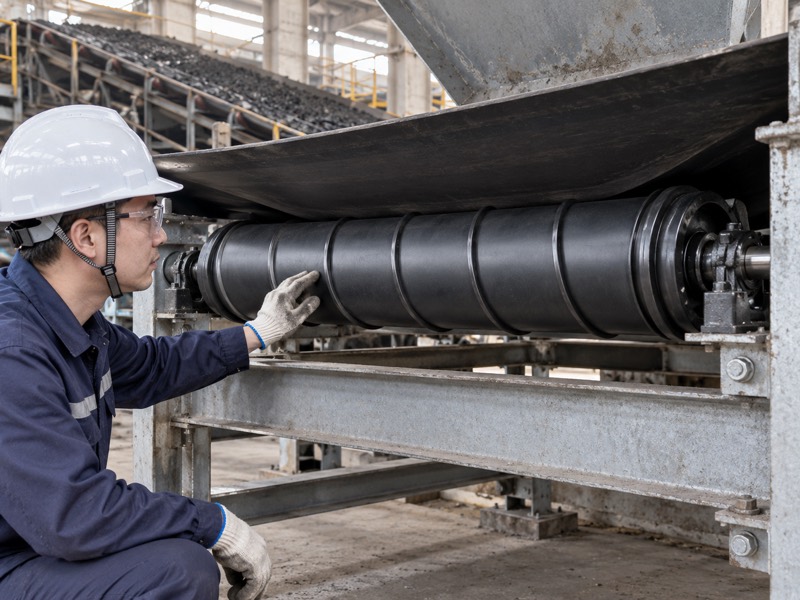
Identify conditions that need correction
Inspect edges before service. Burrs, damaged welds or sharp corrosion features can mark covers. Excessive wear can change contact shape even when a roller still rotates. Check repaired belt areas and splices because raised or damaged features may interact differently with helical elements.
- Inspect complete working surfaces during isolation.
- Photograph new belt marks near trial positions.
- Check whether contact remains even across working width.
Connect belt findings with mechanical checks
Persistent marks may involve skewed frames, seized bearings or incorrect shaft seating. Investigate those conditions alongside surface wear. Guide rollers also need appropriate contact positioning; they cannot excuse continuing abnormal edge pressure caused by underlying alignment issues.
| Finding | Potential concern | Response |
|---|---|---|
| Sharp element edge | Cover damage | Remove and review |
| New contact marks | Geometry or alignment | Inspect trial position |
| Roller binding | Bearing or fit issue | Isolate and investigate |
Use approved withdrawal criteria when abnormal contact appears. Key Takeaway: Inspect helical surfaces and belt covers before allowing continued service.
6. How do comb and spiral return surfaces compare?
Comb and spiral surfaces compare through different contact patterns rather than universal performance rankings. A spiral return roller uses helical elements, while comb designs support a belt on separated discs. Both require compatible support geometry and material-specific evaluation.
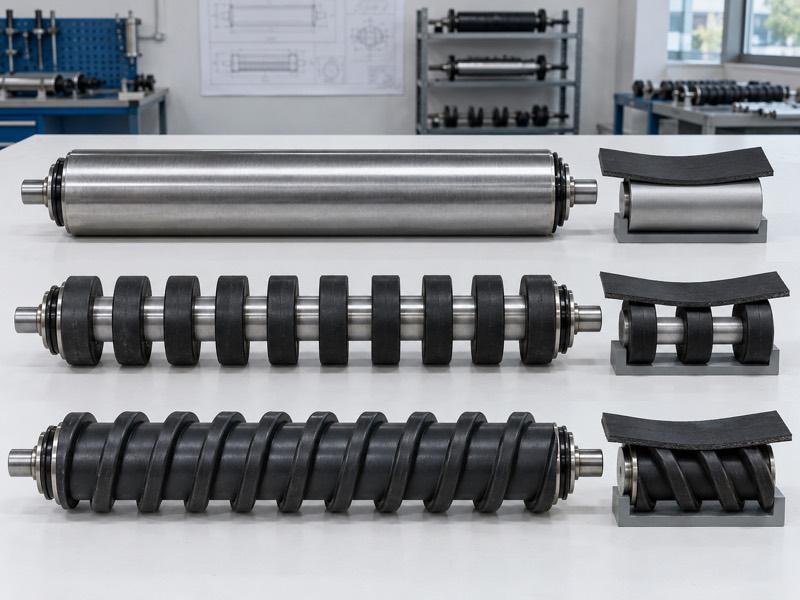
Compare working surfaces directly
Match geometry with deposit behavior. Disc gaps may allow some deposits to fall away, but adhesive material can bridge those gaps. Helical surfaces may disturb deposits differently, yet they can also wear or collect material. Review actual construction and trial conditions before selecting an alternative.
- Describe how existing deposits form and detach.
- Compare working-face support and element condition.
- Check clearance and shaft interfaces for both options.
Use a relevant baseline
Consider comb return support alongside spiral construction when carryback dominates your problem. Record belt wear and maintenance effort as well as visible residue. A cleaner-looking roller may still present an unacceptable contact pattern.
| Surface | Feature to inspect | Trial question |
|---|---|---|
| Plain cylinder | Continuous buildup | Is special geometry needed? |
| Separated discs | Gap bridging | Does material fall away? |
| Helical elements | Surface wear and deposits | Is contact acceptable? |
Compare options using matched positions and recorded material conditions. Key Takeaway: Select return geometry from observed support and deposit behavior rather than a general cleaning claim.
7. Which bearing and sealing details matter?
Bearing and sealing details matter when a spiral return roller operates around abrasive fines, water or repeated deposits. Working-surface design cannot compensate for unsuitable bearing protection. Shaft support and end-housing construction also affect assembly behavior.
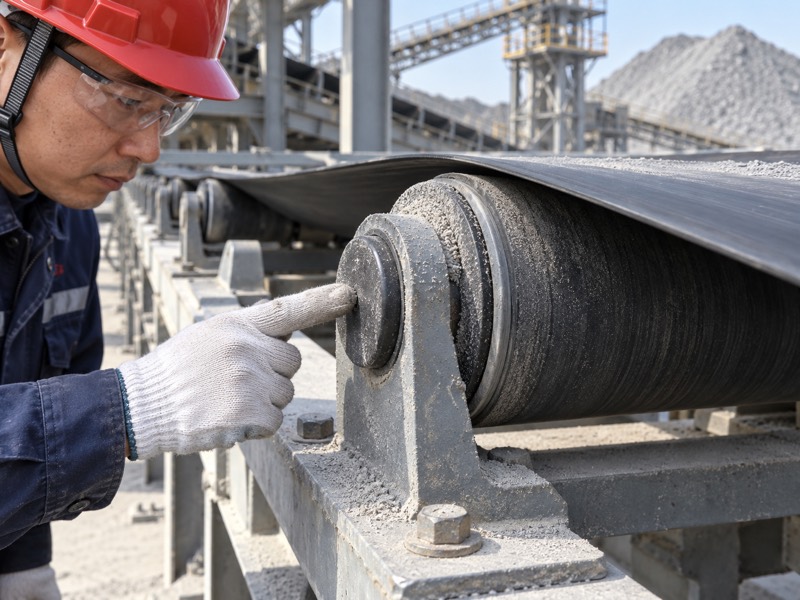
Describe contamination around both ends
Check where debris collects. Material can pack around end housings even when a central working surface remains relatively clear. Ask for seal arrangement details and relevant maintenance instructions. Identify direct spray and washdown because those conditions may differ from ordinary damp exposure.
- Confirm bearing identification and duty basis.
- State dust, moisture and cleaning exposure.
- Ask about lubrication and approved replacement methods.
Inspect rotation with an approved procedure
During isolation, look for roughness, binding, loose housings or damaged seals. Free rotation by hand provides one observation, not a complete load or service-life assessment. Compare findings with supplier instructions and investigate changes from an approved sample.
| End condition | Potential concern | Maintenance action |
|---|---|---|
| Packed contamination | Seal exposure | Clean and inspect |
| Rough rotation | Internal damage | Review assembly |
| Loose housing | Support movement | Check attachment |
Address end-condition problems before deposits conceal them. Key Takeaway: Specify bearing protection against actual contamination routes, then inspect complete end assemblies.
8. What maintenance keeps spiral geometry usable?
Maintenance keeps spiral geometry usable by removing harmful deposits, checking surface damage and preserving mounting condition. A spiral return roller still needs inspection even when buildup appears reduced. Service intervals should follow equipment instructions and site-specific observations.
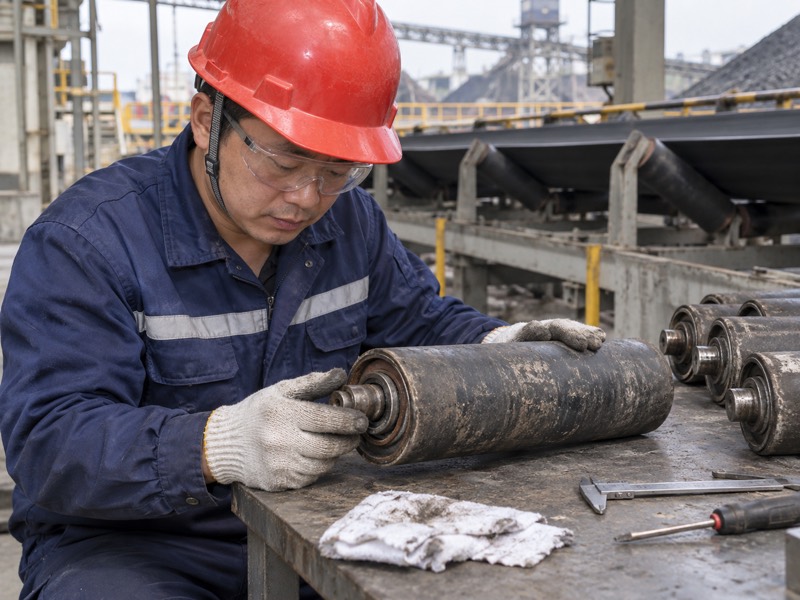
Establish a safe inspection routine
Bring the inspection within safe reach. Identify observations from guarded positions during operation and conduct contact work only after verified isolation. Avoid scraping moving components or removing guards during running checks. Account for stored belt tension and other energy sources under approved hazardous-energy control procedures.
- Inspect helical elements for wear and sharp damage.
- Check shaft seating, retention and bracket condition.
- Clear deposits without forcing contamination into seals.
Record findings that change selection
Repeated bridging, rapid element wear or abnormal belt marks may indicate unsuitable geometry or unresolved upstream carryback. Log those findings with material and operating conditions. Use that evidence when discussing repairs, replacement construction or another return-support option.
| Inspection area | Record | Decision supported |
|---|---|---|
| Working elements | Wear and damage | Continued contact suitability |
| End assembly | Rotation and contamination | Replacement review |
| Mounting | Seating and alignment | Installation correction |
Adjust inspections from recorded deterioration rather than assumed self-cleaning behavior. Key Takeaway: Maintain a spiral roller as a working support component with defined inspection and withdrawal criteria.
9. How should you trial a spiral return roller?
Trial a spiral return roller at a defined position with documented carryback and belt condition. Compare results with a relevant existing support. Keep material changes and cleaner adjustments visible in your records.
Agree a practical acceptance plan
Choose measurements your crew can repeat. Record deposit locations after comparable production periods, inspect cover marks and log cleaning work. Include shell or element condition and end-housing observations. Decide in advance which findings require stopping the trial for engineering review.
- Photograph initial belt and roller conditions.
- Log operating exposure and maintenance interventions.
- Retain removed samples for investigation where practical.
Interpret trial limits honestly
A short trial may confirm fit and initial behavior without establishing lifetime performance. Avoid converting one observation into a promised cleaning percentage. Review whether seasonal moisture or another feed blend could change results before extending purchasing.
| Trial measure | Reference | Acceptance discussion |
|---|---|---|
| Deposit behavior | Existing support | Practical cleanup burden |
| Belt contact | Initial cover condition | No abnormal marks |
| Assembly condition | Approved sample | Stable mounting and rotation |
Use recorded findings to approve or revise proposed geometry. Key Takeaway: Expand spiral support only when a controlled trial answers your maintenance problem.
10. What information belongs in a spiral roller inquiry?
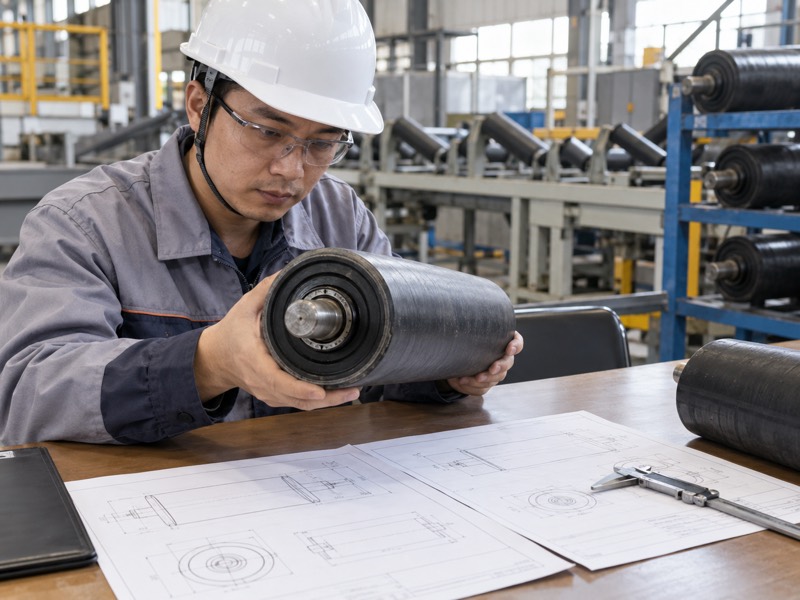
A spiral roller inquiry should include replacement dimensions, belt details, deposit behavior and service exposure. A spiral return roller proposal needs enough information for fit and compatibility review. A photograph alone cannot define shaft ends or required tolerances.
Prepare the required dimensions
Send a drawing with context. Include outside diameter, working-face length, shaft-end geometry and mounting clearances. Describe belt width, speed, construction and material conditions. Ask the supplier to confirm helical arrangement and proposed bearing protection for your intended return position.
- State drawing revision and dimensional units.
- Provide photographs of existing deposits and brackets.
- Define sample approval and inspection requirements.
Confirm technical details before ordering
| Inquiry item | Confirmation needed | Purchase decision |
|---|---|---|
| Mounting dimensions | Approved drawing | Installation fit |
| Belt and material | Contact suitability | Trial scope |
| Environment | Bearing and seal proposal | Assembly selection |
Key Takeaway: Request a drawing-based proposal with explicit belt contact and contamination conditions. Send XINYONGDUO your return-roller drawing, belt width, travel direction and deposit photographs. Contact us for a spiral roller quotation and confirmation of proposed construction. Your order should identify measurable fit and service requirements before installation begins.
FAQ
Q1: Can I use a spiral return roller as a belt cleaner? It can complement cleaning by changing deposit interaction. Dedicated cleaners still need suitable positions and maintenance.
Q2: What’s the best roller for sticky fines? It depends on belt contact and material behavior. Compare plain, comb and spiral options under a defined trial.
Q3: How do I know whether spiral contact suits my splice? Request a compatibility review using actual belt and splice details. Inspect a sample and watch for abnormal marks during an approved trial.
Q4: Can I install spiral support at any return position? No. Review spacing, load, clearances, debris discharge and safe access before approving its location.
Q5: Is this a complete spiral warehouse conveyor? No. This component supports a bulk conveyor’s returning belt; package-handling spiral conveyor machines require a different design and supply review.