
A comb conveyor roller uses separated contact elements in an approved return-support arrangement rather than a continuous working face. This geometry can help manage deposits in suitable duty, but it does not replace belt cleaning. If sticky carryback keeps fouling return rollers, review cleaning, support and material collection before ordering another component.
1. What does a comb conveyor roller do?
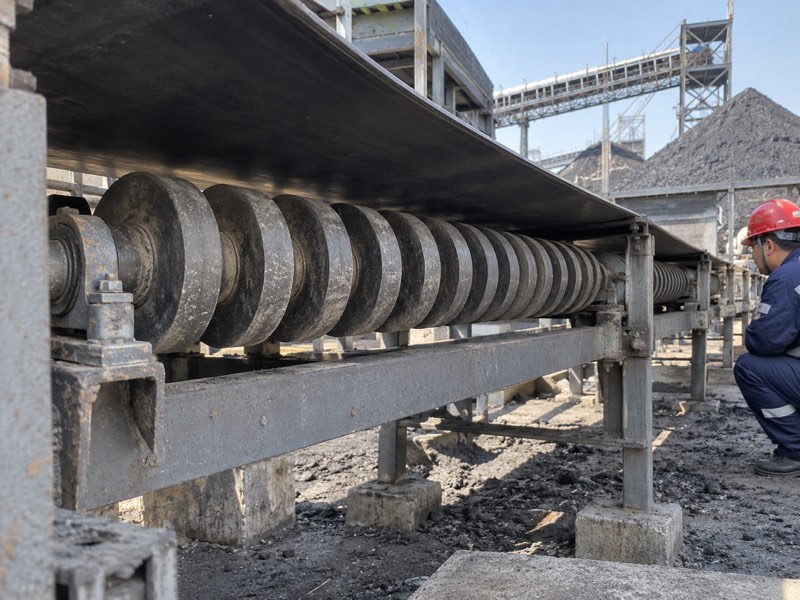
A comb conveyor roller supports a returning belt through separated discs or other defined contact elements. Its construction provides spaces between contact areas. Actual suitability depends on belt condition, element layout and operating duty, so confirm geometry rather than relying on the comb label.
Which construction should you specify?
Ask for the contact layout in a drawing. Product terminology can vary between suppliers. Identify whether the proposed roller uses discs, rings or another structure. Then check how each element and its supporting shaft are retained.
- Define contact-element type and material.
- Record element positions and overall working width.
- Identify shaft, bearing and mounting arrangement.
If your existing part has worn elements, photograph its installed orientation before removal. A complete drawing helps distinguish nominal layout from damage or displaced parts. Keep these records with your replacement inquiry.
What does each drawing detail establish?
| Detail | Question answered | Buyer check |
|---|---|---|
| Contact elements | What supports the belt? | Type and material |
| Element positions | Where does contact occur? | Controlled layout |
| Shaft and ends | How does the assembly fit? | Mounting dimensions |
Key Takeaway: Specify construction and contact layout explicitly. Treat a product name as a starting point for technical review.
2. Why does sticky carryback collect on return support?
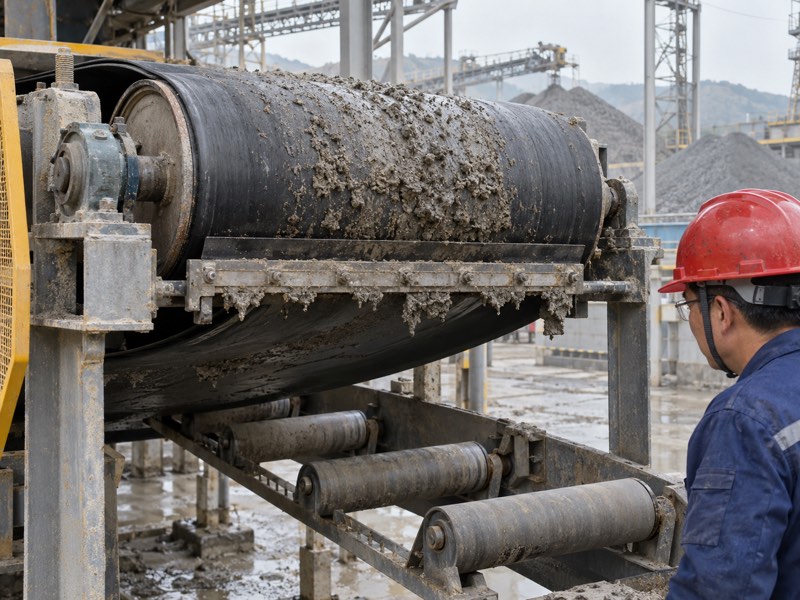
Carryback remains on the belt after discharge and reaches return contact points. A comb conveyor roller encounters that material during support. If deposits remain wet or adhesive, they can build up despite spaces between elements, changing contact and inspection conditions.
What should you inspect at the source?
Follow material from discharge toward the return run. Look at where residue remains after cleaning and where deposits gather. Material condition can change with moisture or process variation. Record those changes before choosing a different return roller.
- Identify material type and moisture conditions.
- Check discharge and cleaner arrangements after isolation.
- Photograph where carryback reaches support.
If deposits return after cleaning, review the whole material path. A roller replacement can address component condition without solving the carryback source. Include recurring residue in your maintenance record and quotation duty.
Which observation supports which investigation?
| Observation | Possible relationship | Review |
|---|---|---|
| Residue remains after cleaner | Cleaning issue | Cleaner condition and setting |
| Deposits vary with moisture | Changing material behavior | Relevant process conditions |
| Same support fouls repeatedly | Persistent contact with carryback | Return layout and collection |
Key Takeaway: Define carryback conditions before selecting support. Record material behavior and cleaning performance separately from roller condition.
3. How can separated discs affect buildup?
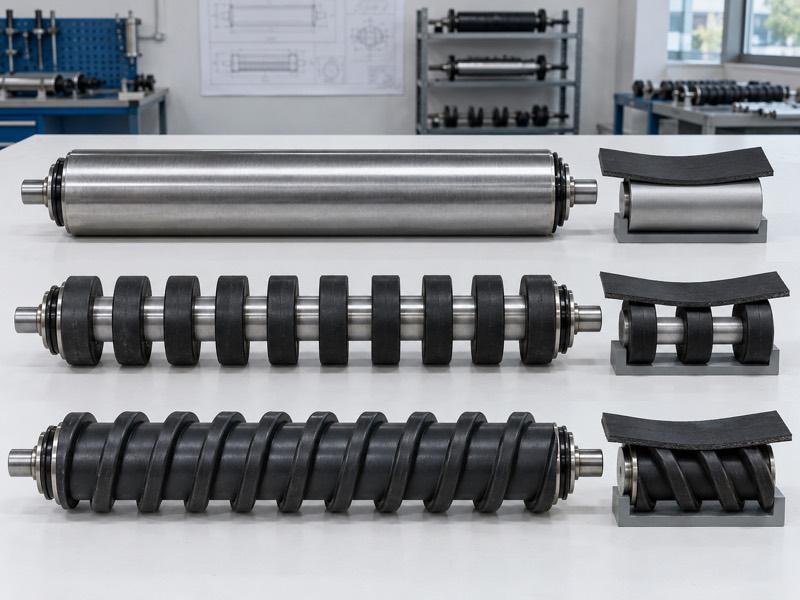
Separated discs reduce continuous support contact and leave open spaces around portions of the shaft. Your comb conveyor roller may handle deposits differently from a plain cylinder. It can still pack with material, so any self-cleaning description needs clear operating limits.
What can the open spaces achieve?
Review how material can leave the contact zone. Spaces may let loose particles fall away when conditions permit. Sticky material can instead bridge gaps or gather around the shaft. Your proposal should explain expected behavior without promising complete deposit removal.
- Identify likely particle form and adhesive behavior.
- Review space around elements and nearby structure.
- Ask how the layout suits your belt and carryback.
Open geometry also creates inspection needs. Material lodged between elements may be difficult to see from one side. Plan safe access and collection rather than assuming spaces remain clear throughout operation.
Which material behavior changes the decision?
| Behavior | Possible outcome | Review need |
|---|---|---|
| Loose particles | May fall through open spaces | Collection arrangement |
| Adhesive residue | May bridge element gaps | Cleaning and layout |
| Packed deposits | Changes support geometry | Isolated inspection |
Key Takeaway: Evaluate separated contact against actual carryback. Keep claims conditional and plan inspection where material can accumulate.
4. Can comb rollers replace primary belt cleaners?
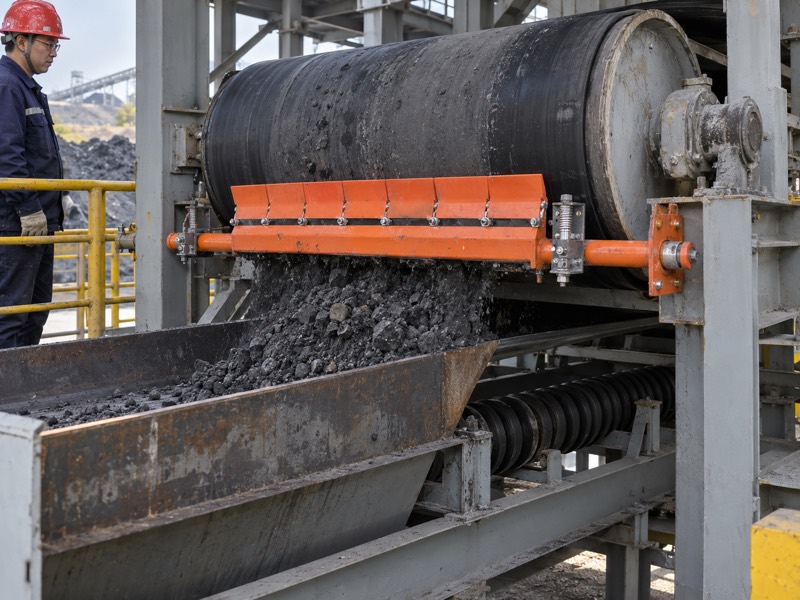
No, return support should not be treated as a substitute for the conveyor’s approved cleaning system. A comb conveyor roller supports the belt and may affect deposit behavior locally. Primary cleaning addresses carryback at a defined cleaning location and needs its own design and maintenance.
How should the two requirements be separated?
Specify cleaning and support as linked but distinct tasks. A cleaner needs suitable contact, condition and adjustment for its duty. A return roller needs suitable belt support and rotating interfaces. If either task is undefined, changing another component can leave the problem unresolved.
- Review cleaner condition through its approved procedure.
- Define roller support geometry and contamination exposure.
- Check where removed material will be collected.
Compare proposed support with a standard return roller using your actual duty. Do not expect a disc arrangement to provide a cleaner’s full function. Ask for a clear statement of what remains outside roller supply scope.
Which task belongs to which equipment?
| Task | Equipment requirement | Separate check |
|---|---|---|
| Remove carryback at cleaning point | Approved belt cleaner | Contact and maintenance |
| Support returning belt | Return roller arrangement | Geometry and rotation |
| Collect released material | Collection provisions | Access and disposal |
Key Takeaway: Keep cleaners, support and collection in your carryback plan. Do not approve a roller on an unsupported replacement-cleaner claim.
5. Where should falling material go?
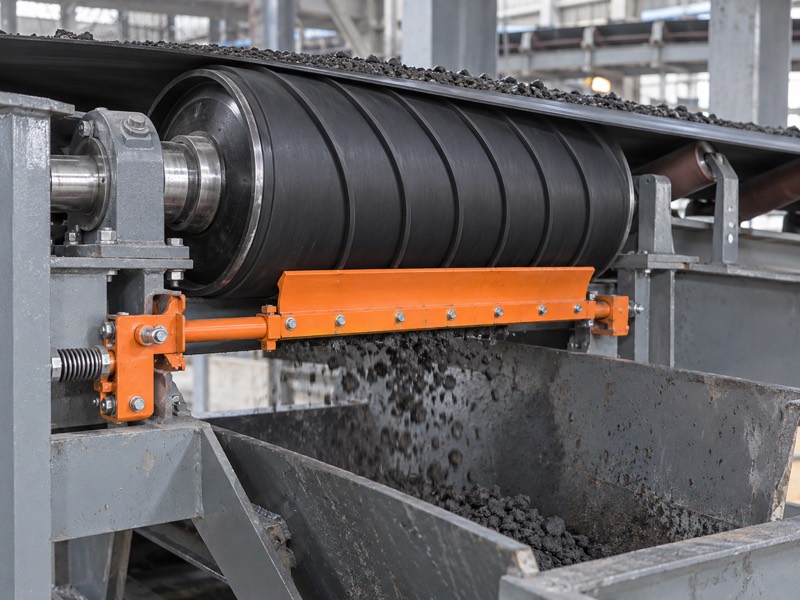
Falling material should reach a collection arrangement approved for your conveyor and site. Your comb conveyor roller needs space for released particles without creating new obstruction. If debris accumulates around frames or pivots, the problem can shift from roller surfaces to nearby structure.
Which surrounding details should you check?
Inspect the space below and beside each support. Look for places where deposits can trap material against rotating parts. Review trays, drainage and cleaning routes where relevant. Then confirm those provisions remain clear through normal operation.
- Identify collection surfaces and safe removal access.
- Check gaps around shafts, bearings and mounting brackets.
- Record recurring piles or blocked drainage.
Don’t reach into moving equipment to remove debris. Follow site-approved hazardous-energy control for physical cleaning and inspection. Collection arrangements need planned maintenance just as rollers do.
What can poor collection cause?
| Condition | Consequence | Action |
|---|---|---|
| Debris reaches rotating parts | Rotation becomes restricted | Correct collection and clearance |
| Tray fills repeatedly | Material accumulates near support | Review cleaning schedule |
| Access remains obstructed | Inspection becomes difficult | Improve approved access |
Key Takeaway: Plan where material lands and how staff remove it. Confirm collection space before adding separated-disc support.
6. How should disc spacing and position be selected?
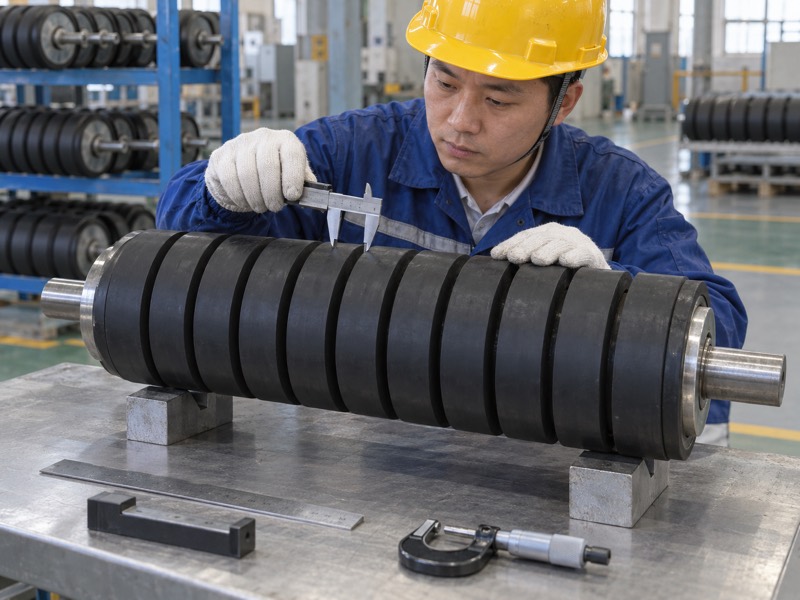
Disc spacing and position should follow an approved support design matched with your belt and duty. A comb conveyor roller has no universal best ring layout. If contact elements move or wear unevenly, verify their nominal arrangement before choosing a replacement.
What determines a useful contact arrangement?
Balance support needs with contamination conditions. Separated contact changes how belt load reaches the roller. Wider gaps may suit one arrangement while leaving another belt inadequately supported. Your design should specify element locations and any required retention.
- Provide belt construction, width and return profile.
- Identify approved roller spacing along the conveyor.
- Record element dimensions and their axial positions.
Avoid adding or removing discs based only on visible deposits. A changed arrangement can alter cover contact or support. Request an application review when nominal layout or belt requirements are unclear.
Which requirement defines which dimension?
| Requirement | Layout detail | Approval reference |
|---|---|---|
| Belt contact | Element positions | Support drawing |
| Mounting fit | Working width and shaft | Assembly dimensions |
| Element retention | Fixing or spacing features | Approved construction |
Key Takeaway: Use a controlled layout for discs and spacers. Obtain design approval before changing contact-element quantity or position.
7. What belt-support limits should you review?
Review return profile, support span, belt construction and local contact before selecting a comb conveyor roller. Separated discs concentrate support into defined areas. Your proposed arrangement must suit your belt rather than assuming every return run accepts the same geometry.

Where can a support mismatch appear?
Check the belt across its full working width. Local deflection or cover marks can show where contact differs. Inspect transitions and neighboring rollers as well. If the belt profile changes, a layout accepted elsewhere may not fit this position.
- Record belt construction and installed support profile.
- Inspect contact marks and unsupported spans after isolation.
- Check neighboring elevations and frame alignment.
Do not apply an invented universal load or spacing limit. Your conveyor design and belt requirements should provide suitable values. Ask suppliers to review provided conditions and identify any limitations.
Which support evidence needs which review?
| Evidence | Possible concern | Review |
|---|---|---|
| Local cover impressions | Concentrated contact | Disc layout and belt suitability |
| Uneven deflection | Unequal support | Profile and span |
| Changing belt path | Inconsistent contact geometry | Adjacent support |
Key Takeaway: Confirm separated-disc support against belt requirements. Include contact observations when requesting application approval.
8. Which element materials and wear signs matter?
Element material must suit contact, contamination and cleaning conditions. A comb conveyor roller may use different constructions, so request a defined material proposal. If elements crack, harden, loosen or wear unevenly, document those findings before selecting another arrangement.
How do you define material suitability?
Describe exposure before asking for a material grade. Water, oils, cleaning chemicals and abrasive particles create different conditions. Include process temperature from verified records. Then ask suppliers to explain compatibility and the evidence they can provide.
- Identify chemical and moisture exposure.
- Record element damage and installed orientation.
- Confirm whether elements can be replaced under approved procedures.
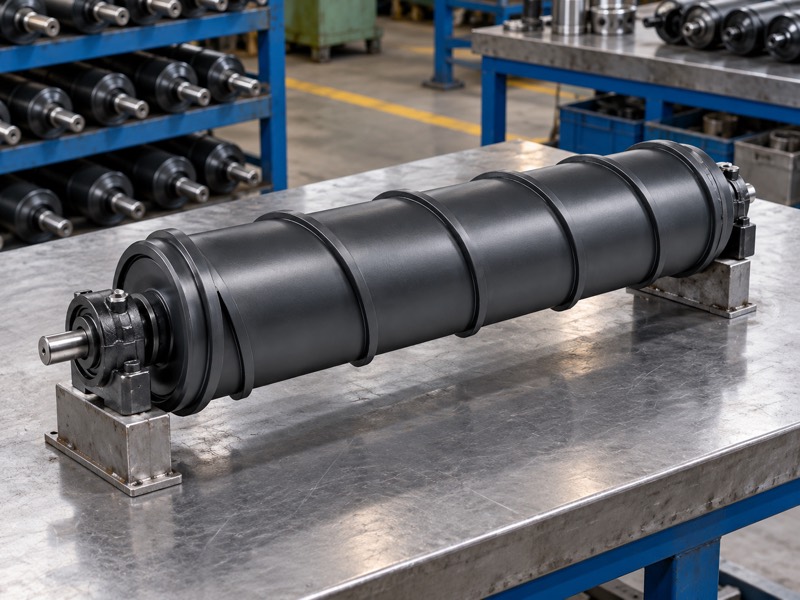
A spiral return arrangement uses another contact geometry and also requires application review. Don’t treat alternative product names as proof of better performance. Compare their defined construction and maintenance requirements against your duty.
Which wear sign helps your inquiry?
| Sign | Possible issue | Supplier question |
|---|---|---|
| Cracked element | Damage or unsuitable exposure | Material and duty review |
| Uneven element wear | Concentrated contact | Layout suitability |
| Loose element | Retention fault | Approved fixing method |
Key Takeaway: Request material suitability against actual exposure. Preserve wear evidence before choosing another contact construction.
9. How should you inspect rotation and trapped deposits?
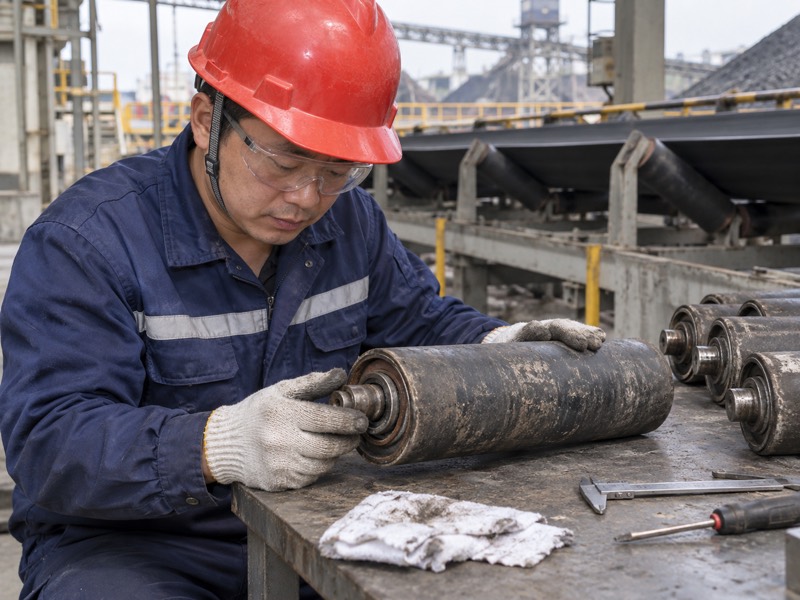
Inspect rotation, seals, elements and trapped material after approved isolation. Your comb conveyor roller needs free movement and a sound contact layout. If a deposit hides a damaged element or blocks rotation, cleaning alone may be insufficient.
What should an inspection record include?
Check each contact element and both roller ends. Look for packed gaps, displaced elements and visible seal damage. Record rough rotation using your approved method. Then compare findings with belt marks and known carryback conditions.
- Inspect contact surfaces and axial element positions.
- Check bearing condition and shaft retention.
- Document deposits before cleaning obscures their pattern.
Use cleaning tools and chemicals allowed by component instructions. Avoid forced rotation against packed material or damaged parts. Repair unserviceable elements, bearings or mounting before returning the roller to duty.
Which finding requires which response?
| Finding | Response | Follow-up |
|---|---|---|
| Packed gaps | Clean through approved method | Review recurrence |
| Damaged or displaced elements | Repair approved construction | Verify layout |
| Rough or seized rotation | Repair rotating fault | Check seals and exposure |
Key Takeaway: Inspect deposits and component condition together. Verify layout and rotation after repair rather than releasing a cleaned but damaged assembly.
10. What should you include in a replacement inquiry?
Include belt details, carryback conditions, complete dimensions and inspection requirements. A comb conveyor roller should be quoted against defined contact layout and duty. If your inquiry describes only sticky material, mounting and support questions can remain unresolved.
How do you make the proposal reviewable?
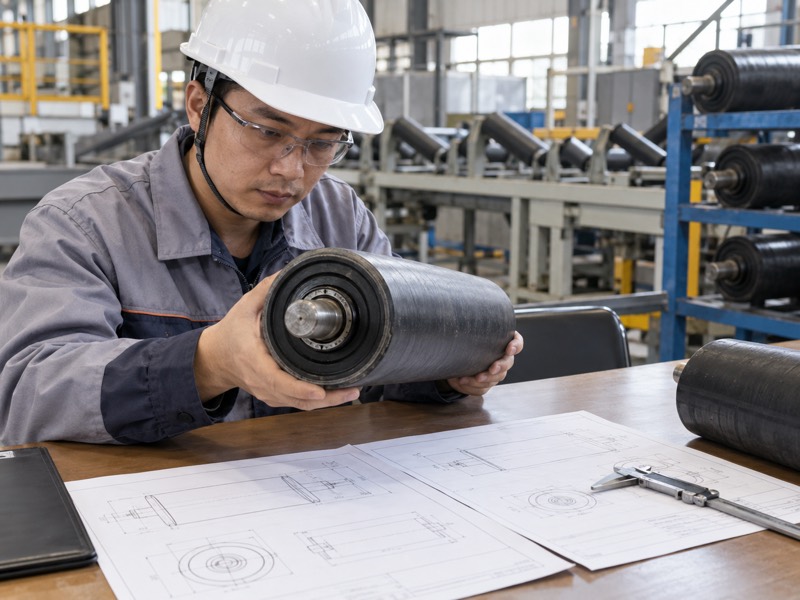
Use one controlled package for fit and duty. Include overall working width, shaft ends, element positions and installation photos. Describe cleaning and material collection. Then ask suppliers to identify deviations and expected maintenance requirements.
- Provide quantity and drawing revision.
- State belt construction, exposure and return arrangement.
- Define inspection records and acceptance criteria.
Acceptance should cover incoming fit and installed contact. A representative operating check can identify recurring deposits or unsuitable support. Keep results with the approved drawing for future orders.
Which requirement supports which decision?
| Requirement | Supplier decision | Buyer check |
|---|---|---|
| Assembly dimensions | Mounting compatibility | Drawing agreement |
| Contact layout | Belt support proposal | Approved application |
| Carryback and cleaning | Material and maintenance plan | Defined limits |
Key Takeaway: Request a defined assembly for your carryback duty. Keep cleaner and collection requirements visible in the final installation plan.
FAQ
Q1: Can comb rollers remove all sticky carryback? No. Their geometry may affect local deposits, but cleaning remains a separate requirement.
Q2: Can I change disc spacing myself? Only through approved design changes. Spacing affects belt contact and support.
Q3: What’s the best way to handle material below rollers? Use an approved collection plan. Include safe access, clearance and routine removal.
Q4: How do I know whether an element needs replacement? Inspect cracking, wear, retention and contact after isolation against approved requirements.
Q5: Can a spiral roller replace a comb roller directly? Only after application and interface review. Contact geometry and duty can differ.
Send your return-support drawing and carryback observations when you contact us about comb-roller requirements.