
Resin bolt gloving occurs when capsule packaging remains wrapped around a bolt and interferes with the intended resin anchorage. A completed installation cannot reveal every buried defect. Diagnose suspected wrapping through preserved specimens, relevant records, and controlled examination. Published in-situ research demonstrates why achieved encapsulation deserves inspection. Your resin bolt gloving investigation should distinguish visible film, unmixed material, and empty regions before discussing their engineering consequences.
1. What does resin bolt gloving mean?
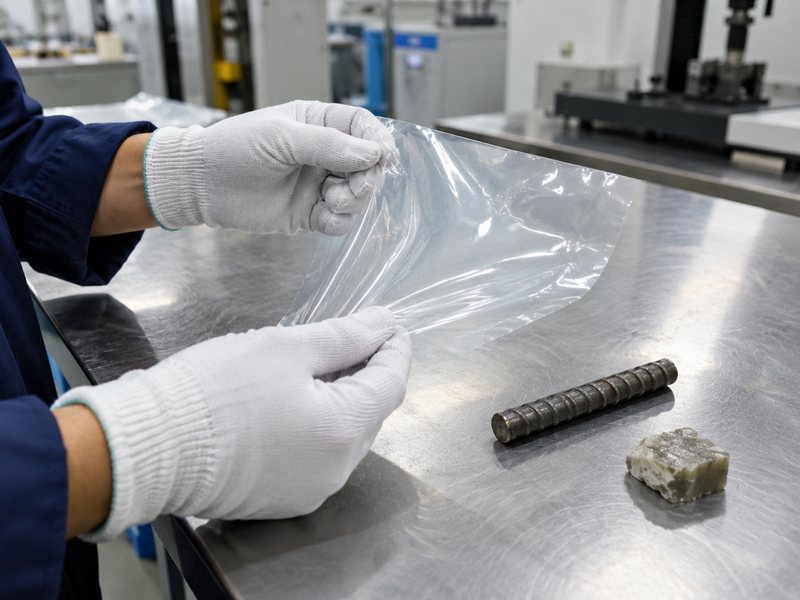
Resin bolt gloving describes capsule film wrapping around steel rather than dispersing as intended during installation. Its presence and extent require evidence. A fragment near an exposed face does not describe an entire bolt. Use a bounded defect description tied to observed locations.
Which observations should remain separate?
Record retained film, unmixed resin, and missing encapsulation independently. These conditions can occur together without sharing an identical cause. Do not replace physical descriptions with a broad label such as poor mixing. A clear description helps determine which examination would answer the remaining question.
- Identify film location and visible arrangement.
- Describe adjacent material condition separately.
- State which regions remain unobserved.
Name the observed condition. Ask your examiner to distinguish confirmed wrapping from a suspected mechanism.
Which defect label fits the evidence?
| Observation | Defensible description |
|---|---|
| Film wrapped around bar | Local wrapping observed |
| Unmixed constituents | Local mixing defect observed |
| Empty region | Local encapsulation discontinuity observed |
A precise defect record prevents several different conditions from becoming one unsupported diagnosis. Keep descriptions consistent across photographs and sample logs so later reviewers can locate each observed feature reliably.
2. Why can external completion records miss gloving?
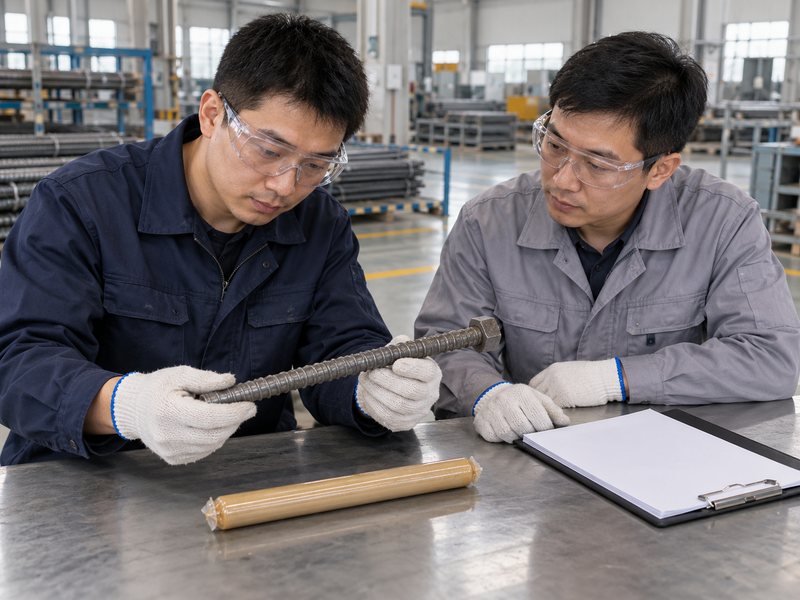
External completion records describe recorded installation events rather than every internal resin condition. Equipment can complete a programmed event while buried material remains unexamined. Keep process evidence and achieved-condition evidence separate. Neither should be silently substituted for the other during a defect review.
What should the initial evidence package contain?
Retrieve product identities, location, equipment records, and any reported anomalies. Include relevant assembly accessories so reviewers understand the installed configuration. Preserve original records rather than recreating them from memory. Mark missing information explicitly.
- Identify bolt, resin, and installation location.
- Retain recorded operating events and deviations.
- Separate operator recollection from logged evidence.
Look beyond a completion checkmark. Decide which internal-condition question remains unanswered by available records.
Which record answers which question?
| Record | Supported question |
|---|---|
| Installation log | What events were recorded? |
| Product traceability | Which combination was installed? |
| Internal examination | What condition was actually observed? |
A complete process log remains useful even when additional evidence is needed to evaluate buried encapsulation. A missing record should remain a visible limitation rather than become a reconstructed assumption within the investigation.
3. How can recovered specimens improve diagnosis?
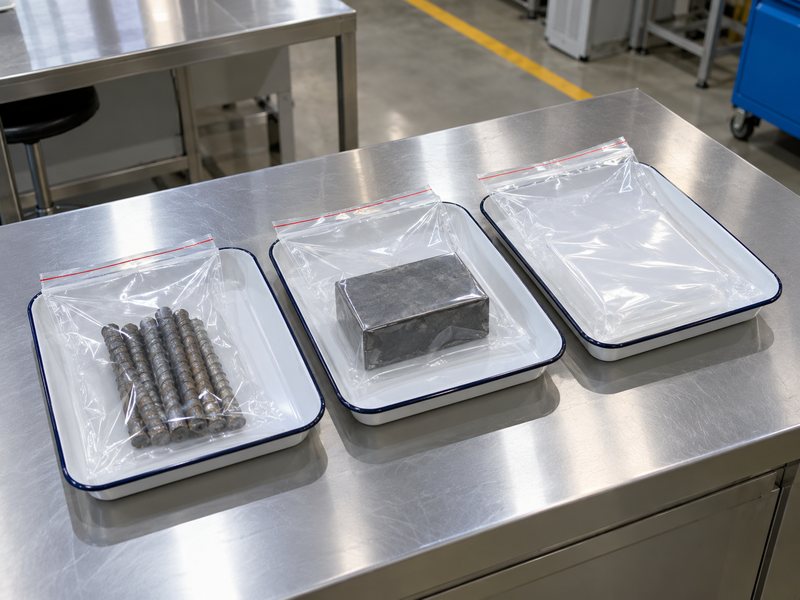
Recovered specimens can expose internal conditions that external records cannot show. In-situ research used overcored roof bolts to examine actual encapsulation. Your resin anchorage investigation should preserve specimen orientation and examination context. Recovery methods can also disturb evidence and need their own limitations.
Which context should accompany a specimen?
Identify original location, orientation, and recovery method. Record where material was lost or disturbed during recovery. Photograph intact condition before opening or cleaning. A specimen with unclear origin may still show a feature but cannot support location-specific conclusions reliably.
- Maintain sample identity through each transfer.
- Preserve orientation with photographs and sketches.
- Record damage introduced during recovery.
Protect the internal evidence. Agree on examination and preservation requirements before authorizing destructive handling.
Which recovery detail protects interpretation?
| Detail | Interpretation benefit |
|---|---|
| Original location | Links condition with installation records |
| Orientation | Locates observed features along the bolt |
| Disturbance record | Separates original condition from recovery effects |
Qualified recovery does not remove every uncertainty, but its documented limits help reviewers avoid overclaiming what a specimen proves. Compare recovery photographs with examination photographs whenever handling may have changed the arrangement of small fragments.
4. How should examination coverage be described?
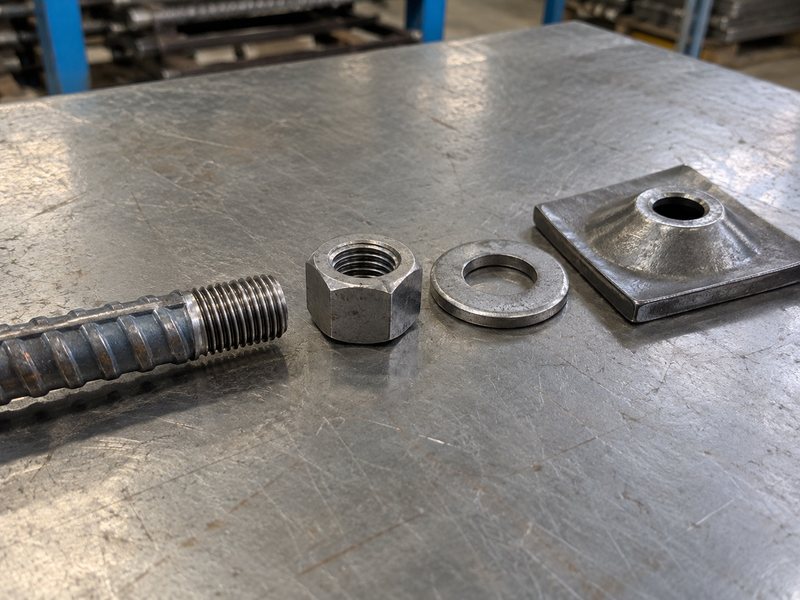
Examination coverage should identify inspected regions and unobserved portions explicitly. A single cross-section cannot establish continuous wrapping along an entire bolt. Different methods expose different surfaces. State those boundaries before describing defect extent or asking engineering to interpret consequences.
Which assembly details still matter?
Document the complete configuration even when examination focuses on buried steel. A bearing plate identity helps reconstruct the assembly but cannot prove internal mixing. Avoid allowing a tidy external head to outweigh direct internal observations. Keep both evidence streams in the report.
- Map inspected segments and exposed surfaces.
- Record gaps between examination locations.
- Preserve the sequence of recovered pieces.
State the viewing limits. Require captions that identify specimen region rather than imply complete-length coverage.
Which coverage statement is appropriate?
| Examination | Supported scope |
|---|---|
| One exposed face | Condition at that face |
| Several mapped segments | Conditions at those recorded segments |
| Continuous accessible surface | Observed surface, subject to method limits |
A coverage map helps engineers decide whether further examination would change the interpretation of suspected wrapping. Use specimen maps to direct further work toward genuinely unobserved regions rather than repeat an already documented view.
5. How do you distinguish film from unmixed resin?
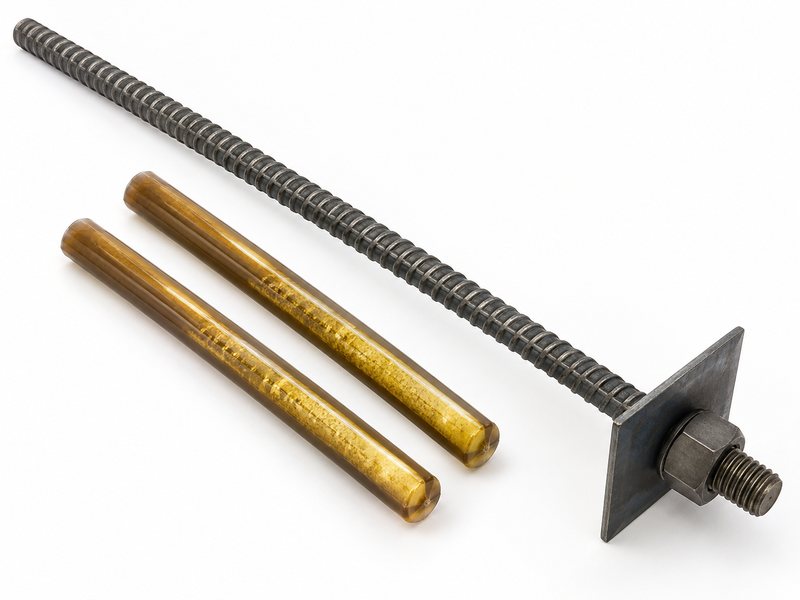
Film and unmixed resin should be distinguished by direct description and suitable examination. Their appearance can overlap in unclear photographs. A resin bolt defect assessment should identify the basis for each material label. Avoid inferring chemical condition solely from color.
Which evidence deserves a closer examination?
Record texture, location, and physical relationship with steel. Ask the responsible examiner which observations can identify packaging reliably. Preserve small fragments separately where feasible. Additional material examination should answer a specific unresolved identification question.
- Photograph features before separation changes them.
- Keep film and resin descriptions distinct.
- State uncertainty where identification remains provisional.
Separate identity from appearance. Request a qualified material description before using a photograph as proof of unmixed constituents.
What should a feature record include?
| Feature | Information to preserve |
|---|---|
| Suspected film | Location and physical form |
| Suspected unmixed material | Examination basis and uncertainty |
| Adjacent cured resin | Relationship with the suspect region |
A material label gains value when the report explains how that identification was made and where it remains uncertain. When material identity remains uncertain, retain the specimen and use wording that preserves that uncertainty for readers.
6. Could fractures explain missing resin instead?
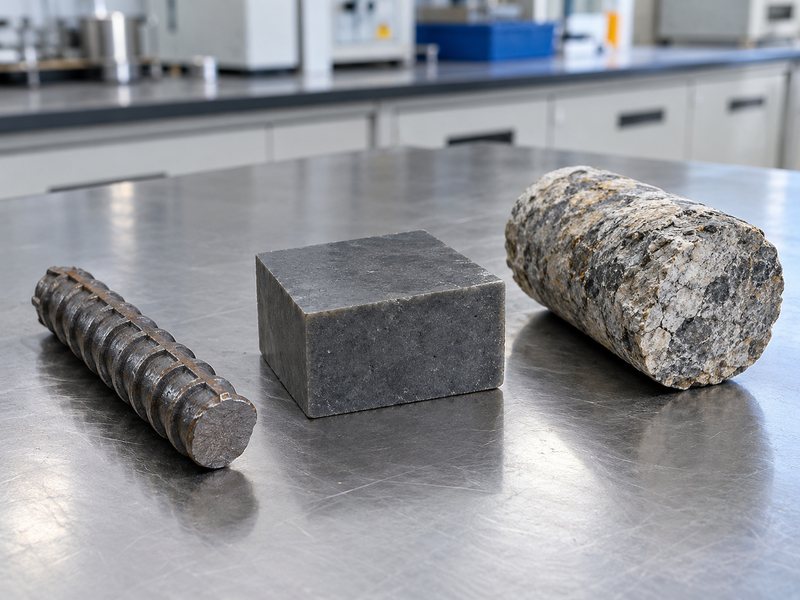
Fractures can provide a different explanation for missing resin around an installed bolt. Published in-situ examination reported resin loss into rock fractures. That condition should not automatically be labeled gloving. Inspect surrounding material where available before choosing a wrapping mechanism.
How can competing explanations be compared?
Map empty regions alongside visible film and fracture features. Ask whether preserved evidence supports more than one mechanism. A void may remain unexplained when surrounding rock was not recovered. Record that uncertainty instead of assigning a convenient cause.
- Map voids separately from retained packaging.
- Preserve relevant surrounding rock features.
- Identify evidence supporting competing hypotheses.
Test the alternative explanation. Ask which observation would distinguish wrapping from resin loss at the investigated location.
Which condition suggests which question?
| Condition | Follow-up question |
|---|---|
| Film beside steel | Was wrapping present and continuous? |
| Fracture-connected void | Could resin have migrated into rock? |
| Unexplained empty region | What evidence remains unavailable? |
A disciplined diagnosis can retain several explanations until additional examination separates them. A proposed explanation should identify which missing observation would materially strengthen or weaken its support within the record.
7. Does paddle geometry automatically prevent gloving?
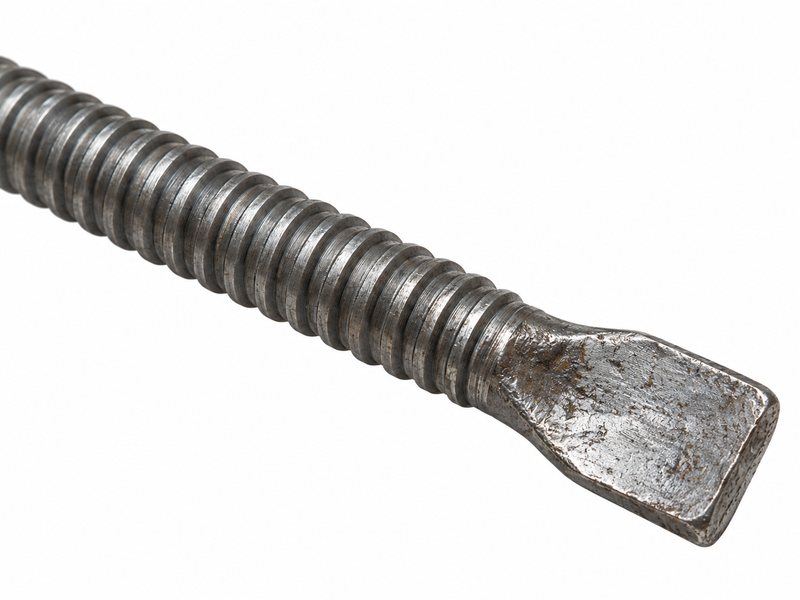
Paddle geometry does not automatically establish freedom from gloving. Mixing research evaluates particular geometries under stated conditions. A resin bolt assembly must be assessed as an actual combination of steel, packaging, resin, and confinement. A descriptive product name cannot establish achieved encapsulation.
Which design evidence should reviewers request?
Identify tested geometry and supplied drawing revision. Ask whether film arrangement and filling were examined directly. Separate research on another modified end from evidence for the proposed ordinary paddle. Avoid claiming every improved mixing observation eliminates all internal defects.
- Match tested and supplied geometry.
- Request direct observations of packaging behavior.
- Record which conditions were unrepresented.
Ask for the demonstrated outcome. Use geometry evidence to frame investigation rather than dismiss observed film automatically.
Which claim needs qualification?
| Claim | Required boundary |
|---|---|
| Better mixing | Defined comparison and observed condition |
| Less wrapping | Identified specimens and examination coverage |
| Complete encapsulation | Relevant evidence for the stated assembly |
A model-specific observation should remain model specific when procurement evaluates a different bar, resin, or hole condition. Technical reviewers should distinguish evidence for a named modified geometry from assumptions about the supplied bar end.
8. Can a mechanical result quantify gloving severity?
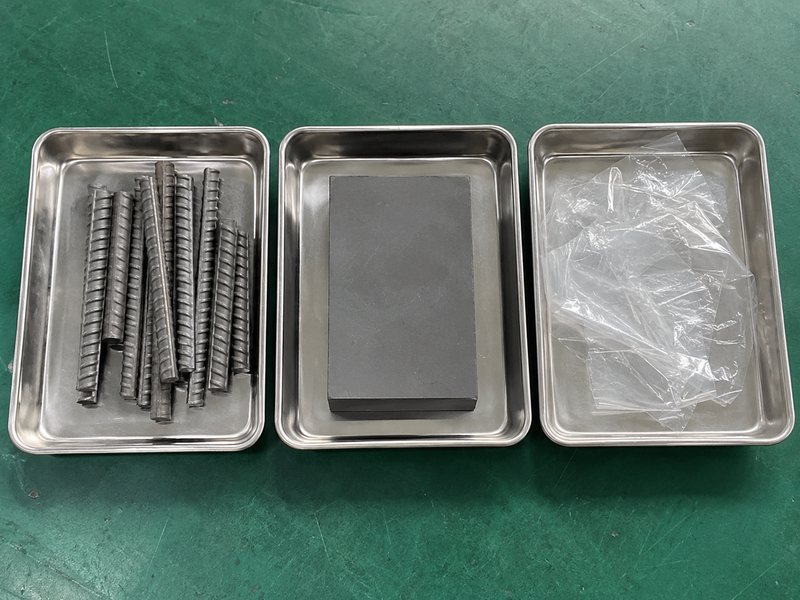
A mechanical result alone cannot uniquely quantify gloving severity. Several assembly features can influence measured response. Likewise, a visual wrapping observation does not establish a universal capacity reduction. Connect mechanical records with identified specimens and their actual examination findings.
What should reviewers compare?
Identify failure location, tested geometry, and observation coverage. Ask whether internal examination concerned the same specimen or a separate comparison set. Preserve unfavorable and uncertain findings alongside favorable examples. Do not derive a fixed percentage loss from an isolated photograph.
- Link specimen identity across evidence streams.
- Review failure mode and observed defects together.
- State alternative explanations for changed response.
Keep strength and appearance connected carefully. Ask engineering which conclusions the combined evidence can support.
Which evidence supports which conclusion?
| Evidence | Supported statement |
|---|---|
| Mechanical response | Behavior under the stated test conditions |
| Internal examination | Observed condition at examined locations |
| Linked evidence set | Bounded interpretation requiring engineering review |
Stronger evidence comes from a traceable relationship between observations rather than a dramatic image paired with an unrelated result. If specimen identities cannot be linked, state that limitation instead of presenting separate observations as a controlled comparison.
9. What should a gloving investigation deliver?
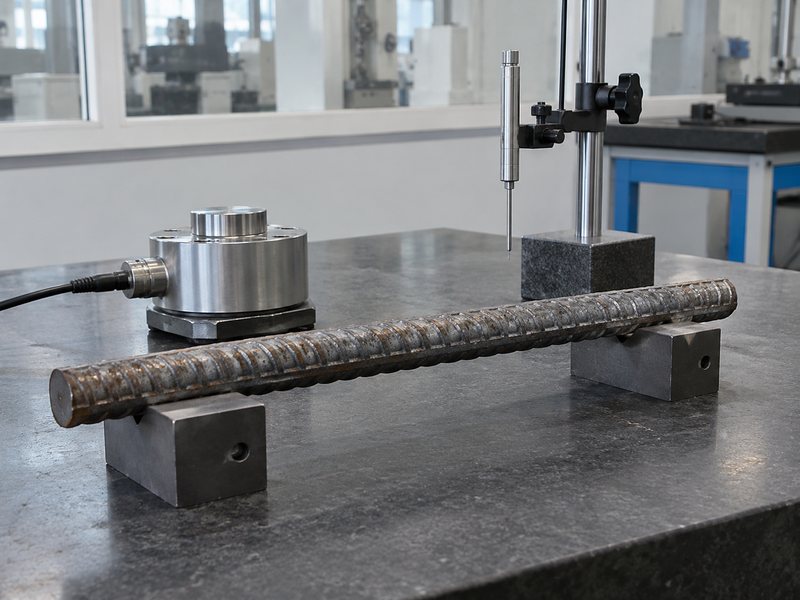
A gloving investigation should deliver a defect map, evidence limits, and an engineering interpretation. A resin bolt technical inquiry should request product-specific evidence relevant to the observed condition. It should not presume that changing one component will remove every cause. Keep corrective proposals separate from confirmed findings.
How should corrective actions be reviewed?
Ask which diagnosed mechanism each action addresses. Identify who must approve changes and what evidence would verify their effect. Avoid changing several variables without a plan for interpretation. An immediate operational response belongs within your mine's approved ground-control process.
- State confirmed and provisional findings.
- Link proposed changes with explicit mechanisms.
- Define follow-up evidence and responsibility.
Make the remedy testable. Request a review plan that can establish whether the targeted condition has changed.
Which deliverable supports a useful decision?
| Deliverable | Decision purpose |
|---|---|
| Defect and coverage map | Establishes observed condition |
| Mechanism assessment | Separates supported and uncertain explanations |
| Follow-up plan | Evaluates proposed corrective action |
A technically useful report allows a reviewer to disagree with an interpretation while still trusting its preserved observations. Follow-up work should preserve comparable records so its findings can be evaluated against the original defect question.
10. How should you act when gloving remains uncertain?
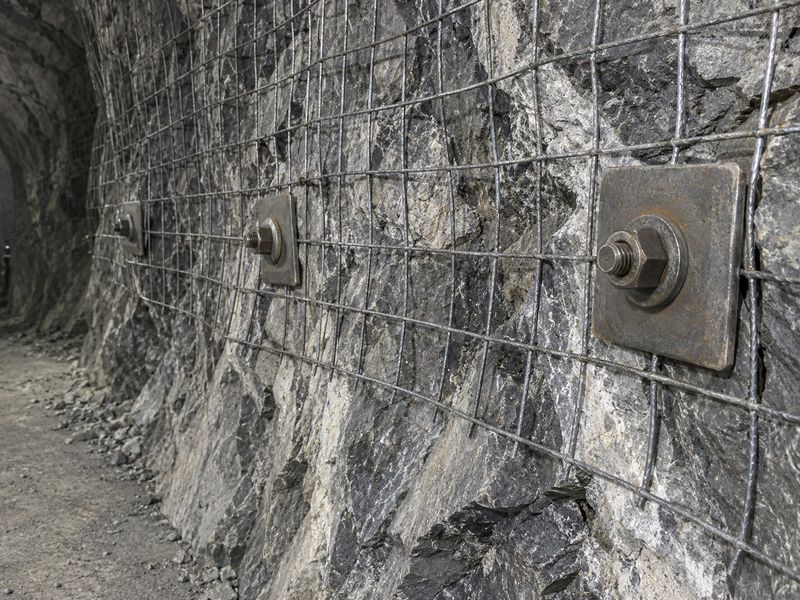
Act on uncertain gloving through responsible engineering review and documented site procedures. Preserve evidence before making changes that erase its origin. A suspected defect and a confirmed mechanism require different wording. Record what further examination could resolve the uncertainty.
What should the next inquiry contain?
Send mapped photographs, sample identities, product documents, and the precise unresolved question. Ask suppliers for relevant evidence without treating a sales reply as engineering acceptance. Keep any proposed assembly change conditional on review. Retain records connecting follow-up specimens with the original concern.
- Describe observed facts without exaggeration.
- Identify missing evidence and its consequence.
- Assign the next examination or review action.
| Closure check | Action to retain |
|---|---|
| 1 | Describe observed facts without exaggeration. |
| 2 | Identify missing evidence and its consequence. |
| 3 | Assign the next examination or review action. |
Proceed from the evidence you have. Share your assembly documents and investigation questions when you contact us. Request product-specific information for your engineer's review.
Q1: Can I confirm gloving from a bolt-head photograph?
Usually no. A head photograph cannot reveal buried film arrangement or resin condition along the anchored region.
Q2: Does any packaging fragment prove a failed bolt?
No. Describe its location and extent, then evaluate consequences using relevant engineering evidence.
Q3: Can a void be caused by something other than gloving?
Yes. Resin loss into fractures and other mechanisms require separate consideration when evidence supports them.
Q4: Does a successful mechanical result prove complete mixing?
No. A mechanical result and direct internal examination answer different questions and should be linked carefully.
Q5: What is the best evidence to send a supplier?
Provide traceable specimens, mapped photographs, installation records, and a clear technical question with known limitations.