What is rock bolting in construction? Rock bolting in construction is a specialized geotechnical stabilization technique that reinforces unstable geological strata by anchoring high-strength steel rods deep into rock masses. If you manage an active tunneling project, open-pit mine, or steep highway excavation, you frequently deal with the threat of unexpected rockfalls, shifting structural joints, and sudden cave-ins. Left unreinforced, these minor geological shifts can quickly escalate into catastrophic collapses, endangering your crew’s safety and inflating your project budget exponentially. To solve this, integrating a highly dependable expansion shell rock bolt provides immediate mechanical anchoring that instantly stabilizes the rock and secures the structural perimeter.
How does an expansion shell rock bolt secure rock?
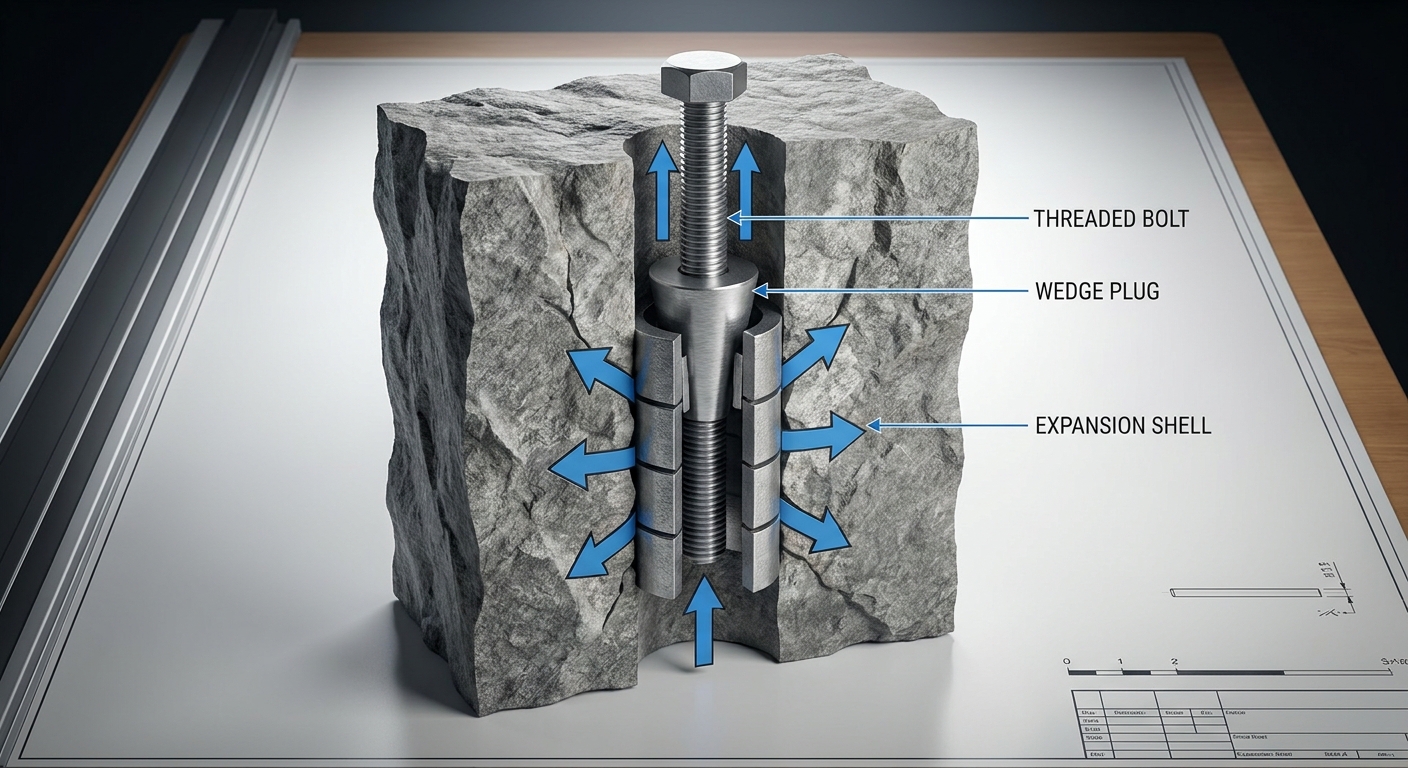
An expansion shell rock bolt secures rock masses by expanding its outer shell against the borehole wall when the central bolt is tensioned. As you apply torque to the bolt head, the wedge-shaped plug is pulled down into the expansion shell, forcing the serrated leaves outward. This physical expansion turns the surrounding unstable rock blocks into a unified, self-supporting structural arch.
What is the mechanical gripping mechanism?
The entire anchoring system relies on a reliable wedge expansion mechanism. When you apply rotational force to the nut, the internal wedge expands.
Look: Without proper mechanical expansion, the bolt cannot transfer high load forces.
- Serrated Leaves: Bite directly into the surrounding borehole walls.
- Tapered Wedge: Drives radial expansion as you apply torque.
- Threaded Bolt: Transfers structural tension to the surface plate.
How does radial force benefit rock mass stability?
When the shell expands, it generates high radial force against the borehole wall. This active compression zone pins loose rock joints together, preventing shear displacements. You get immediate ground control without waiting for chemical grout to cure.
| Component | Primary Function | Material Class | |
|---|---|---|---|
| Expansion Shell | Grips borehole walls | Cast Steel / Ductile Iron | |
| Wedge Plug | Drives radial expansion | Forged Carbon Steel | |
| Bolt Rod | Transfers structural tension | High-grade Carbon Steel |
This table illustrates how each core component of the expansion bolt assembly works in unison to generate active structural reinforcement.
Key Takeaway: The immediate mechanical lockup minimizes rock mass deformation, ensuring high safety levels right after installation.
When should you use an expansion shell rock bolt?
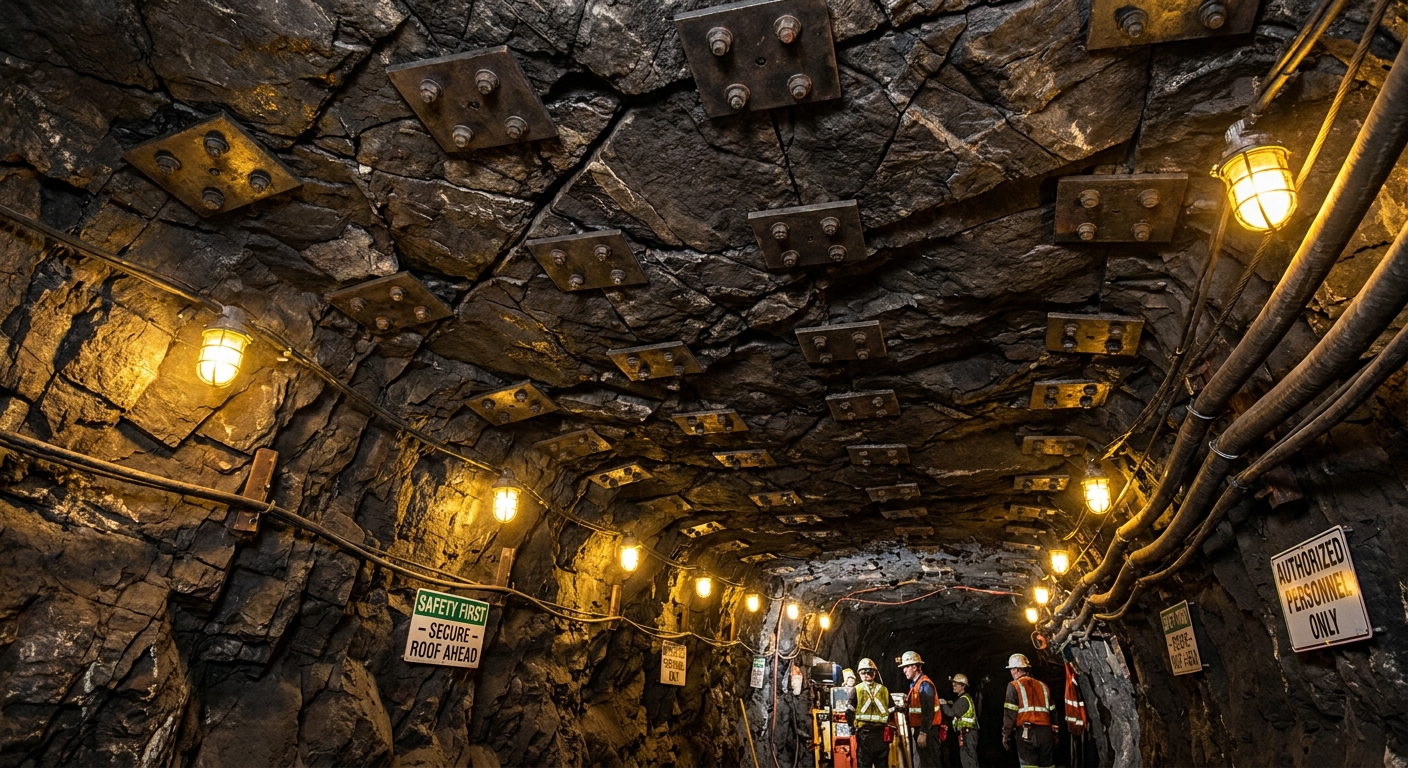
You should use an expansion shell rock bolt primarily in medium-to-hard, competent rock formations where immediate post-installation active support is required. These systems excel in jointed rock masses prone to localized block falls. Because they do not rely on grout to achieve initial hold, they allow you to secure unstable sectors rapidly.
Is it suitable for temporary tunnel face support?
Tunneling crews require rapid deployment of active anchors to shield themselves from immediate falls. These mechanical systems allow you to achieve immediate safety without waiting hours for cement or chemical resins to cure.
Think about it. Every hour spent waiting for grout to dry is an hour of lost productivity. Utilizing our advanced mine support solutions allows you to keep the project moving safely and efficiently.
How does rock compressive strength affect performance?
The compressive strength of the rock must be high enough to resist the concentrated point-loading of the expanding leaves. If you try to use these in soft clays or highly weathered shale, the rock will simply crush under the radial force, leading to anchor slippage.
- Granite/Basalt: Ideal for maximum mechanical anchorage.
- Hard Sandstone: Highly effective with stable mechanical grip.
- Weak Shale/Clay: High risk of crushing and anchor slip.
| Rock Class | Compressive Strength (MPa) | Anchor Suitability | |
|---|---|---|---|
| Class I (Hard) | > 100 | Highly Recommended | |
| Class II (Medium) | 50 – 100 | Recommended | |
| Class III (Soft) | < 50 | Not Recommended |
This table guides field operators in evaluating site-specific geological profiles before deploying mechanical anchor systems.
Key Takeaway: Choosing the correct rock type ensures the mechanical anchor performs up to its rated load limits without slipping.
How to install an expansion shell rock bolt safely?
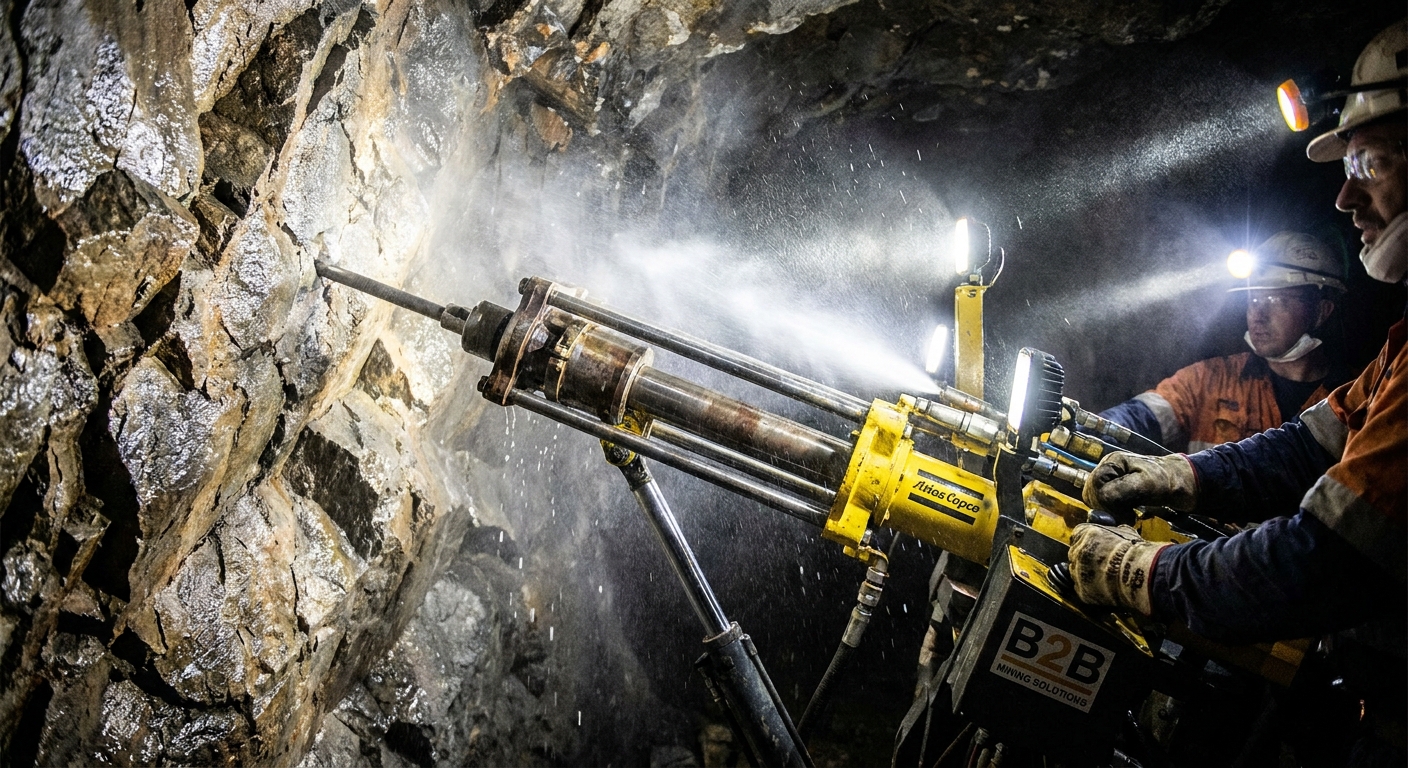
You can install an expansion shell rock bolt safely by drilling a precise borehole, inserting the bolt, and applying calibrated torque to activate the mechanical anchor. This straightforward workflow makes it one of the most popular rock reinforcement methods in modern tunneling and mining. Ensuring exact borehole diameters is paramount to achieving a reliable mechanical grip.
Why is precise borehole sizing critical?
If you drill a hole that is even slightly too wide, the expanding leaves will not be able to reach or bite into the rock walls. Conversely, a hole that is too narrow will make insertion impossible or damage the assembly.
Here is the thing: A precise match between the drill bit size and the expansion shell specifications is non-negotiable.
- Too Wide: Leaf expansion fails to contact the borehole wall.
- Too Narrow: Assembly gets stuck or pre-expands during insertion.
- Ideal Fit: Safe, instantaneous mechanical anchorage with minimal torque.
How do you torque and tension the anchor?
You must apply torque using a calibrated impact wrench to pull the wedge down and expand the shell fully. Once tensioned, you can proceed with secondary grouting to protect the steel rod from corrosion.
| Installation Step | Critical Action | Quality Target | |
|---|---|---|---|
| Borehole Drilling | Maintain straightness and correct diameter | Diameter tolerance within 1mm | |
| Bolt Insertion | Align assembly and slide smoothly | Avoid premature shell expansion | |
| Nut Torquing | Use calibrated tools | Achieve specified pre-tension |
Adhering to these strict quality metrics minimizes human error and guarantees a highly reliable mechanical structural anchor.
Key Takeaway: Tight quality control during drilling and torquing operations eliminates the risk of anchor slippage.
Why choose an expansion shell rock bolt for tunnels?
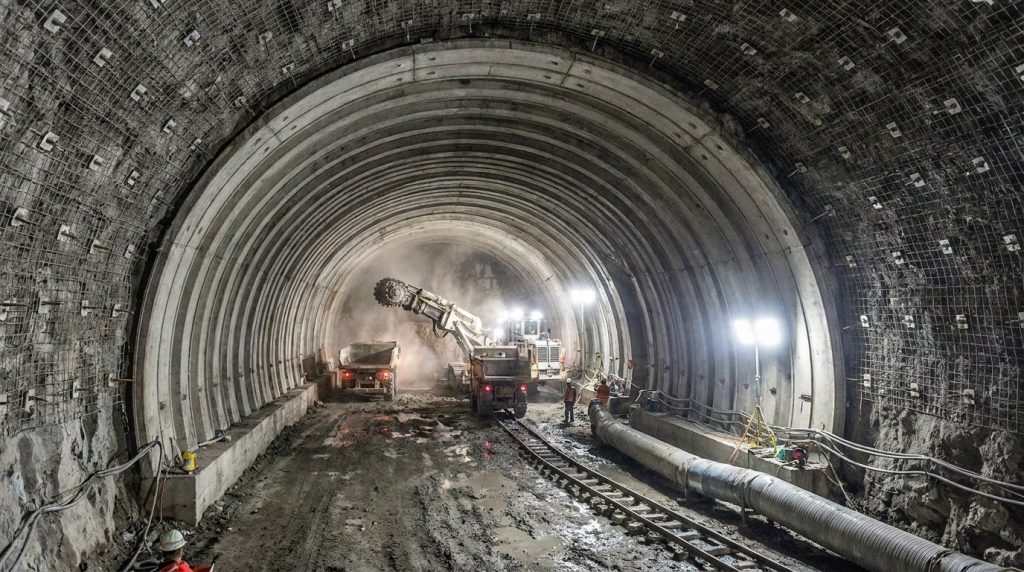
You should choose an expansion shell rock bolt for tunnels because it provides instantaneous active ground support to prevent rockfalls before permanent concrete linings are placed. In fast-paced excavation environments, waiting for chemical anchors to set can dangerously slow down your cycles. This mechanical support secures the roof immediately, protecting your workers and equipment.
How does immediate active tension save lives?
By applying immediate active tension, you clamp the fractured rock joints together to prevent small blocks from sliding out of the ceiling. This maintains the self-supporting capacity of the rock mass, turning the ground itself into a structural arch.
But that is only part of the story: Integrating top-tier rock reinforcement systems not only boosts safety but also dramatically reduces tunnel excavation deformation.
What are the economic benefits in tunnel construction?
Using these bolts allows your tunneling crew to advance without waiting for grout hydration cycles. This reduction in downtime translates to lower labor costs and faster project completion dates.
- Reduced Idle Time: Crews can blast and excavate immediately after bolting.
- Lower Material Costs: Eliminates the immediate need for expensive fast-setting chemical resins.
- Simplified Logistics: No need to store and transport temperature-sensitive chemical cartridges.
| Support Method | Core Benefit | Project Impact | |
|---|---|---|---|
| Expansion Shell Bolt | Immediate active support | Drastically reduces idle cycle time | |
| Resin Grouted Bolt | High shear capacity | Requires precise temperature storage | |
| Cement Grouted Bolt | Long-term durability | Slow advance due to long cure times |
The comparative analysis highlights why mechanical shell systems remain the preferred choice for fast-track tunnel excavations.
Key Takeaway: Active mechanical rock bolts provide a highly cost-effective method to maintain rapid tunneling momentum while ensuring safety.
Who makes the best expansion shell rock bolt systems?
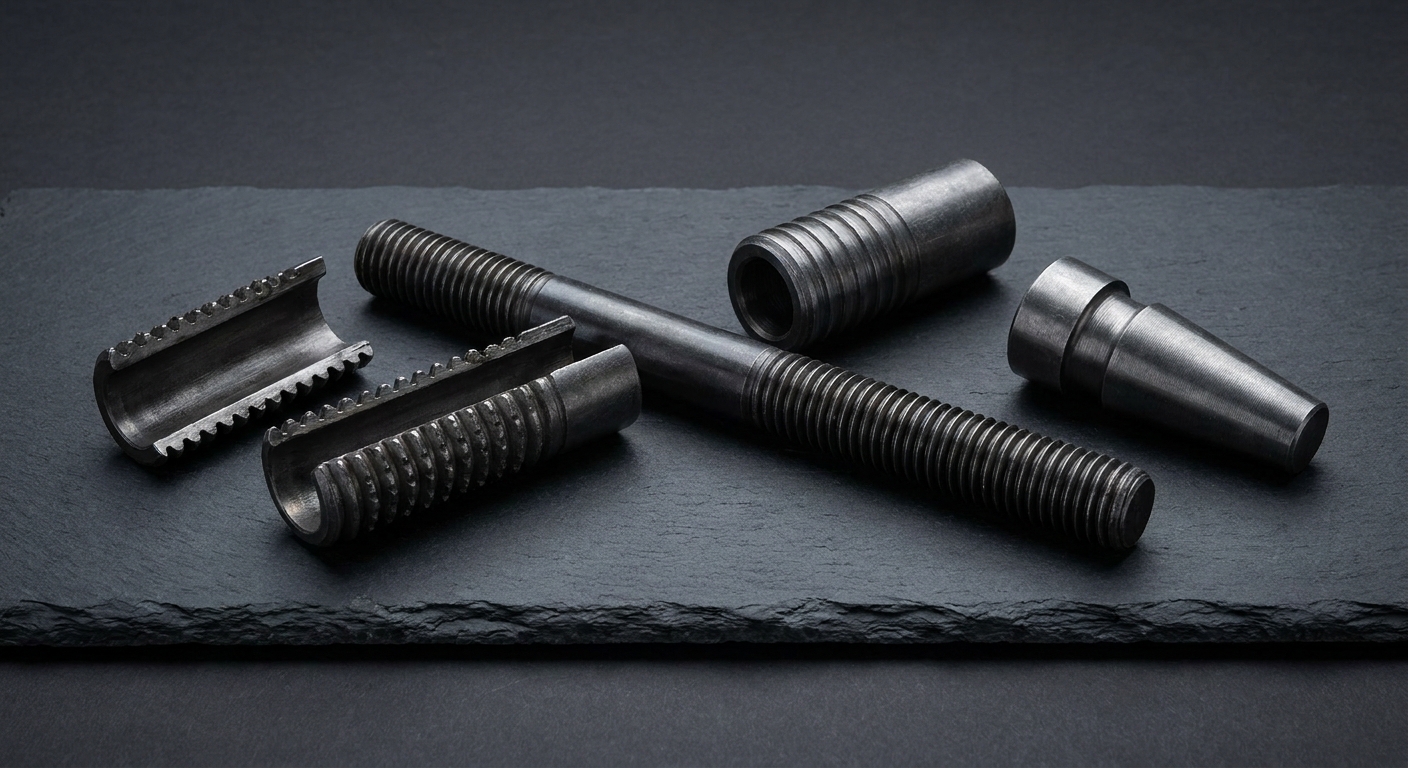
Yongduo Roller is a premier global manufacturer that produces the highest quality expansion shell rock bolt systems matching international civil engineering standards. By leveraging state-of-the-art manufacturing processes and premium steel alloys, we guarantee that each bolt delivers reliable, heavy-duty mechanical anchorage in demanding terrains. Our B2B clients rely on our products for critical ground stabilization worldwide.
What are the manufacturing standards?
To withstand extreme geological stresses, rock bolts must be fabricated from high-tensile steel with exceptional ductility. Every batch must undergo rigorous material testing to ensure there are no hidden structural defects.
Simple: In underground construction, structural integrity is something you can never compromise on.
- Raw Steel Sourcing: Using certified high-tensile alloys.
- Precision Threading: Machined to exact tolerances for locknut compatibility.
- Controlled Forging: Tempering the wedge plugs for uniform strength.
How does quality control impact B2B purchasing?
Buying from a certified manufacturer gives you the confidence that your support systems will perform predictably under extreme stress. This protects your enterprise from costly liability and project delays.
| Material Parameter | Industry Standard | Yongduo Roller Specification | |
|---|---|---|---|
| Yield Strength | Min 500 MPa | Up to 800+ MPa | |
| Elongation Rate | Min 12% | Optimized for high-strain geologies | |
| Thread Tolerance | Standard Class 6g | Exceeds Class 6g standards |
These superior material specifications show why leading global contractors trust Yongduo Roller for critical ground support requirements.
Key Takeaway: Partnering with a reliable manufacturer like Yongduo Roller mitigates geological risk and guarantees consistent on-site anchor performance.
Does an expansion shell rock bolt beat other bolts?
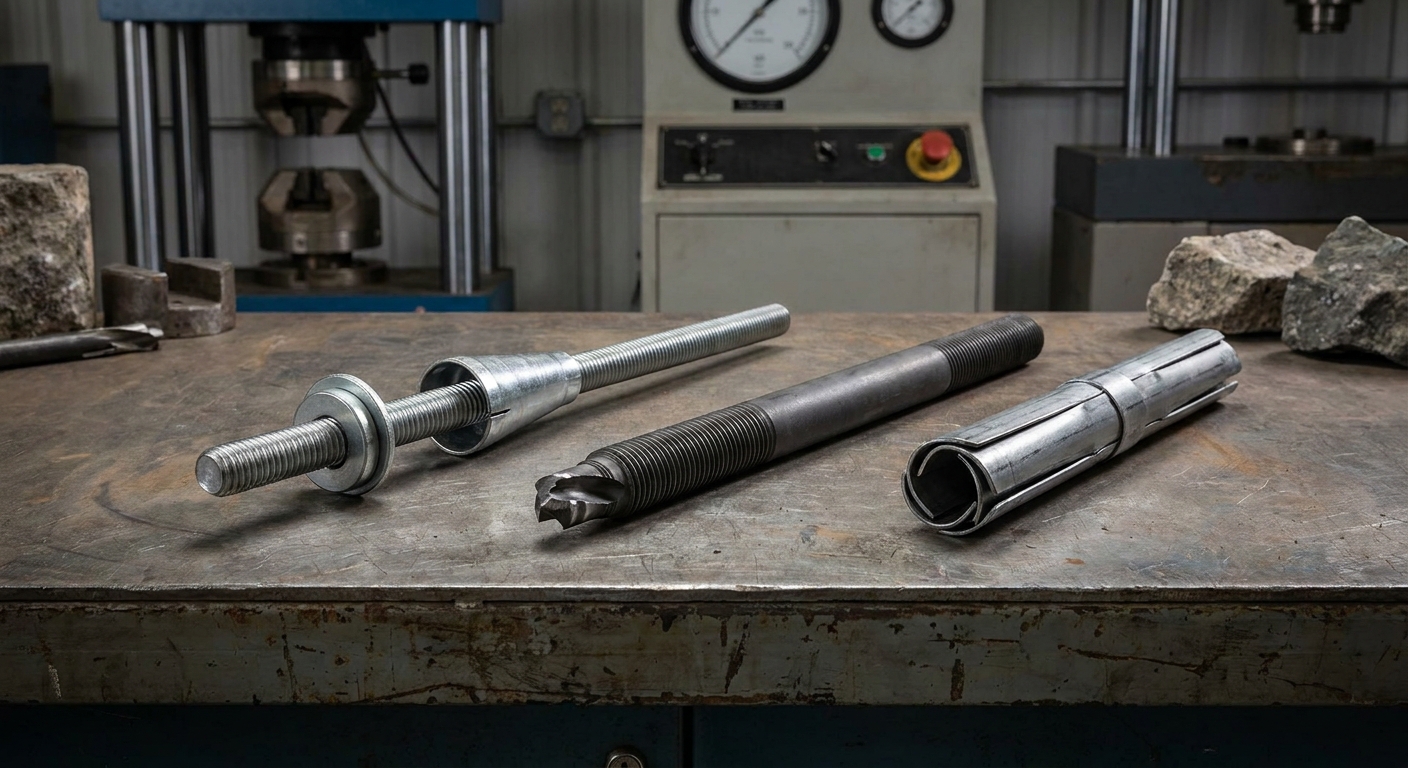
Yes, an expansion shell rock bolt beats other bolts in competent ground due to its cost efficiency and ability to transfer high tensile preloads immediately without waiting for grout hydration. While other systems excel in highly fractured or loose ground, the mechanical expansion shell rock bolt remains the most reliable and direct support solution for competent rock masses.
Is it better than chemical resin anchors?
Chemical resin anchors offer excellent long-term shear strength, but they are highly sensitive to installation temperatures and shelf life. A mechanical bolt, on the other hand, is unaffected by thermal fluctuations during installation.
Why does this matter? If you are working in freezing temperatures, chemical resins may fail to cure properly. For maximum versatility, combining a mechanical expansion shell with a high-strength hollow anchor bar allows you to tension immediately and grout later.
How does it fare against self-drilling systems?
Self-drilling systems are necessary when borehole walls collapse constantly. However, in hard rock formations where boreholes remain stable, mechanical expansion bolts are far more economical and faster to install.
- Mechanical Bolt: Best for stable hard rock; low cost; active pre-tension.
- Self-Drilling Bolt: Best for collapsing ground; higher cost; passive/active anchorage.
- Swellex Friction Bolt: Best for highly fractured rock; moderate cost; hydraulic expansion.
| Bolt Type | Primary Geology | Tension Mechanism | Cost Level | |
|---|---|---|---|---|
| Expansion Shell | Stable hard to medium rock | Mechanical wedge | Low to Moderate | |
| Self-Drilling | Loose soil / collapsing rock | Grout body bond | High | |
| Swellex | Jointed rock with deformation | Friction (Hydraulic) | Moderate |
Field engineers can use this comparison to optimize budget allocations based on specific geological challenges.
Key Takeaway: Knowing when to select a mechanical bolt over a self-drilling system allows you to optimize your project budget without sacrificing safety.
Where is an expansion shell rock bolt most effective?
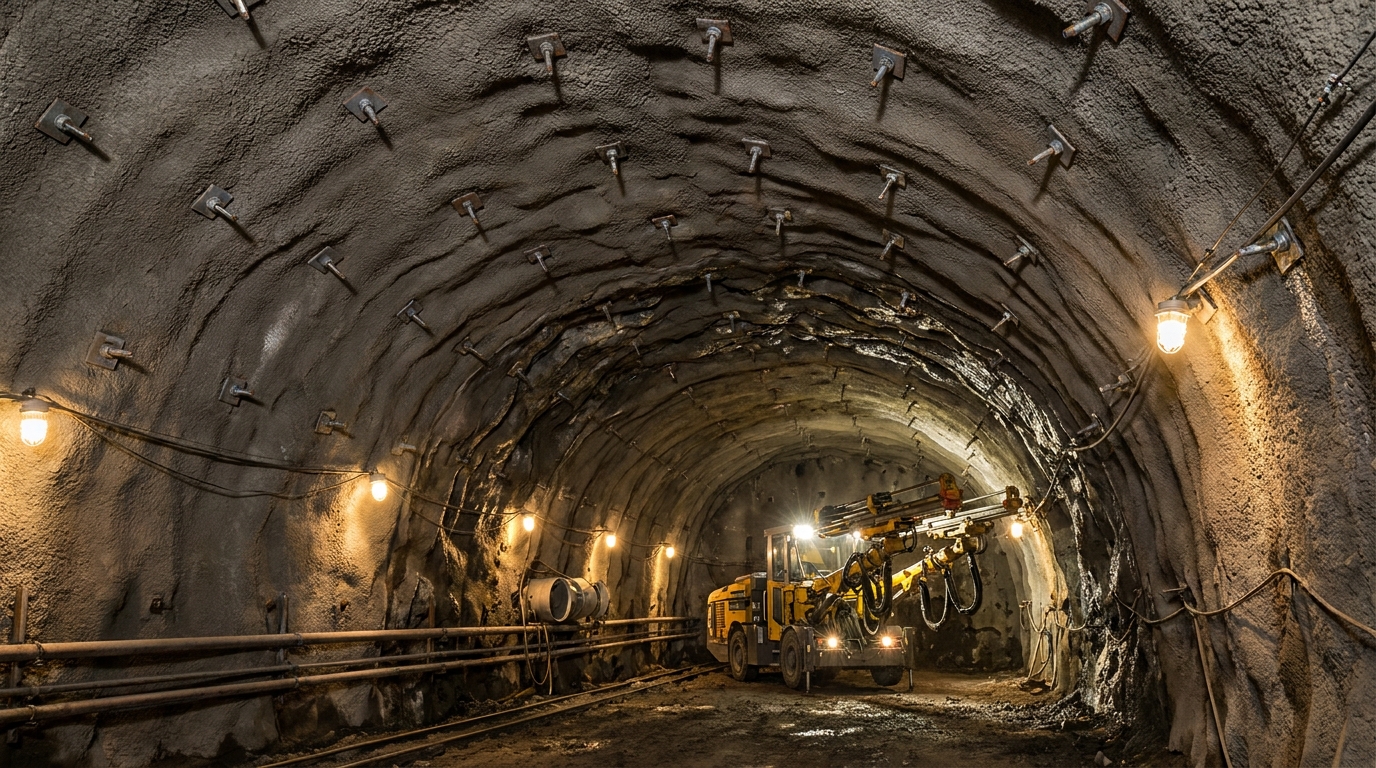
An expansion shell rock bolt is most effective in hard rock environments like granite, basalt, or dense sandstone where the borehole wall can withstand massive radial pressure. In these highly competent geologies, the expanding leaves bite deeply without crushing the surrounding strata. This ensures a rock-solid anchorage that handles both static and dynamic loads.
Why is deep underground mining a primary application?
In deep underground mines, high overburden pressure can cause sudden rock bursts or key block displacements along the drift roof. You need instant, reliable mechanical reinforcement that you can deploy right at the face.
Look: Miners working under newly blasted roofs cannot afford to wait for chemical grouts to set before securing the area.
- Immediate Ground Control: Secures active mining entries.
- No Chemical Dependency: Works flawlessly in extreme freezing or hot underground climates.
- Adaptable Sizing: Integrates with automated bolting jumbo rigs.
Can it be deployed on massive civil slope projects?
Massive highway cuts and railway slopes are prone to sliding along joint planes. You can install mechanical anchors systematically to tie loose external blocks back into the deep, stable bedrock, preventing catastrophic rockslides.
| Geotechnical Project | Primary Challenge | Anchoring Benefit | |
|---|---|---|---|
| Deep Mining Drifts | Severe overburden stresses | Immediate safety at the active face | |
| Highway Slopes | Planar and wedge sliding | Clamps joints to prevent slope slippage | |
| Dam Foundations | High tensile hydrostatic forces | Transfers structural loads to stable rock |
This structural breakdown reinforces why mechanical anchors are preferred across highly demanding geotechnical applications.
Key Takeaway: Deploying mechanical bolts in highly competent geological formations provides an instant safety shield for critical public and private infrastructure.
How do you test an expansion shell rock bolt’s load?
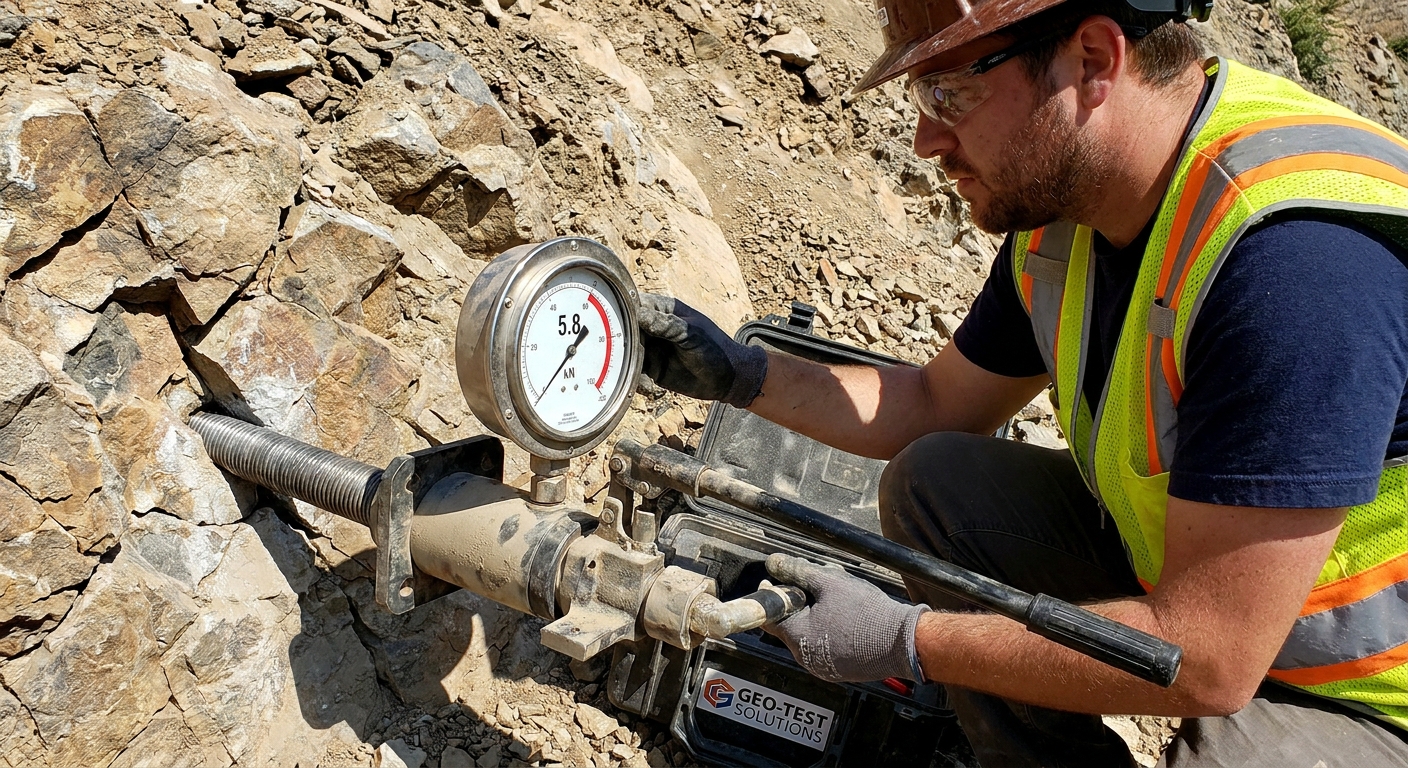
You test an expansion shell rock bolt’s load capacity by using a hydraulic pull-out jack to apply incremental tensile forces and measuring the resulting displacement. This pull-out test is the ultimate field verification to confirm that the mechanical shell has gripped the rock wall securely. Regular testing ensures that your installations meet the project’s strict safety factors.
What is the procedure for a pull-out test?
You mount a hydraulic pull-out jack over the exposed thread of the bolt and slowly pump fluid to apply tension. A technician monitors an analog dial gauge or digital sensor to record how much the bolt stretches under the load.
Here is the deal: Any sudden jump in displacement indicates that the mechanical shell is slipping inside the borehole, signaling installation or rock quality issues.
How do you interpret load-displacement curves?
A sharp, linear curve means the bolt is behaving elastically, showing that the mechanical grip is holding strong. A flat or fluctuating curve indicates that the shell is sliding, which means you must re-evaluate your borehole diameter or rock compressive strength.
- Elastic Phase: Bolt stretches slightly and returns to shape (good grip).
- Yield Point: Bolt begins to undergo permanent plastic deformation.
- Slippage Phase: Shell slides through the borehole (anchor failure).
| Test Metric | Target Outcome | Remedial Action on Failure | |
|---|---|---|---|
| Peak Load (kN) | Exceeds design load by 1.25x | Redrill borehole / check bit size | |
| Max Displacement | Less than 5 mm under load | Clean borehole of stone dust | |
| Grip Stability | No sudden drops in resistance | Replace expansion shell assembly |
Field technicians must systematically log these metrics to maintain a comprehensive safety audit trail for the project.
Key Takeaway: Conducting systematic load tests protects your project from catastrophic ground failures by catching weak anchors early.
Which accessories fit an expansion shell rock bolt?
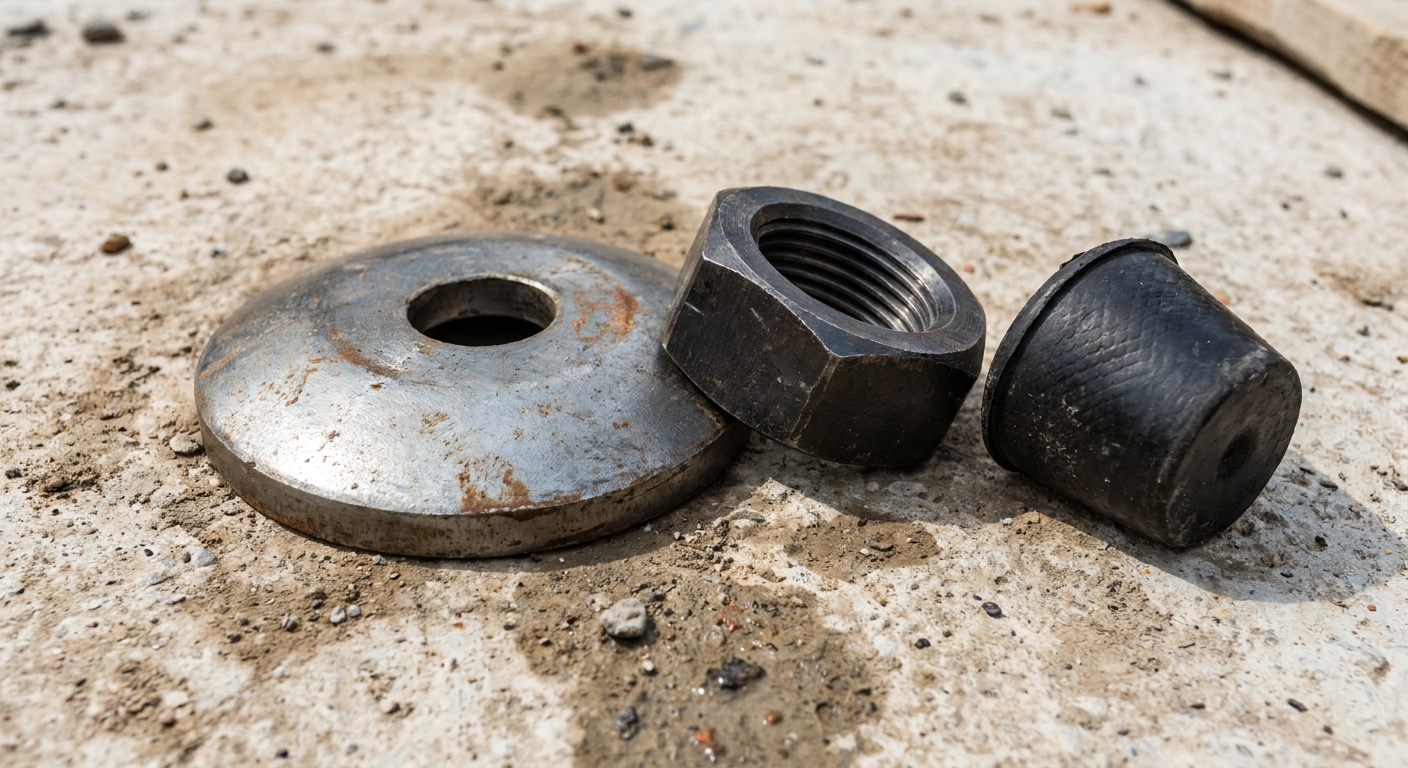
The accessories that fit an expansion shell rock bolt include heavy-duty domed backing plates, high-torque hex nuts, and specialized rubber slurry plugs for subsequent grouting. These matching components are vital to distribute the massive tension load evenly across the rock face. Using subpar accessories can cause localized crushing or premature load release.
Why are dome plates preferred over flat plates?
Blasted rock faces are rarely flat or perfectly perpendicular to your drill holes. Dome plates allow you to accommodate angular misalignments of up to 15 to 20 degrees, ensuring the load is transferred down the center of the bolt.
Think about it. A misaligned flat plate can bend the bolt rod, introducing unwanted shear stresses that weaken the entire system.
What is the role of the slurry plug and grouting accessories?
Slurry plugs seal the mouth of the borehole, allowing you to inject cement grout under high pressure. This grout fills the spaces between the rod and the rock, providing long-term corrosion protection and extra shear resistance.
- Domed Plate: Corrects angular drilling misalignments on rough rock.
- Hex Nut: Locks the pre-tensioned load securely against the plate.
- Slurry Plug: Retains high-pressure grout within the borehole.
| Accessory | Primary Purpose | Material Class | |
|---|---|---|---|
| Dome Plate | Angle adjustment and load distribution | High-strength Structural Steel | |
| Hex Nut | Thread lockup and tension hold | Heat-treated Carbon Steel | |
| Slurry Plug | Grout containment during injection | Heavy-duty Rubber |
Selecting high-quality, matched accessories guarantees the mechanical integrity of the entire anchoring system.
Key Takeaway: A rock bolting system is only as strong as its weakest component; always use certified accessories matching the tensile grade of your bolt.
Can an expansion shell rock bolt stabilize soil slopes?
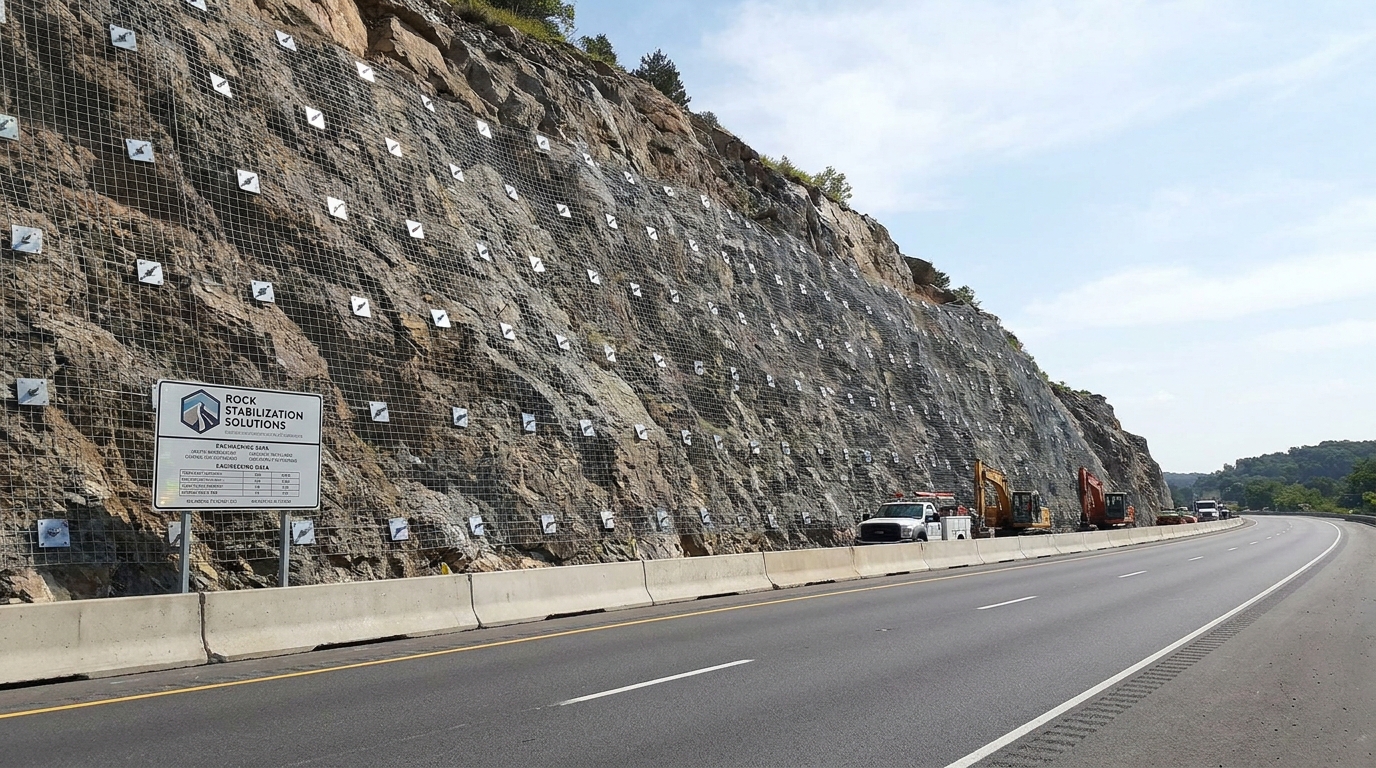
Yes, an expansion shell rock bolt can stabilize soil slopes and fractured rock cuts by anchoring loose surface blocks to the stable bedrock deep behind the failure plane. While they are not meant for pure soil slopes, they are incredibly effective on soil-over-rock cut faces. The active tension binds loose geological blocks together to form a self-supporting rock structure.
How does it resist planar sliding?
When a mass of fractured rock or soil-rock mixture is on the verge of sliding down a slope, the bolt acts as a high-strength tie-back. The active clamping force of the expanded shell increases the friction along the sliding plane.
Simple: More friction means the slope stays put, even under heavy rains.
How do you design a grid pattern for slope safety?
You must design a systematic staggered grid layout based on joint spacing and the estimated volume of unstable blocks. Combining the bolts with high-tensile wire mesh ensures that even tiny, weathered fragments cannot fall onto roads or railway tracks below.
- Staggered Grid: Distributes anchorage forces evenly across the slope.
- Wire Mesh Integration: Catches smaller stones and weathered rubble.
- Deep Bedrock Anchorage: Anchors the active slope face directly to stable geological zones.
| Slope Geology | Core Hazard | Bolting Strategy | |
|---|---|---|---|
| Jointed Hard Rock | Wedge and block falls | Tight staggered grid with wire mesh | |
| Soil-Over-Rock | Superficial sliding | Deep mechanical anchorage into bedrock | |
| Weathered Strata | Surface rockfall | Shotcrete combined with shorter mechanical anchors |
This tactical design matrix helps engineering teams successfully design high-performance rock slope protection systems.
Key Takeaway: Installing an active mechanical bolting grid prevents slope erosion and protects civil infrastructure from unpredictable rockfalls.
Conclusion
By utilizing mechanical expansion shell rock bolts, geotechnical engineers can effectively solve the critical problems of geological instability, unpredictable cave-ins, and dangerous rockfalls that threaten modern infrastructure projects. Yongduo Roller provides top-grade, customizable rock bolting solutions, high-precision expansion shells, and robust hollow bars engineered to perform under the toughest geotechnical conditions. Our vision is to support safer excavations, stronger tunnels, and more resilient infrastructure for the future. To find out how our high-quality rock stabilization products can secure your next civil engineering or mining project, contact us today for detailed specifications and a custom quotation.
FAQ
Can I use an expansion shell rock bolt in soft soil?
No, you cannot. Soft soils lack the compressive strength to withstand the high concentrated radial forces exerted by the mechanical expansion shell, which will cause the shell to slip and fail.
What’s the best borehole diameter for these bolts?
The best diameter is typically 1 to 2 millimeters larger than the unexpanded shell. This tight tolerance ensures immediate mechanical engagement when the bolt is tensioned.
How do I know if my rock bolt is tensioned correctly?
You can verify this by checking torque levels with a calibrated torque wrench or performing a hydraulic pull-out test. Steady resistance and correct torque readings confirm proper active tension.
Can I combine mechanical anchoring with cement grouting?
Yes, you can. Performing a secondary grouting step through the hollow bar after mechanical tensioning protects the steel from corrosion and adds shear load capacity.