The primary difference between a rock bolt and a rock anchor lies in their load-transfer mechanics: a rock bolt consolidates the rock mass to make it self-supporting, while a rock anchor transfers heavy external structural loads deep into stable bedrock. Imagine you are managing a deep subterranean excavation or a steep highway cut-slope when the jointed geological strata begins to shift unexpectedly. A sudden structural failure in these high-stakes environments risks catastrophic slope collapse, devastating equipment damage, months of project delays, and fatal safety hazards for your crew. Fortunately, you can eliminate these hazards and secure your site efficiently by selecting and correctly installing the right stabilization system, starting with whether you deploy a rock bolt or a deep tension anchor.
How does a rock bolt support unstable highway slopes?
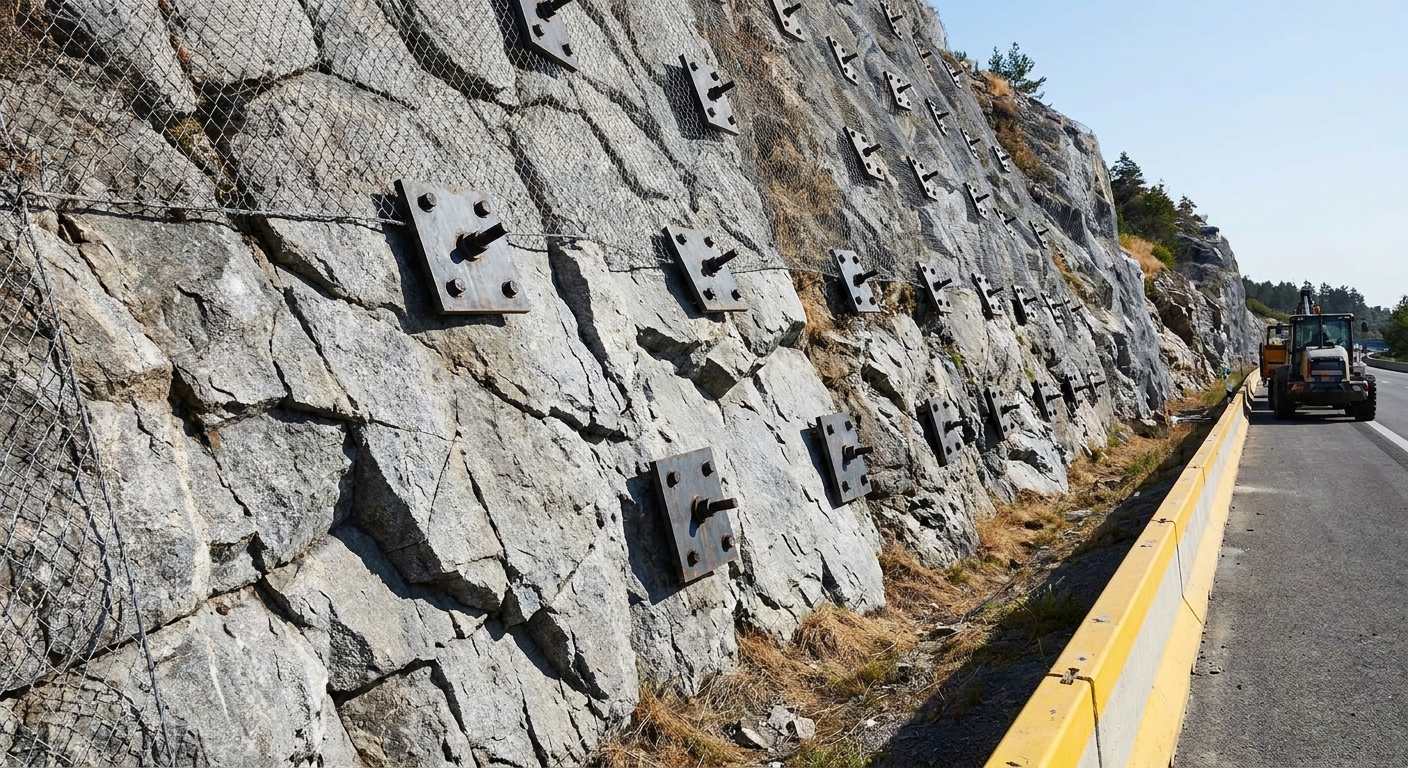
A rock bolt supports unstable highway slopes by consolidating fractured rock masses into a self-supporting structural arch. A rock bolt achieves this by binding jointed, loose layers of stone together to increase internal friction. When you secure a vulnerable slope, you prevent catastrophic rockfalls from damaging surrounding infrastructure or blocking vital transport routes. Just as high-quality bulk material handling requires reliable components, stabilizing a rock face demands precise engineering.
By utilizing these systems, you ensure the long-term safety of the roadway below. You can choose from active or passive systems depending on the specific slope characteristics. For ground-anchor design context, see the FHWA guide.
What are active versus passive slope systems?
Active systems apply immediate compressive force to the rock face, while passive systems only engage when geological movement occurs. You must analyze the joint patterns of the slope before choosing which methodology to deploy. If the rocks are highly prone to shifting, an active tensioned approach is often superior.
- Active reinforcement: Prevents initial movement by applying a pre-stress load.
- Passive reinforcement: Relies on ground displacement to mobilize the steel’s tensile capacity.
- Hybrid setups: Combines both elements to address complex, multi-layered slope geologies.
Think about it: securing the slope surface protects everything downstream from unexpected shifts. This is similar to how a robust conveyor bracket keeps structural components in perfect alignment during heavy operations.
How do you choose the right spacing?
Choosing the right spacing depends on the joint frequency and block size of the fractured granite or limestone. You generally space them in a systematic grid pattern to ensure uniform pressure across the rock face. Engineers calculate this grid to prevent individual blocks from slipping through the gaps.
- 1.5m x 1.5m grid: Standard for highly fractured, small-block geologies.
- 3m x 3m grid: Typically reserved for massive rock blocks with wider joint spacing.
Here is the kicker: miscalculating the spacing can lead to localized failures between the installations, risking the safety of the entire system. You must perform thorough field pull tests to verify the rock mass can support the intended grid pattern.
| Slope Condition | Recommended Spacing | Reinforcement Type | |
|---|---|---|---|
| Highly Fractured | 1.0m to 1.5m | Active / Fully Grouted | |
| Moderately Jointed | 1.5m to 2.5m | Passive / Tensioned | |
| Massive Blocks | 2.5m to 4.0m | Passive |
Understanding these structural patterns allows you to evaluate how individual components bear heavy external loads compared to larger anchoring systems.
Key Takeaway: Choosing the correct slope spacing and reinforcement type ensures that you prevent localized rockfalls while optimizing material and installation costs.
What is the structural difference of a rock bolt?
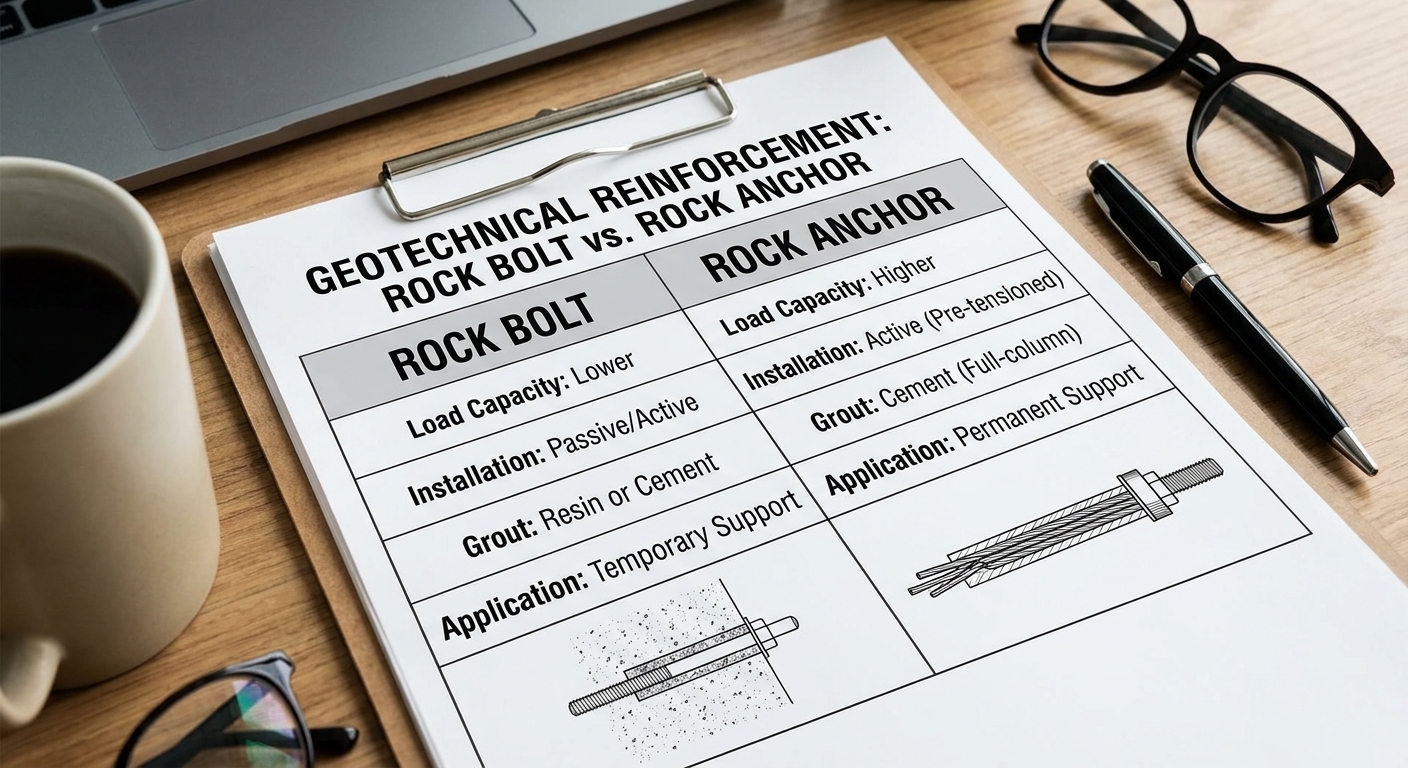
The structural difference of a rock bolt lies in its ability to consolidate the surrounding ground internally, whereas a rock anchor transfers massive external loads to deeper, stable layers. A standard rock bolt is typically shorter and acts as a localized reinforcement element within the plastic zone of the excavation. You rely on this system to bind rock joints together, effectively turning a fractured geological mass into a cohesive structural beam. This internal reinforcement prevents small-scale failures near the excavation boundary.
Conversely, rock anchors are longer and utilize high-strength steel cables or heavy bars to resist major external tensile forces. They anchor structures like retaining walls directly into deep, competent bedrock.
How do tension zones differ?
The tension zone of a rock bolt is concentrated near the surface, reinforcing the rock mass immediately surrounding the borehole. This differs significantly from an anchor, which features a long free-tensioning length and a deep grouted bond zone. You must recognize where your structural load needs to be transferred to avoid failure.
- Bolt tension zone: Localized within the shallow rock mass (1 to 10 meters).
- Anchor tension zone: Extends deep past the failure plane (up to 50+ meters).
But wait, there is more: if you apply a heavy anchor to a shallow rock consolidation problem, you will likely over-engineer the project and waste valuable resources. Matching the engineering tool to the geological scale is the secret to structural efficiency.
What materials define each system?
Rock bolts are constructed from solid or hollow steel bars, whereas anchors consist of multi-strand high-strength steel tendons. The choice of material dictates how much tensile and shear stress the system can handle. You must ensure your materials meet strict metallurgical standards to prevent brittle failures.
- Solid steel bars: High shear resistance, ideal for rock bolts in jointed ground.
- Multi-strand cables: Exceptionally high tensile capacity, perfect for deep anchor loads.
Think about it: choosing the wrong material can compromise the entire structural integrity of your excavation. Just as industrial operations depend on durable steel conveyor rollers to keep materials moving, you need high-spec steel to keep the earth stable.
| Component Type | Material Composition | Primary Loading Mode | |
|---|---|---|---|
| Rock Bolt | Solid or hollow steel bar | Shear and localized tension | |
| Rock Anchor | Multi-strand steel tendon | Deep axial tensile load |
Once you understand these material compositions, you can determine when to deploy each option in the field.
Key Takeaway: By recognizing the structural limits of steel bars versus multi-strand cables, you can prevent structural failures and avoid the high costs of over-engineering.
When should you select a rock bolt over a heavy anchor?
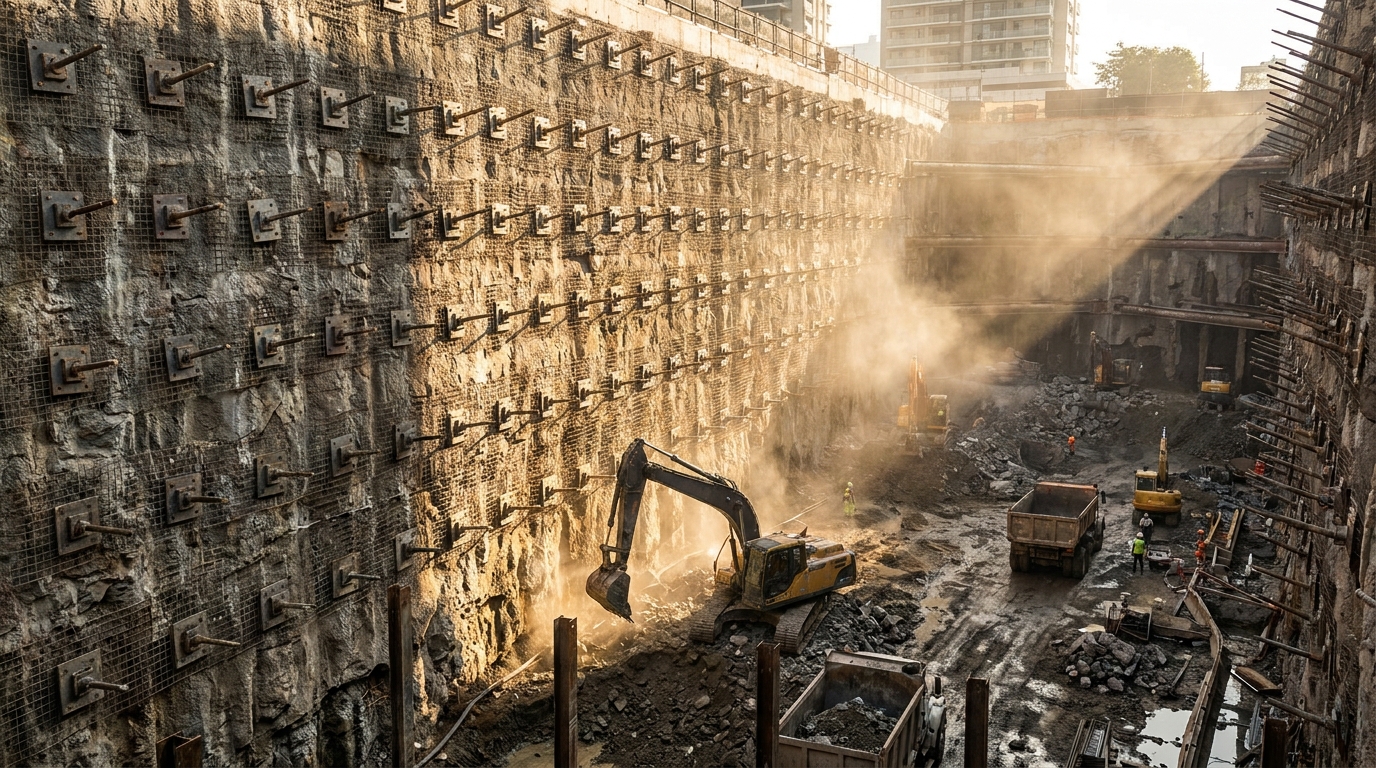
You should select a rock bolt over a heavy anchor when your primary engineering goal is localized rock mass consolidation rather than resisting massive, deep-seated tensile forces. Choosing a rock bolt is the logical decision for tunnel lining support, shallow highway cuts, and minor underground excavations. In these scenarios, the rock possesses self-supporting capabilities but requires localized reinforcement to prevent joint slippage. Opting for a bolt system saves significant time and equipment costs.
Heavy anchors should be reserved for high-capacity applications like dam foundations or large retaining walls. Using them for minor rockfall protection is an expensive engineering mistake.
How do excavation depths guide your choice?
Excavation depth directly dictates whether you need localized face stability or deep structural anchorage. Shallow excavations benefit from rapid rock bolt patterns that secure jointed surface blocks. If you are digging a deep basement next to existing high-rise structures, however, massive lateral pressures require deep anchors.
- Excavations < 10m: Typically stabilized using systematic rock bolt patterns.
- Excavations > 10m with high lateral loads: Require pre-stressed rock anchors.
Here is the kicker: trying to secure a massive deep excavation with only short bolts will lead to structural failure. You must evaluate the potential failure envelope to ensure your stabilization system extends far beyond the active slip plane.
What are the equipment footprint constraints?
Rock bolts require much smaller, highly mobile drilling rigs compared to the heavy equipment needed for long anchors. If you are working in tight underground spaces or on steep, narrow mountain roads, equipment size is a deciding factor. Smaller rigs allow you to install bolts quickly without blocking vital project access routes.
- Rock bolt rigs: Compact, versatile, easily mounted on excavators or small platforms.
- Anchor drill rigs: Large track-mounted units requiring substantial working platforms.
Think about it: minimizing your equipment footprint is crucial when operating under tight spatial constraints. Just as compact conveyor parts optimize space in processing plants, smaller drilling setups streamline complex geotechnical operations.
| Project Scope | Equipment Required | Recommended Stabilization | |
|---|---|---|---|
| Tunnel Portal | Compact rotary drill | Systematic Rock Bolt | |
| Deep Urban Basement | Heavy track-mounted rig | Prestressed Rock Anchor |
After assessing your equipment limits and project scope, you must evaluate how local ground conditions influence your selection.
Key Takeaway: Selecting compact rock bolts for shallow projects keeps your site agile and significantly reduces mobilization costs while ensuring safety.
How do ground conditions impact rock bolt selection?
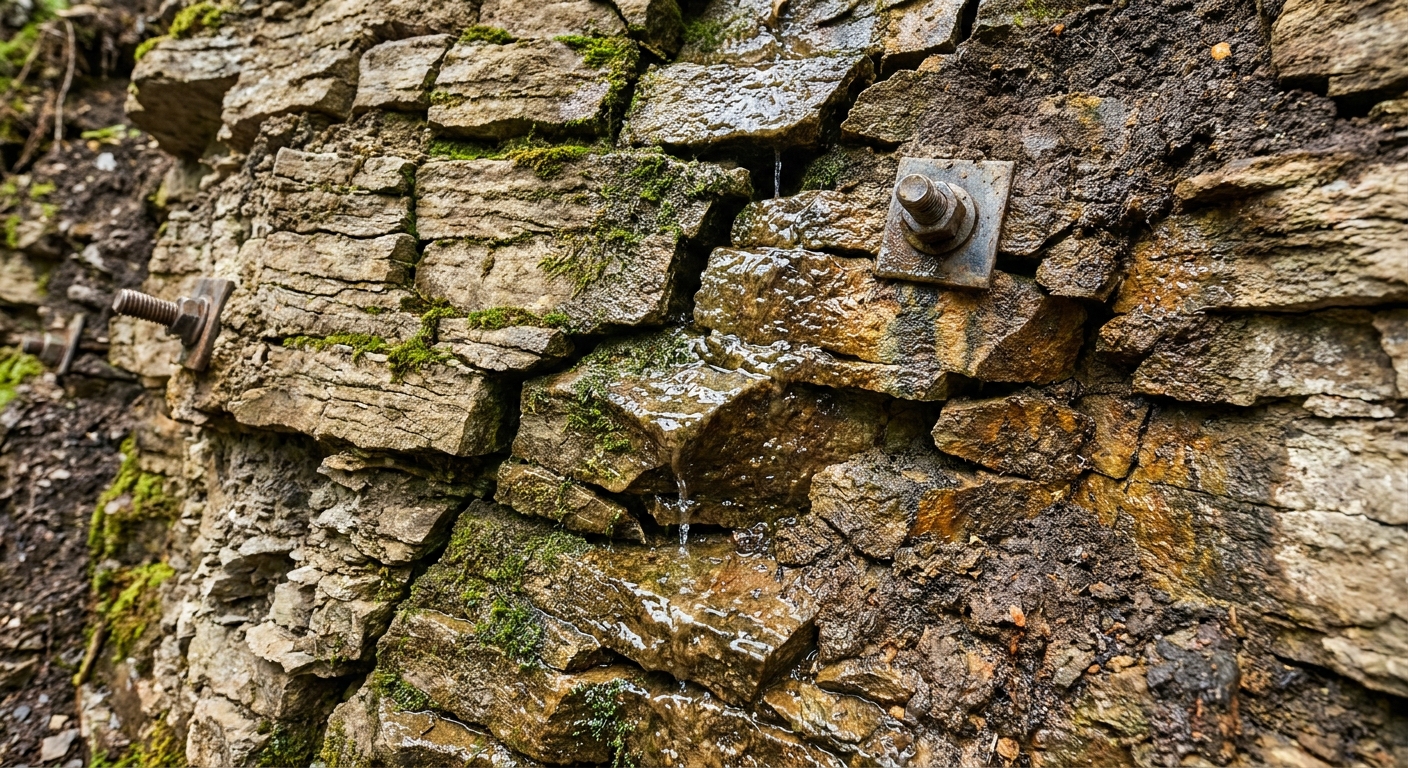
Ground conditions impact rock bolt selection by determining the required bonding mechanism, whether it be mechanical friction, chemical resin, or cement grout. When you encounter highly fractured or soft geological formations, a standard mechanical rock bolt may fail to grip the borehole walls. You must adapt your selection to utilize continuous-bonding systems like self-drilling hollow bars or resin-grouted bolts. These systems ensure that the load is distributed evenly along the entire length of the borehole.
Conversely, competent granite allows you to use simpler, more economical mechanical expansion bolts. Understanding the geological strata is the first step toward a safe, cost-effective installation.
How does groundwater alter your strategy?
High groundwater pressure can easily wash away standard cement grout before it has time to cure. In these wet conditions, you must pivot to fast-setting chemical resin bolts or friction-expansion bolts. These alternative systems achieve immediate structural capacity regardless of water inflow.
- Friction-expansion (Swellex): Unaffected by water, expands to fit the borehole instantly.
- Chemical resin: Fast-setting formulas cure in minutes, blocking minor water ingress.
Here is the kicker: if you ignore water pressure, your grout envelope will degrade, leading to rapid corrosion and ultimate system failure. Protecting your steel elements from moisture-induced corrosion is a top priority in wet geologies.
What challenges do soft rock formations pose?
Soft formations like claystone or weathered shale cannot support highly concentrated point loads. If you use a mechanical expansion bolt in soft rock, the anchor shell will simply slip through the material under tension. You must use fully grouted systems to distribute the load across a larger surface area.
- Mechanical anchoring: Prone to slipping in soft, weathered formations.
- Grouting systems: Distribute tensile load along the entire length of the borehole.
But wait, there is more: distributing the load prevents localized over-stressing of weak rock layers. This load distribution principle is identical to how an impact roller absorbs and disperses high impact forces in heavy industrial conveyor systems.
| Ground Type | Groundwater Level | Ideal Rock Bolt Type | |
|---|---|---|---|
| Weak Weathered Shale | High | Resin-Grouted or Self-Drilling | |
| Competent Granite | Low | Mechanical Expansion Bolt |
Choosing the right bolt for specific ground conditions is particularly vital when operating in high-stress deep mining environments.
Key Takeaway: Matching your bolting system to the geological and water conditions of your site prevents premature anchorage failure and ensures absolute structural stability.
Which rock bolt type works best for deep mining?
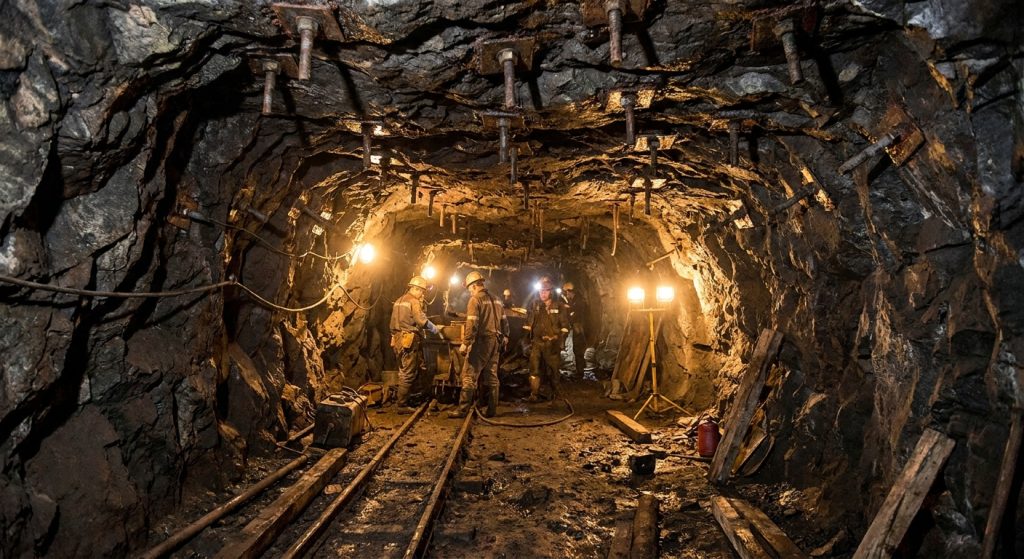
Resin-grouted and yielding rock bolts work best for deep mining because they accommodate dynamic stress fields and prevent rockburst-induced failures. In deep mining environments, a resin-grouted rock bolt provides continuous bonding along its entire length, offering exceptional resistance to lateral shear movements. As you dig deeper, the geological pressures increase dramatically, making rigid, non-yielding systems highly vulnerable to snapping. Deploying yielding systems allows the rock face to deform safely without causing a collapse.
These specialized systems are engineered to stretch or slide plastically under extreme loads, absorbing seismic energy. This capability is critical for protecting miners working at great depths.
Why are rigid bolts risky in deep mines?
Rigid steel bolts lack the ductility required to survive sudden, dynamic rockburst events. When the surrounding rock shifts violently, a rigid bolt will absorb the stress until it reaches its ultimate tensile strength and snaps. You must avoid relying solely on rigid anchoring in seismically active zones.
- Rigid bolts: High static strength but zero tolerance for dynamic deformation.
- Yielding bolts: Absorb dynamic energy by sliding or deforming plastically.
Think about it: a sudden bolt failure can trigger a chain reaction, leading to a catastrophic tunnel collapse. Using yielding technology ensures that your support system remains intact even during seismic shifts.
How does resin grout outperform cement?
Resin grout cures within minutes, providing immediate structural support compared to the 24-hour curing time required for cement. In rapid-advance mining operations, you cannot afford to wait a full day for grout to set before continuing excavation. Resin allows you to secure the roof and advance the mine face immediately.
- Resin curing time: 1 to 5 minutes, allowing immediate excavation advancement.
- Cement curing time: 12 to 24 hours, slowing down development cycles.
Here is the kicker: rapid installation cycles are essential for maintaining high mining productivity and ensuring worker safety. This demanding environment requires reliable material handling equipment, such as heavy-duty conveyor systems built with rugged steel conveyor rollers to move mined ores efficiently.
| Mining Condition | Stress Level | Best Support System | |
|---|---|---|---|
| Seismically Active | High Dynamic | Yielding Rock Bolts | |
| Stable Underground | Medium Static | Resin-Grouted Solid Bolts |
Once you select the ideal mining bolt, mastering its installation in difficult ground becomes your next engineering priority.
Key Takeaway: Implementing resin-grouted and yielding bolts in deep mines provides immediate roof support and prevents catastrophic failure under extreme geological pressures.
How do you install a rock bolt in fractured ground?
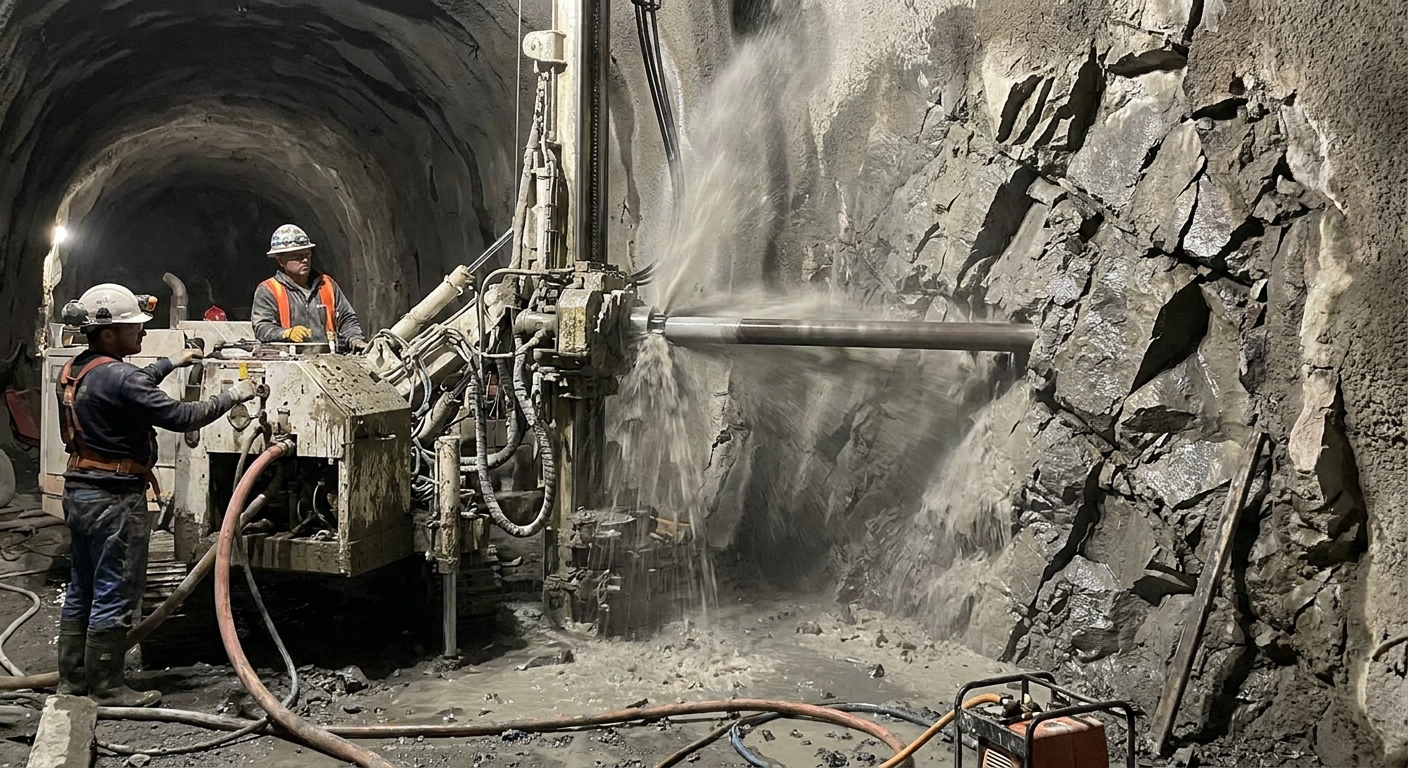
You install a rock bolt in fractured ground by utilizing the hollow-bar self-drilling method, which prevents borehole collapse by using the bolt itself as the drill string. In highly unstable or collapsing ground, attempting to drill a hole, withdraw the drill bit, and insert a traditional rock bolt is almost impossible. The self-drilling method solves this challenge by eliminating the need to withdraw the drill string. You drill the hollow bar directly into the rock face, inject grout through the center, and leave it in place as the permanent support.
This streamlined process saves labor hours and eliminates the risk of borehole collapse. It is the most reliable way to secure heavily fractured geologies.
What are the steps of self-drilling?
The self-drilling process combines drilling, flushing, and grouting into a single, continuous operation. You mount a sacrificial drill bit onto the end of the hollow steel bar and drill to the target depth. Grout or water is simultaneously pumped through the center of the bar to flush out rock cuttings.
- Drilling & Flushing: The hollow bar acts as the drill rod, using water or air to clear debris.
- Final Grouting: Thick cement grout is pumped through the bar, filling the hole from the bottom up.
Here is the kicker: because the borehole is never left empty, there is zero chance of the hole collapsing before the bolt is secured. This method provides an exceptional grout envelope that protects the steel core from corrosion.
How do you optimize material handling?
Transporting heavy steel hollow bars to an active, muddy tunnel face requires a highly efficient logistics setup. You must minimize manual handling of these heavy components to prevent worker fatigue and injury. Integrating rugged conveyor systems near your drilling zones keeps the installation process moving smoothly.
- Conveyor transport: Automates the movement of heavy hollow bars to the drill rig.
- Ergonomic storage: Keeps installation components organized and free from mud contamination.
Think about it: streamlining your on-site logistics is just as important as the drilling process itself. Deploying specialized machinery equipped with highly durable conveyor roller units ensures your materials arrive exactly when the drilling crew needs them.
| Installation Method | Ground Condition | Borehole Collapse Risk | |
|---|---|---|---|
| Standard Drill & Insert | Competent Rock | Low | |
| Hollow-Bar Self-Drilling | Fractured / Collapsing | Zero |
After successfully installing the bolts in fractured ground, you must evaluate the maximum loads they can safely bear.
Key Takeaway: Utilizing hollow-bar self-drilling systems in unstable ground eliminates borehole collapse risks, saving labor hours while ensuring a perfect grout seal.
What are the capacity limits of a standard rock bolt?
The ultimate capacity limits of a standard rock bolt typically range from 100 kN to 300 kN of tensile force, depending on the steel grade and bar diameter. When you design a reinforcement pattern, you must ensure that the anticipated geological load does not exceed the ultimate yield point of the rock bolt . If shear forces perpendicular to the bolt axis exceed 15 millimeters of displacement, the steel rod can suffer from localized necking. You must calculate these structural limits carefully to avoid sudden brittle failure.
Overloading the system risks sudden face failure. This is why safety margins must be strictly maintained in every geotechnical design.
How do you calculate tensile limits?
Tensile limits are calculated based on the cross-sectional area of the steel bar and its yield strength. You must also account for the bond strength between the grout and the surrounding rock. If the rock is weak, the bolt may pull out entirely before the steel reaches its yield point.
- Steel yield strength: The maximum load the steel bar can absorb before deforming permanently.
- Grout bond strength: The holding power of the grout interface against the rock wall.
Think about it: a strong steel bar is useless if the surrounding grout slips under tension. You must conduct comprehensive field pull tests to verify that your actual bond capacity meets design requirements.
What are the shear capacity constraints?
Shear capacity constraints are critical when your bolt crosses active geological fault lines or joint planes. As the rock blocks slide past each other, they apply a shearing force that cuts perpendicular to the steel bar. You can increase shear resistance by selecting thicker solid steel bars rather than hollow options.
- Solid bars: Offer superior shear resistance in highly jointed formations.
- Hollow bars: Provide slightly lower shear limits but excel in installation speed.
But wait, there is more: ensuring your support elements can withstand these multi-directional forces is crucial. In high-vibration heavy industrial plants, engineers secure structural elements using specialized conveyor brackets to prevent shear misalignment, mirroring this geotechnical concept.
| Bolt Diameter | Ultimate Tensile Capacity | Typical Shear Limit | |
|---|---|---|---|
| 25 mm Solid Bar | 220 kN | 150 kN | |
| 32 mm Hollow Bar | 280 kN | 110 kN |
Knowing these capacity boundaries allows you to design systemic configurations that prevent sudden underground structural collapses.
Key Takeaway: Designing with a clear understanding of steel yield and grout bond limits prevents sudden pull-out failures, keeping your excavations secure under heavy loading.
How do rock bolt systems prevent tunnel collapses?
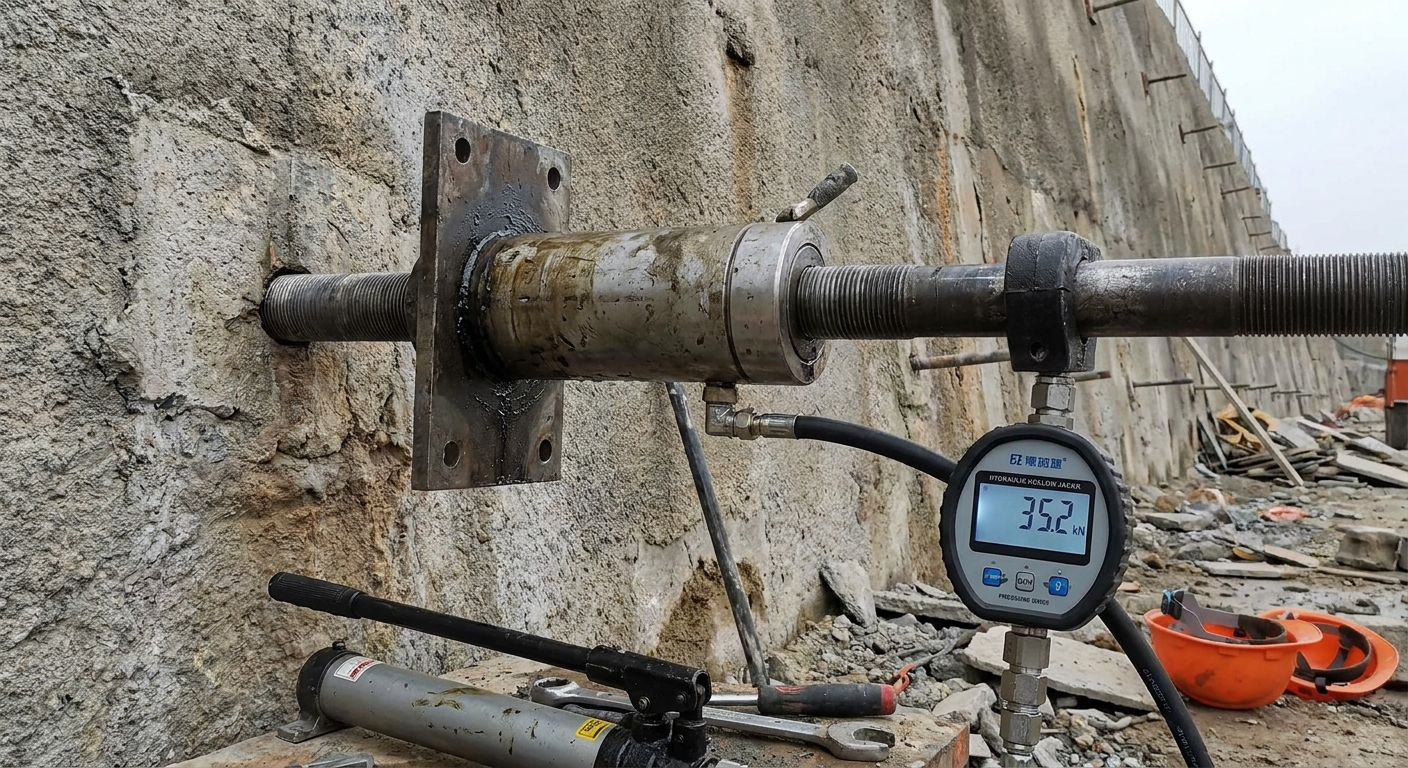
Rock bolt systems prevent tunnel collapses by creating a compressed reinforcement ring of consolidated rock around the excavation arch. When you install a systematic radial pattern of rock bolts, you bind the jointed blocks of stone together into a single cohesive ring. This radial array uses the natural strength of the geological formations to support the immense weight of the overlying ground. By transforming the rock mass into its own support structure, you reduce the required thickness of expensive concrete linings.
This arching action is the foundation of modern tunneling science. It ensures that the tunnel remains stable during and after excavation.
What is the radial arching action?
Radial arching action works by applying compressive forces to individual rock blocks, locking them in place like the stones of an ancient arch. This compression increases the shear strength of the joint planes, preventing individual blocks from falling. You must install the bolts immediately after blasting to capture this self-supporting arch.
- Immediate radial installation: Prevents the rock mass from loosening and losing its inherent strength.
- Continuous compression: Maintains friction across joint planes, stabilizing the excavation roof.
Here is the kicker: delaying the installation allows the rock to decompress and lose its structural integrity. You must prioritize fast, systematic execution to ensure the safety of your tunneling crew.
How do you verify long-term stability?
Verifying long-term stability requires continuous monitoring and systematic pull-testing of a representative sample of installed bolts. You use hydraulic jacks to apply a proof load, ensuring the anchor has not slipped or degraded over time. This quality assurance process is vital for public infrastructure projects designed to last for decades.
- Proof-testing: Involves pulling a bolt to a specific percentage of its design load.
- Instrumentation: Using load cells to monitor real-time tension changes in the tunnel arch.
Think about it: constant structural verification is the only way to detect silent ground shifts before they turn into major failures. This rigorous inspection approach is as critical as checking for wear on heavy-duty return roller assemblies in continuous high-output transport operations.
| Support Phase | Action | Primary Benefit | |
|---|---|---|---|
| Excavation Phase | Radial Rock Bolting | Creates consolidated reinforcement ring | |
| Maintenance Phase | Systematic Pull-Testing | Verifies long-term anchor bond integrity |
Maintaining this structural integrity over decades requires robust engineering solutions to fight environmental degradation.
Key Takeaway: Designing systematic radial bolting patterns converts unstable rock masses into self-supporting structural rings, minimizing concrete costs and securing the tunnel arch.
What is the design service life of a modern rock bolt?
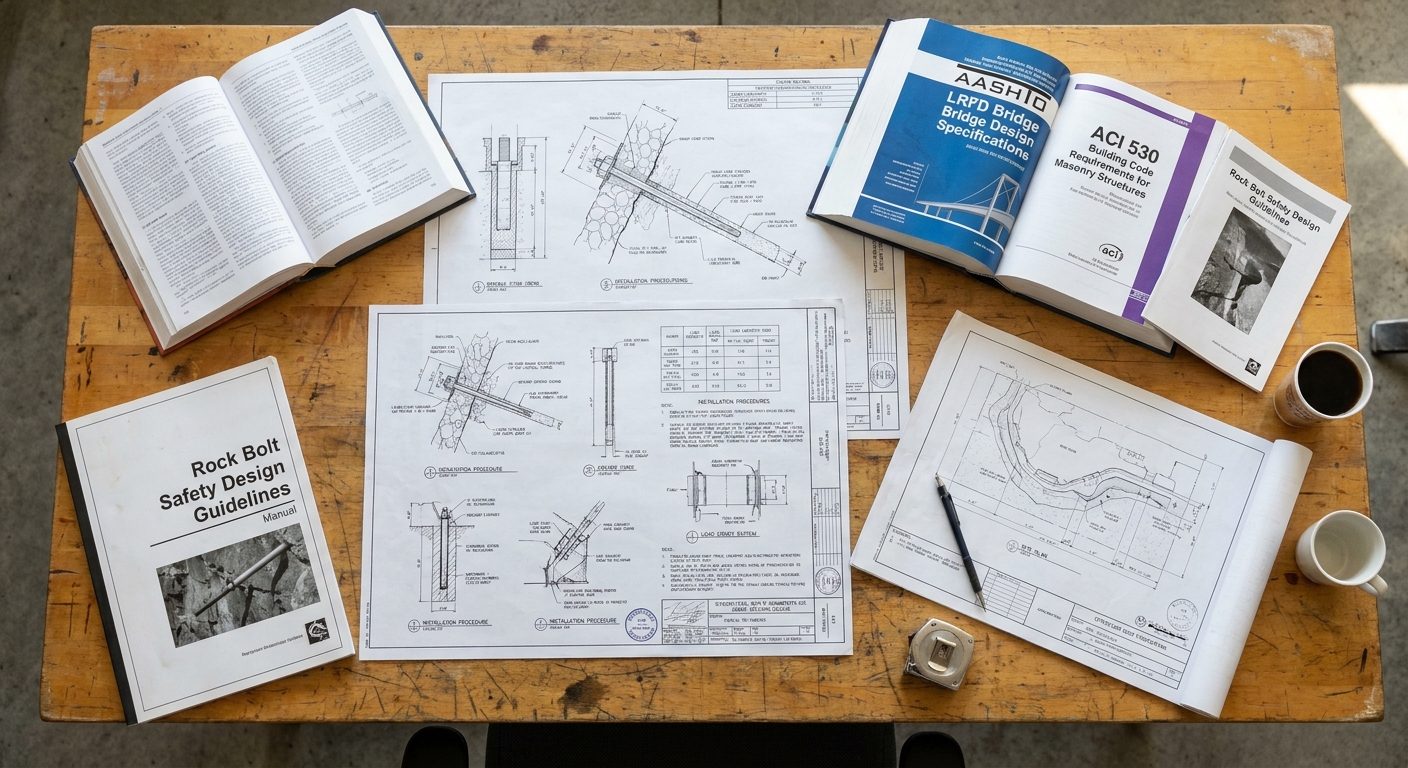
The design service life of a modern rock bolt can range from a few years for temporary support to over 100 years for permanent civil infrastructure when proper corrosion barriers are applied. To achieve a century of performance, a permanent rock bolt must be protected from corrosive groundwater using hot-dip galvanizing, epoxy coatings, or double corrosion protection (DCP) sheaths. In highly acidic underground environments, unprotected steel can lose its structural integrity within a matter of months. You must select the appropriate corrosion barrier during the initial design phase to match your project’s lifespan requirements.
Choosing the wrong coating can lead to premature failure and costly remediation projects. Investing in robust protection upfront ensures long-term peace of mind.
What are double corrosion protection systems?
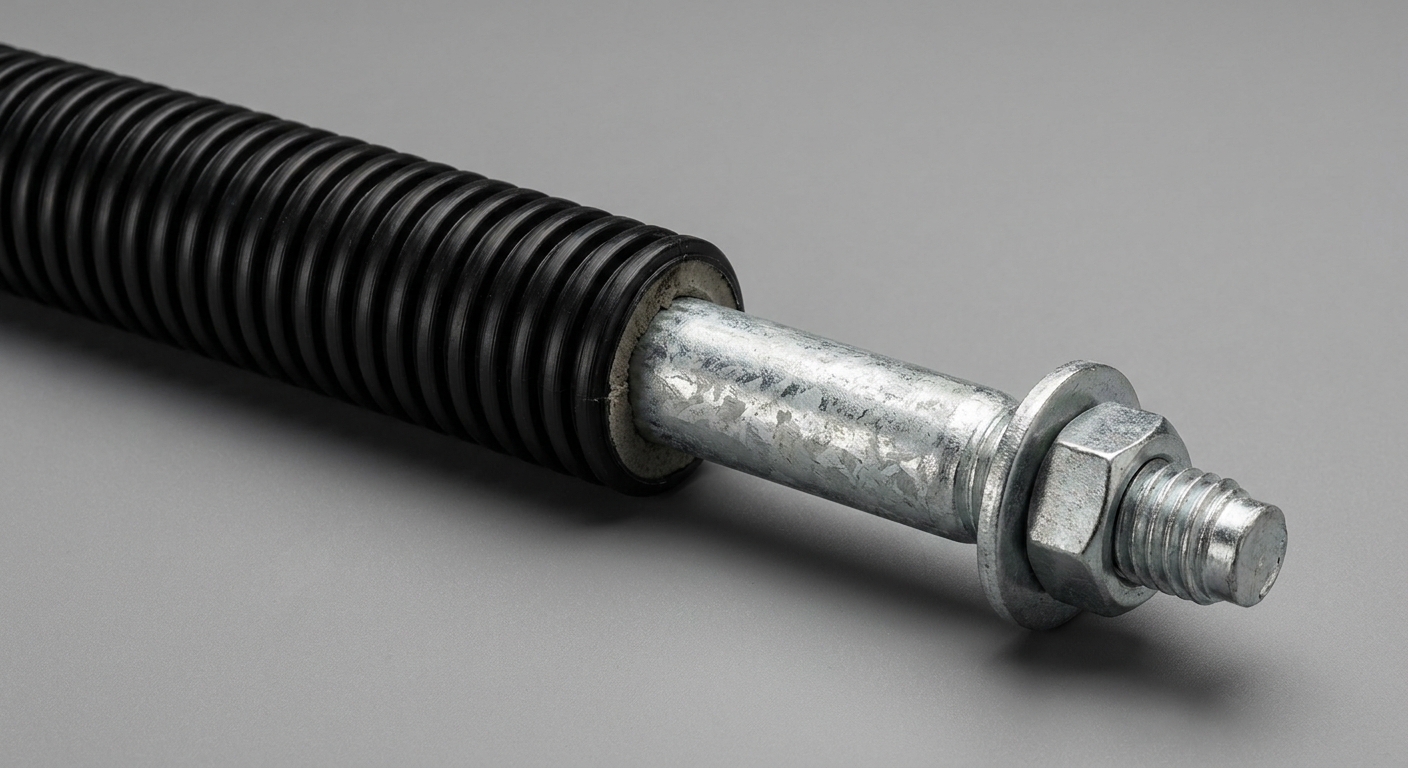
Double corrosion protection (DCP) systems encapsulate the steel bar within a corrugated plastic sheath filled with high-strength grout. This dual-layer barrier completely isolates the steel from corrosive groundwater and gases. You must specify DCP bolts for permanent retaining walls, highway slopes, and sub-sea tunnels.
- Inner barrier: Corrugated plastic sheath filled with specialized grout.
- Outer barrier: The secondary grout envelope filling the borehole drill space.
Think about it: if water penetrates the outer grout layer, the plastic sheath remains intact, preventing moisture from reaching the steel. This multi-layered defense is the gold standard for high-consequence civil engineering projects.
How do environmental factors alter lifespan?
Lifespan is heavily influenced by the chemical composition of the surrounding groundwater and soil. High concentrations of chlorides or sulfates will aggressively attack bare steel, leading to rapid rust development and loss of cross-sectional area. You must perform comprehensive chemical testing on groundwater samples before choosing your steel coatings.
- Acidic water (pH < 5): Requires epoxy-coated or DCP systems for long-term survival.
- Saline environments: High chloride levels necessitate hot-dip galvanizing or specialized duplex coatings.
But wait, there is more: protecting your core components from chemical wear is a universal engineering rule. Just as specialized steel conveyor rollers are galvanized to resist harsh industrial processing environments, your underground support must be built to withstand its unique surroundings.
| Protection Level | Coating Type | Design Life Expectancy | |
|---|---|---|---|
| Temporary Support | Black Steel (Bare) | 1 to 3 Years | |
| Permanent Civil | Double Corrosion Protection (DCP) | 50 to 120 Years |
Once you have designed for long-term durability, you must evaluate the financial impact of your stabilization options.
Key Takeaway: Specifying double corrosion protection sheaths for permanent installations guarantees a service life of over 100 years, eliminating the risk of costly future repairs.
How do costs compare for rock bolt installations?
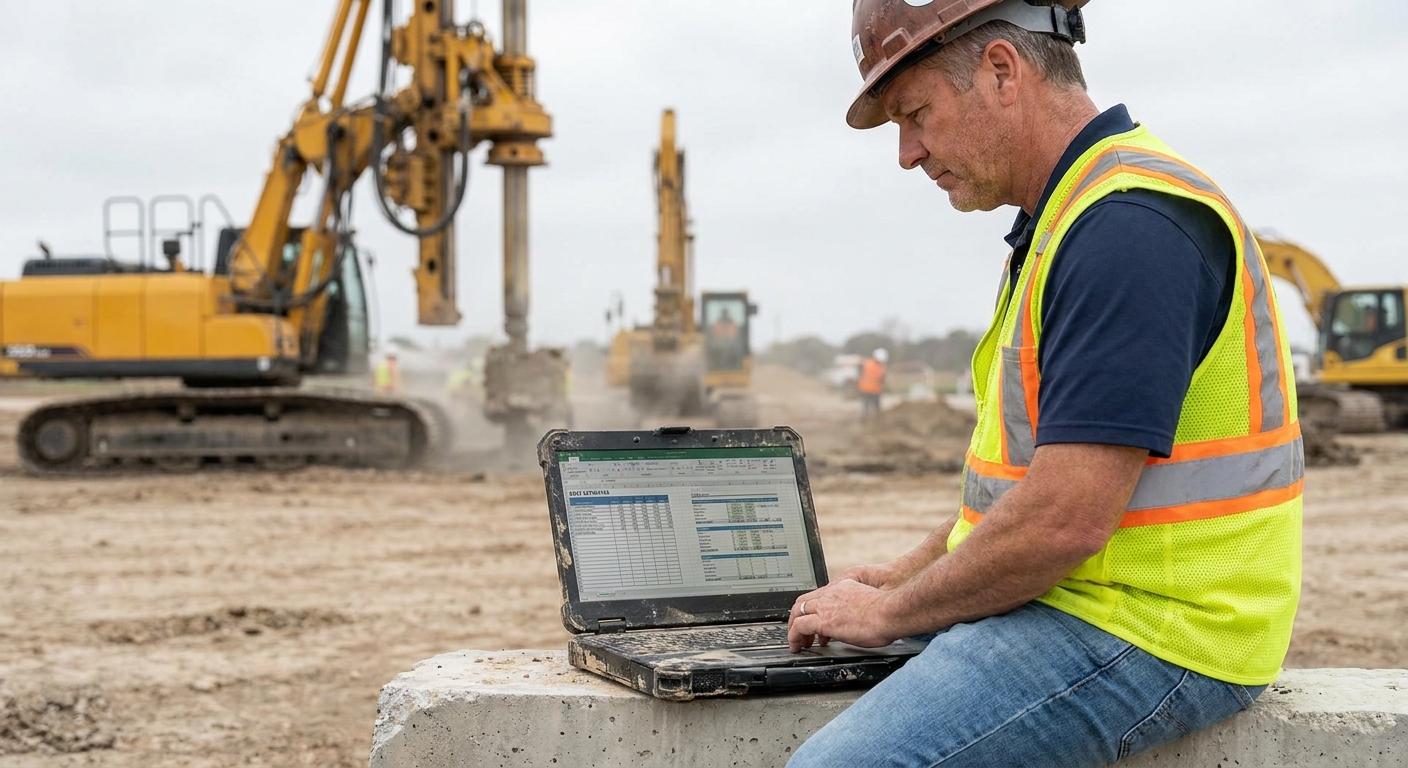
Rock bolt installations are significantly more cost-effective than heavy rock anchor systems due to lower material costs, lighter equipment requirements, and faster drilling cycles. A typical rock bolt utilizes simpler solid or hollow steel bars, which are far less expensive than the multi-strand high-strength steel tendons required for anchors. You can complete bolting installations using highly mobile, compact rigs, which dramatically reduces machinery mobilization fees. This combination of lower material and equipment expenditures makes bolts the preferred choice for shallow consolidation projects.
Heavy anchors require complex multi-stage tension testing and massive grout volumes, which drives up labor costs. Choosing bolts whenever technically feasible keeps your project on budget.
Are self-drilling systems more economical?
While self-drilling hollow bars have a higher upfront material cost, they are often more economical overall due to massive labor savings in weak ground. By combining drilling, placement, and grouting into a single operation, you drastically reduce the hours your crew spends on-site. In collapsing soils, this efficiency can cut total installation costs in half.
- Higher initial cost: Hollow bars and sacrificial bits cost more than standard solid rebar.
- Lower total cost: Faster cycle times and zero borehole collapses translate to major labor savings.
Here is the kicker: time is money on any heavy civil project, and faster execution means lower overhead costs. Streamlining your operations with self-drilling systems keeps your project moving forward without costly structural delays.
What are the primary labor cost drivers?
Labor costs are driven by the complexity of the installation process, drilling speeds, and material handling logistics. If your crew has to handle bulky, heavy materials manually, productivity drops and the risk of accidents increases. You must optimize your material flow to ensure that drilling crews are never waiting for steel or grout supply.
- Drilling speed: Slow drilling in hard rock increases total active hours.
- Material supply chain: Inefficient delivery of steel bars halts production immediately.
Think about it: maximizing labor efficiency requires reliable mechanical support throughout the job site. Utilizing high-efficiency material handling systems, such as heavy-duty conveyor lines built with robust conveyor roller components, ensures a continuous supply of essential parts to the excavation face.
| Support Type | Relative Material Cost | Relative Labor Cost | Total Economic Footprint | |
|---|---|---|---|---|
| Rock Bolt | Low | Moderate | Highly Cost-Effective | |
| Rock Anchor | Very High | High | Capital Intensive |
Balancing these financial variables allows you to make informed, data-driven decisions for your site stabilization projects.
Key Takeaway: While heavy anchors are necessary for massive loads, utilizing rock bolts for shallow consolidation minimizes material and labor expenditures to optimize your construction budget.
Conclusion
Securing complex underground excavations and steep rock faces demands absolute engineering precision. Whether you are stabilizing a highway cut-slope with rock bolts or anchoring a massive concrete retaining wall into deep bedrock with prestressed tendons, making the wrong choice can lead to devastating structural failures and project delays. By partnering with structural engineering and high-efficiency material handling experts, you can streamline your site operations, reduce labor overhead, and ensure long-term stability in any geological condition. At Yongduo, we are dedicated to powering global infrastructure development with heavy-duty components built to survive the harshest field conditions. If you are ready to optimize your next project’s safety and operational efficiency, contact us today to explore our customized structural support and heavy-duty conveyor solutions.
Frequently Asked Questions
Can I use rock bolts to support a deep basement retaining wall?
Yes, you can use rock bolts, but only if the wall is shallow and the ground conditions allow for localized mass reinforcement. If the excavation is deep and must resist massive lateral earth and hydrostatic pressures, you must transition to high-capacity, prestressed rock anchors to transfer the tensile loads deep into stable bedrock.
What is the best way to prevent corrosion in permanent rock bolt installations?
The best way to prevent corrosion is to use double corrosion protection (DCP) sheaths. This system encapsulates the solid steel bar within a corrugated plastic sheath filled with grout, creating a dual-layer barrier that completely isolates the steel from aggressive groundwater, chlorides, and soils.
How do I know if my project requires a self-drilling hollow bar?
You require a self-drilling hollow bar system if you are working in highly fractured, loose, or collapsing ground where drilling a stable borehole is impossible. By using the hollow bar as both the drill rod and the grout injection channel, you eliminate the risk of borehole collapse and ensure a fast, successful installation.
Can I tension a passive rock bolt after it has been fully grouted?
No, you cannot tension a passive rock bolt after the grout has cured because the cured grout bonds the entire length of the bar to the rock, preventing any stretch. If you need a tensioned system, you must use a mechanical anchor shell or leave a specific free-tensioning length un-grouted prior to post-tensioning.