Slotted friction stabilizer-style friction rock bolts work by utilizing a high-strength steel tube slotted along its length that is driven into a slightly smaller borehole, generating immediate, full-length radial friction against the surrounding rock mass. Underground mining and civil tunneling operations face constant, unpredictable shifts in rock strata. Unstable ground conditions threaten worker safety, damage expensive machinery, and cause catastrophic project delays. When a roof collapse or rockfall occurs, the consequences are devastating—halting production, racking up regulatory fines, and risking human lives.
Relying on slow-curing resin anchors or complex multi-component bolting systems only prolongs exposure to unsupported ground. The ultimate solution lies in the elegant, immediate engineering of a high-performance friction rock bolt . By utilizing instant radial force, these stabilizers secure the rock mass the moment they are driven into the borehole.
What are friction rock bolts?
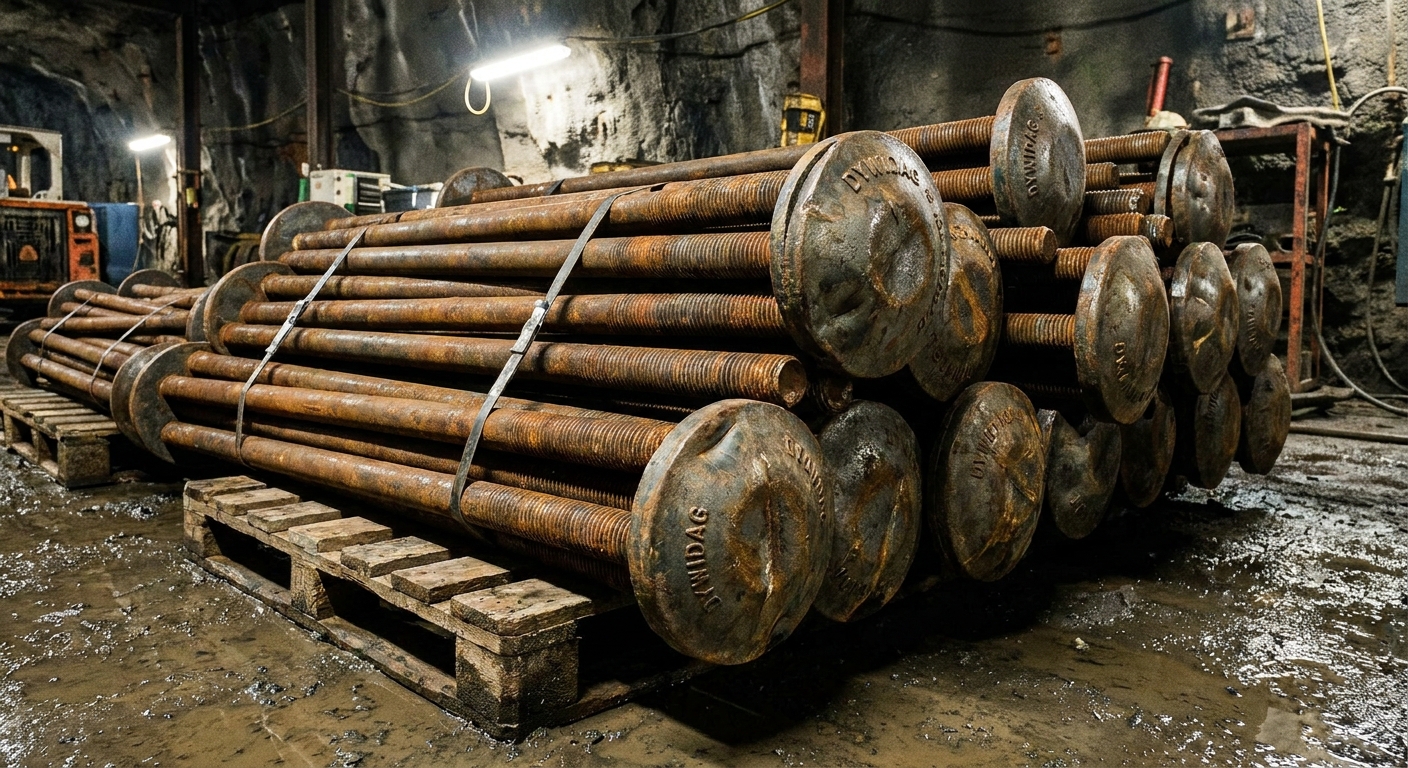
A friction rock bolt is an incredibly simplified ground support system that provides instant geological stabilization through radial tension against borehole walls. These robust fasteners consist solely of a slotted steel tube and a matching domed bearing plate, requiring no chemical resins or mechanical expansion shells to operate. This streamlined, minimalist design directly minimizes your inventory management challenges on-site while maximizing underground security. By eliminating complex multi-component assemblies, you can significantly accelerate your installation cycles.
The welded ring flange on the collar end is engineered to secure the domed plate flush against the uneven rock face. The tapered end allows for rapid alignment into the borehole. For operator precautions during roof bolting, see MSHA guidance.
The two-part design
When you examine the mechanical design, you will notice that simplicity is its ultimate strength. The assembly consists solely of a slotted, high-strength steel tube and a matching domed bearing plate. There are no torque-tensioning steps, expansion shells, or chemical resins required for active reinforcement. Think about this: this minimalist construction directly minimizes inventory management challenges on your job site.
- High-Yield Steel Tube: The primary structural member featuring a continuous longitudinal slot.
- Domed Bearing Plate: Distributes the load evenly across the uneven rock surface.
- Welded Ring Flange: Retains the plate and acts as the striking surface during installation.
Role of high-strength steel
The metallurgical properties of the raw material are designed to withstand extreme shear forces. This high-yield steel retains a powerful elastic memory after being compressed inside the rock. What does this mean for you? It means you get a highly resilient anchor that actively fights ground convergence.
The balance between tensile strength and ductility is critical. This steel composition ensures the tube absorbs shifting ground energy without experiencing brittle failure.
Key Takeaway: The ultimate strength of a friction bolt lies in its simplified two-part composition, eliminating the failure points common in complex mechanical anchors.
| Component | Primary Material | Dimensional Purpose | Operational Role | |
|---|---|---|---|---|
| Slotted Tube | High-strength steel | Variable length & diameter | Exerts continuous radial force | |
| Bearing Plate | Domed structural steel | Matches tube diameter | Distributes face loads evenly |
The mechanical interaction between these two basic components ensures that surface shifting is converted into stable, compressive resistance across the entire depth of the borehole.
How do friction bolts generate grip?
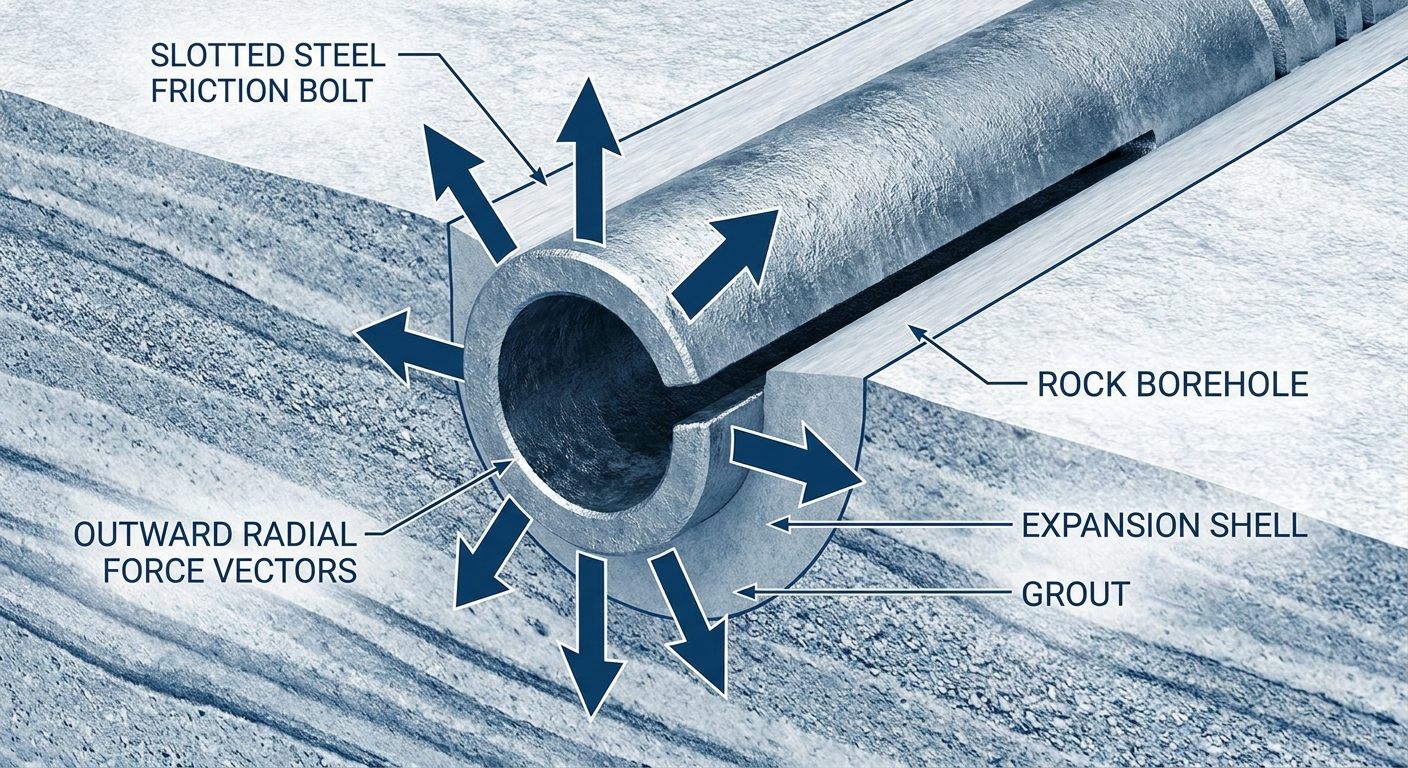
Friction bolts generate grip by utilizing an interference fit, where a larger-diameter friction rock bolt is driven into a smaller borehole, forcing the slotted steel to compress and exert continuous outward radial pressure. This mechanical compression creates a powerful, high-friction bond along the entire length of the borehole. Unlike traditional systems that offer localized point anchoring, this uniform contact distributes loads evenly. This ensures immediate load-bearing capacity without waiting for chemical resins to cure.
As geological forces shift, the surrounding rock mass further compresses the slotted profile. This dynamic interaction actually increases the holding power of the stabilizer over time. You will find that this continuous resistance prevents local block movement. This makes it an ideal option for dynamic and fractured ground conditions.
Understanding radial pressure
When you force the oversized tube into the borehole, the longitudinal slot is compressed. This interference fit forces the steel tube to exert constant, outward radial pressure against the rock walls. Let’s dive deeper: this active radial pressure contrasts sharply with traditional passive rebar systems. Passive systems require the rock to move before they can even begin bearing loads.
- Interference Fit: Occurs when the borehole diameter is smaller than the steel tube.
- Continuous Friction: Exerted uniformly from the back of the hole to the collar.
- Dynamic Grip: Adapts actively as geological shifts compress the slotted profile.
Full-length anchorage mechanics
Friction is distributed uniformly along the entire length of the tube-to-rock interface. This full-contact anchoring ensures that any localized shifting along the borehole is immediately arrested. You will notice that as the rock mass settles, it compresses the slot further. This structural reaction actually increases the friction resistance over time.
Key Takeaway: Unlike point-anchor bolts, friction stabilizers distribute loads across the entire borehole length, mitigating stress concentrations.
| Parameter | Force Mechanism | Stress Distribution | Geological Adaptability | |
|---|---|---|---|---|
| Point-Anchor Bolts | Concentrated mechanical wedge | High local stress concentrations | Low (prone to slippage in soft rock) | |
| Friction Bolts | Continuous radial expansion | Uniform full-length load distribution | High (tightens under rock pressure) |
By distributing shear and tensile forces across the entire length of the borehole, friction stabilizers prevent localized rock failure and premature anchor slippage.
Why choose them over traditional bolts?
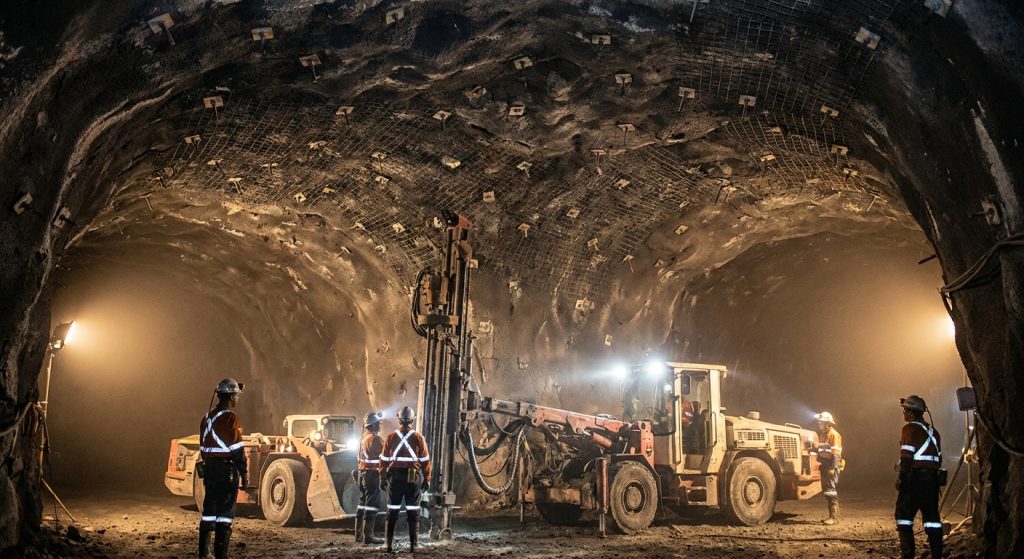
You should choose these systems because a high-performance friction rock bolt provides immediate load-bearing capacity without any chemical cure times. Unlike traditional resin-anchored rebar that requires strict waiting periods, these stabilizers secure the rock mass instantly upon installation. This immediate support significantly reduces your exposure to unsupported ground. What does this mean for you? It means you can streamline your mining cycle and improve underground safety.
Furthermore, these systems adapt dynamically to moving ground by allowing controlled yielding. This slip capacity allows the anchor to absorb massive energy during seismic events. You won’t have to worry about sudden brittle failures. These stabilizers remain intact where other rigid systems would snap.
Immediate load-bearing capacity
Friction stabilizers require absolutely zero curing time once they are driven into the rock. Your operators can safely work under newly secured roofs immediately after driving the bolts home. This instant reinforcement eliminates the traditional process bottlenecks associated with resin-grouted or cement-grouted ground support applications . Why does this matter? It means your development cycle moves forward without delay.
- No Cure Time: Zero waiting for resins or cement grouts to set.
- Yielding Support: High capability to withstand seismic energy and rock bursts.
- Reduced Labor: Faster installation translates to lower cost per meter of advance.
Adaptive ground movement support
The continuous longitudinal slot allows the steel tube to yield slightly during severe rock bursts or seismic shifts. As the rock strata shifts, the bolt slips microscopically while maintaining its structural holding force. You can rely on this dynamic flexibility to absorb immense geological energy. This prevents sudden, catastrophic rockfalls in high-stress zones.
Key Takeaway: Choosing friction bolts over traditional resin-anchored systems drastically reduces installation cycle times while providing superior yielding support in dynamic ground.
| Metric | Resin-Anchored Rebar | Friction Stabilizer Bolts | |
|---|---|---|---|
| Installation Time | 3 to 5 minutes per bolt | Under 1 minute per bolt | |
| Primary Failure Mode | Brittle shear / resin debonding | Controlled slip yielding |
The capability of friction stabilizers to slip slightly without failing makes them the optimal choice for seismically active mines.
What is the installation process?
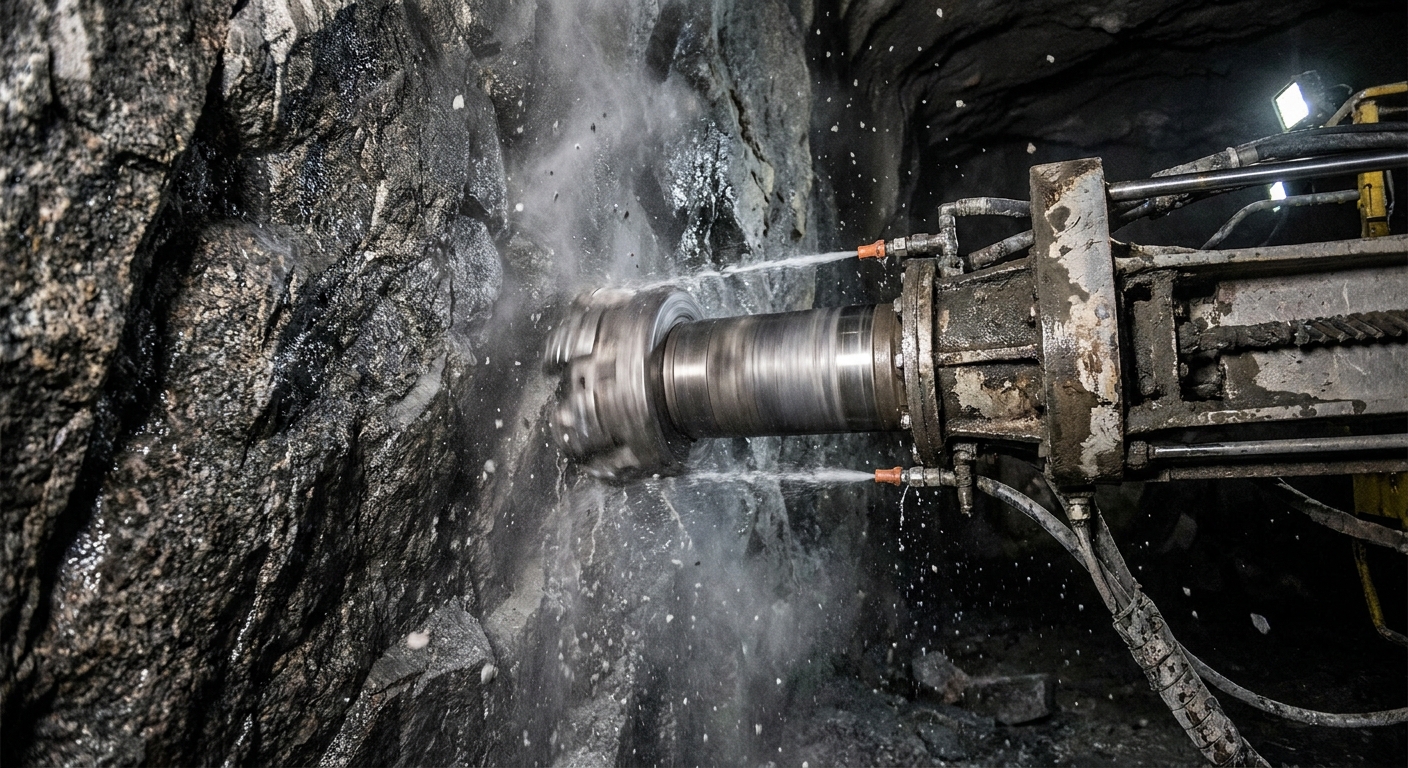
The installation process involves drilling a precise borehole slightly smaller than the tube diameter, aligning the plate, and driving the friction rock bolt in using a rapid hydraulic or pneumatic percussion drifter. Achieving the correct borehole diameter is absolutely critical to ensuring maximum frictional grip. If your hole is even slightly oversized, the bolt’s load capacity will drop dramatically. Conversely, an undersized hole can cause the steel tube to buckle during insertion.
Once you drill the hole, you simply slide the bearing plate onto the tapered tip of the stabilizer. The assembly is then driven home using standard drilling machinery in under a minute. This rapid cycle time allows you to secure large areas quickly. It is the most efficient ground support method available.
Borehole preparation steps
You must measure the drill bit wear regularly to prevent drilling oversized or undersized holes. If the hole is too large, holding capacity drops; if too small, the bolt will buckle during driving. Here is the step-by-step: use specialized hole gauges to check your dimensions frequently. This simple quality control step ensures your ground support remains completely reliable.
- Hole Drilling: Drill the hole using a bit sized precisely for the chosen bolt model.
- Plate Positioning: Slide the matching domed plate over the tapered tip to the flange.
- Pneumatic Driving: Push the tube in using a stoper, jack drill, or jumbo driver.
Driving the steel tube
The bolt assembly is loaded onto a specialized driver tool fitted to your percussion drill or roof-bolting jumbo. Under full feed pressure, the rapid hammer action drives the stabilizer into the borehole in under 60 seconds. You will see the domed plate press firmly against the rock face, confirming a tight fit. This instant compression provides immediate passive-to-active roof support.
Key Takeaway: Precise borehole calibration is the single most critical factor in guaranteeing the rated holding capacity of a friction stabilizer.
| Installation Phase | Equipment Needed | Common Pitfall | Prevention Method | |
|---|---|---|---|---|
| Drilling | Percussion drill, sized bit | Oversized borehole | Regular drill bit gauge testing | |
| Driving | Driver tool, jumbo/stoper | Incomplete driving | Apply full feed pressure until plate is flush |
Adhering to strict borehole sizing parameters ensures the friction interface remains within the designed shear resistance limits.
When should you use fiberglass rock bolts?
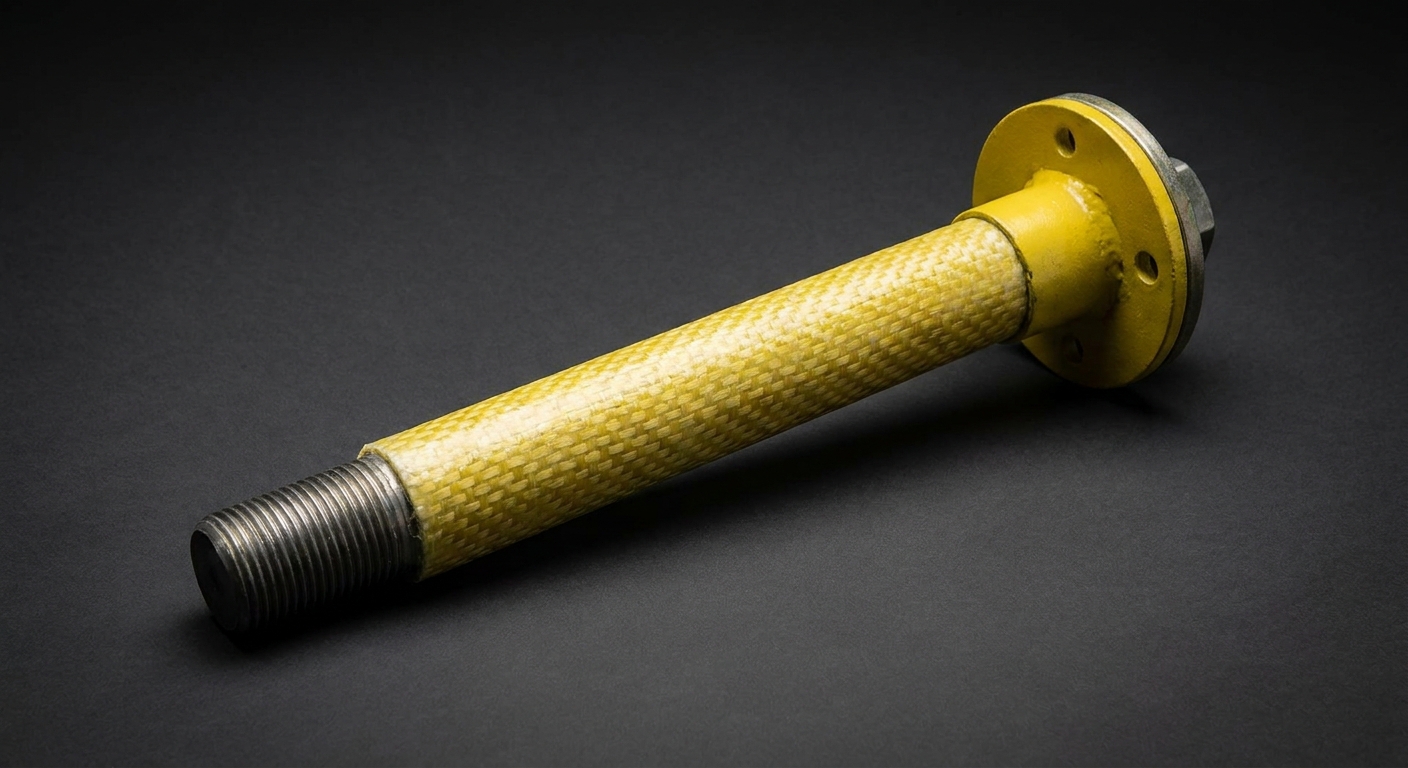
You should use a fiberglass rock bolt when your excavation faces require temporary support that can be easily cut through by mining machinery, or in extremely corrosive environments where a standard steel friction rock bolt would degrade rapidly. These polymer composite anchors are incredibly lightweight and highly resistant to chemical attack. They allow you to support coal ribs and tunnel faces that must be excavated later. This prevents damage to your expensive shearer drums and continuous miners.
However, you must remember that steel stabilizers remain the primary choice for long-term, high-yield seismic support. Fiberglass bolts offer high tensile strength but lower shear resistance. This makes them ideal for temporary or cuttable zones. Steel remains king for permanent underground structures.
Benefits of composite materials
When you use composite materials, you immediately reduce worker fatigue because these bolts are exceptionally lightweight. They are impervious to highly acidic or alkaline groundwater, which would eat away at raw steel. That is not all: their high tensile strength ensures reliable temporary stabilization. This makes them a highly versatile addition to your ground support toolkit.
- High Cuttability: Prevents damage to shearers and continuous mining machinery.
- Zero Corrosion: Impervious to harsh chemical environments and water ingress.
- Lightweight Handling: Reduces musculoskeletal injuries among underground crews.
Temporary vs permanent support
The unique cuttable nature of fiberglass bolts makes them perfect for coal mine faces or civil tunnels. When your continuous miner or tunnel boring machine (TBM) reaches the secured wall, it can cut right through the composite material without breaking a tooth. You will save valuable time and maintenance costs during advanced excavation phases. What does this mean for you? It means seamless development and zero machinery downtime.
Key Takeaway: While steel friction bolts provide unmatched ductile energy absorption, fiberglass bolts are the gold standard for cut-through mining zones.
| Performance Attribute | Steel Friction Stabilizer | Fiberglass Rock Bolt | |
|---|---|---|---|
| Shear Profile | High ductility, slips without breaking | High shear strength, clean cutting profile | |
| Lifespan in Acidic Water | Moderate (requires galvanization) | Exceptional (chemical-resistant polymer) |
Selecting between fiberglass and steel friction bolts depends entirely on whether the excavation face requires permanent high-ductility support or temporary, machine-penetrable stabilization.
How do you verify bolt performance?
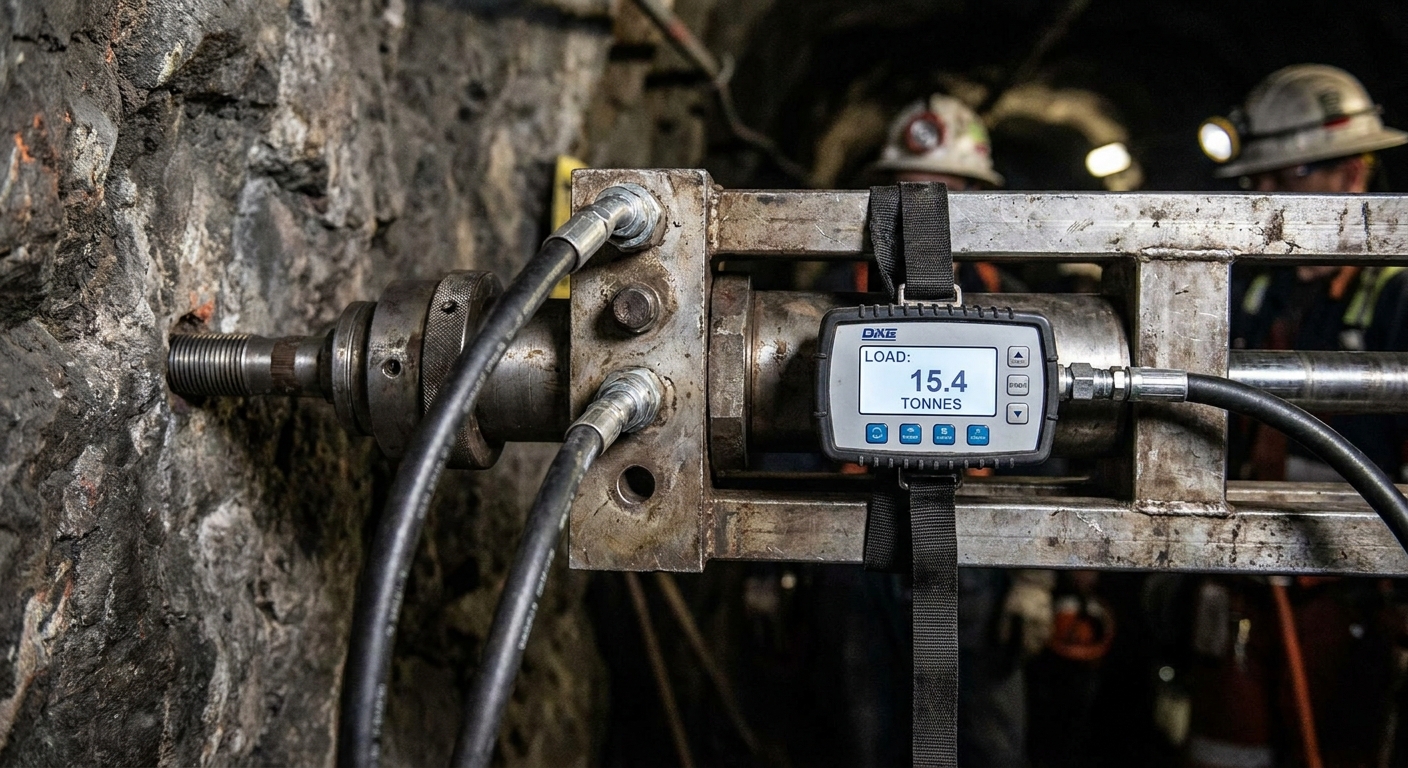
You verify bolt performance by executing standard hydraulic pull-collar tests to measure holding capacity and performing routine visual inspections of the plates and collars. A hydraulic pull test physically pulls a sample friction rock bolt to confirm it meets the required holding forces. This process provides concrete, auditable safety data for your engineering team. It ensures your installation crew is maintaining proper borehole tolerances.
Visual inspections also play a vital role in daily quality control. You should look for deformed bearing plates or slipping ring flanges. These visual cues indicate that the rock mass is shifting. This helps you identify areas that need secondary reinforcement before a failure occurs.
Executing pull tests
You should perform regular pull tests using a specialized hydraulic pull-test collar clamped onto the tube. This apparatus directly measures the slip resistance in tons or kilo-Newtons, verifying that the friction force meets regulatory standards. Look at the evidence: a successful test proves your borehole dimensions are perfectly matched to the stabilizer. This converts subterranean guesswork into quantifiable, auditable safety metrics.
- Hydraulic Pull Test: Directly measures the slip force in tons or kilo-Newtons.
- Plate Deformation: Visually indicates the structural load acting on the face.
- Ring Flange Inspection: Ensures the welded collar remains intact under tension.
Identifying visual failure signs
When you conduct daily walk-throughs, always inspect the exposed portion of the installed stabilizers. A heavily distorted bearing plate or a ring flange sliding down the shaft are clear indicators of ground movement. You can also spot micro-shifts by checking the alignment of your original paint or date stamps. This simple visual habit can save lives by flagging unstable zones early.
Key Takeaway: Dynamic field pull testing is the only definitive method to verify that borehole tolerances match friction expectations.
| Inspection Method | Primary Metric | Target Standard | Corrective Action | |
|---|---|---|---|---|
| Pull Collar Testing | Slip resistance (kN) | Minimum 5 to 8 tons initially | Adjust drill bit diameter downward | |
| Visual Inspection | Collar deformation | Intact weld, flush plate | Install secondary support mesh or bolts |
Rigorous testing programs convert subterranean guesswork into highly quantifiable, auditable ground-control data.
What sizes and dimensions exist?
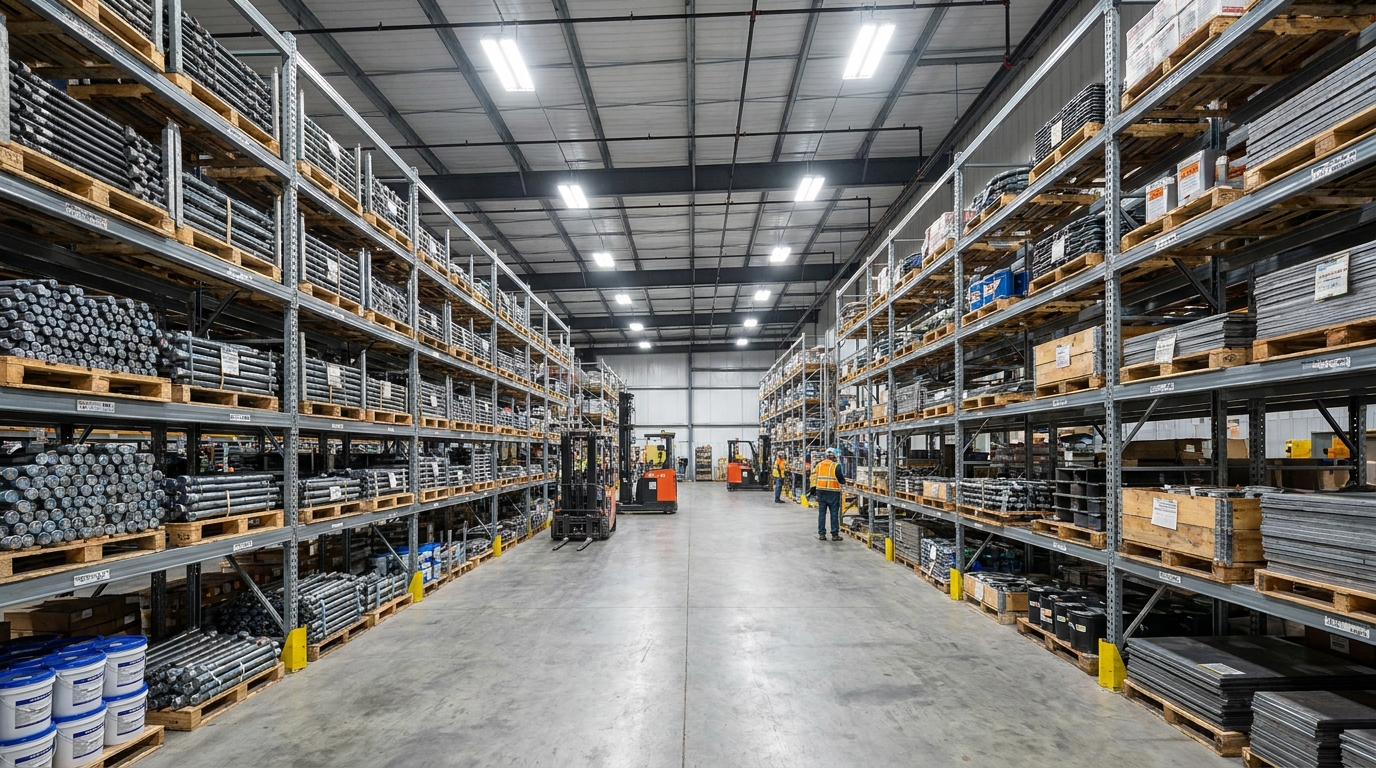
Standard sizes for a high-quality friction rock bolt span three primary outer diameters—33mm, 39mm, and 46mm—with customized lengths designed to match your specific ground conditions. Choosing the right diameter is crucial for matching your drilling equipment and required geological holding capacities. Each size serves a distinct engineering purpose in underground reinforcement. For instance, the 39mm diameter is the most widely used standard in global mining operations.
You must also ensure that your bearing plates are perfectly sized to match the chosen tube diameter. A mismatched plate can lead to the tube pulling straight through the plate under intense ground pressure. This ruins the effectiveness of your ground support system. Using a properly matched rock bolt sizes combination is key to maintaining a safe work environment.
Standard outer diameters
When planning your procurement, you will typically choose between 33mm, 39mm, and 46mm diameters. Smaller diameters are ideal for lightweight utility hanging and narrow-vein mining. Keep this in mind: larger diameters are designed for heavy-duty civil tunneling and high-stress portal support. Selecting the correct size ensures you achieve optimal installation speeds and maximum safety margins.
- 33mm Stabilizers: Optimized for lightweight applications and smaller boreholes.
- 39mm Stabilizers: The global standard for medium-duty underground mining ground control.
- 46mm Stabilizers: Designed for heavy-duty civil tunneling and major highway cuttings.
Matching plates to tubes
You must pair your stabilizers with the correct domed bearing plate to distribute face loads evenly. If the plate is too thin or features an incorrect center-hole diameter, structural failure is inevitable under high load. You can also select specialized plates with integrated utility loops or mesh hooks. This allows you to install safety screens quickly and securely.
Key Takeaway: Selecting the proper diameter ensures optimal installation speeds and safety margins across varying rock mass qualities.
| Tube Model | Nominal Diameter | Target Borehole Size | Common Application | |
|---|---|---|---|---|
| Small-Diameter | 33 mm (1.3 in) | 30 to 32 mm | Lightweight utility suspension & narrow veins | |
| Medium-Diameter | 39 mm (1.5 in) | 35 to 38 mm | Hard rock mining & production drifts | |
| Large-Diameter | 46 mm (1.8 in) | 41 to 44 mm | High-stress civil tunneling & portal support |
Choosing a matched system of tubes and plates prevents structural mismatch failures under extreme geological shifts.
How do utility hangers enhance safety?
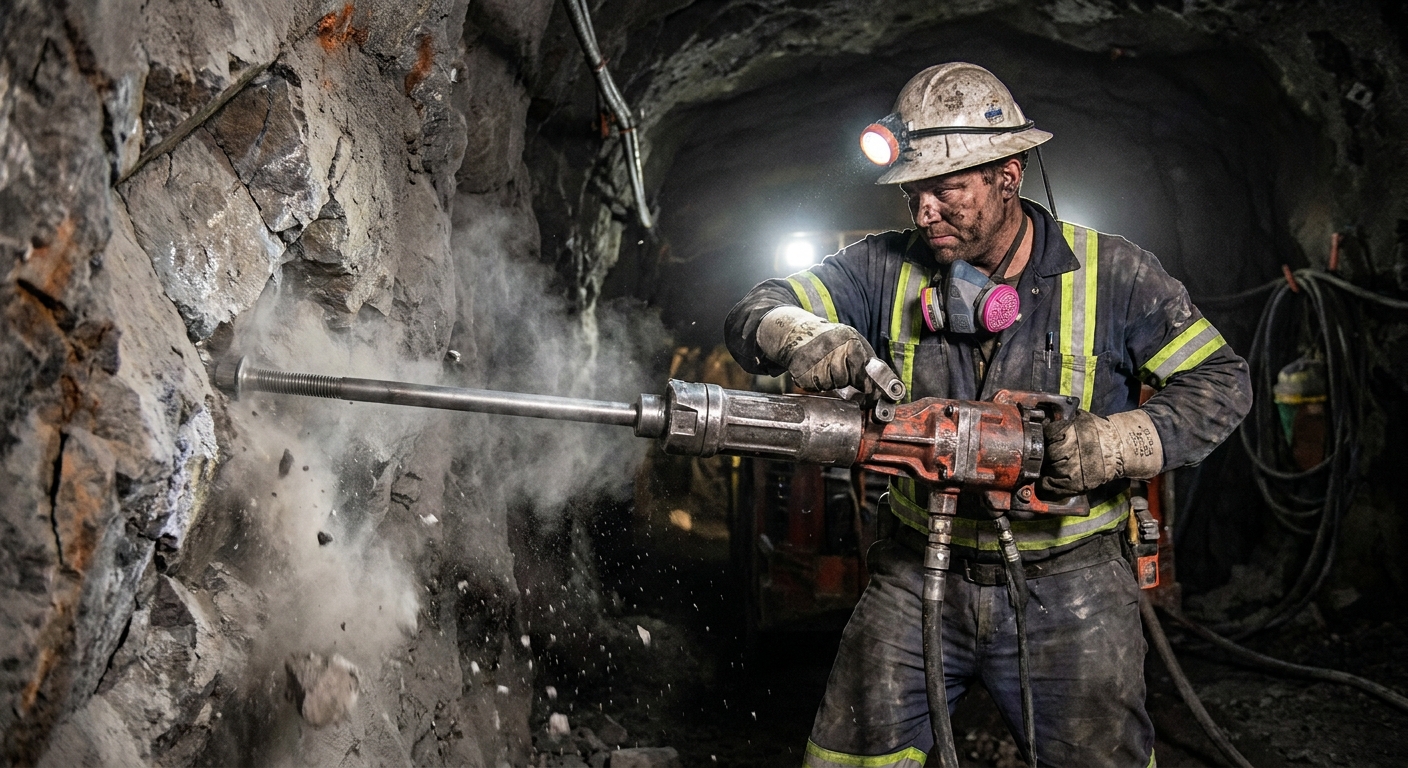
Utility hangers enhance safety by driving directly into installed stabilizer tubes, allowing you to hang heavy lines and safety mesh without drilling new boreholes. This dual-purpose design utilizes the empty inner core of your existing friction rock bolt to secure mine infrastructure. By avoiding the need to drill additional utility holes, you drastically reduce your drilling costs and operator exposure. It keeps your haulage ways clean and completely organized.
Furthermore, hanging pipelines and cables overhead protects them from damage by heavy moving machinery. This prevents costly operational downtime and eliminates electrical hazards on the mine floor. You will find that these simple accessories make a massive difference in daily safety. They are an essential add-on for any modern mine.
Supporting mine infrastructure
You can drive specialized utility hangers directly into your installed tubes using a standard handheld driver. This allows you to suspend heavy water pipelines, high-pressure air ducts, and heavy power cables safely overhead. But wait, there is more: this method keeps the mine floor entirely clear of hazards. It represents the fastest way to organize your underground services without wasting valuable drill time.
- Secondary Utility Anchoring: Hangs water, slurry, and high-pressure air pipelines securely.
- Cable Management: Organizes high-voltage electric cables away from heavy vehicles.
- Rapid Mesh Fixation: Pinpoints mesh tightly to the rock face with minimal labor.
Easiest way to install mesh
When you need to secure highly fractured roofs with safety screen or steel mesh, these hangers make the job incredibly easy. You can pin the mesh tightly to the rock face without requiring separate, dedicated anchors. This minimizes manual overhead handling, keeping your crew safely supported under already-bolted ground. It is the ultimate combination of speed, efficiency, and worker safety.
Key Takeaway: Utility hangers transform standard ground-support bolts into multi-functional infrastructure anchors without requiring additional drilling.
| Hanger Length | Primary Attachment | Intended Load Profile | Core Advantage | |
|---|---|---|---|---|
| 18-Inch (46 cm) | Integrated steel loop | Lightweight ventilation / power cables | Extremely rapid insert-and-lock | |
| 24-Inch (61 cm) | Heavy-duty welded loop | Heavy steel piping / air lines | High shear capacity, handles dynamic weight |
By utilizing the inner void of previously installed stabilizers, utility hangers maximize operational efficiency and maintain clear haulage ways.
What environments cause bolt corrosion?
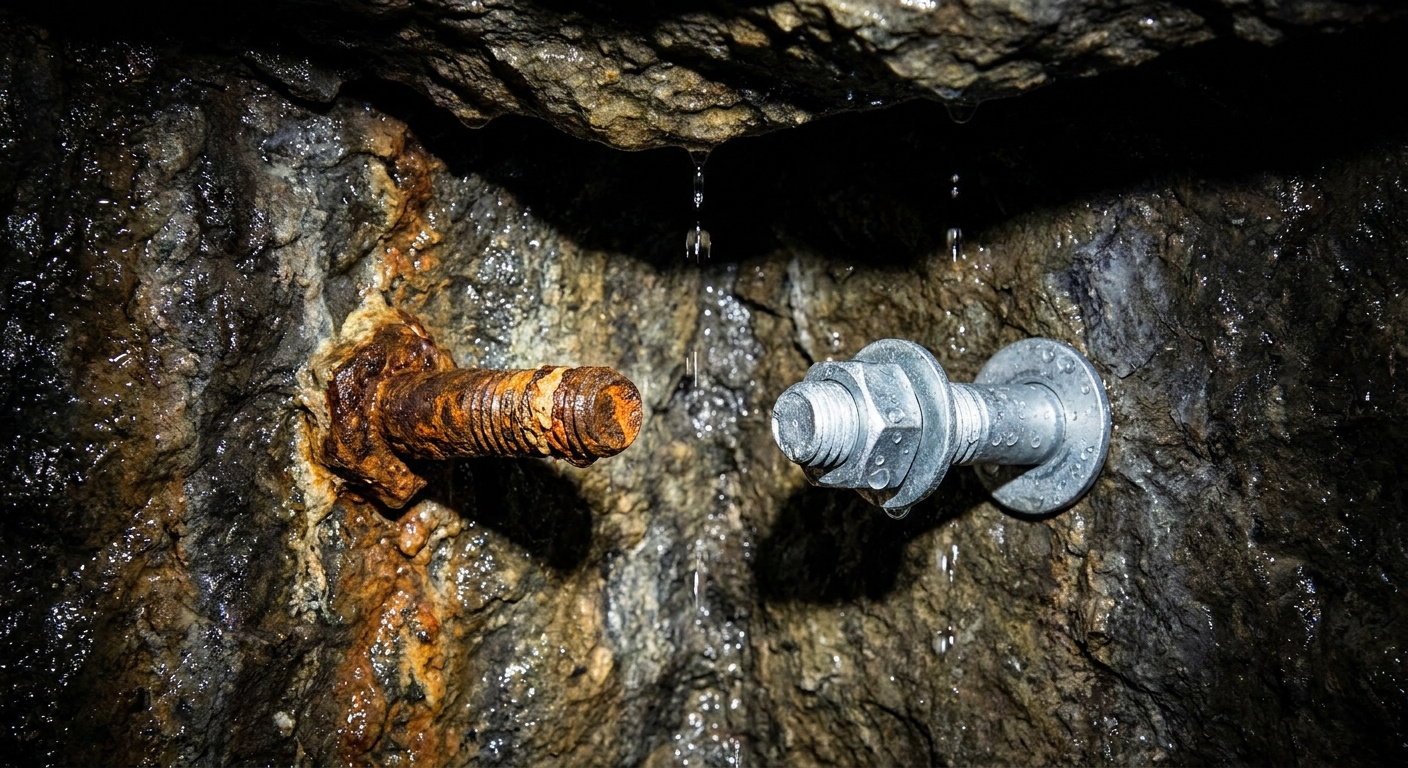
Highly humid mine shafts, acidic groundwater zones, and sulfur-rich strata represent the primary environments that cause rapid steel corrosion, compromising the holding capacity of a standard friction rock bolt . When raw steel is exposed to highly acidic water, rust quickly eats away at the tube’s thin walls. This chemical attack dramatically reduces the active radial friction holding the bolt in place. If left unchecked, this localized pitting can lead to premature stress-corrosion cracking and catastrophic roof failure.
To combat these harsh conditions, you should always choose protective coatings for long-term installations. Hot-dip galvanizing provides a robust zinc barrier that prevents oxygen and moisture from reaching the load-bearing steel. This simple upgrade extends the operational lifespan of your ground support system from months to decades. It is a vital investment for permanent mine roadways and civil tunnels.
Acidic mine water challenges
If you operate in wet, sulfur-rich environments, untreated steel is highly vulnerable to rapid degradation. Acidic mine water triggers an electrochemical reaction that weakens the steel’s structural integrity. Here is the catch: localized pitting can occur hidden inside the borehole, out of sight. You must be proactive in testing water quality to determine the right level of corrosion protection.
- Black Steel: Best suited for short-term, dry, or non-corrosive mining drifts.
- Galvanized Coating: Essential for wet, humid, or long-life tunnel developments.
- Sacrificial Zinc Layer: Actively blocks oxygen and moisture from reaching the load-bearing steel.
Galvanized vs black steel
While black steel is highly cost-effective for short-term production headings, galvanized finishes are mandatory for long-term safety. Hot-dip galvanized friction stabilizers provide a sacrificial zinc layer that actively resists acidic attack. You will achieve peace of mind knowing your main haulage routes are secured for years to come. What does this mean for you? It means lower maintenance costs and a significantly safer mine site.
Key Takeaway: In highly corrosive or long-term structural applications, investing in hot-dip galvanized coatings is mandatory to prevent rapid friction degradation.
| Steel Treatment | Relative Cost | Expected Lifespan (Wet Mine) | Structural Application | |
|---|---|---|---|---|
| Untreated Black Steel | Baseline | Under 12 to 24 months | Temporary mining slopes, active production | |
| Hot-Dip Galvanized | Premium | 5 to 20+ years | Main haulage drifts, civil rail tunnels |
The selection of corrosion protection directly dictates the long-term safety factor of the entire subterranean reinforcement grid.
Which rock types fit friction stabilizers?
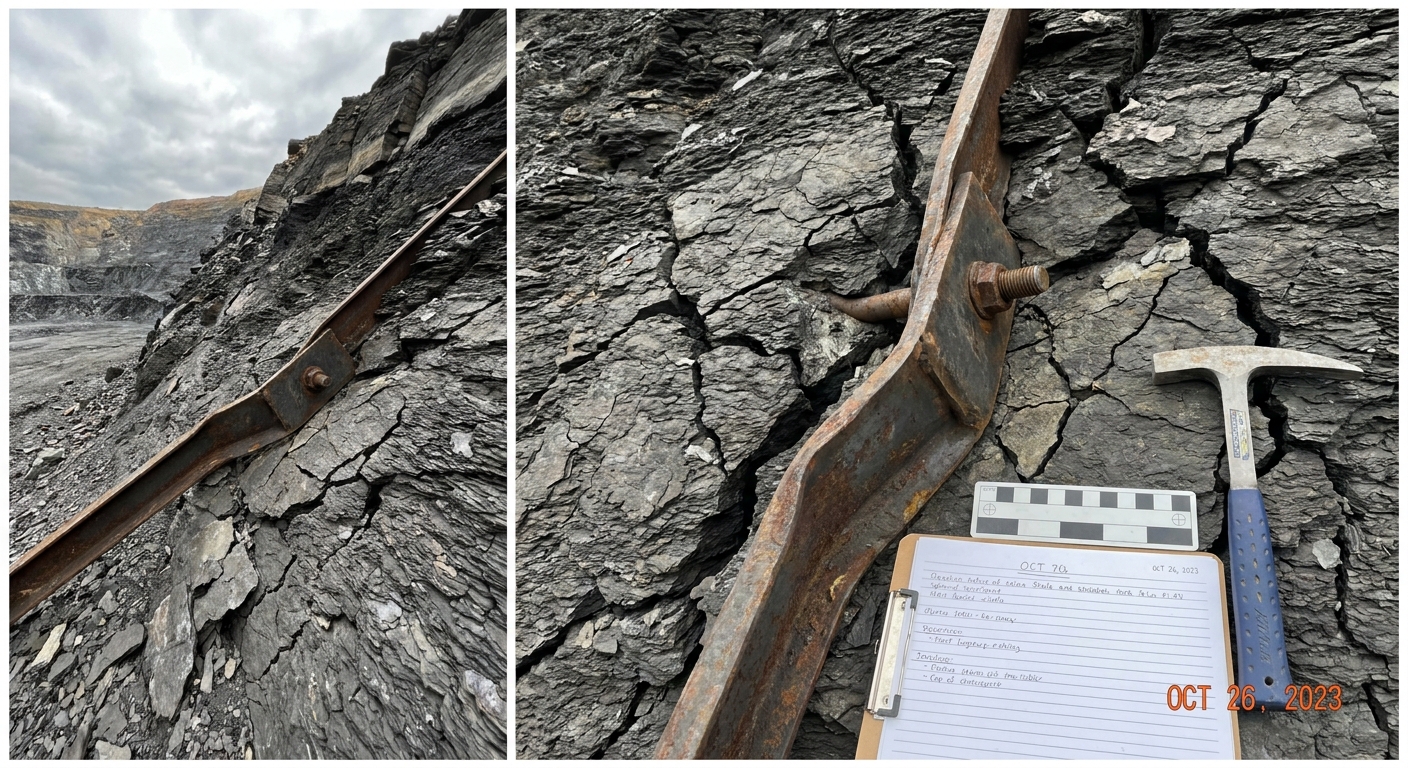
Friction stabilizers are ideal for highly fractured, jointed, or layered rock masses, but are not recommended for extremely soft, clay-rich, or muddy ground where a standard friction rock bolt cannot generate sufficient holding force. In jointed shale or granite, the continuous radial pressure acts as a powerful clamp, binding separate rock layers into a single cohesive beam. This dynamic clamping action prevents individual blocks from sliding or falling out of the roof. It is the ultimate stabilization method for blocky, seismically active ground.
However, if you attempt to install these stabilizers in soft, plastic clay, the borehole walls will simply deform outwards under the radial pressure. This lack of resistance prevents the bolt from achieving its rated frictional grip. In these weak, squeezing ground conditions, you must substitute alternative chemical or mechanical anchoring systems. Always match your bolting technology to your specific geological profile to guarantee maximum safety.
Performance in fractured rock
When you install these bolts in highly jointed granite or shale, they perform exceptionally well because they distribute load along the entire borehole length. The continuous radial force binds loose strata together, preventing localized failure. The crucial factor is this: this full-length grip is far superior to standard mechanical expansion anchors. Expansion bolts rely on a single point of contact and can slip easily in fractured rock.
- Jointed Shale/Granite: Outstanding; the bolt binds layered blocks via continuous radial shear.
- Hard Igneous Rock: Highly effective; provides solid resistance to maximize the radial interference fit.
- Squeezing/Plastic Ground: Excellent; the bolt yields with the rock mass without snapping.
Limitations in soft strata
You must exercise caution when dealing with clay-dense or highly weathered, muddy formations. In these geological conditions, the soft rock fails to provide the counter-pressure required for the interference fit. If you drive a bolt into these zones, the holding capacity can drop below acceptable safety margins. Under these circumstances, you should combine them with specialized chemical grouting to reinforce the borehole.
Key Takeaway: While incredibly versatile in fractured and jointed hard rock, friction bolts lose holding capacity in soft, clay-dense formations.
| Rock Type | Ground Condition | Suitability Level | Primary Mechanical Behavior | |
|---|---|---|---|---|
| Jointed Shale/Granite | Highly Fractured | Excellent | Binds layers via continuous radial shear | |
| Hard Igneous Rock | Solid, competent | High | Maximum resistance for interference fit | |
| Squeezing/Plastic | Dynamic stress | Moderate to High | Yields with rock mass without brittle snap | |
| Soft Clay/Muddy | Non-cohesive | Poor | Deforms under radial force, reducing grip |
Matching geological conditions with the correct anchor design is the only way to guarantee a reliable subterranean safety grid.
Conclusion
Friction stabilizers represent one of the most reliable and efficient ground support solutions available for modern underground mining and tunneling. By harnessing the physics of immediate radial friction, these slotted steel tubes and fiberglass rock bolts mitigate dangerous ground falls without the delay of curing resins. Their simple, two-part design provides passive-to-active stabilization the split second they are driven into the borehole wall. This simple mechanical action protects workers, safeguards multi-million dollar machinery, and keeps your project timelines completely on track.
If you are ready to elevate your safety standards and streamline your operational cycle, our team is prepared to deliver custom-manufactured ground support solutions built to your exact geological requirements. Please contact us today to discuss your project dimensions, rapid shipping logistics, and bulk pricing. Let us partner to build a safer, more productive future for underground operations worldwide.
FAQ
Can I install friction rock bolts in soft or muddy ground?
No, friction stabilizers are not recommended for extremely soft, clay-rich, or muddy strata. Because these bolts rely entirely on the surrounding rock’s structural resistance to generate holding friction, soft ground will simply deform outwards under the bolt’s radial pressure, drastically reducing the overall safety factor.
What’s the best way to determine the correct borehole size?
The best way is to refer strictly to the manufacturer’s technical specification sheet and perform regular on-site borehole measurements using a physical hole-gauge tool. Even minor drill bit wear can create an undersized hole that buckles the steel tube during driving, or an oversized hole that drastically degrades the bolt’s holding force.
How do I know if a friction bolt is starting to fail?
You can spot early warning signs of failure through routine visual inspections. Watch for visible deformation of the domed bearing plate, slippage of the welded ring flange down the shaft of the tube, or noticeable rock movement around the bolt collar. Performing periodic hydraulic pull tests on random sample bolts is the most definitive way to verify ongoing friction performance.
Can I reuse friction stabilizer bolts after they have been installed?
Absolutely not. Once a friction stabilizer is driven into a borehole, the steel tube undergoes permanent plastic deformation as it conforms to the irregular shape of the rock wall. Attempting to pull out and reinstall a spent bolt ruins its structural integrity, negates the interference fit, and is a severe safety violation.
What’s the best coating option for highly humid, wet mine shafts?
The best coating option is hot-dip galvanized steel. In highly humid or water-dripping mine environments, untreated black steel is highly susceptible to rapid rust and pitting corrosion, which compromises the bolt’s wall thickness and friction capacity over time. Hot-dip galvanizing provides a robust zinc protective layer that extends the life of the stabilizer.