Fiberglass rock bolts provide a highly versatile and durable solution for a variety of geotechnical reinforcement applications by combining complete corrosion resistance with exceptional tensile strength and an ultra-lightweight profile. When you operate in demanding underground mines or complex civil tunneling excavations, you face unstable rock strata and highly humid environments. Traditional steel supports degrade rapidly due to severe chemical and water corrosion, risking catastrophic cave-ins and requiring frequent, expensive maintenance. Fortunately, switching to a high-strength fiberglass rock bolt eliminates these critical vulnerabilities and guarantees immediate, long-lasting safety for your operations.
What is a fiberglass rock bolt?
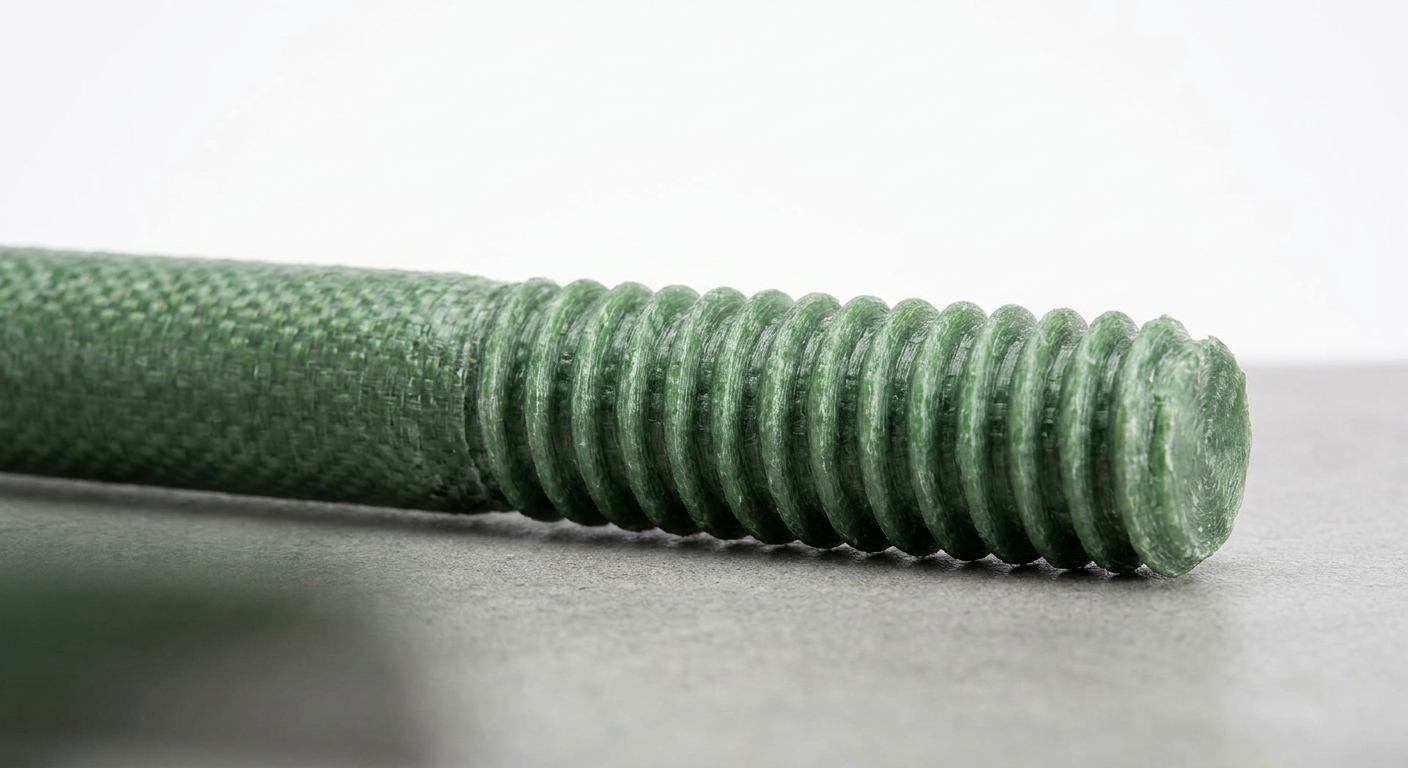
A fiberglass rock bolt is a high-strength composite reinforcing bar engineered from dense glass filaments bound by a protective polymer resin. This advanced composite material is designed specifically to replace heavy, rust-prone steel anchors in highly demanding geological environments. When you install these modern polymer supports, they create a reliable, continuous reinforcement system in rock formations. They work seamlessly alongside your underground infrastructure to guarantee long-term stability and high load distribution.
You can easily carry and install these lightweight bolts without causing worker fatigue. They offer high axial strength and excellent compatibility with standard chemical grouts. This makes them a trusted choice for modern underground support projects. For roof-bolting operator precautions, see MSHA guidance.
Structural Composition and Design
The core of this advanced support solution consists of thousands of high-purity glass fibers. These continuous fibers are pulled tight under tension and saturated with a durable vinyl ester or epoxy resin matrix. This combination results in a finished profile that matches the tensile capacity of traditional steel. Think about it: you are getting a lightweight alternative that does not compromise on raw holding power.
The outer surface features continuous rib threading to ensure a superior mechanical bond with chemical resins. This threaded profile allows for immediate tensioning during installation. Here is the kicker: you get immediate roof safety without waiting hours for the support to stabilize.
- High fiber-to-resin ratio for maximum durability
- Continuous rib design for secure mechanical interlocking
- Fully compatible with fast-setting mining resins
Key Operational Advantages
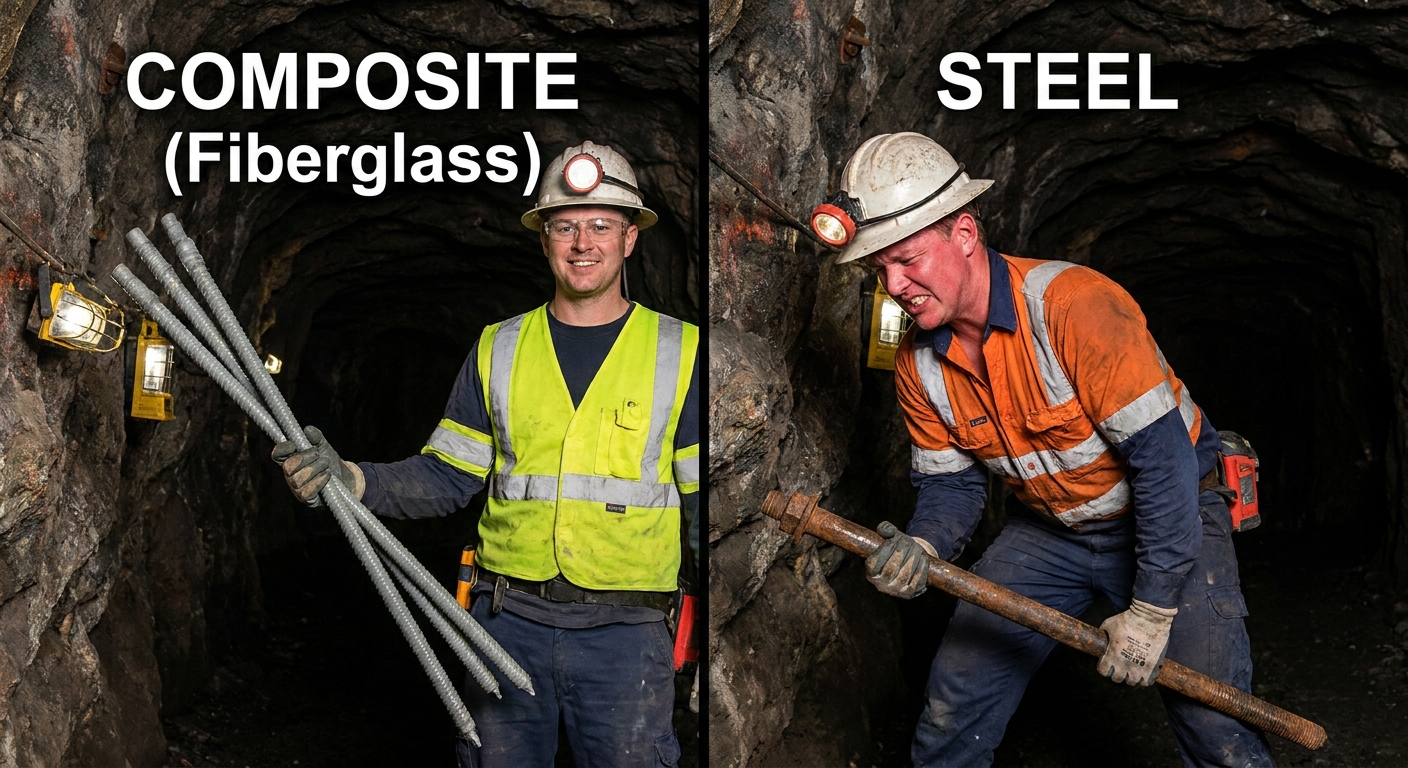
Switching from heavy steel to lightweight composites transforms your field ergonomics instantly. Your crews can carry multiple composite bolts easily, which speeds up the daily installation cycle. This rapid pace directly reduces your overall tunneling timelines. Think about it: you are saving time and money on every shift.
Furthermore, their unique mechanical properties protect downstream machinery from costly damage. If a mining machine cuts into a composite bolt, the material shreds harmlessly. This is a game-changer for continuous excavation operations.
Key Takeaway: Upgrading to lightweight composite bolts improves your project timeline and worker safety by eliminating the physical strain and machinery damage associated with traditional steel.
| Specification | Composite Bolt Detail | |
|---|---|---|
| Base Material | Continuous glass fibers with epoxy/vinyl ester resin | |
| Thread Type | Continuous left-hand or right-hand ribbing | |
| Key Benefit | Corrosion resistance with high tensile strength |
Understanding these fundamental physical characteristics helps you make informed decisions when upgrading your underground support systems.
Why choose a fiberglass rock bolt?
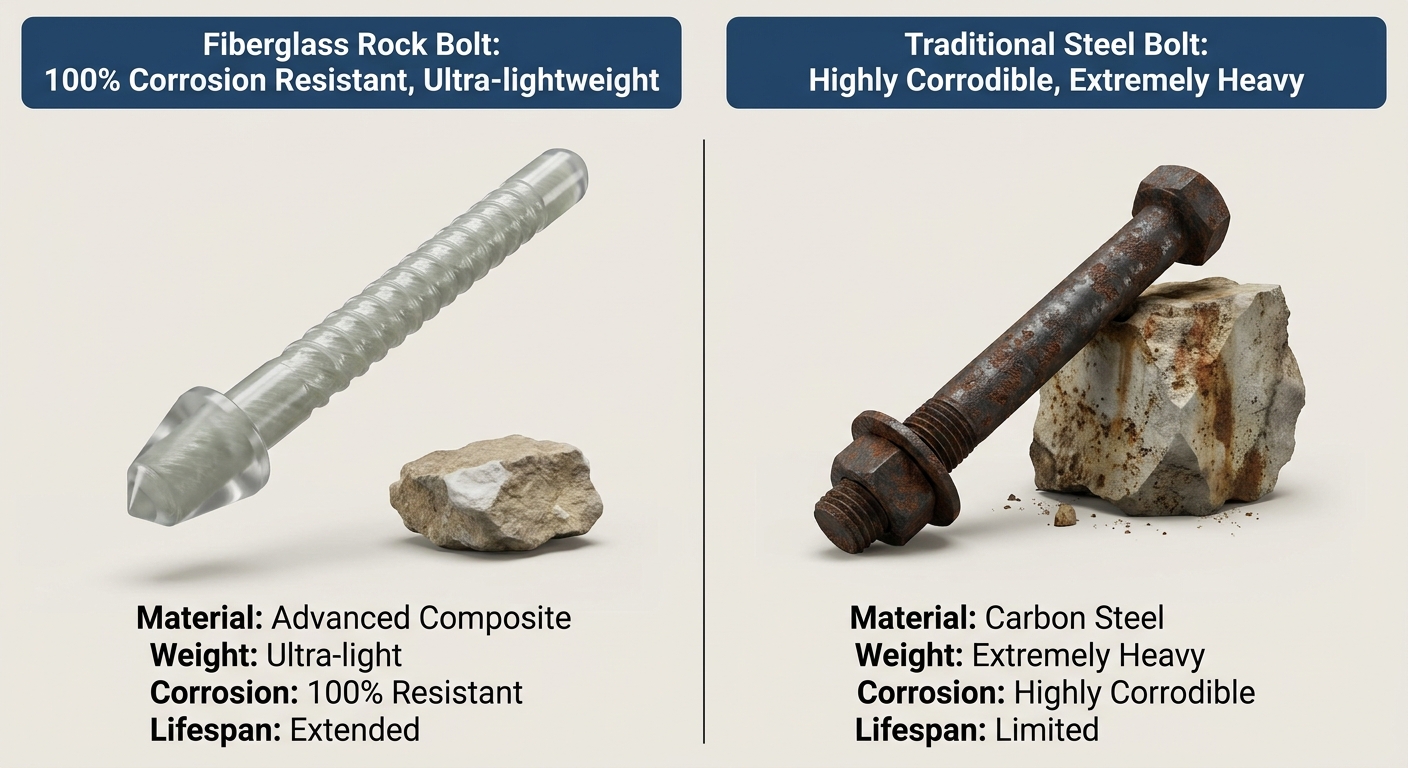
You should choose a fiberglass rock bolt because it provides complete immunity to corrosion, high tensile strength, and a lightweight profile that steel simply cannot match. When your project operates in extremely humid and chemically aggressive environments, traditional steel bolts fail rapidly. This modern polymer alternative stands up to acidic conditions without losing any structural integrity. Consequently, you save on costly remediation projects and secure your tunnel for decades.
Additionally, handling lighter materials reduces physical strain on your crew. This safety improvement translates directly to higher productivity and lower worker compensation claims. Making this switch is a smart move for any safety-conscious mining manager.
Complete Resistance to Corrosion
Acidic mine water and aggressive soils are notorious for eating through steel rock bolts in a matter of months. When steel rusts, it expands, causing severe cracking in the surrounding rock strata. But wait, there is more: composite polymer bolts do not react with water, oxygen, or subterranean chemicals. This makes them completely immune to corrosion.
By using this advanced material, you eliminate the risk of structural failure caused by rust. This ensures your ground reinforcement remains perfectly stable for its entire operational life. It is the ultimate insurance policy against ground movements.
- Immune to highly acidic or alkaline mine environments
- Prevents rust-induced rock expansion and cracking
- Maintains original holding force in humid areas
Ergonomics and Worker Safety
Traditional steel anchors are incredibly heavy, making manual installation physically exhausting and dangerous. Workers face high risks of back strains, slips, and falls when carrying them up steep rock faces. Here is the kicker: composite bolts are up to 75% lighter than steel. This weight reduction simplifies handling and drastically cuts down on onsite injuries.
Your installation crews can work faster and with less fatigue throughout their shifts. This ergonomic benefit keeps morale high and keeps your project timelines on track. It is a win-win for safety and efficiency.
Key Takeaway: Choosing lightweight, rust-proof composite bolts protects your physical assets from structural decay while safeguarding your workers from strain injuries.
| Feature | Fiberglass Rock Bolt | Traditional Carbon Steel | |
|---|---|---|---|
| Corrosion Rate | 0% (Immune) | High (Requires protection) | |
| Weight Index | 25% of steel | 100% (Extremely heavy) | |
| Manual Handling | Easy and low strain | Difficult, high risk of injury |
This direct comparison proves that shifting to modern polymer materials eliminates the physical and environmental vulnerabilities of steel.
Where is a fiberglass rock bolt used?
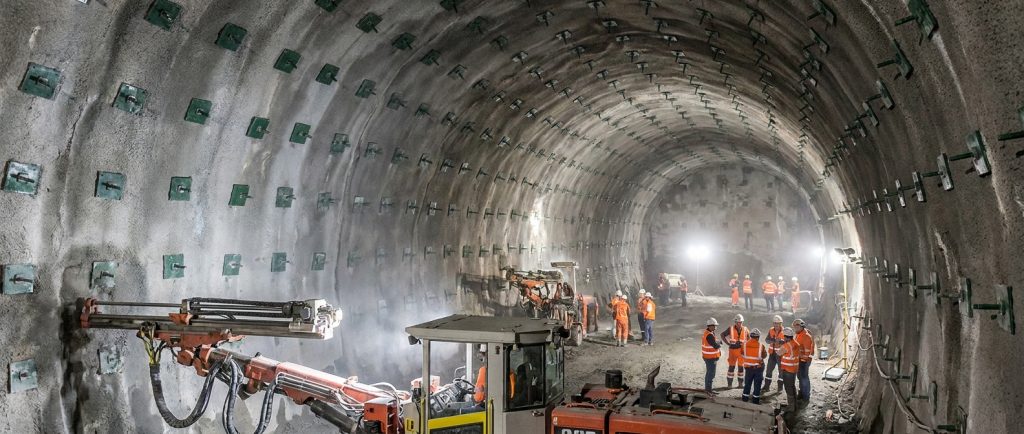
A fiberglass rock bolt is used primarily in underground mining, civil tunneling, slope stabilization, and temporary excavation works where durability is a priority. These highly flexible anchors excel in environments that demand rapid excavation and cutting-edge ground support. When you apply them in soft rock mass or coal seams, they provide reliable geological reinforcement. They ensure the stability of major transit lines and deep-level extraction shafts globally.
You can deploy them in municipal projects to secure soil walls and rock faces. Their high versatility makes them adaptable to a wide array of geological formations. Choosing them ensures your civil projects stand on solid ground.
Underground Mining Operations
In deep underground coal mining, continuous cutters frequently need to drive through supported faces. If you use steel bolts, the cutter heads will be destroyed upon contact, causing expensive machine damage and prolonged downtime. Think about it: cuttable composite anchors let your heavy machinery slice straight through the rock and supports seamlessly. This keeps your production moving without expensive interruptions.
This clean cutting action produces no dangerous sparks, significantly reducing the risk of gas explosions in underground faces. It is a critical safety feature that protects both your capital equipment and your crew.
- Easy cutability for continuous mining machine heads
- Zero cutter head damage or expensive replacement parts
- Spark-free cutting to prevent gas explosions
Civil Engineering and Tunnels
Civil engineering projects such as subway tunnels and highway slopes require permanent, worry-free stabilization systems. Standard metal anchors degrade over time when exposed to the atmosphere and moisture, leading to structural shifts. Here is why: composite materials remain completely unaffected by weather, ensuring decades of reliable hold. They provide the perfect solution for long-term municipal infrastructure reinforcement.
They are also widely used in temporary soil nailing during deep foundation excavations. Once the permanent structure is built, these temporary anchors can be easily excavated by standard machinery. This makes municipal development much simpler and safer.
Key Takeaway: Utilizing cuttable and environmentally stable composite anchors optimizes continuous mining operations and secures municipal infrastructure for decades.
| Application Area | Primary Structural Role | Equipment Safety Advantage | |
|---|---|---|---|
| Coal Face Mining | Temporary roof support | Safe for continuous miners | |
| Subway Tunneling | Permanent rock stabilization | Immune to stray electrical currents | |
| Slope Retention | Long-term soil nail support | Resistant to weathering |
Aligning your material choices with these specific application needs ensures maximum equipment safety and long-term project viability.
How does a fiberglass rock bolt perform?
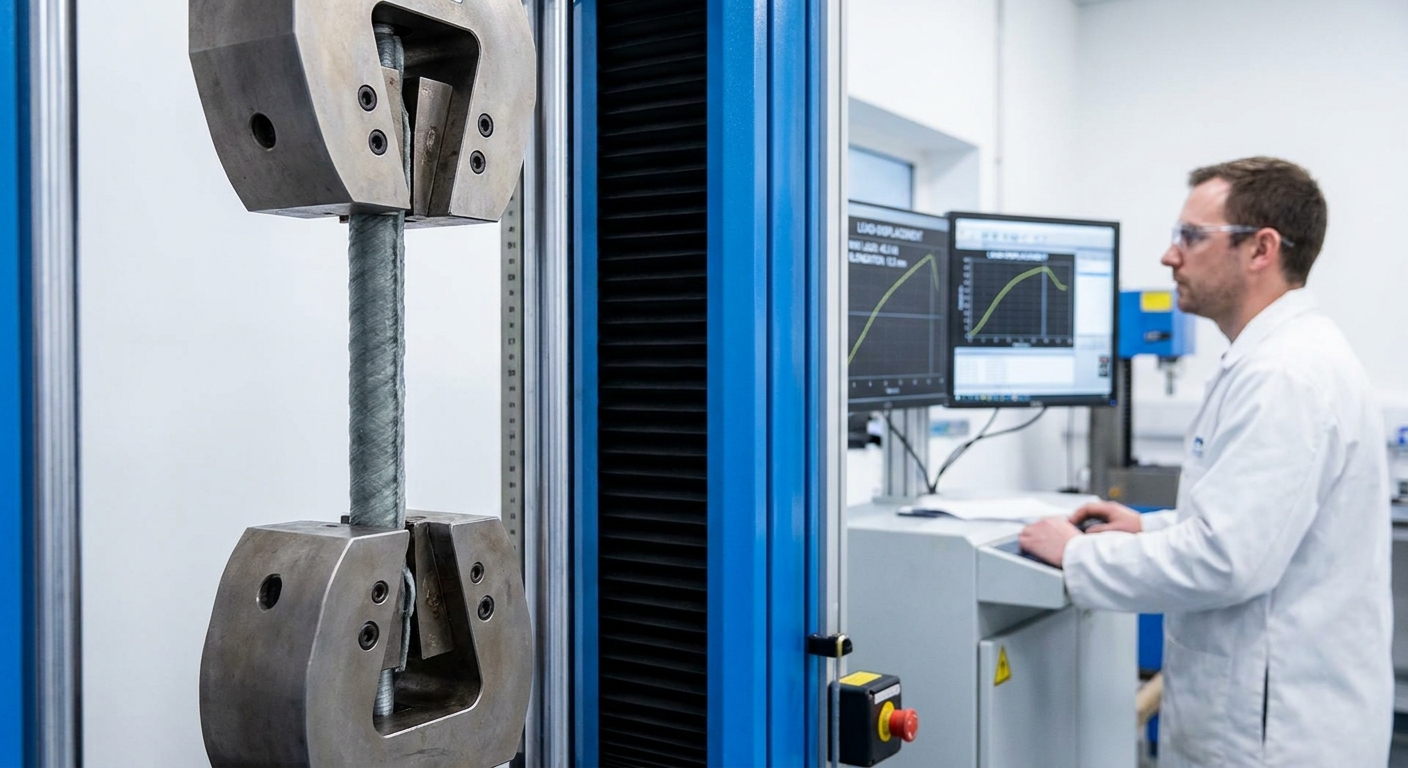
A fiberglass rock bolt performs exceptionally well under high tensile loads, offering strong axial resistance combined with unique cutability. You might worry that non-metallic components cannot match the raw strength of heavy carbon steel. In reality, these polymer composites are engineered to deliver impressive load-bearing capacity that secures heavy strata. They withstand severe geological stress while maintaining their shape and anchoring force perfectly.
Furthermore, their elastic properties allow them to absorb minor ground movements without fracturing. This flexibility is critical in preventing sudden, unpredictable rock collapses. You can rely on them to keep your workings highly secure.
Exceptional Tensile Strength
These composite anchors boast tensile strengths that can easily exceed 1000 MPa, making them incredibly robust under pressure. This performance is achieved through the continuous alignment of premium glass fibers during production. Here is the kicker: you get a bolt that is physically stronger than standard steel on a per-weight basis. This gives you peace of mind during deep-ground operations.
This high load capacity prevents roof sagging and holds multi-layered rock formations together securely. It provides a reliable safety net that protects your crew from sudden geological failures. It is engineering excellence at its finest.
- Tensile strength values exceeding 1000 MPa
- High strength-to-weight ratio for easy logistics
- Excellent load transfer to surrounding grout
High Shear and Cutability Profile
While these bolts offer excellent axial strength, they are designed with low shear resistance to allow for easy cutting. When your excavation machinery passes through, it can slice the bolt without tooth damage. But wait, there is more: this cutability is achieved without producing dangerous frictional sparks underground. This ensures your active mine face remains completely safe at all times.
This combination of high tensile support and clean shear cutability is unique to polymer composite technology. It allows your project to balance robust ground safety with rapid machinery advancement. This is the ultimate operational efficiency tool.
Key Takeaway: The unique combination of high tensile capacity and easy machine cutability ensures your mine remains structurally secure while protecting your cutting machinery.
| Performance Property | Expected Value | Operational Benefit | |
|---|---|---|---|
| Tensile Strength | >1000 MPa | Secure high-pressure ceiling support | |
| Shear Strength | Moderate to High | Prevents lateral layer shifting | |
| Cutability Index | Excellent | Zero cutter tooth damage |
Evaluating these technical performance values demonstrates how composite bolts deliver the perfect balance of raw strength and physical flexibility.
What is a fiberglass rock bolt made of?
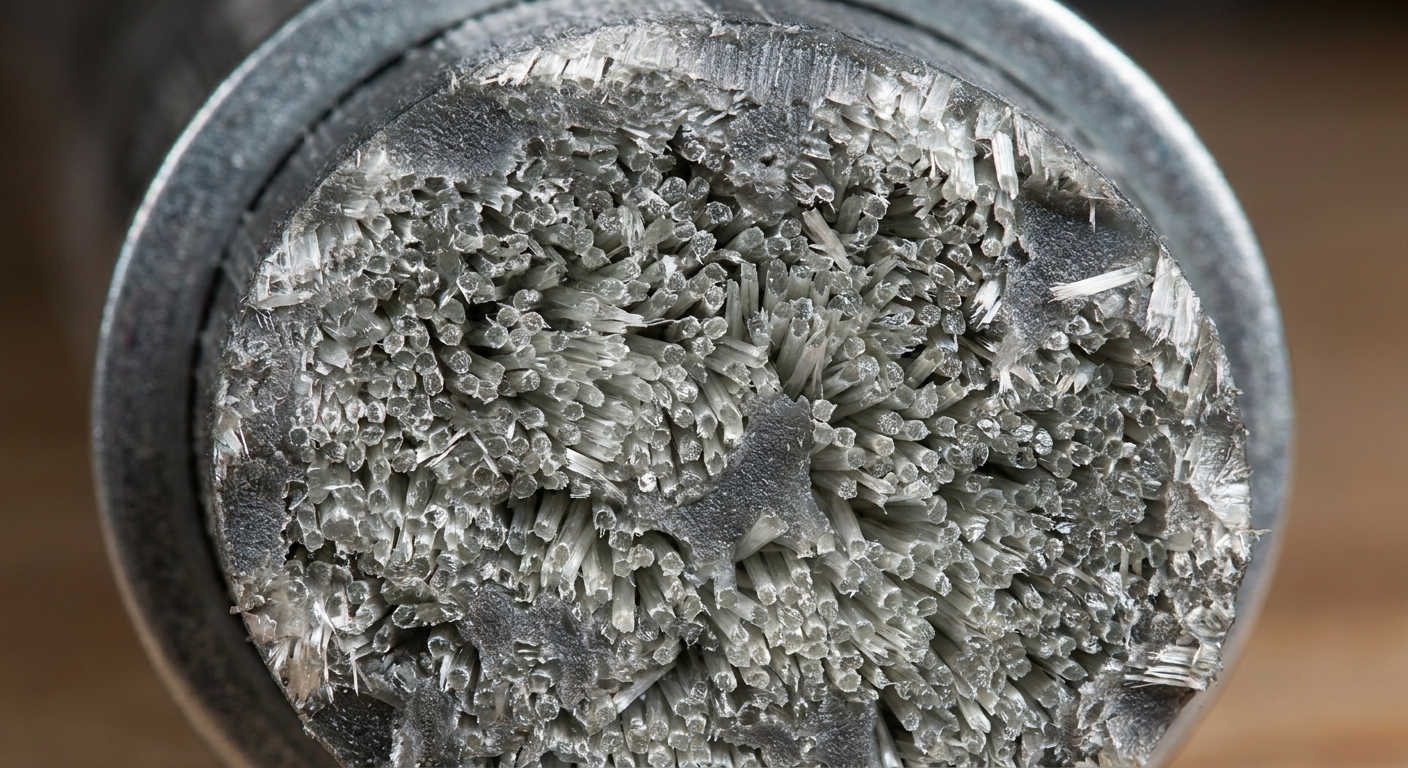
A fiberglass rock bolt is made of thousands of high-strength glass fibers bound together with a durable resin matrix. This advanced formulation is engineered to create a tough, non-corrosive structural anchor that easily outperforms standard metals. When you look closely at its physical design, you see a highly organized composite matrix. This continuous alignment of glass fibers is what gives the bolt its incredible mechanical performance.
The polymer matrix protects these fibers from moisture and environmental degradation. This dual-component system ensures your ground supports remain active and secure for decades. It is a masterpiece of modern materials science.
Continuous Glass Fiber Reinforcement
The core structural strength of the anchor comes from the continuous glass filaments running along its length. These fibers are manufactured from premium E-glass or S-glass, ensuring uniform density and high mechanical properties. Think about it: every single fiber contributes to holding up the massive weight of your mine’s ceiling. This density translates into reliable ground safety you can always trust.
These fibers are carefully tensioned during the pultrusion manufacturing process to maximize their load-carrying capacity. This guarantees that the final product remains free from structural voids or weak points. It is built to handle the toughest underground pressures.
- Premium E-glass filaments for high structural integrity
- Continuous, void-free fiber alignment
- Optimal load distribution along the entire bolt length
Advanced Polymer Resin Matrix
The continuous fibers are bound together by a premium vinyl ester or epoxy resin matrix. This resin acts as a protective shield, preventing chemicals from reaching the structural glass fibers. Here is why: without this protective barrier, subterranean water would eventually weaken the internal fibers. The high-performance resin ensures complete environmental protection and long-term durability.
This specialized formulation also provides high bonding strength with your chemical anchoring grouts. This quick bonding ensures immediate load transfer as soon as the resin cures. It is the key to achieving fast-setting, reliable ceiling support.
Key Takeaway: Combining continuous premium glass fibers with a protective polymer resin results in an ultra-strong, chemical-resistant anchor built for extreme underground conditions.
| Raw Material | Primary Material Type | Structural Purpose | |
|---|---|---|---|
| Reinforcing Fibers | E-Glass / S-Glass filaments | Generates massive tensile resistance | |
| Binding Matrix | Vinyl Ester / Epoxy Resin | Shields fibers and distributes stress | |
| Outer Profiling | Composite rib threads | Facilitates chemical grout bonding |
Understanding this high-tech composition reveals why composite anchors are physically superior to raw, unprotected steel.
How to install a fiberglass rock bolt?
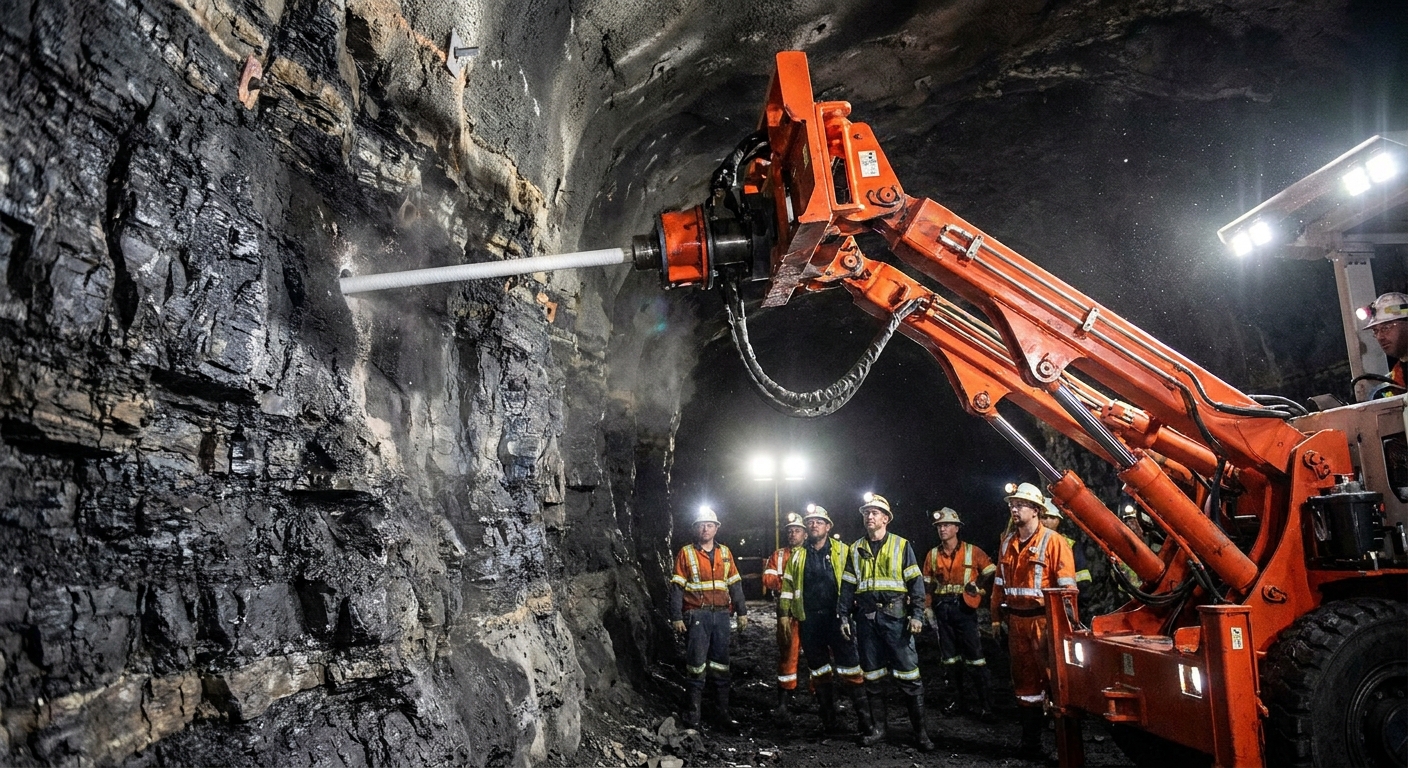
To install a fiberglass rock bolt, you must drill a borehole of correct diameter, insert the resin cartridges, and spin the bolt to mix the chemicals. This precise sequence is vital for ensuring the composite anchor achieves its full load-bearing capacity. When you follow the correct procedures, the fast-acting chemical grout cures within seconds to secure the rock. This rapid stabilization is crucial for keeping your active work faces completely safe.
You can easily integrate this installation process with standard mining and tunneling equipment. No specialized tools are required, which simplifies your field logistics. This ease of use helps your crew maintain rapid progress safely.
Drilling and Hole Preparation
The first step requires drilling a borehole to the exact depth and diameter specified by your engineering plans. Any dust or loose debris left inside the hole can weaken the chemical bond of the resin. Here is the kicker: taking time to clean the hole with water or compressed air ensures maximum anchoring strength. This small step prevents support failure later.
Once the borehole is completely clean, you can proceed with confidence to the insertion phase. Proper alignment is just as critical here as keeping your heavy conveyor systems perfectly balanced. A clean borehole is the foundation of high-performance support.
- Drill hole to exact engineered specifications
- Thoroughly flush out residual dust and debris
- Verify hole depth matches your composite bolt length
Resin Mixing and Torque Application
After inserting the fast-setting resin cartridges into the clean hole, you must push and spin the composite bolt. This rapid spinning action mixes the two-part chemical components, initiating the curing process immediately. But wait, there is more: this chemical reaction occurs so quickly that you can tension the bolt within a few minutes. This immediate holding power prevents any initial ground shifting.
Finally, apply the specified torque to the end nut to secure the bearing plate tightly against the rock face. This mechanical pre-tensioning locks the strata in place, providing instant roof stability. It is the perfect finishing touch to a secure installation.
Key Takeaway: Following a disciplined, multi-step installation process ensures your chemical grout mixes perfectly, achieving maximum load-bearing capacity to protect your workforce.
| Installation Phase | Key Action Required | Expected Safety Outcome | |
|---|---|---|---|
| Phase 1: Borehole Drilling | Drill and flush out dust | Prepares clean surface for bonding | |
| Phase 2: Resin Insertion | Insert rapid-cure cartridges | Prepositions adhesive components | |
| Phase 3: Bolt Spinning | Spin bolt to mix chemical resin | Initiates rapid curing reaction | |
| Phase 4: Pre-Tensioning | Tighten end nut with torque | Locks rock strata in place instantly |
Executing these steps with precision guarantees that your composite anchors perform at their designed structural limits.
What is the fiberglass rock bolt lifespan?
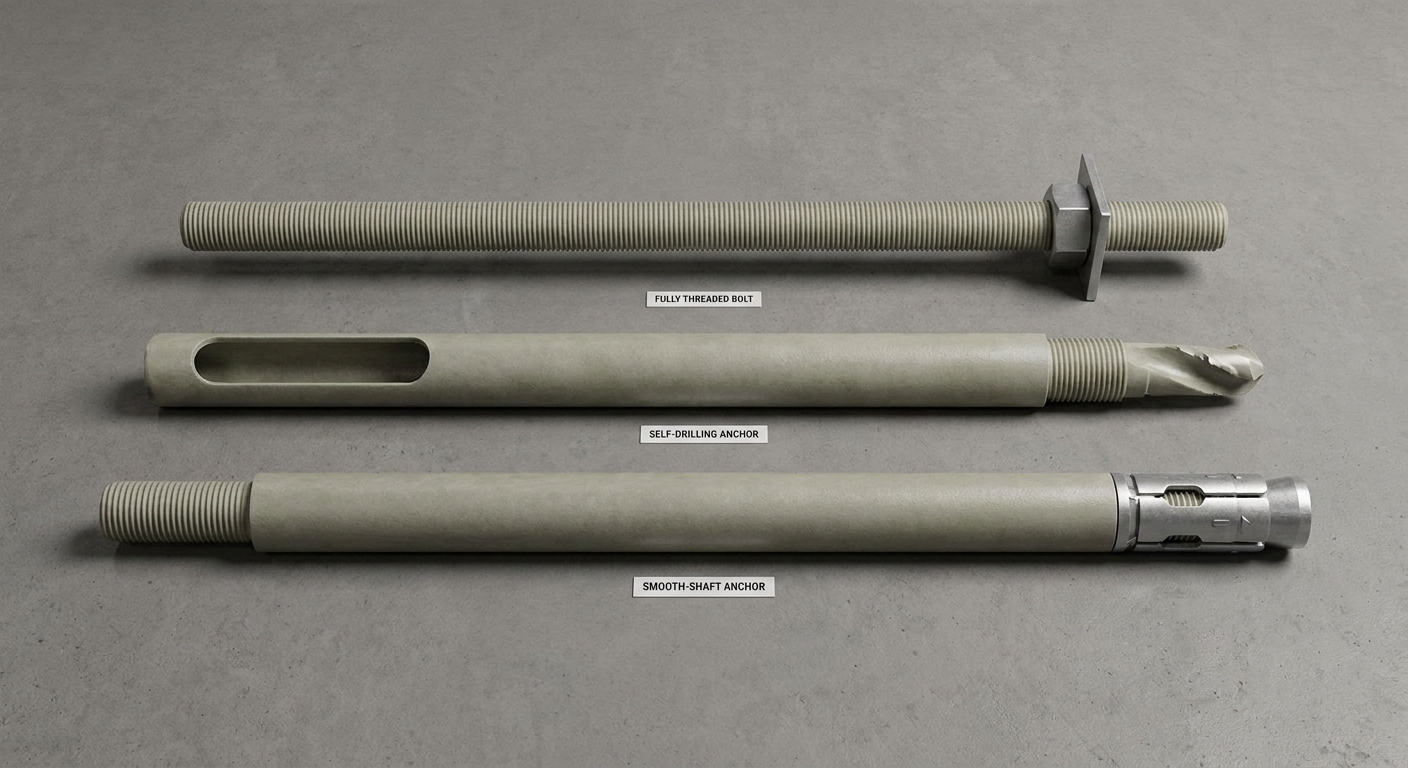
The fiberglass rock bolt lifespan regularly exceeds 100 years under normal underground conditions, making it an incredibly durable permanent solution. Traditional steel supports lose their structural strength rapidly due to continuous exposure to acidic mine water. When you switch to advanced composite bolts, you bypass these maintenance headaches entirely. They maintain their full load-bearing capacity without any degradation over decades of continuous service.
This incredible longevity makes them the ideal choice for municipal projects where retrofitting is extremely difficult. You can install them once and enjoy worry-free performance for the entire lifecycle of your infrastructure. This long-term stability is what makes them highly cost-effective.
Superior Environmental Longevity
Underground tunnels are highly corrosive environments, saturated with salts, gases, and highly acidic groundwater. Under these harsh conditions, unprotected steel anchors can fail in less than five years, requiring expensive rehabilitation. Think about it: composite materials do not rust or react with acidic water. This chemical inertness guarantees that your support system remains fully functional for over a century.
By choosing these non-corrosive supports, you eliminate the need for regular, dangerous replacement work. This keeps your tunnels open and your maintenance budgets highly predictable. It is the ultimate set-and-forget ground support solution.
- Immune to severe groundwater acidity and salt spray
- No material degradation or rust-related expansion
- Eliminates recurring structural inspection costs
High Resistance to Material Creep
Some synthetic reinforcing materials tend to stretch or lose tension under continuous heavy loads, a phenomenon known as creep. High-performance composite bolts are formulated to resist this long-term deformation, keeping your tunnel roofs secure. Here is why: the continuous glass fiber core maintains its original tension and shape under massive geological pressure. This prevents the ceiling from sagging or shifting over time.
This structural stability means you never have to worry about re-tensioning your anchors after installation. They provide a reliable, maintenance-free grip that keeps your infrastructure perfectly safe for decades. This reliability is highly valued by global engineering firms.
Key Takeaway: An outstanding 100-year lifespan under highly corrosive conditions ensures that composite rock anchors deliver permanent, maintenance-free ground support for your projects.
| Support Material | Lifespan in Acidic Soil | Long-Term Maintenance | |
|---|---|---|---|
| Fiberglass Bolt | 100+ Years | None (Zero maintenance) | |
| Standard Carbon Steel | 5 to 15 Years | High (Requires regular replacements) | |
| Galvanized Steel | 15 to 30 Years | Moderate (Requires check of coatings) |
This longevity comparison highlights how shifting to non-metallic reinforcement protects your long-term capital investments from structural decay.
Is a fiberglass rock bolt cost-effective?
Yes, a fiberglass rock bolt is highly cost-effective when you evaluate the total lifecycle savings from reduced shipping, fast installation, and zero maintenance. While the initial purchase price of composite materials can be slightly higher than raw steel, the long-term savings are massive. When you install these rust-proof bolts, you eliminate the recurring costs of inspection, repair, and replacement. Consequently, your overall project expenses are significantly lower over the life of the facility.
Furthermore, their light weight cuts transport and labor costs dramatically, making them highly attractive for tight project budgets. This economic benefit makes them the smart choice for smart infrastructure managers. You get better safety at a lower long-term cost.
Drastic Transport and Handling Savings
Shipping heavy steel anchors to remote mining sites is extremely expensive and consumes valuable transport capacity. Because composite anchors are up to 75% lighter, you can transport four times as many bolts for the same shipping cost. Here is the kicker: this massive weight reduction also means fewer workers are needed for manual handling. This lowers your onsite labor costs while speeding up your project timeline.
Easier handling also translates directly into a safer work site with fewer manual handling accidents. This reduces downtime caused by worker injuries, keeping your project moving forward smoothly. It is a major economic benefit that standard steel cannot match.
- Up to 75% savings in shipping and logistics weight
- Fewer transport vehicles required for remote sites
- Dramatically lower physical strain on installation crews
Elimination of Maintenance Costs
Traditional steel installations require continuous monitoring and regular, expensive replacements to prevent catastrophic failures. When you choose composite materials, those recurring operational costs disappear completely because the material never rusts. Think about it: you are purchasing a lifetime support solution that requires zero future maintenance. This lets you allocate your budget to other critical development areas.
Additionally, their easy cutability protects your expensive mining machinery from cutter head damage. This avoids costly equipment downtime and replacement parts, adding thousands of dollars back to your bottom line. It is the ultimate financial choice for modern operations.
Key Takeaway: Evaluating total lifecycle costs reveals that composite anchors provide the lowest total cost of ownership by eliminating maintenance, transport weight, and equipment damage.
| Cost Factor | Fiberglass System | Traditional Steel System | |
|---|---|---|---|
| Shipping Weight | Ultra-lightweight | Extremely heavy and costly | |
| Maintenance Fees | Zero (Immune to corrosion) | High (Requires periodic replacements) | |
| Machinery Risk | Zero (Cuttable and safe) | High (Destroys cutter heads on contact) |
This financial analysis demonstrates that investing in high-grade polymer composites yields substantial returns over standard steel solutions.
How to source a fiberglass rock bolt?
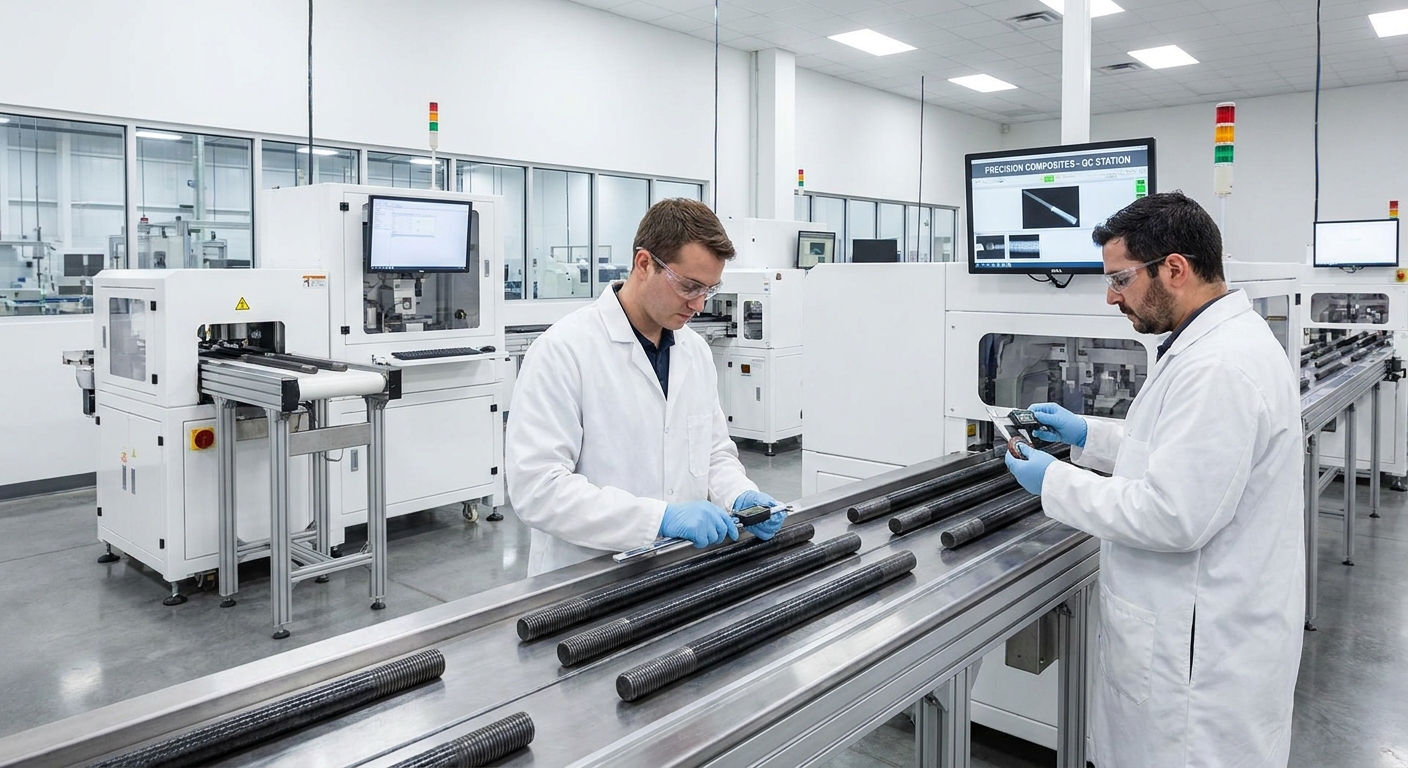
To source a high-quality fiberglass rock bolt for your projects, you must partner with a certified manufacturer who uses premium resins and offers rigorous testing certificates. Working with an experienced industrial manufacturer ensures that your support materials are built to meet strict ISO 9001 standards. When you purchase directly from an established supplier, you can request customized lengths and thread designs. This guarantees that your geological anchors fit your specific site conditions perfectly.
A reliable manufacturer will also provide full technical support and batch-specific test reports to prove tensile capacity. This transparency gives you absolute confidence in the safety of your underground operations. It is the only way to source professional-grade support materials.
Verifying Quality and Certifications
Underground safety leaves absolutely no room for compromise, which is why verifying manufacturer certifications is vital. You should always demand independent laboratory test reports showing the precise tensile and shear strength of the bolts. But wait, there is more: a certified manufacturer uses premium raw materials like vinyl ester resin and continuous glass filaments. This guarantees that your anchors perform reliably under maximum geological stress.
Avoid uncertified, low-cost suppliers who use low-grade polyester resins or recycled glass fibers. These cheap alternatives can fail unexpectedly under high geological load, placing your underground crews in extreme danger. Always prioritize proven safety and certified quality.
- Always request ISO 9001 quality management certificates
- Demand batch-specific tensile and shear test reports
- Verify the raw material composition with your supplier
Custom Engineering and Integration
Every underground mine and tunnel project has unique geological challenges that require custom engineering solutions. Sourcing from a versatile manufacturer allows you to request customized thread pitches, outer diameters, and lengths. Here is why: custom-tailored anchors integrate seamlessly with your existing hydraulic installation rigs. This prevents onsite adaptation issues and ensures your installation crew works at maximum speed.
Additionally, you can coordinate your support material orders with your overall heavy-duty conveyor hardware needs. This centralized procurement simplifies your logistics and ensures that all your heavy-duty components arrive on time. It is the most efficient way to manage large-scale industrial projects.
Key Takeaway: Partnering with a certified, quality-focused manufacturer guarantees you receive high-performance, custom-engineered support materials that protect your underground operations.
| Sourcing Parameter | Recommended Target | Risk to Avoid | |
|---|---|---|---|
| Manufacturing Standard | ISO 9001 and CE Certified | Uncertified, low-cost generic suppliers | |
| Testing Verification | Batch-specific lab reports | No material safety data sheets | |
| Material Grade | Premium vinyl ester and continuous fibers | Low-grade polyester with air voids |
Establishing these strict quality parameters prevents sourcing failures and ensures your geological support systems meet international safety standards.
Why trust our fiberglass rock bolt FAQ?
You can trust our fiberglass rock bolt FAQ because we compile technical answers from experienced mining engineers and composite materials experts who work directly in the field. When you are managing complex underground operations, you need accurate, real-world data to make safety decisions. This comprehensive FAQ is designed to address your most critical questions about composite support performance. We provide clear, direct insights to help you optimize your ground reinforcement systems safely.
Our expert guidance simplifies your transition from heavy steel to lightweight, high-performance composites. This ensures your project benefits from maximum efficiency and complete safety. You can rely on our technical expertise to guide your sourcing decisions.
Frequently Asked Questions
Below are the answers to the most common questions about composite rock anchors. These answers are designed to help you understand their physical limits and practical benefits in active tunnels. Here is why: having clear technical answers simplifies your engineering designs and keeps your project on track. Let’s explore these critical questions together.
We cover installation, cutability, durability, and compatibility to give you a complete picture of this advanced technology. This ensures your project benefits from maximum safety and operational efficiency. Here are the expert details you need.
- Expert guidance on continuous miner cutability
- Clear criteria for chemical grout selection
- Reliable data on long-term chemical durability
Key Takeaway: Having access to expert-verified technical answers enables your team to deploy composite anchors safely, maximizing underground productivity.
Can I cut a fiberglass rock bolt using standard mining machinery?Yes, you can cut them cleanly with standard continuous mining heads. The advanced glass fibers and polymer resins are formulated to shred cleanly without causing spark hazards or damaging the expensive steel cutting teeth of your excavation equipment.
What’s the best resin to use for anchoring these composite bolts?High-performance vinyl ester or epoxy chemical grout is the best choice for anchoring. These resins create a reliable, high-strength chemical bond with the continuous threads of the bolt and the surrounding rock face, curing within minutes to provide immediate structural support.
How do I know if fiberglass is strong enough for my tunnel roof?You can easily verify this by checking the high-tensile test certifications of the manufacturer. Modern composite bolts meet or exceed the tensile strengths of conventional carbon steel while remaining highly immune to shear failures and geological shifts.
Can I use these bolts in highly acidic groundwater environments?Absolutely, they are completely immune to chemical and acidic corrosion. Unlike traditional steel anchors which quickly weaken and rust in aggressive water, these polymer composites maintain their structural integrity for over a century.
What’s the best way to handle these bolts on a steep underground site?Manual handling is the best and safest option due to their extremely lightweight profile. Your installation crew can carry multiple bolts simultaneously without risking back injuries or suffering from rapid fatigue, speeding up your overall workflow.
Achieving Ground Safety and Operational Efficiency
Finding a balance between robust ground reinforcement and rapid excavation speed is the key to successful tunneling and mining. By replacing rust-prone steel with advanced polymer composites, you completely resolve the chronic problems of high maintenance, frequent rust-related structural failures, and equipment wear. We can provide you with fully customized engineering components tailored to your exact site specifications, supporting your operations from ground support to bulk material transport. Our brand vision is to deliver unbreakable, ultra-durable mining and civil engineering products that guarantee worker safety and maximum productivity worldwide. For more details on how to optimize your geological reinforcement, you can contact us today to explore our full range of heavy-duty composite anchors and support systems.