
Why Does Ground Stability Matter in Construction?
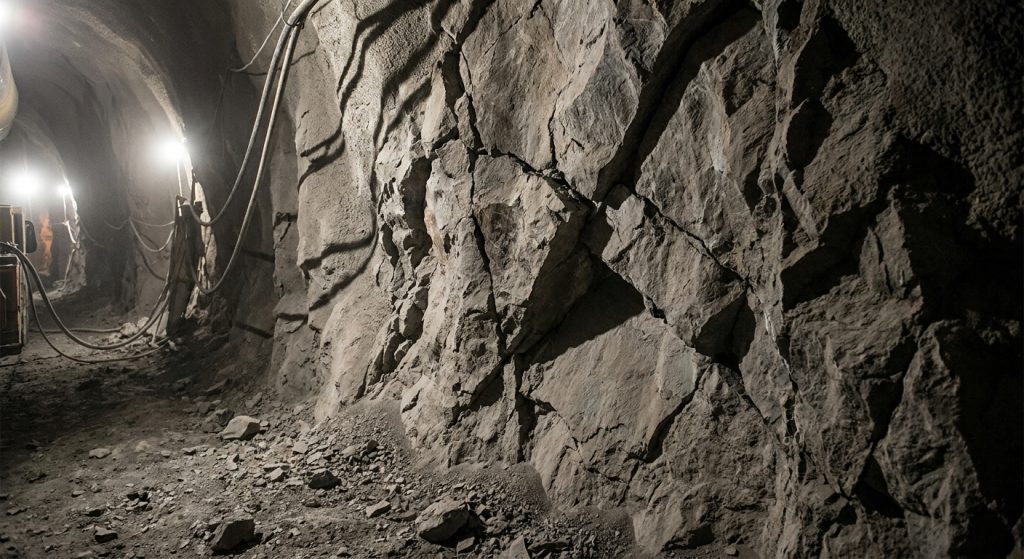
The primary difference between a rock bolt and a rock anchor is that a rock bolt is a shorter, active reinforcement system designed to stabilize localized fractured rock mass, whereas a rock anchor is a longer, high-capacity system designed to transfer heavy structural loads deep into stable bedrock. Unstable geological formations pose an immense threat to modern underground excavations, jeopardizing lives and structural integrity. When a ceiling or rock face begins to fail, the resulting delays, damaged machinery, and safety hazards can quickly ruin your project’s bottom line. Choosing the right support setup with a high-quality rock bolt vs rock anchor is the ultimate solution to secure your workspace and maintain continuous operational safety.
Understanding these geological differences ensures that your site team implements the most cost-effective and structurally sound stabilization method. From deep underground mines to major highway cuts, selecting the wrong system can lead to devastating geotechnical failures.
The Danger of Unstable Geotechnical Formations
Geological shifts and shifting strata are constant hazards during heavy excavation. When you are working on a dynamic site, unpredictable pore water pressure and shear stress can compromise even the most rugged ground support.
Think about it: without robust stabilization, a minor rock slip can escalate into an uncontrollable cave-in within seconds. You need a reliable reinforcement strategy to prevent catastrophic ground movement before it happens.
- Uncontrolled pore pressure lubricates weak joint planes.
- Foliation and jointing patterns create dangerous falling blocks.
- Environmental weathering rapidly degrades rock mass self-support.
Protecting your workers and heavy-duty machinery from sudden collapse is always your top priority. Choosing appropriate structural support systems prevents costly project downtime and ensures compliance with strict safety regulations.
The Engineering Challenge of Rock Reinforcement
Geotechnical engineers face the continuous challenge of turning unstable, fractured ground into a self-supporting geological structure. To achieve this, you must apply immediate external confining pressure to hold the rock blocks in place.
But that’s not all: the chosen support must also resist long-term seismic and environmental shifts. This is where advanced geological reinforcement components prove their worth on your jobsite.
- Restoring natural rock arch self-support mechanisms.
- Increasing frictional resistance along major joint interfaces.
- Preventing progressive tension-crack propagation near the surface.
Securing your site requires high-performance hardware designed for extreme environments. Integrating reliable rock reinforcement elements with dependable material handling setups keeps your operations safe and efficient.
Key Takeaway: Soil and rock instability presents massive safety risks that require prompt engineering intervention. Deciding between a rock bolt and a rock anchor is crucial for safeguarding high-risk tunneling and civil excavation projects.
What Is a Rock Bolt and How Does It Work?
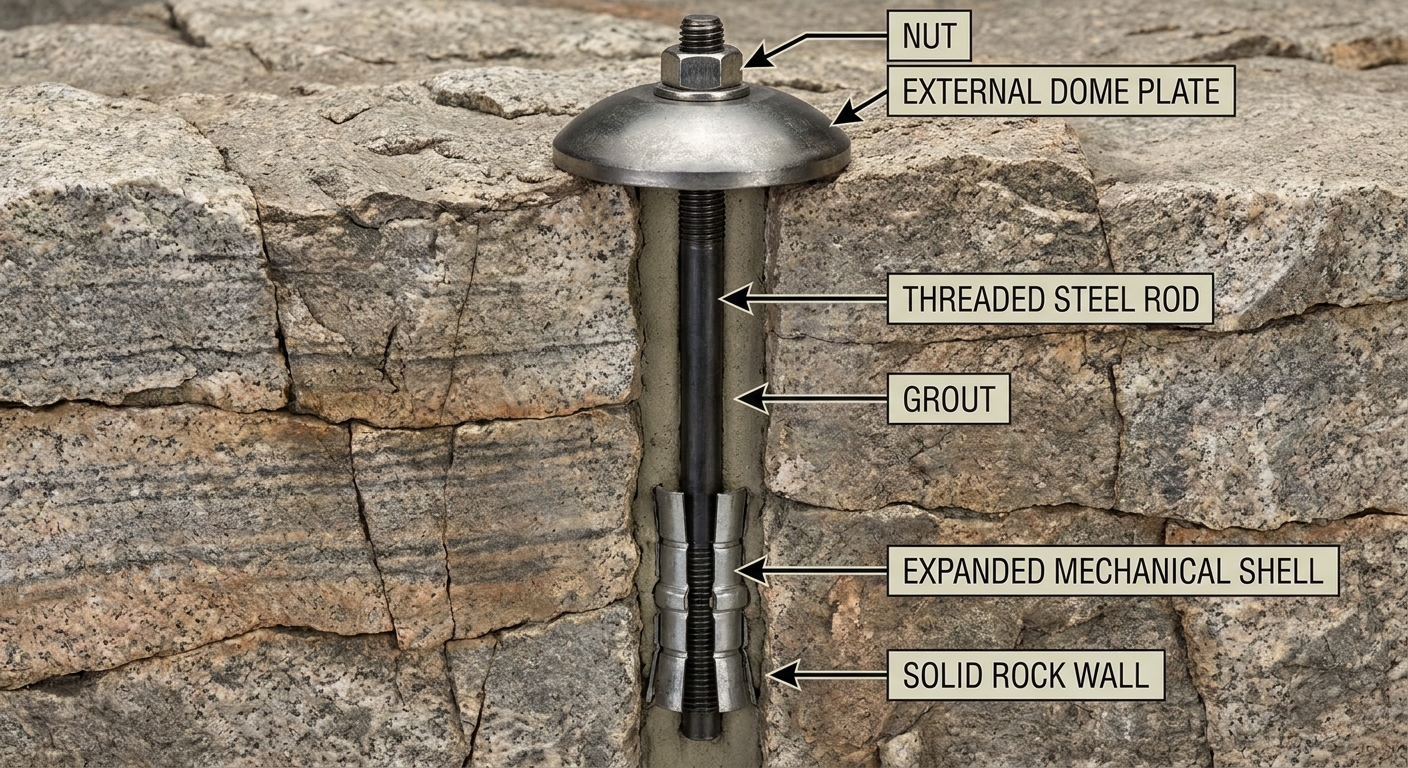
A rock bolt is a highly specialized, tensioned steel rod designed to actively compress and lock fractured rock layers near the excavation surface. Utilizing an expansion mechanical shell or rapid-setting chemical resin, it grips the borehole walls to generate immediate active confining pressure. When determining the right fit for your project, understanding how a rock bolt vs rock anchor functions under load is essential. This active compression prevents adjacent rock blocks from sliding along joint planes and failing.
These systems are typically installed in dense, systematic patterns to build a reinforced rock arch. They provide immediate, localized support right after excavation, keeping your underground workspace secure.
Structural Anatomy of Modern Rock Bolts
Modern rock bolts are engineered with high-yield solid steel or hollow bars that can withstand extreme tensile stresses. When you inspect a standard assembly, you will find a specialized expansion anchor shell, a high-strength threaded bar, and a heavy-duty dome plate.
Here is the key: these components must work together flawlessly to distribute the pre-stressing force evenly across the rock face. Integrating these security components alongside heavy mine equipment like durable steel conveyor rollers keeps your productivity high.
- High-yield threaded steel bar for maximum tensile transfer.
- Expansion mechanical shell that locks into the borehole wall.
- Heavy-duty dome plate and tensioning nut to apply surface force.
If any single component fails under tension, the entire rock reinforcement pattern loses its effectiveness. You must select premium-grade materials to withstand corrosive groundwater and continuous geological stress.
The Power of Post-Tensioned Active Loading
Unlike passive elements, rock bolts actively modify the local stress field around your excavation immediately after installation. When you torque the outer nut against the dome plate, the bolt stretches and applies an active compressive load to the rock mass.
But that’s not all: this post-tensioning action binds laminated rock strata together to form a single, strong, self-supporting beam. This beam-building effect dramatically increases the safety of your underground tunnel or mine roof.
- Locks joint planes together to prevent block slippage.
- Provides immediate resistance before any ground movement begins.
- Reduces localized rock expansion into the open excavation.
Managing active loads requires precise monitoring and regular field inspection. Ensuring that your rock bolts maintain their tension prevents localized rockfalls and long-term structural deformation.
Key Takeaway: Rock bolts operate as active reinforcement systems. They apply immediate post-tensioned compressive forces that clamp unstable rock layers into a cohesive, self-supporting structure.
| Component | Material | Function | |
|---|---|---|---|
| High-Strength Threaded Rod | Carbon/Stainless Steel | Transfers tensile load to the anchorage | |
| Expansion Shell/Resin | Hardened Steel/Polymer | Grips the borehole wall to secure the anchor | |
| Heavy-Duty Dome Plate | Structural Plate Steel | Distributes compressive force across the rock surface |
This table shows how the individual components of a rock bolt work together to deliver active surface compression and secure localized rock masses.
What Is a Rock Anchor and Its Primary Use?
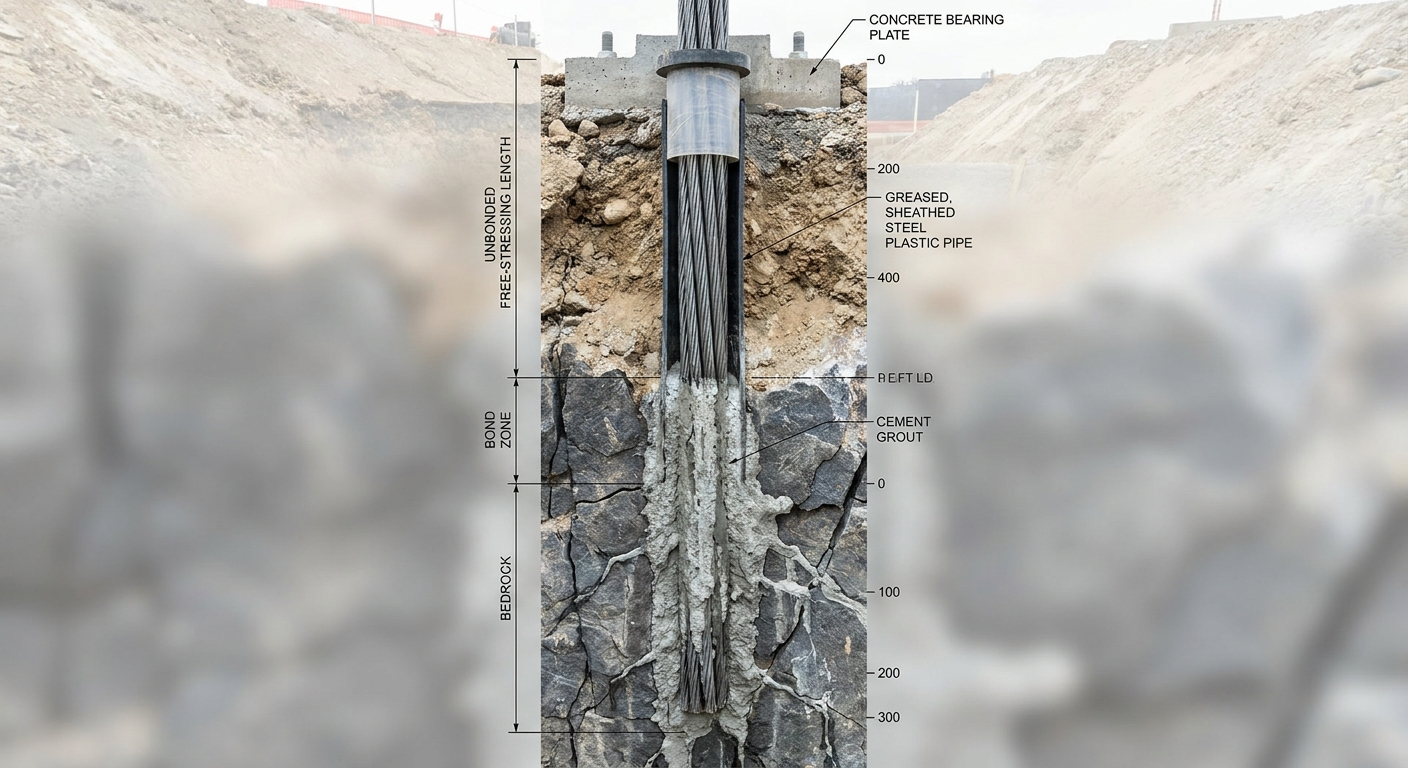
A rock anchor is a heavy-duty, long-reach tensioning system engineered to transfer massive structural loads past weak, superficial soil layers and deep into stable bedrock. Typically constructed from multi-strand steel cables or high-strength threadbars, these systems can extend up to thirty meters or more into the ground. Deciding between a rock bolt vs rock anchor often comes down to the depth of the stable geological formation and the sheer scale of the forces involved. They are the ideal choice for anchoring massive civil engineering structures like dams, bridge abutments, and large retaining walls.
By bypassing loose, weathered surface zones, rock anchors tie your surface structures directly to the Earth’s solid crust. This provides unmatched resistance against overturning and deep-seated slip-plane failures.
Design Characteristics of High-Tensile Anchors
High-tensile rock anchors are built around complex steel tendon bundles designed to handle immense tensile loads. When you install these systems, you must separate them into a deep bond length and a free-stressing length.
Think about it: this unbonded free length allows the steel to stretch freely, concentrating the entire anchor force deep into the bedrock socket. To protect these setups on heavy construction sites, engineers combine them with robust protective structures and highly durable impact rollers near material transport zones.
- Multi-strand high-tensile steel wire tendons for maximum strength.
- Unbonded free-stressing length to bypass unstable superficial ground.
- Deep cement-grouted bond zone to anchor the tendon into bedrock.
Designing these complex systems requires precise geotechnical data to calculate the exact bond length needed. You must ensure the bedrock can withstand the concentrated tensile forces without shearing.
The Mechanics of Passive Load Transfer
While some rock anchors are pre-stressed, many function as passive support systems that generate resistance as the surrounding ground attempts to shift. When you rely on passive load transfer, the steel tendon remains relatively dormant until external forces initiate movement.
Here is the key: as the rock mass deforms, it stretches the steel, mobilizing the anchor’s massive holding capacity. This displacement-activated resistance is highly effective at stopping large-scale geological movements over time.
- Generates holding force in response to physical ground movement.
- Avoids overloading the steel tendon during minor geological shifts.
- Utilizes a deep anchor root to resist massive, deep-seated sliding forces.
This mechanic makes passive anchors incredibly reliable for stabilizing expansive slopes and heavy foundations. You can rest assured that your structures are securely tied to solid ground, even in challenging terrain. See the FHWA guide.
Key Takeaway: Rock anchors utilize high-tensile steel cables and extensive free-stressing lengths to bypass unstable superficial soil layers, transferring heavy structural loads directly into deep bedrock.
| System | Typical Length | Primary Material | Applications | |
|---|---|---|---|---|
| Rock Anchor | 6m to 30m+ | Multi-strand high-tensile steel | Retaining walls, dams, bridge abutments |
This table highlights the deep-reach capabilities of rock anchors, making them indispensable for heavy civil engineering projects.
How Do Active and Passive Anchoring Systems Differ?
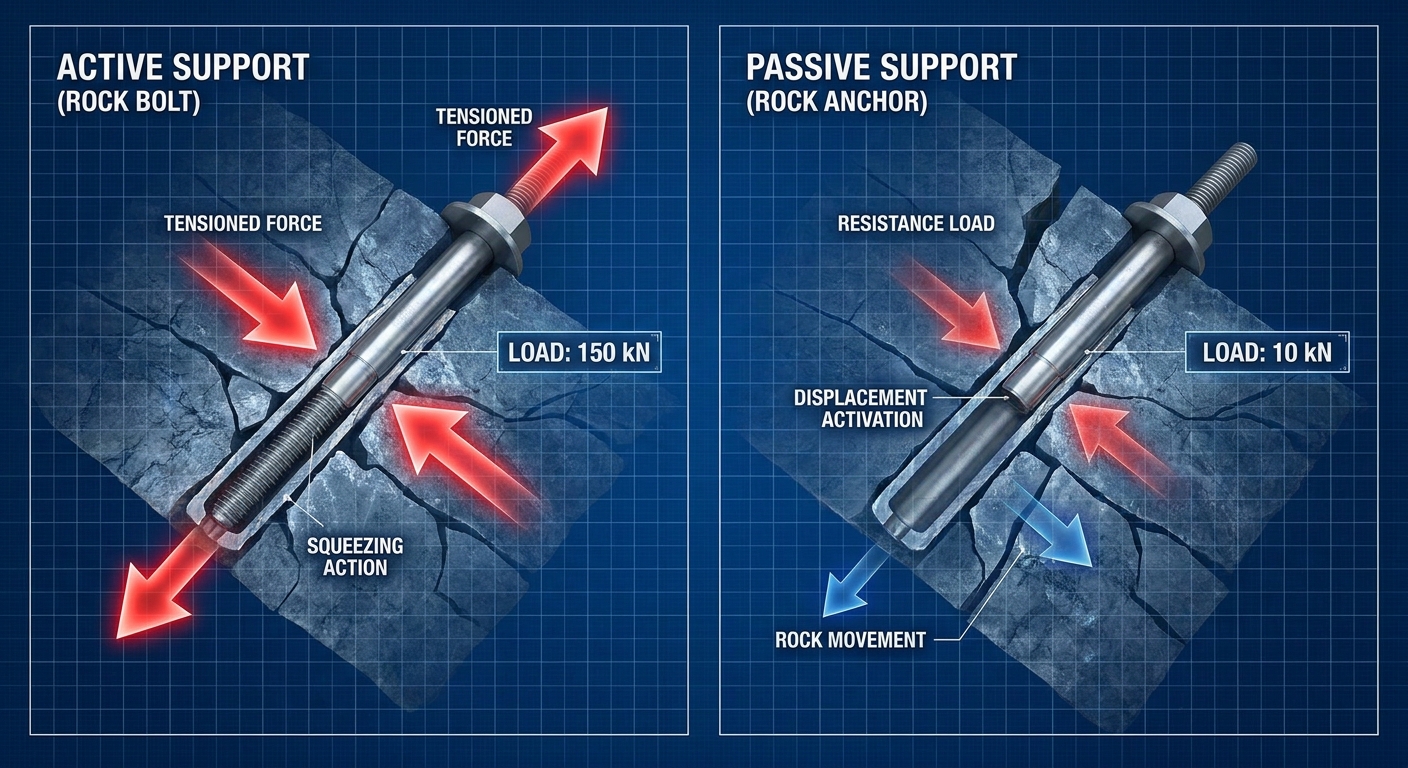
The fundamental operational difference between these two systems lies in whether they apply immediate pre-stressing forces or resist loads in response to ground movement. An active system immediately squeezes joint planes together to raise their frictional shear strength, while a passive system remains dormant until geologic displacement occurs. Selecting the right mechanism from a rock bolt vs rock anchor perspective determines how effectively your support system controls ground deformation. Active systems are essential when you need to prevent rock mass relaxation right after excavation.
Passive systems, on the other hand, are designed to handle large-scale, slow-moving geological forces. They provide high ultimate capacity once physical shifting begins.
The Role of Compressive Pre-Stressing Forces
Active pre-stressing forces immediately change the stress state within the surrounding rock mass. When you apply this continuous clamping force, you prevent joints from opening and sliding.
But that’s not all: this active confinement preserves the rock’s natural strength and stops progressive failure in its tracks. To keep your high-capacity mining operations running smoothly, these active systems are paired with reliable transport systems utilizing durable conveyor rollers .
- Immediately increases the frictional shear strength of rock joints.
- Prevents initial rock mass relaxation and joint opening.
- Redistributes local stress fields to prevent rock bursts in deep tunnels.
This active compression creates a self-supporting geological arch that can handle dynamic loads. You can confidently proceed with excavation knowing the rock mass is actively held together.
Response Profiles Under External Structural Loads
Passive anchoring systems rely on physical structural movement to mobilize their high-tensile capacity. As the rock mass shifts or a retaining wall tilts, it pulls on the anchored steel, generating a proportional resisting force.
Think about it: this displacement-activated response allows the system to handle heavy, slow geological movements without overstressing the steel. It provides a flexible yet incredibly strong barrier against massive slope failures.
- Mobilizes high tensile resistance as the ground deforms.
- Provides a flexible buffer in creep-prone geological zones.
- Handles massive, slow-moving earth pressures without sudden failure.
This makes passive systems excellent for securing large retaining walls and stabilizing expansive cuts. You gain a highly reliable, long-term stabilization barrier that adapts to the natural behavior of the ground.
Key Takeaway: Active systems (rock bolts) use immediate pre-stressing to compress and strengthen rock joints, whereas passive systems (rock anchors) rely on ground displacement to mobilize high-tensile resistance.
| Feature | Active Systems (Rock Bolts) | Passive Systems (Rock Anchors) | |
|---|---|---|---|
| Primary Mechanism | Immediate compressive pre-stress | Displacement-activated tensile resistance | |
| Installation Timing | Immediately following excavation | Long-term structural stabilization | |
| Typical Loading | Post-tensioned to design load | Untensioned or minimal nominal load |
This table compares the contrasting load response profiles, helping engineers select the correct stabilization behavior for their specific site conditions.
Which Installation Steps Set These Systems Apart?
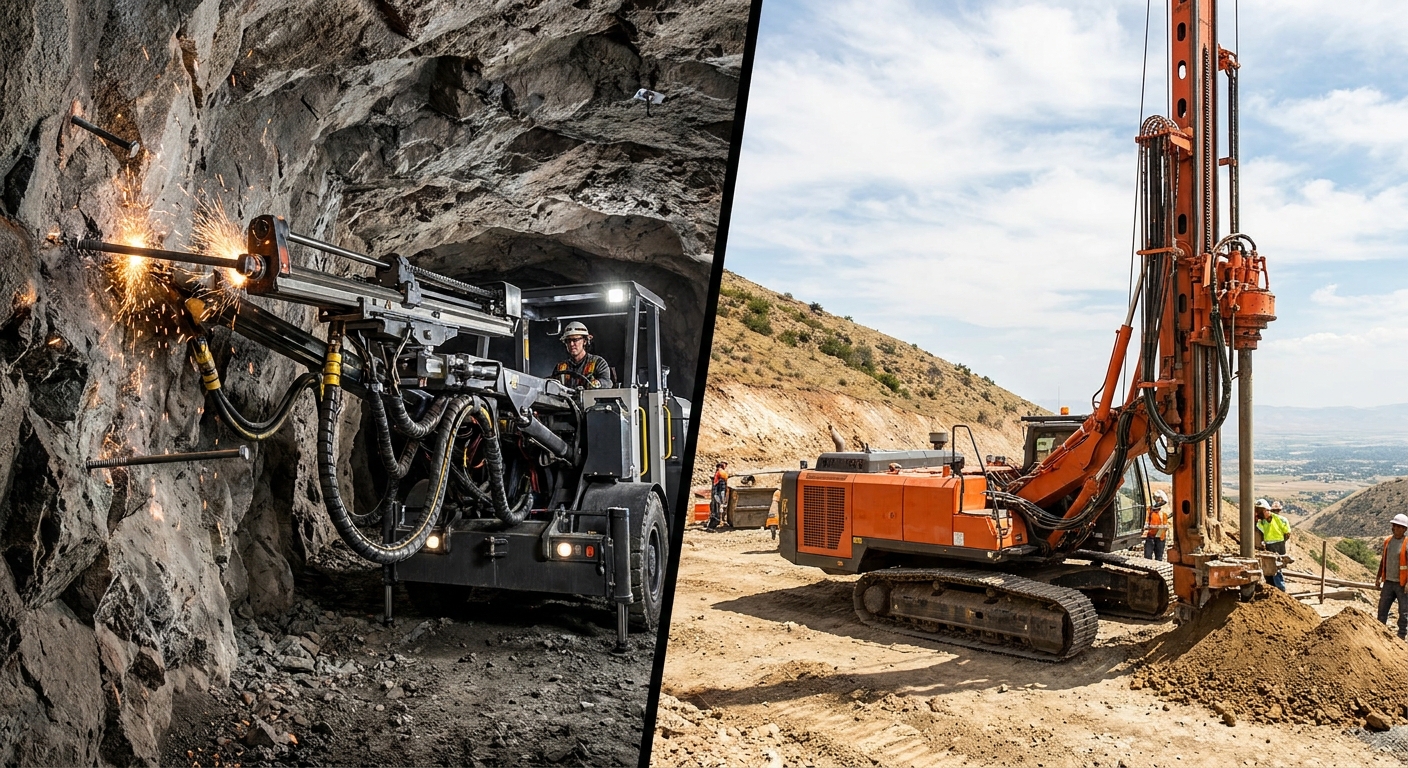
The physical installation process, machinery requirements, and curing schedules differ greatly between these two geotechnical solutions. Installing rock bolts involves rapid, highly repetitive drilling and immediate tensioning, whereas installing rock anchors requires deep-hole drilling, tendon placement, and specialized multi-stage grouting. Evaluating a rock bolt vs rock anchor from an operational perspective helps you plan project timelines and allocate labor efficiently. This difference in workflow dictates which system is best suited for fast-paced tunneling versus long-term civil construction.
Rock bolts can be installed and tensioned in a matter of minutes, keeping pace with rapid excavation cycles. Rock anchors, however, require specialized equipment and a multi-day curing process before they can be fully tensioned.
The Multi-Stage Process of Tensioning Rock Bolts
The installation of rock bolts is designed for maximum speed and integration with underground mining cycles. When you operate a modern bolting jumbo, the machine drills a short hole, inserts resin capsules, and spins the bolt to shred and mix the chemical polymer.
Here is the key: this rapid-curing resin allows you to mechanically torque and fully tension the bolt within minutes. Keeping this fast cycle running smoothly is vital for deep mining operations where materials are transported via high-speed conveyor systems equipped with robust heavy-duty return rollers .
- Rotational percussive drilling of short, precise boreholes.
- Insertion of fast-curing chemical resin capsules.
- Mechanical spinning and immediate torqueing to apply active tension.
This efficient process ensures that the newly exposed roof is secured almost immediately after blasting. You can maintain a fast, continuous excavation rate while keeping your crew safe from sudden falls.
Simplifying the Anchor Installation Workflow
While rock anchors require much deeper holes, their physical installation is a highly systematic and structured engineering process. You must use heavy-duty crawler-mounted rotary drills to penetrate deep into bedrock before lowering the pre-assembled tendon bundle.
But that’s not all: once the tendon is in place, high-pressure primary grouting is performed to secure the deep bond zone while keeping the free length unbonded. This specialized process requires experienced crews and precise quality control.
- Deep rotary-duplex drilling to reach stable bedrock formations.
- Pre-assembly and insertion of multi-strand steel cable bundles.
- High-pressure grouting of the anchor zone with neat cement.
The cement grout must be allowed to cure for several days to achieve its target compressive strength. Once cured, specialized hydraulic jacks are used to tension the anchor and lock it into place.
Key Takeaway: Rock bolt installation is a rapid, integrated process focused on fast tensioning, while rock anchor installation requires deep-hole drilling, tendon installation, and specialized grouting.
| Step | Rock Bolt Installation | Rock Anchor Installation | |
|---|---|---|---|
| Typical Depth | 2 to 6 meters | 6 to 30+ meters | |
| Machinery | Light bolting jumbos, hand jacks | Heavy crawler-mounted rotary drills | |
| Anchorage | Mechanical expansion / Fast resin | High-strength cement grout socket |
This table shows the operational differences between the rapid cycles of rock bolting and the heavy equipment requirements of rock anchoring.
How Do Load Transfer Mechanisms Diverge in Action?
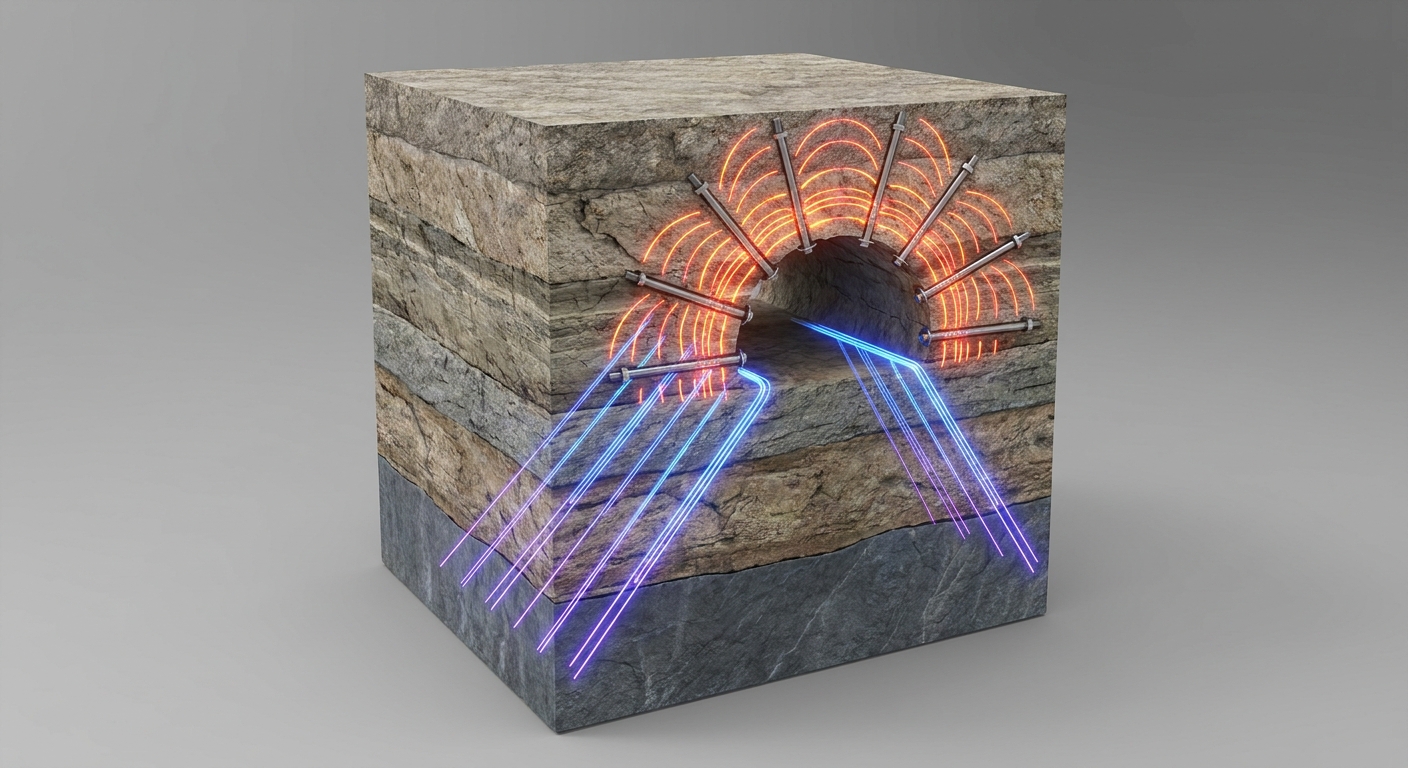
The physical path that forces travel through the ground differs significantly between these two stabilization systems. Rock bolts generate localized, internal shear resistance and friction to bind loose strata together, whereas rock anchors transfer massive external loads directly to a deep, secure bedrock foundation. Analyzing this difference under a rock bolt vs rock anchor framework ensures that your structural design matches the geological conditions of your site. This distinct force distribution determines whether you are reinforcing the rock mass from within or anchoring a structure to it.
Rock bolts create a reinforced structural zone that allows the rock mass to support itself. Rock anchors bypass unstable ground entirely to secure massive surface loads directly to stable rock.
How Rock Bolts Bind Loose Strata Together
Rock bolts function by locking individual, fractured rock blocks into a cohesive, self-supporting structural arch. When you install a pattern of bolts, the compressive forces increase the friction between adjacent rock faces, preventing sliding.
Think about it: this suspension and clamping action turns weak, laminated layers into a thick, strong geological beam. These active reinforcements work alongside other durable industrial components, such as polymer-coated HDPE rollers , to keep mines safe and productive.
- Increases frictional shear resistance across rock joint planes.
- Suspends loose, thin surface slabs from deeper, self-supporting layers.
- Clamps adjacent blocks to form a stable, load-bearing rock arch.
This localized reinforcement is highly effective at preventing shallow rockfalls in tunnels and mine shafts. You are enabling the rock mass to carry its own load safely.
How Rock Anchors Tie Structures into Deep Bedrock
Rock anchors work by ignoring shallow, weak soil layers and transferring immense tensile loads deep into solid bedrock. When you tension a rock anchor, the force is carried down the unbonded free length and concentrated in the deep bond zone.
But that’s not all: this deep-seated anchorage allows you to tie massive surface structures directly to stable geological formations. It provides a secure, permanent connection that can resist extreme overturning and uplift forces.
- Transfers high structural loads past weak, superficial slip zones.
- Concentrates tensile forces inside a deep, secure cement grout socket.
- Clamps surface structures directly to the Earth’s stable bedrock.
This deep-reaching force transfer is essential for stabilizing massive dams and tall retaining walls. You gain a highly secure, high-capacity stabilization system that stands up to extreme geological pressures.
Key Takeaway: Rock bolts stabilize ground by binding shallow rock strata together, whereas rock anchors bypass unstable surface layers to transfer loads deep into solid bedrock.
| Parameter | Rock Bolt Load Transfer | Rock Anchor Load Transfer | |
|---|---|---|---|
| Zone of Action | Localized (within 2-6 meters) | Deep ground (up to 30+ meters) | |
| Load Bearing Mode | Internal shear resistance & friction | Concentrated tensile transfer to grout socket | |
| Failure Risk | Superficial rockfall between bolts | Deep-seated slip plane failure |
This comparison highlights how rock bolts reinforce ground internally, while rock anchors anchor structures externally into bedrock.
What Are the Primary Application Environments?
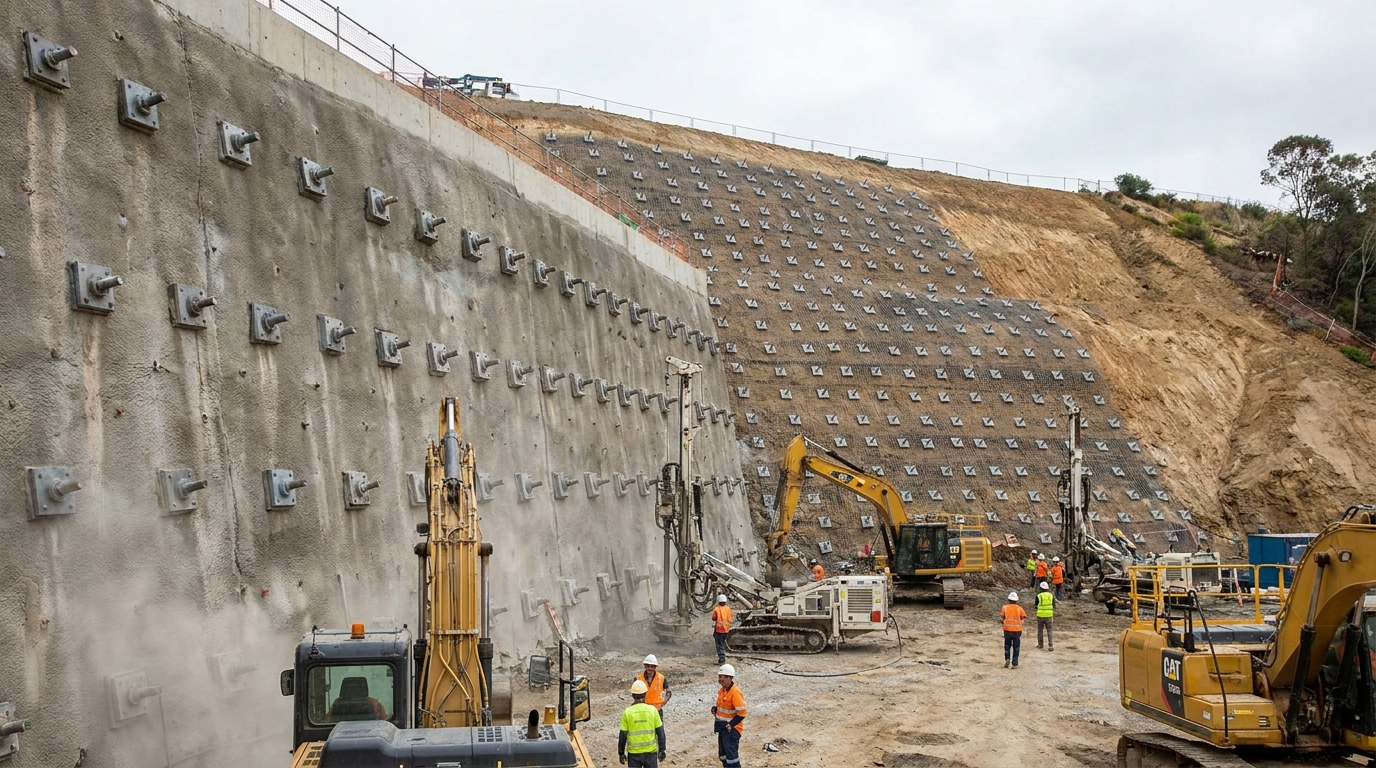
The operational environment of your project is the ultimate deciding factor when choosing between these two geotechnical systems. Rock bolts are the standard choice for rapid, localized reinforcement in underground mining and tunneling, while rock anchors are required for stabilizing massive civil structures and deep hillsides. Assessing your site’s physical constraints under a rock bolt vs rock anchor framework ensures that your selection matches the operational demands of your project. This environmental alignment prevents costly delays and guarantees long-term structural safety.
Underground mining demands rapid, high-speed installation to keep pace with continuous excavation. Civil engineering, on the other hand, requires massive, long-term load capacity to secure permanent public infrastructure.
Tunneling and Underground Mining Stability
In underground mining and tunneling, the goal is to secure newly exposed rock roofs and walls as quickly as possible. When you drill and blast, the immediate installation of rock bolts prevents the rock mass from relaxing and failing.
Here is the key: this high-speed environment requires reliable mining equipment and robust material handling systems, such as dependable mining conveyor rollers , to keep operations moving safely. Integrating rapid bolting with high-efficiency transport keeps your productivity high and your crew protected.
- Immediate roof bolting prevents dangerous rockfalls at the excavation face.
- Yielding rock bolts absorb massive deformation in high-stress deep mines.
- Pattern bolting creates a stable structural arch over wide intersections.
This rapid, localized support is essential for maintaining safety in dynamic underground environments. You can proceed with excavation knowing the newly exposed ground is immediately secured.
Slope Stabilization and Foundation Anchorage
Civil engineering projects face the challenge of stabilizing massive, deep-seated slopes and resisting extreme structural overturning forces. When you are building highway cuts or concrete gravity dams, you must reach past superficial soils to secure structures to deep bedrock.
But that’s not all: this requirement demands the immense load capacity and deep reach that only multi-strand rock anchors can provide. These high-capacity systems are essential for securing permanent infrastructure against long-term geological movement.
- Ties retaining walls and highway cut slopes directly to deep bedrock.
- Anchors concrete gravity dams to resist extreme hydraulic overturning forces.
- Stabilizes active, deep-seated landslides by pinning the sliding mass.
This deep-reaching support is crucial for protecting highways, dams, and public buildings from devastating failures. You gain a highly secure, permanent stabilization barrier that stands up to nature’s strongest forces.
Key Takeaway: Rock bolts are the standard for rapid, localized reinforcement in tunnels and mines, while rock anchors are essential for securing massive civil structures and stabilizing deep hillsides.
| Environment | Preferred Method | Technical Reason | |
|---|---|---|---|
| Underground Mine | Rock Bolts | Fast installation keeps pace with rapid mining cycles | |
| Highway Cut Slope | Rock Anchors | Reaches past deep failure planes into stable bedrock | |
| Hydraulic Dam Wall | Rock Anchors | Transfers massive overturning forces to deep foundations |
This application matching matrix demonstrates how project environment and excavation speed dictate the correct support choice.
How Do Material Standards and Lifespans Compare?
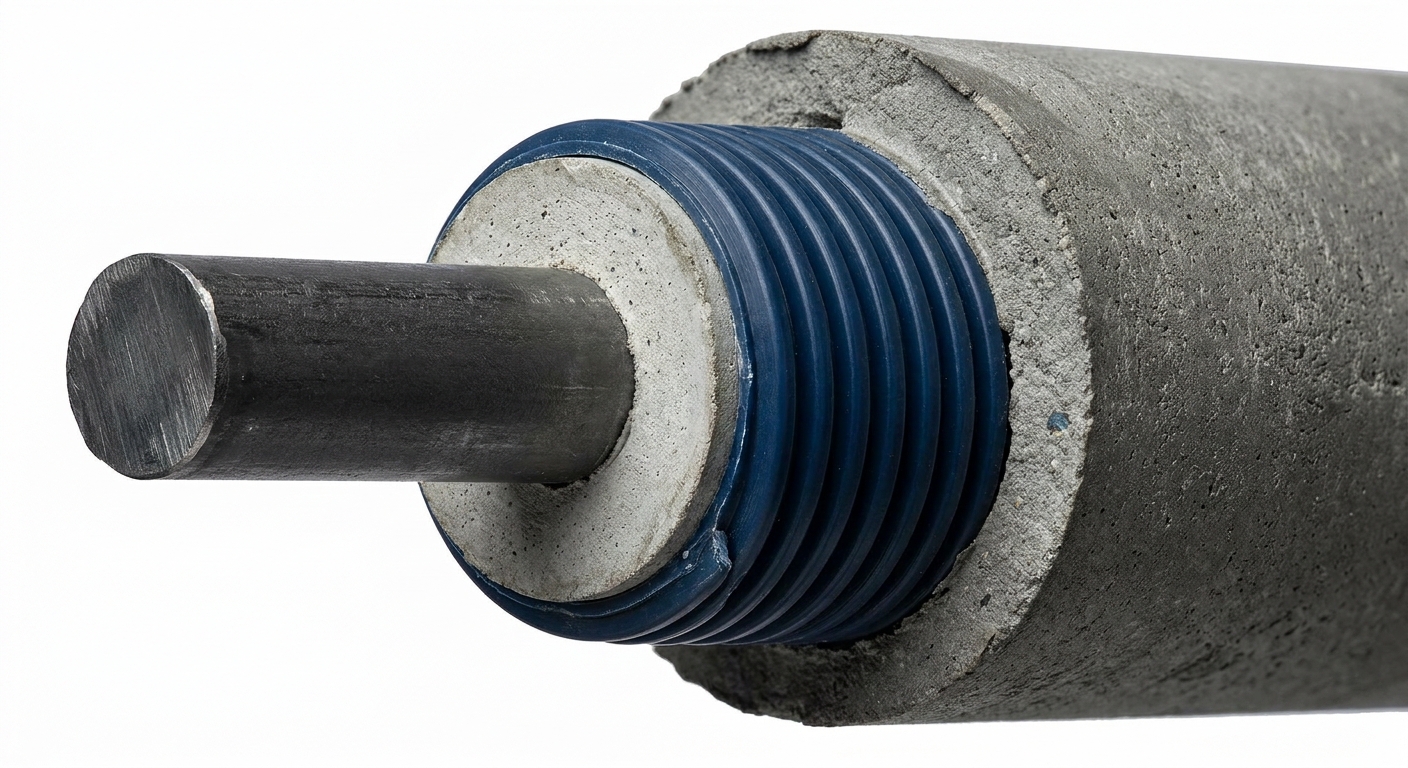
The physical materials, protective coatings, and intended design life differ significantly between these two ground support options. Temporary mining rock bolts are often made of basic steel with minimal coating, designed to last just a few years, whereas permanent civil rock anchors use multi-layer Double Corrosion Protection (DCP) to guarantee a service life of over one hundred years. When you evaluate a rock bolt vs rock anchor from a durability standpoint, you must match the system’s lifespan to your project’s operational timeline. This alignment prevents premature structural failure and avoids incredibly expensive remediation work in the future.
Aggressive groundwater, stray electrical currents, and corrosive soils can rapidly degrade unprotected steel. Selecting the appropriate material standard is essential for ensuring long-term ground stability and safety.
Corrosion Protection and Steel Grades
Geotechnical systems must withstand highly aggressive and corrosive environments over their operational life. When you design a permanent anchor, you must utilize specialized protection methods like Double Corrosion Protection (DCP) to isolate the steel tendon.
Think about it: this process involves encasing the high-tensile steel inside a corrugated plastic sheath filled with high-strength cement grout, creating two separate physical barriers. To match this extreme durability, other critical components on your site—such as heavy-duty conveyor idlers —are engineered with premium-grade materials and advanced protective seals.
- Double Corrosion Protection (DCP) for maximum environmental resistance.
- Hot-dip galvanizing to protect steel from atmospheric and water-borne rust.
- Electrostatic epoxy coatings that form an impermeable barrier on steel.
These advanced materials ensure that the reinforcement remains fully functional under continuous high-tension loads. You can rely on these multi-layered barriers to prevent corrosion and maintain structural integrity.
Long-Term Durability in High-Stress Environments
The design life of your installation dictates the complexity and cost of the corrosion protection required. For temporary mining applications, simple steel bars or light coatings are sufficient because the excavation is only used for a few years.
But that’s not all: permanent civil structures like bridge abutments or hillside retaining walls require robust protection to last a century or more. Designing with extra sacrificial steel thickness ensures the anchor retains its load capacity even if minor surface corrosion occurs over time.
- Temporary rock bolts typically have a design life of 1 to 5 years.
- Permanent civil rock anchors are designed to last 50 to 100+ years.
- Sacrificial steel allowances protect the tendon’s core load capacity over time.
Choosing the correct durability standard protects your capital investment and prevents catastrophic structural failures. You gain peace of mind knowing your foundation is secured by the highest material standards.
Key Takeaway: Temporary rock bolts rely on basic steel or simple galvanizing for short-term support, whereas permanent rock anchors use Double Corrosion Protection (DCP) to guarantee a service life of over 100 years.
| Category | Temporary Support (Rock Bolts) | Permanent Support (Rock Anchors) | |
|---|---|---|---|
| Design Life | 1 to 5 Years | 50 to 100+ Years | |
| Corrosion Barrier | Bare steel, light grease, or galvanizing | Double Corrosion Protection (DCP), epoxy | |
| Inspection Mode | Pull testing only | Continuous monitoring with load cells |
This table shows how material selection and corrosion barriers directly determine the operational lifespan of ground supports.
How Do You Choose the Best System for Your Project?
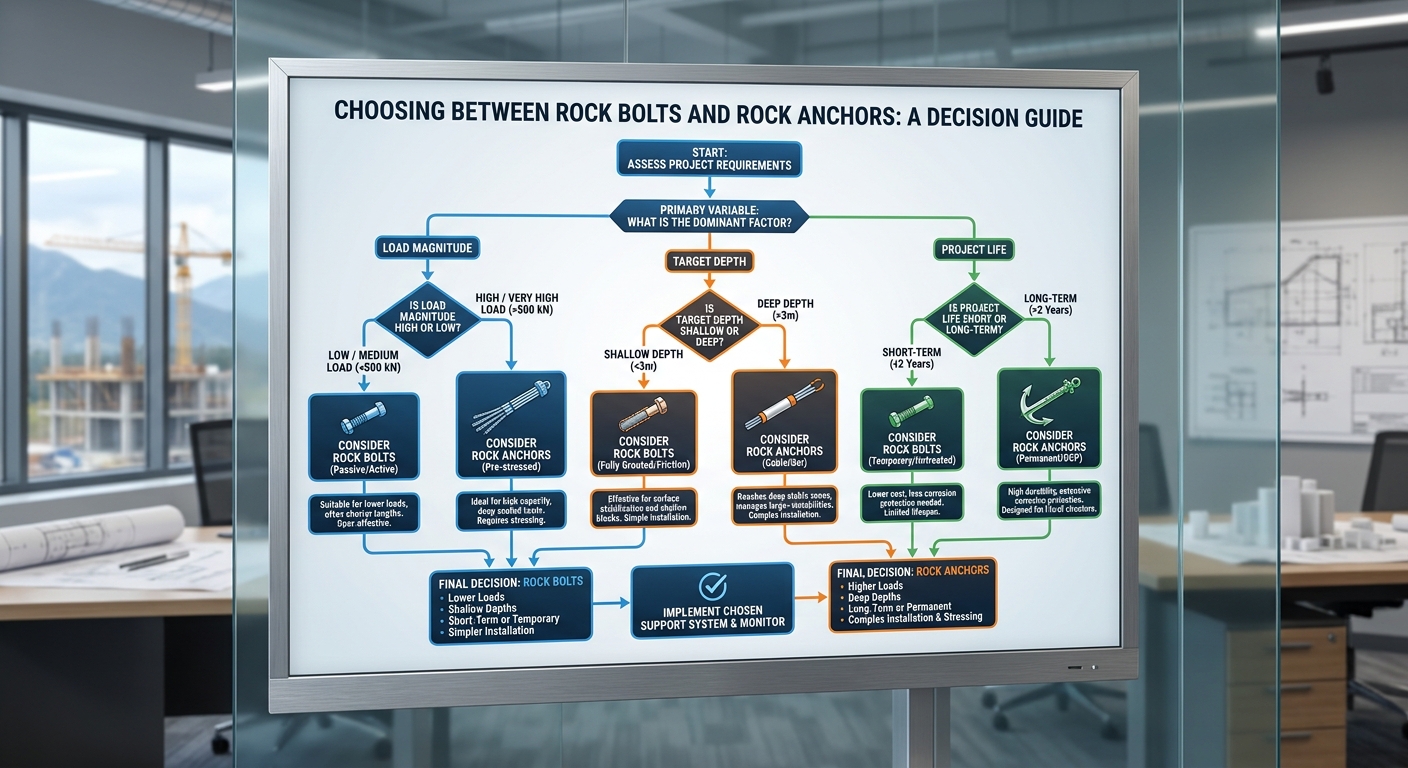
Making the final choice between these two systems requires a systematic evaluation of your site’s geological profile, structural loads, and project constraints. You must analyze the Rock Mass Rating, the depth of the stable bedrock, and the total tensile forces your structures will apply to the ground. When evaluating a rock bolt vs rock anchor , establishing a clear engineering framework ensures that your selection balances safety, cost, and installation speed. This methodical approach prevents design errors and keeps your construction project running on schedule and within budget.
Weak, highly fractured rock often requires a dense pattern of active rock bolts to lock the surface layers together. In contrast, massive civil structures with deep-seated forces demand the high tensile capacity of long rock anchors.
Key Geotechnical and Structural Variables
Geotechnical engineers must carefully evaluate several critical geological and structural variables before finalizing any ground support design. When you analyze the Rock Mass Rating (RMR), you determine whether the rock mass is self-supporting or highly fractured and prone to sliding.
Here is the key: for projects with heavy material handling needs, coordinating your stabilization plans with highly reliable transport systems—using robust conveyor idlers —helps maintain continuous site productivity. Understanding how geology and surface loads interact is the foundation of a successful engineering design.
- Rock Mass Rating (RMR) to assess rock quality and joint patterns.
- Overburden thickness to determine the depth of stable bedrock.
- Magnitude of applied structural loads from dams, bridges, or walls.
These variables dictate whether you need localized strata binding or high-capacity deep bedrock load transfer. You can ensure the long-term safety of your project by selecting the system that matches these exact parameters.
Budget limits, equipment access, and schedule constraints play a major role in your final ground support selection. While rock bolts offer lower unit costs and rapid installation, rock anchors provide unmatched high-capacity support that prevents catastrophic structural movements.
But that’s not all: investing in high-quality, permanent rock anchors can drastically reduce your long-term maintenance and repair costs. Balancing these upfront material costs with the long-term safety of your infrastructure is a critical business decision.
- Lower direct material and installation costs for rock bolts.
- Higher ultimate capacity and long-term reliability for rock anchors.
- Equipment access limitations in low-clearance tunnels versus open slopes.
Selecting the most efficient system keeps your project on track and minimizes operational disruptions. You can optimize your resources by matching the support system to your specific site accessibility and budget constraints.
Key Takeaway: The final selection between rock bolts and rock anchors depends on a balance of geotechnical conditions, structural loads, equipment access, and project budgets.
| Variable | Rock Bolt Selection | Rock Anchor Selection | |
|---|---|---|---|
| Geotechnical Goal | Localized strata binding & rock arch building | Deep bedrock load transfer | |
| Structural Load | Low to medium localized forces | Massive, concentrated tensile loads | |
| Access Constraints | Compact tunnels, low-clearance areas | Open slopes, large drilling pad access |
This selection framework guides engineers to the most cost-effective and structurally sound choice based on key design inputs.
What Common Questions Do Engineers Have About Them?
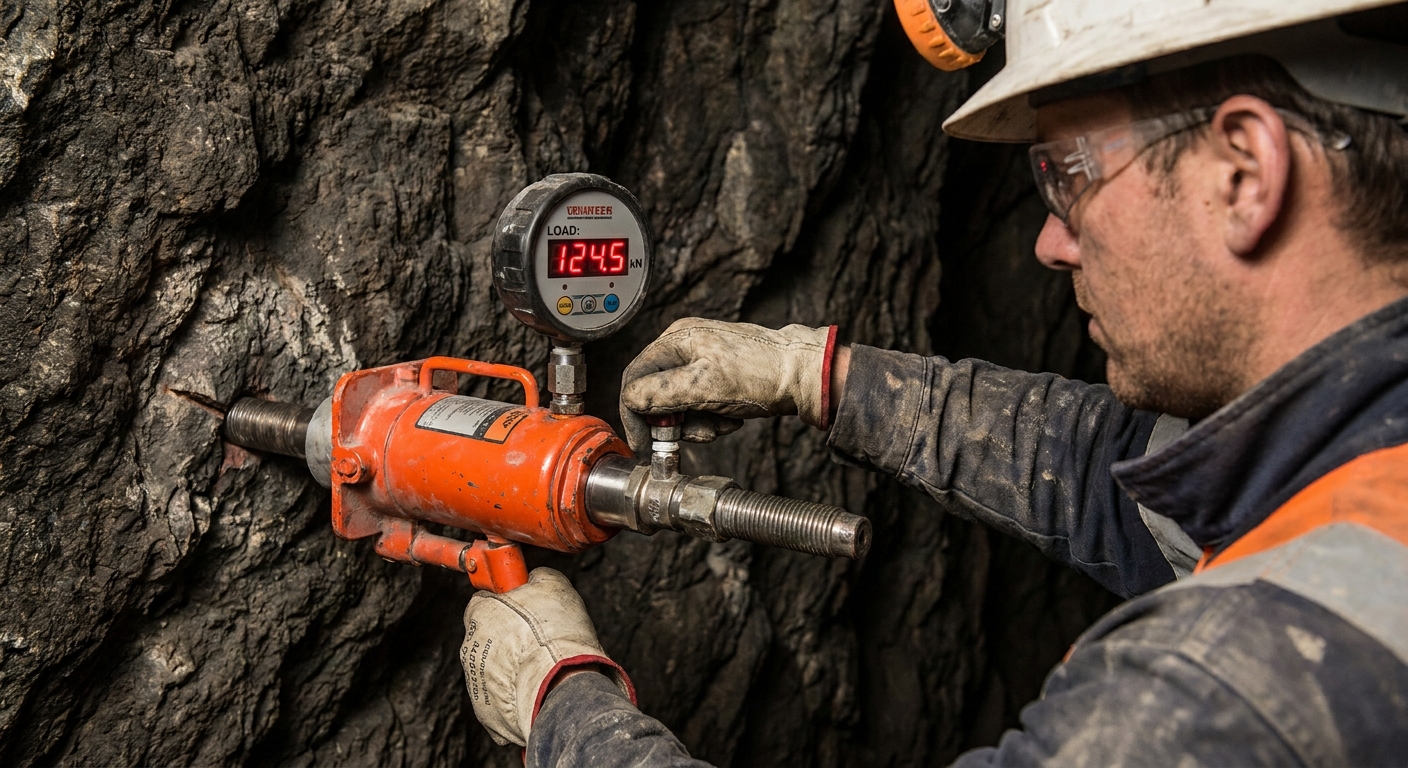
Resolving complex geotechnical challenges requires a thorough understanding of support system behavior and field quality control procedures. In demanding environments where mining supports and bulk material handling systems operate side-by-side, precise engineering knowledge is essential. When you evaluate the practical differences of a rock bolt vs rock anchor in the field, you must verify safety protocols and installation parameters. This ensures that every component performs at its peak under continuous load.
From monitoring resin gel times to calibrating hydraulic tensioning jacks, strict quality control is the key to successful ground stabilization. Let’s look at the most common field questions that geotechnical engineers ask during project execution.
Critical Field Questions Clarified
Field engineers must maintain rigorous inspection protocols to guarantee the performance of installed ground supports. When you verify borehole alignment, you ensure that the steel tendons cross major geological joint planes at the optimal angle.
Think about it: a small misalignment can significantly reduce the effective shear resistance of your reinforcement pattern. To optimize high-capacity mining operations, these robust support systems work alongside reliable transport networks featuring high-performance troughing idlers .
- Verify borehole alignment to maximize joint shear resistance.
- Monitor resin gel times based on ambient underground temperature.
- Calibrate hydraulic tensioning equipment regularly to ensure accurate pre-stressing.
This careful field monitoring prevents installation defects and ensures the long-term safety of your workers. You can proceed with confidence knowing that every step of the process is fully validated.
Key Takeaway: Successful installation requires strict field quality control, regular equipment calibration, and precise monitoring of grout and resin cure times.
Frequently Asked Questions
Can I use rock bolts for permanent structural foundations?
No, rock bolts are generally not recommended for permanent structural foundations. They are typically shorter and lack the advanced, multi-layer Double Corrosion Protection (DCP) required to withstand long-term ground corrosion. For permanent civil foundations, high-capacity, fully corrosion-protected rock anchors are the industry standard.
What’s the best way to prevent corrosion in rock anchors?
The most effective method to prevent corrosion in permanent rock anchors is implementing a Double Corrosion Protection (DCP) system. This system encases the high-tensile steel tendon inside a corrugated plastic sheath filled with high-strength cement grout. It creates two separate physical barriers that isolate the steel from corrosive groundwater and stray electrical currents.
How do I know if my project requires active tensioning?
Your project requires active tensioning if you must prevent initial geological relaxation and maintain the peak shear strength of rock joints. Active post-tensioning immediately squeezes the rock mass together before any displacement can occur. If your goal is to lock joint planes and build a self-supporting rock arch right after excavation, active systems are essential.
Can I install rock anchors without heavy drilling machinery?
No, installing rock anchors always requires heavy, specialized drilling equipment. Because rock anchors typically reach depths of 10 to over 30 meters, you must use crawler-mounted rotary or percussive drills. This heavy machinery is necessary to maintain precise borehole alignment and penetrate deep into solid bedrock.
What’s the best method to test the load capacity of a rock bolt?
The industry standard method to verify the load capacity of an installed rock bolt is a hydraulic pull test. A calibrated hydraulic jack is attached to the exposed thread of the bolt to apply a controlled proof load. Measuring the bolt’s displacement under this tension confirms whether its anchorage meets the design requirements.
Stabilize Your Geotechnical Projects Today
Ground stability is the foundation of any successful tunneling, mining, or civil engineering operation. Choosing between rock bolts and rock anchors shouldn’t be a source of project delays or safety concerns. Our team of experts is ready to help you navigate these complex geotechnical decisions and supply the high-performance support equipment your site demands. Don’t let unstable ground compromise your operations— contact us today to discover how our premium structural reinforcement and conveyor solutions can secure your workspace and drive long-term project success.