
Conveyor belt cleaning works best when compatible cleaners remove carryback and suitable return rollers support a stable belt. A wet fines stream can leave deposits beneath an otherwise sound conveyor, forcing repeated shutdowns and making roller inspection difficult. Match conveyor belt cleaning equipment with actual material behavior, belt condition and maintenance access. A clean-looking discharge point alone cannot confirm that your return run stays clean.
1. What should conveyor belt cleaning remove?
Conveyor belt cleaning should remove material that remains attached after discharge without damaging belt covers or splices. Carryback differs from spillage beside a loading chute. Separate those sources before choosing equipment, because a cleaner cannot correct every transfer problem.
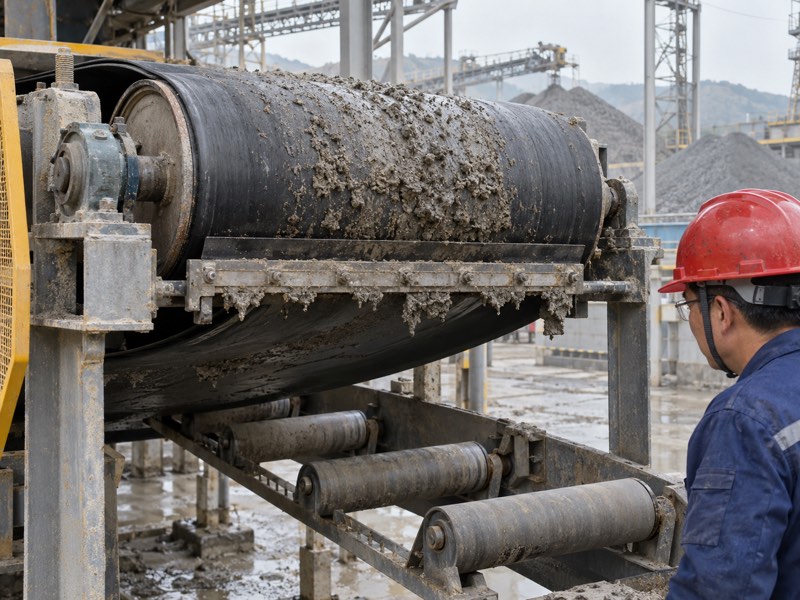
Trace deposits along their route
Follow material beyond discharge. Fine particles can adhere across a belt face while larger pieces lodge around damaged covers or mechanical fasteners. Deposits may then fall beneath return supports, accumulate near pulleys or stick around roller contact surfaces. Photograph locations during an isolated inspection and compare them with safely observed operating conditions.
- Note whether deposits contain dry dust, wet fines or coarse particles.
- Record which belt face carries each deposit.
- Separate chute leakage from material returning on belt surfaces.
Choose a useful inspection reference
Record material moisture, belt speed and production conditions alongside photographs. Comparing unlike operating periods can make an ineffective cleaner appear successful. A consistent inspection route helps your maintenance team identify where contamination starts.
| Observation | Likely route | Next check |
|---|---|---|
| Deposits after discharge | Carryback | Cleaner contact |
| Piles near loading | Transfer leakage | Chute and skirts |
| Material near tail pulley | Return contamination | Plow and support |
Use deposit location as your starting point for investigation. Key Takeaway: Map material movement before ordering cleaners or replacement return rollers.
2. Which cleaner belongs at each conveyor position?
A cleaner belongs where its approved geometry can contact supported belt surfaces and discharge removed material safely. For conveyor belt cleaning, primary and secondary positions usually address different fractions of carryback. Actual placement depends on conveyor layout and cleaner instructions.
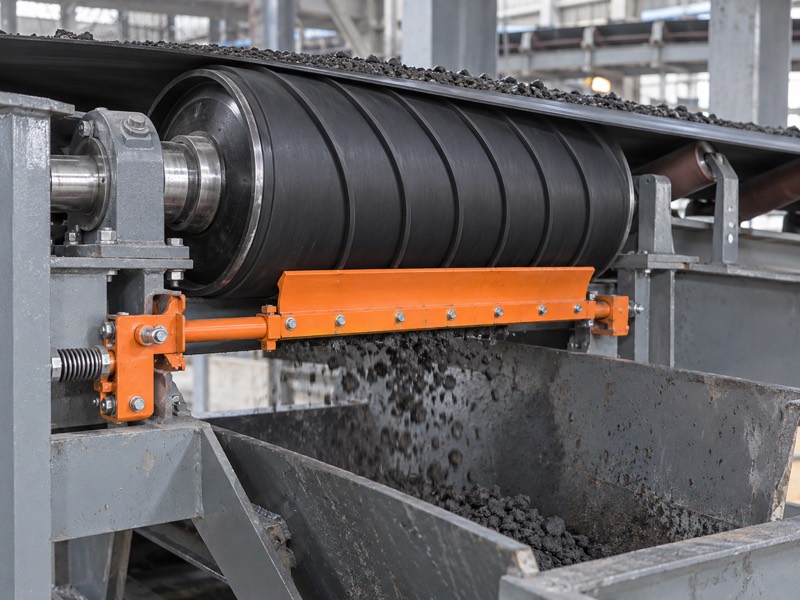
Separate removal stages
Match each stage with its duty. A primary cleaner typically acts around a head pulley, where belt support helps control contact. A secondary cleaner may address remaining fines on a suitable straight return section. A return plow protects approaching pulleys from material on an inward belt face; it performs a different task.
- Check available installation space and required belt support.
- Confirm discharge routes for removed material.
- Inspect access for adjustment, blade replacement and guarding.
Check the whole return arrangement
Plain return rollers provide baseline support where buildup remains manageable. Cleaner location should leave adequate support without trapping debris against bearings or guards. Ask your conveyor designer whether additional support affects existing clearances.
| Component | Typical purpose | Approval check |
|---|---|---|
| Primary cleaner | Bulk carryback removal | Pulley geometry |
| Secondary cleaner | Remaining residue removal | Belt support |
| Return plow | Pulley protection | Inward-face clearance |
Specify positions separately instead of requesting one universal cleaning assembly. Key Takeaway: Confirm cleaner function, mounting space and material discharge for each position.
3. How do comb rollers support conveyor belt cleaning?
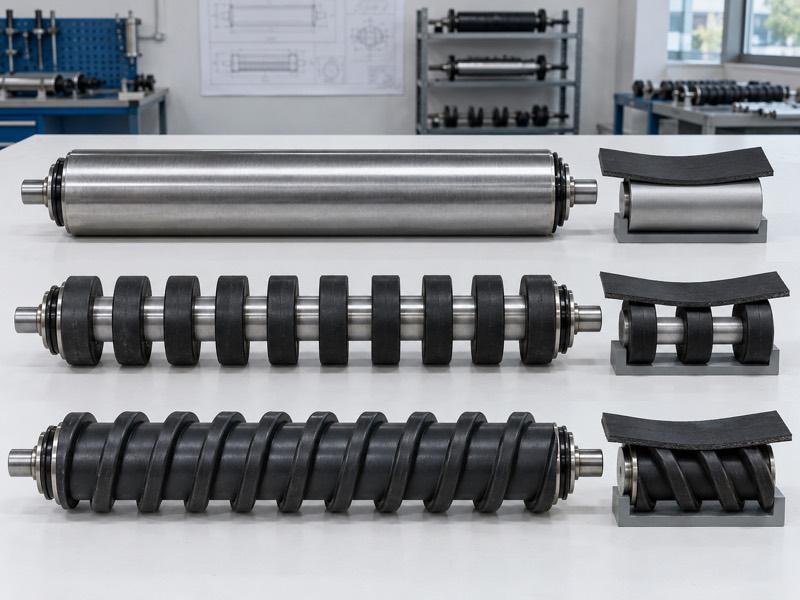
Comb rollers support a returning belt on separated discs, which can reduce continuous surfaces where carryback accumulates. Their contribution to conveyor belt cleaning depends on disc spacing, belt contact and material behavior. They complement upstream cleaners rather than replace them.
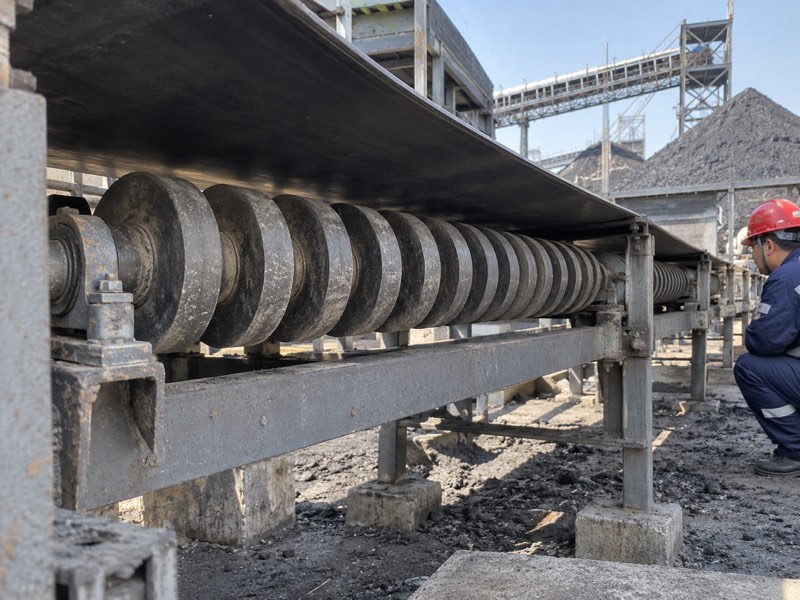
Review contact and open space
Inspect what happens between discs. Open spaces may give loosened deposits room to fall away, but sticky material can still bridge gaps. Uneven buildup changes effective roller shape and may disturb belt travel. Disc wear, missing elements or insufficient support can also concentrate belt contact.
- Confirm disc layout against belt width and return duty.
- Inspect gaps for bridging material during isolated maintenance.
- Check disc condition across the complete working face.
Compare alternative support surfaces
A spiral return surface offers another geometry for carryback-prone service. Selection requires belt compatibility and material review; neither geometry removes every residue. Trial one defined conveyor position before extending changes across a line.
| Return condition | Candidate approach | Trial observation |
|---|---|---|
| Moderate deposits | Disc support | Gap bridging |
| Sticky residue | Spiral review | Surface buildup |
| Clean return belt | Plain support | Rotation and wear |
Judge candidates using observed belt support and deposit behavior. Key Takeaway: Evaluate comb rollers as return support within a complete carryback-control plan.
4. When does sticky material need a different cleaning method?
Sticky material needs a different method when existing contact geometry leaves persistent residue or rapidly loads cleaner blades. Conveyor belt cleaning must account for moisture, clay content and changing process conditions. Increasing blade pressure alone can accelerate wear without resolving adhesion.
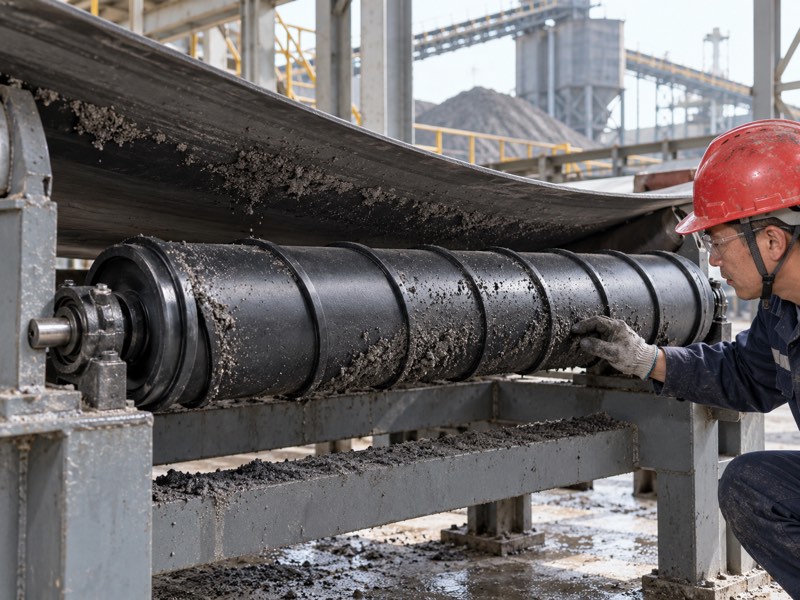
Compare operating conditions
Check moisture before changing hardware. A conveyor carrying damp fines may behave differently after rain, a process-water change or an altered feed blend. Record those changes alongside cleaner wear. Include belt surface damage, because grooves can retain residue beyond effective blade contact.
- Compare deposits during dry and wet operating periods.
- Describe particle size and material stickiness without guessing percentages.
- Record whether removed material drains or packs beneath equipment.
Review washing with its consequences
Water-assisted cleaning requires compatible belt materials, appropriate drainage and protection against water entering bearings. It can move contamination downstream if collection remains inadequate. Obtain approval for water pressure, temperature and any cleaning chemicals before introducing them.
| Material behavior | Candidate review | Additional requirement |
|---|---|---|
| Dry loose fines | Blade or brush | Dust collection |
| Wet adhesive fines | Cleaner geometry | Deposit discharge |
| Washable residue | Approved wash system | Water management |
Select a method that handles removed material as reliably as attached residue. Key Takeaway: Document material changes and drainage before specifying more aggressive cleaning.
5. How can conveyor belt cleaning protect covers and splices?
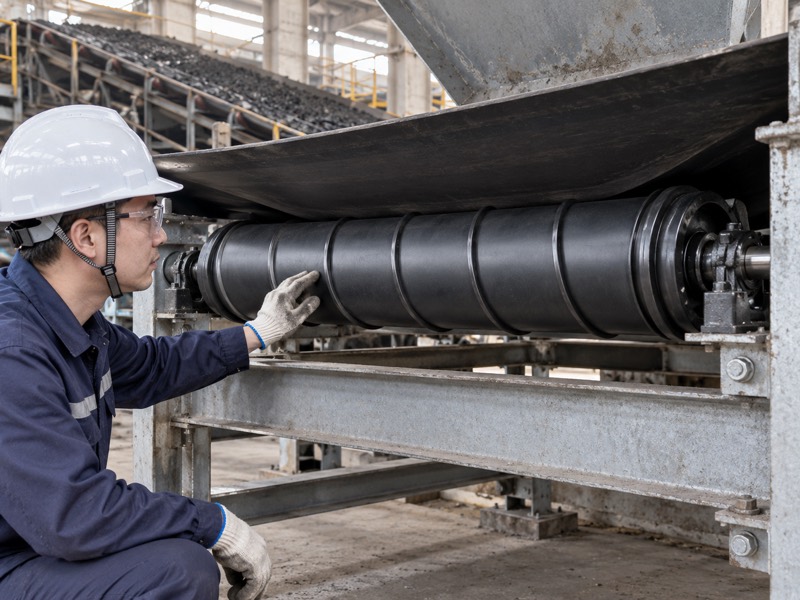
Compatible blades and controlled contact protect covers and splices during conveyor belt cleaning. Belt construction, surface damage and splice type determine allowable cleaner interaction. A replacement blade should match approved equipment specifications rather than appearance alone.
Inspect vulnerable contact areas
Treat splice passage as a design check. Mechanical fasteners, raised repairs and damaged covers can present discontinuities across a cleaner path. A blade that catches those features may damage itself or belt surfaces. Confirm suitability with belt and cleaner suppliers before adjusting contact around a troublesome splice.
- Identify mechanical or vulcanized splice construction.
- Record repaired areas, cover gouges and exposed reinforcement.
- Check blade condition and tensioning mechanism movement.
Use specified adjustment procedures
Set cleaner loading according to approved instructions. Excessive force can increase friction and wear; insufficient contact can leave streaks. Your inspection should also check whether belt movement changes blade engagement across width.
| Belt feature | Cleaning risk | Review action |
|---|---|---|
| Mechanical fasteners | Blade catching | Confirm compatible blade |
| Grooved cover | Residue retention | Evaluate repair |
| Uneven blade contact | Cleaning streaks | Inspect alignment |
Address belt defects alongside cleaner adjustment rather than compensating indefinitely. Key Takeaway: Approve cleaner compatibility with your actual belt surface and splice arrangement.
6. What makes manual conveyor cleaning safe?
Manual conveyor cleaning requires verified isolation, controlled stored energy and safe access before anyone contacts machinery. Conveyor belt cleaning around moving nip points exposes workers to serious entanglement hazards. Follow approved hazardous-energy control procedures and equipment-specific isolation requirements.
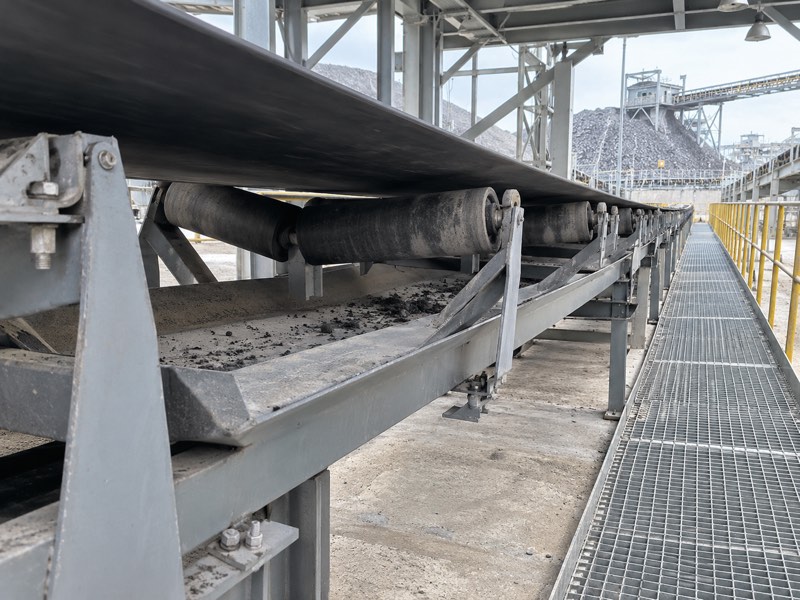
Plan access before a shutdown
Prepare the job while equipment remains guarded. Identify cleaning locations from designated observation positions. During maintenance, isolate every relevant energy source and verify conditions before removing guards. Inclined belts and tensioned components may retain energy after electrical power has been disconnected.
- Use approved tools and accessible working positions.
- Support components where removal changes load paths.
- Keep hands and loose clothing away from potential movement.
Control debris and restart
Collected material can create slippery floors or obstruct access. Clear working areas without directing compressed air or water into unprotected bearings. After maintenance, restore guards, account for tools and obtain restart authorization under your site procedure.
| Work stage | Required control | Responsible check |
|---|---|---|
| Before access | Isolation verification | Authorized personnel |
| During cleaning | Safe tools and position | Maintenance team |
| Before restart | Guards and area clearance | Restart authority |
Build cleaning access into maintenance planning before deposits become difficult to reach. Key Takeaway: Never scrape, wipe or adjust a belt while it moves.
7. How should conveyor belt cleaning be inspected?
Inspection should compare residual material, component condition and return behavior under recorded operating conditions. Effective conveyor belt cleaning needs repeatable observations rather than occasional photographs of a clean belt. A maintenance log makes changes easier to interpret.
Choose observations that answer a question
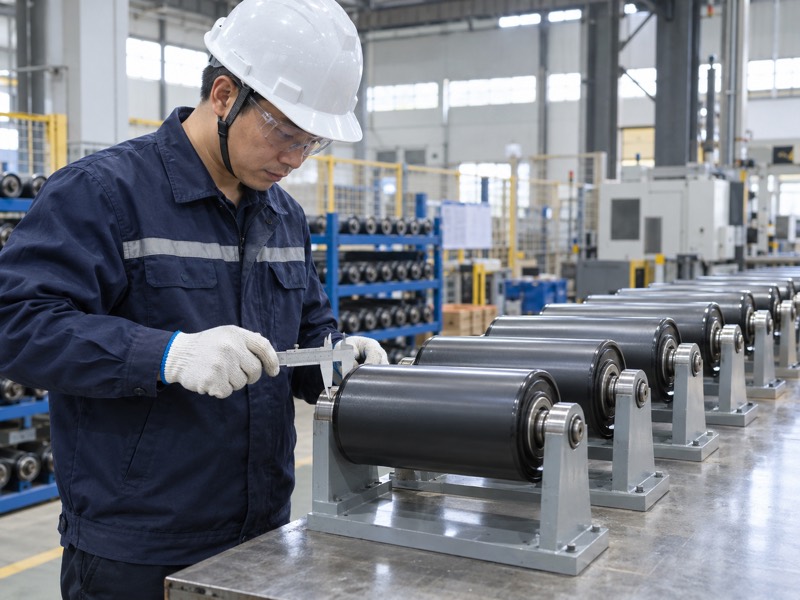
Measure a repeatable symptom. You might record deposit locations after comparable production periods or weigh collected residue using a defined safe method. Establish sampling location and duration before comparing results. Different feed rates or moisture conditions can otherwise overwhelm changes caused by new equipment.
- Record cleaner wear and adjustment status.
- Check roller rotation, deposit shape and belt tracking.
- Log feed conditions and relevant shutdowns.
Connect findings with maintenance decisions
A sudden residue increase may indicate worn blades, changed feed or belt damage. Investigate those causes separately. Escalate abnormal heat, seized rollers or visible cover damage using site inspection criteria instead of waiting for a routine cleaning interval.
| Finding | Possible cause | Follow-up |
|---|---|---|
| New cleaning streaks | Uneven blade wear | Check contact |
| Growing roller deposits | Carryback increase | Review upstream cleaning |
| Rough rotation | Bearing or seal issue | Isolated inspection |
Use trends to identify what changed before selecting a corrective action. Key Takeaway: Record production conditions together with cleaning performance and component wear.
8. Can return rollers fix belt mistracking caused by buildup?
Return rollers may help when buildup changes contact geometry, but they cannot correct every source of mistracking. Conveyor belt cleaning removes one potential disturbance. Off-center loading, skewed frames, damaged splices and pulley alignment require separate investigation.

Establish a clean mechanical baseline
Remove deposits before interpreting alignment. A lumpy roller surface can steer belt travel differently from its nominal geometry. Clean and inspect components during isolation, then observe operating behavior from a safe location. Check whether deviation occurs consistently or changes with feed conditions.
- Inspect frame squareness and shaft seating.
- Check belt damage and splice alignment.
- Compare unloaded and loaded tracking observations where permitted.
Review guidance without masking causes
Guide rollers require proper position and compatible contact duty. Constant heavy edge contact can signal unresolved alignment problems. Your conveyor specialist should approve tracking changes, especially when cleaning work has altered return support geometry.
| Tracking symptom | Investigation | Avoid assuming |
|---|---|---|
| Deposit-related variation | Clean contact surfaces | Guidance alone fixes it |
| Load-dependent drift | Review feed placement | Rollers caused every issue |
| Persistent edge contact | Inspect alignment | More pressure helps |
Compare behavior only after removing known mechanical disturbances. Key Takeaway: Investigate tracking causes before adding or repositioning guidance equipment.
9. What should a conveyor belt cleaning trial compare?
A trial should compare a documented baseline with candidate equipment under similar duty and inspection methods. For conveyor belt cleaning, include belt condition and maintenance burden alongside residual material. Cleaner appearance or purchase price alone cannot establish value.
Define success before installation
Give the trial a written acceptance plan. Select a position with known carryback, suitable access and stable support requirements. Record installation details and inspect candidate geometry before startup. Keep original parts identifiable so any necessary reversal follows an approved maintenance plan.
- Agree how residue and cleaning labor will be recorded.
- Inspect cover wear, disc wear and bearing condition.
- Log operating hours and material changes.
Compare complete ownership costs
Include labor, consumables, replacement parts and planned access in your comparison. A roller that resists deposits may still need frequent inspection under abrasive conditions. Use measured local results before estimating savings across other conveyors.
| Trial measure | Baseline record | Acceptance discussion |
|---|---|---|
| Carryback | Defined sampling | Acceptable residue |
| Belt contact | Cover photographs | No abnormal wear |
| Maintenance | Time and parts | Practical service effort |
Review results jointly with operations and maintenance before broader purchasing. Key Takeaway: Approve expansion using recorded service data rather than promised cleaning percentages.
10. What information should your cleaning and roller quote include?
Your quote should include belt dimensions, return geometry, carryback conditions and approved component requirements. Conveyor belt cleaning and return support must be reviewed as connected duties. Separate cleaner procurement from roller specifications so each supplier can confirm scope precisely.
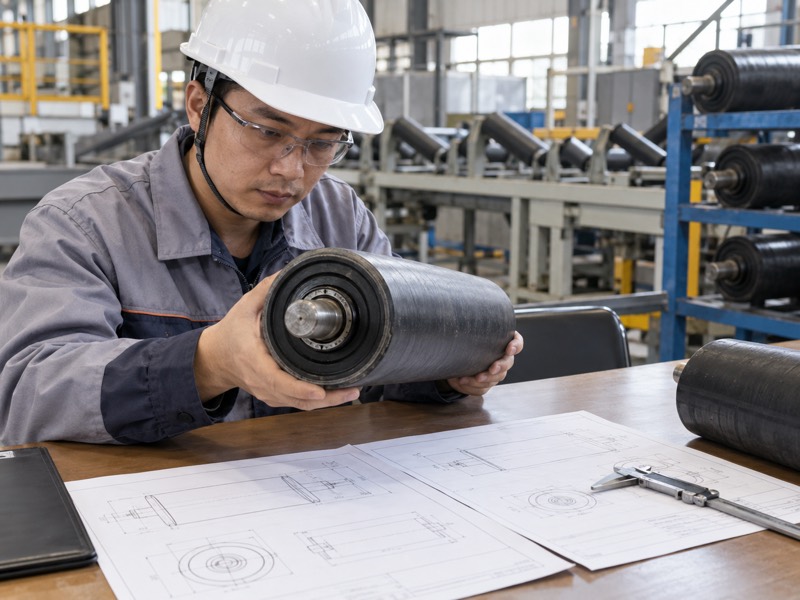
Assemble a usable inquiry
Send measurements with operating context. Include working-face length, shaft ends, frame openings and belt width for roller replacement. Add material description, speed, temperatures and wet-service exposure. Photographs help explain deposits, but dimensioned drawings control fit.
- Identify whether you need comb, spiral or plain return support.
- Include current cleaner positions and remaining installation space.
- Specify sample approval and inspection-document expectations.
Decide what must be confirmed
| Inquiry item | Why it matters | Confirmation needed |
|---|---|---|
| Drawing and tolerances | Installation fit | Approved dimensions |
| Carryback description | Surface selection | Material suitability |
| Service conditions | Bearing and seals | Proposed construction |
Key Takeaway: Request a drawing-based roller proposal with defined operating conditions and inspection criteria. For a comb or spiral return-roller quotation, send your drawing, belt width, speed and deposit photographs. Contact us with those details so XINYONGDUO can review roller fit and confirm a proposed scope. Your maintenance team should receive a component specification they can check before installation.
FAQ
Q1: Can I replace belt cleaners with comb rollers? No. Comb rollers support a returning belt and may limit deposits, while dedicated cleaners remove carryback at approved contact positions.
Q2: What’s the best cleaner for wet mineral fines? It depends on adhesion, belt construction and discharge conditions. Request a compatible blade and mounting review before choosing a cleaning method.
Q3: How do I know if cleaner pressure is too high? Check approved adjustment instructions and inspect abnormal friction, blade wear or belt damage. Stop for an authorized review when those symptoms appear.
Q4: Can I wash return rollers with high-pressure water? Only with an approved procedure. Water can drive contamination into seals, and wash residue needs controlled collection and drainage.
Q5: How do I choose a cleaning inspection interval? Start with equipment instructions and site requirements. Adjust intervals using recorded buildup, wear and operating changes rather than a universal schedule.