
A rubber disc return roller supports a returning conveyor belt through defined rubber contact rings separated along a shaft or roller body. Ring positions and condition affect support. If your replacement uses a different layout, contact can change even when its mounting fits. Compare nominal geometry, belt requirements and wear before approving a new part.
1. What makes a rubber disc return roller different?
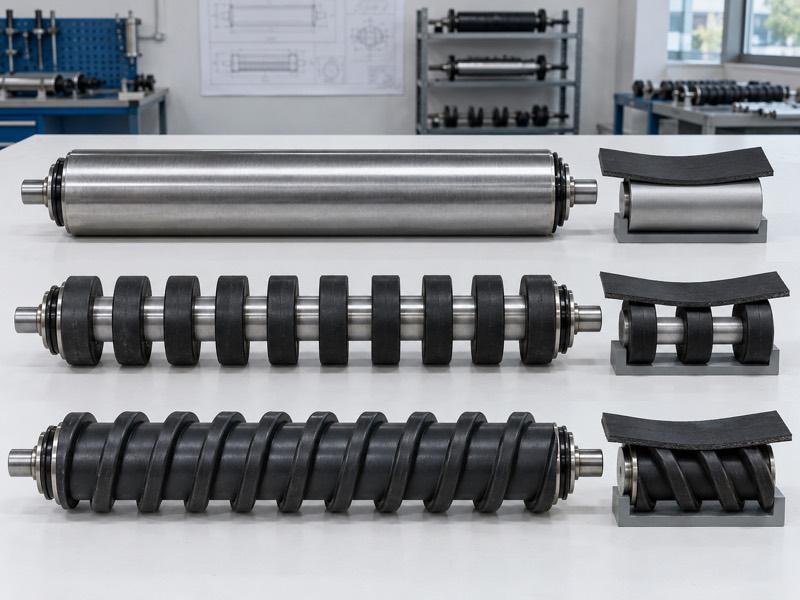
A rubber disc return roller provides separated rubber contact areas rather than a continuous working surface. Those areas carry the returning belt within an approved arrangement. Its suitability depends on ring layout, construction and duty, so a rubber-disc label cannot define every requirement.
Which construction details should you identify?
Define what holds each ring in position. Some arrangements use discs mounted along a shaft or body with specified retention. Your drawing should show that construction clearly. If rings move during service, installed contact may differ from the approved layout.
- Identify ring dimensions and nominal axial positions.
- Record supporting shaft or roller-body construction.
- Define spacers, retention and end details where fitted.
Then document whether rings can be replaced separately through an approved procedure. Don’t assume every construction permits field replacement. Keep supplier instructions with your spare records so maintenance knows the intended repair scope.
What should the component drawing show?
| Detail | Function | Buyer check |
|---|---|---|
| Rubber rings | Provide separated contact | Defined dimensions |
| Axial arrangement | Sets contact positions | Controlled layout |
| Retention and support | Maintains ring location | Approved construction |
Key Takeaway: Specify rings and their supporting arrangement together. Confirm repair provisions before buying individual replacement elements.
2. How should ring spacing be specified?
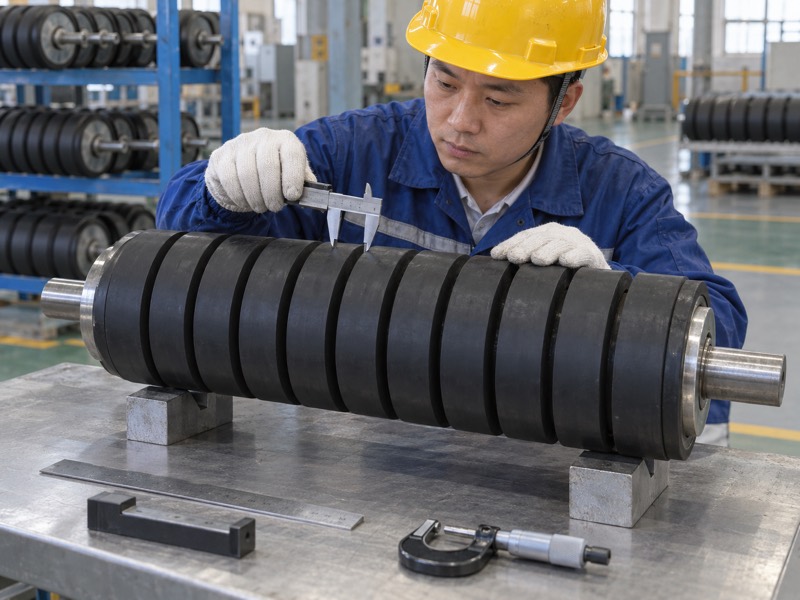
Specify ring spacing through a controlled layout referenced from defined datums. A rubber disc return roller has no universal best spacing for every belt. If you measure a worn part, check whether rings remain in their nominal positions before using it as a reference.
Which measurements prevent ambiguity?
Distinguish positions from gaps between surfaces. Center locations, ring widths and clear gaps describe different dimensions. State which values your drawing uses. Then define any variation across the roller rather than assuming one repeated spacing.
- Mark the reference end and measurement datum.
- Define ring width, outside diameter and axial position.
- Record nominal spacing separately from observed movement or wear.
If original drawings are unavailable, photograph the complete arrangement before removal. Ask engineering to interpret wear and displacement. A damaged sample should support investigation rather than silently becoming a new nominal design.
Which dimension answers which question?
| Dimension | Question | Drawing reference |
|---|---|---|
| Ring width | How broad is contact? | Individual element |
| Axial position | Where does contact occur? | Defined end datum |
| Clear gap | What space remains between rings? | Agreed layout method |
Key Takeaway: Use an unambiguous ring layout. Identify datums and distinguish nominal dimensions from a used roller’s condition.
3. What should you check near belt edges?
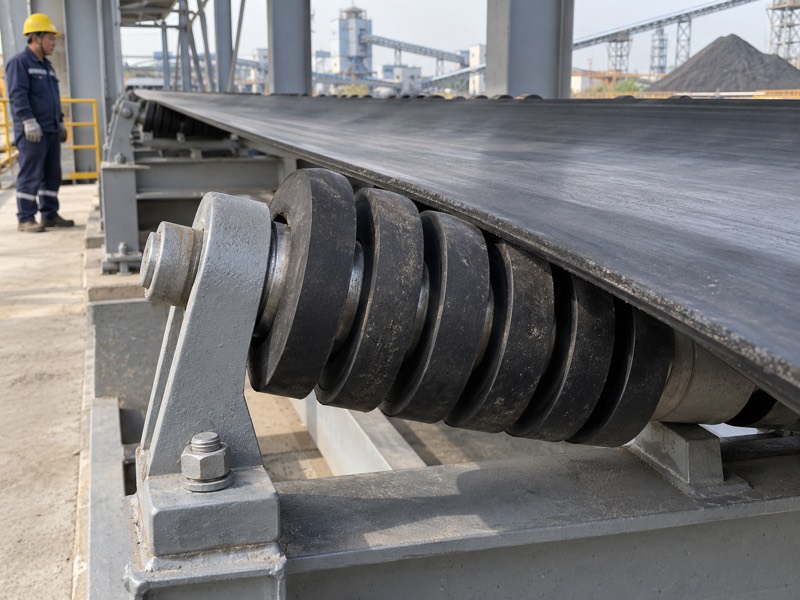
Check whether ring contact supports the belt within its approved lateral travel and profile. Your rubber disc return roller needs an application-specific arrangement near edges. Different ring positions can leave contact unsuitable even when total working width seems correct.
Why should normal belt movement be included?
Review the belt’s operating envelope as well as centered position. A belt can move within its permitted path during normal duty. Edge contact may change as it moves. Your arrangement should be checked against approved geometry and belt construction.
- Provide belt width and permitted travel from equipment records.
- Inspect ring contact across relevant belt positions.
- Check surrounding brackets and shaft features for clearance.
If edge marks appear, compare their location with ring layout and nearby structure. They may reflect drift or unsupported contact rather than rubber material alone. Keep these observations in your maintenance record before changing end-ring positions.
Which edge finding needs which review?
| Finding | Possible concern | Review |
|---|---|---|
| Marks near one belt edge | Concentrated contact or drift | Layout and belt path |
| Unsupported edge region | Unsuitable contact position | Approved support design |
| Contact with fixed hardware | Insufficient clearance | Movement envelope |
Key Takeaway: Check edge support across permitted belt movement. Obtain design approval before moving rings near either end.
4. How do roller spacing and belt profile affect contact?
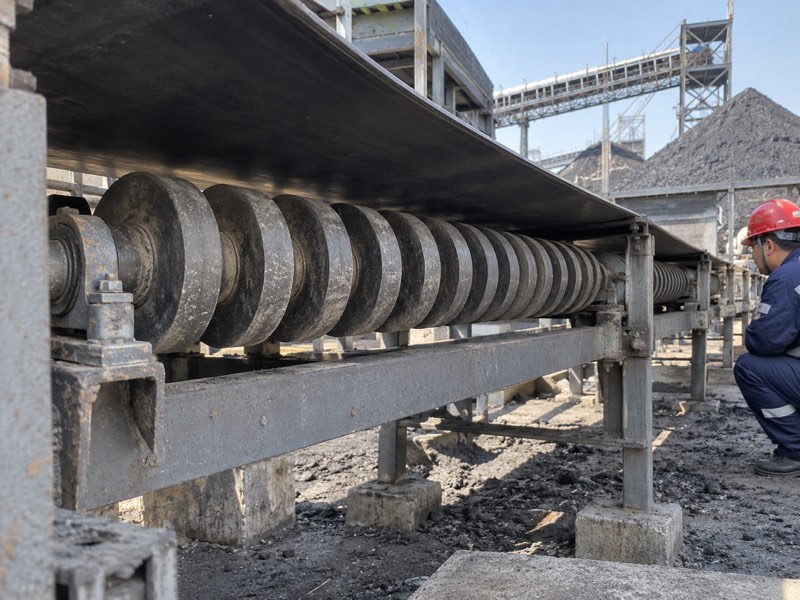
Roller spacing along the conveyor and belt profile determine how contact develops at each support. A rubber disc return roller must suit that arrangement. If nearby elevations or spans change, an unchanged ring layout can still contact the belt differently.
What should you review beyond one roller?
Check the neighboring support sequence. Inspect return roller arrangements and their mounting condition. Compare profile, elevation and frame alignment. Then review contact marks against the belt’s actual installed shape.
- Record belt construction and approved return profile.
- Define support spacing and installed elevations.
- Inspect local deflection and uneven contact after isolation.
Separated contact can concentrate support into defined areas. Your belt and conveyor design should determine acceptable geometry. Avoid applying unsupported universal load or spacing figures from an unrelated installation.
Which support detail affects which condition?
| Detail | Contact relationship | Approval reference |
|---|---|---|
| Support span | Belt shape between rollers | Conveyor layout |
| Roller elevation | Local engagement | Installation drawing |
| Return profile | Distribution across rings | Belt-support design |
Key Takeaway: Approve ring layout within the whole support arrangement. Check spans and elevations before blaming individual disc material.
5. Which rubber properties should your supplier confirm?
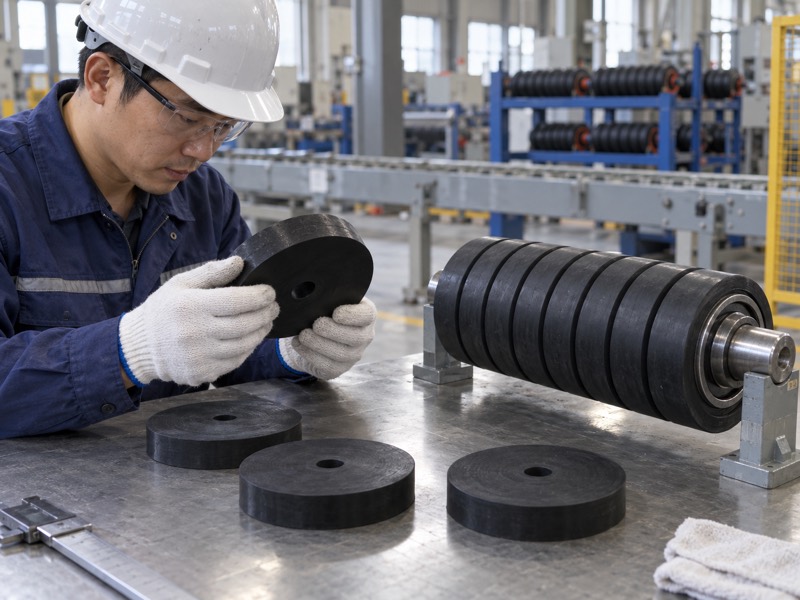
Your supplier should confirm rubber suitability for contact, temperature, chemicals and abrasion under stated duty. A rubber disc return roller needs more than a generic rubber description. If exposure remains unclear, material selection cannot be meaningfully reviewed.
How do you describe the operating exposure?
Provide actual conditions before requesting a compound. Water, oils and cleaning agents can affect materials differently. Abrasive particles also change contact and wear. Use verified process records for temperatures and chemical exposure rather than estimated claims.
- Identify material contacting the return belt.
- State moisture, oil and cleaning exposure.
- Request defined material information and applicable test evidence.
Rubber hardness is one property rather than a complete suitability judgment. It does not establish chemical compatibility or service life by itself. Ask suppliers to explain their proposal and any limits under your stated conditions.
Which exposure needs which confirmation?
| Exposure | Material question | Supporting information |
|---|---|---|
| Cleaning chemical | Is the compound compatible? | Chemical and method |
| Abrasive carryback | How is contact suitability assessed? | Material condition |
| Operating temperature | What limits apply? | Verified duty records |
Key Takeaway: Request a defined compound proposal against actual exposure. Keep hardness and service-life claims tied to appropriate evidence.
6. Which mounting dimensions matter for replacement?
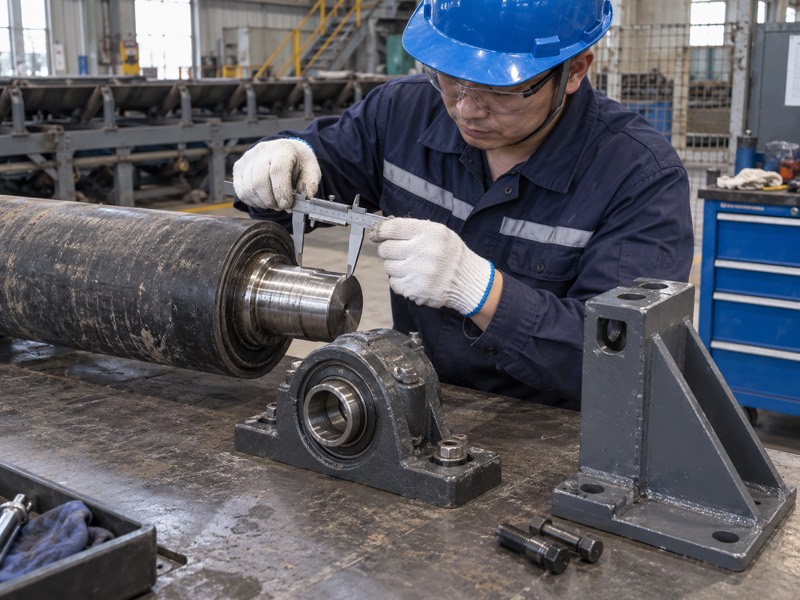
Working width, shaft ends, mounting centers and bearing arrangement determine replacement fit. A rubber disc return roller with matching rings can still have incompatible interfaces. If your supplier changes those details, obtain a revised drawing before approving the component.
What should your inquiry drawing include?
Specify the interfaces your crew must install. Identify shaft diameter, end features and retention. Show working width separately from overall mounting length. Then include nearby frame clearances and any required spacers.
- Record shaft arrangement and mounting-end details.
- Define working-face and total assembly dimensions.
- Identify bearing positions and associated installation hardware.
A comb-style product proposal should still be checked against your drawing. Similar labels do not establish matching mounts or ring positions. Ask suppliers to list deviations rather than substituting interfaces silently.
Which interface needs which approval?
| Interface | Requirement | Evidence |
|---|---|---|
| Shaft ends | Retention and fit | Dimensioned detail |
| Mounting length | Frame compatibility | Defined datum |
| Bearing arrangement | Rotation and support | Approved assembly |
Key Takeaway: Confirm full mounting geometry before purchase. Keep interface deviations visible until engineering approves them.
7. How should you interpret uneven ring wear?
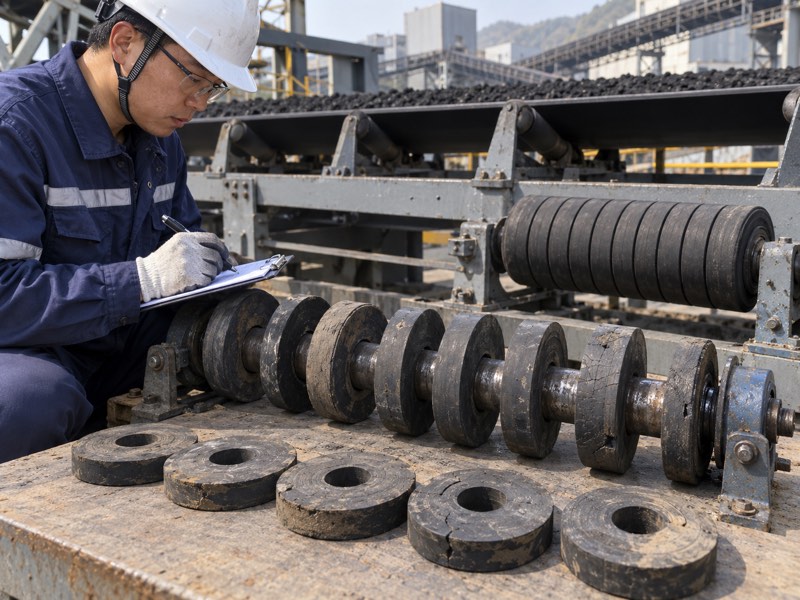
Interpret uneven wear against contact positions, belt path and component condition. Your rubber disc return roller may wear differently across its width because operating contact differs. If rings crack or move, include material exposure and retention in the investigation.
What makes a wear comparison useful?
Record each ring’s position before removing it. Compare outside diameter, visible damage and contact marks through an agreed inspection method. Note belt behavior and contamination at that location. Then inspect supporting parts for looseness or damage.
- Photograph wear across the complete working width.
- Identify cracking, missing material or displaced rings.
- Record nominal dimensions and observed condition separately.
Don’t invent a universal wear limit from visual appearance. Approved criteria should come from the component and belt-support design. If limits are unavailable, request engineering review before replacing only the most visibly damaged ring.
Which wear sign suggests which investigation?
| Sign | Possible relationship | Review |
|---|---|---|
| Uneven wear across width | Unequal contact | Belt profile and layout |
| Cracking or surface change | Damage or exposure issue | Compound and duty |
| Ring displacement | Retention fault | Supporting construction |
Key Takeaway: Tie wear to installed ring position and duty. Use approved replacement criteria rather than appearance alone.
8. What bearing and rotation checks should you make?
Check bearings, seals, shaft retention and rotation after approved isolation. A rubber disc return roller can damage contact if its body or rings fail to rotate as designed. If inspection finds rough movement, investigate the whole rotating arrangement before release.

What should your inspection procedure cover?
Inspect both ends and the working arrangement. Look for damaged seals, loose interfaces and deposits near rotating parts. Record movement through your approved method. Then compare findings with belt and ring wear.
- Check bearing condition and mounting security.
- Inspect contamination paths around seals and gaps.
- Confirm rotation after cleaning or repair.
Follow site-approved lockout/tagout before physical inspection on the conveyor. Use approved handling when components are removed. If sealed bearings have no service provision, follow replacement instructions rather than forcing lubrication.
Which finding supports which response?
| Finding | Candidate issue | Response |
|---|---|---|
| Rough rotation | Bearing or seal damage | Repair defined component |
| Loose mounting | Changing installed position | Restore approved retention |
| Packed deposits | Movement restricted | Clean and review recurrence |
Key Takeaway: Verify rotation and mounting alongside ring wear. Don’t release a cleaned roller if bearings or retention remain faulty.
9. How should you manage carryback around discs?
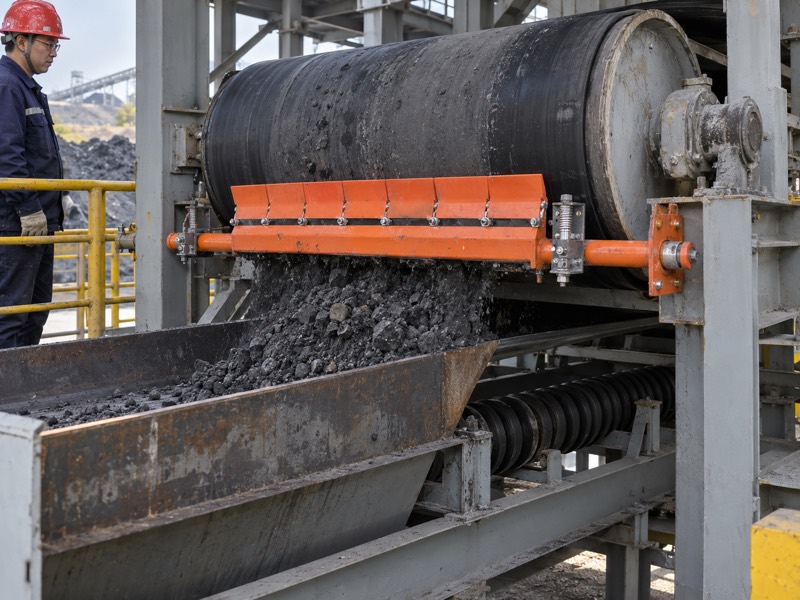
Manage carryback through suitable cleaning, collection and safe access around the support. Your rubber disc return roller can still accumulate sticky material between rings. It should not be specified as a substitute for the conveyor’s primary cleaning system.
What should you inspect when gaps fill?
Trace recurring deposits toward their source. Check residue after discharge and cleaner contact through approved procedures. Look where falling material gathers around structure. Then record whether deposits return under particular moisture or loading conditions.
- Review cleaners and collection arrangements separately.
- Document packed gaps before removing deposits.
- Confirm safe access for planned maintenance.
If material remains trapped, ask whether contact geometry or collection needs review. Do not widen ring spacing through an unapproved modification. Support and cleaning changes should each have a defined technical basis.
Which carryback issue needs which action?
| Issue | Review target | Action |
|---|---|---|
| Residue remains after cleaning | Primary cleaning system | Inspect approved cleaner duty |
| Gaps pack with material | Contact and exposure | Review layout and maintenance |
| Debris obstructs structure | Collection space | Correct approved collection |
Key Takeaway: Keep cleaning, support and collection requirements separate. Investigate recurring deposits before changing ring layout.
10. How do you accept a replacement disc roller?
Accept it against approved dimensions, material information, contact layout and inspection requirements. A rubber disc return roller then needs an installed check under relevant duty. If nominal geometry or acceptance limits remain unresolved, close those gaps before placing your order.
Which records should follow the part?
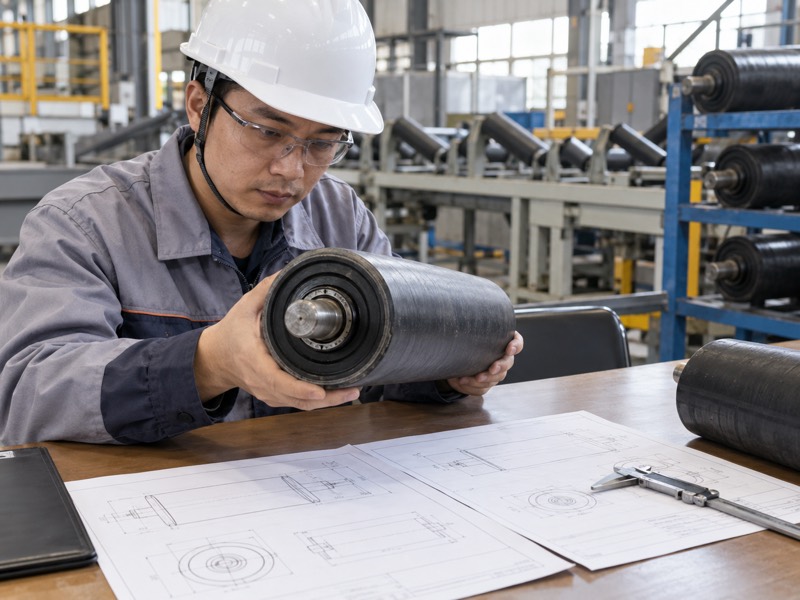
Agree inspection evidence while the quotation is reviewed. Define dimensions, ring positions and supplied material information. Request deviations in writing. Then identify what incoming inspection and site commissioning will verify.
- Confirm controlled drawing and supply scope.
- Check mounting, ring layout and rotation on receipt.
- Record installed contact and recurring deposits during trials.
Keep results linked with part identity and installation location. If your belt or support layout changes, review compatibility before using another spare. This record gives maintenance and procurement a consistent replacement reference.
What supports release at each stage?
| Stage | Evidence | Release decision |
|---|---|---|
| Quotation | Drawing, material proposal and deviations | Approve specified part |
| Incoming inspection | Fit, layout and rotation | Ready for installation |
| Installed trial | Contact and carryback observations | Meets defined duty |
Key Takeaway: Accept a complete defined arrangement. Preserve nominal ring layout and trial records for future wear comparisons.
FAQ
Q1: Can I move rings to create wider gaps? Only through an approved design change. Ring positions affect belt support and local contact.
Q2: How do I know whether rubber needs replacement? Compare damage and dimensions with approved criteria. Record installed position and exposure.
Q3: Is harder rubber always better? No. Contact, chemical compatibility and duty also determine suitability.
Q4: Can I replace only one disc? Only if the construction and repair procedure permit it. Confirm retention and final contact layout.
Q5: What’s the best replacement-order reference? Use a controlled assembly drawing with ring positions, mounting details and duty records.
Send your ring-layout drawing and wear observations when you contact us about rubber-disc return roller requirements.