
UHMW rollers should be compared with steel using complete assembly specifications, defined duty and measured maintenance costs. A lower purchase price can lose its appeal when shaft ends need rework or replacement intervals remain unpredictable. Evaluate uhmw rollers through drawing approval and a controlled service trial. Your procurement team needs comparable proposals before it can make a defensible buying decision.
1. What belongs in a UHMW rollers comparison?
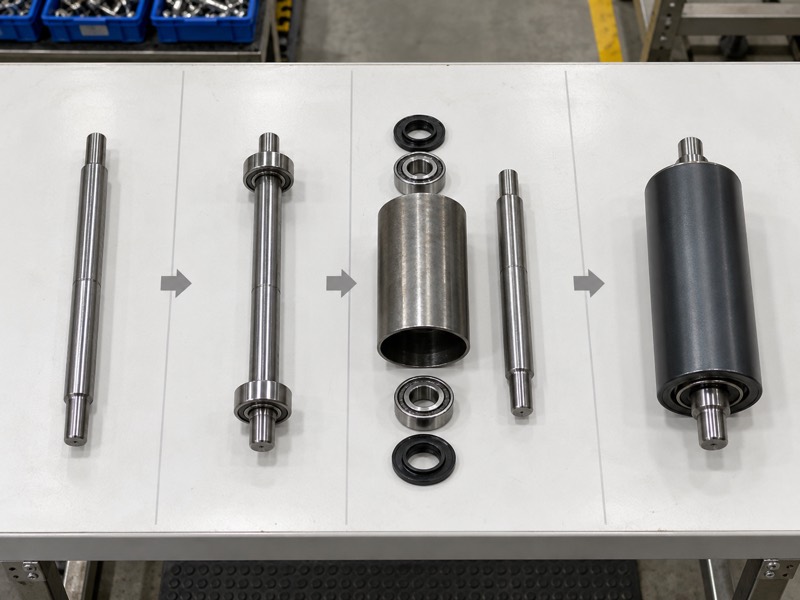
A useful comparison of uhmw rollers includes shell construction, shaft geometry, bearings, seals and operating conditions. Compare complete assemblies rather than material labels. Otherwise, differences in length or end design can distort both performance and price comparisons.
Establish a common specification
Put both proposals on one basis. Define working-face length, outside diameter, shaft ends and intended installation positions. Add loading, speed and environmental exposure. A quote for a shorter roller or different bearing arrangement should be identified as a technical deviation before your team compares costs.
- Request a complete assembly drawing from each supplier.
- Separate mandatory requirements from optional construction choices.
- List deviations beside their practical installation consequences.
Review construction before prices
An existing carrying roller provides a reference for mounting and belt-support requirements. Confirm whether proposed polymer construction maintains those requirements. Any diameter or frame-clearance change needs approval from your conveyor engineer.
| Comparison item | Common basis | Buyer check |
|---|---|---|
| Dimensions | Approved drawing | Fit equivalence |
| Assembly construction | Listed components | Technical deviations |
| Intended duty | Named conveyor position | Relevant proposal |
Return incomplete proposals for clarification before commercial ranking. Key Takeaway: Compare rollers against one approved duty and dimensional specification.
2. How do loads affect UHMW rollers selection?
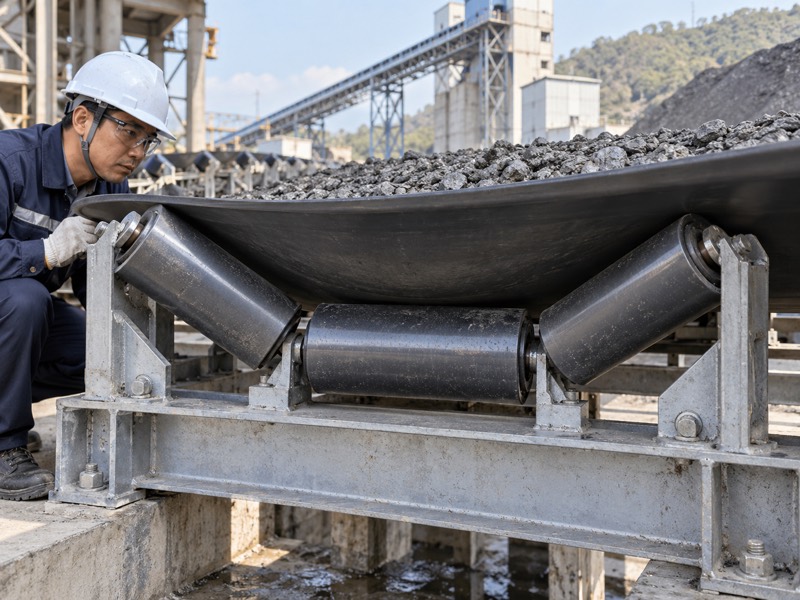
Loads affect uhmw rollers through shell deformation, shaft bending and bearing duty. Belt weight alone does not describe every loading condition. Include conveyed material, support spacing and unusual operating events before reviewing a proposed capacity.
Identify the load path
Ask where the load travels. Belt contact transfers force through a working surface into end supports, bearings and shaft seats. Long spans and uneven loading can change stresses across that path. A supplier should explain rating conditions and allowable deformation for its actual construction.
- State roller spacing and trough arrangement where applicable.
- Include normal duty and foreseeable maximum loading.
- Flag material impact as a separate design condition.
Check loading-zone suitability
Where falling lumps strike a belt, compare approved impact rollers or other specified loading support. Do not infer impact capacity from polymer abrasion resistance. Mechanical suitability should be reviewed for each position rather than applied across an entire conveyor.
| Load condition | Needed information | Selection consequence |
|---|---|---|
| Steady support | Load and spacing | Assembly rating |
| Uneven feed | Load distribution | Contact review |
| Falling material | Impact conditions | Dedicated support review |
Separate ordinary carrying duty from positions with different mechanical demands. Key Takeaway: Request capacity evidence tied to load, temperature, span and proposed construction.
3. Which sealing details should you compare?
Compare sealing arrangements on uhmw rollers by contamination route and complete end construction. A shell that resists corrosion still needs suitable bearing protection. Identical bearing codes do not establish equal resistance to dust or water entry.

Describe exposure without vague labels
State how contamination arrives. Direct washdown, airborne dust and wet carryback require different attention. Ask for a section drawing showing seal placement and shaft interfaces. Review lubrication requirements, because a nominally sealed assembly may have different maintenance expectations from your current roller.
- Record direct spray, splashing and dust accumulation.
- Ask which components can be replaced or serviced.
- Request inspection criteria for abnormal rotation or housing damage.
Include installed geometry
Frame distortion and improper shaft seating can affect end assemblies. A clean bench sample may rotate normally but bind after incorrect installation. Sample approval should include trial mounting and inspection under an approved procedure.
| Seal question | Supplier response needed | Field relevance |
|---|---|---|
| Entry routes | Seal arrangement | Dust and water exposure |
| Maintenance | Lubrication instructions | Service workload |
| End support | Housing attachment | Installed stability |
Judge sealing as an assembly feature under stated service conditions. Key Takeaway: Compare seal construction and maintenance requirements, not bearing identification alone.
4. What material documentation should purchasing request?
Purchasing should request a material description and documentation tied to supplied uhmw rollers. A generic polyethylene statement leaves grade and construction unclear. Agree which identification records your quality team needs before accepting a production lot.
Define acceptable identification
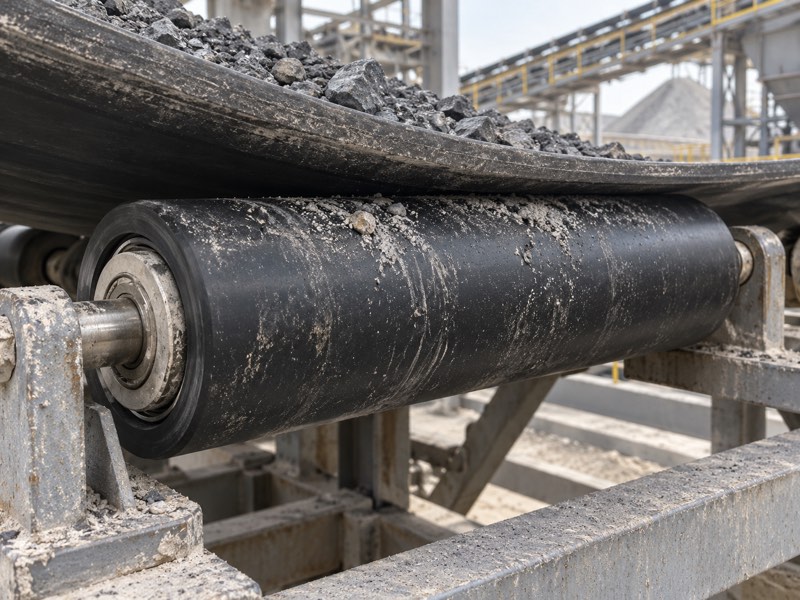
Keep claims traceable to a product. Material grade, shell design and any additives should be stated where they affect approval. Ask how production parts remain connected with agreed construction. Supplier literature can explain a product family, but your order needs a specific technical description.
- Request exact material wording on technical documents.
- Identify whether electrical or fire properties require separate evidence.
- Record permitted substitutions and their approval process.
Avoid unsupported shortcuts
Color cannot reliably identify polymer grade. Likewise, a photograph cannot establish abrasion performance or conductivity. When a requirement depends on a test, identify relevant conditions and acceptance criteria rather than requesting an undefined certificate.
| Document | Useful content | Does not establish |
|---|---|---|
| Material description | Grade and construction | Complete service life |
| Assembly drawing | Geometry and components | Environmental performance |
| Relevant test record | Method and conditions | Every operating condition |
Assign each required record a clear acceptance purpose. Key Takeaway: Request traceable material information and define evidence for consequential property claims.
5. How can you compare UHMW rollers with steel fairly?
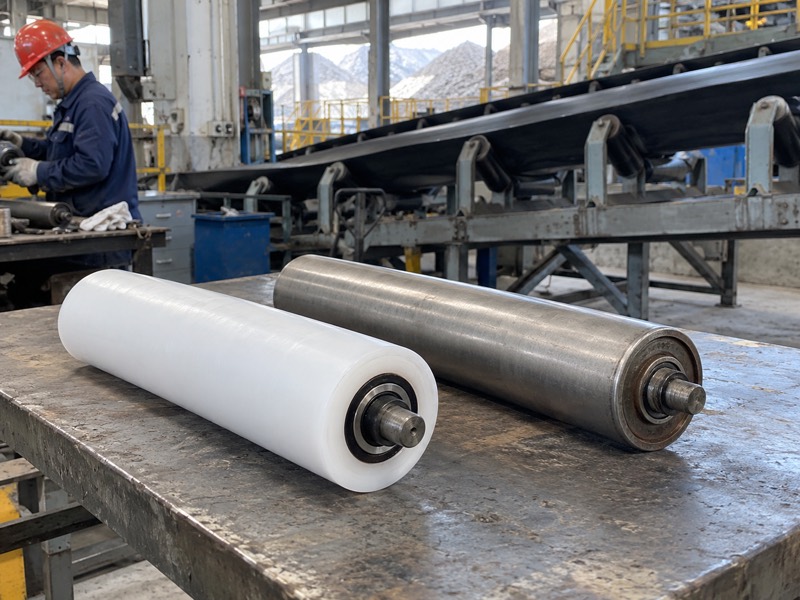
Compare uhmw rollers with steel at positions having similar loads, exposure and inspection access. Material differences may affect handling, corrosion and surface behavior. Bearings, sealing and fabrication quality can also influence results, so record those differences explicitly.
Keep comparison conditions visible
Account for more than the shell. Changing shaft diameter or bearing size at the same time changes your comparison. Such changes may be justified, but results should be attributed to a complete assembly. Ask whether candidate and baseline rollers share meaningful fit and duty requirements.
- Record assembly mass rather than shell mass alone.
- Compare proposed dimensions and bearing arrangements.
- Inspect belt-contact surfaces after similar operating periods.
Use the same service problem
For contaminated return duty, establish current return-support performance before introducing a new material. A carrying-run trial cannot automatically answer a return-run buildup problem. Choose locations matching your reason for considering replacement.
| Comparison factor | Fair approach | Common mistake |
|---|---|---|
| Position | Similar duty | Comparing unrelated zones |
| Construction | Record all differences | Crediting shell alone |
| Exposure | Log material conditions | Ignoring moisture changes |
Interpret trial results within recorded assembly and position differences. Key Takeaway: Compare complete roller alternatives at positions relevant to your maintenance problem.
6. What should a sample approval include?
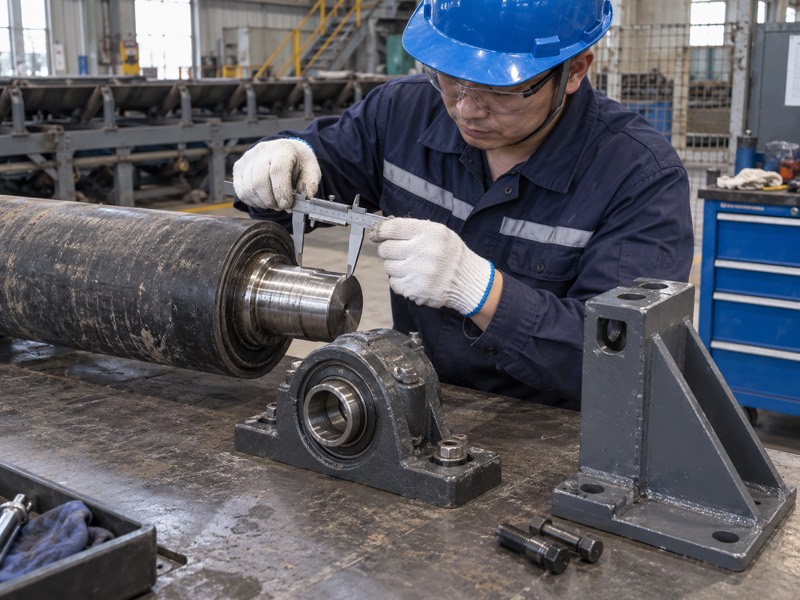
Sample approval should include dimensional inspection, trial fit and agreed checks of uhmw rollers before a wider order. A freely rotating sample provides useful information, but it does not establish long-term service performance. Keep bench acceptance and service approval separate.
Inspect fit before operating exposure
Check the interfaces your crew will use. Measure shaft ends, working-face length and outside diameter against approved tolerances. Inspect housings, surface condition and retention details. Before touching installed parts, apply approved lockout/tagout and stored-energy controls.
- Identify samples by drawing revision and proposed construction.
- Record measurements and visible workmanship findings.
- Define handling and installation instructions before field use.
Set a written acceptance sequence
Decide which findings permit installation and which require correction. A sample with a dimensional deviation should not enter service merely because it spins smoothly. Retain records so production deliveries can be checked against approved construction.
| Approval stage | Required check | Release decision |
|---|---|---|
| Bench inspection | Dimensions and condition | Fit acceptable |
| Trial mounting | Seating and clearance | Installation acceptable |
| Service trial | Recorded performance | Wider purchasing review |
Sign off each stage with a named technical reviewer. Key Takeaway: Use documented sample checks before exposing a new construction to conveyor service.
7. How should UHMW rollers replacement costs be calculated?
Replacement costs for uhmw rollers include purchasing, handling, installation, inspection and disposal. Add shutdown consequences only when your plant has a defensible costing method. Predicted service life should remain an assumption until operating records support it.
Build a transparent cost sheet
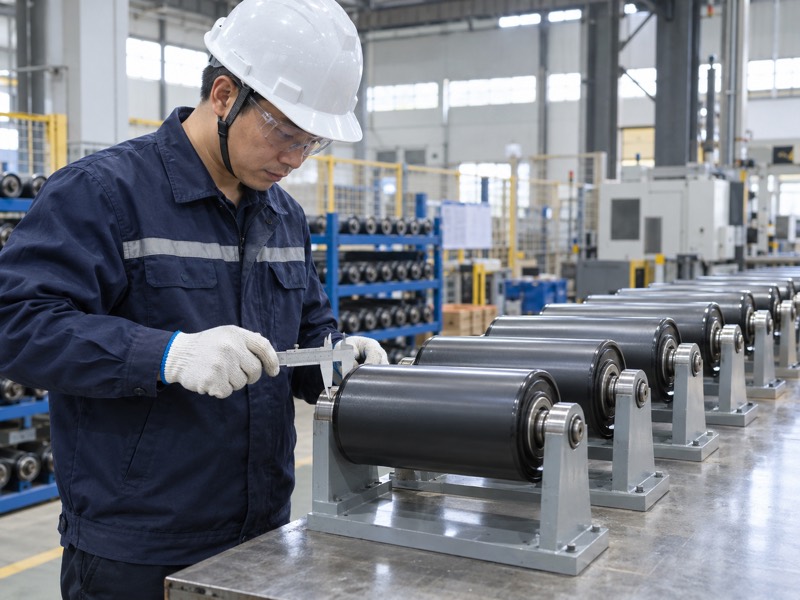
Show assumptions beside each number. Separate quoted costs from measured maintenance labor and forecast quantities. Include freight, packaging and spare-stock requirements where relevant. This allows procurement and maintenance teams to revise estimates without disguising uncertainty inside one attractive total.
- Record actual replacement labor during approved maintenance.
- Identify consumables or bracket work required by a change.
- Use observed removal reasons rather than assumed lifespan ratios.
Compare cost over a defined period
A purchase-price comparison answers a different question from a service-cost comparison. Define your observation period and units clearly. If operating histories remain unequal, report that limitation instead of presenting a precise lifetime saving.
| Cost item | Evidence basis | Uncertainty to record |
|---|---|---|
| Purchase and freight | Supplier quotation | Commercial validity |
| Replacement labor | Plant records | Job variation |
| Replacement frequency | Service observations | Limited trial duration |
Update cost assumptions as actual service data becomes available. Key Takeaway: Calculate replacement costs from stated assumptions and measured work, without invented service-life multipliers.
8. Can you claim energy savings from lighter rollers?
You cannot claim energy savings from lighter uhmw rollers without relevant measurements and an appropriate comparison. Assembly mass affects handling and some dynamic conditions. Conveyor power also depends on load, belt behavior, bearings, alignment and operating speed.
Define the measurement question
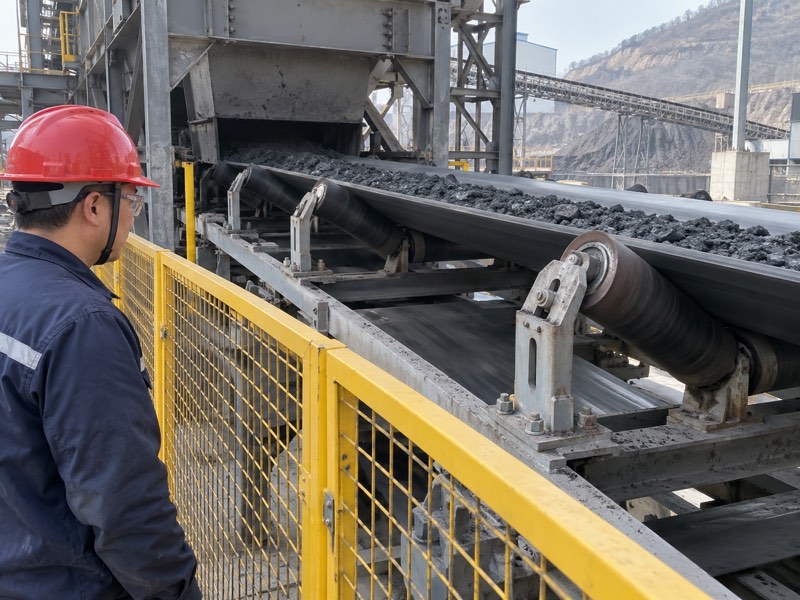
Separate handling benefits from power use. Easier manual handling does not prove lower electrical demand during normal operation. A power comparison needs recorded feed, speed and relevant operating conditions. Consult a competent engineer about measurement duration and controls before assigning a percentage.
- Record comparable production and loading conditions.
- Note bearing, belt or alignment changes made simultaneously.
- Include instrument suitability and measurement uncertainty.
Report observed results carefully
A change in power during unmatched duty cannot be attributed confidently to rollers. Short observations may also miss temperature or contamination effects. Describe findings with their measured conditions and avoid transferring one result across every conveyor.
| Claim | Required basis | Acceptable wording |
|---|---|---|
| Easier handling | Complete assembly mass | Condition-specific comparison |
| Lower power | Controlled measurements | Observed result and limits |
| Longer service | Comparable operating records | Recorded replacement history |
Approve claims only at a level supported by actual evidence. Key Takeaway: Treat energy savings as a measurement task, not a presumed result of polymer construction.
9. How do you plan a useful UHMW rollers field trial?
A useful uhmw rollers trial starts with known failure modes, approved samples and consistent inspection records. Select positions that represent your intended purchase. Keep a clear removal procedure for abnormal wear, heat, binding or belt damage.
Make observations comparable
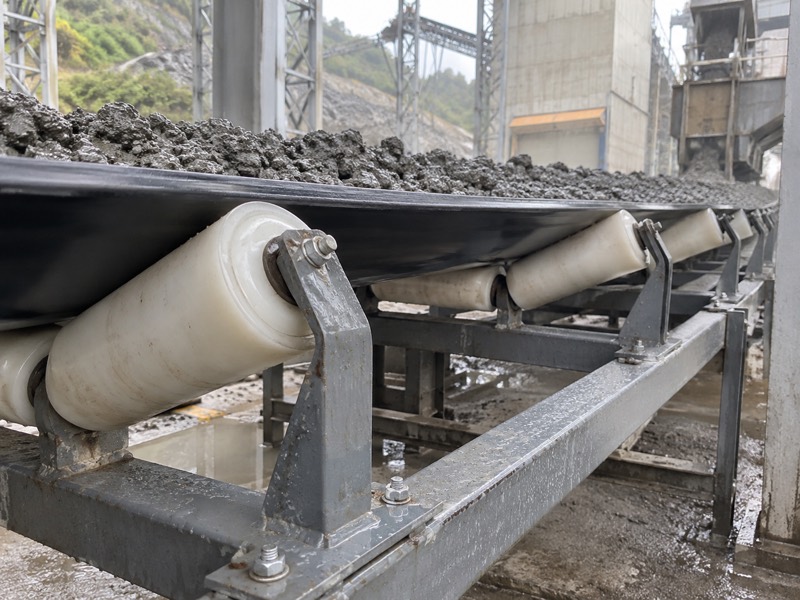
Write down what would change your decision. Agree inspection criteria before installation so a clean appearance does not become the only success measure. Record operating hours, material conditions and maintenance actions. Keep removed components available for failure review when practical.
- Photograph initial shell and belt conditions.
- Log deposits, rotation and housing movement.
- Record why any sample leaves service.
Review both positive and negative findings
Stable operation supports continued evaluation under observed conditions. Unexpected wear should trigger a review of loading, material compatibility and assembly construction. A supplier should receive detailed findings rather than a vague statement that samples passed or failed.
| Trial finding | Decision supported | Further work |
|---|---|---|
| Good fit and rotation | Continue observation | Check wear progression |
| Repeated buildup | Surface review | Compare material changes |
| Abnormal belt marks | Stop and inspect | Contact-geometry investigation |
Use recorded findings to approve, revise or reject proposed construction. Key Takeaway: Give every field-trial observation a direct connection with purchasing acceptance criteria.
10. What should purchasing send for a reliable quotation?
Purchasing should send drawings, operating conditions and acceptance criteria for uhmw rollers alongside quantity and intended positions. A complete inquiry reduces unresolved assumptions between technical and commercial teams. Ask suppliers to list deviations and confirm a proposed assembly scope.
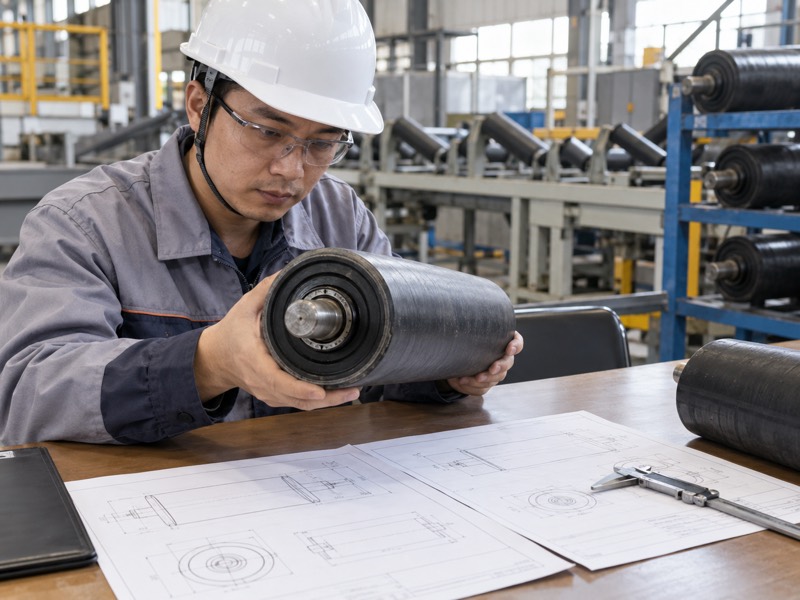
Prepare technical and commercial inputs
Make the review package usable. Include current failure descriptions, photographs and dimensional units. State inspection records, sample approval and packaging requirements. Identify electrical or hazardous-service requirements separately so nobody assumes ordinary material properties satisfy them.
- Provide approved drawings with revision identifiers.
- State speed, loading, temperatures and contamination exposure.
- Specify the sequence for sample and production acceptance.
Compare confirmed proposals
| Inquiry input | Supplier confirmation | Buyer action |
|---|---|---|
| Drawing | Dimensions and tolerances | Approve fit |
| Service description | Proposed construction | Approve duty review |
| Inspection plan | Available documentation | Agree acceptance |
Key Takeaway: Request an assembly-specific proposal and a written deviation list before releasing an order. Send XINYONGDUO your roller drawing, installation positions, operating conditions and expected sample checks. Contact us for a UHMW roller quotation based on that package. You can then compare confirmed construction and measured replacement costs using the same purchasing criteria.
FAQ
Q1: Can I compare polymer and steel using unit price alone? Only for purchase cost. Service comparisons need equivalent duty, fit, maintenance work and observed replacement frequency.
Q2: What’s the best sample size for a field trial? Choose a quantity that represents relevant positions and allows meaningful inspection. Agree the plan with your conveyor engineer before ordering.
Q3: How do I know if a seal proposal is suitable? Compare complete end construction with actual dust, water and maintenance exposure. Request relevant evidence and review installed shaft seating.
Q4: Can I assume all UHMW rollers use identical grades? No. Request product-specific material descriptions, construction details and an approval process for substitutions.
Q5: How should I report a short trial result? Report measured observations and their operating conditions. State limited duration clearly rather than extrapolating a guaranteed service life.