
A roller conveyor design guide starts by identifying what supports the load: exposed rollers under packages or idlers beneath a moving belt. Confusing those systems can produce wrong spacing, drive assumptions and replacement specifications. Use this roller conveyor design guide to prepare loads, layouts and component drawings for engineering review. Confirm a supplier’s actual component scope before requesting a complete conveyor system.
1. Which conveyor system are you designing?
Identify whether your load travels directly on exposed rollers or rests on a belt supported by idlers. A roller conveyor design guide needs that distinction before addressing geometry or drive requirements. These systems support and move material through different arrangements.

Define the transport function
Name what contacts the load. Cartons, pallets and rigid units can travel on suitable exposed rollers, while bulk material usually travels on a belt. Package rollers may be gravity-operated or driven. Belt idlers generally support a moving belt whose drive belongs elsewhere in the system.
- State whether you handle packages, pallets or bulk material.
- Identify gravity, driven-roller or belt transport.
- Separate component replacement from complete-system design.
Set the engineering review boundary
For example, a carrying roller drawing defines belt support rather than package accumulation control. A complete conveyor also needs structural, drive, control and safety review. Identify the responsible system designer before selecting isolated components.
| System | Load contact | Main design inputs |
|---|---|---|
| Package roller conveyor | Exposed rollers | Unit base and drive |
| Pallet roller conveyor | Exposed support rollers | Pallet structure and orientation |
| Bulk belt conveyor | Belt over idlers | Belt duty and support layout |
Keep system type explicit across drawings and inquiries. Key Takeaway: Define machine function before transferring any roller-selection rule into a project.
2. What load information should you collect?
Collect load mass, dimensions, base construction and operating variation before using a roller conveyor design guide. A rigid carton and a flexible bag behave differently on exposed rollers. Pallets also depend on runner orientation and their condition during transport.
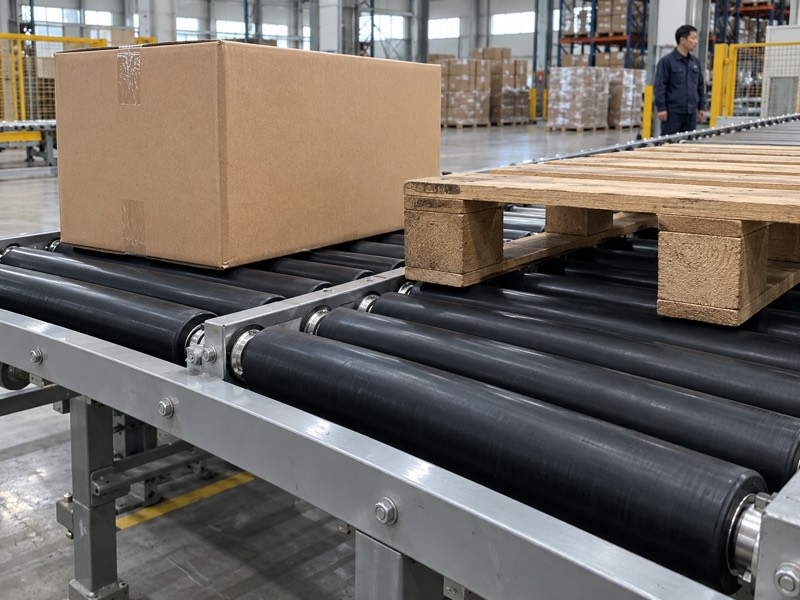
Describe the complete load envelope
Include your smallest and least stable units. Maximum mass matters, but short bases or uneven weight can control support requirements. Record where a unit’s center of mass sits and how it enters a conveyor. Include damaged or irregular units only within an explicitly approved operating envelope.
- List normal and maximum load mass.
- Record minimum and maximum base dimensions.
- Describe base stiffness, runners and contact surfaces.
Review loading events separately
For package lines, lifting, pushing and pallet placement can create different loads from normal rolling transport. For belt systems, falling material needs a separate impact-support review. Ask your engineer to identify credible operating events rather than applying one static weight everywhere.
| Load input | Design question | Needed evidence |
|---|---|---|
| Mass | Component and frame duty | Defined operating load |
| Base geometry | Stable support | Actual unit samples |
| Entry conditions | Transfer or impact | Loading description |
Provide representative loads before approving spacing or component ratings. Key Takeaway: Define mass, base structure and entry conditions as one operating package.
3. How should roller spacing be selected?
Select roller spacing so approved loads remain adequately supported throughout normal travel and transfers. A roller conveyor design guide must consider unit length, stiffness and base contact. Belt-idler spacing follows a separate review of belt support and loading.
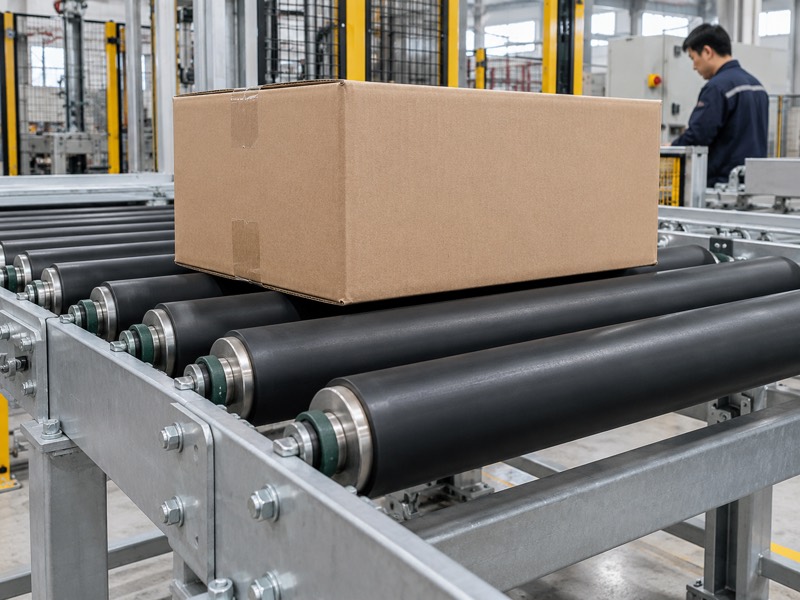
Examine support through movement
Check the shortest base in motion. A unit may bridge rollers differently as its leading edge enters a transfer. Flexible bottoms can sag into gaps, while pallet runners may contact only certain supports. Validate proposed spacing using manufacturer criteria and representative units rather than a universal numerical rule.
- Check support at entry, normal travel and discharge.
- Include base flexibility and runner orientation.
- Evaluate small units that can enter gaps or lose stability.
Keep component and frame requirements connected
Closer spacing changes roller quantities, frame interfaces and potentially drive arrangements. For belt systems, spacing also affects sag and support duty. Your design review should reconcile those consequences instead of choosing a convenient pitch from available stock alone.
| Load condition | Spacing concern | Validation approach |
|---|---|---|
| Short rigid package | Intermittent support | Representative trial |
| Flexible base | Sagging into gaps | Transport-method review |
| Pallet runners | Contact alignment | Orientation check |
Approve spacing using actual loads and their movement across the complete route. Key Takeaway: Validate support through transfers instead of checking only a stationary package.
4. Which dimensions and bearings control roller fit?
Roller fit depends on working length, outside diameter, shaft ends and bearing construction. A roller conveyor design guide should connect those dimensions with frame geometry and intended duty. Similar nominal diameters do not establish interchangeable assemblies.
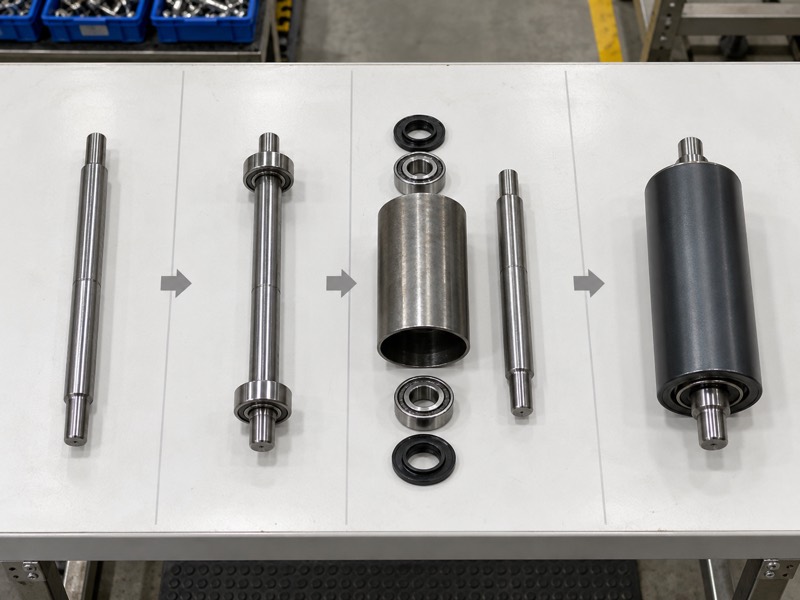
Specify the mounting interface
Measure what the frame accepts. Shaft-end forms, spring-loaded arrangements or fixed retention details vary by construction. Identify the exact design on an approved drawing. Belt idlers and driven package rollers may use very different end details even when working surfaces look similar.
- State working-face length and overall shaft length separately.
- Show end forms, retention and clearance requirements.
- Identify bearing arrangement and relevant load basis.
Review rotation and structural support
Bearing speed, load and sealing need review within an actual assembly. Shaft deflection and frame stiffness can also influence alignment. If a proposed diameter changes support height or rotational speed, obtain engineering approval before ordering replacements.
| Dimension | Controls | Acceptance check |
|---|---|---|
| Working length | Load or belt coverage | Drawing inspection |
| Outside diameter | Contact height and rotation | Duty review |
| Shaft ends | Frame seating | Gauge or trial fit |
Confirm component fit together with surrounding structural requirements. Key Takeaway: Approve complete mounting and bearing construction rather than nominal roller size alone.
5. Should you choose gravity or powered rollers?
Choose gravity or powered rollers according to load behavior, route, control requirements and approved safety provisions. A roller conveyor design guide cannot select a drive from package mass alone. Belt-conveyor idlers support a belt and require a different drive-system review.
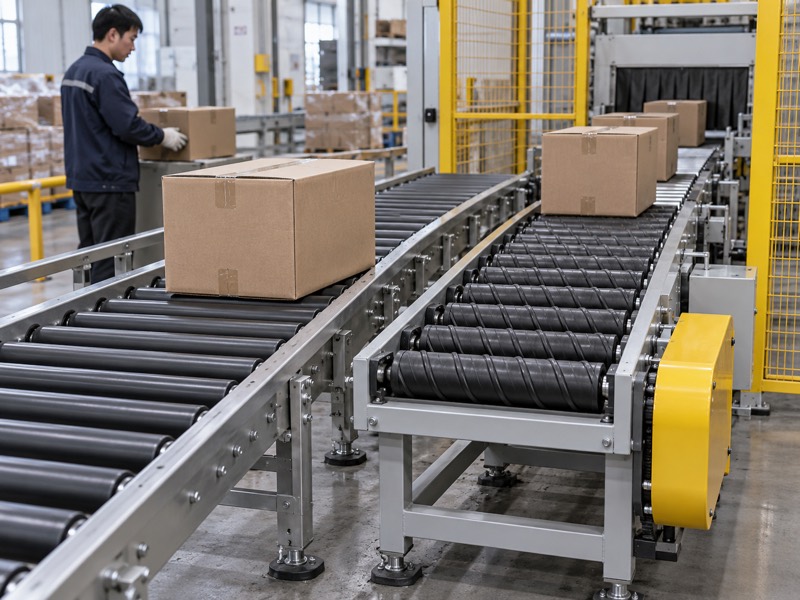
Evaluate controlled movement
Decide how travel will start and stop. Gravity transport depends on load behavior and route geometry, so stopping and accumulation need review. Powered rollers require suitable drive capacity and controls. Include starts, stops and intended product spacing before selecting a system arrangement.
- Describe required transport speed and flow.
- State accumulation, stopping and release requirements.
- Identify inclined sections and relevant holding needs.
Review a complete drive arrangement
For example, friction, belt or chain transmission may introduce different interfaces and guarded hazards. A system designer should confirm drive selection, control logic and applicable protection. A supplier listing belt idlers should not automatically be assumed to supply a complete powered package conveyor.
| Transport choice | Design review | Additional requirement |
|---|---|---|
| Gravity | Movement and stopping | Controlled release |
| Powered rollers | Drive and speed | Controls and guarding |
| Belt system | Belt drive duty | Idler support layout |
Select transport mode through the complete operating workflow. Key Takeaway: Confirm controlled motion, stopping and supplier scope before choosing a drive arrangement.
6. How should curves and route changes be reviewed?
Review curves and route changes using load stability, contact geometry and the intended conveyor construction. A roller conveyor design guide needs actual unit dimensions and travel orientation. Belt-conveyor route changes follow different geometric and engineering requirements from exposed package rollers.
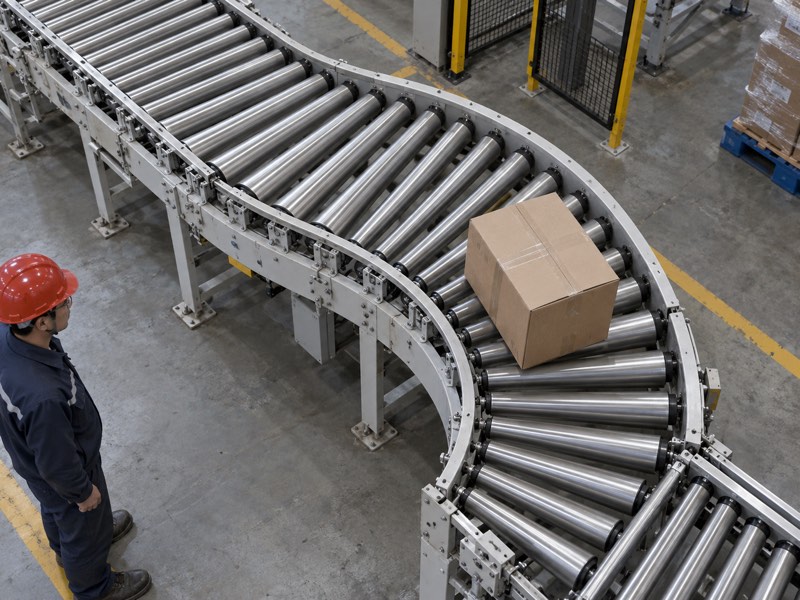
Check how units behave around curves
Use representative loads through the route. Package orientation can change during curved travel, especially with uneven bases or off-center mass. Tapered exposed rollers may appear in particular curve designs, but their dimensions need system-specific selection. Do not transfer package-curve geometry onto belt-idler assemblies.
- Check inner and outer clearances around units.
- Include the longest and least stable load shapes.
- Record desired orientation at each downstream station.
Resolve interference and access
Curves can reduce clearance around guards, side structures and maintenance areas. Review access for inspection and removal before finalizing a layout. If products contact guides repeatedly, investigate stability and geometry instead of assuming stronger side contact will solve the issue.
| Route issue | Review focus | Validation |
|---|---|---|
| Curve travel | Contact and orientation | Representative-load trial |
| Restricted clearance | Unit envelope | Layout check |
| Frequent guide contact | Stability and geometry | System review |
Approve route changes as part of a complete conveyor layout. Key Takeaway: Validate curves with actual loads and system-specific contact geometry.
7. What makes transfers reliable?
Transfers become reliable when adjacent heights, gaps, speeds and support conditions suit intended loads. A roller conveyor design guide should examine every handoff along a route. A stable unit on one section may still tip or stall at a poorly matched transition.
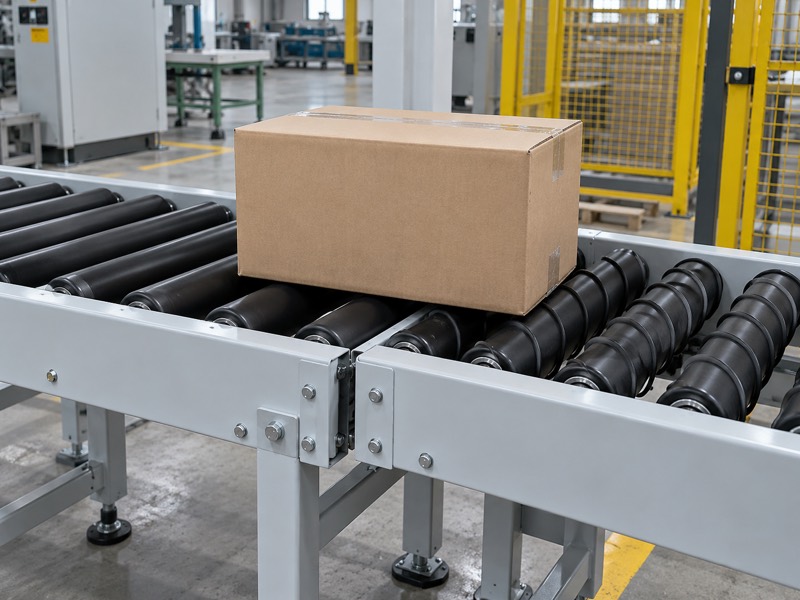
Review the handoff geometry
Inspect where support changes. A leading edge may meet a height step while its trailing edge loses support. Flexible bases and short packages need particular attention. Confirm transfer details with representative units and include product variation in your operating envelope.
- Record adjacent conveyor heights and directions.
- Check transfer gaps and exposed support edges.
- Review speed differences and product orientation.
Separate package and bulk transfers
Package transfers require stable unit movement, while bulk belt transfers also involve material trajectories, chute conditions and impact support. Their design questions overlap only partly. Keep each transfer function explicit when coordinating conveyors, loading equipment and downstream machinery.
| Transfer feature | Potential issue | Review method |
|---|---|---|
| Height step | Impact or catching | Layout and trial |
| Support gap | Tipping or sag | Small-unit check |
| Speed difference | Compression or spacing change | Controlled flow review |
Test transfers with loads at relevant size and weight limits. Key Takeaway: Approve support continuity and motion at every handoff before finalizing a route.
8. How should environment and maintenance affect design?
Environment and maintenance should affect materials, sealing, access and inspection planning in a roller conveyor design guide. Dust, water and chemicals impose different conditions. A design that fits available floor space still needs workable access for safe servicing.

Describe actual exposure
Include cleaning in the duty description. Direct washdown can challenge seals differently from ordinary damp air. Abrasive material may affect working surfaces and end components. For belt systems, return support also needs review where carryback accumulates beneath a conveyor.
- State temperatures and relevant chemical exposure.
- Describe dust, slurry and cleaning methods.
- Identify access for guards, bearings and roller removal.
Plan safe servicing before installation
Contact work requires approved hazardous-energy control procedures and management of stored energy. Include isolation points and accessible maintenance positions in your project review. Avoid layouts that require workers to reach toward moving nip points for routine cleaning or adjustment.
| Design consideration | Needed information | Practical result |
|---|---|---|
| Exposure | Materials and cleaning methods | Appropriate construction |
| Access | Removal and inspection space | Feasible maintenance |
| Energy control | Isolation arrangement | Approved servicing procedure |
Review maintenance tasks against the layout before releasing fabrication drawings. Key Takeaway: Design component access and contamination protection alongside transport performance.
9. What drawings should a design review include?
A design review should include system layout, load descriptions and component drawings with clear revisions. A roller conveyor design guide also needs agreed operating limits and acceptance tasks. A photograph cannot define every mounting interface or transfer clearance.
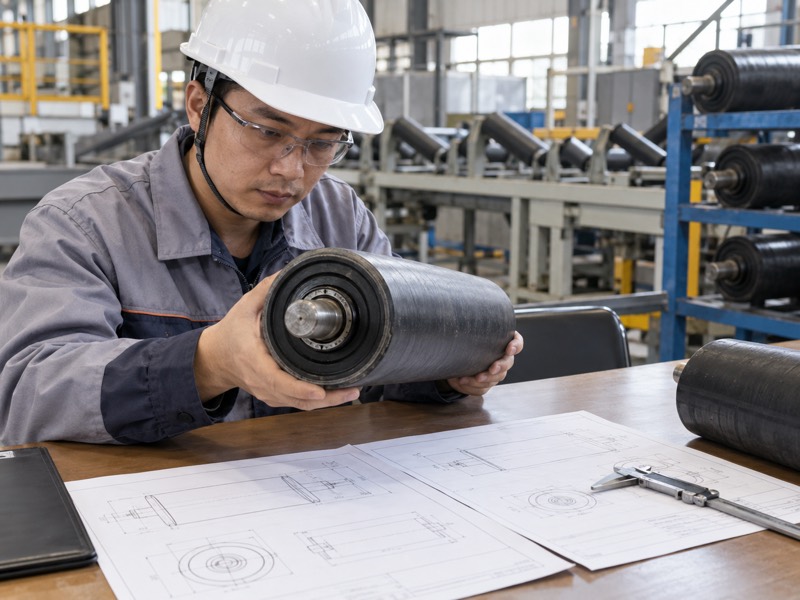
Connect component drawings with the route
Keep interfaces visible. Show heights, direction changes, transfer positions and maintenance access on layout documents. Component drawings should define shafts, working dimensions and retention. If several suppliers contribute equipment, appoint a responsible reviewer for cross-system interfaces.
- State drawing numbers, revisions and dimensional units.
- Mark operating limits and representative load requirements.
- List deviations requiring approval before manufacture.
Define what acceptance will demonstrate
Dimensional inspection confirms geometry, while load trials evaluate movement under defined conditions. Controls and safety acceptance require their own agreed reviews. Keep those tasks explicit rather than declaring an entire system accepted from one successful component test.
| Review document | Controls | Acceptance task |
|---|---|---|
| Layout | Route and interfaces | Clearance review |
| Component drawing | Fit and construction | Dimensional inspection |
| Operating description | Loads and flow | Defined system trial |
Release production only after responsible reviewers resolve required interfaces. Key Takeaway: Use coordinated drawings and acceptance tasks for components and complete-system behavior.
10. What should you send before requesting a quotation?
Send machine type, load envelope, layout, drawings and required supply scope before requesting a quotation. A roller conveyor design guide should help suppliers identify which components they can actually propose. Confirm complete-machine availability separately from belt-idler product listings.
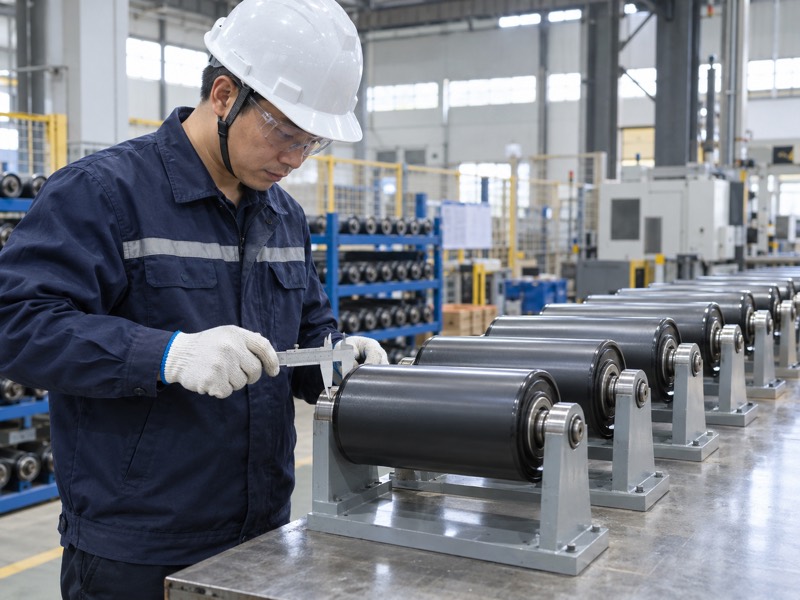
Make the requested scope explicit
State exactly what you want supplied. Identify whether your inquiry concerns belt support, exposed rollers, replacement parts or a complete transport system. For XINYONGDUO, request confirmation against its listed belt-conveyor roller scope. Package-conveyor machinery should receive separate capability and engineering confirmation before any order assumption.
- Include quantities by component and intended position.
- Provide fit dimensions and operating exposure.
- State sample, inspection and project-interface expectations.
Compare confirmed offers
| Inquiry item | Required response | Buyer decision |
|---|---|---|
| Machine and component scope | Available supply | Relevant quotation |
| Drawings and duty | Proposed construction | Technical review |
| Acceptance requirements | Agreed evidence | Release process |
Key Takeaway: Request a quotation for a defined component scope within an approved conveyor design. Send XINYONGDUO your belt-idler drawings, operating conditions and required roller schedule. Contact us for a review of listed conveyor roller products and confirmation of proposed supply scope. For package-handling systems, obtain a separate system-design review and verify available components before placing an order.
FAQ
Q1: Can I use belt idlers as package-conveyor rollers? Only after a specific engineering review. Shaft interfaces, load contact and drive requirements may differ substantially.
Q2: What’s the best spacing for small cartons? Use manufacturer criteria and representative loads to verify support through movement and transfers. Avoid applying a universal pitch without checking base construction.
Q3: How do I know whether gravity transport will work? Review unit behavior, route geometry, stopping and accumulation with a qualified designer. Controlled trials should represent actual loads.
Q4: Can I assume a roller supplier sells complete conveyors? No. Request written supply-scope confirmation. Component product listings do not establish complete-machine design or manufacturing capability.
Q5: What should I provide for belt-idler replacement? Provide an approved drawing, belt width, speed, support positions and exposure conditions. Add photographs of current fit or failure problems.