A conveyor roller bearing must suit assembly load, rotational speed, fit and contamination exposure. A replacement bearing can fail again if damaged housings, water entry or incorrect installation remain unresolved. Review a conveyor roller bearing within its complete shaft, housing and sealing arrangement. Identify actual failure evidence before changing a bearing code or ordering another batch of rollers.
1. What does a conveyor roller bearing support?
A conveyor roller bearing supports relative rotation between a roller’s working assembly and its shaft arrangement. In many belt-idler designs, a shell rotates around a stationary shaft. Confirm your actual construction because rotating rings and load directions affect selection and fit.
Identify the assembly before selecting parts
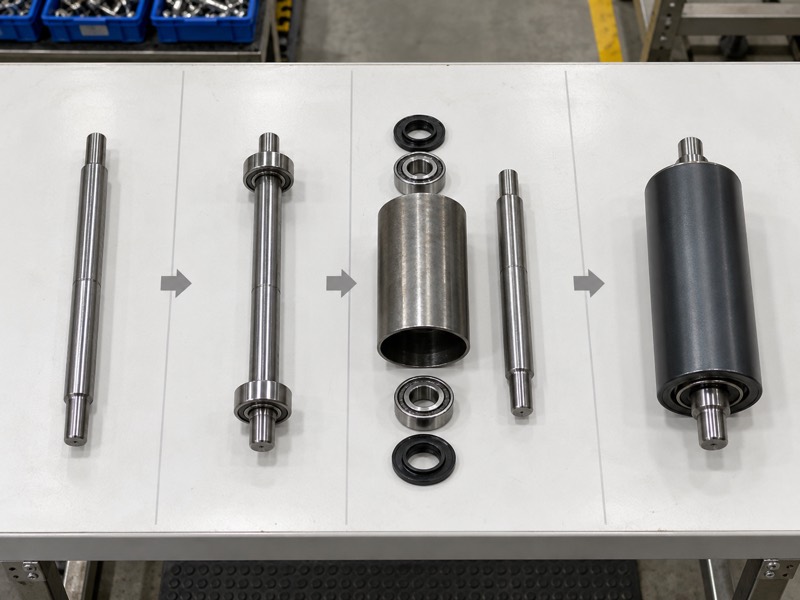
Start with the section drawing. Bearings transfer belt-support forces through housings and shafts into a frame. Their behavior depends on surrounding support rather than bearing identification alone. Ask which ring rotates, where loads act and how end components retain their positions.
- Record bearing type and exact designation.
- Identify shaft, housing and retention construction.
- Confirm intended conveyor position and working load.
Keep different conveyor functions separate
For example, belt idlers support a moving belt, while exposed package rollers directly support goods and may include drive components. Those assemblies can have different bearing arrangements. Identify machine function before using another roller’s bearing specification as a replacement reference.
| Assembly question | Information needed | Selection consequence |
|---|---|---|
| Which part rotates? | Section drawing | Ring fit review |
| Where does load enter? | Belt and support arrangement | Bearing duty |
| How are parts retained? | End construction | Assembly stability |
Define the complete bearing position before comparing components. Key Takeaway: Select bearings from actual shaft and housing construction, not a product name alone.
2. Which loads should bearing selection include?
Bearing selection should include normal support loads and relevant operating events for a conveyor roller bearing. Belt mass, conveyed material, spacing and uneven loading influence duty. Falling material or misalignment can create conditions requiring additional engineering review.
Describe load at the roller position
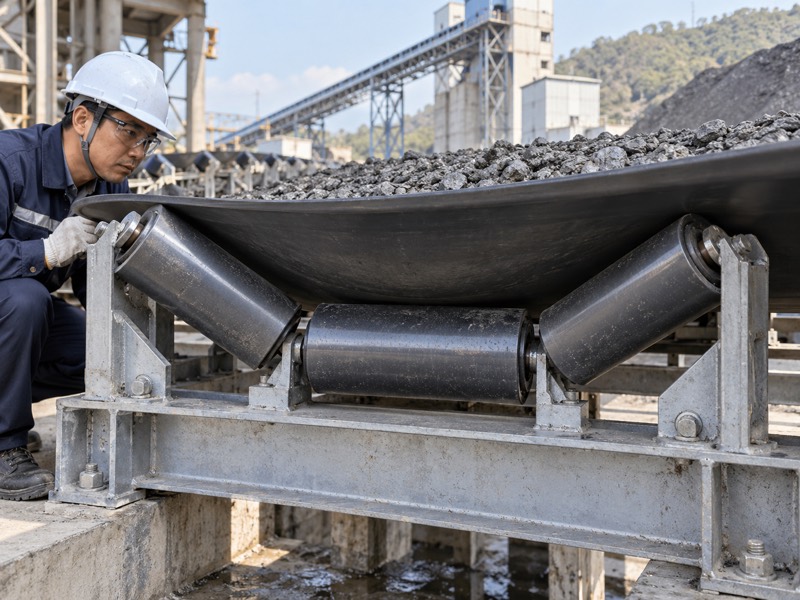
Separate ordinary duty from exceptional events. A bearing proposal needs a load basis tied to an actual assembly. Ask your engineer to review radial loads and any relevant axial forces. Housing stiffness and shaft deflection can influence alignment even when a bearing’s catalogue capacity appears sufficient.
- Provide belt width, speed and support spacing.
- Describe normal and maximum intended material loading.
- Identify startup, uneven feed and impact conditions.
Review loading support before increasing bearing size
Where falling material dominates, assess approved impact rollers and loading-zone geometry. A larger bearing cannot compensate automatically for unsuitable contact or a weak housing. Compare any proposed bearing change with shaft interfaces and surrounding construction.
| Load issue | Review basis | Related component |
|---|---|---|
| Steady support | Load and spacing | Shaft and housing |
| Uneven contact | Belt and alignment | Roller geometry |
| Material impact | Loading conditions | Resilient support arrangement |
Ask for a documented bearing selection basis rather than an unexplained capacity claim. Key Takeaway: Review load, alignment and structural support together before changing bearing size.
3. How do belt speed and roller diameter affect bearings?
Belt speed and working diameter determine approximate rotational speed for a conveyor roller bearing when contact rolls without significant slip. Smaller diameters rotate faster at the same belt speed. Actual geometry and operating behavior still need confirmation.
Use compatible units for calculations
Check the working diameter. A rotation estimate uses n = 60v/(piD), where v uses m/s and D uses metres. The result gives revolutions per minute. Convert units consistently and use actual working contact diameter for your construction.
- State normal belt speed and credible operating changes.
- Identify roller diameter and contact surface geometry.
- Review bearing and lubricant speed limits from product documentation.
Include temperature and contamination
Speed suitability depends on bearing construction, lubricant, load and sealing friction. As a result, a catalogue speed value needs review within the complete assembly. If an operating change raises belt speed, reassess rollers rather than assuming previous approval covers it.
| Input | Used for | Required check |
|---|---|---|
| Belt speed | Rotation estimate | Consistent units |
| Working diameter | Rotation estimate | Actual contact geometry |
| Bearing arrangement | Speed suitability | Documented limits |
Keep estimates separate from approved operating ratings. Key Takeaway: Calculate rotational speed from valid inputs, then review complete assembly limits.
4. Why do shaft and housing fits matter?
Shaft and housing fits matter because they locate and support a conveyor roller bearing under actual ring loads. Loose or excessively tight fits can create different failure mechanisms. Required fits depend on bearing arrangement, materials and operating conditions.
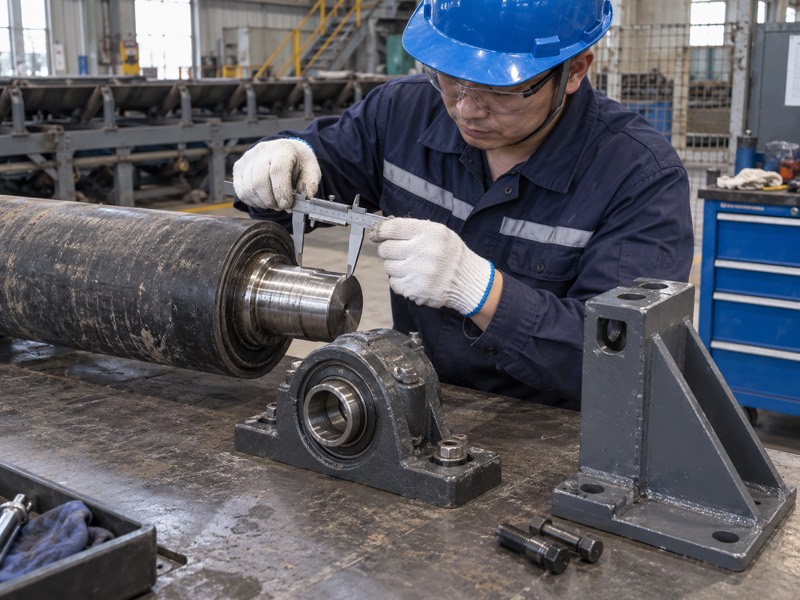
Identify which surfaces locate each ring
Measure the actual bearing seats. Housing damage, shaft wear or production deviations can change fit even when replacement bearings match an original code. Ask for approved tolerances and measurement references. Do not choose a fit class without considering which ring rotates and how its load behaves.
- Check shaft and housing dimensions against drawings.
- Inspect seats for wear, scoring and distortion.
- Confirm shoulder, retention and assembly details.
Keep installation force on the correct path
Follow bearing and roller instructions when assembling fitted components. Force transmitted through rolling elements can damage a bearing before service begins. If a sample binds after installation, investigate seat dimensions and assembly methods before blaming lubricant or bearing quality.
| Fit finding | Potential effect | Inspection action |
|---|---|---|
| Worn seat | Unstable support | Measure and review |
| Distorted housing | Binding or misalignment | Check construction |
| Incorrect assembly force | Internal damage | Review installation method |
Approve fits through relevant drawings and construction-specific procedures. Key Takeaway: Verify bearing seats and installation methods before repeating a failed replacement.
5. What internal clearance should a bearing have?
Internal clearance for a conveyor roller bearing should follow an approved selection considering fits, temperatures and operating loads. Installed conditions can change clearance from an unfitted bearing’s value. A particular clearance designation should not be assumed universal for conveyor rollers.
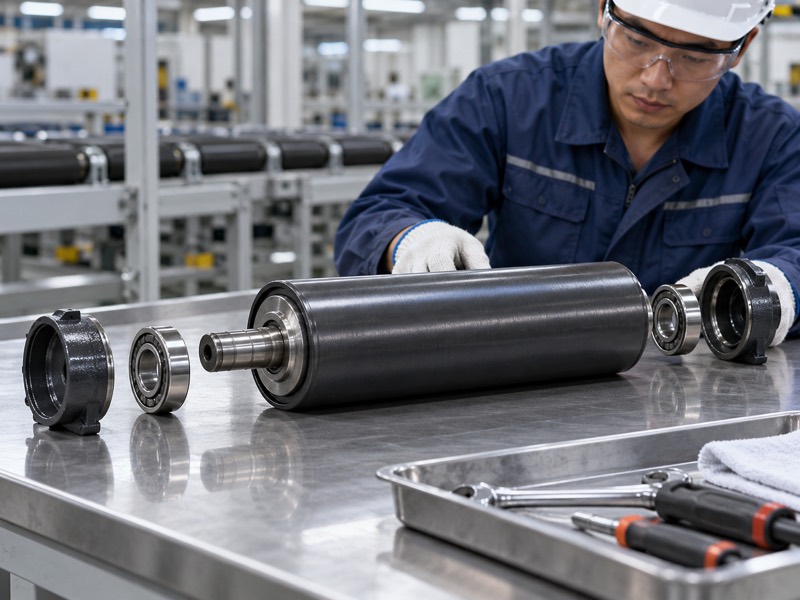
Review conditions that change clearance
Check fits before changing a designation. Ring interference and temperature differences may affect internal clearance. An unexplained switch to another clearance group can introduce new problems without correcting damaged seats. Use bearing-manufacturer data and qualified engineering review for consequential changes.
- Record existing bearing designation completely.
- Include shaft and housing fit requirements.
- Describe temperatures and observed binding or looseness.
Treat substitutions as assembly changes
A proposed replacement should identify every relevant designation difference. Your reviewer can then determine whether fit, lubricant or end construction also needs adjustment. A supplier should confirm compatibility in writing rather than describing bearings as interchangeable because their principal dimensions match.
| Clearance input | Why it matters | Review source |
|---|---|---|
| Fit requirements | Installed ring condition | Approved drawing |
| Temperature conditions | Expansion behavior | Service description |
| Bearing designation | Internal construction | Product documentation |
Resolve clearance selection before approving a substitute bearing. Key Takeaway: Approve clearance with fits and temperatures rather than selecting a code by habit.
6. Which seals protect bearings from carryback?
Seals protect a conveyor roller bearing when their complete arrangement suits actual contamination routes. Dust, slurry and washwater can approach from different directions. Bearing shields or seals should be reviewed alongside housing interfaces and external assembly protection.
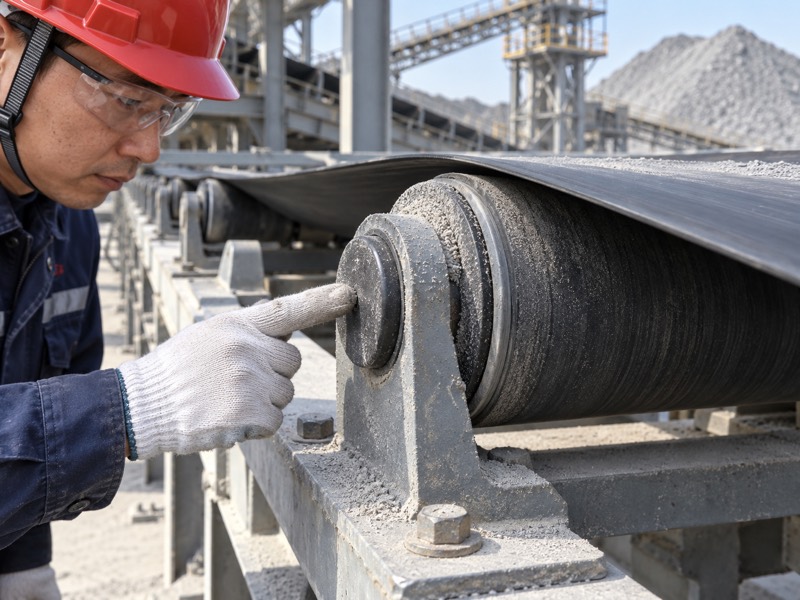
Inspect where contamination collects
Trace material around the ends. Carryback may pack near shaft interfaces or remain around damaged housings. Ask for section drawings showing protection stages and maintenance requirements. For contaminated return duty, review return roller construction rather than assuming carrying-run exposure describes the same conditions.
- Record dust, direct spray and slurry exposure.
- Inspect visible seal damage after isolation.
- Check whether cleaning methods drive material toward bearings.
Evaluate the complete protection arrangement
For example, a compatible working surface does not prevent water entering an unsuitable end assembly. Seal descriptions need relevant conditions and construction details. Keep cleaning access and material discharge in your review so contamination does not remain trapped around protected components.
| Exposure | Review focus | Requested detail |
|---|---|---|
| Airborne fines | Dust entry routes | Seal arrangement |
| Wet carryback | Packed end contamination | Housing protection |
| Washdown | Direct water exposure | Approved cleaning method |
Specify contamination conditions rather than an undefined sealed-bearing requirement. Key Takeaway: Review bearing protection as a complete end arrangement under stated exposure.
7. How should lubrication requirements be confirmed?
Lubrication requirements for a conveyor roller bearing should be confirmed from its actual construction and approved service instructions. Some assemblies have specified servicing provisions, while others require different maintenance approaches. Additional grease should not be treated as a universal repair.
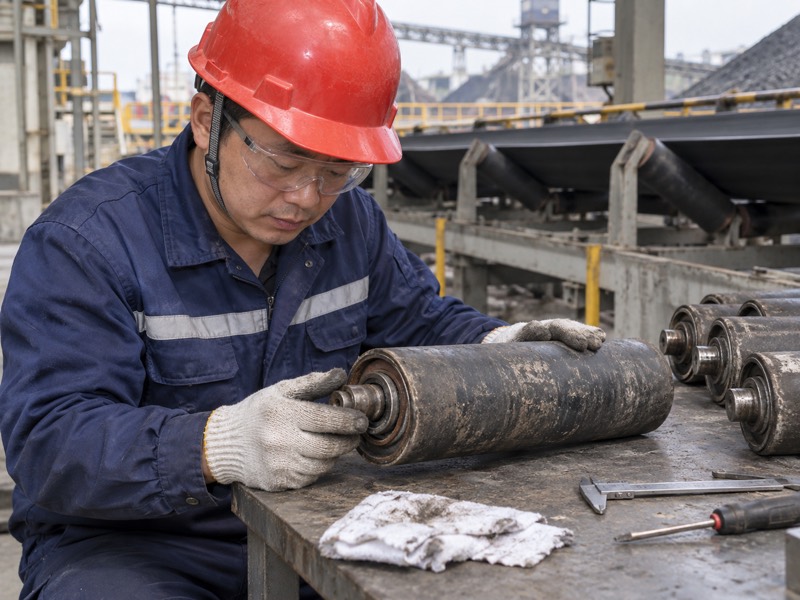
Ask for a usable maintenance instruction
Confirm the intended service route. Request lubricant type, relevant temperature and speed limits, and any approved servicing requirements. Mixing lubricants without compatibility review can cause problems. A bearing that rotates roughly may need investigation rather than relubrication through an improvised opening.
- Identify whether routine lubrication is intended.
- Confirm storage and handling conditions.
- Ask for contamination and replacement criteria.
Keep lubrication connected with assembly condition
If seals fail or seats become distorted, fresh lubricant may leave the original cause unresolved. Inspect removed parts where practical and document what changed. Service decisions should consider contamination, mechanical damage and construction instructions together.
| Lubrication question | Required answer | Decision supported |
|---|---|---|
| Routine service intended? | Maintenance description | Work planning |
| Which lubricant? | Approved specification | Compatibility |
| Rough bearing present? | Inspection findings | Service or replacement |
Use approved instructions before adding lubricant or dismantling end assemblies. Key Takeaway: Confirm lubrication by construction and duty, then investigate faults before attempting service.
8. How do you investigate recurring bearing failures?
Investigate recurring failures by examining a conveyor roller bearing together with its shaft, housing, seals and operating history. Similar symptoms can arise from different causes. Preserve evidence before cleaning or dismantling removes useful contamination patterns.
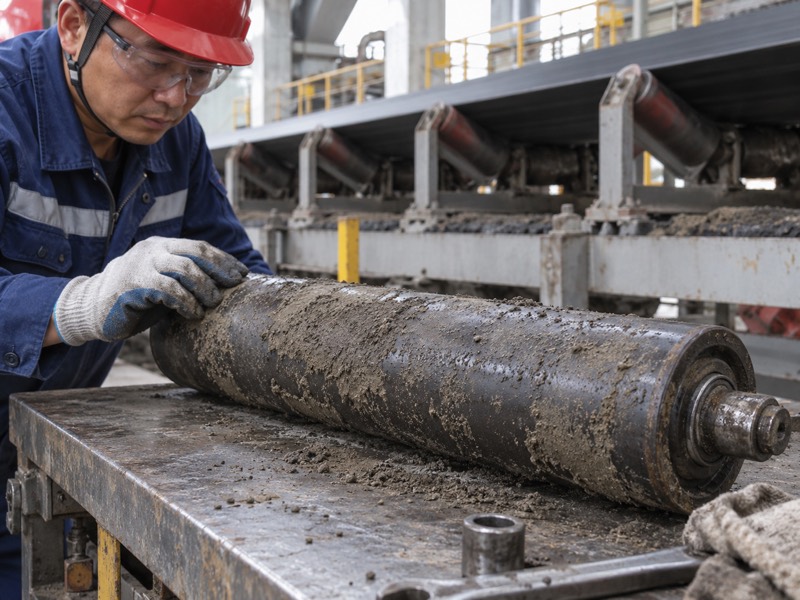
Record observations before assigning a cause
Describe what you can see. Note corrosion, contamination, seat wear, housing movement and rough rotation. Record installation date and operating exposure where available. Avoid labeling every noisy roller a lubrication failure, because alignment or damaged components may also contribute.
- Photograph removed parts and surrounding deposit conditions.
- Identify exact bearing and assembly construction.
- Record cleaning, loading or speed changes before failure.
Compare patterns across positions
For example, failures concentrated near washdown may suggest an exposure route worth investigating. Failures after mounting changes may point toward fit or assembly methods. A polymer roller still needs suitable bearings and end protection, so shell substitution alone may leave recurring failures unchanged.
| Pattern | Investigation direction | Evidence needed |
|---|---|---|
| Wet-service cluster | Water entry | Seal and exposure review |
| Post-installation binding | Fit or assembly | Seat measurements |
| Position-specific wear | Duty and alignment | Conveyor geometry |
Confirm causes through qualified review rather than symptoms alone. Key Takeaway: Preserve failure evidence and compare assembly conditions before specifying another bearing.
9. How should a conveyor roller bearing be inspected safely?
A conveyor roller bearing should be inspected with approved access and verified isolation before contact work. During operation, use designated guarded observation positions. Site-approved hazardous-energy control procedures must address stored energy as well as electrical power.
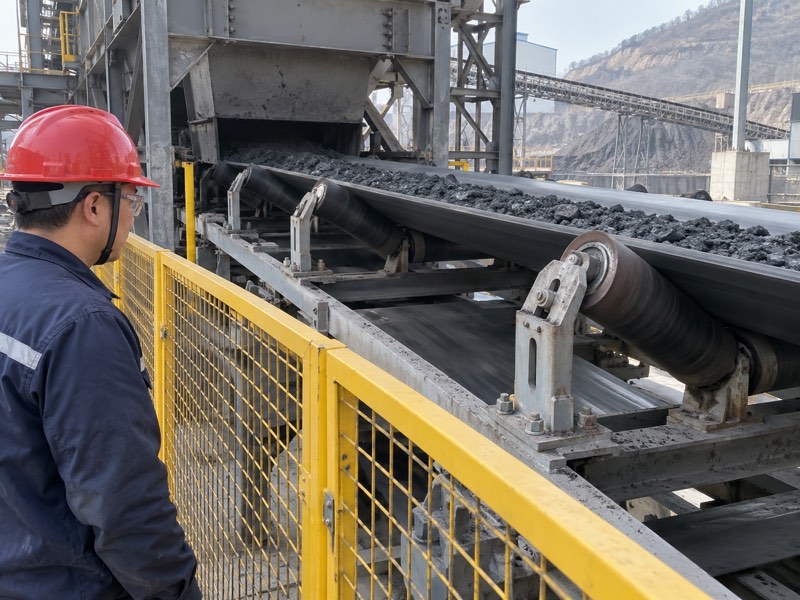
Separate running observations from contact checks
Plan both inspection stages. Guarded observations can record noise, belt behavior or other approved indicators without reaching toward components. After isolation, check rotation, housing condition and shaft seating under specified procedures. Removed rollers should be supported securely on a suitable bench.
- Do not touch moving rollers or remove running guards.
- Support components before releasing mounting restraints.
- Keep tools and debris clear before restart.
Record limitations of each check
Hand rotation cannot reproduce loaded service or establish bearing life. Likewise, a temperature observation needs operating context and approved interpretation. Combine findings rather than treating one convenient test as complete acceptance evidence.
| Inspection method | Useful observation | Limit |
|---|---|---|
| Guarded operation | Noise and behavior | No contact access |
| Isolated assembly | Binding and visible damage | Unloaded condition |
| Removed component | Seats and contamination | Requires qualified interpretation |
Apply supplier and site criteria when deciding whether service can continue. Key Takeaway: Keep inspections safe and interpret each observation within its practical limits.
10. What should a roller bearing quotation include?
A quotation should identify complete assembly dimensions, bearing requirements, duty and contamination exposure for a conveyor roller bearing. Confirm whether you need bearings alone or finished rollers. Supplier proposals should list relevant substitutions and unresolved technical assumptions.
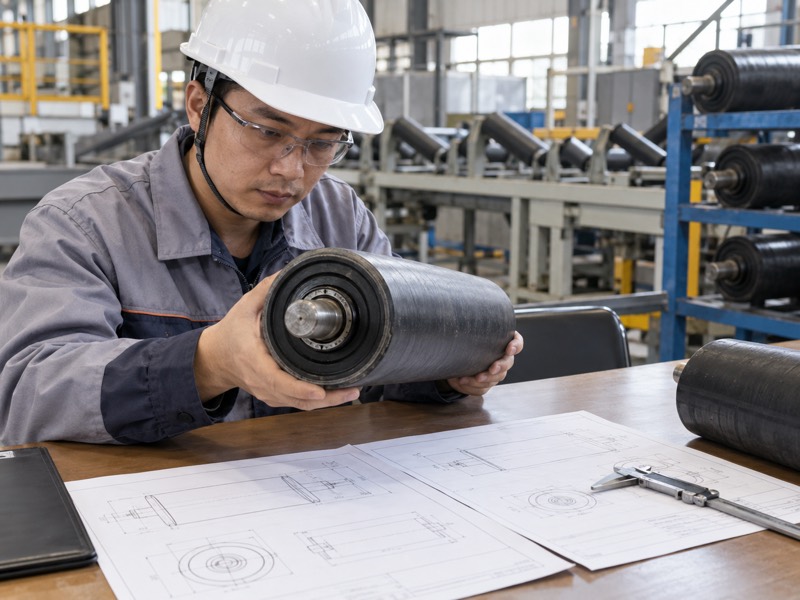
Prepare a complete inquiry
Send the end-construction details. Include bearing designation, shaft and housing dimensions, retention features and approved tolerances. Add belt speed, roller diameter, loads and temperatures. Explain recurring failures using photographs and observations rather than a guessed cause.
- State intended quantity and component scope.
- Include seal arrangement and maintenance requirements.
- Define sample inspection and production acceptance records.
Confirm technical equivalence before purchase
| Inquiry item | Required response | Buyer review |
|---|---|---|
| Bearing and seats | Proposed construction | Fit and clearance |
| Duty and exposure | Selection basis | Operating suitability |
| Acceptance plan | Available records | Sample approval |
Key Takeaway: Request a complete bearing-position proposal rather than an unexplained replacement code. Send XINYONGDUO your roller drawing, bearing identification, operating conditions and failure photographs. Contact us for a conveyor roller assembly review and confirmation of proposed supply scope. Your technical team should approve fit, bearing protection and duty before production.
FAQ
Q1: Can I replace a bearing with any matching dimensions? No. Check designation, internal construction, clearance, fits, seals and operating limits before approving substitution.
Q2: What’s the best bearing for a conveyor roller? It depends on load, speed, fits and exposure. Use product documentation and qualified engineering review for the actual assembly.
Q3: How do I know if a bearing failed from water? Preserve corrosion and contamination evidence, then inspect seals and exposure routes. Symptoms alone cannot establish a confirmed cause.
Q4: Can more grease fix rough rotation? Not necessarily. Mechanical damage, contamination or distorted seats may remain. Follow approved maintenance instructions before attempting lubrication.
Q5: Can a polymer shell prevent bearing corrosion? No. Bearing protection depends on seals, housings, metal components and exposure. Review complete construction even when a shell resists corrosion.