Select an impact roller by checking material arrival, belt support, mounting fit and service conditions at your loading zone. Here, impact rollers mean rubber-ring conveyor supports, rather than road compaction machines. A falling lump can strike between poorly placed supports even when rollers look substantial. Review your transfer geometry first, then request a construction assessment for the duty you can document.
1. Where should an impact roller work on your conveyor?
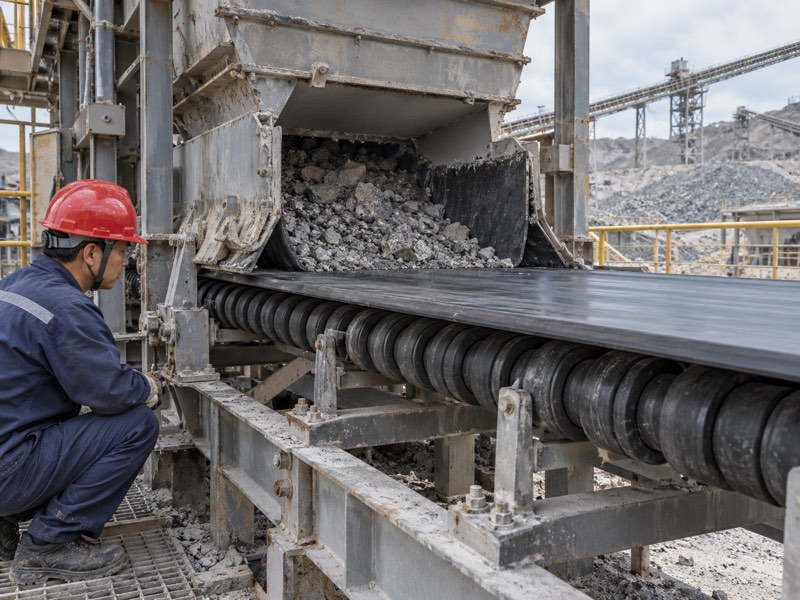
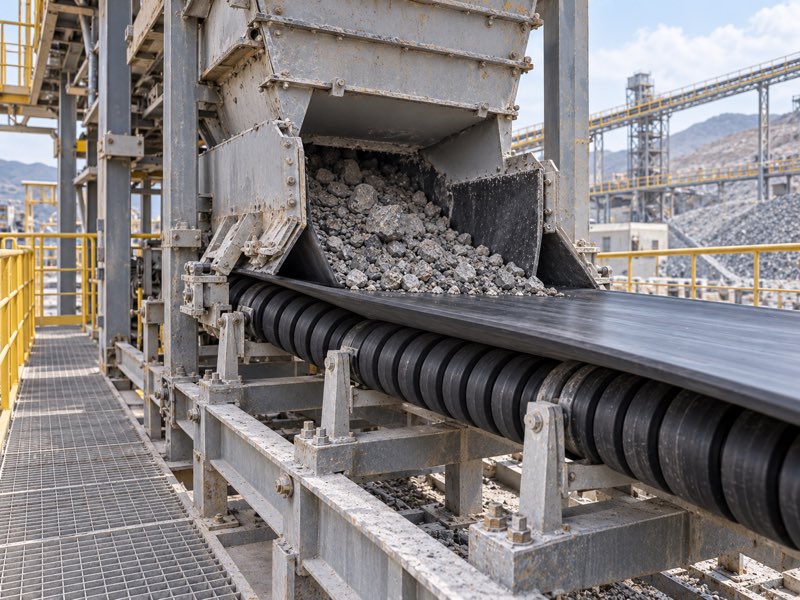
An impact roller should work within an approved loading-zone arrangement where material strikes your conveyor belt. Its resilient working surface supports belt contact under that duty. Location matters because loading doesn’t always occur directly above existing stations. A chute change can move the landing region, so confirm transfer position before selecting replacement rollers or expanding impact support.
How should you define the supported area?
Locate where incoming material lands. Use your transfer drawing and safe operating observations to identify the contact region. Then check which supports sit beneath it and beyond its edges. Include skirts and loading-zone structure because their geometry affects support access and belt movement during transfer.
- Mark chute outlet and material landing region.
- Identify impact and neighboring carrying stations.
- Record skirt and frame positions around transfer.
What separates impact duty from normal carrying duty?
Your carrying roller arrangement supports the loaded belt along its run. Impact support also addresses material arrival, so ordinary carrying capacity alone cannot establish suitable loading-zone performance.
| Position | Main condition | Required review |
|---|---|---|
| Material landing | Concentrated transfer demand | Impact support arrangement |
| After loading | Distributed belt load | Carrying support |
| Return run | Belt and carryback | Return duty |
Key Takeaway: Identify your actual material landing region before approving impact support extent and construction.
2. Which material details affect impact roller selection?
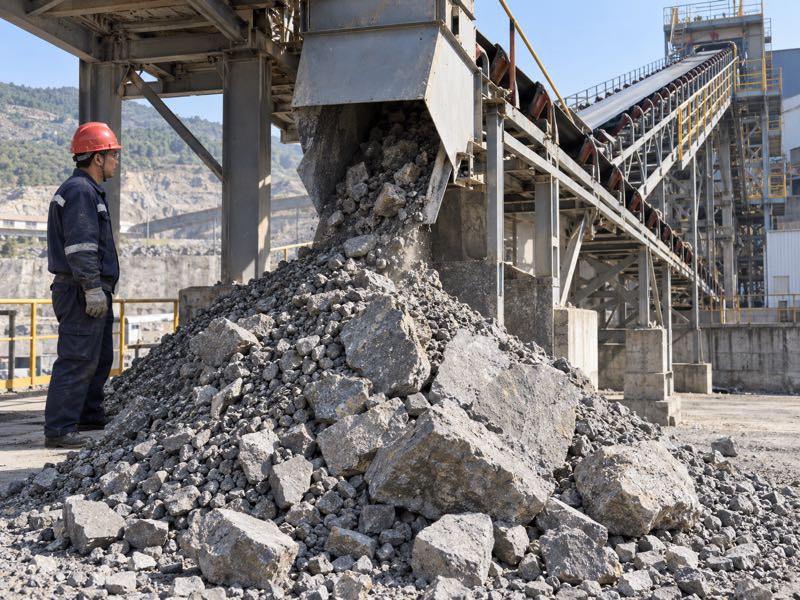
Material mass, lump size, shape and flow affect impact roller selection because they influence how force reaches your belt and supports. A stream of fines behaves differently from isolated heavy lumps. Wet material may also arrive in clumps or stick around components. Describe normal feed and foreseeable changes rather than selecting from a material name alone.
What should you tell your supplier?
Describe the largest expected pieces and normal flow. Include bulk properties from your process records where available. If feed changes between products, list those cases separately. Sharp lumps can damage belt surfaces even when support remains sound, so transfer and belt construction need review alongside roller choice.
- State material type and bulk properties.
- Describe lump sizes, shape and moisture.
- Record normal flow and irregular feed conditions.
How should uncertain material information be handled?
Mark estimates and missing values clearly. Then ask your process or conveyor team to resolve inputs that affect selection. An unverified description should not quietly become the basis for a promised impact capacity.
| Material detail | Why it matters | Useful evidence |
|---|---|---|
| Lump mass and size | Concentrated demand | Process material data |
| Shape | Local belt contact | Representative samples |
| Moisture and adhesion | Buildup and clumping | Operating observations |
Key Takeaway: Provide representative material conditions and distinguish confirmed data from estimates before requesting impact-duty assessment.
3. How does transfer geometry affect an impact roller?
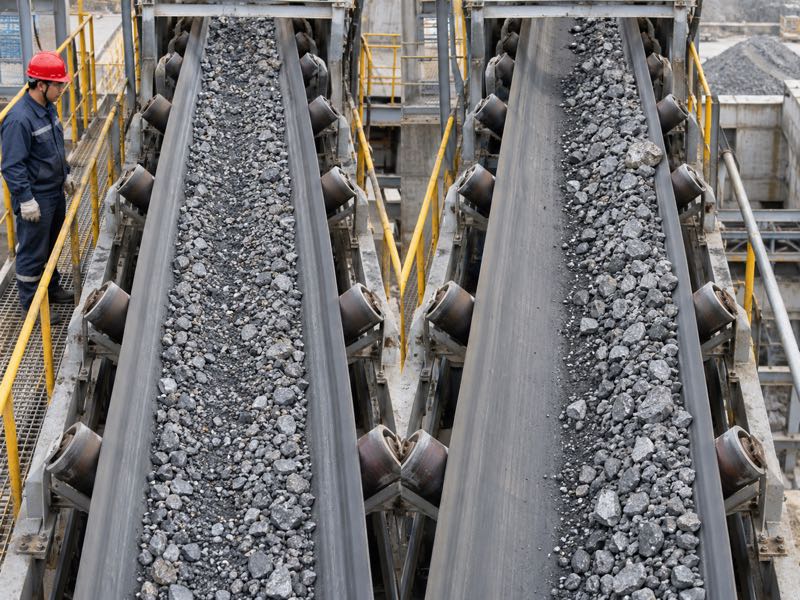
Transfer geometry affects an impact roller by determining where material arrives and how its motion changes at belt contact. Drop height is one input, but incoming direction and speed also matter. If feed lands off-center, support reactions can become uneven. Review the complete chute and receiving belt arrangement rather than assigning a universal capacity from height alone.
Which geometry should your review include?
Trace material motion through the transfer. Show chute exit, receiving belt direction and support positions on a layout. If liner wear or adjustment changes the flow, update that record. A roller substitution may not resolve damage caused by a poorly aligned material stream or an unsuitable chute trajectory.
- Record material travel and receiving belt direction.
- Mark drop geometry and expected landing location.
- Include chute changes and worn flow-control surfaces.
Who should evaluate the combined transfer duty?
Your conveyor or transfer designer should assess material motion with belt and support constraints. Ask a roller supplier for construction information against that approved duty, keeping responsibilities and assumptions clear.
| Geometry input | Support consequence | Review output |
|---|---|---|
| Landing position | Which stations receive impact | Support coverage |
| Arrival direction | Uneven contact or loading | Transfer alignment |
| Chute condition | Changed material path | Updated layout |
Key Takeaway: Review material motion and landing position before treating roller construction as the sole answer to transfer damage.
4. What role do rubber rings play in impact support?
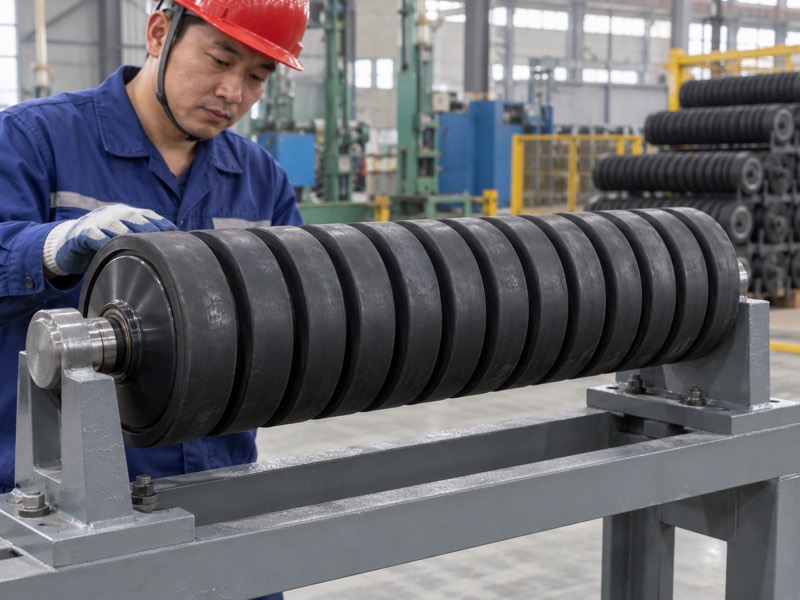
Rubber rings give an impact roller a resilient working surface, but complete performance depends on ring construction, shaft support and belt contact. Their response cannot be inferred from color or apparent thickness alone. Rubber compounds also differ in environmental compatibility. Request material and application details that match your duty instead of accepting a generic heavy-duty description.
Which ring details should you confirm?
Check geometry and material together. Ring diameter, arrangement and retention affect the working surface. If heat, oil or chemicals reach your transfer, disclose them before selection. A damaged or loose ring can alter belt support even when shaft ends still fit their brackets correctly.
- Confirm ring layout and working diameter.
- Describe heat and chemical exposure.
- Ask for retention and serviceability criteria.
What should you avoid assuming about resilient surfaces?
Do not equate resilience with unlimited impact protection. Ring wear, bottoming behavior and assembly demand require engineering review. Your supplier should explain proposed construction and its applicable limits without inventing a field-life promise.
| Ring feature | Application question | Evidence needed |
|---|---|---|
| Compound | Does exposure suit material? | Material specification |
| Layout | Is contact continuous as required? | Approved drawing |
| Retention | Can rings move under duty? | Construction details |
Key Takeaway: Specify rubber construction and contact geometry as engineering inputs, not appearance-based quality labels.
5. How should an impact roller support your belt shape?
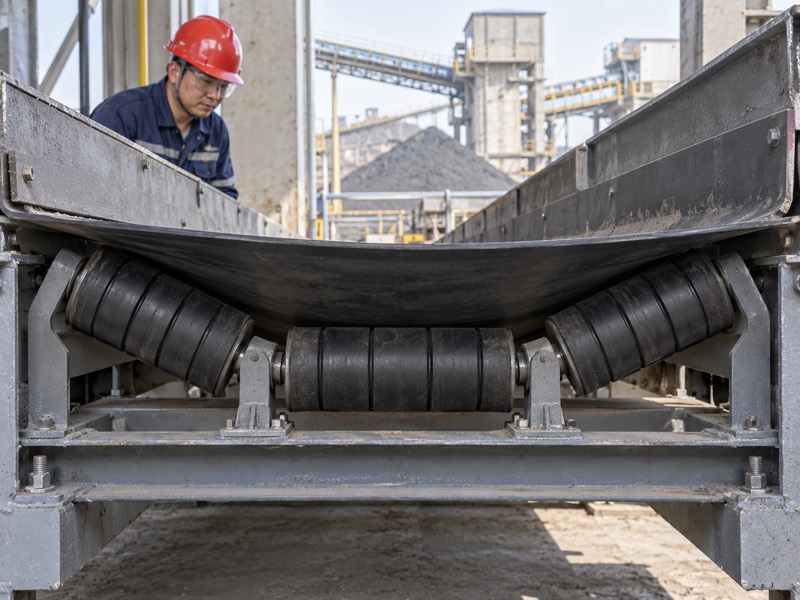
An impact roller arrangement should support your approved belt shape without creating uneven elevations or unsuitable contact near loading equipment. Trough geometry, working diameter and frame spacing influence that support. If belt deflection affects skirt contact, impact resistance alone may not solve leakage. Review belt stability and loading support as connected requirements.
Which neighboring components should you review?
Match impact support with the surrounding belt path. Compare contact height with adjacent carrying stations and check transition areas. Skirt pressure and clearance need their own approved settings. A change in ring diameter can raise belt position, so it requires more review than checking whether shaft ends fit.
- Confirm trough angles and support elevation.
- Check skirt contact and nearby clearances.
- Compare impact and carrying station geometry.
When does a support layout need engineering changes?
Seek review when observed belt movement persists between stations or the landing zone extends beyond support. The designer can compare revised roller arrangements with other support methods while checking belt constraints.
| Belt condition | Relevant geometry | Required review |
|---|---|---|
| Uneven contact | Working diameters and elevation | Assembly fit |
| Skirt leakage | Belt movement and seal setting | Loading-zone support |
| Changed landing area | Station coverage | Transfer arrangement |
Key Takeaway: Confirm belt shape, contact height and skirt support together before changing an impact roller arrangement.
6. Which shaft and frame details control mounting fit?
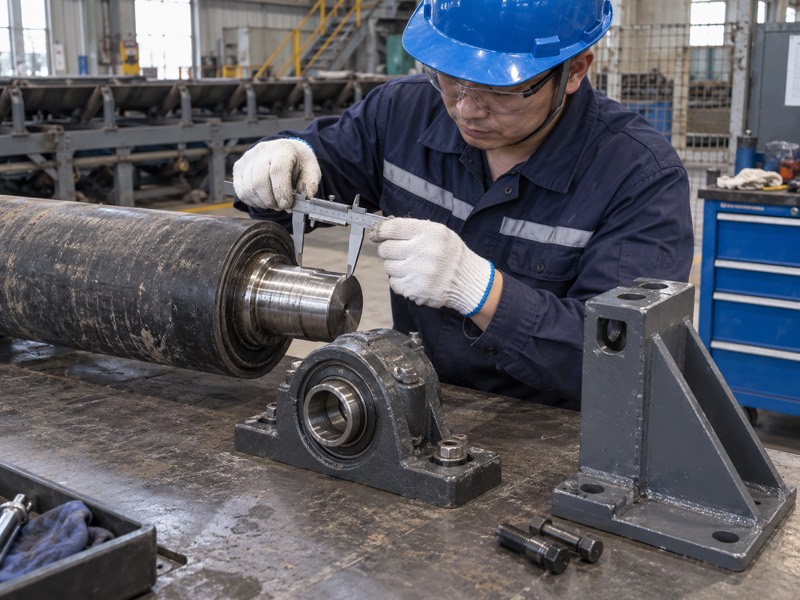
Shaft-end geometry, mounting span and frame condition control impact roller fit. A rubber-ring unit may appear compatible while its flats engage brackets poorly. Impact duty also reaches mounts and crossmembers, so inspect them for damage before installing replacements. If a support has deformed, a new roller cannot restore the original geometry by itself.
What should you measure on existing equipment?
Use clean interfaces and an approved drawing. Compare worn samples with original dimensions where possible. Before close checks, follow site-approved lockout and tagout procedures. Record complete working dimensions as well as end details, since fit also includes belt support height and surrounding clearance.
- Measure shaft flats and engagement length.
- Record mounting span and contact diameter.
- Inspect slots, crossmembers and fastener joints.
How should you handle missing original dimensions?
Use several representative measurements and flag differences. Ask your responsible engineer to approve an interface drawing before production. Avoid averaging worn parts into a new specification without understanding their original geometry.
| Interface | Mismatch risk | Approval check |
|---|---|---|
| Shaft flats | Poor restraint | End-detail drawing |
| Mounting span | Incomplete engagement | Frame dimensions |
| Working diameter | Changed support height | Complete arrangement |
Key Takeaway: Verify mounts and frame condition along with roller dimensions before releasing a replacement order.
7. How should impact roller bearings resist contamination?
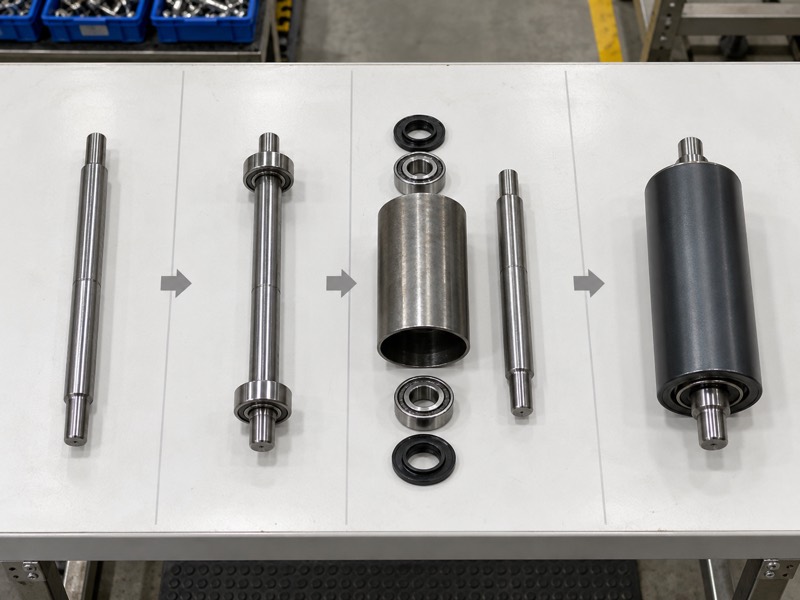
Bearings in an impact roller need protection suited to dust, wet fines and cleaning exposure at your transfer. Rubber rings don’t establish end protection or bearing suitability. Material can collect around brackets and remain damp. So describe contamination paths alongside load and speed before comparing bearing and seal proposals.
What should you ask about the complete assembly?
Review bearing support beneath the rings. Ask for bearing arrangement, fit controls and seal construction. If a stated service estimate depends on clean conditions, compare that assumption with your actual transfer exposure. Approved cleaning instructions also matter because harsh cleanup can damage otherwise suitable protection.
- Identify bearing designation and assembly arrangement.
- Describe dust, splash and washdown conditions.
- Clarify lubrication and complete replacement instructions.
What can relevant inspection records reveal?
Compare faults by location and exposure. If failures cluster near wet end areas, review drainage and housekeeping. That evidence can guide a construction change more effectively than requesting a larger bearing without assessing ingress.
| Duty factor | Assembly question | Wider check |
|---|---|---|
| Service load | What assumptions support selection? | Transfer duty |
| Wet fines | How are ingress paths restricted? | End-area drainage |
| Cleaning | What methods are permitted? | Maintenance instructions |
Key Takeaway: Specify bearings and seals as part of the whole impact assembly, including transfer contamination and cleaning practices.
8. What clearance and access should your selection preserve?
Your impact roller selection should preserve approved clearances around skirts, guards, chutes and service routes. Larger working dimensions or altered frames can create new interference. A component that fits its bracket may still be difficult to remove safely. Review maintenance access before accepting a substitution, especially in confined transfer areas with retained material above supports.
What should your crew assess before purchasing?
Check the removal path as well as installed fit. Confirm space for lifting, supporting and withdrawing a roller using approved methods. If a design uses sliding or retractable supports, request their actual operating instructions. Don’t assume a removable part can be serviced while equipment runs or material remains uncontrolled.
- Check installed clearances and removal envelope.
- Identify handling and belt-support requirements.
- Review guards and access restoration after service.
Why inspect nearby contamination paths?
Material trapped under a chute can hinder access and expose adjacent return support to falling carryback. Include those conditions in your maintenance plan rather than treating the loading frame as an isolated component.
| Access item | Practical question | Selection consequence |
|---|---|---|
| Withdrawal space | Can parts be removed safely? | Service arrangement |
| Guard clearance | Does substitution interfere? | Approved envelope |
| Retained material | Can movement occur during work? | Isolation and work plan |
Key Takeaway: Confirm safe removal and restored guarding before accepting impact supports with changed dimensions or service features.
9. What should an impact roller inspection plan cover?
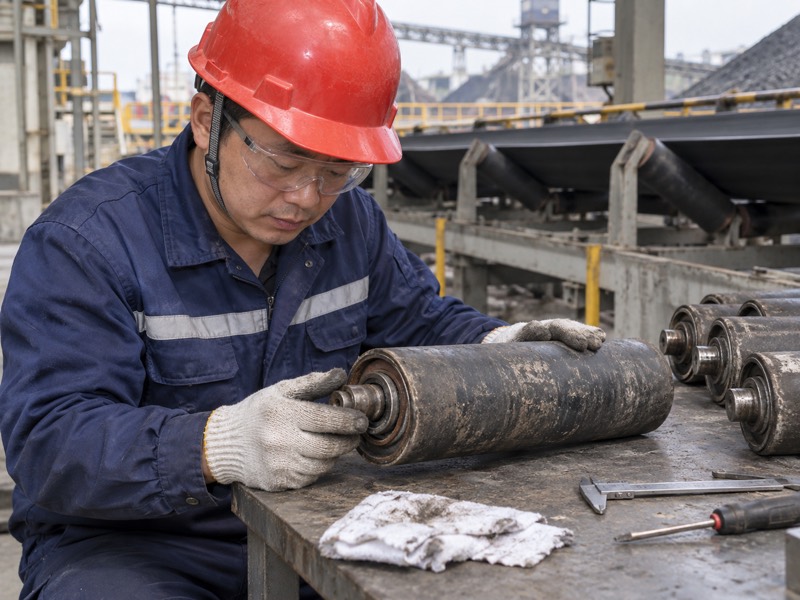
An impact roller inspection plan should cover drawing fit, ring condition, retention, rotation and contact-surface geometry. Agree on methods and criteria before manufacture. Then receiving checks can assess conformity without inventing tolerances after delivery. Your maintenance plan should also identify ring damage and frame faults that require further serviceability review.
Which acceptance items should be specific?
Turn broad descriptions into shared checks. Define dimensional references and the setup for rotational or runout checks. Inspect ring cuts, loose features and handling damage against agreed criteria. Keep part identity and drawing revision with results so multiple roller variants remain traceable through storage and installation.
- Approve drawings and working-surface dimensions.
- Specify ring and assembly inspection requirements.
- Define identification and nonconformance handling.
How should you handle a questionable batch?
Hold affected pieces and document findings before installation. Ask your supplier to resolve conformity against the approved order. If site requirements have changed, address that separately as an engineering revision rather than a manufacturing discrepancy.
| Inspection item | Evidence | Decision basis |
|---|---|---|
| Fit | Measured dimensions | Approved drawing |
| Rings | Condition and retention | Agreed criteria |
| Assembly | Rotation and identification | Inspection method |
Key Takeaway: Set impact roller acceptance requirements before ordering and keep questionable parts out of service until resolved.
10. How should you request an impact roller quotation?
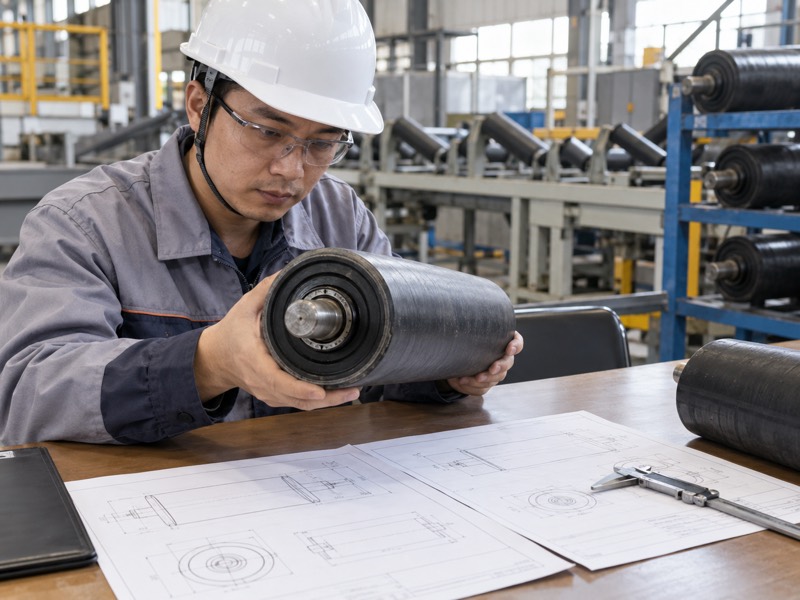
Request an impact roller quotation with your transfer layout, material conditions and dimensioned support drawing. These inputs let suppliers assess construction against an actual loading duty. If drop or material data remain uncertain, mark them clearly. Your technical comparison should show what each proposal covers and where additional conveyor design review remains necessary.
What should your enquiry include?
Name the conditions behind your requested design. Include belt details, running direction and service exposure. Then list required quantities by position and drawing revision. Ask for deviations in writing so a different ring diameter, shaft interface or protection system doesn’t enter your order unnoticed.
- Attach transfer and mounting drawings.
- Describe material, belt and contamination conditions.
- State inspection evidence and service requirements.
How can you approve the proposed roller clearly?
Approve interface fit and duty assumptions together. Keep the resulting drawing and agreed inspection requirements with your order. This gives later spare orders a stable reference and makes proposed substitutions visible.
| Quotation area | Your information | Required response |
|---|---|---|
| Transfer duty | Material and arrival conditions | Construction assessment |
| Fit | Support drawing | Confirmed interfaces |
| Acceptance | Inspection requirements | Methods and records |
Key Takeaway: Order against an approved loading duty and drawing, with construction limits and inspection evidence stated clearly. For a loading-zone quotation, contact us with transfer geometry, material details and shaft measurements. Request confirmation of mounting fit and proposed impact construction before approval.
FAQ
Q1: Can I select an impact roller from drop height alone? No. Material, arrival motion, belt and support geometry also affect duty.
Q2: What’s the best ring thickness for every transfer? There isn’t one universal choice. Review complete ring construction against your documented loading conditions.
Q3: Can a new roller fix a damaged impact frame? No. Restore approved mounting geometry and inspect affected supports first.
Q4: How do I know whether seals suit my transfer? Compare protection details and evidence with dust, moisture and approved cleaning exposure.
Q5: Are these rollers used for road compaction? No. This article addresses rubber-ring support rollers in belt conveyor loading zones.