
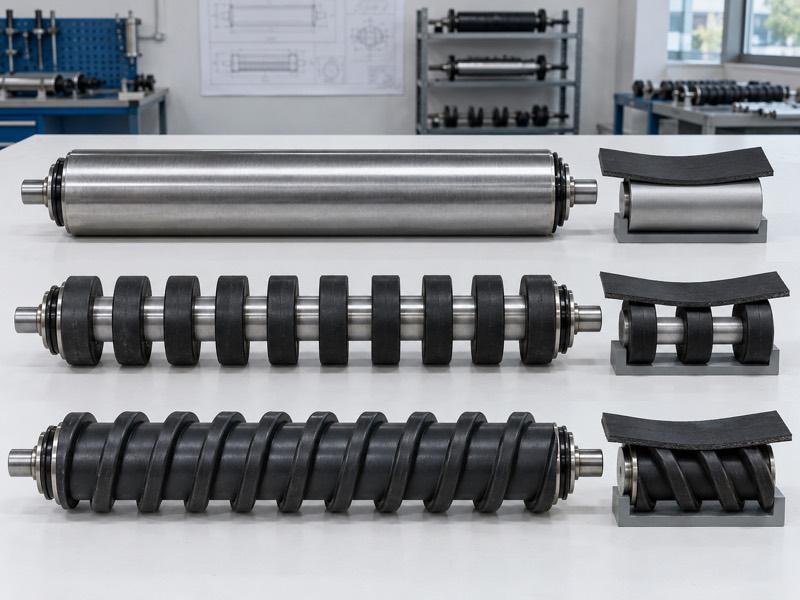
Choose steel, disc or spiral conveyor return rollers according to belt contact, carryback behavior and your approved return arrangement. Steel shells provide continuous contact, while discs and spiral features change that pattern. Those differences can affect buildup and wear. Compare complete assemblies against your material and belt conditions before assuming one structure offers the same result everywhere.
1. What should conveyor return rollers do on your belt run?
Your conveyor return rollers should support the returning belt while remaining compatible with its path, surface and operating conditions. They must also fit approved mounts and guards. Because return duty differs from carrying duty, don’t copy a loaded-run specification without review. Confirm which belt surface reaches the rollers and whether retained material travels with it.
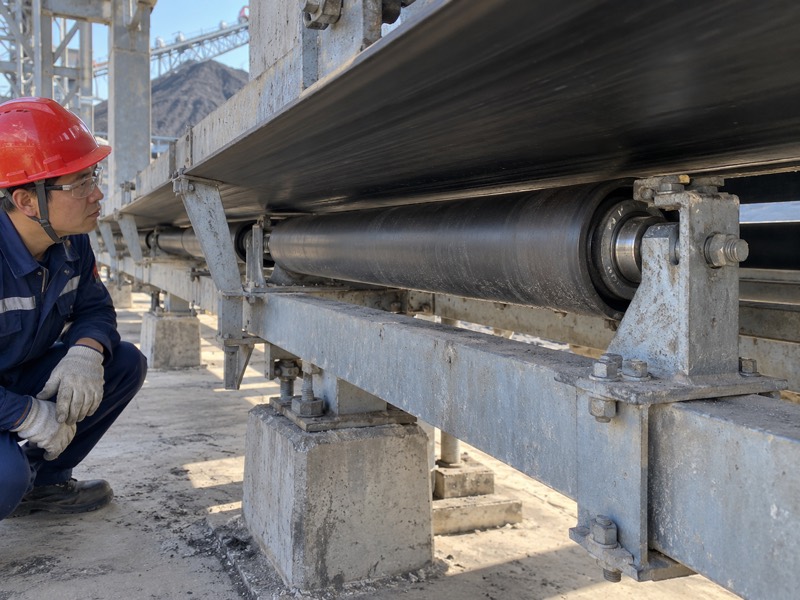
Which common duty comes before comparing structures?
Start with the belt you need to support. All candidate structures need suitable shafts, bearings and interfaces. A surface feature cannot compensate for an underspecified frame or incorrect mounting span. So record these shared requirements before discussing steel contact, spaced discs or a helical working surface.
- Identify belt width, construction and running direction.
- Describe return support geometry and contact surface.
- Confirm frame, shaft and guard interfaces.
How should you organize a fair comparison?
Use one operating description for every candidate. Then ask each supplier to explain contact geometry and limitations against that same description, making any departures from your current arrangement visible.
| Shared requirement | Why it applies | Evidence |
|---|---|---|
| Mounting fit | All variants need restraint | Approved drawing |
| Belt support | Contact differs by structure | Return arrangement |
| Operating duty | Bearings and shafts carry demand | Load and speed review |
Key Takeaway: Establish common fit and duty requirements before comparing surface constructions.
2. When are plain steel conveyor return rollers suitable?
Plain steel conveyor return rollers can suit your duty when broad shell contact, wear resistance and complete assembly construction meet its requirements. A smooth shell provides continuous support across its working length. However, adhesive material can build on that surface. Review actual contamination and shell condition rather than assuming steel automatically provides suitable service under every return belt.
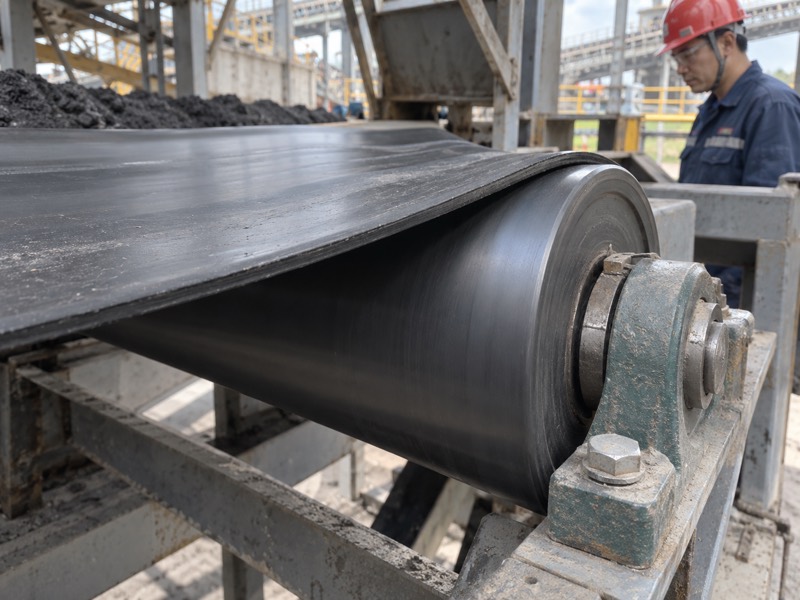
What should you compare beyond shell material?
Check how the shell works in your installation. Its diameter affects rotation and support height. Its surface needs agreed acceptance criteria for dents, sharp features and runout. If corrosion drives replacement, describe wet exposure and cleaning chemicals before requesting a coating or material change.
- Confirm working dimensions and support height.
- Describe abrasion, moisture and corrosion exposure.
- Review present deposits and shell wear.
What evidence favors retaining a plain shell?
Good operating history under comparable conditions supports an existing specification. But repeat faults should trigger a review of their cause. Preserve successful construction details while addressing a documented issue through approved changes.
| Duty condition | Plain-shell question | Decision input |
|---|---|---|
| Broad clean contact | Does geometry match? | Belt and frame drawing |
| Abrasive residue | What wear construction suits it? | Material description |
| Adhesive buildup | How does contact change? | Deposit observations |
Key Takeaway: Choose steel from a reviewed contact and exposure requirement, with complete assembly fit confirmed.
3. What changes when conveyor return rollers use discs?
Disc-style conveyor return rollers replace continuous shell contact with contact at selected bands across your belt. Gaps between discs leave a different path for retained material. This may help some applications, but performance depends on deposit behavior and disc layout. Check belt compatibility because the changed contact area can also change local pressure and wear.
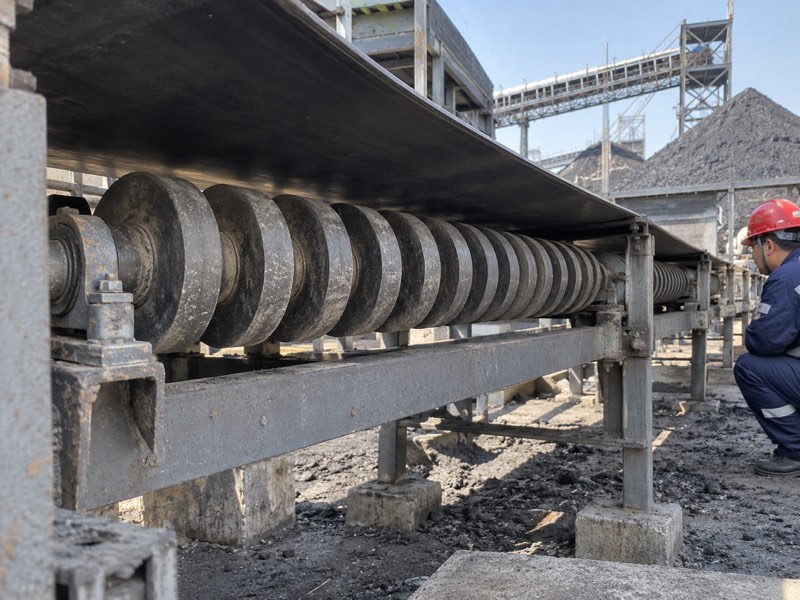
Which disc details should your drawing define?
Locate every working contact band. End arrangements and central disc spacing should follow an approved design. If material packs between discs, the intended gaps may no longer remain clear. Ask how disc material suits your temperature and chemical exposure rather than accepting rubber as one uniform specification.
- Record disc positions and working diameter.
- Confirm disc material and environmental compatibility.
- Review belt joints, repairs and contact requirements.
How can you compare a comb arrangement?
Review comb roller options using their actual drawings. Then compare working surfaces and belt constraints instead of deciding from a product name alone.
| Disc feature | Possible effect | Review requirement |
|---|---|---|
| Spaced bands | Changed local contact | Belt compatibility |
| Open gaps | Different deposit behavior | Packing tendency |
| Flexible discs | Different contact response | Material suitability |
Key Takeaway: Approve disc positions, material and belt compatibility before changing your return contact pattern.
4. What distinguishes spiral conveyor return rollers?
Spiral conveyor return rollers use a helical working surface, which creates a different belt contact pattern from plain shells or separate discs. Their action depends on specific construction, orientation and material behavior. Some designs have directional requirements. So obtain installation and application details before selecting them for a reversible conveyor or promising improved carryback control.
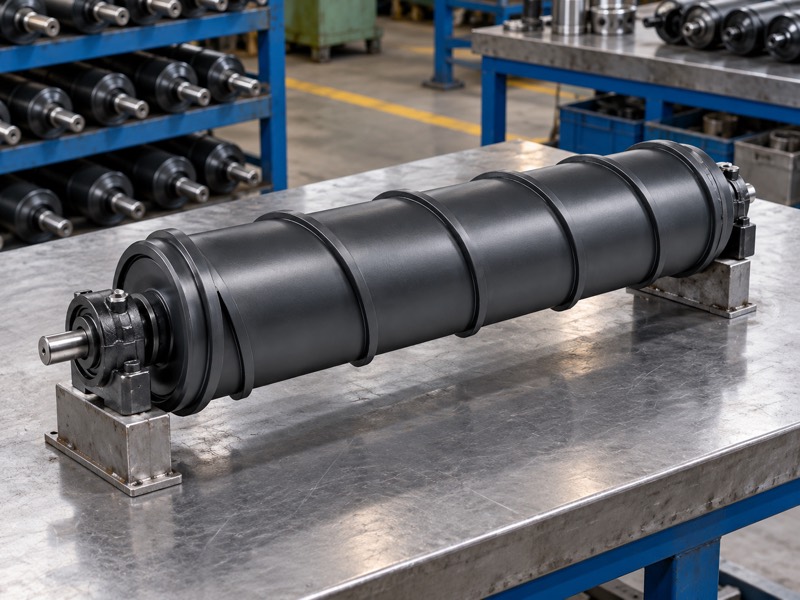
Which spiral features need explicit confirmation?
Check direction before ordering replacement stock. Helix handedness and arrangement may affect installation. Compare spiral roller construction with your belt surface and cleaning system. Worn or damaged features need approved service limits because sharp contact areas can present a belt-damage risk.
- State normal and reverse running conditions.
- Confirm helix layout and required orientation.
- Review working surface and belt restrictions.
What should you ask about cleaning claims?
Ask which material conditions support an expected effect and which conditions limit it. If a supplier provides test evidence, review its setup and applicability. Broad self-cleaning wording doesn’t establish your field result.
| Spiral detail | Application question | Approval evidence |
|---|---|---|
| Helix orientation | Does direction affect operation? | Installation instructions |
| Contact geometry | Is your belt suitable? | Compatibility review |
| Material behavior | Will deposits pack or release? | Application conditions |
Key Takeaway: Treat spiral geometry and direction as specification items, with cleaning expectations tied to stated conditions.
5. How do conveyor return rollers compare with dry fines?
Compare conveyor return rollers for dry fines by reviewing abrasion, deposit behavior and end-area contamination. Dry material may fall away in one plant yet pack around supports elsewhere. The chosen surface affects contact but doesn’t remove every contamination pathway. So inspect both working surfaces and bearing protection when dry powder drives your maintenance concerns.
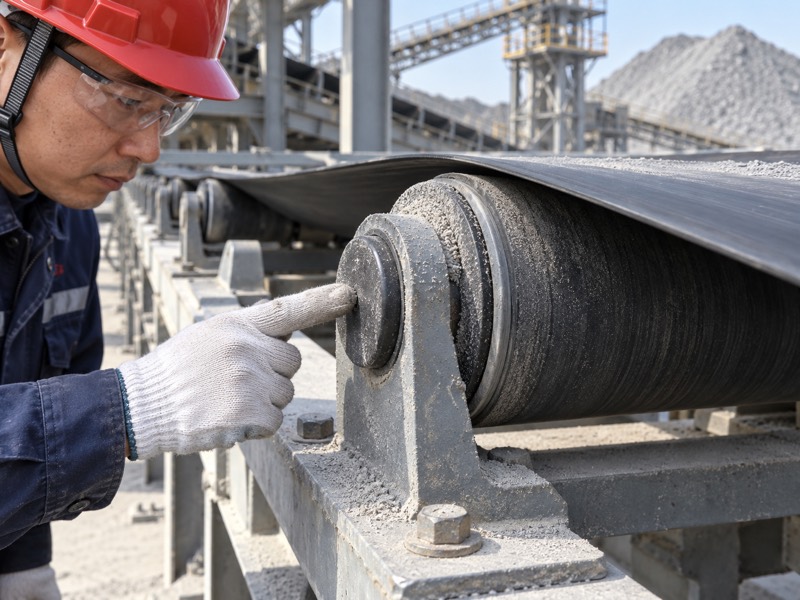
What should you observe in dry service?
Record where particles remain after discharge. Look at shell deposits, gaps and roller ends during approved inspection. Before close checks, follow site-approved lockout and tagout procedures. If fines collect around mounts, a new contact surface may still need improved housekeeping and end protection.
- Note abrasion and shell contact marks.
- Check material retained between surface features.
- Record dust exposure around roller ends.
How can you compare structures without guessing?
Use observed material behavior as your application input. Ask for specific limits and a review of your duty. The result should explain why a structure suits those conditions, rather than rank all structures universally.
| Dry-service evidence | Steel review | Disc or spiral review |
|---|---|---|
| Surface abrasion | Shell construction | Working-feature wear |
| Loose fines | Deposit tendency | Release through gaps |
| Packed end areas | Sealing exposure | Same end-protection need |
Key Takeaway: Compare dry-fines behavior and wear at both surfaces and ends; surface structure alone cannot resolve every dust-related fault.
6. How do wet or sticky deposits change the comparison?
Wet or sticky deposits change conveyor return rollers by filling gaps, adhering to surfaces and altering belt contact. Moisture can also increase exposure around roller ends. A structure that works with dry powder may behave differently after rain or process-water changes. Describe those changes so your supplier can review material behavior under representative conditions.
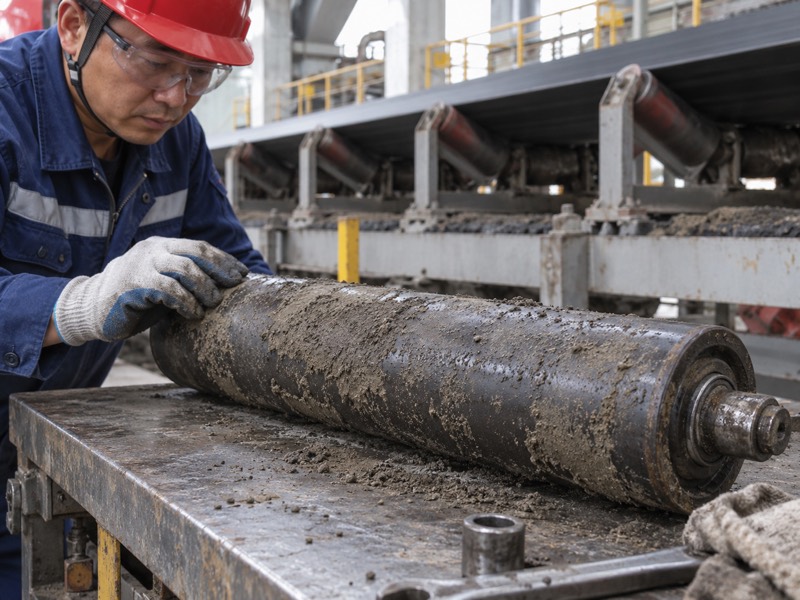
What evidence should you collect for wet service?
Describe adhesion rather than moisture alone. Slurry, damp fines and hard-setting deposits can need different cleaning methods. If buildup changes effective diameter unevenly, record associated belt movement. Then review upstream cleaning, drainage and surface construction together because each contributes to the condition you see.
- Describe deposit consistency and adhesion.
- Record moisture changes across operating periods.
- Check where water and material remain trapped.
What should remain conditional in your decision?
Keep any expected buildup reduction tied to application conditions. Ask how cleaning and inspection should change with the selected structure. No unverified service-life or savings estimate should decide compatibility.
| Wet deposit behavior | Construction question | Wider review |
|---|---|---|
| Thin adhesive layer | Does contact diameter change? | Belt cleaning |
| Packed gaps | Can working spaces remain open? | Approved cleanup |
| Persistent wet ends | What protection suits exposure? | Drainage and seals |
Key Takeaway: Compare structures using actual adhesion and wet exposure, with cleaning and drainage included in your review.
7. How should belt condition affect your roller choice?
Your conveyor return rollers must suit belt construction, surface condition and repair details as well as material contamination. Disc and spiral contact differs from a plain shell. A damaged surface or protruding repair can interact poorly with some working features. Have the responsible conveyor engineer review compatibility before changing contact patterns on an existing belt.
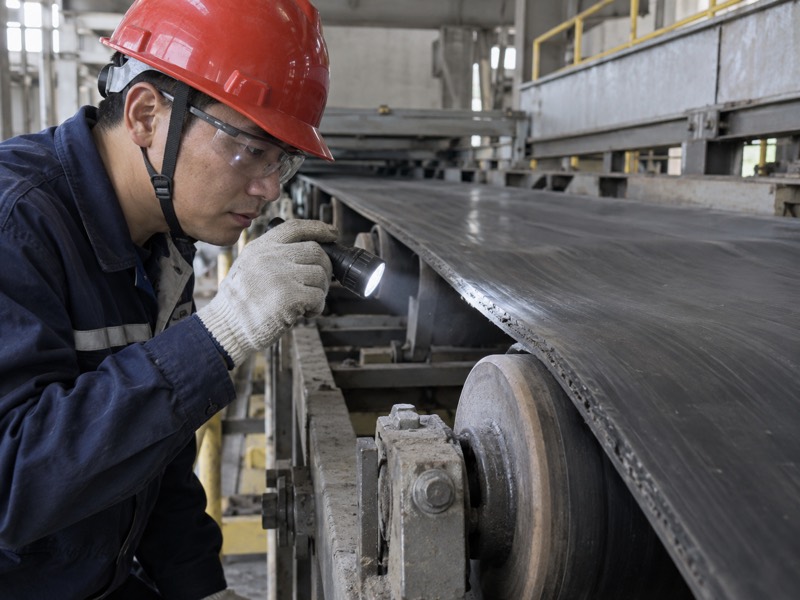
Which belt details should a supplier receive?
Show the belt surface that will make contact. Include joint construction and any repaired areas relevant to return support. If you have belt manufacturer restrictions, attach them to your request. Photographs can reveal condition, but written belt details and a reviewed arrangement establish the selection basis.
- Provide belt type and relevant manufacturer guidance.
- Describe joints, repairs and uneven surface areas.
- State operating direction and contact requirements.
What happens if belt condition changes later?
Recheck compatibility after substantial repairs or a belt replacement. A previous roller selection assumed particular conditions, so changes to surface or construction can require a new review even if frames remain unchanged.
| Belt detail | Contact concern | Required check |
|---|---|---|
| Joint | Passage over working features | Belt and roller compatibility |
| Surface repair | Local contact variation | Repair details |
| New construction | Changed support requirements | Updated application review |
Key Takeaway: Keep belt condition in your specification and recheck contact compatibility when that condition changes.
8. Do seals and bearings differ between return structures?
Seals and bearings in conveyor return rollers depend on each complete assembly, so a steel, disc or spiral label doesn’t establish their quality. Surface construction and end protection answer different questions. A helpful contact pattern can still sit above bearings exposed to wet fines. Review the offered bearing arrangement and seals against load, speed and contamination.
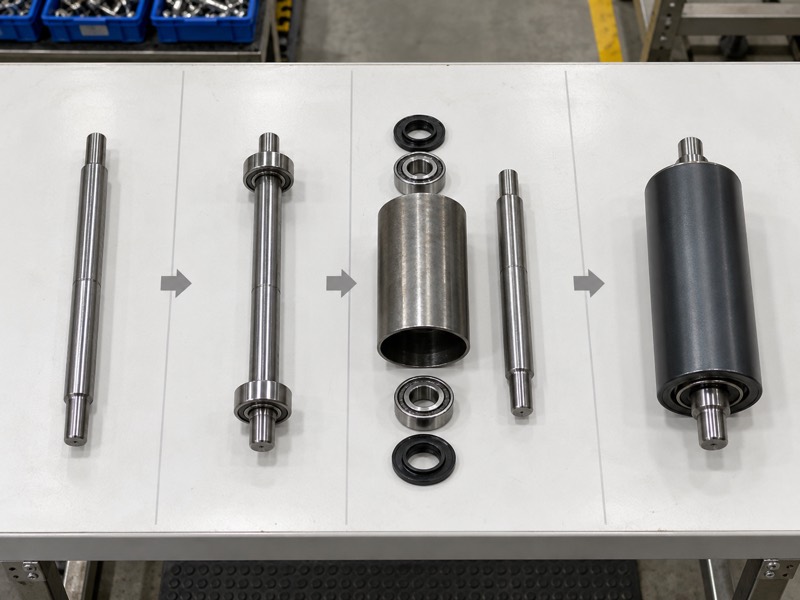
How should you assess the complete assembly?
Ask for construction beneath the surface description. Confirm bearing designation, lubrication requirements and protection details. If a supplier states a rating, ask what conditions support it. Compare any test method with your actual exposure before treating its result as a promise of field life.
- Identify bearing arrangement and duty assumptions.
- Describe end-area dust, splash and washdown.
- Confirm service or complete replacement instructions.
What should a cross-structure comparison show?
Use separate rows for contact design and internal construction. Then your purchasing team can see whether an alternative changes only the surface or also changes bearings, seals and maintenance obligations.
| Assembly element | Main question | Comparison basis |
|---|---|---|
| Working surface | Does contact suit the belt? | Geometry and material |
| Bearings | Does duty match assumptions? | Load and speed |
| Seals | Does protection suit exposure? | Construction and evidence |
Key Takeaway: Compare contact surfaces and end protection separately, then approve the complete assembly for your duty.
9. Which maintenance differences should influence selection?
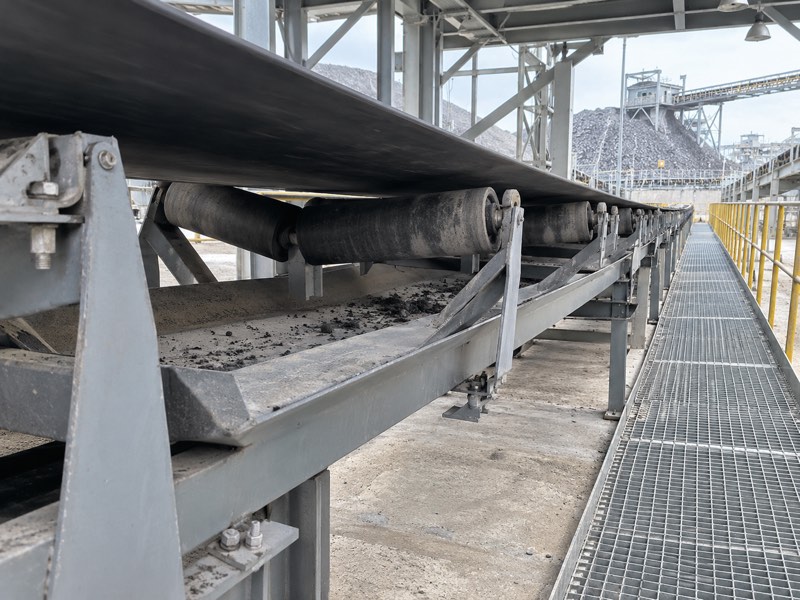
Maintenance differences should influence conveyor return rollers selection when cleaning, inspection or replacement methods change with working surfaces. A plain shell and spaced discs present different access and wear areas. Spiral designs may add orientation requirements. So ask how your crew should inspect and service the proposed structure before assuming it reduces maintenance effort.
What should your crew assess beforehand?
Check whether faults can be seen and reached safely. Discuss buildup removal methods and acceptable wear conditions. If a roller requires complete replacement, stock its correct variant. Directional parts need clear identification outside operating surfaces so warehouse and installation teams can avoid mix-ups.
- Confirm approved cleaning and inspection methods.
- Check removal space and handling requirements.
- Define spare variants and installation orientation.
How should you judge maintenance expectations?
Use actual tasks and access conditions. Request guidance on common defects and replacement criteria, then compare those requirements with your site’s work process. Avoid unsupported claims about fixed maintenance savings.
| Structure | Maintenance focus | Planning question |
|---|---|---|
| Plain shell | Surface and end condition | How are deposits removed? |
| Disc | Disc wear and packed gaps | What contact damage is unacceptable? |
| Spiral | Feature wear and orientation | Which replacement direction applies? |
Key Takeaway: Choose a structure your crew can inspect, clean and replace using approved methods and available access.
10. How should you make the final return roller decision?
Make your final conveyor return rollers decision by checking fit, belt compatibility, contamination and maintenance requirements against one operating description. A candidate should answer each of these points clearly. If key details remain unknown, obtain review before approval. Your quotation comparison can then address defined constructions rather than a simple steel-versus-rubber choice.
What belongs in your comparison sheet?
Write down conditions behind each proposal. Include drawing revision, belt direction and carryback description. Then identify deviations and questions requiring approval. Keep commercial terms alongside the technical comparison, but don’t let a lower price conceal incomplete shaft details or unconfirmed contact compatibility.
- Compare interfaces and working geometry.
- Record material and operating limitations.
- Confirm inspection evidence and service instructions.
How can you approve an alternative clearly?
Record its accepted drawing and relevant conditions. If your site uses a controlled trial, define monitoring and approval criteria beforehand. A successful check should lead to a traceable specification for later spare orders.
| Decision area | Required confirmation | Approval output |
|---|---|---|
| Fit | Interfaces and support geometry | Accepted drawing |
| Duty | Belt and material compatibility | Recorded application conditions |
| Maintenance | Safe service method | Inspection and spare plan |
Key Takeaway: Approve an alternative only when its fit, contact limits and maintenance requirements are clear enough for repeat orders. To compare constructions for your return run, contact us with belt details, buildup photographs and mounting drawings. Request a quotation that names each proposed variant and its application conditions.
FAQ
Q1: What’s the best return roller structure for every belt? There isn’t one. Contact geometry, belt condition and material behavior determine suitability.
Q2: Can disc rollers guarantee a clean belt? No. Their effect depends on deposits and geometry; review your cleaning system too.
Q3: Can spiral rollers run in either direction? Only if the specific design is approved for both directions.
Q4: How do I know whether a new structure fits? Compare shaft interfaces, working dimensions and support arrangement with approved drawings.
Q5: Should I ignore seals when changing surface structure? No. Bearings and end protection still need review against load and contamination.