Choose a conveyor return roller by matching belt support, retained material, moisture exposure and mounting geometry. Wet fines carried past a discharge can build unevenly on roller surfaces and disturb belt contact. Selecting another shell without examining carryback may repeat that problem. Start with your return-run conditions, then compare construction and cleaning compatibility using an approved drawing and operating description.
1. What does a conveyor return roller support?
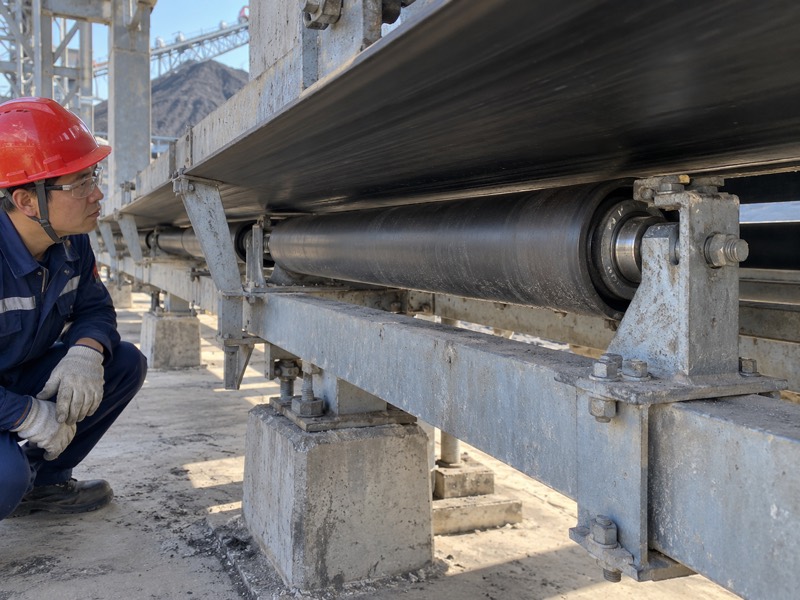
A conveyor return roller supports your belt on its return journey after discharge. Its service load includes belt weight and any material remaining on that run. Flat and V-return arrangements create different contact geometry. Your selection therefore starts with the installed belt path and support arrangement, rather than copying specifications from loaded carrying stations.
How should you define its duty?
Identify which belt surface contacts your roller. A conventional return arrangement may expose rollers to carryback from the conveying surface. Belt turnover or other special layouts change that relationship. Mark your arrangement on a drawing so a supplier can assess contact and contamination without assuming a standard layout.
- Describe flat, V-return or special support geometry.
- Record belt width, construction and operating speed.
- Identify contacting surface and retained material.
Why keep carrying support separate?
Your carrying assemblies support a loaded belt under another duty. Similar appearance doesn’t establish interchangeability between those positions or validate a shared load rating.
| Arrangement | Contact characteristic | Selection reference |
|---|---|---|
| Flat return | Broad longitudinal belt support | Full mounting drawing |
| V-return | Angled contact arrangement | Approved V geometry |
| Special return | Layout-dependent contact | Complete belt-path detail |
Key Takeaway: Specify the return arrangement and contacting belt surface before comparing roller constructions.
2. How does carryback change conveyor return roller selection?
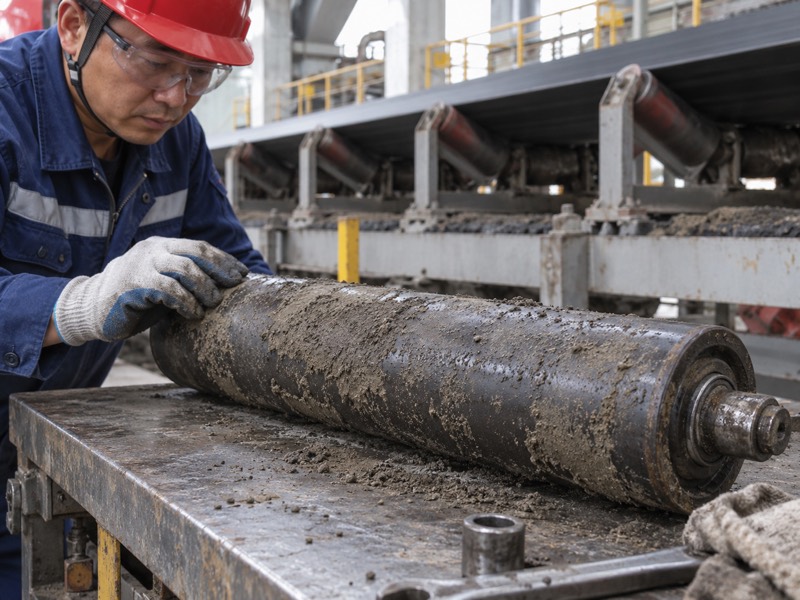
Carryback changes conveyor return roller selection by adding contamination and altering contact as deposits accumulate. Dry abrasive particles and sticky wet fines behave differently. Neither condition can be described adequately as dirty service. Collect material samples or clear observations so your supplier understands particle behavior, moisture and where buildup occurs along the return run.
What should you observe about deposits?
Describe whether material sticks, cakes or falls away. Uneven deposits can change effective contact diameter and disturb belt tracking. Look at upstream cleaning and material conditions before blaming roller construction. A roller design may resist some buildup but cannot guarantee a clean belt under every carryback condition.
- Note dry powder, wet fines or adhesive deposits.
- Identify buildup location and its distribution.
- Record changes with material feed and moisture.
What belongs in an application description?
Include cleaning arrangements and maintenance access. Repeated accumulation may require changes upstream as well as a roller review, so preserve that context in quotation discussions.
| Carryback behavior | Selection question | Wider action |
|---|---|---|
| Dry abrasive fines | What contact surface suits wear? | Review cleaning performance |
| Wet adhesive material | How may buildup affect contact? | Check moisture and scraper condition |
| Irregular deposits | Does contact diameter change? | Investigate tracking symptoms |
Key Takeaway: Describe carryback behavior precisely and assess upstream cleaning alongside your return roller choice.
3. When does a plain conveyor return roller make sense?
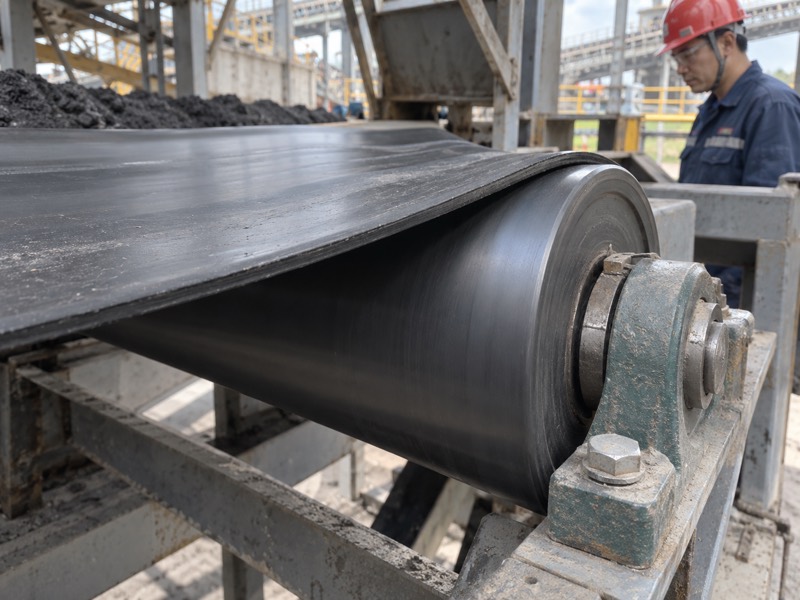
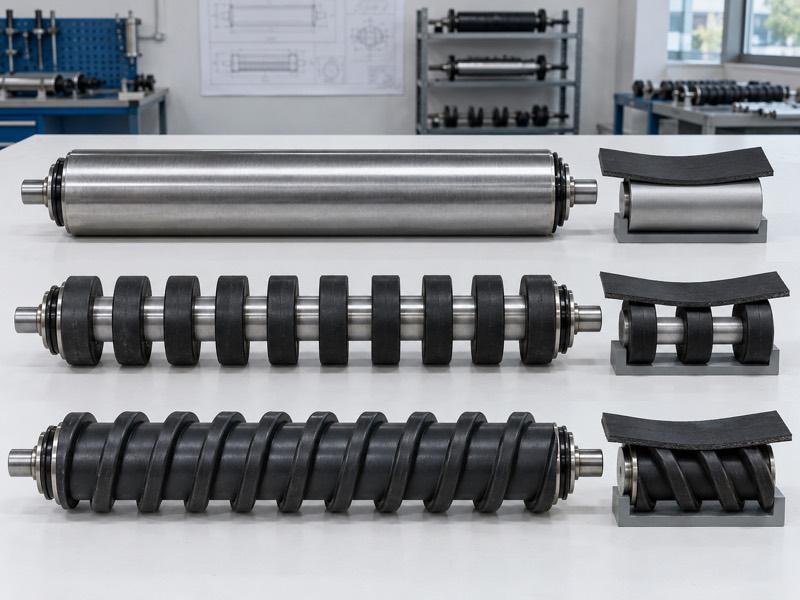
A plain conveyor return roller makes sense when its contact surface and complete construction suit your return belt and contamination conditions. A continuous shell provides broad support, but adhesive carryback may accumulate on it. Steel shell selection still needs consideration of abrasion, corrosion and operating speed. A clean-looking sample doesn’t establish suitability for your wet material.
What advantages and limits should you compare?
Start with required belt support. Continuous contact can suit an approved flat-return arrangement without changing its support pattern. Check shell condition, end protection and mounting details together. Where buildup causes recurring problems, assess contamination behavior before specifying another identical shell merely because it fits existing brackets.
- Confirm working shell length and diameter.
- Check contact-surface and corrosion requirements.
- Review observed buildup on current rollers.
Which evidence supports keeping your existing design?
Use operating history and inspection records, including conditions during successful service. A replacement specification should retain dimensions while addressing documented weaknesses through an approved construction review.
| Condition | Plain-shell review | Decision basis |
|---|---|---|
| Clean return belt | Surface and bearing duty | Approved arrangement |
| Abrasive residue | Wear and shell construction | Material exposure |
| Sticky buildup | Changing contact diameter | Cleaning and design review |
Key Takeaway: Select a plain shell because its support and exposure suit your duty, with recorded evidence where replacements repeat an existing design.
4. When should you review disc-style return support?
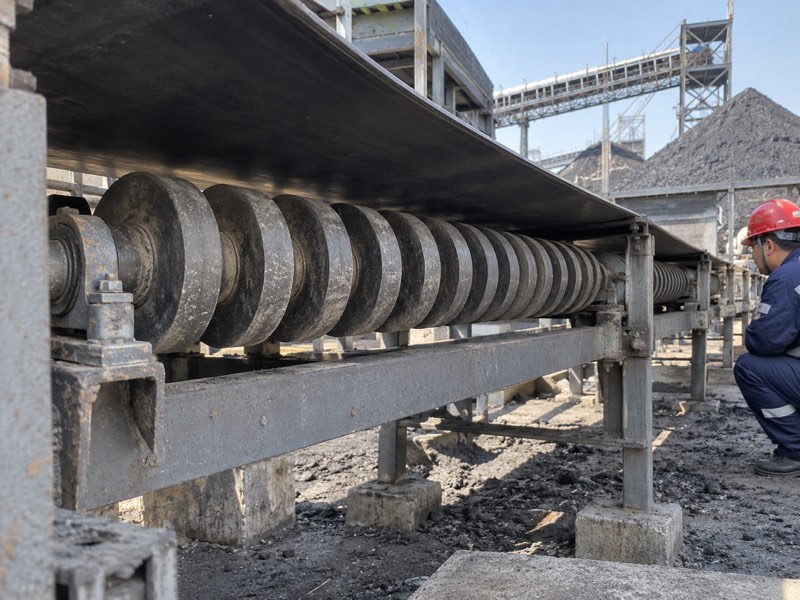
Review disc-style support when your conveyor return roller repeatedly accumulates carryback and a changed contact pattern may help. Spaced discs contact selected belt areas while leaving gaps between them. Suitability depends on disc layout, belt construction and material behavior. A disc arrangement requires approval because narrower contact regions can introduce different local loading and wear conditions.
Which disc details affect your decision?
Check contact locations across belt width. End discs, central discs and spacing should correspond with your approved arrangement. Follow site-approved lockout and tagout procedures before inspecting deposits and disc damage. Rubber chemistry and environmental compatibility also require review when heat, oils or chemicals are present in your material stream.
- Confirm disc positions and contact diameter.
- Describe belt repairs, joints and surface condition.
- Identify material and environmental compatibility requirements.
How should you discuss an alternative arrangement?
Compare comb-style return construction against your current belt and maintenance conditions. Ask for drawing details rather than accepting a broad self-cleaning description as proof.
| Disc feature | What it changes | Approval check |
|---|---|---|
| Spaced contact | Belt support pattern | Belt compatibility |
| Flexible material | Contact behavior | Material and temperature suitability |
| Gaps between discs | Deposit pathways | Carryback packing tendency |
Key Takeaway: Review disc geometry and material compatibility before changing from continuous shell contact.
5. What should you check before choosing a spiral design?
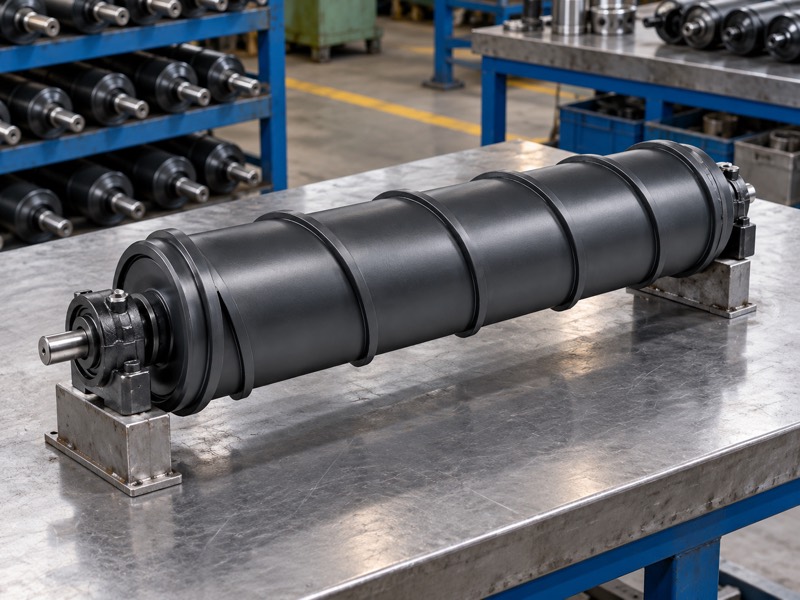
Before choosing a spiral conveyor return roller, check its contact geometry, rotation requirements and compatibility with your belt. A helical surface creates a different contact pattern from a smooth shell. Its effect depends on construction and material behavior. Don’t assume every spiral design cleans effectively or suits reversible running without written application confirmation.
Which operating details deserve explicit confirmation?
Ask how the proposed helix works in your layout. Directional requirements can affect installation and replacement stock. Check whether sharp edges, worn spiral features or accumulated material could damage belt contact. Your engineer should review any proposed change in return contact pattern or belt support geometry.
- State whether your conveyor runs in reverse.
- Confirm handedness and installation orientation.
- Review surface condition and belt compatibility.
What can a comparison with existing rollers show?
Present your buildup photographs and cleaning arrangements with the proposed drawing. A defined application review offers more useful evidence than a generic claim about automatic cleaning.
| Application factor | Supplier question | Decision evidence |
|---|---|---|
| Belt direction | Are there directional restrictions? | Installation instructions |
| Sticky carryback | How may material behave? | Application review |
| Contact surface | What belt constraints apply? | Approved construction drawing |
Key Takeaway: Confirm spiral geometry, belt direction and contact limits before approving a return-side substitution.
6. How should moisture influence return roller seals?
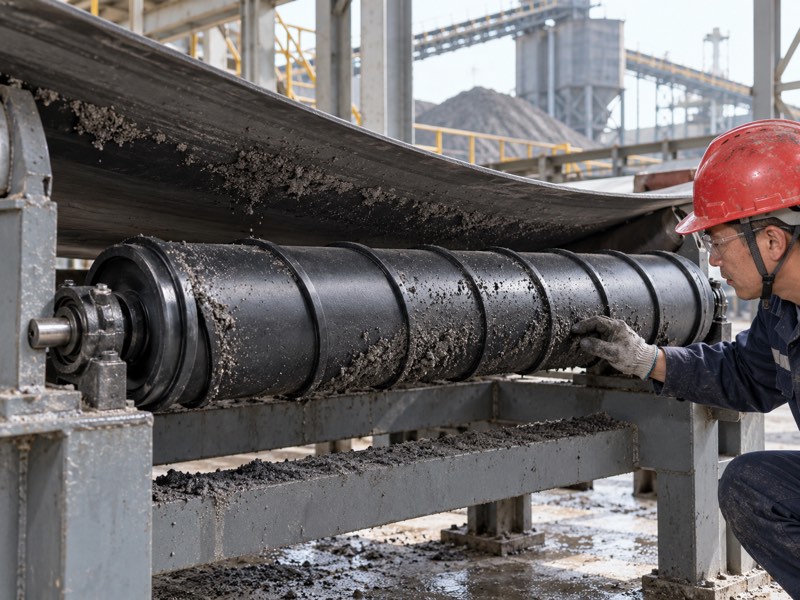
Moisture should influence conveyor return roller sealing choices because wet fines, splash and cleaning can expose bearing entrances differently. External rust or deposits do not prove internal ingress, but they document exposure. Explain where water collects around mounting points. A roller described only as sealed needs further construction and application information before you can judge suitability.
What makes your wet service distinctive?
Report cleaning exposure as part of operation. Direct jets, cleaning chemicals and persistent pooled moisture may create conditions beyond normal splash. Ask for approved cleaning instructions and relevant protection evidence. Drainage and accessible housekeeping can reduce exposure even when a roller’s seal design remains unchanged.
- Describe rain, process water and washdown.
- Record material accumulation around end shields.
- Provide cleaning method and chemical information.
How do you compare protection claims?
Request test methods and their conditions. Compare those details with site exposure rather than treating a broad water-resistant label as a guarantee of bearing life.
| Exposure | Detail to provide | Required response |
|---|---|---|
| Splash | Source and frequency | Proposed end protection |
| Wet fines | Buildup locations | Seal and housekeeping review |
| Washdown | Method and chemicals | Approved cleaning restrictions |
Key Takeaway: Specify wet exposure and cleaning practices so seal selection addresses how moisture reaches your roller ends.
7. Which dimensions control conveyor return roller fit?
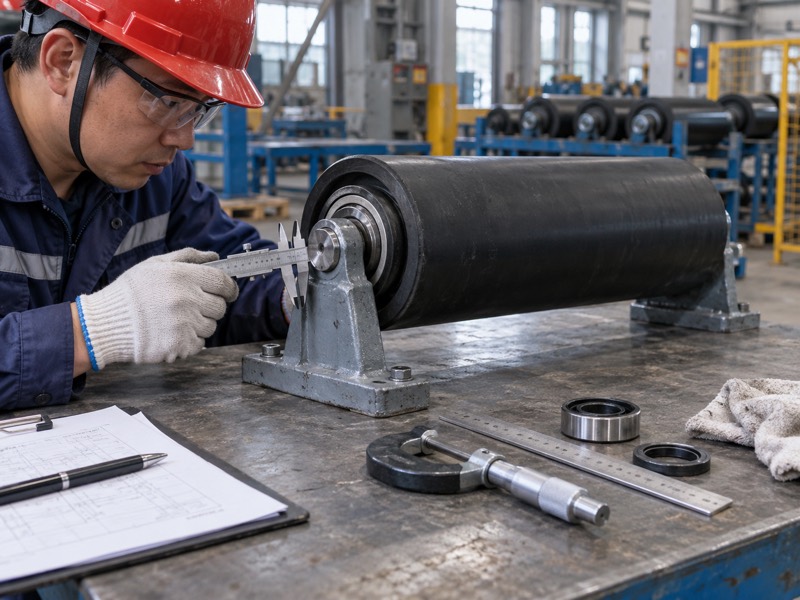
Shell or disc contact length, diameter and shaft-end geometry control whether a conveyor return roller fits your assembly. Overall shaft length alone doesn’t confirm bracket engagement. Hanging supports and rigid brackets may use different interfaces. Check the complete arrangement, including restraints and guards, before ordering replacements from a removed sample.
How should you assess an existing sample?
Measure worn interfaces with caution. A damaged flat or widened bracket slot can misrepresent original geometry. Compare clean samples with available drawings and record discrepancies. Include belt contact diameter separately from shaft dimensions, especially when discs or spiral features form the working surface.
- Record shaft flats and engagement length.
- Measure contact length and working diameter.
- Confirm mounting span and retention method.
What should an approval drawing show?
Include reference dimensions, tolerances and installation orientation. Photographs can clarify assembly style but should not replace dimensioned approval of mounting interfaces.
| Dimension group | Fit consequence | Approval evidence |
|---|---|---|
| Shaft ends | Seating and restraint | End-detail drawing |
| Contact envelope | Support and clearance | Working-surface dimensions |
| Mounting span | Bracket engagement | Complete assembly drawing |
Key Takeaway: Approve shaft interfaces and contact geometry together before releasing a return roller order.
8. Can a return roller correct belt tracking by itself?
A conveyor return roller cannot be expected to correct belt tracking by itself when buildup, misaligned frames or belt-path faults remain. Its geometry can influence contact, but belt behavior depends on the complete arrangement. Investigate where drift begins and whether deposits change roller diameter. Avoid forcing belt edges against restraints while leaving the original tracking cause unexamined.

What should you check before selecting training components?
Observe the belt path before adjusting supports. Uneven carryback, loose mounts and distorted frames can alter contact. Record whether drift changes with loading or after cleaning. Any proposed training arrangement needs designer review and suitable installation instructions for your conveyor, including reverse operation if applicable.
- Inspect support alignment and shaft seating.
- Compare clean and contaminated contact conditions.
- Trace drift through neighboring return stations.
How should you separate symptoms from selection inputs?
Send photographs and location records with your quotation request. State confirmed defects and uncertain causes separately so a supplier doesn’t infer that a different roller guarantees correction.
| Symptom | Investigation | Selection consequence |
|---|---|---|
| Drift near buildup | Contact diameter | Review cleaning and surface |
| Drift at bent frame | Support alignment | Repair mounting geometry |
| Load-dependent drift | Complete belt path | Engineering review |
Key Takeaway: Resolve tracking causes and obtain design approval before expecting a roller substitution to change belt direction.
9. What should a conveyor return roller acceptance check cover?
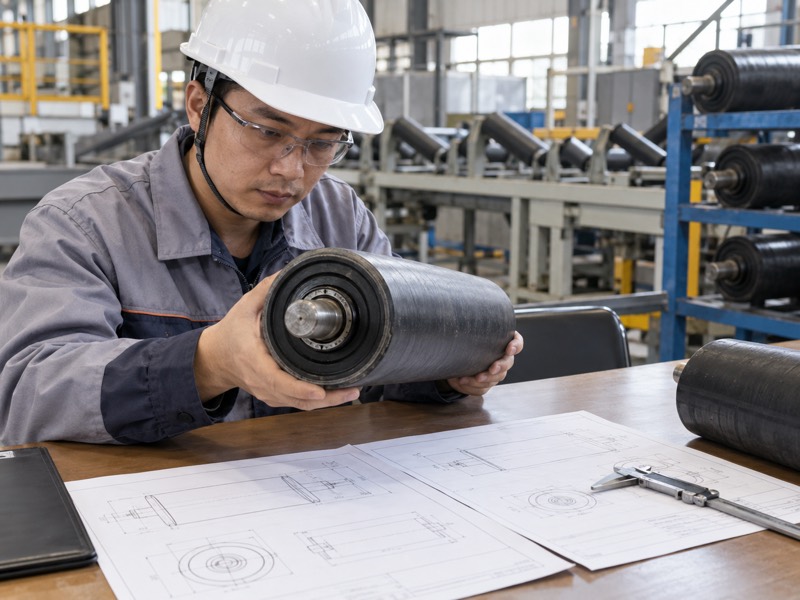
A conveyor return roller acceptance check should cover dimensions, rotation, contact-surface condition and construction against your approved order. Disc and spiral variants need their specific working geometry checked too. Agree on measurement methods and sampling before manufacture. Receiving inspection can then verify conformity without inventing new criteria after components arrive.
Which checks need an agreed method?
Define what constitutes an acceptable result. Dimensional references, runout setup and rotational checks should follow shared instructions. Check packaging for damage and preserve part identification. If a batch includes different variants, keep their drawing references separate so warehouse stock remains traceable by intended position.
- Confirm dimensions and drawing revision.
- Inspect working surfaces for damage or sharp features.
- Record rotation and identification checks.
What should you do with a discrepancy?
Hold affected pieces from installation and document the finding. Resolve whether it concerns manufacturing conformity, transport damage or a drawing mismatch before approving replacement stock.
| Acceptance item | Relevant variant detail | Record |
|---|---|---|
| Fit | Shaft and mounting geometry | Measured dimensions |
| Contact | Shell, disc or spiral condition | Surface inspection |
| Assembly | Rotation and identification | Agreed inspection results |
Key Takeaway: Agree on variant-specific acceptance requirements and keep nonconforming parts out of installation.
10. How should you request a cleaner-run roller quotation?
Request a conveyor return roller quotation with mounting drawings, belt details and a description of carryback and cleaning. These inputs let suppliers review support and contamination together. Include photographs of deposits without treating them as complete design evidence. Ask each offer to identify construction, deviations and cleaning restrictions so your technical comparison has a defined basis.
What belongs in your request package?
Give the supplier conditions that shape contact. Describe sticky deposits, moisture and belt direction explicitly. State which dimensions must match existing frames and which alternatives require review. Your purchasing team should obtain written confirmation of deviations before accepting a revised contact pattern or end arrangement.
- Attach dimensioned drawings and position quantities.
- Describe belt condition, direction and material behavior.
- State inspection and documentation requirements.
How can you compare proposed constructions?
Compare fit, duty assumptions and acceptance evidence before commercial terms. Keep unresolved compatibility questions visible until your conveyor engineer or responsible maintenance authority approves them.
| Offer item | Needed confirmation | Decision value |
|---|---|---|
| Contact design | Belt compatibility | Suitable support pattern |
| End protection | Exposure assumptions | Suitable bearing protection |
| Interfaces | Drawing conformity | Installation fit |
Key Takeaway: Quote a complete return duty, including cleaning and compatibility limits, rather than asking only for a roller diameter. To review replacement options, contact us with your return assembly drawing, carryback photographs and belt direction. Request a quotation that identifies proposed construction and any application restrictions.
FAQ
Q1: Can a return roller replace a belt cleaner? No. Roller construction may affect buildup, but cleaning performance needs its own assessment.
Q2: What’s the best roller for wet fines? Choose after reviewing adhesion, moisture, belt contact and sealing; one structure doesn’t suit every material.
Q3: Can I install a spiral roller on a reversible conveyor? Only after confirming directional compatibility and installation requirements with your supplier and designer.
Q4: How do I know whether discs fit my belt? Review disc layout, contact diameter, belt construction and surface condition against an approved arrangement.
Q5: Should return and carrying rollers share a specification? Only when verified drawings and duty assessments establish compatibility. Appearance alone cannot confirm it.