
Choose a carrying roller by checking service load, mounting dimensions and bearing protection against your conveyor’s operating conditions. A replacement can fit between brackets yet still overload its shaft or expose bearings to wet fines. Your drawing and operating records provide a firmer purchasing basis than appearance alone. Use them together before approving a batch for a loaded belt.
1. What does a carrying roller support on your conveyor?
A carrying roller supports your loaded belt and passes that load through bearings, shaft ends and brackets into its frame. In a troughing assembly, center and wing rollers share support according to belt shape and material distribution. Their reactions can differ even when their shells look identical. You need a clear position description before comparing replacement options.
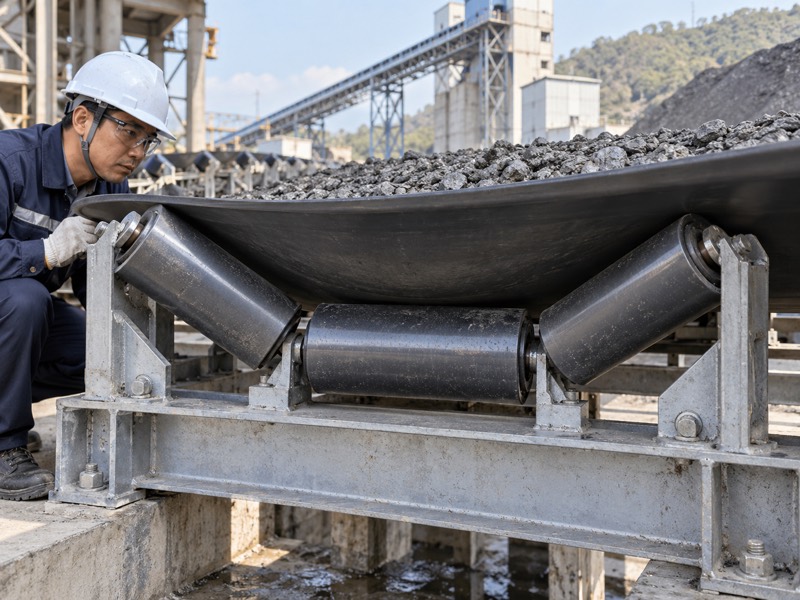
Which load path should you trace?
Follow support through every connection. Shell contact, bearing seats and shaft restraints all contribute to service performance. A sound roller cannot compensate for a cracked bracket or a twisted crossmember. Check how your assembly carries vertical force and how its mounting holds shaft orientation during loaded starts.
- Identify center, left wing and right wing positions.
- Record trough geometry and mounting orientation.
- Inspect brackets for cracks, wear and loose fasteners.
What distinguishes neighboring duties?
Your return-side support carries a different belt run, while loading points may need impact-specific support. Treat these positions separately when creating a spare-parts schedule.
| Position | Main duty | Selection record |
|---|---|---|
| Carrying run | Support loaded belt | Load distribution and trough fit |
| Loading zone | Receive falling material | Transfer geometry and impact support |
| Return run | Support returning belt | Carryback and return geometry |
Key Takeaway: Name each roller position on your drawing before requesting a replacement; similar shells can serve different duties.
2. How should you describe the carrying roller load?
Describe carrying roller load using belt weight, conveyed material and operating conditions at its installation position. Conveyor throughput alone doesn’t describe every roller reaction. A heavily loaded center section and lightly contacted wings may experience unequal demand. Material arriving off-center can change that balance again, so your supplier needs more than a nominal production target.

Which operating cases belong in your request?
Include conditions beyond steady running. Loaded starts, accumulated material and uneven feed can change service demand. Your conveyor designer should check those cases against assembly ratings. Don’t translate an unknown throughput figure directly into an allowable roller load without belt speed, material properties and spacing information.
- Supply belt width, speed and belt construction.
- Describe material bulk density and normal loading shape.
- Identify loaded starting and upset conditions.
How can you compare supplier answers?
Ask whether a stated rating covers one roller or a complete idler assembly. Record calculation assumptions alongside any offered capacity so later substitutions remain comparable.
| Supplied information | What it helps establish | Remaining question |
|---|---|---|
| Belt and material mass | Distributed service demand | How is load shared? |
| Idler arrangement | Reaction locations | Which roller governs? |
| Operating cases | Peak service demand | What allowance applies? |
Key Takeaway: Request a load assessment tied to your conveyor arrangement rather than approving a capacity figure without its assumptions.
3. Which carrying roller dimensions determine fit?
Shell length, outside diameter, shaft-end geometry and mounting span determine whether a carrying roller fits your existing assembly. Overall length alone can hide a mismatch in shaft engagement. A replacement with incorrect end flats may rotate within its bracket or sit unevenly. Measure from defined drawing references and keep units visible on every dimension.
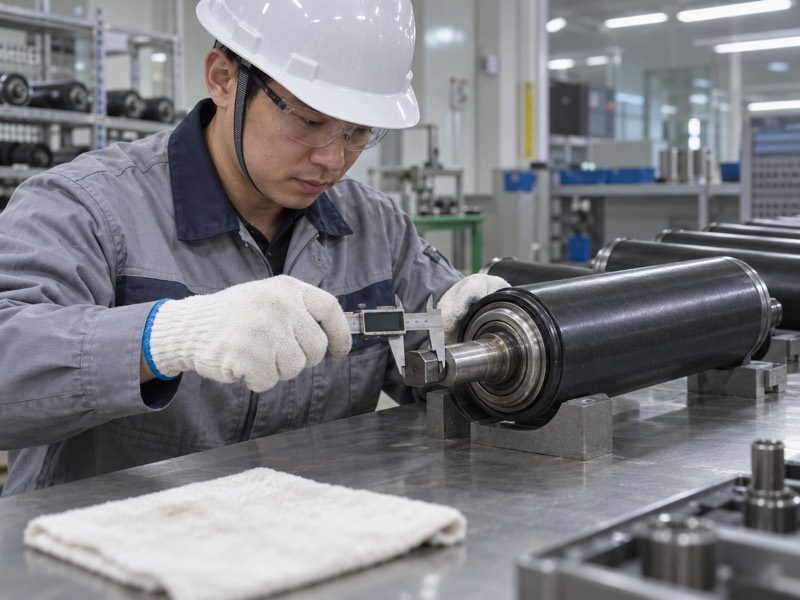
Where should you measure?
Measure interfaces before cosmetic features. Use a clean, representative sample when drawings are unavailable. Wear can shorten flats, widen slots or disguise a bent shaft. Compare more than one sample and flag any disagreement instead of averaging measurements into a new specification.
- Measure shell length separately from overall shaft length.
- Record flat width, flat depth and usable engagement.
- Check bracket spacing and seating orientation.
What should appear on an approval drawing?
Show reference faces and acceptance tolerances. Include photographs for orientation, but use dimensioned drawings for approval because camera perspective can distort proportions.
| Interface | Mismatch consequence | Approval check |
|---|---|---|
| Shaft flats | Poor restraint or seating | Geometry and engagement |
| Shell length | Unsupported belt or interference | Working contact width |
| Outside diameter | Changed belt support height | Assembly geometry |
Key Takeaway: Approve a dimensioned interface drawing before production; a photograph cannot establish mounting compatibility.
4. How does carrying roller diameter affect operation?
Your carrying roller diameter affects rotational speed, belt contact geometry and clearance within its frame. At a given belt speed, a smaller diameter rotates faster. Diameter changes can also alter belt elevation and adjacent roller gaps. Choose within your conveyor design requirements rather than assuming a larger shell automatically provides suitable capacity or longer bearing life.
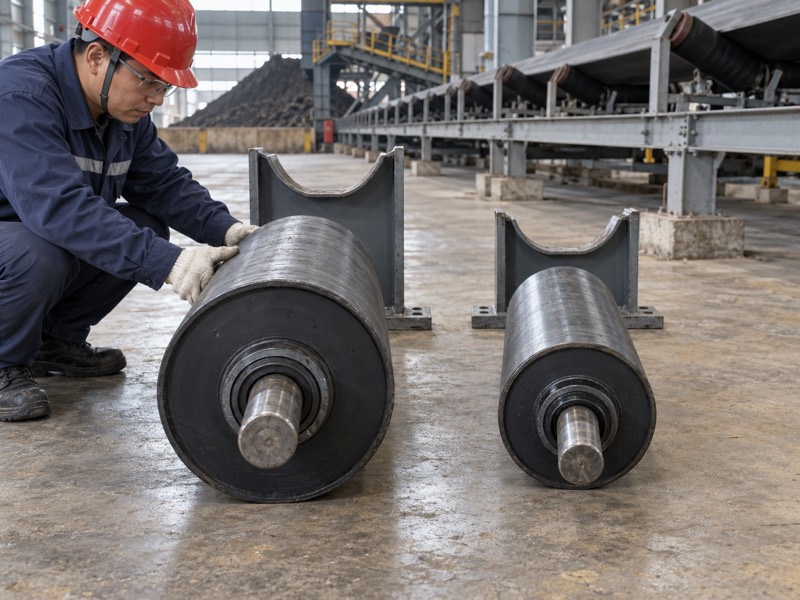
What changes with a diameter substitution?
Check the surrounding geometry as well. A replacement may clear its bracket but interfere with guards, skirts or nearby structure. Unequal diameters within a troughing set can change contact distribution. If your assembly requires mixed diameters, that arrangement should be intentional and documented by its designer.
- Confirm operating speed against roller construction.
- Check belt elevation at neighboring assemblies.
- Review clearances around guards and transfer equipment.
Which comparison avoids a false shortcut?
Compare complete designs, including shaft and bearing arrangements. Shell diameter supplies only one part of your purchasing decision and cannot stand in for a verified load rating.
| Proposed change | Possible effect | Required review |
|---|---|---|
| Smaller diameter | Faster rotation | Bearing and seal suitability |
| Larger diameter | Higher contact surface | Frame and guard clearance |
| Mixed set | Unequal belt support | Approved assembly layout |
Key Takeaway: Keep diameter consistent with your approved arrangement unless an engineering review supports a change.
5. What should you check in carrying roller bearings?
Check bearing type, fit, arrangement and stated service conditions when specifying a carrying roller. Bearing size alone doesn’t establish performance because contamination, misalignment and shaft deflection also affect operation. A catalog life estimate depends on assumptions. Ask your supplier which loads, speeds and cleanliness conditions underpin its recommendation before treating that estimate as an operating promise.
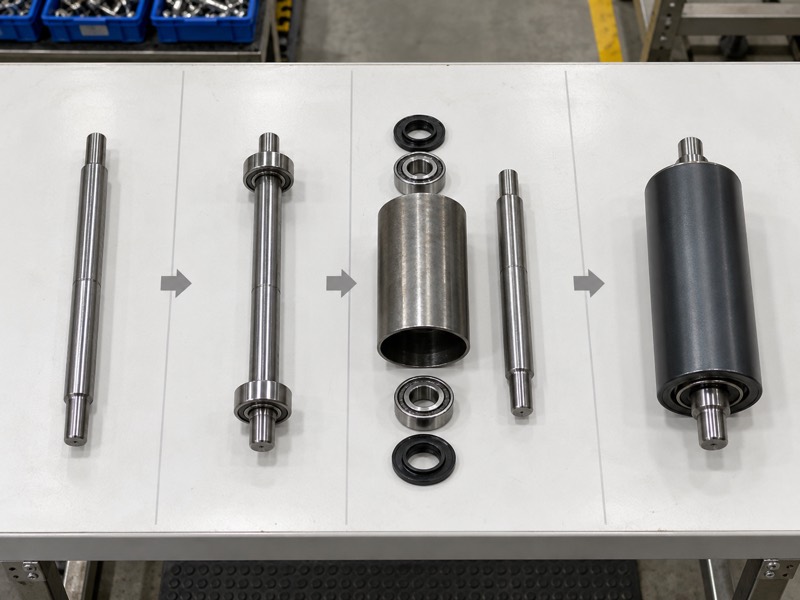
Which assembly details deserve questions?
Ask how bearing support stays aligned. Concentric bearing seats and sound shaft support help maintain rolling contact. Poor fits can allow movement or impose unwanted loading during assembly. Maintenance also needs a clear answer about sealed construction, approved lubrication and whether servicing requires complete roller replacement.
- Identify bearing designation and arrangement.
- Request fit and assembly-control information.
- Clarify lubrication and replacement instructions.
How should you assess an offered bearing specification?
Compare its operating basis with your site conditions. A technically suitable bearing can still fail early if abrasive fines enter through an unsuitable sealing arrangement.
| Check | Useful evidence | Purchasing implication |
|---|---|---|
| Load basis | Design assumptions | Rating matches your duty |
| Bearing fit | Approved assembly drawing | Seats support alignment |
| Maintenance | Service instructions | Crew follows correct method |
Key Takeaway: Review bearings as part of a complete roller assembly, including seals and shaft support.
6. How should carrying roller seals match contamination?
Your carrying roller seals should match exposure to dust, wet fines, washdown and standing moisture. Different sealing arrangements create different barriers and contact conditions. A seal described only as dustproof gives you little basis for assessing wet service. Specify actual exposure and request relevant evidence without assuming any seal makes a roller immune to contamination.

What should you report about your environment?
Describe how contamination reaches each end. Falling dust, splash and direct cleaning jets follow different paths. Trapped material around brackets can keep roller ends wet after surrounding surfaces dry. Include your cleaning practices because maintenance can expose seals more severely than normal production.
- Describe dry, damp or slurry-like carryover.
- Identify rain, splash and washdown exposure.
- Note any material buildup around roller ends.
What evidence supports a seal choice?
Ask for construction details and applicable test methods. Compare test conditions with your duty before accepting broad protection claims or assuming laboratory results reproduce field service.
| Exposure | Design question | Site action |
|---|---|---|
| Dry fines | How are ingress paths restricted? | Remove end-area buildup |
| Splash | What protects bearing entrances? | Check drainage paths |
| Washdown | What cleaning limits apply? | Follow approved cleaning method |
Key Takeaway: Put contamination and cleaning conditions into your specification so seal selection reflects real exposure.
7. Which carrying roller shell details affect belt contact?
A carrying roller needs a sound contact surface, suitable shell construction and acceptable runout for your belt duty. Sharp seams, dents or uneven rotation can disturb belt contact. Material choice also depends on abrasion, corrosion and operating temperature. Request acceptance criteria rather than judging shell quality from paint color or a polished product photograph.
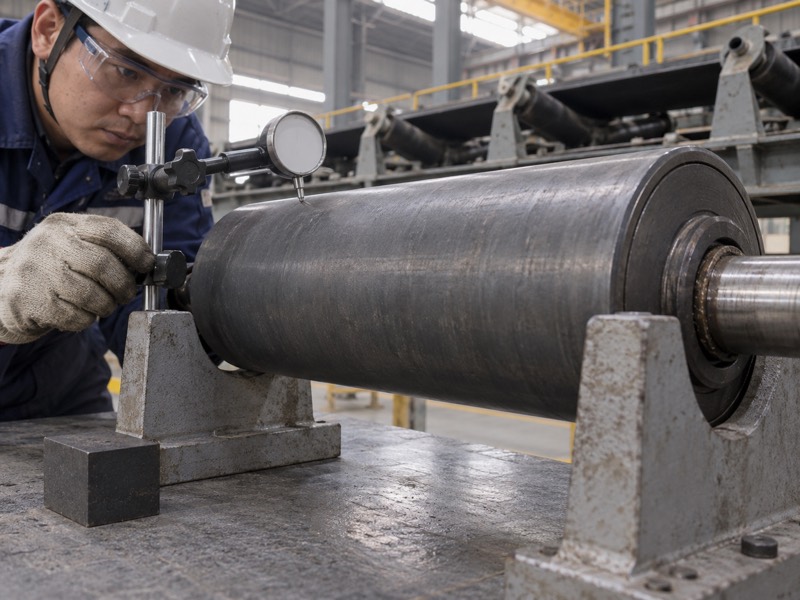
What can you examine during receipt?
Separate surface defects from dimensional errors. A chipped coating and a dented shell present different concerns. Rotate a supported sample and inspect its contact surface while keeping hands clear of pinch points. Any formal runout measurement needs an agreed setup, reference and acceptance limit.
- Inspect seams and ends for sharp projections.
- Look for dents, corrosion and coating damage.
- Record visible wobble for controlled measurement.
When does another shell material merit review?
You can compare UHMW roller construction where abrasion or corrosion drives selection. Confirm load, temperature and mounting suitability before proposing a material substitution.
| Observation | Possible concern | Follow-up |
|---|---|---|
| Dent | Uneven belt contact | Check shell acceptance criteria |
| Sharp projection | Local belt damage | Reject or resolve before installation |
| Wobble | Runout or assembly error | Measure using agreed method |
Key Takeaway: Define contact-surface and runout acceptance requirements in your order rather than relying on appearance.
8. How do spacing and alignment affect carrying roller duty?
Spacing and alignment affect how carrying roller assemblies support your belt and distribute service load. Wider unsupported spans can change sag and material behavior, while skewed assemblies can introduce lateral forces. Your conveyor design should determine permitted spacing and adjustment. Installing stronger rollers without correcting damaged frames or uneven support can leave belt problems unresolved.

What installation conditions should you inspect?
Check all neighboring supports together. A single replacement can sit correctly within a frame that remains misaligned with its neighbors. Before close checks, follow site-approved lockout and tagout procedures and confirm reference lines. Don’t force a roller into a distorted bracket or compensate with undocumented shims that change trough geometry.
- Compare support elevation along your conveyor.
- Inspect frame squareness and shaft seating.
- Verify spacing against current design drawings.
Who should approve layout changes?
Ask your conveyor engineer to review changes near loading zones, transitions and curves. These locations can have different support requirements from a uniform carrying run.
| Site condition | What you should check | Decision |
|---|---|---|
| Bent frame | Alignment and seating | Repair before replacement |
| Changed spacing | Sag and load distribution | Obtain engineering review |
| Local transition | Belt geometry | Follow transition design |
Key Takeaway: Repair support geometry before expecting a replacement roller to correct tracking, sag or uneven contact.
9. What should a carrying roller acceptance plan include?
A carrying roller acceptance plan should cover drawing conformity, rotation, contact condition and traceable inspection records. Your order should state which checks apply and how samples represent a production batch. Without agreed methods, buyers and suppliers can measure different features and reach conflicting conclusions. Set expectations before manufacturing rather than after a shipment arrives.
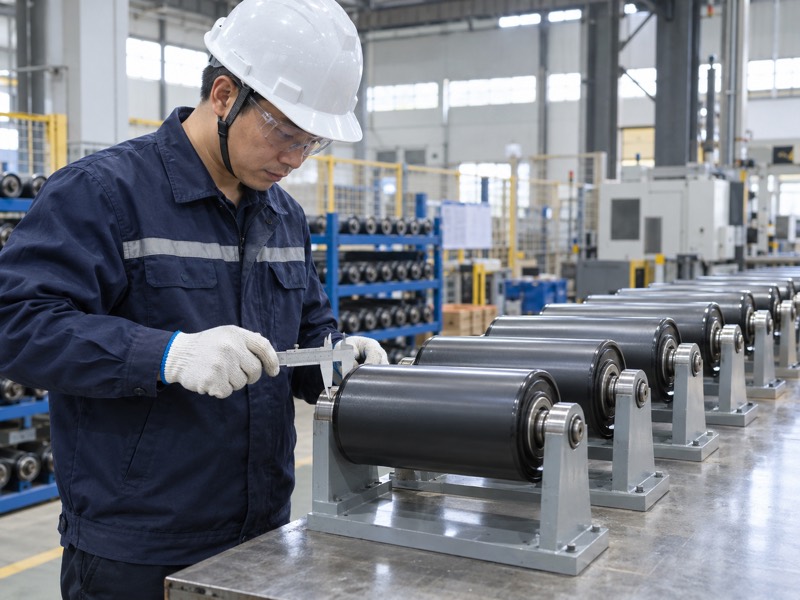
Which checks should you agree beforehand?
Turn descriptions into measurable acceptance items. Use defined datums for dimensions and a documented setup for rotational checks. Ask how nonconforming pieces will be identified and resolved. Where inspection requires special equipment, confirm your supplier’s proposed method before making that result a release condition.
- Approve revision-controlled drawings and tolerances.
- Define inspection methods and sampling arrangements.
- Agree on identification and nonconformance handling.
How can receipt inspection stay practical?
Compare packaging condition with inspection records and check representative pieces before installation. Preserve part identification so any discrepancy can be connected with its order and drawing revision.
| Acceptance item | Record needed | Benefit to your team |
|---|---|---|
| Dimensions | Drawing and measured results | Confirm replacement fit |
| Rotation | Agreed inspection method | Detect assembly concerns |
| Identification | Order and revision reference | Resolve discrepancies clearly |
Key Takeaway: Agree on inspection evidence before placing an order; acceptance should follow a shared method.
10. How should you request a carrying roller quotation?
Request a carrying roller quotation with a drawing, operating description and acceptance requirements so suppliers can assess fit and duty together. Include quantities by position rather than combining different assemblies into one vague line item. Your comparison then has a defined technical basis. Prices become more useful when each offer addresses equivalent dimensions, construction and inspection obligations.
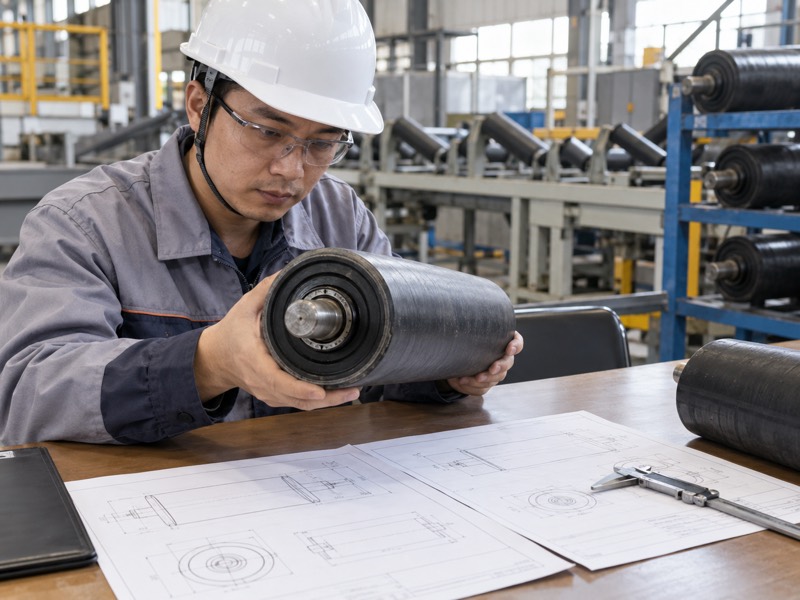
What should your quotation package contain?
Make unresolved details visible before approval. Mark missing dimensions, uncertain operating cases and proposed substitutions. Ask for written confirmation of deviations instead of relying on informal correspondence. Procurement and maintenance should review one approved specification so replacement stock matches equipment installed on site.
- Attach drawings and clear position references.
- Provide belt, material and contamination details.
- State quantities and required inspection documents.
How can you compare the final offers?
Use a technical comparison alongside commercial terms. Request clarification wherever an offer changes your approved construction or leaves an acceptance item unanswered.
| Quotation field | Your input | Supplier response |
|---|---|---|
| Fit | Drawing and revision | Confirmed dimensions |
| Duty | Operating conditions | Proposed construction |
| Acceptance | Inspection requirements | Methods and records |
Key Takeaway: Approve fit, duty and inspection together before releasing a carrying roller purchase order. Send your roller drawing, position list and operating conditions when you contact us for a quotation. Ask for confirmation of mounting fit and proposed bearing protection before approving production.
FAQ
Q1: Can I select a roller from belt width alone? No. You also need mounting dimensions, service load, speed and environmental conditions.
Q2: How do I know whether my shaft ends will fit? Compare flats, engagement and mounting span with a dimensioned drawing and clean bracket measurements.
Q3: Can I replace steel with a polymer shell? Possibly. Confirm load, temperature, wear conditions and geometry before approving a substitution.
Q4: What’s the best bearing for abrasive service? Choose an assembly with bearings and seals assessed against your specific contamination and loading conditions.
Q5: Should I replace a bent frame with new rollers? Repair or replace its frame first. Distorted supports can prevent correct shaft seating and alignment.